
News
President Tinubu Announces Up to ₦100m Mortgages at 9.75% Under ₦1tn Housing Fund for Nigerians
By Yusuf Danjuma Yunusa
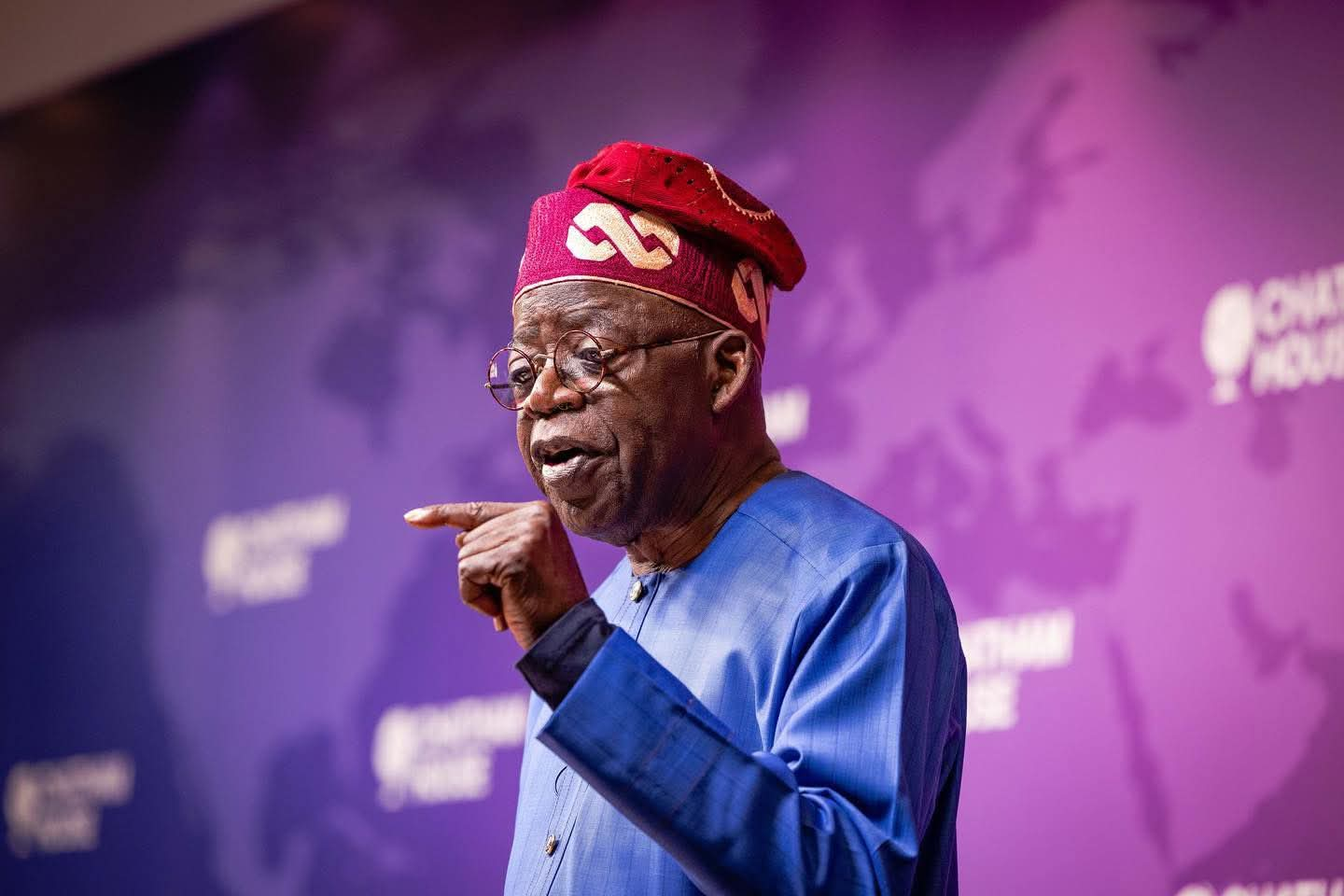
President Bola Tinubu has announced that eligible Nigerians can access mortgages of up to ₦100m at a fixed interest rate of 9.75 per cent, with a repayment period of up to 20 years, under the Federal Government’s housing finance initiative.
The President said the facility, provided through the ₦1tn MOFI Real Estate Investment Fund (MREIF), was part of his administration’s efforts to expand access to affordable housing and help Nigerians move from renting to homeownership.
Tinubu disclosed this in a statement on his verified X handle on Tuesday, explaining that beneficiaries could secure mortgages with an initial deposit of 10 per cent of the property’s value.
Using a ₦10m house as an example, he said a prospective homeowner would need an initial deposit of ₦1m and could repay approximately ₦85,400 monthly over 20 years.
According to the President, more than 2,300 Nigerians across 27 states have accessed ₦160bn in mortgages through MREIF.
“Imagine paying house rent for 25 years. Your children have grown up, you are approaching retirement, and you are still worried about the next rent increase. This is the reality for many hardworking Nigerians,” he said.
Tinubu said expanding access to affordable, long-term credit was a priority when he introduced his economic reforms in 2023, leading to the establishment of the ₦1tn MREIF.
He also announced that the Federal Mortgage Bank of Nigeria had been strengthened to provide eligible Nigerians with housing loans of up to ₦50m at an interest rate of six per cent, repayable over a maximum period of 30 years.
The President said contributors to the Contributory Pension Scheme could also qualify to use up to 25 per cent of their retirement savings towards their initial mortgage deposit.
He added that married applicants could submit joint applications with their spouses to increase their chances of accessing higher mortgage amounts.
“For Nigerians who cannot afford a mortgage, Family Homes Fund supports the delivery of affordable housing, with more than 53 social homes delivered for vulnerable and underserved households,” he said.
News
Industry Leaders Applaud Dangote’s Agricultural Impacts In Africa
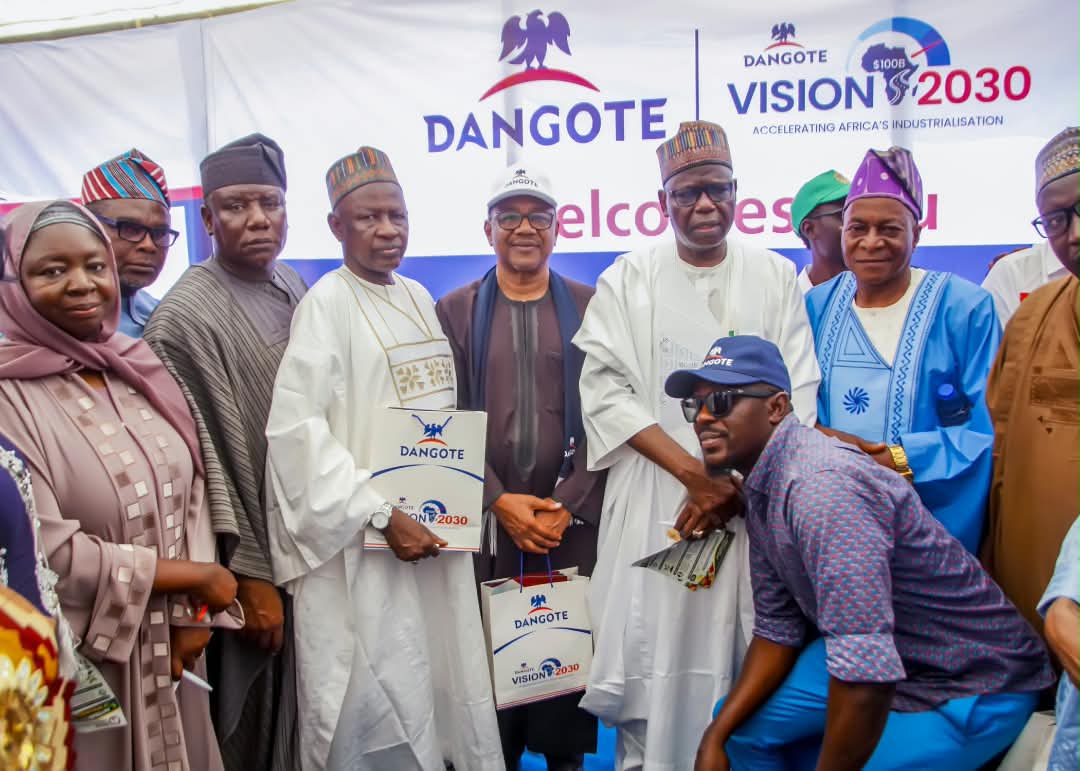
Industry leaders and key stakeholders in Nigeria’s agricultural sector have applauded Dangote Group for its strategic investments and contributions to agricultural development, food security and agro-industrial growth, describing the conglomerate’s initiatives as critical to unlocking Africa’s vast agricultural potential.
The commendation came at the 2026 National Agricultural Show, organised by the National Agricultural Foundation of Nigeria (NAFN), where stakeholders highlighted Dangote Group’s investments across the agricultural value chain, particularly in fertiliser production, rice cultivation and processing, sugar production, mechanised farming and backward integration.
This is coming as the Nigerian industrialist Aliko Dangote is in discussions with the Ghanaian government over a proposed arrangement to process 500,000 metric tonnes of cocoa locally.
The development comes as Ghana intensifies efforts to boost domestic cocoa processing and add value to its cocoa beans instead of exporting them predominantly in their raw form.
Dangote Industries Limited is driving Nigeria’s agricultural self-sufficiency through multibillion-dollar investments in fertiliser manufacturing, large-scale commercial farming, and agro-processing for rice and sugar to reduce food import dependence.
The National Coordinator of NAFN, Hajiya Aishatu Rufa’i Ibrahim, described the partnership between the Foundation and Dangote Group as instrumental to its success in promoting private-sector participation in agricultural development, industrialisation and food security.
Speaking at the official opening of the 2026 National Agricultural on Tuesday, Mrs Ibrahim commended the Group for its contributions to Nigeria’s economic development and urged its President, Alhaji Aliko Dangote, to further expand his investments in the agricultural sector.
According to her, Dangote’s experience in large-scale industrial investments could help transform agriculture through mechanisation, agro-processing, storage, logistics and commodity production.
She called on more indigenous investors to emulate Dangote Group by viewing agriculture as a viable business opportunity capable of generating wealth, creating jobs and securing Nigeria’s food future.
Hajiya Ibrahim explained that this year’s Show, themed “Building a Resilient Nigerian Agrifood System: Empowering Farmers, Mobilising Investment and Driving Innovation for Food Security and Shared Prosperity,” goes beyond the traditional exhibition of agricultural products by providing a strategic platform for connecting farmers, investors, policymakers and technology providers to develop practical solutions to Nigeria’s food security challenges.
The National President of the All Farmers Association of Nigeria (AFAN), Hon. Muhammad Magaji Gettado, also commended Dangote Group for its investments in the agricultural sector, noting that the participation of major private-sector players such as the Group was essential to accelerating Nigeria’s agricultural transformation.
He said the agricultural programmes and policies of the President Bola Ahmed Tinubu-led Federal Government were yielding positive results, but stressed the need for stronger collaboration among government, private-sector investors such as Dangote Group, commercial farmers and smallholder farmers to enhance productivity, boost food production and strengthen food security.
Similarly, the representative of the Nasarawa State Governor and Commissioner for Agriculture, Mohammed Iyimoga Oyigye, acknowledged the importance of private-sector investments, particularly those of Dangote Group, in advancing agricultural development and strengthening Nigeria’s food production capacity.
He said Governor Abdullahi Sule had made significant investments in the science, practice and business of agriculture in the state, adding that partnerships with major investors such as Dangote Group would further accelerate the state’s agricultural ambitions.
He expressed confidence that, with sustained investments and the implementation of ongoing agricultural initiatives, Nasarawa State would, in the nearest future, be capable of producing enough food to feed Nigeria and contribute to global food supply.
Declaring the 2026 National Agricultural Show open on behalf of the Minister of Agriculture and Food Security, Senator Abubakar Kyari, the Ministry’s Director, Malam Bukar Musa, highlighted the importance of private-sector investments, including those of Dangote Group, in driving agricultural modernisation and industrial development.
He said the future of agriculture in Nigeria depended on the country’s ability to embrace science, precision agriculture and mechanised farming, noting that investments in modern technology and agro-industrial infrastructure were essential to improving productivity, reducing production costs and building a resilient agricultural sector.
He stressed that strategic investments by companies such as Dangote Group could complement government efforts to modernise agriculture, strengthen local production and meet the country’s growing food needs.
In her goodwill message, Dangote Group’s Regional Director and Senior Adviser to the Group President, Mrs Fatima Wali-Abdurrahman, said agriculture remained a strategic pillar of Nigeria’s industrialisation, economic diversification, food security and job creation.
Mrs Wali-Abdurrahman, who was represented by the General Manager, Government Relations, Mallam Hashem Ahmed, said the Group remained committed to supporting Nigeria’s agricultural transformation through strategic investments, partnerships and initiatives across the agricultural value chain.
She noted that the Group’s investments in fertiliser production, rice cultivation and processing, sugar production and backward integration, mechanised agriculture and other agro-industrial initiatives reflected its commitment to strengthening domestic food production and building a competitive agricultural economy.
According to her, Dangote Group is also advancing rice production and processing initiatives in Northern Nigeria as part of efforts to stimulate local production, support farmers, promote agro-industrial development and create sustainable employment opportunities, particularly for young people and women.
She commended the Federal Government, under President Bola Ahmed Tinubu, for prioritising food security and agricultural transformation, particularly through initiatives aimed at boosting domestic food production, promoting mechanisation, improving access to agricultural inputs, expanding irrigation and attracting private-sector investments.
She, however, emphasised the need for sustained collaboration, improved rural infrastructure, access to affordable financing, enhanced security in farming communities and policies that encourage long-term investments.
She reaffirmed Dangote Group’s commitment to working with government and other stakeholders to transform Nigeria’s agricultural potential into sustainable economic opportunities, strengthen food security and position the country as a leading agricultural and agro-industrial powerhouse in Africa.
News
Abba Yusuf, Peter Mbah Accept Appointment as Deputy Grand Patrons of Nigeria Forward
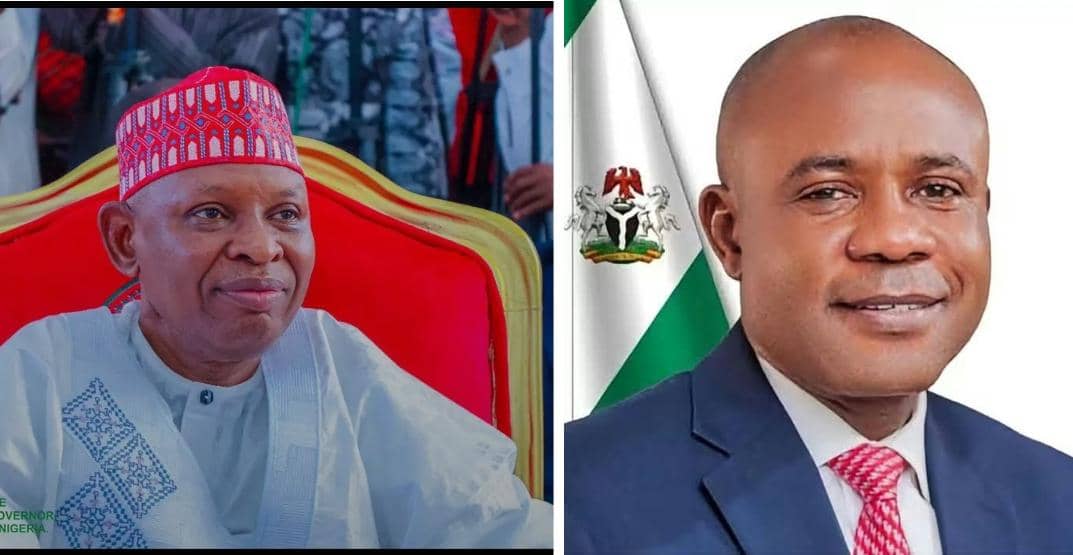
The Executive Governor of Kano State, Abba Kabir Yusuf, and his Enugu State counterpart, Peter Ndubuisi Mbah, have accepted their appointments as Deputy Grand Patrons of Nigeria Forward, a national mobilisation platform committed to promoting unity, peace and inclusive citizens’ participation in national development.
The Nigeria Forward Project announced the development in a statement, saying the two governors formally communicated their acceptance following the presentation of appointment letters by the organisation.
According to the statement, the appointment letters were jointly signed by the Convener of Nigeria Forward, Hon. Dr Kingsley Tochukwu Udeh, SAN, who is the Minister of Innovation, Science and Technology, and the Co-Convener, Comrade Ibrahim Abdullahi Waiya, PhD, Kano State Commissioner for Youth and Sports Development.
The organisation explained that the appointments followed careful consideration of the leadership qualities of the two governors, their contributions to good governance and their commitment to enhancing citizens’ participation in Nigeria’s democratic process.
Nigeria Forward said the appointments were consistent with its vision of building a strong national platform that promotes unity, peaceful coexistence and inclusive participation in governance as a foundation for national development.
The statement described the acceptance by Governors Yusuf and Mbah as a significant milestone in the organisation’s efforts to strengthen its national structure and expand its mobilisation activities across the country.
It added that the decision of the two governors to accept the positions demonstrated their confidence in the vision and objectives of Nigeria Forward and would further encourage the organisation’s growing support base across the country.
According to the project, the governors, in their capacities as Deputy Grand Patrons, are expected to provide leadership direction, guidance and support as the platform intensifies its engagement with stakeholders across Nigeria’s six geopolitical zones.
The organisation expressed appreciation to both governors for accepting the appointments, noting that their involvement would contribute to advancing its objectives and strengthening its commitment to national unity, peace and democratic participation.
The statement was signed by Abdulhafiz Garba, PhD, National Secretary of Nigeria Forward, who reaffirmed the organisation’s commitment to working with stakeholders towards achieving its vision of a more united and inclusive Nigeria.
News
Nigeria’s Headline Inflation Slows To 14.06% As Food Inflation Hits 19.13%
By Yusuf Danjuma Yunusa
Nigeria’s headline inflation rate declined to 14.06 per cent in October 2026 from 14.63 per cent in September, but food inflation remained elevated at 19.13 per cent, highlighting the continued pressure of food prices on household purchasing power.Buy Maps
The National Bureau of Statistics (NBS), in its October 2026 Consumer Price Index (CPI) report released on November 15, said the headline inflation rate declined by 0.57 percentage points year-on-year from the 14.63 per cent recorded in September.
The October figure also represented a significant decline from the 18.97 per cent recorded in October 2025.
However, the moderation in annual inflation was accompanied by an increase in the month-on-month headline inflation rate, which rose to 0.43 per cent in October from 0.06 per cent in September.
This indicates that although the pace of price increases was lower compared with the corresponding period last year, prices recorded a faster monthly increase in October than in September.
The NBS said the Consumer Price Index increased to 147.0 in October 2026, representing a 0.6-point increase from the preceding month.
The latest figures followed the completion of the bureau’s CPI rebasing exercise, which introduced 2024 as the new base year and 2023 as the weight reference period.
Food inflation, which remains a major concern for Nigerian households, stood at 19.13 per cent year-on-year in October.
On a month-on-month basis, however, food inflation declined by 0.75 per cent, compared with a contraction of 1.55 per cent recorded in September.
The bureau attributed the movement in food prices to changes in the average prices of several commodities, including vegetable oil, Titus sardines, green peas, frozen mackerel, croaker, locally produced rice, fresh catfish, beef tripe, palm oil and millet flour.
The figures suggest that the moderation in food prices recorded in September lost some momentum in October, although the monthly food inflation rate remained negative.
Core inflation, which excludes prices of volatile agricultural produce and energy, stood at 10.78 per cent year-on-year in October.
On a month-on-month basis, core inflation declined by 0.53 per cent, compared with an increase of 1.11 per cent recorded in September.
An analysis of the newly introduced inflation sub-indices showed that energy recorded the highest month-on-month increase at 1.74 per cent, while services declined by 0.94 per cent.
Farm produce recorded a monthly decline of 0.40 per cent, imported food fell by 0.38 per cent, while goods declined marginally by 0.01 per cent.
On a year-on-year basis, farm produce inflation stood at 18.38 per cent, followed by goods at 13.58 per cent, energy at 12.30 per cent, services at 11.73 per cent and imported food at 8.39 per cent.
The NBS also reported significant differences in inflationary pressures across states, with Imo recording the highest year-on-year all-items inflation rate at 28.66 per cent.
Enugu followed with 22.81 per cent, while Kaduna recorded 21.55 per cent.
Taraba, Sokoto and Ekiti recorded the lowest year-on-year headline inflation rates at 6.12 per cent, 6.68 per cent and 7.64 per cent respectively.
On a month-on-month basis, Bauchi recorded the highest headline inflation increase at 11.23 per cent, followed by Borno at 10.94 per cent and Yobe at 9.93 per cent.
Oyo, Osun and Akwa Ibom, however, recorded monthly declines of 6.71 per cent, 4.78 per cent and 4.41 per cent respectively.
The state-level food inflation figures showed that Ondo recorded the highest year-on-year food inflation at 31.74 per cent, followed by Lagos at 31.43 per cent and Imo at 29.75 per cent.
Nasarawa recorded the lowest year-on-year food inflation at 3.70 per cent, while Bayelsa and Kano recorded 7.11 per cent and 7.13 per cent respectively.
On a month-on-month basis, food inflation was highest in Yobe at 18.41 per cent, Kebbi at 16.45 per cent and Borno at 13.96 per cent.
Lagos, Plateau and Benue recorded monthly food inflation declines of 5.93 per cent, 5.83 per cent and 5.49 per cent respectively.
The NBS cautioned that differences in consumption expenditure patterns across states influence the weighting of food and non-food items in their respective consumer baskets, making direct interstate comparisons potentially misleading.
The October report presents a mixed picture of Nigeria’s inflation trajectory, with the annual headline and core inflation rates moderating, while monthly headline inflation accelerated and food inflation remained significantly higher than the overall inflation rate.
The October 2026 Consumer Price Index report is based on the new 2024 CPI base year and 2023 weight reference period.

President Tinubu Announces Up to ₦100m Mortgages at 9.75% Under ₦1tn Housing Fund for Nigerians

Industry Leaders Applaud Dangote’s Agricultural Impacts In Africa

Abba Yusuf, Peter Mbah Accept Appointment as Deputy Grand Patrons of Nigeria Forward

Sarkin Yaki Kano: A Decade Of Leadership, Integrity And Service

Nigeria’s Headline Inflation Slows To 14.06% As Food Inflation Hits 19.13%

Open The Social Sciences “A Tribute to a Heterodox Scholar: Mallam Ibrahim Muazzam

Kano’s War On Drugs: How Barr. Muhyi’s Taskforce Is Changing The Game

Begging in Northern Nigeria: What Future Are We Preparing for Our Society?

NDC Deputy Governorship Candidate Gives Kano Information Commissioner 48-Hour Ultimatum Over Alleged Defamation

Gov. Yusuf Appoints Inuwa Waya Director of International Corporations Engagement
President Tinubu Announces Up to ₦100m Mortgages at 9.75% Under ₦1tn Housing Fund for Nigerians
Industry Leaders Applaud Dangote’s Agricultural Impacts In Africa
Abba Yusuf, Peter Mbah Accept Appointment as Deputy Grand Patrons of Nigeria Forward
Sarkin Yaki Kano: A Decade Of Leadership, Integrity And Service
Nigeria’s Headline Inflation Slows To 14.06% As Food Inflation Hits 19.13%
Open The Social Sciences “A Tribute to a Heterodox Scholar: Mallam Ibrahim Muazzam
Kano’s War On Drugs: How Barr. Muhyi’s Taskforce Is Changing The Game
Begging in Northern Nigeria: What Future Are We Preparing for Our Society?
NDC Deputy Governorship Candidate Gives Kano Information Commissioner 48-Hour Ultimatum Over Alleged Defamation
Gov. Yusuf Appoints Inuwa Waya Director of International Corporations Engagement
-

 Opinion5 years ago
On The Kano Flyovers And Public Perception
-

 Features5 years ago
How I Became A Multimillionaire In Nigeria – Hadiza Gabon
-

 Opinion6 years ago
Kano As future Headquarters Of Poverty In Nigeria
-

 History6 years ago
Sheikh Adam Abdullahi Al-Ilory (1917-1992):Nigeria’s Islamic Scholar Who Wrote Over 100 Books And Journals
-

 Opinion5 years ago
My First Encounter with Nasiru Gawuna, the Humble Deputy Governor
-

 History5 years ago
The History Of Borno State Governor Professor Babagana Umara Zulum
-

 History6 years ago
The Origin Of “Mammy Market” In Army Barracks (Mammy Ochefu)
-
 News5 years ago
Federal University Of Technology Babura To Commence Academic Activities September