
News
IWD: Dangote Pledges Greater Investment in Women Empowerment













News
NEC Activates 90-Day Economic Action Plan to Ease Cost of Living
By Yusuf Danjuma Yunusa
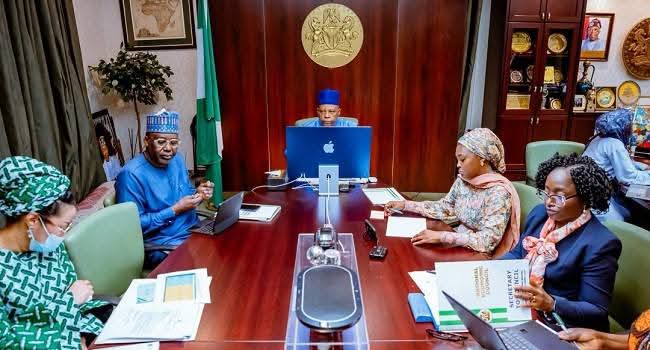
The National Economic Council has endorsed a 90-day economic action plan aimed at reducing the cost of living, improving food affordability and attracting investment across Nigeria.
The plan was proposed by the Federal Ministry of Finance and endorsed on Thursday during the council’s 161st meeting, chaired virtually by Vice President Kashim Shettima.
According to a statement by Shettima’s Senior Special Assistant on Media and Communications, Stanley Nkwocha, the plan has five priority areas: food affordability, tax harmonisation, completion of high-impact projects, resolution of investment bottlenecks and regulated household support.
The council also approved the establishment of a national dashboard to track projects across the country, with emphasis on transparency, accountability and reporting on how proceeds from fuel subsidy removal are being used.
Speaking at the meeting, Shettima urged state governors and relevant government institutions to ensure that the benefits of President Bola Tinubu’s economic reforms translate into better living conditions for Nigerians.
He said the success of economic policies should be measured by their impact on people’s daily lives, including access to affordable transportation, healthcare, employment opportunities and financial security.
“The first dividend of prosperity should be the confidence to plan a life. Our task is to make such confidence less dependent on fortune,” the vice president said.
Shettima also called for greater cooperation between federal and state governments, saying their separate responsibilities should not hinder the delivery of essential services.
“Our separate mandates must not become competing excuses. Each governor carries knowledge that no federal document can supply,” he said.
On transportation, the vice president said the National Compressed Natural Gas Bus Initiative should be assessed by how much it reduces commuters’ expenses rather than the number of vehicles deployed.
“The cost of reaching a livelihood should never consume the livelihood itself. The passenger’s experience must guide our ambition, because the value of public transport resides in the journeys it makes possible. We should assess success through affordability and access, rather than fleet size alone,” he said.
The council also resolved to establish a joint financing framework between the Federal Government and state governments to accelerate the deployment of compressed natural gas and electric vehicles.
It directed relevant authorities to engage transport unions and operators to ensure that savings from the use of the vehicles are passed on to commuters through lower fares.
Meanwhile, the Minister of Health and Social Welfare, Prof Muhammad Ali Pate, briefed the council on the reported Ebola outbreak in the Federal Capital Territory and assured members that Nigeria had the institutional capacity to contain the situation.
Pate said the national response would focus on coordination, detection at points of entry, laboratory testing, the provision of essential kits and personal protective equipment, and public communication.
He said 21 state governments had updated their preparedness and response plans, urging the remaining 15 states to establish appropriate mechanisms.
The council also directed states to strengthen polio eradication efforts, particularly in communities where children were missed during immunisation campaigns and areas affected by insecurity.
It further acknowledged the potential of livestock development to create jobs, stimulate economic growth and improve livelihoods, resolving to strengthen cooperation between federal and state governments to advance the sector.
News
Katsina Emir Warns APC: Stop Misleading Nigerians, Tackle Insecurity and Economic Hardship
By Yusuf Danjuma Yunusa
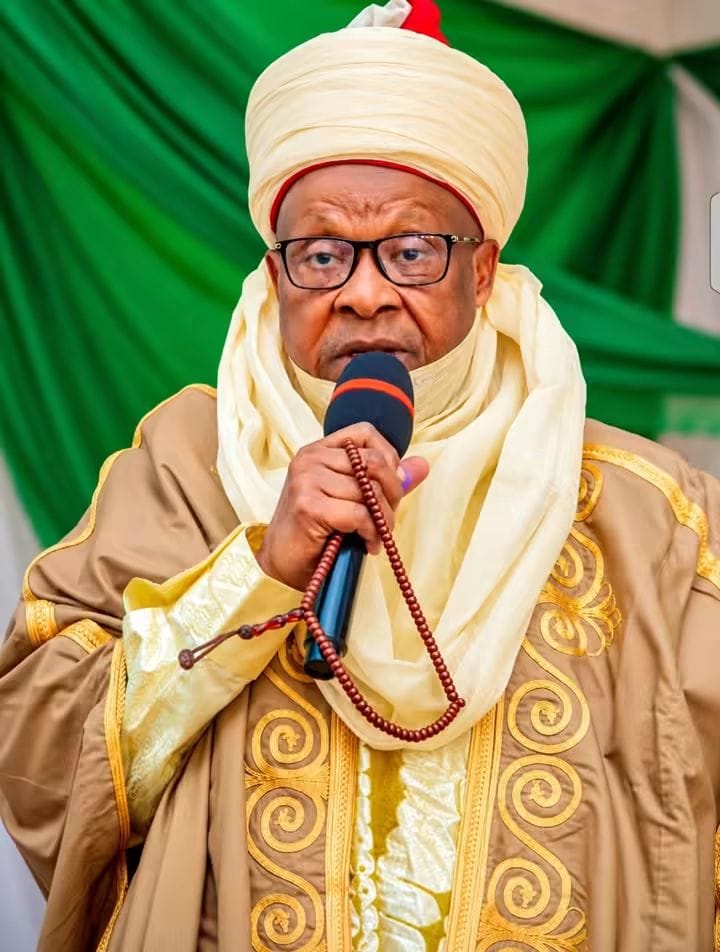
The Emir of Katsina, Alhaji Abdulmumini Kabir Usman, has challenged the All Progressives Congress (APC) to stop misleading Nigerians about the country’s condition, warning that insecurity is preventing farmers from accessing their farmlands while economic hardship deepens.
The monarch spoke when Senator Abdulaziz Abubakar Yari, Director-General of the APC Presidential Campaign Council for President Bola Tinubu’s 2027 re-election bid, visited his palace in Katsina State.
In a Hausa-language video of the meeting, Usman urged Yari to tell political leaders the truth about the challenges facing ordinary Nigerians rather than prioritise political interests.
“Director-General, you are now in a position of leadership. This is not just about this place; it concerns the entire country. We are all children of this nation, and we must stand for the truth,” the Emir said.
He said political leaders should focus on improving people’s welfare, addressing insecurity and creating conditions that allow Nigerians to earn a living.
The monarch also condemned political dishonesty, warning against making false claims to win public support or undermine opponents.
He argued that politics should be driven by dialogue, consultation and persuasion rather than hostility, backbiting and attempts to destroy political rivals.
“What is politics? You convince me to accept your conviction. You must be wise enough to listen to what I have to say or consider my point of view. That is politics. It is not fighting or condemning others,” he said.
Usman questioned why political actors appeared more concerned with attacking one another than working together to address the country’s problems.
He also invoked religious teachings, saying leaders should place the interests of others above personal ambition and material gain.
The Emir warned that public officials should not assume they would escape the consequences of treating others unfairly, urging them to demonstrate genuine concern for the people they serve.
On insecurity, he expressed concern that farmers in parts of northern Nigeria could no longer freely access their farmlands, a situation that threatens livelihoods and agricultural production.
“Why are we drifting apart? Farmers have been prevented from carrying out their activities,” he said.
He called on political leaders to take practical steps to restore security and protect rural communities whose economic activities have been disrupted by threats and violence.
The monarch also lamented the decline of industrial establishments in Kaduna State, citing the DIC and Peugeot company as examples of businesses whose fortunes, he said, should concern political leaders and regional elders.
“If you go to Kaduna, look at the DIC and the Peugeot company. Where are they now? They have all collapsed. Why?” he asked.
“We have to speak. We have to speak. We must stand up and take action.”
Usman urged traditional rulers, politicians and other influential figures to speak out against insecurity, economic decline and other challenges affecting Nigerians.
Yari, a former Zamfara State governor and serving senator, is leading the APC’s campaign preparations for Tinubu’s 2027 re-election bid.
News
ABCOAD, UNESCO Partner to Boost Technical Skills in Rice Processing
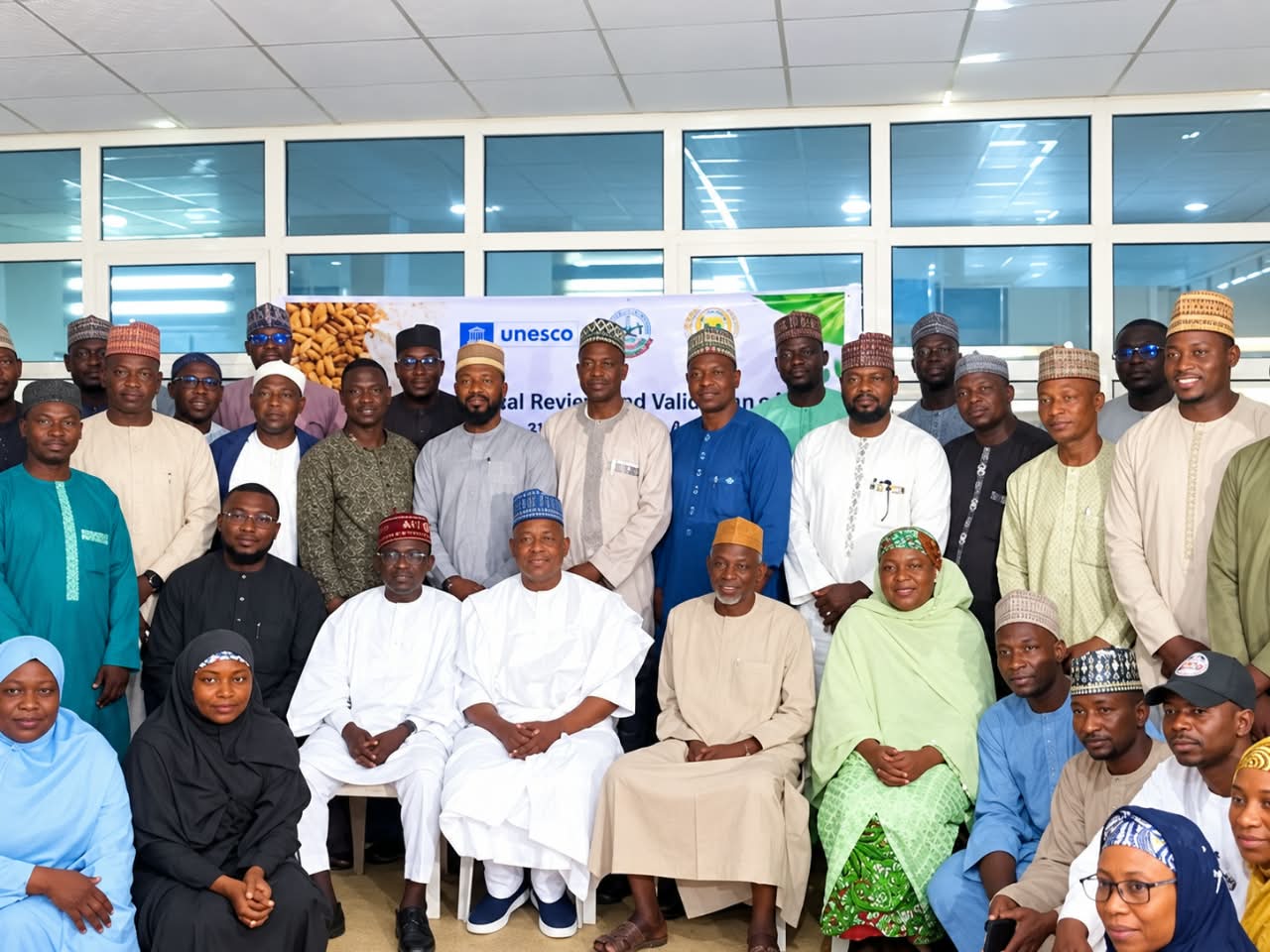
The Audu Bako College of Agriculture, Dambatta (ABCOAD), and the United Nations Educational, Scientific and Cultural Organisation (UNESCO) have partnered to strengthen competency-based training in rice processing and bridge the skills gap among Nigerian graduates.
The partnership is being implemented under the Better Education for Africa’s Rise (BEAR II) project, which seeks to strengthen Technical and Vocational Education and Training (TVET), particularly in agriculture and agro-processing.
The initiative features a three-day capacity-building workshop for master trainers on competency-based training in rice processing, scheduled for Oct. 21 to Oct. 23 at Alhamsad Rice Mill, Kano.
Speaking at the workshop, the Provost of ABCOAD, Dr Hassan Ibrahim, called for stronger collaboration between educational institutions and industry partners to equip graduates with practical skills required by employers.
Ibrahim said many graduates left educational institutions without the practical competencies needed in the workplace, stressing the need to align training programmes with industry requirements.
He said the partnership would strengthen vocational education and improve graduates’ employability by ensuring that students acquired relevant, industry-oriented skills.
The provost commended UNESCO and industry partners for supporting skills development and youth employment.
He said the college was committed to sustaining the initiative beyond the project period through stronger partnerships with industry stakeholders.
Ibrahim added that such collaboration would enable industry requirements to inform curriculum development and training delivery.
He urged participants and other stakeholders to contribute to achieving the objectives of the programme, expressing optimism that the workshop would improve the quality of vocational training in rice processing.
Declaring the workshop open, the Executive Secretary of the Kano State Science and Technical Schools Board, Prof. Dahiru Saleh, reaffirmed the state’s commitment to strengthening technical and agricultural education through modern equipment and skills development programmes.
Saleh said the initiative would promote practical skills by integrating technical education with agricultural practices and industry requirements.
He said the participation of the National Board for Technical Education (NBTE), ABCOAD, industry partners and UNESCO demonstrated a collaborative approach to improving vocational training.
According to him, stakeholders participated in developing the training manual, which would undergo scrutiny by the NBTE for certification under the National Skills Qualification (NSQ) framework.
He said the certification process would ensure that the training materials met the required standards for competency-based skills development.
Saleh commended the Kano State Government for providing modern agricultural equipment to support practical training in educational institutions.
He listed a combine harvester, tractor and planter among the equipment provided to Government Technical College to enhance hands-on learning and equip students with skills relevant to modern agriculture and agro-processing.
Earlier, the Executive Secretary of NBTE, Prof. Idris Bugaje, called on experts and stakeholders to contribute to the review and validation of the training manual developed to strengthen competency-based training in rice processing.
Bugaje, represented by Rukayya Rabiu, said the manual was designed to translate National Occupational Standards (NOS) into practical learning materials for trainers and trainees.
He said the standards covered rice processing and were intended to support certification under the NSQ framework.
According to him, the standards needed to be developed into comprehensive training manuals to facilitate effective instruction and ensure that learners acquired the required competencies.
He said the draft manual was presented for review and validation by experts and other stakeholders before its adoption for training programmes.
Bugaje urged participants to identify gaps, suggest improvements and make recommendations to enhance the quality of the document.
He expressed optimism that the exercise would produce a comprehensive manual to support effective skills development and facilitate the certification of trainees under the NSQ framework.

NEC Activates 90-Day Economic Action Plan to Ease Cost of Living

Katsina Emir Warns APC: Stop Misleading Nigerians, Tackle Insecurity and Economic Hardship

ABCOAD, UNESCO Partner to Boost Technical Skills in Rice Processing

Kwankwaso May Become Nigeria’s Oldest Vice-Presidential Running Mate, Says Activist

APC Denies Plot to Assassinate Atiku, Urges Security Agencies to Question Timi Frank

Zamfara Varsity ASUU Threatens Warning Strike Over FG-ASUU Agreement, Promotion Arrears

PCACC Arrests Man Over Alleged ₦4.5m Sale, Illegal Leasing of Kano Government Horse Stable

Kano Monitors ₦48.9bn Projects Across Six LGAs

Goje’s Electoral War:The Confrontation With Tinubu,Governor Inuwa,Usman Kumo And APC candidates Ahead Of 2027

Kano Spends ₦10.36bn on Hospitality, Sitting Allowances, Others in Six Months
NEC Activates 90-Day Economic Action Plan to Ease Cost of Living
Katsina Emir Warns APC: Stop Misleading Nigerians, Tackle Insecurity and Economic Hardship
ABCOAD, UNESCO Partner to Boost Technical Skills in Rice Processing
Kwankwaso May Become Nigeria’s Oldest Vice-Presidential Running Mate, Says Activist
APC Denies Plot to Assassinate Atiku, Urges Security Agencies to Question Timi Frank
Zamfara Varsity ASUU Threatens Warning Strike Over FG-ASUU Agreement, Promotion Arrears
PCACC Arrests Man Over Alleged ₦4.5m Sale, Illegal Leasing of Kano Government Horse Stable
Kano Monitors ₦48.9bn Projects Across Six LGAs
Goje’s Electoral War:The Confrontation With Tinubu,Governor Inuwa,Usman Kumo And APC candidates Ahead Of 2027
Kano Spends ₦10.36bn on Hospitality, Sitting Allowances, Others in Six Months
-

 Opinion5 years ago
On The Kano Flyovers And Public Perception
-

 Features5 years ago
How I Became A Multimillionaire In Nigeria – Hadiza Gabon
-

 Opinion6 years ago
Kano As future Headquarters Of Poverty In Nigeria
-

 History6 years ago
Sheikh Adam Abdullahi Al-Ilory (1917-1992):Nigeria’s Islamic Scholar Who Wrote Over 100 Books And Journals
-

 Opinion5 years ago
My First Encounter with Nasiru Gawuna, the Humble Deputy Governor
-

 History5 years ago
The History Of Borno State Governor Professor Babagana Umara Zulum
-

 History6 years ago
The Origin Of “Mammy Market” In Army Barracks (Mammy Ochefu)
-

 News5 years ago
Federal University Of Technology Babura To Commence Academic Activities September