
News
CODE Galvanises Mass Action Against Gender Violence In Kano
Abbas Yushau Yusuf
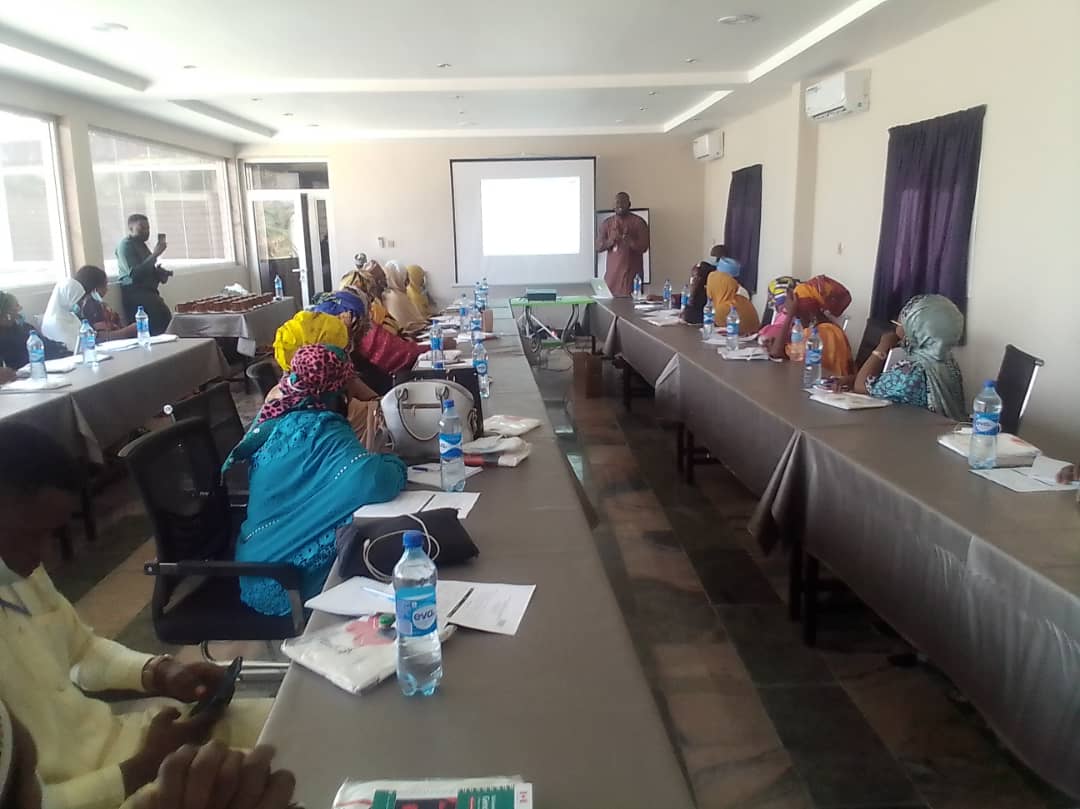
Connect development (CODE) with support from Canadian High Commission, has convened a two day capacity building workshop for 30 women in Kano State, as gender advocates galvanising mass action against Gender-Based Violence (GBV) with the aim to create awareness on the provisons of Violence Against Persons Prohibition (VAPP) Act.
The aim of the worskshop is to train 30 women and girls on advocacy skills and use of technological tools to make people abreast with the VAPP Act in Kano state.
The Executive Director of CODE, Mr Hamzat Lawal express his concern over the alarming rate of GBV on women and girls reported in Kano State.
“There is a shadow pandemic of GBV in Kano State which have attracted international concerns and yet, the act that will safeguard the well-being of our mothers and sister haven’t been domesticated” he said.
“We know and recognize religion and culture belief plays a critical role and that is why we will be working with religious and traditional leaders to influece their messages to inform the people to put an end to GBV” he said.
Gender Based Violence has Subjected Women To Poverty-NHRC
One of the conveners Sani Muhammad, who is the executive Director of Bridge connect said one of the challenges of Gender-Based Violence in Nigeria is inability of victims to speak.
“stigmatization of victims make the victims to allow perpetrators to continue with the evil act. Many of the Nigerian women and girls who are victims of SGV don’t seek help due to fear of stigmatization”, He said.
In her remark, the head of Women Right Advancement and Protection Alternative (WRAPA), Barrister Fatima Ahmad said the reason we are advocating for VAPP Act to be passed is the way and manner GBV is increasing and that is very alarming which makes the need to fight it necessary .
On her part, another legal practitioner and trainee Asmau muhammad said, “since their is an attempt to pass the geneder based violence prohibition act after the conference the they will push for it”.
She said gender based violence is worrisome and to putting an end to it is necessary hence the need to come together.














News
IGP Disu Commits to Fallen Officers’ Legacies with N2.4 Billion Payout to Next-of-Kin

By Yusuf Danjuma Yunusa
The Inspector-General of Police, Olatunji Disu, has presented cheques totalling N2.4 billion to 1,075 beneficiaries and next-of-kin of deceased police officers under the Group Life Assurance and IGP Family Welfare Schemes.
According to a statement on Wednesday signed by the Force Public Relations Officer, Anthony Placid, the presentation took place at the Force Headquarters, Abuja.
The cheques, “amounting to ₦2,435,421,584.11, cover policy years 2018/2019, 2020/2021, 2021/2022, 2022/2023, as well as 2024/2025 and 2025/2026, including outstanding insurance claims recovered from previous years.”
In her remarks, the Force Insurance Officer, Lydia Ameh, said the disbursement reflects “the determination of the IGP Olatunji Disu to prioritise the welfare of officers and their families.”
She noted that “the payments represent recoveries from long-standing insurance obligations” and added that “decisive steps have been taken to ensure compliance by insurance providers and prevent delays in claims settlement.”
Ameh further reaffirmed “the commitment of the Force Insurance Unit to efficient, transparent, and accountable service delivery.”
In his response, the IGP described the ceremony as “a solemn recognition of the sacrifices made by officers who lost their lives in the line of duty,” noting that the welfare of personnel remains a central pillar of his administration.
He stated that the presentation “goes beyond financial support,” adding that it represents “the Force’s enduring obligation to honour the courage, service, and commitment of its fallen heroes while standing firmly by their families.”
Disu assured all that “efforts would be intensified to strengthen welfare frameworks, improve administrative efficiency, and eliminate delays in the processing and disbursement of benefits.”
He also noted that “the Force will leverage modern technology to enhance transparency, streamline claims processing, and ensure accountability in welfare administration.”
The Nigeria Police Force reiterated its commitment, stating that the sacrifices of fallen officers “remain invaluable to the peace, security, and stability of the nation.”
News
Zakatul Fitr: The Final Act of Ramadan’s Compassion and Purification”

By Yusuf Danjuma Yunusa
As the blessed month of Ramadan draws to a close, Muslims turn their attention to one of its final acts of worship: Zakatul Fitr. More than just a charitable donation, this obligation is a profound act of purification and social solidarity, completing the spiritual journey of the month. Its performance, guided by clear prophetic traditions, ensures that its spiritual and social objectives are beautifully fulfilled.
Zakatul Fitr is a duty incumbent upon every Muslim who possesses the means beyond their basic needs for themselves and their family. The Prophet Muhammad (peace be upon him) clearly established this, declaring: “The Messenger of Allah made Zakatul Fitr obligatory upon every Muslim—free or slave, male or female, young or old.” (Bukhari & Muslim).
This universality is a powerful reflection of Islam’s inclusive spirit. It ensures that every household that is able can participate in a collective act of compassion, supporting the less fortunate and weaving a tighter fabric of community care.
The amount set for Zakatul Fitr is one ṣā‘ of a household’s staple food. Classical scholars describe a ṣā‘ as a volume measure roughly equivalent to 2.5 to 3 kilograms of common food items like rice, wheat, dates, or barley. The head of the household is responsible for fulfilling this duty on behalf of all dependents, including children and those under their care. This system guarantees that every member of the community, even the youngest, contributes to uplifting the poor, reinforcing the principle of shared responsibility.
Timing is essential for Zakatul Fitr to achieve its intended purpose. The charity must be given before the Eid prayer. The Prophet (peace be upon him) instructed that it be distributed before people set out for the prayer, so that the needy may benefit from it in time to celebrate Eid al-Fitr with dignity and joy. Recognizing the logistical challenges of distribution, scholars permit giving the Zakat a day or two before Eid. This flexibility facilitates the process, ensuring it reaches those who need it most in a timely manner.
The primary recipients of Zakatul Fitr are the poor and the needy. By providing them with the means to partake in the Eid festivities, this charity prevents their social exclusion and transforms Eid into a genuine celebration for the entire community. It is a tangible expression of the principle that joy is meant to be shared.
In contemporary contexts, many scholars permit giving the equivalent monetary value, allowing recipients the flexibility to address their most pressing needs. This opinion is followed when it is deemed more beneficial, though the original Sunnah emphasizes the distribution of food.
Reflecting on Zakatul Fitr reveals the profound practical wisdom within Islam. It ensures that the intense worship of Ramadan does not remain a private spiritual exercise but instead culminates in a visible act of social responsibility. As believers conclude their month of fasting with gratitude to Allah for His blessings, they channel that gratitude into generosity toward others.
Thus, Zakatul Fitr stands as the final, defining gesture of Ramadan. It is a powerful symbol of personal purification, sincere compassion, and communal harmony, ensuring that the joy of Eid is not a private privilege but a shared blessing for all members of society.
News
Eid-el-Fitr: FG Declares Thursday, Friday Public Holidays

By Yusuf Danjuma Yunusa
The Federal Government has officially declared Thursday, March 19, and Friday, March 20, 2026, as public holidays to celebrate Eid-el-Fitr, marking the end of the holy month of Ramadan.
The announcement was made on Tuesday by the Minister of Interior, Olubunmi Tunji-Ojo, in a statement issued on behalf of the Federal Government by the ministry’s Permanent Secretary, Magdalene Ajani.
In the statement, the Minister extended warm greetings and heartfelt congratulations to the Muslim Ummah for the successful completion of the Ramadan fasting period.
Tunji-Ojo encouraged the Muslim faithful to uphold the profound spiritual values fostered during the holy month. He emphasized the importance of sustaining the virtues of love, generosity, peace, tolerance, and sacrifice in their daily lives.
He also called on all Nigerians to leverage the festive occasion to offer special prayers for the nation’s continued peace, unity, and prosperity.
While wishing all Muslims a joyous and blessed Eid-el-Fitr, the Minister urged citizens to celebrate responsibly. He specifically encouraged acts of kindness and generosity towards the less privileged in society, embodying the spirit of the season.
The Minister reaffirmed the Federal Government’s steadfast commitment to fostering national unity and promoting peaceful coexistence among the diverse communities in Nigeria.

IGP Disu Commits to Fallen Officers’ Legacies with N2.4 Billion Payout to Next-of-Kin

A Life of Promise: Young Hussein’s Tragic Death at the Hands of Phone Snatchers”

Zakatul Fitr: The Final Act of Ramadan’s Compassion and Purification”

Eid-el-Fitr: FG Declares Thursday, Friday Public Holidays

Tinubu Orders Relocation of Service Chiefs to Maiduguri Following Deadly Borno Attacks

BREAKING: El-Rufai Suffers Nose Bleeding in EFCC Custody, Family Denied Access

The Governor Who Chose His People Over His Politics: Abba Yusuf and the Moral Courage Behind Kano First

The Essence of Great Health During Ramadan—By Dr. Nelson Aluya

Political Organization : Why Gov Abba Should Adjust

FREEDOM OF SPEECH, NOT FREEDOM FROM CONSEQUENCE: A CITIZEN’S CALL FOR RESPONSIBLE PUBLIC COMMENTARY
IGP Disu Commits to Fallen Officers’ Legacies with N2.4 Billion Payout to Next-of-Kin
A Life of Promise: Young Hussein’s Tragic Death at the Hands of Phone Snatchers”
Zakatul Fitr: The Final Act of Ramadan’s Compassion and Purification”
Eid-el-Fitr: FG Declares Thursday, Friday Public Holidays
Tinubu Orders Relocation of Service Chiefs to Maiduguri Following Deadly Borno Attacks
BREAKING: El-Rufai Suffers Nose Bleeding in EFCC Custody, Family Denied Access
The Governor Who Chose His People Over His Politics: Abba Yusuf and the Moral Courage Behind Kano First
The Essence of Great Health During Ramadan—By Dr. Nelson Aluya
Political Organization : Why Gov Abba Should Adjust
FREEDOM OF SPEECH, NOT FREEDOM FROM CONSEQUENCE: A CITIZEN’S CALL FOR RESPONSIBLE PUBLIC COMMENTARY
-

 Opinion4 years ago
On The Kano Flyovers And Public Perception
-

 Features5 years ago
How I Became A Multimillionaire In Nigeria – Hadiza Gabon
-

 Opinion5 years ago
Kano As future Headquarters Of Poverty In Nigeria
-

 History5 years ago
Sheikh Adam Abdullahi Al-Ilory (1917-1992):Nigeria’s Islamic Scholar Who Wrote Over 100 Books And Journals
-

 Opinion4 years ago
My First Encounter with Nasiru Gawuna, the Humble Deputy Governor
-

 History5 years ago
The Origin Of “Mammy Market” In Army Barracks (Mammy Ochefu)
-

 History4 years ago
The History Of Borno State Governor Professor Babagana Umara Zulum
-

 News4 years ago
Federal University Of Technology Babura To Commence Academic Activities September