
Opinion
Our gauzy language of patriotism

By Haroun Muhammed
No one will teach you how to love your skin; how to gauge your taste for everything around you. No one will teach you how to love your country. It boils down to your common sense; the reality before you, the stuff you are made of.
Whether you listen to the professors of psychology at Harvard or you listen to the sociologists from Cambridge and Oxford combined — somethings are naturally built-in — and further share the iterative growth in us.
Recent events showed how we could match the present and past events together in order to make sense of the future. This isn’t a prophetic sentiment, rather than, a wake up call. Countries over all the world are being built on the overwhelming sense of patriotism.
Pray For Troops At Christmas-Magashi Urge Christians
Whether you worship the West, the Middle East, or even those that speak in different tongues, the logic is the same: indigenes build their country not foreigners. A country is as good as its people, says the cerebral MS II.
Back to the events. Our love for foreign “things” is legendary. Anything tag “foreign” is given a special treatment. This is us; a country with a fashionable love for foreign things (Nigeria itself needs to travel abroad, said a frustrated Nigerian.) EndSars protest would continue to weigh a huge mark in our books of history — its spontaneous negative impact, and perhaps, its undermine positive impact.
What we had back then was the rebirth of our love for foreign affairs. At some particular stage, we jettisoned our local media and clear facts before us to blindly absorb the “foreign unsubstantiated sentiments”. This time around we rally around and allowed others to have taken an advantage of what’s meant to be a good precedent — infiltrated the good cause with cornucopia of deceitfulness.
Can we really be that shortsighted? (I’m trying to be nice here. The word I was going to use was “stupid.”)! There was also a wave of ignorance that swept our sense of reasoning away. Imagine an overrated foreign-based Medic saying if protest lasted for 30 days UN will intervene and sack the people in charge. Seriously? Even the shortest route to the Google search-engine seemed to have disappeared from some people’s head then. Some didn’t logically and thoroughly ask for more details regarding that… na to Soro Soke dey go!
And then, there was a noise of holding the Nigerian flag, there was one of inviting economic sanctions, of signing funny signatures, there was another one of asking the UK to ask the president to resign, there was so many colourful rumours and lies peddled on and off the media streets. And then, the almighty “massacre” gracefully landed. Up till now, we are still looking for the unknown dead bodies to honor their deaths. They truly deserve our final respect. They do!
Instead to gather around our senses and set our house in order, we consequently fell back into lawlessness, lashing out the unknown, starving our economy in the back by roadblocks, huddling against the darkness, killings of our own security men, robbing our countrymen, etc. We were never casted in that mould, I didn’t know how we got ourselves there. Believe me, I didn’t!
If we could learn something from the past, it’s that of, no one can help us set our house in order while we take a step back and watch the magic to happen. The people we consciously invited will leave us, the way rats leave a sinking, when we set our nation on fire. Developing countries like ours thrive on a painstaking patriotism regardless of who is in charge of the country.
Unlike us, they passionately despise anything that will bring their country down. Unlike us, they don’t adopt “fashionable foreign love”, they are contented with home-based love cast in the mould of patriotism. Chip in any developing country like us, their story of success lies in their patriotism.
There was an attack on the Capitol, an insurrection they say, days ago. But, all we had was Americans solving their own problems. Of course, it’s arguable to say no one can dare interfere in their internal affairs, though, we have adopted “foreign love”, we can, as well, learn something from them — that’s the love of our own country.
Let me repeat this one more time: Nigeria is the only country we have. Unless, you are preparing to rent a house in Elon’s self-sustaining city on Mars, the politics of this country affect all of us; directly or indirectly.
We should all frown at the shabby-driven-system in our country. We should all be actively involved in shaping the future of this country. It doesn’t matter which industry you belong to; if we keep on producing half-baked politicians as our leaders, nobody’s going to be safe in this country. Their infectious incompetency will locate us, on the road, home, on our beds, wherever we are. The Nigeria of yesterday, that of today, is a textbook reference for this.
We can join hands and rebuild this country —make it whatever we want it to be — or watch it bounce into a valley of nothingness under the influence of never-ending blames and staggering perfidiousness.
The choice is ours.
May Nigeria succeed!












Opinion
Per Ishaq Samaila: “Waziri” for Strategy. “Mai Jama’a” for Service. One Man. One Mission. Ibrahim Kabir Masari

By Abba Anwar
I read with great admiration and clear endorsement the piece by Ishaq Samaila titled “Why President Tinubu Calls Ibrahim Kabir Masari ‘Waziri’ and the First Lady Senator Oluremi Tinubu calls him ‘Mai Jama’a.” It is not only an envelope of precision, it is also the kind of political writing we need more of under the current political atmosphere; thoughtful, measured, and rooted in substance rather than fallacy.
Ishaq Samaila deserves commendation for capturing what many in Abuja understand but few can articulate so clearly. As he rightly noted, “President Bola Ahmed Tinubu describes Alhaji Ibrahim Kabir Masari as his ‘Waziri’ — a traditional title associated with counsel, responsibility, political strategy and service close to leadership. And First Lady Senator Oluremi Tinubu has referred to him as ‘Mai Jama’a’ a Hausa expression meaning “man of the people.”
These are not casual and loosed nicknames. In Samaila’s analysis, they represent “… two defining sides of Masari’s political identity.” I could not agree more. And it is on this premise that I offer this addendum, not to debate, but to amplify and showcase how Masari, the man, embodies every word in that excellent article.
Being “Waziri” in tensed and difficult political atmosphere isn’t a joke. The man, Masari, is an embodiment of Presidential trust, vision for the nation and unwavering loyalty from the former. While the latter maintains a very long standing relationship. He (Masari) is entrusted with the weight of the nation’s political stability. It is to be the calm in the storm, the ear that listens as it sounds musical to it, before decisions are made, and the hand that builds bridges where others see walls and castles in the air.
That is Masari. As Special Adviser to the President on Political and Other Matters, he has operated with a rare combination of discretion, ingenuity, efficiency and effectiveness. At a time when governance requires managing 36 states, 360 federal constituencies, and thousands of political interests, Masari has been the President’s henchman and trusted anchor.
He does not grandstand. He does not seek credit. His work is in the consultations that prevent crises, in the engagements that align stakeholders with the Renewed Hope Agenda, and in the political intelligence that allows leadership to stay ahead of challenges. Also in political sophistication that strengthens presidential ambition through utilization of all options.
This is the modern definition of a Waziri: a man who serves power by serving the country first. President Tinubu, a master political strategist himself, recognized this quality in Masari and brought him closer in strategy and execution. It was not by accident. It was designed long before now. A relationship built over decades and rooted in trust.
If “Waziri” explains Masari in the Villa, “Mai Jama’a” explains Masari in the villages, in our communities. And this is where his political genius truly shines. This is where he speaks wisdom, freedom and breaks chain of hardship, to stardom, to build a kingdom of service. He is a great leader and mentor who never left ground, grassroot. Hence, he is well grounded and firmer.
The title “Man of the People” is the hardest to earn in Nigerian politics because the people themselves must give it to you. You cannot buy it. You cannot lobby for it. You can only work for it. The title is more or less, achievable and non-replaceable. Masari toiled for it and achieved it.
First Lady’s description speaks to something deeper than politics. It speaks to character and characteristics. To accessibility and creativity. To a man who, despite holding one of the most sensitive political offices in the country, still believes in his people, still attends community events, and still understands the language of the ordinary Nigerian. Hence the initiation of many interventions. To help people become economically independent, culturally creative and politically reliable.
From Katsina to Kano, from party meetings to condolence visits, Masari has maintained what Samaila correctly called “… grassroots orientation and his ability to maintain contact with communities, political supporters and ordinary citizens.” What a reliable political figure. Reliability in its purest form.
He is proof that you can be in the room where national strategy is decided in the morning, and still be on the ground listening to market women and youth leaders in the evening. A balanced political figure, who believes strategy keeps political opponents continuously busy from a position of weakness. That balance is rare. That balance is leadership. That balance is resistance against a non-welfare state.
As Samaila concluded so powerfully, “Tinubu’s ‘Waziri’ is also the First Lady’s ‘Mai Jama’a.’ One description highlights his role around political leadership; the other highlights his connection with the people.”
In today’s Nigeria we need leaders who understand high-level politics but are not imprisoned by it. A clear explanation of President Tinubu’s symbol, a broken chain of slavery. Where poverty of rationality remains in limbo. We need advisers who can navigate complex stakeholder dynamics without losing touch with the pain and aspirations of the people. We need a Waziri who is also Mai Jama’a.
It is absolutely true that Masari depicts this with all that is said in Samaila’s article. He depicts loyalty without sycophancy. He depicts strategy without arrogance. He depicts accessibility without losing authority. The same way he depicts engagement without scarcity.
He is a bridge-builder in an age of division, where weaker opponents misrepresent facts with fictions, vision with illusion, and hope with hype. A stabilizer in an age of noise, who clearly differentiates empty noise from real choices. A public servant who understands that titles are not for decoration, they are for duty. They are for selfless service to humanity.
While I concur with the author in all his submission, let me also join him in celebrating this well-thought and timely piece. It reminds us that in the midst of our national challenges, we still have men and women in government who embody service, humility, and competence.
Alhaji Masari, by all standard, is one of them. The President saw the Waziri in him. The First Lady saw the Mai Jama’a in him. The people are beginning to see both. His interventions to his people is invaluable. His faith in this administration is absolute. His hope is renewed. His effort in renewing people’s hope is rewarding and visibly engaging.
Samaila Bravo for explaining in a more clearer terms, Waziri and Mai Jama’a in Masari. A golden coin of two inseparable sides.
Anwar writes from Kano
Thursday, 10th September, 2026
Opinion
Fifty Years, Four Terms. A Life Of Enterprise, Scholarship And Public Service-By Abbas Tajuddin
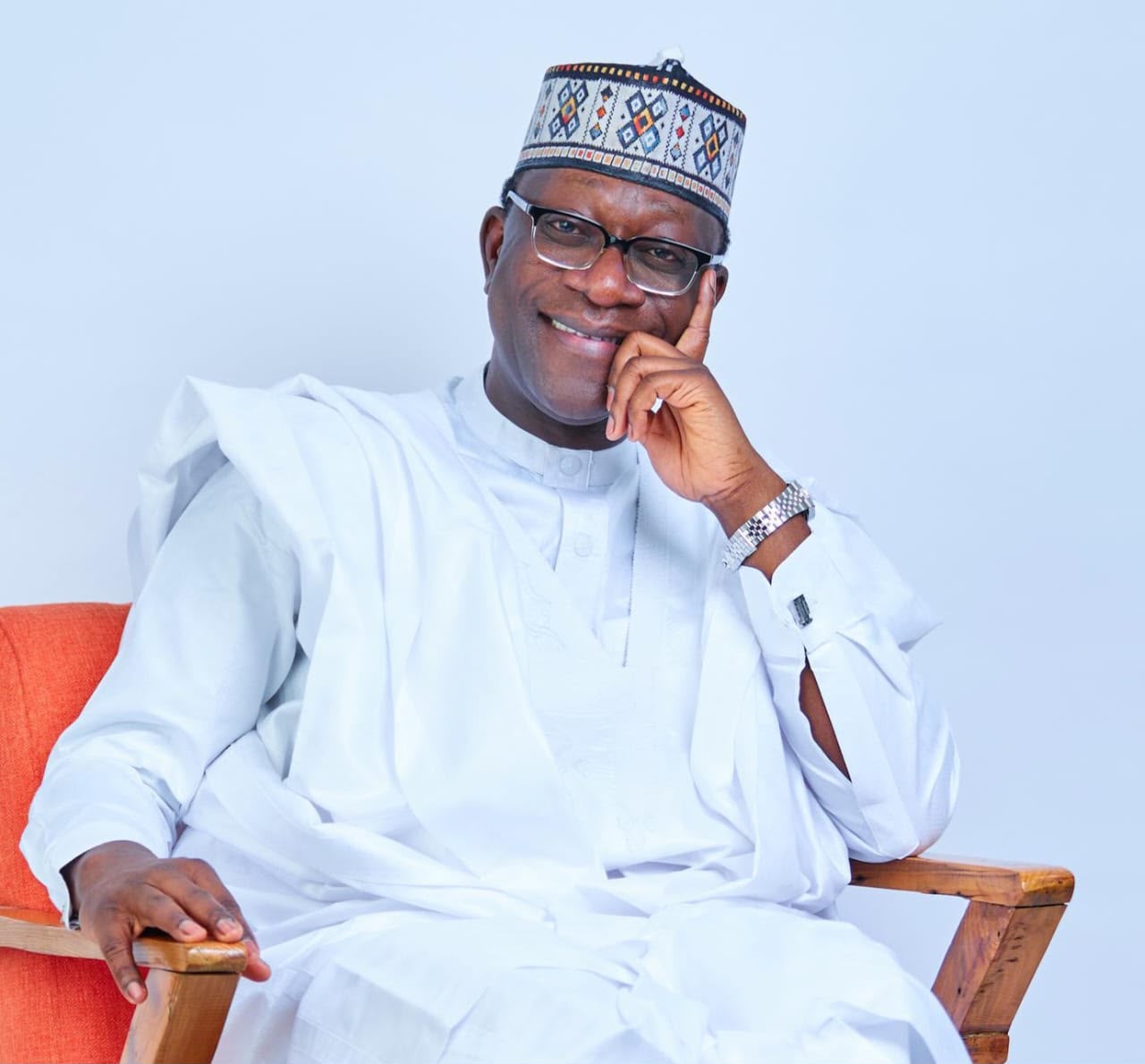
Today, I celebrate my colleague and friend, Hon. Abdulmumin Jibrin Kofa, as he attains the golden milestone of 50.
Turning 50 is more than a birthday; it is a moment to pause, reflect and appreciate a journey already rich in accomplishment, service and impact.
Over four terms in the House of Representatives, Abdulmumin has brought to our legislative enterprise a rare combination of intellectual depth, business experience, courage and an unmistakable independence of mind. From his leadership of key committees, including Finance, Appropriations, Land Transport, Foreign Affairs, and Housing and Habitat, his contributions have reflected a strong grasp of public finance and a broad understanding of national affairs.
He is, without doubt, one of the sharpest minds in our Parliament. His academic accomplishments, including two PhDs and an MBA, his experience in business and academia, his executive education at leading institutions, and his service at the Federal Housing Authority have all contributed to the distinctive perspective he brings to public service.
But beyond the degrees, positions and accomplishments is a man who has never been afraid to speak his mind.
Abdulmumin is forthright. He is courageous. He is independent-minded. And he is never one to hide his convictions.
In a Parliament, such voices matter. A healthy legislature must have room for principled disagreement, robust debate and legislators willing to speak for what they believe is right and in the interest of their constituents.
As you celebrate 50, dear Abdulmumin, I celebrate not only the milestones behind you but also the possibilities ahead.
On behalf of the leadership and the entire membership of the House of Representatives, I wish you good health, renewed strength, greater accomplishments and many more years of impactful service to your constituents and our dear nation.
May the next chapter be even greater than the first five decades.
Happy 50th Birthday, Hon. Abdulmumin Jibrin Kofa.
Opinion
A FRIEND’S LETTER TO ABDULMUMIN AT FIFTY
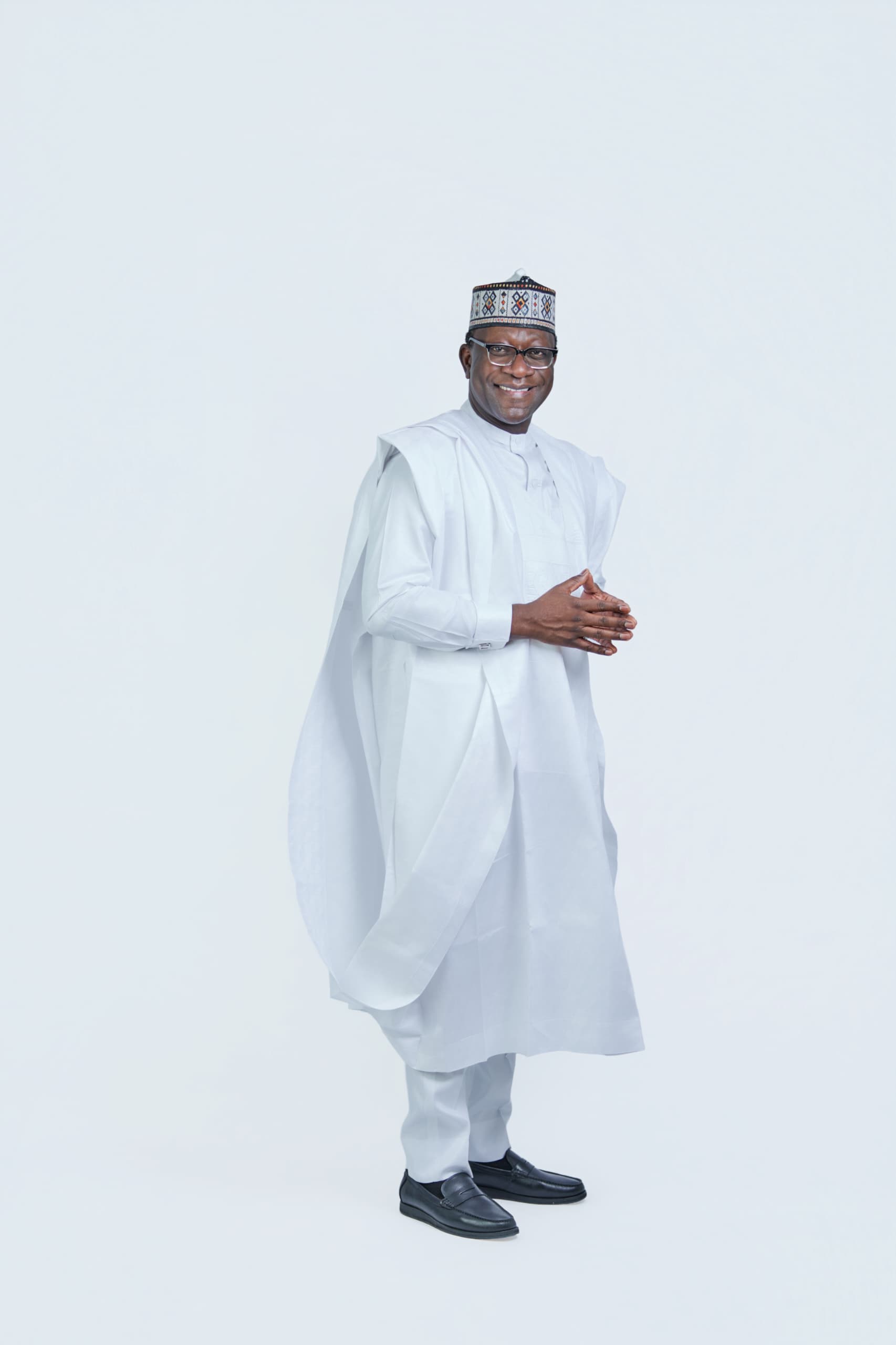
By Barr. Ismaeel Ahmed, OON
There is a particular privilege in knowing someone before the world decided who they were going to be; before the titles, the cameras, the offices and the public arguments. I have had that privilege with Abdulmumin Jibrin.
I knew Abdulmumin long before most people knew him as they do today, before the National Assembly and before the many chapters of public life that have since defined his name. So, as he turns fifty, I find myself writing not about the Honourable Member for Kiru and Bebeji, but about my friend, my older brother and school father. That distinction has always mattered.
I remember someone whose mind never seemed to rest. Chairman, as we fondly call him, could take an idea everyone else had accepted, turn it around repeatedly, question it from every direction and continue long after the rest of us had become tired of the conversation. I used to tease him about it, and sometimes I still do. But over the years, I have come to understand that this intellectual restlessness is at the very centre of who he is.
It explains the businessman, the teacher, the politician and the scholar who earned a PhD in International Relations and, years later, returned to Bayero University Kano for another in Economics. Chairman has never believed that learning has an end point. He is always searching for the next question and, inevitably, the better answer.
Yet, for all his accomplishments, what I value most about him is something much simpler: his loyalty. He remembers people. He remembers friendships, kindnesses and those who stood with him when there was little to gain from doing so. Beneath the forcefulness that people see in public is a tenderness and generosity that those who know him closely understand very well.
I have also had the privilege of seeing him through both triumph and adversity. His political journey has had its share of difficult seasons, some of them difficult enough to discourage almost anyone. But Chairman has an extraordinary capacity to return. He reflects, recalibrates and rises again. Not because the fall did not hurt, but because he has always believed that a difficult chapter does not have to be the end of the story.
Perhaps that is one of the most important lessons of his first fifty years. We are not measured by never falling. We are measured by what we learn from the fall and whether we find the courage to rise again.
Another quality I have come to admire is his ability to create room for other people to grow. He does not merely occupy spaces; he opens conversations, shares ideas and encourages those around him to think beyond their immediate circumstances. Many people have benefited from his advice, introductions, encouragement and willingness to challenge them to become better versions of themselves. That influence may not always be visible, but it is one of the lasting marks a person leaves on the lives of others.
He also possesses a rare ability to remain connected to his roots while engaging confidently with the wider world. Whether in the classroom, the boardroom, the political arena or among friends, he carries with him a strong sense of identity and responsibility. His journey has taken him through different institutions and experiences, but it has not separated him from the people, values and community that shaped him. That balance is not easy to maintain, and it is one of the reasons his story continues to resonate with many people.
At fifty, therefore, I am less interested in counting Abdulmumin’s offices, businesses, degrees or political accomplishments. I think instead of the full measure of the man I have known: the businessman who understood risk, the scholar who never stopped learning, the politician who survived both victory and defeat, and the friend who still remembers to call.
Fifty is a beautiful milestone. It gives a man enough road behind him to understand the journey, and, God willing, enough road ahead to decide what he wants the rest of that journey to mean.
My Chairman, I hope the years ahead bring a little more patience to your restlessness and a little more peace to your ambition. Build more. Give more. Mentor more. Forgive quickly, as you have always somehow managed to do. And worry less about who receives the credit. History has its own way of separating noise from substance.
Happy fiftieth birthday, Sir. May the years ahead bring you more wisdom than ambition, more peace than pressure, more purpose than applause, and many more opportunities to give than reasons to receive.
Congrats.

Hon. Lanre Oladebo Felicitates Hon. Abdulmumin Jibrin Kofa on His 50th Birthday

Per Ishaq Samaila: “Waziri” for Strategy. “Mai Jama’a” for Service. One Man. One Mission. Ibrahim Kabir Masari

Akpabio Petitions DSS, Demands Probe Into ‘Anti-north Statement’ Attributed to Him on Social Media

Fifty Years, Four Terms. A Life Of Enterprise, Scholarship And Public Service-By Abbas Tajuddin

NFF Appoints Eguavoen as Interim Head Coach of Super Falcons

From World’s 9th Most Populous City to Perfect: As Gov Yusuf Revisits Kano Master Plan

95% of Governor Abba Kabir Yusuf’s Promises Have Been Fulfilled — CPS Interview By Musa Diso, In Kano

Kano Islamic Scholar Declares Kano Widow Marriage Programme ‘Haram’, Urges Government to Stop It

Between Sabotage and Scepticism: Why Nigeria’s Oil Dream Keeps Stalling

Bello Sharada: A Great Writer, A Bookish Soul, Gone Too Soon
Hon. Lanre Oladebo Felicitates Hon. Abdulmumin Jibrin Kofa on His 50th Birthday
Per Ishaq Samaila: “Waziri” for Strategy. “Mai Jama’a” for Service. One Man. One Mission. Ibrahim Kabir Masari
Akpabio Petitions DSS, Demands Probe Into ‘Anti-north Statement’ Attributed to Him on Social Media
Fifty Years, Four Terms. A Life Of Enterprise, Scholarship And Public Service-By Abbas Tajuddin
NFF Appoints Eguavoen as Interim Head Coach of Super Falcons
From World’s 9th Most Populous City to Perfect: As Gov Yusuf Revisits Kano Master Plan
95% of Governor Abba Kabir Yusuf’s Promises Have Been Fulfilled — CPS Interview By Musa Diso, In Kano
Kano Islamic Scholar Declares Kano Widow Marriage Programme ‘Haram’, Urges Government to Stop It
Between Sabotage and Scepticism: Why Nigeria’s Oil Dream Keeps Stalling
Bello Sharada: A Great Writer, A Bookish Soul, Gone Too Soon
-

 Opinion5 years ago
On The Kano Flyovers And Public Perception
-

 Features5 years ago
How I Became A Multimillionaire In Nigeria – Hadiza Gabon
-

 Opinion6 years ago
Kano As future Headquarters Of Poverty In Nigeria
-

 History5 years ago
Sheikh Adam Abdullahi Al-Ilory (1917-1992):Nigeria’s Islamic Scholar Who Wrote Over 100 Books And Journals
-

 Opinion5 years ago
My First Encounter with Nasiru Gawuna, the Humble Deputy Governor
-

 History5 years ago
The History Of Borno State Governor Professor Babagana Umara Zulum
-

 History5 years ago
The Origin Of “Mammy Market” In Army Barracks (Mammy Ochefu)
-

 News4 years ago
Federal University Of Technology Babura To Commence Academic Activities September