
News
MacArthur Announced The Funds Supporting An Equitable Recovery
MAcArThur has awarded Centre for Information Technology and Development (CITAD) FUNDS SUPPORTING AN EQUITABLE RECOVERY
The grant will support CITAD’s work to promote vaccine acceptance and access for marginalized groups in northern regions of Nigeria
CITAD was awarded a grant from the John D. and Catherine T. MacArthur Foundation for its work to promote vaccine acceptance and access for marginalized groups in northern regions in Nigeria
The grant is part of roughly $80 million in awards MacArthur announced today in support of the foundation’s Equitable Recovery initiative, centered on advancing racial and ethnic justice. The initiative is funded by MacArthur’s social bonds, issued in response to the crises of the pandemic and racial inequity.
In its announcement, The John D. and Catherine T. MacArthur Foundation said “As we emerge from this moment of crisis, we have an opportunity to improve the critical systems that people and places need to thrive. Our systems and structures must be rebuilt,” said MacArthur President John Palfrey. “We are committed to ensuring that our response to the pandemic is focused on supporting the reimagining of systems that create a more just, equitable, and resilient world.”
CITAD is one of the organizations receiving grants advancing the Public Health Equity and COVID-19 Mitigation and Recovery focus area of the Foundation’s initiative.
The Incomparable Comparison Between The Feeble And The Noble Man
To advance Public Health Equity and COVID-19 Mitigation and Recovery support improving access to resources for immediate health challenges while advancing new policies, models, and structures to support a more equitable and resilient public health sector in the future, MacArthur is supporting work in that focus, as well as three other areas:
- Racial Justice Field Support, with a focus on combatting anti-Blackness, supports building Black power by supporting Black-led and -focused philanthropic organizations. MacArthur also will take a leadership role in positioning reparations and racial healing as issues that philanthropy helps to meaningfully address.
- Self-determination of Indigenous Peoples supports uplifting Indigenous communities to enable the autonomous pursuit of a recovery guided by their priorities, cultures, and practices.
- An Equitable Housing Demonstration Project supports restoring communities and reducing incarceration and housing instability by generating an array of housing solutions that can help to permanently end the use of jails and prisons as housing of last resort.
MacArthur identified the areas through a participatory process with a diverse group of external advisors, who informed its strategic approach. The participatory process aimed to center the voices of communities that are affected by the Foundation’s decisions and have a stake in the grant-making outcomes.
Almost two-thirds of the awards represent new grantee relationships, and most of the organizations are Black, Indigenous, and People of Color-led or -serving. The grants also reflect MacArthur’s global reach: 45 percent of the new funding supports work outside of the U.S., including 12 percent in India, and 14 percent in Nigeria, where MacArthur has offices.
Equitable Recovery Initiative
In the fall of 2020, MacArthur established a $125 million Equitable Recovery Initiative. The Foundation deployed $40 million of bond proceeds through 24 grants. Initial grants focused on strengthening voter mobilization and election protection, addressing anti-Black racism, and supporting Native Americans impacted by COVID-19. Grants also supported Black, Latinx, Asian, and Indigenous arts organizations in Chicago, technology and justice, and a fund for social entrepreneurs advancing racial equity.
News
At MAN AGM In Kano, Manufacturers Throng Dangote Pavilion Over ‘Peoples IPO’

Manufacturers under the aegis of the Manufacturers Association of Nigeria (MAN) thronged the Dangote Group’s pavilion at the exhibition to seek information and clarification on the ongoing Public Initial Public Offering (IPO) of the Dangote Petroleum Refinery and Petrochemicals (DPRP).
The three-day Annual General Meeting (AGM) of the Kano-Jigawa Branch of the Manufacturers Association of Nigeria (MAN), the 54th in the series, ended on Thursday, with the Dangote Group’s representative hosting participants and engaging manufacturers who expressed keen interest in the ongoing Initial Public Offering (IPO) of the Dangote Refinery.
The Dangote Refinery Peoples’ IPO offers Nigerians and other eligible investors an opportunity to buy shares in the Dangote Petroleum Refinery and Petrochemicals, thereby becoming part-owners of one of Africa’s largest industrial projects and participating in its future growth.
The Dangote Refinery IPO runs from 14 September to 13 October 2026.
Dangote Industries Limited is one of the sponsors of the 54th MAN AGM.
Earlier, in his opening remarks, the Chairman of the Manufacturers Association of Nigeria (MAN), Sharada/Challawa Branch, Alhaji Nura S. Madugu, highlighted the mounting burden of multiple taxes, levies and charges on manufacturers, warning that the situation is increasing the cost of doing business and undermining the competitiveness of local industries.
Madugu urged the Kano State and Federal Governments to ease the tax burden on manufacturers and accelerate efforts to harmonise taxes and levies imposed on businesses.
He particularly decried the practice of double and multiple taxation, which he said continued to place additional financial pressure on manufacturers already grappling with high energy costs, inadequate infrastructure, expensive financing, insecurity, foreign exchange challenges and unfair competition from imported goods.
“We are especially concerned about instances of double and even multiple taxation, where the three tiers of government impose what is essentially the same levy under different names and different guises. This practice places our products at a serious disadvantage in their constant competition with imported goods, a disadvantage made worse by the high cost of alternative power supply and the volatility of the foreign exchange rate.
Madugu reminded the meeting of MAN’s enormous contribution to the society and provide employment to thousands of Nigerians, as well as participating actively in tax revenue generation for the country.
“We provide employment to thousands of Nigerians. We participate actively in tax revenue generation for the states and the federation through the deduction of Value Added Tax on our products, the remittance of Pay-As-You-Earn on behalf of our staff, and the payment of Withholding Tax, Education Tax, Tertiary Education Tax, Company Income Tax, and a whole host of other levies too numerous to mention individually. Beyond taxation, we also discharge our Corporate Social Responsibility diligently to the communities in which we operate.
“Even though what we receive in return remains modest, we continue, in strength and in good faith, to serve this nation and to hold up its economy. We do this because we believe in Nigeria and in Kano State. But it must be said plainly,” Madugu added.
In his remarks also, MAN Chairman, Bompai/Jigawa Branch, Mohammed Bello I. Umar, appreciated the association’s members for their resilience, commitment and continued investment in the Nigerian economy despite the difficult operating environment.
He pointed out that the meeting provides the members of the association with an opportunity to reflect on its activities, review the challenges confronting their businesses, acknowledge the progress they have made, and chart a stronger course for the future of manufacturing in the country.
However, he said, the members must acknowledge that manufacturing remains under serious pressure.
He highlighted that the high cost of energy, multiple taxes and levies, inadequate infrastructure, high financing costs, insecurity, foreign exchange challenges and unfair competition from imported goods continue to affect our competitiveness.
“One issue that requires our collective attention is the importation of contraband and substandard goods. These products undermine local manufacturers who invest heavily
“Reliable and affordable electricity remains one of the most important requirements for industrial development.
He however welcomed the ongoing electricity reforms and efforts by the Kano State Government and the State House of Assembly towards establishing a more effective electricity framework for the State.
He called for the swift implementation of reforms that will create a more reliable, competitive and affordable electricity market for industries.
He noted that manufacturers continue to provide employment, generate wealth, support local communities and contribute significantly to government revenue in production, employ Nigerians and comply with government regulations.
“We must therefore stand together and call for stronger enforcement at our borders and markets.
He urged the relevant government agencies to intensify the fight against smuggling, counterfeiting and the importation of goods that compete unfairly with locally
News
NLC President Ajaero: It Is Wrong to Negotiate Minimum Wage Without Minimum Pension
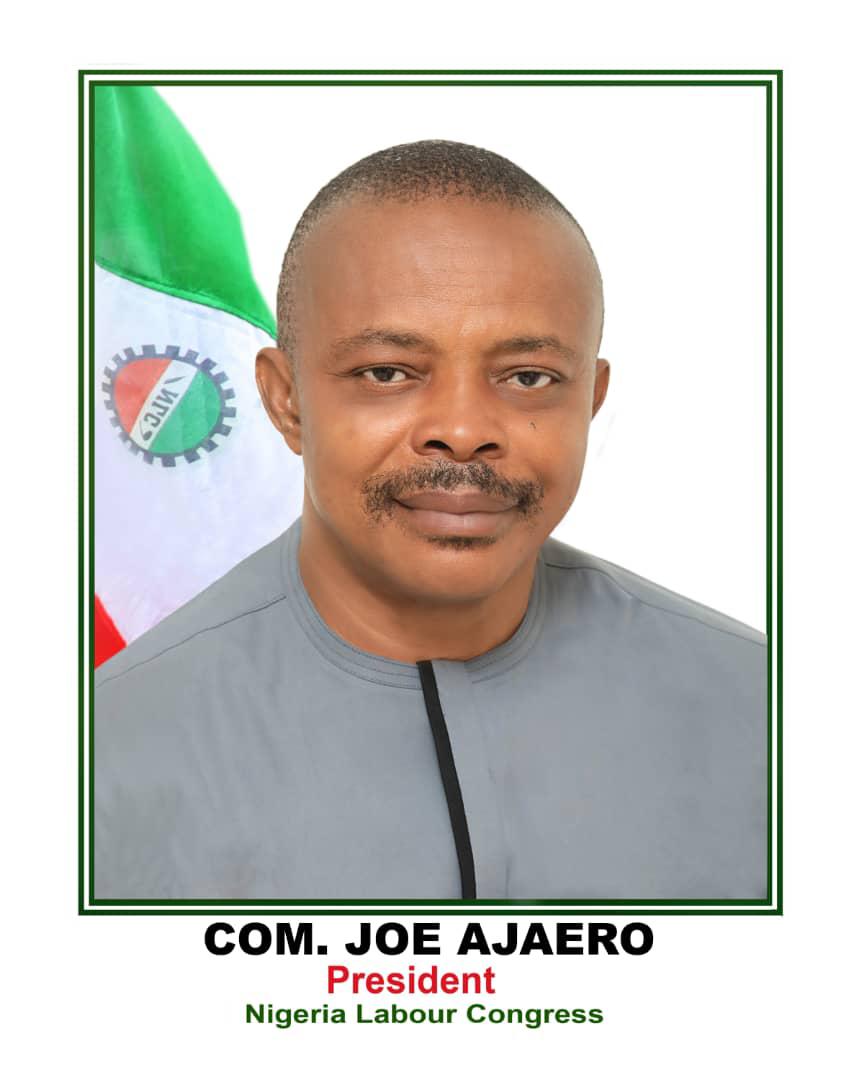
The President of the Nigeria Labour Congress (NLC), Comrade Joe Ajaero, has called for the simultaneous negotiation of minimum wage and minimum pension, saying it is wrong for government and organised labour to focus on workers’ wages without addressing the welfare of retirees.
Ajaero made the call while speaking at the National Pre-Retirement Summit, held at Shehu Musa Yaradua centre in Abuja where he raised concerns over the declining purchasing power of retirement savings and pensions as a result of inflation and other economic challenges.
According to the NLC President, the experience of retirees over the years has demonstrated the need for workers and policymakers to consider what happens to employees after they leave active service.
Ajaero said the depreciation of the value of money means that savings made during a worker’s active years could lose significant purchasing power by the time the worker retires.
He explained that a worker who saves ₦1 million at a particular period could find that the real value of the savings has substantially declined over time because of inflation and the rising cost of living.
“It is wrong for us to start negotiating minimum wage without negotiating minimum pension,” Ajaero said, stressing that retirement benefits must be treated as an important component of workers’ welfare.
The NLC President said the objective of the summit was to examine ways of protecting workers from falling into poverty after retirement, particularly by ensuring that pension contributions and retirement savings are effectively managed.
Ajaero said pension fund administrators and other stakeholders in the pension industry must ensure that workers’ contributions are preserved and managed in a manner that protects their value against economic depreciation.
He said the challenge facing retirees goes beyond the amount accumulated in their pension accounts, arguing that the real value of such funds must also be considered in the face of inflation and increasing living costs.
According to him, the purpose of the discussion should be to develop mechanisms that would enable workers to enjoy a reasonable standard of living after retirement instead of becoming financially vulnerable when they leave active service.
Ajaero also questioned the adequacy of the existing provision allowing retirees to make a 25 per cent withdrawal from their retirement savings, saying such an amount may not provide sufficient financial support for retirees facing the realities of life after employment.
The NLC President called for consideration of mechanisms that would allow retirement contributions to serve as collateral for accessing funds, particularly for retirees who want to establish or manage businesses.
He argued that allowing workers to leverage their retirement savings as collateral could provide them with access to capital while preserving the broader objective of retirement security.
Ajaero said retirees who have acquired skills and experience during their years of service should be supported to use those skills to remain economically active after retirement rather than being left without adequate means of livelihood.
The labour leader also linked the removal of fuel subsidy to the declining purchasing power of pensioners, saying rising transportation and living costs can make existing pension payments inadequate.
Ajaero explained that a pensioner receiving ₦30,000, for instance, could face serious difficulties meeting basic transportation and other expenses when the cost of fuel and other essential commodities rises.
According to him, pension policy must therefore take inflation into account so that pension benefits do not lose their purchasing power as the cost of living increases.
He called for pension investments and benefits to be reviewed in line with prevailing inflationary trends, arguing that the value of retirement income should be protected against sustained increases in prices.
Ajaero further urged the National Pension Commission (PenCom), pension fund administrators and other policymakers to establish stronger channels of communication with workers and contributors.
He said workers who make regular contributions to pension schemes should have opportunities to interact directly with regulators and policymakers so that their experiences and concerns can influence decisions affecting the pension system.
The NLC President said such interaction would enable policymakers to better understand the challenges faced by contributors and retirees, particularly those struggling with the effects of inflation and the rising cost of living.
Ajaero said the labour movement would continue to advocate policies that protect workers not only during their active years but also after retirement, stressing that retirement security should remain an integral part of labour negotiations.
He said the discussions at the National Pre-Retirement Summit were therefore aimed at finding practical solutions to the challenges confronting workers and retirees and preventing poverty in old age.
The NLC President maintained that a comprehensive approach to workers’ welfare must cover both minimum wage during active employment and adequate pension after retirement, saying the two issues should not be treated separately.
News
Prof Yusuf Adamu Delivers BUK’s 63rd Professorial Inaugural Lecture, Reflects on Medical Geography and Academic Legacy

By Abbas Yushau Yusuf
Professor Yusuf Adamu, a scholar of Medical Geography at Bayero University Kano (BUK), has delivered the university’s 63rd Professorial Inaugural Lecture, reflecting on his academic journey, research, mentorship and contributions to the development of health and medical geography.
Professor Adamu delivered the lecture under the theme, “Putting Health and Disease in Place: My Story and Legacy,” where he traced the evolution of his interest in geography, his transition into medical geography and the research contributions of his students and collaborators.
Speaking during the lecture, Professor Adamu described medical geography as a sub-discipline of geography concerned with understanding the spatial dimensions of health, disease and healthcare, noting that scholars in the field are sometimes known by different professional descriptions.
According to him, human beings should be regarded as citizens of the world from the perspective of physical and natural processes because health and disease are influenced by the environments in which people live.
Professor Adamu said BUK has emerged as an important centre for the study and development of Medical Geography, attributing the progress to sustained research, teaching, mentorship and collaboration among scholars and students.
Reflecting on his childhood and early intellectual development, the professor said his earliest geographical thoughts were connected to ideas about heaven and earth, before his interest gradually expanded to physical geography and the natural environment.
He said he remained fascinated by physical geographical features, including landforms, rivers and valleys, which later contributed to the development of his broader interest in the relationship between people, places and health.
Professor Adamu also recalled that his father worked with the World Health Organisation (WHO) between 1967 and 1970, saying his early exposure to health-related issues contributed to the intellectual environment that shaped his later academic interests.
The professor said his academic journey also took him to Ibadan, where he produced his first research paper on Dakin Duhu, or “The Dark Room,” while his Master’s research focused on eclampsia, a serious pregnancy-related medical condition.
Speaking on his research into maternal health, Professor Adamu explained that maternal morbidity and mortality should not be treated as fixed phenomena because their patterns can change across time and locations.
He cited data from his research to illustrate fluctuations in maternal health indicators, noting that figures recorded in 1992 were different from those recorded in 1993, demonstrating the importance of examining health conditions spatially and over time.
According to him, his research also examined the differences between urban and rural health challenges, including issues surrounding eclampsia and anaemia epidemics.
Professor Adamu argued that health geography must move beyond a narrow concentration on hospitals and healthcare facilities to examine the wider social, environmental and economic factors that influence people’s health.
He said gender analysis should also form an important part of health geography, while challenging researchers to examine how social and spatial conditions affect men and women differently.
On his role as an academic mentor, Professor Adamu disclosed that he had supervised more than 200 undergraduate students during his career and had also supervised seventeen PhD students between 2010 and 2026.
He said some of his doctoral students had expanded their research beyond conventional health geography, working on subjects including depression and anxiety, medical tourism and other emerging areas of health research.
Professor Adamu said his philosophy of mentorship was centred on producing competent medical geographers who could eventually conduct independent research and mentor others.
He described himself as a demanding supervisor, saying his students were aware of his high expectations, but added that he also gave them choices, made himself available to them and provided access to his office at virtually all times when they needed academic guidance.
The professor said he also referred students to experts in specialised areas whenever such external expertise was necessary, adding that compassion remained an important part of his relationship with students.
Professor Adamu paid tribute to the late Zainab Bello, one of his students who worked on low vision, describing her contribution as part of the academic legacy of the students he had mentored.
He said his collaborative research network had continued to grow, adding that he had worked with 16 students on published research papers as part of his effort to expose young scholars to collaborative academic research.
According to him, the ultimate measure of mentorship is not simply the number of students supervised but the quality of work produced by those students and their ability to become independent researchers and mentors themselves.
Professor Adamu said many of his former students had now begun producing independent research, with some focusing on diseases such as malaria and meningitis.
He described the work as part of a sustained research tradition, stressing the importance of building academic capacity that would continue beyond the careers of individual scholars.
The professor also spoke about the development of a school of Medical Geography in Kano, describing it as part of the continuing institutionalisation and expansion of health and medical geography research in the North.
Looking into the future, Professor Adamu outlined the vision and prospects of health and medical geography, saying the discipline has an important role to play in identifying health problems and understanding their geographical distribution.
He noted that marginalised communities should not be regarded as simply missing from health statistics, but should be deliberately identified and studied to understand the factors responsible for their exclusion from healthcare and other social services.
Professor Adamu highlighted the practical value of medical geography, including the identification of disease hotspots, analysis of access to obstetric care, modelling and the use of empirical studies to support better understanding of health challenges.
He called on medical geographers to intensify their research and ensure that their findings contribute to solving real-world health problems.
The professor said the fight against disease had not yet been won, but maintained that researchers and policymakers were now better equipped to locate disease patterns, understand their causes and develop approaches capable of addressing them.
In his welcome address, the Vice-Chancellor of Bayero University Kano, Professor Haruna Musa, described Professor Adamu as a scholar who had spent more than three decades teaching, researching and contributing to the development of the university.
Professor Musa said the inaugural lecture provided an opportunity for Professor Adamu to showcase his intellectual journey and contributions to academia, adding that the professor was not only an academic but also a poet and novelist.
The Vice-Chancellor called on other professors who had not yet delivered their inaugural lectures to take advantage of the opportunity, saying the university was working to revive its culture of professorial and academic lecture series.
According to Professor Musa, the university would continue to organise lectures and other intellectual programmes that would provide opportunities for academics to share their knowledge and research with the wider university community.
Also speaking, the Dean of the Faculty of Earth and Environmental Sciences, Professor Abdulaziz Raji, described Professor Yusuf Adamu as a distinguished scholar whose academic career had made significant contributions to the university and the field of Medical Geography.
Professor Raji said Professor Adamu was born in March 1968 in Katsina and progressed through his academic career before attaining the rank of professor in 2010.
He said Professor Adamu’s academic development was strengthened by his international scholarship at the University of Alabama in the United States, where he studied from 2001 to 2003 under a Fulbright scholarship programme.
Professor Raji said the professor’s academic and mentorship contributions had helped produce a large body of scholarly work, with his students and collaborators contributing to more than 230 publications.
He added that Professor Adamu himself had produced more than 135 publications, including over 40 works written in Hausa, demonstrating his contribution to both international scholarship and scholarship accessible to local audiences.
The dean said Professor Adamu’s body of work reflected a career that combined teaching, research, mentorship, international collaboration and engagement with issues affecting communities.
The inaugural lecture therefore provided an opportunity for the university community, academics, students and invited guests to reflect on the evolution of Medical Geography at BUK and Professor Adamu’s contribution to the discipline.
Professor Adamu’s lecture also underscored the importance of continuing research into the geographical dimensions of disease, healthcare access and the social and environmental factors that shape health outcomes.

At MAN AGM In Kano, Manufacturers Throng Dangote Pavilion Over ‘Peoples IPO’

NLC President Ajaero: It Is Wrong to Negotiate Minimum Wage Without Minimum Pension

Prof Yusuf Adamu Delivers BUK’s 63rd Professorial Inaugural Lecture, Reflects on Medical Geography and Academic Legacy

Court Orders Fresh PDP Primary in Gombe Over Pantami’s Candidacy

JUST IN: EFCC Re-declares Abdulrasheed Maina Wanted over Alleged Receipt of Stolen Property

Zamfara Varsity ASUU Threatens Warning Strike Over FG-ASUU Agreement, Promotion Arrears

Bello Sharada: A Great Writer, A Bookish Soul, Gone Too Soon

NUT Launches ‘Go Public’ Campaign to Promote Public Education in Nigeria

Kano Chemists Threaten Warning Strike Over Alleged PCN Pressure

Per Ishaq Samaila: “Waziri” for Strategy. “Mai Jama’a” for Service. One Man. One Mission. Ibrahim Kabir Masari
At MAN AGM In Kano, Manufacturers Throng Dangote Pavilion Over ‘Peoples IPO’
NLC President Ajaero: It Is Wrong to Negotiate Minimum Wage Without Minimum Pension
Prof Yusuf Adamu Delivers BUK’s 63rd Professorial Inaugural Lecture, Reflects on Medical Geography and Academic Legacy
Court Orders Fresh PDP Primary in Gombe Over Pantami’s Candidacy
JUST IN: EFCC Re-declares Abdulrasheed Maina Wanted over Alleged Receipt of Stolen Property
Zamfara Varsity ASUU Threatens Warning Strike Over FG-ASUU Agreement, Promotion Arrears
Bello Sharada: A Great Writer, A Bookish Soul, Gone Too Soon
NUT Launches ‘Go Public’ Campaign to Promote Public Education in Nigeria
Kano Chemists Threaten Warning Strike Over Alleged PCN Pressure
Per Ishaq Samaila: “Waziri” for Strategy. “Mai Jama’a” for Service. One Man. One Mission. Ibrahim Kabir Masari
-

 Opinion5 years ago
On The Kano Flyovers And Public Perception
-

 Features5 years ago
How I Became A Multimillionaire In Nigeria – Hadiza Gabon
-

 Opinion6 years ago
Kano As future Headquarters Of Poverty In Nigeria
-

 History5 years ago
Sheikh Adam Abdullahi Al-Ilory (1917-1992):Nigeria’s Islamic Scholar Who Wrote Over 100 Books And Journals
-

 Opinion5 years ago
My First Encounter with Nasiru Gawuna, the Humble Deputy Governor
-

 History5 years ago
The History Of Borno State Governor Professor Babagana Umara Zulum
-

 History5 years ago
The Origin Of “Mammy Market” In Army Barracks (Mammy Ochefu)
-

 News4 years ago
Federal University Of Technology Babura To Commence Academic Activities September