
News
Radiographers Kick Against Controversial Health Bills, Demand Immediate Withdrawal
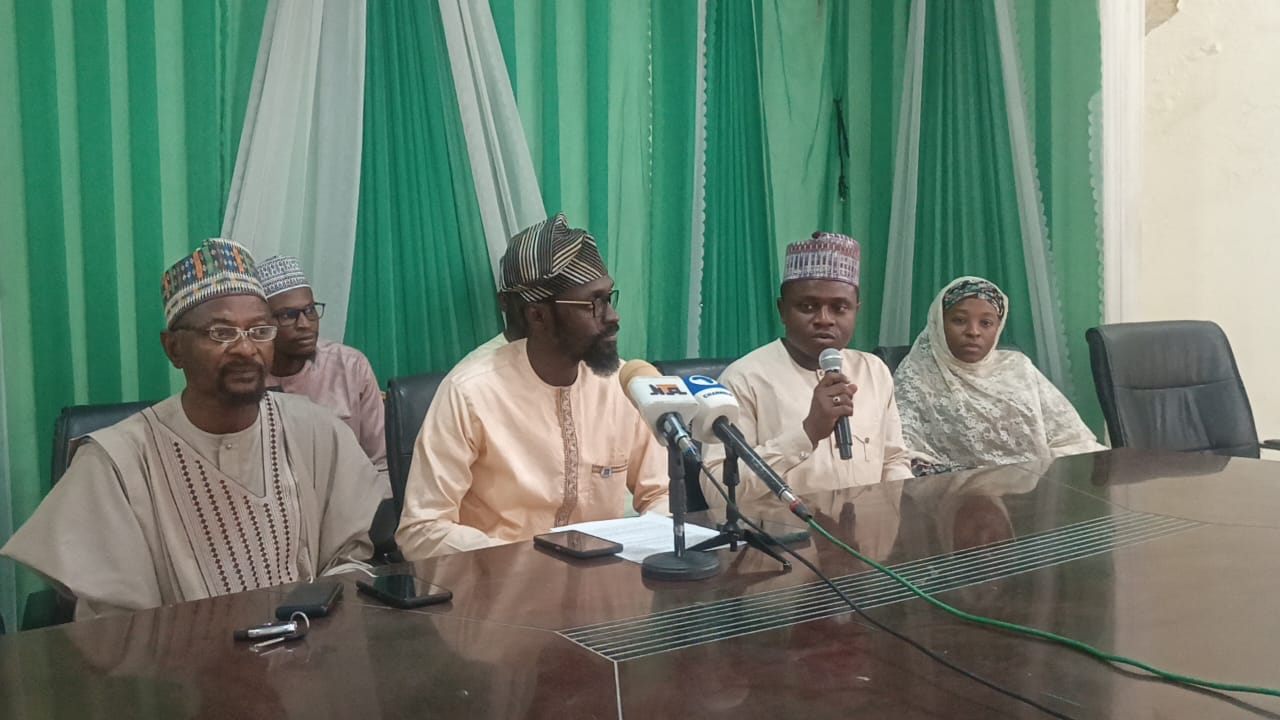
The Association of Radiographers of Nigeria (ARN) has strongly opposed the proposed Dental Practitioners Act (Repeal and Re-enactment) Bill, 2026 (HB 2695), warning that its passage could destabilise Nigeria’s healthcare system and undermine the professional autonomy of radiographers.
The position was made known by the National President of the association, Musa Y. Dambele PhD, during a press briefing held at the Nigeria Union of Journalists Secretariat in Kano on Saturday.
Addressing journalists, Dambele described the bill as a “calculated and existential threat” to radiography practice in Nigeria, alleging that it is designed to transfer regulatory authority from the Radiographers Registration Board of Nigeria to the Medical and Dental Council of Nigeria.
Dambele highlighted Section 8(1) of the proposed bill, which contains a “notwithstanding clause” granting the MDCN overriding authority over other regulatory bodies.
According to him, the provision directly conflicts with the Radiographers (Registration, etc.) Act, Cap R1, LFN 2004, effectively stripping the RRBN of its statutory mandate.
“The clause is designed to create jurisdictional supremacy and dismantle the existing regulatory structure governing radiography in Nigeria,” he stated.
The ARN President also faulted Section 47 of the bill, which defines radiology as encompassing all aspects of diagnostic imaging.
He argued that such classification amounts to a deliberate attempt to subsume radiography under medicine, stressing that radiography is a distinct scientific discipline involving imaging technology, radiation physics, and patient safety.
He warned that the provision could lead to the “legal erasure” of radiography as an independent profession and place practitioners under the control of a council lacking relevant expertise.
Dambele further raised concerns over Section 8(1)(k), which empowers the MDCN to regulate the use of ultrasound, laser systems, and radiofrequency-based devices.
He maintained that these technologies are core components of radiographic practice and are not exclusive to any single profession.
He cautioned that restricting access to such tools could create workforce shortages, limit specialised services, and reduce patients’ access to essential diagnostic and therapeutic procedures.
On disciplinary matters, the ARN President criticised Sections 30 to 32 of the bill, which propose tribunals composed entirely of medical and dental practitioners to adjudicate cases involving all registered health professionals.
He argued that this arrangement violates the constitutional right to fair hearing, noting that professionals cannot be judged impartially by competing disciplines.
Dambele also opposed Section 18(3), which mandates that a significant percentage of professional fees be shared with external bodies, including the Nigerian Medical Association.
He described the provision as “financial exploitation” and a form of regulatory overreach.
The ARN President further alleged that the proposed legislation, alongside HB 2699, represents a coordinated attempt to weaken radiography through what he described as a “pincer movement.”
According to him, while HB 2695 seeks to erode internal regulatory control, HB 2699 aims to impose external constraints that could cripple the profession.
Dambele expressed concern over provisions that expand the powers of the Minister of Health to influence the composition and leadership of regulatory boards, warning that such measures could politicise professional regulation.
He also criticised attempts to dilute the authority of the RRBN in appointing its Registrar, describing it as an erosion of institutional independence.
Furthermore, he opposed the inclusion of loosely defined “community interest” representatives in regulatory boards, arguing that healthcare regulation should remain technical, evidence-based, and competence-driven.
Citing global best practices, Dambele noted that in countries such as the United Kingdom, Canada, and Australia, healthcare professions are regulated independently to ensure accountability and professional competence.
He warned that adopting contrary measures in Nigeria could set a dangerous precedent, trigger inter-professional conflicts, and weaken healthcare delivery systems.
The ARN, he added, aligns with other health sector stakeholders, including the Joint Health Sector Unions, as well as professional bodies in medical laboratory science and physiotherapy, in opposing the bill.
Dambele said the association is calling on the National Assembly to:
Reject the bill in its current form
Uphold the principle of professional self-regulation
Remove provisions enabling external control and dominance
Retain the statutory powers of the RRBN, particularly in appointing its Registrar
Convene a stakeholders’ summit to develop a harmonised regulatory framework in line with international standards
The ARN President emphasised that radiographers play a critical role in delivering diagnostic and therapeutic services, including X-rays, ultrasound, CT scans, MRI, radiotherapy, and nuclear medicine.
He warned that any attempt to centralise control under a single profession could compromise patient safety and reduce the quality of healthcare delivery.
Dambele reiterated the association’s commitment to defending the integrity of the profession and called on Nigerians to support efforts aimed at preserving a balanced and effective healthcare system.










News
Report: Nigeria Records N166trn Public Debt
By Yusuf Danjuma Yunusa
The Debt Management Office (DMO) says Nigeria’s total public debt rose to N166.79 trillion as of June 30, 2026.
The DMO published the latest public debt portfolio report on Friday.
The figure represents a 9.4 percent or N14.39 trillion increase from the N152.4 trillion recorded at the end of June 2025.
It also represents an increase of N7.44 trillion or 4.7 percent compared with the N159.35 trillion recorded at the end of the first quarter (Q1) of 2026.
According to the latest report, the debt stock comprises N91.59 trillion in domestic debt, which accounts for 54.91 percent of the total debt stock, and N75.2 trillion in external debt, representing 45.09 percent.
The debt office said domestic debt increased by N11.04 trillion (13.7 percent) from N80.55 trillion recorded in June 2025.
The office said external debt also rose by N3.35 trillion (4.7 percent) from N71.85 trillion in the same period.
According to the DMO, the federal government accounted for N152.77 trillion of the total debt stock, comprising N86.99 trillion in domestic debt and N65.77 trillion in external debt.
On the other hand, states and the Federal Capital Territory (FCT) accounted for the remaining N14.01 trillion — N4.59 trillion in domestic debt and N9.42 trillion in external debt.
In dollar terms, the agency said Nigeria’s total public debt stood at $120.93 billion as of June 30, 2026 — up from $99.66 billion recorded in June 2025.
The DMO said the Central Bank of Nigeria (CBN) official exchange rate of N1,379 per dollar as of June 30 was used to convert the external debt to naira.
News
NNPC Ltd Welcomes $800m Ima Gas Final Investment Decision
The Nigerian National Petroleum Company Limited (NNPC Ltd) has welcomed the $800 million Final Investment Decision (FID) on the Ima Gas Project, describing it as a landmark development that affirms the growing viability of Nigeria’s upstream gas sector.
The project, located offshore in OMLs 112 and 117 and developed by AMNI International in partnership with TotalEnergies, will produce about 300 million standard cubic feet of gas per day at peak. The output will supply critical feedgas to Nigeria LNG Limited in support of its Train 7 expansion, which will increase capacity at the Bonny Island plant from 22 million tons per annum to 30 Mtpa.
The FID was enabled by the Presidential Directives of 2024, which provided fiscal incentives for non-associated gas, streamlined contracting and lowered development costs. Ima is the fourth major gas project to reach FID under President Bola Ahmed Tinubu, after Iseni, Ubeta and HI.
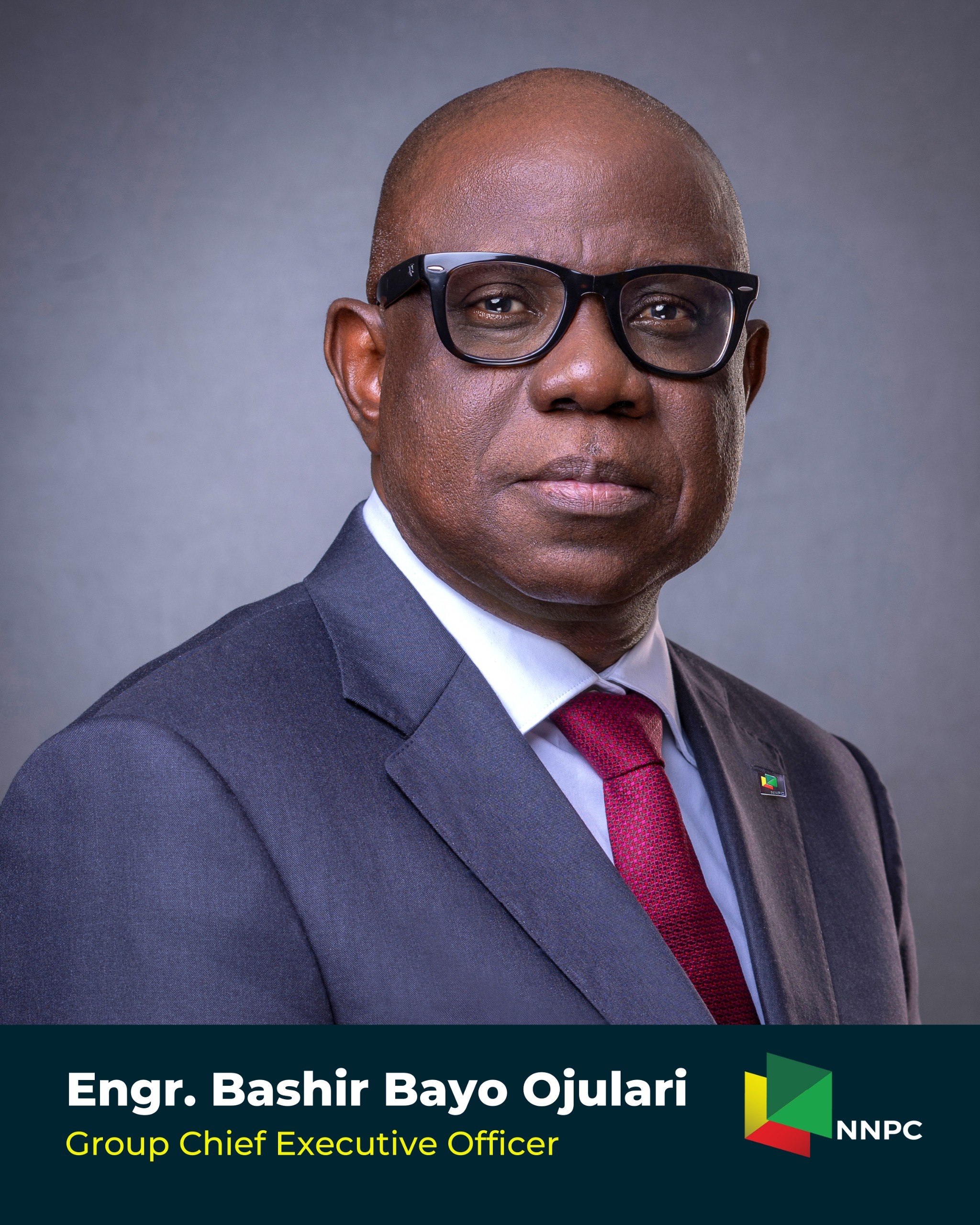
Group Chief Executive Officer, NNPC Ltd., Engr. Bashir Bayo Ojulari described it as “a decisive vote of confidence in Nigeria’s gas sector and in the bold reforms” that have created competitive terms and a predictable investment environment.
NNPC Ltd. also commends the collaboration between AMNI, TotalEnergies and the Nigerian financial sector, saying the model of indigenous operator, international partner and domestic capital is a template for future developments.
In a statement signed by Andy Odeh Chief corporate communications officer of NNPC Ltd. reaffirms its commitment to work with government, regulators and industry partners to sustain investment momentum and deploy Nigeria’s gas resources for industrialisation, job creation and long-term prosperity.
News
At MAN AGM In Kano, Manufacturers Throng Dangote Pavilion Over ‘Peoples IPO’
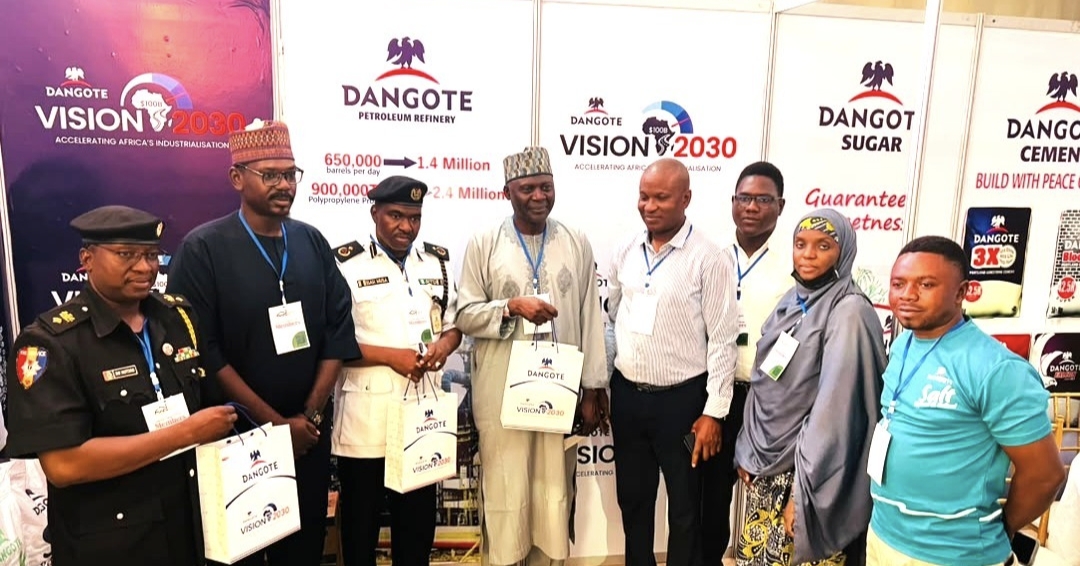
Manufacturers under the aegis of the Manufacturers Association of Nigeria (MAN) thronged the Dangote Group’s pavilion at the exhibition to seek information and clarification on the ongoing Public Initial Public Offering (IPO) of the Dangote Petroleum Refinery and Petrochemicals (DPRP).
The three-day Annual General Meeting (AGM) of the Kano-Jigawa Branch of the Manufacturers Association of Nigeria (MAN), the 54th in the series, ended on Thursday, with the Dangote Group’s representative hosting participants and engaging manufacturers who expressed keen interest in the ongoing Initial Public Offering (IPO) of the Dangote Refinery.
The Dangote Refinery Peoples’ IPO offers Nigerians and other eligible investors an opportunity to buy shares in the Dangote Petroleum Refinery and Petrochemicals, thereby becoming part-owners of one of Africa’s largest industrial projects and participating in its future growth.
The Dangote Refinery IPO runs from 14 September to 13 October 2026.
Dangote Industries Limited is one of the sponsors of the 54th MAN AGM.
Earlier, in his opening remarks, the Chairman of the Manufacturers Association of Nigeria (MAN), Sharada/Challawa Branch, Alhaji Nura S. Madugu, highlighted the mounting burden of multiple taxes, levies and charges on manufacturers, warning that the situation is increasing the cost of doing business and undermining the competitiveness of local industries.
Madugu urged the Kano State and Federal Governments to ease the tax burden on manufacturers and accelerate efforts to harmonise taxes and levies imposed on businesses.
He particularly decried the practice of double and multiple taxation, which he said continued to place additional financial pressure on manufacturers already grappling with high energy costs, inadequate infrastructure, expensive financing, insecurity, foreign exchange challenges and unfair competition from imported goods.
“We are especially concerned about instances of double and even multiple taxation, where the three tiers of government impose what is essentially the same levy under different names and different guises. This practice places our products at a serious disadvantage in their constant competition with imported goods, a disadvantage made worse by the high cost of alternative power supply and the volatility of the foreign exchange rate.
Madugu reminded the meeting of MAN’s enormous contribution to the society and provide employment to thousands of Nigerians, as well as participating actively in tax revenue generation for the country.
“We provide employment to thousands of Nigerians. We participate actively in tax revenue generation for the states and the federation through the deduction of Value Added Tax on our products, the remittance of Pay-As-You-Earn on behalf of our staff, and the payment of Withholding Tax, Education Tax, Tertiary Education Tax, Company Income Tax, and a whole host of other levies too numerous to mention individually. Beyond taxation, we also discharge our Corporate Social Responsibility diligently to the communities in which we operate.
“Even though what we receive in return remains modest, we continue, in strength and in good faith, to serve this nation and to hold up its economy. We do this because we believe in Nigeria and in Kano State. But it must be said plainly,” Madugu added.
In his remarks also, MAN Chairman, Bompai/Jigawa Branch, Mohammed Bello I. Umar, appreciated the association’s members for their resilience, commitment and continued investment in the Nigerian economy despite the difficult operating environment.
He pointed out that the meeting provides the members of the association with an opportunity to reflect on its activities, review the challenges confronting their businesses, acknowledge the progress they have made, and chart a stronger course for the future of manufacturing in the country.
However, he said, the members must acknowledge that manufacturing remains under serious pressure.
He highlighted that the high cost of energy, multiple taxes and levies, inadequate infrastructure, high financing costs, insecurity, foreign exchange challenges and unfair competition from imported goods continue to affect our competitiveness.
“One issue that requires our collective attention is the importation of contraband and substandard goods. These products undermine local manufacturers who invest heavily
“Reliable and affordable electricity remains one of the most important requirements for industrial development.
He however welcomed the ongoing electricity reforms and efforts by the Kano State Government and the State House of Assembly towards establishing a more effective electricity framework for the State.
He called for the swift implementation of reforms that will create a more reliable, competitive and affordable electricity market for industries.
He noted that manufacturers continue to provide employment, generate wealth, support local communities and contribute significantly to government revenue in production, employ Nigerians and comply with government regulations.
“We must therefore stand together and call for stronger enforcement at our borders and markets.
He urged the relevant government agencies to intensify the fight against smuggling, counterfeiting and the importation of goods that compete unfairly with locally

Report: Nigeria Records N166trn Public Debt

NNPC Ltd Welcomes $800m Ima Gas Final Investment Decision

At MAN AGM In Kano, Manufacturers Throng Dangote Pavilion Over ‘Peoples IPO’

NLC President Ajaero: It Is Wrong to Negotiate Minimum Wage Without Minimum Pension

Prof Yusuf Adamu Delivers BUK’s 63rd Professorial Inaugural Lecture, Reflects on Medical Geography and Academic Legacy

Zamfara Varsity ASUU Threatens Warning Strike Over FG-ASUU Agreement, Promotion Arrears

Bello Sharada: A Great Writer, A Bookish Soul, Gone Too Soon

Kano Chemists Threaten Warning Strike Over Alleged PCN Pressure

Per Ishaq Samaila: “Waziri” for Strategy. “Mai Jama’a” for Service. One Man. One Mission. Ibrahim Kabir Masari

Court Ultimatum Forces FBI to Hand Over Tinubu’s Fraud Records to Judge—But Keeps Them Hidden from Public
Report: Nigeria Records N166trn Public Debt
NNPC Ltd Welcomes $800m Ima Gas Final Investment Decision
At MAN AGM In Kano, Manufacturers Throng Dangote Pavilion Over ‘Peoples IPO’
NLC President Ajaero: It Is Wrong to Negotiate Minimum Wage Without Minimum Pension
Prof Yusuf Adamu Delivers BUK’s 63rd Professorial Inaugural Lecture, Reflects on Medical Geography and Academic Legacy
Zamfara Varsity ASUU Threatens Warning Strike Over FG-ASUU Agreement, Promotion Arrears
Bello Sharada: A Great Writer, A Bookish Soul, Gone Too Soon
Kano Chemists Threaten Warning Strike Over Alleged PCN Pressure
Per Ishaq Samaila: “Waziri” for Strategy. “Mai Jama’a” for Service. One Man. One Mission. Ibrahim Kabir Masari
Court Ultimatum Forces FBI to Hand Over Tinubu’s Fraud Records to Judge—But Keeps Them Hidden from Public
-

 Opinion5 years ago
On The Kano Flyovers And Public Perception
-

 Features5 years ago
How I Became A Multimillionaire In Nigeria – Hadiza Gabon
-

 Opinion6 years ago
Kano As future Headquarters Of Poverty In Nigeria
-

 History5 years ago
Sheikh Adam Abdullahi Al-Ilory (1917-1992):Nigeria’s Islamic Scholar Who Wrote Over 100 Books And Journals
-

 Opinion5 years ago
My First Encounter with Nasiru Gawuna, the Humble Deputy Governor
-

 History5 years ago
The History Of Borno State Governor Professor Babagana Umara Zulum
-

 History5 years ago
The Origin Of “Mammy Market” In Army Barracks (Mammy Ochefu)
-

 News4 years ago
Federal University Of Technology Babura To Commence Academic Activities September