
News
Fuel Hike Dampens Eid Spirit in Mararaba
By Yusuf Danjuma Yunusa
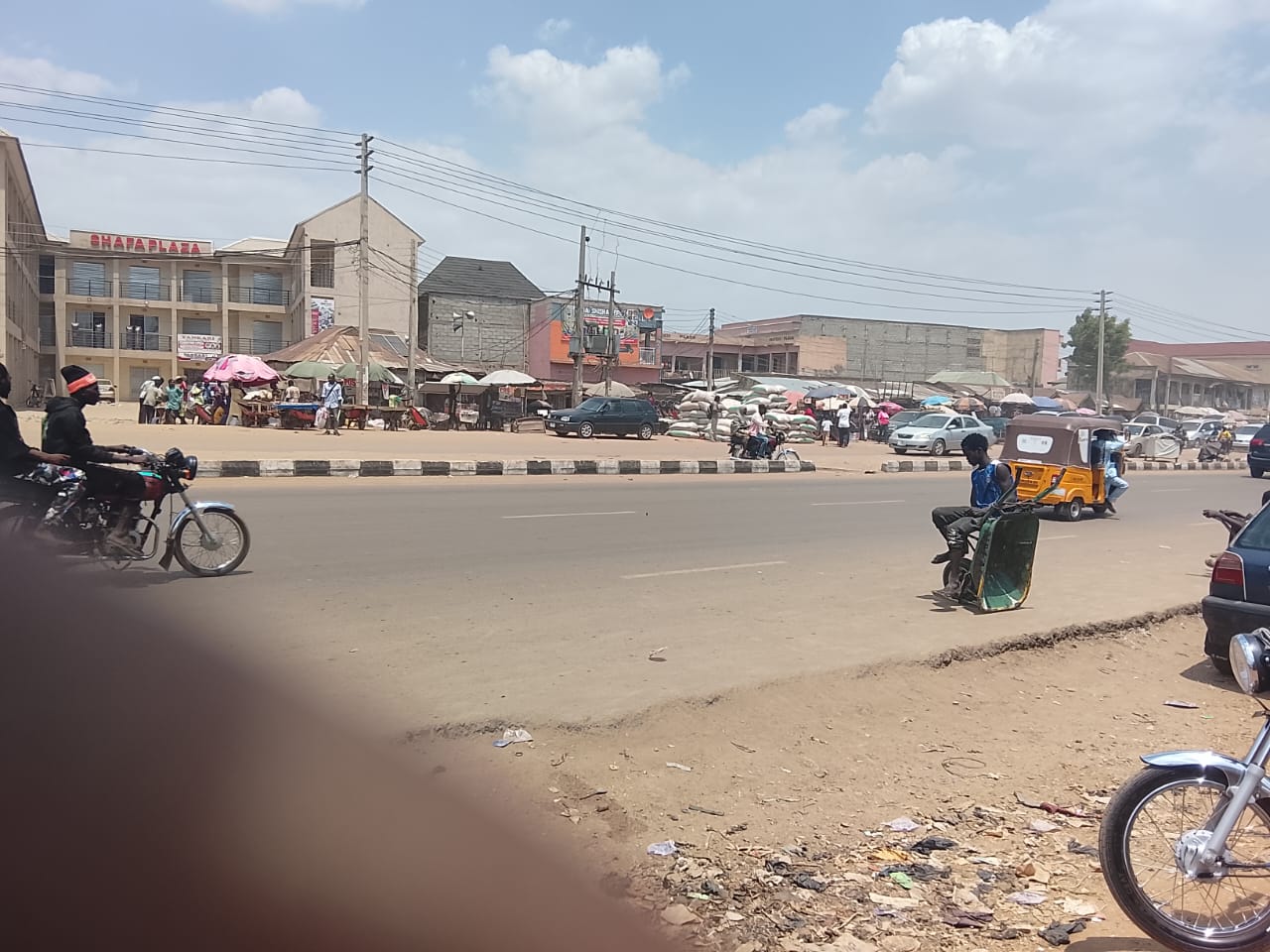
In the bustling heart of Mararaba, a satellite town known for its relentless energy, the usual pre-festival buzz is unusually subdued. With just days to go until Eid-el-Fitr, the air is thick not only with dust from the busy streets but also with a palpable sense of anxiety. The holy month of Ramadan, already a period of sacrifice for many Muslims struggling with the country’s economic hardship, has been made even more challenging by a recent and significant hike in fuel prices. The celebration that marks the end of fasting—a time for joy, new clothes, and communal feasting—now looms as a day of difficult choices for many residents.
On a street lined with small shops and busy pedestrians, our correspondent spoke to five Muslim residents to understand how they plan to navigate this celebration amidst mounting hardship.
For Aliyu Mohammed, a taxi driver, the fuel hike has directly slashed his earnings, forcing him to redraw his Eid budget entirely.
“Before now, it was tough, but we were managing,” Mohammed said, leaning against the bonnet of his taxi. “But this fuel price increase has finished our little remaining strength. I spend almost everything I make on fuel, leaving nothing for my family. For Eid, I had hoped to buy new clothes for my three children, but now I will be lucky if we can afford a good meal of rice and chicken. The celebration will be just in prayers. The joy is gone from it.”
A few meters away, Aisha Garba, a mother of four and food vendor, expressed her worries about the rising cost of food items. Her small business, which usually thrives in the week leading up to Eid, is struggling.
“People are not buying food like they used to,” she explained, stirring a large pot of stew. “The money they have is for transport to their villages or for small essentials. For my own family, Eid will be very simple. I planned to prepare traditional dishes like Masa and Taushe, but the price of rice, oil, and even sugar has gone up since the fuel hike. Everything is transported by road, so prices must rise. We will cook what we can afford and be grateful to Allah for seeing us through Ramadan. There will be no new furniture or special treats for the children.”
For young men like Ibrahim Sani, the prospect of Eid is a painful reminder of his circumstances. He spends his days helping out at a friend’s phone-charging kiosk.
“Eid is supposed to be a reward after a month of patience,” Sani said, his voice low. “But what reward is there when you can’t even afford henna for your hands or a new pair of slippers? I cannot travel to see my family in Kano because transport fares have doubled. I will attend the Eid prayer at the central mosque and then probably spend the rest of the day here in Mararaba. The feeling is one of deep sadness. We are being squeezed from all sides.”
The hike has also affected community dynamics. Malam Yusuf Idris, a tailor, has seen a sharp decline in customers bringing fabric for Eid outfits. His shop, once a hub of activity, is quiet.
“This is usually my busiest time of the year,” Idris said, his measuring tape hanging idly around his neck. “But this year, people come, they ask for the price, and they leave. They can no longer afford to sew new clothes. I have also had to increase my prices because thread and other materials cost more now due to transport. It is a cycle. I fear many children in this neighborhood will go to the prayer ground in old clothes on Eid day. We will still celebrate, but the spirit is broken by this hardship.”
Yet, amidst the despair, there is a resilient focus on the spiritual core of the festival. Hajiya Fatima Abdullahi, a grandmother and respected elder in the community, embodies this quiet fortitude.
“The essence of Eid is not in new clothes or lavish food,” she said, sitting on a mat in front of her home. “Yes, the hardship is great. The fuel price has made everything more difficult for my children and neighbors. But we are Muslims. We have spent the last 30 days learning patience and gratitude. We will give our Zakat-ul-Fitr (obligatory charity) so that even the poorest can join in the celebration. On that day, we will put on our best clean clothes, even if they are old. We will go to the mosque to thank Allah for giving us the strength to fast. The celebration is in our hearts and in our prayers. We will not let hardship steal our faith.”
As the sun sets over Mararaba, the stories from the street paint a clear picture. The Eid-el-Fitr celebration this year will go ahead, but it will be a more somber, introspective affair. The double blow of persistent hardship and a fresh fuel hike has forced families to strip the festival down to its bare essentials: prayer, charity, and quiet gratitude for survival—leaving the traditional trappings of joy as an unaffordable luxury for many.

















News
FRAMAZAZ Foundation, Brigade Zumunci Train 50 Youths in Digital Entrepreneurship
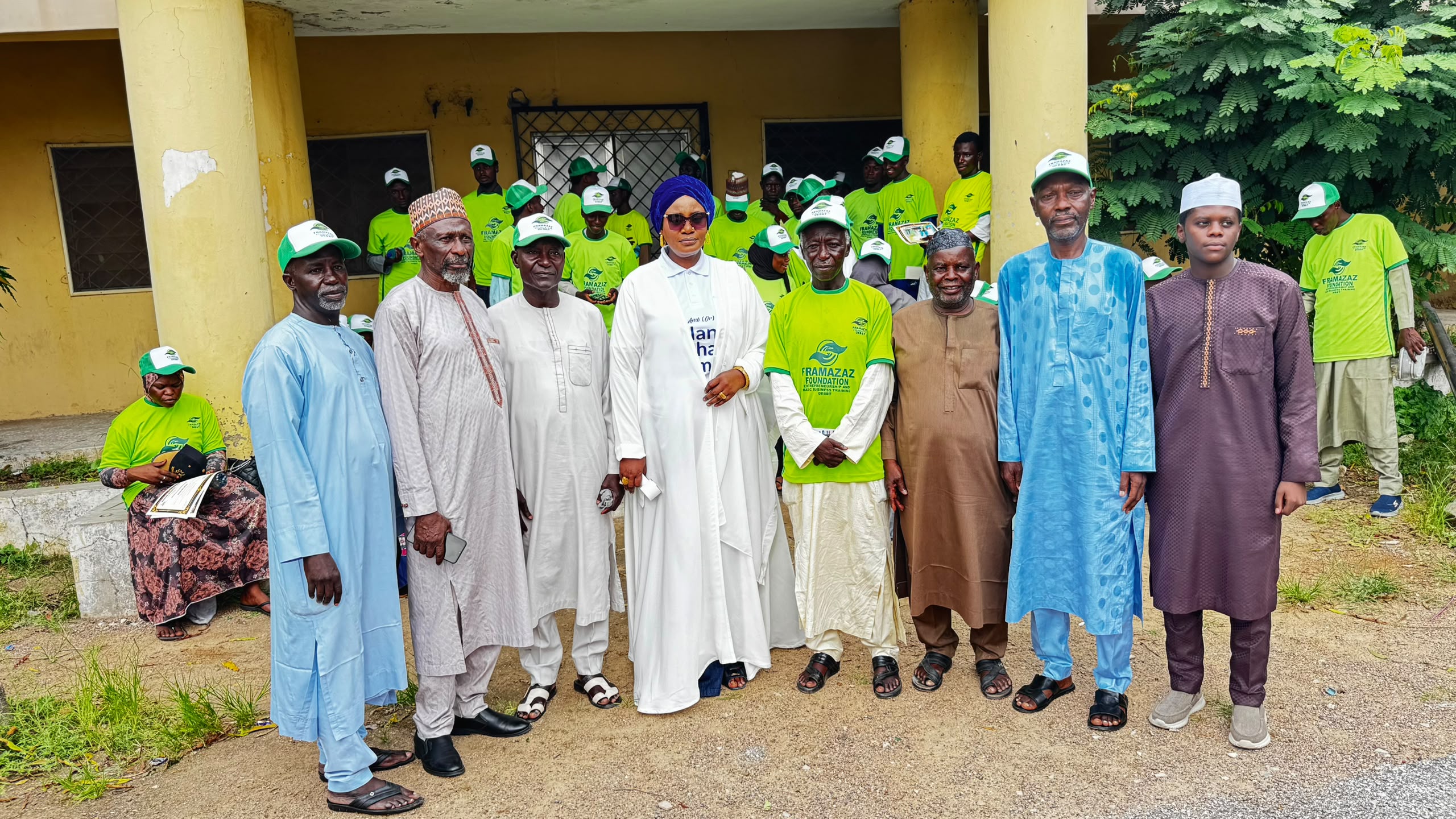
Fifty youths have been trained in digital entrepreneurship and basic business skills as part of an initiative aimed at equipping young people with practical knowledge to establish and manage small-scale businesses.
The training, organised through a partnership between FARAMAZA Foundation and Brigade Zumunci Association, focused on developing the participants’ understanding of entrepreneurship, digital opportunities and basic business management.
The organisers said the programme was designed to provide participants with practical knowledge that could enable them to become more economically productive and pursue sustainable sources of livelihood.
At the end of the training, all 50 participants were presented with certificates of participation in recognition of their completion of the programme.
Speaking as chairperson of the event, Ambassador Nana Aisha said the partnership between FARAMAZA Foundation and Brigade Zumunci Association was established out of a shared commitment to making a meaningful difference in the lives of individuals and communities.
Ambassador Nana Aisha said the initiative was intended not only to provide participants with training but also to expose them to opportunities through which they could translate knowledge into practical economic activities.
She urged the beneficiaries to put the knowledge and skills acquired during the training into practice by establishing productive ventures capable of improving their livelihoods.
According to her, empowering young people with entrepreneurial and digital skills could also contribute to wider socioeconomic development by creating opportunities for self-employment and business growth.
The chairman of Brigade Zumunci Association, Professor Muhammed Atiku, pledged the association’s continued support for the younger generation, saying it would continue to explore initiatives aimed at helping youths achieve their aspirations.
Professor Atiku said the association recognised the importance of investing in young people through programmes that could provide them with relevant skills and opportunities to become productive members of society.
He added that the training represented the association’s first initiative of its kind and expressed the organisation’s commitment to building on the experience gained from the programme.
The participants, in their separate remarks, expressed appreciation to FARAMAZA Foundation and Brigade Zumunci Association for providing them with the opportunity to acquire entrepreneurial skills.
They said the knowledge gained from the training would help them pursue their entrepreneurial goals and explore opportunities in the digital economy.
The organisers also pledged to provide start-up packages to beneficiaries in subsequent editions of the programme as part of efforts to help participants move from training to actual business activities.
The organisers said the provision of start-up support would complement the skills acquired during the training and give future beneficiaries a better opportunity to apply their knowledge in establishing small-scale businesses.
News
UNGA81: Shettima Leads Nigeria’s Delegation to New York

By Yusuf Danjuma Yunusa
President Bola Tinubu has directed Vice President Kashim Shettima to lead Nigeria’s delegation to the 81st Session of the United Nations General Assembly, UNGA, in New York, United States.
Stanley Nkwocha, senior special assistant to the president on media and communications, made this known in a statement on Sunday in Abuja.
The 81st UNGA general debate will be held from September 22 to 28.
The theme of the UNGA is “Restoring trust, managing transformation: A United Nations that delivers for all.”
Mr Nkwocha said Mr Shettima would deliver Nigeria’s national statement at the general debate.
He said the statement would outline Nigeria’s position and priorities on major global issues with implications for national development, peace and security, economic growth and international cooperation.
The presidential aide also said that Shettima would participate in high-level meetings during the UNGA week.
Mr Nkwocha added that VP Shettima’s engagements would focus on the right to development, climate action, and other issues of strategic importance to Nigeria and the African continent.
Similarly, he said Mr Shettima is also expected to join other world leaders at the traditional reception for Heads of Delegation and participate in a series of bilateral meetings with leaders of other countries and international organisations, as well as development partners on the sidelines of the General Assembly.
“The engagements will provide Nigeria an opportunity to advance President Tinubu’s economic diplomacy, deepen strategic partnerships and strengthen the country’s voice on reform of the global financial architecture, sustainable development, climate finance and multilateral cooperation,” he said.
Mr Nkwocha said VP Shettima will return to Nigeria after concluding his engagements in New York.
News
Former Kogi Governor Ibrahim Idris Dies In UK At 77

By Yusuf Danjuma Yunusa
Former Kogi State Governor, Alhaji Ibrahim Idris, has reportedly died in the United Kingdom at the age of 77.
Reliable sources broke the shocking news of Idris’s death on Sunday; further details of his reported death were still being awaited as of press time.
Idris served as governor of Kogi State from 2003 to 2008 and again from 2008 to 2012 on the platform of the Peoples Democratic Party (PDP). He was succeeded by his brother-in-law, Captain Idris Wada, in January 2012.
Born in 1949 in Idah, Kogi State, Idris began his education in Onitsha, Anambra State, before moving to Kano, where he completed his primary education.
He later attended King’s Commercial College in Buguma, Rivers State, and obtained a bachelor’s degree from the University of Abuja.
Before venturing into politics, Idris was a businessman. He established Ibro Trading Company, with interests including construction, furniture manufacturing and hospitality.
He later established a furniture factory in Sokoto and the Ibro Hotel, described in available biographical records as the first three-star hotel in the old Sokoto State.
Idris emerged as the PDP governorship candidate for Kogi State ahead of the 2003 election and defeated the incumbent governor, Prince Abubakar Audu.
He was sworn in as governor on May 29, 2003.
Idris was re-elected in 2007, but the election was later nullified following a legal challenge over the exclusion of the All Nigeria Peoples Party (ANPP) candidate, Abubakar Audu, from the poll.
The Court of Appeal upheld the decision in February 2008 and ordered a fresh election.
Idris subsequently contested the March 2008 re-run and was returned as governor. His victory was challenged by Audu, who alleged electoral irregularities.
Idris eventually completed his tenure in January 2012 and was succeeded by Wada.
The former governor also attracted national attention in 2006 when three of his daughters survived the ADC Airlines Flight 53 crash, which claimed numerous lives.
Following the incident, Idris described the survival of his daughters as a “superlative show of mercy” from God and called for thanksgiving.
In April 2024, Idris suffered the loss of his son, Mohammed Ibrahim Idris, a former member of the House of Representatives representing Ankpa, Olamaboro and Omala Federal Constituency of Kogi State. Mohammed died in Abuja shortly after observing Eid-el-Fitr prayers.

FRAMAZAZ Foundation, Brigade Zumunci Train 50 Youths in Digital Entrepreneurship

UNGA81: Shettima Leads Nigeria’s Delegation to New York

Former Kogi Governor Ibrahim Idris Dies In UK At 77

Muhuyi’s Assignment, Abba’s Edge: How Anti-Drug War Reshapes Kano’s 2027 Race

Mahanga TV Launches in Nigeria to Take Hausa Storytelling, Northern Talent to Global Audiences

95% of Governor Abba Kabir Yusuf’s Promises Have Been Fulfilled — CPS Interview By Musa Diso, In Kano

Bello Sharada: A Great Writer, A Bookish Soul, Gone Too Soon

NUT Launches ‘Go Public’ Campaign to Promote Public Education in Nigeria

Nigerians Are Tired of Promises’ — CAN Demands Action on Insecurity, Hardship In Eid-el-Maulud Message

Imam Jingir Sells Out, Deploys Muslim-Muslim Chants Minutes After ₦600 Million APC Windfall
FRAMAZAZ Foundation, Brigade Zumunci Train 50 Youths in Digital Entrepreneurship
UNGA81: Shettima Leads Nigeria’s Delegation to New York
Former Kogi Governor Ibrahim Idris Dies In UK At 77
Muhuyi’s Assignment, Abba’s Edge: How Anti-Drug War Reshapes Kano’s 2027 Race
Mahanga TV Launches in Nigeria to Take Hausa Storytelling, Northern Talent to Global Audiences
95% of Governor Abba Kabir Yusuf’s Promises Have Been Fulfilled — CPS Interview By Musa Diso, In Kano
Bello Sharada: A Great Writer, A Bookish Soul, Gone Too Soon
NUT Launches ‘Go Public’ Campaign to Promote Public Education in Nigeria
Nigerians Are Tired of Promises’ — CAN Demands Action on Insecurity, Hardship In Eid-el-Maulud Message
Imam Jingir Sells Out, Deploys Muslim-Muslim Chants Minutes After ₦600 Million APC Windfall
-

 Opinion5 years ago
On The Kano Flyovers And Public Perception
-

 Features5 years ago
How I Became A Multimillionaire In Nigeria – Hadiza Gabon
-

 Opinion6 years ago
Kano As future Headquarters Of Poverty In Nigeria
-

 History5 years ago
Sheikh Adam Abdullahi Al-Ilory (1917-1992):Nigeria’s Islamic Scholar Who Wrote Over 100 Books And Journals
-

 Opinion5 years ago
My First Encounter with Nasiru Gawuna, the Humble Deputy Governor
-

 History5 years ago
The History Of Borno State Governor Professor Babagana Umara Zulum
-

 History5 years ago
The Origin Of “Mammy Market” In Army Barracks (Mammy Ochefu)
-

 News4 years ago
Federal University Of Technology Babura To Commence Academic Activities September