
News
News Analysis:Coup Plots Among African Countries, Causes, and Ways to Mitigate them
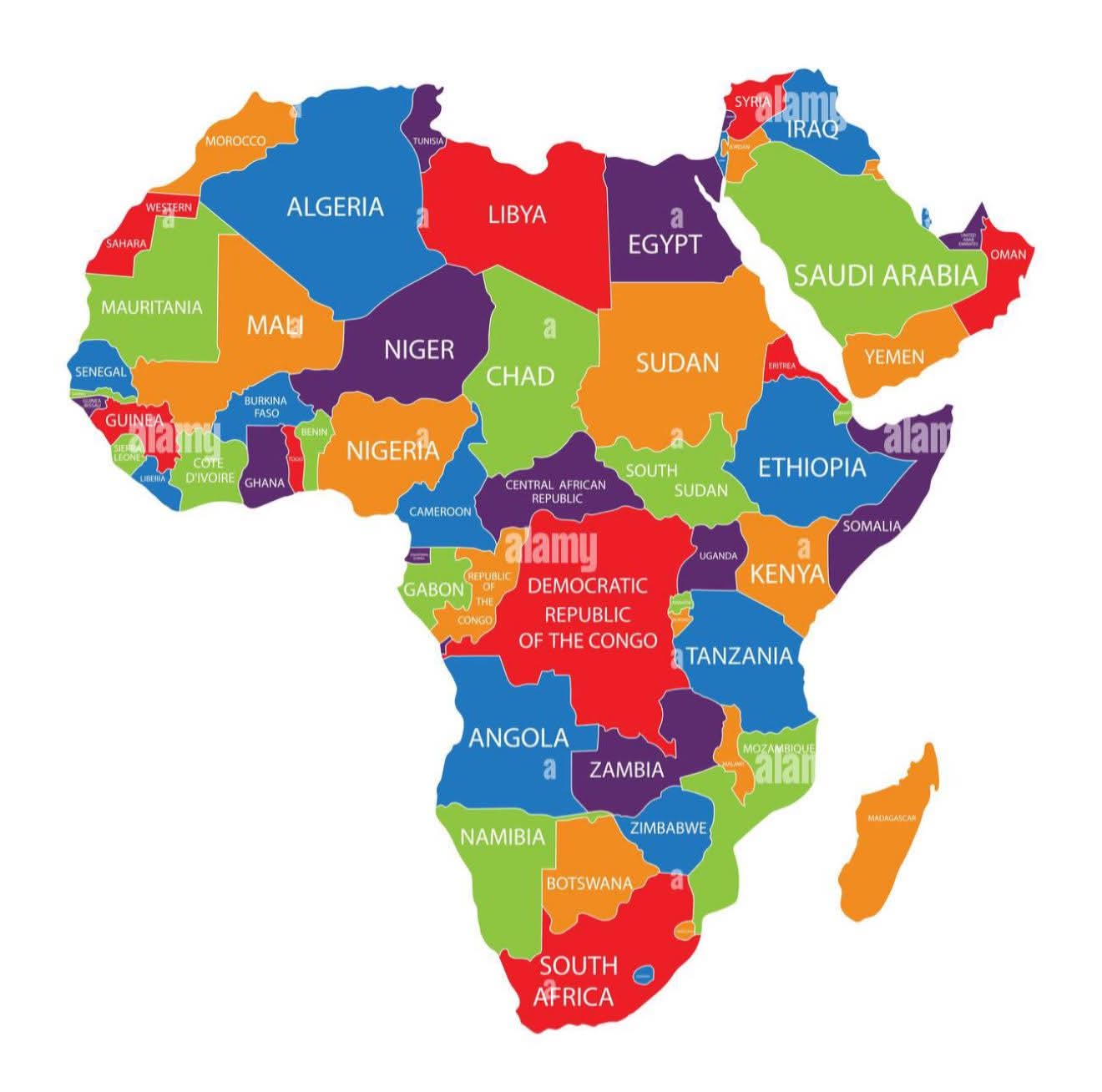
With Surge of military coups in the first quarter of the 21st century Nigerian Tracker’s Yusuf Danjuma Yunusa take a look at military coups in Africa and the causes.
Yusuf Danjuma Yunusa
Early morning on Sunday, December 7, 2025, news broke that a group of soldiers appeared on Benin’s state TV announcing the dissolution of the government in an apparent coup in the West Africa nation.
They announced the overthrow of President Patrice Talon, who has been in power since 2016, as well as all state institutions.
The troops referred to themselves as part of the “Military Committee for Refoundation” (CMR), and said on state television that they had met and decided that “Mr Patrice Talon is removed from office as president of the republic”.
Talon’s whereabouts were unknown.
The French Embassy said on X that “gunfire was reported at Camp Guezo” near the president’s official residence. It urged French citizens to remain indoors for security.
Talon was due to step down next year in April after 10 years in power.
However, the latest report from Cotonou said the National Guard has taken control of the situation and surrounded the television station. According to 24 Hours In Benin, discussions are underway with the mutineers, now holed up inside the station.
“The regular army is regaining control. The city and the country are completely secure,” the report says.

Precious Chukwuemeka Chidiebere
Nigerian Tracker News gathered that Benin Republic has been having records of coup plots since time immemorial.
The Republic of Benin (formerly known as Dahomey until 1975) has experienced a significant number of coup plots, both successful and attempted, particularly during its turbulent early decades of independence. It holds the notable distinction of having the highest number of successful coups in Africa during the 20th century for a single nation.
The first coup plot in that country occurred when President Hubert Maga (from the north) was overthrown in a bloodless coup led by Colonel Christophe Soglo. This was triggered by political deadlock, economic crisis, and widespread strikes and protests. Soglo cited the “incapacity of the political class” as the reason. This was in October, 1963.
The second coup happened after a brief return to civilian rule, the army, again led by General Christophe Soglo, seized power directly. He dissolved the contentious three-member Presidential Council (a triumvirate of Maga, Sourou-Migan Apithy, and Justin Ahomadégbé) and installed himself as head of state.
History has it that the Republic of Benin experienced a total of six coup plots.
However, since its democratic transition in 1990-1991, Benin has broken this cycle and has not experienced a traditional military coup for over three decades, despite facing modern political challenges, until the recent one that happened earlier December 7, 2025.
A View into Africa’s Record of Coup Plots
Since 1953, Africa has been the continent most affected by coup plots and military interventions. While the frequency and drivers have evolved, the fundamental issue of the military’s role in politics remains unresolved in many nations. The current surge in the Sahel represents a critical new phase, characterized by anti-colonial rhetoric, security-focused justifications, and shifting geopolitical alliances. This pattern suggests that, despite decades of democratic development efforts, the coup d’état remains a persistent feature of the African political landscape.
The continent has experienced significant political instability, with coups being a recurrent phenomenon.
Detailed Report of Coup Plots Among African Countries
While many African nations gained independence around 1960, this report draws its details from 1953, allowing the inclusion of pivotal early events in countries like Egypt and Sudan.
North African Countries
In Egypt, the Zehniyet plot in 1953 was an alleged conspiracy by the Muslim Brotherhood to assassinate President Gamal Abdel Nasser, leading to a massive crackdown. While not a classic military coup plot, it was a major internal power struggle.
In 1958, Sudan First Military Coup was led by General Ibrahim Abboud and some army officers. The coup was a bloodless takeover, beginning a cycle of military rule.
Likewise in Libya in 1969, the “Free Officers” movement, led by Captain Muammar Gaddafi, successfully overthrew King Idris I.
Again in Sudan in 1971, a failed Communist Coup which was brief, marked a bloody takeover by communist officers, but it was reversed by loyalist forces under Gaafar Nimeiry.
Also, in Egypt around 1981, President Anwar Sadat was assassinated by Islamist officers within the military during a parade, a plot that aimed at regime change.
And in Algeria in 1991-1992, When the Islamist Islamic Salvation Front (FIS) won elections, the military intervened, canceling the results and precipitating a civil war. This is considered a “coup from above.”
There was also a record of coup plot in Sudan in 2019 in which the military overthrew long-time dictator, Omar al-Bashir, following mass protests, followed by a power-sharing agreement and later another coup in 2021.
West African Countries
The first post-independence coup in Africa, where soldiers assassinated President Sylvanus Olympio, happened in Togo in 1963.
In 1966, the first overthrow of a major Pan-African leader, Kwame Nkrumah of Ghana, happened while he was abroad.
In Nigeria, two successive coups in 1966 destabilized the nation, leading directly to the Biafran Civil War. Aside those mentioned, the country has had a couple of coup plots also.
Liberia’s 1980 Master Sergeant Samuel Doe’s violent coup marked the end of Americo-Liberian rule and began decades of turmoil.
Similarly in 1987, Burkina Faso Captain Blaise Compaoré seized power in a coup that killed his former comrade, the iconic Thomas Sankara.
In 2012, Mali recorded a coup plot by Captain Amadou Sanogo which created a power vacuum that allowed jihadist groups to seize the northern half of the country.
Furthermore, Guinea, in 2021 exprienced coup plot when special forces commander Colonel Mamady Doumbouya ousted President Alpha Condé.
Burkina Faso in 2022 had two coups (January & September), with Captain Ibrahim Traoré installed while citing failure to contain jihadist violence.
Niger also recorded coup in 2023 when the presidential guard deposed President Mohamed Bazoum, triggering a major regional crisis and the formation of the “Alliance of Sahel States” (AES) with Mali and Burkina Faso.
Central African Countries
Coup plots in these central african countries were reoccurring. The major countries below had these records:
Chad (1975, 1990, 2021): A pattern of violent takeovers: Hissène Habré (1982), Idriss Déby (1990), and the military takeover by Mahamat Déby after his father’s death in 2021 (a “dynastic coup”).
Burundi (1965, 1976, 1987, 1996, 2015): Recurring coups and attempted coups, often along ethnic lines (Hutu-Tutsi), culminating in a contested political coup attempt in 2015 during a presidential term-limit crisis.
East African Countries
Ethiopia had an attempted coup against Emperor Haile Selassie by the imperial
guard in 1960.
Also, Somalia experienced theirs in 1969 with the assassination of President Abdirashid Ali Sharmarke which led to a military takeover by Siad Barre.
In Uganda, the famous Idi Amin coup ousted Milton Obote in 1975.
Again in 1974, the Derg committee in Ethiopia deposed Emperor Haile Selassie, ushering in a communist military junta.
Southern African Countries
Lesotho had several military interventions and coups (1991, 1994, 1998, 2014, 2022) within the constitutional monarchy of the nation.
Madagascar also had a handful of coup plots in 1975 and 2009 ushering in Didier Ratsiraka to power militarily; while in 2009, a popular uprising backed by the military installed Andry Rajoelina, considered a “soft coup.”
In Zimbabwe, the 2017 “military-assisted transition” referred to as a “soft coup”, forced long-time ruler Robert Mugabe to resign.
History shows that Benin holds the continental record for the most successful military takeovers in the post-colonial era between 1963-1972. While Sudan tops the chart for frequency of all kinds of coup activities–succesful or not.
What are the Key Drivers of Coup Plots in Africa?
Speaking with a political scientist, Precious Chukwuemeka Chidiebere, he highlighted that there are a lot of causes for the emergence of military coup among African countries, which includes poor governance, corruption, weak democratic institutions and lots more.
“Coup causes ranges from bad governance, leadership failure, weak democratic institutions, insecurity, external influence, and among many other factors,” he said.
“Talking about the corruption aspect, it was quite illustrative in the case of the former president of Mali, Ibrahim Keita, when he was accused of electoral fraud and poor governance. The military took over the government,” Mr. Chidiebere added.
He also emphasized on the fact that having democratic institutions that guide the government of our day is never enough, that the pertinent question should be “how strong are the democratic institutions?”
“Mostly in Africa, our democratic institutions are weak, even here in Nigeria. Rule of Law is not adhered to in Nigeria,” he asserted.
The political scientist categorically stated that the independence of each arms of government that should serve as a tool to embolden good governance is not realistic in Nigeria, and by extension, Africa.
“If you observe closely, there’s no active opposition in Nigeria, and so do many countries in Africa,” he stated.
Mr Chidiebere also discussed the importance of economic integration and planning aimed at leveraging the skills within citizens to liberate them from poverty. He said that economic hardship is also part of those factors that contribute or birth coup plot in most African countries.
Asking about ways to put an end to coup plots in Africa, the scientist recommended that governments in various African countries should strengthen democratic institutions.
“The opposition must not be suppressed. There should be room for criticism without crucification.”
He also added that corruption should be dealt with mercilessly without compromise or favour. And also, opportunities should be created for citizens to survive with. Mr. Chidiebere stressed that economic decisions should address the plights of the masses










News
WHC Solar Trains 300 Youths in Kano to Prevent Installation Errors, Fire Outbreaks
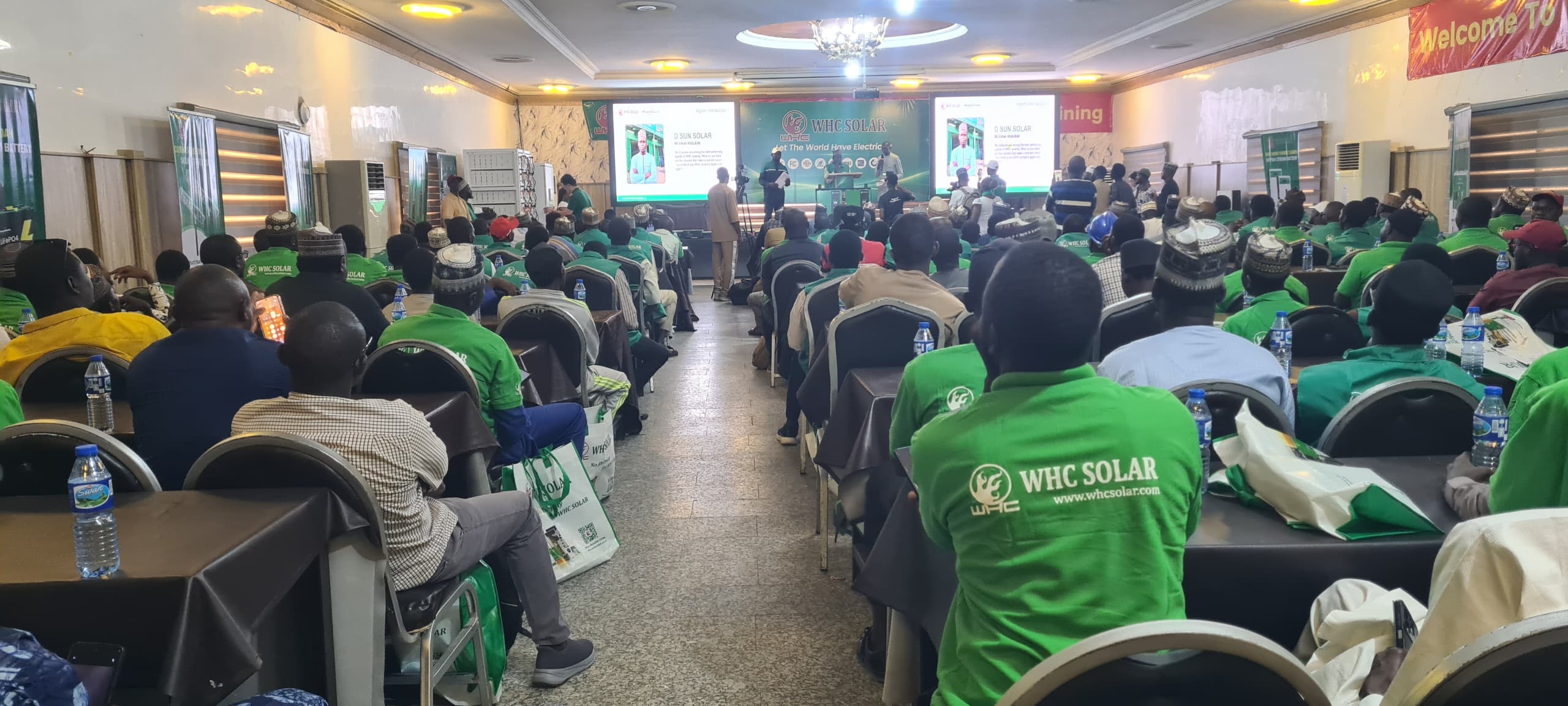
WHC Solar, a Chinese company specialising in solar energy products, has trained about 300 youths in Kano State on the technical installation and configuration of solar power systems to improve safety and expand employment opportunities in Nigeria’s renewable energy sector.
The one-day training, held at Tahir Guest Palace in Kano on Saturday, attracted participants from different parts of Nigeria and beyond, with practical sessions focused on the proper installation of inverters, lithium batteries and other solar power components.
Speaking at the opening of the programme, the company’s Chief Executive Officer, Clint Chan, said the training was organised to equip solar installers with the technical knowledge and practical experience required to deliver quality services to customers.
Chan explained that the company had observed that some solar installers lacked sufficient technical knowledge, resulting in installation errors that could damage equipment or cause fire outbreaks.
He said the initiative was aimed at addressing such challenges by improving the competence of technicians and promoting the safe and efficient use of solar energy systems.
“We noticed that some installers may not fully understand the technology, which can lead to mistakes that could damage a product or even cause fire outbreak,” Chan said.
He added that the training would help participants develop their technical capabilities and become more experienced professionals capable of contributing to society through improved service delivery.
According to Chan, the practical sessions covered the installation and configuration of inverters and lithium batteries, including how the different components communicate and function together within a solar power system.
He said proper understanding of the relationship between the components was essential to ensuring that solar installations operated efficiently, safely and in accordance with technical requirements.
Chan also reaffirmed the company’s commitment to the Nigerian market, saying WHC Solar intended to continue investing in the country’s renewable energy sector and supporting the growing demand for solar power solutions.
He disclosed that the company had a service centre in Kano, through which it provided support for customers using its solar products in residential homes, commercial establishments and industrial facilities.
The chief executive said participants who completed the programme were expected to receive certificates in recognition of their participation and the technical knowledge acquired during the training.
Chan further stated that the company, which he said had been operating for about 10 years, was committed to making solar energy solutions available to Nigerians for domestic, commercial and industrial applications.
Also speaking at the event, Sani Abdulkadir, popularly known as ABDK, said he attended the training as a distributor of the company’s products.
Abdulkadir explained that customers experiencing technical problems with WHC Solar products could take them to the company’s service centre for repairs, adding that some repairs could be completed within 24 hours.
He commended the company for organising the training and creating opportunities for young Nigerians to acquire technical skills that could improve their employment prospects and support self-reliance.
Abdulkadir noted that the growing adoption of solar energy in Nigerian households reflected increasing public interest in alternative electricity sources.
“Before, you could count the number of houses using solar energy, but the situation is changing as more people are embracing it,” he said.
He expressed optimism that the expansion of solar energy adoption would create more opportunities for trained technicians, distributors and other professionals working in the renewable energy value chain.
The training comes amid growing interest in solar power solutions among Nigerian households and businesses seeking alternative sources of electricity, with technical expertise and proper installation remaining important factors in ensuring the safety, reliability and durability of solar systems.
News
Emir Sanusi Seeks Compensation, Reallocation of Demolished Eid Ground Stalls
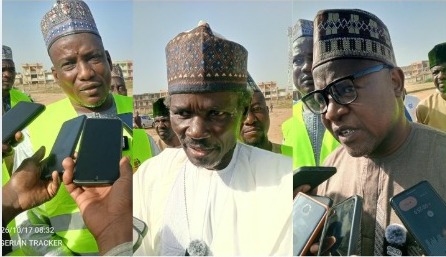
The Emir of Kano, Muhammadu Sanusi II, has appealed to the Kano State Government to compensate traders affected by the demolition of shops at the Filin Idi market in Kofar Mata, Kano, and reallocate stalls to enable them to resume their businesses.
Professor Ibrahim Muazzam Mai Bushira disclosed this during a special prayer session organised by traders affected by the demolition at the Eid Ground in Kofar Mata, where participants prayed for divine intervention and government assistance to alleviate their hardship.
According to Mai Bushira, the Emir has written to Governor Abba Kabir Yusuf, requesting compensation for the affected traders and appealing for measures to address the economic losses they have suffered following the demolition.
He expressed hope that Almighty Allah would reward the Emir for his intervention and urged Governor Yusuf to consider the demands of the traders to enable them to rebuild their businesses and restore their livelihoods.
Mai Bushira said the demolition had caused severe hardship among traders, many of whom depended on their shops as their primary sources of income. He added that some affected individuals had reportedly died, while others had developed high blood pressure following the destruction of their businesses and the resulting economic difficulties.
He explained that the prayer session was organised to seek Allah’s intervention in their predicament and pray for the restoration of their livelihoods, noting that the destruction of the shops had adversely affected the lives of many families who depended on the market for survival.
Speaking at the gathering, Professor Ahmad Muhammad of the Federal University, Dutse (FUD), described Kano as a major commercial centre and called on the Kano State Government to pay attention to the plight of the affected traders and the economic implications of the demolition.
Professor Muhammad also appealed to international entrepreneurs and investors to explore opportunities to support the development of the market, stressing that the destruction of the shops had resulted in substantial financial losses running into billions of naira.
He urged the government to consider establishing a modern market at the location, arguing that the Filin Idi market was not merely a trading centre for Kano but also an important commercial destination for traders from different parts of Nigeria and across Africa.
According to him, the market provides livelihoods for more than one million people, directly and indirectly, making its reconstruction and rehabilitation important to the economic well-being of Kano and its trading community.
The professor further stressed the need for a sustainable solution that would enable displaced traders to return to business, restore commercial activities and protect the economic interests of the large population that depended on the market.
In his remarks, the Chairman of the affected traders’ association, Auwal Said Umar, expressed appreciation to Almighty Allah and Emir Sanusi II for their support and intervention in the traders’ situation.
Umar said many of the affected traders were currently unable to engage in their usual commercial activities because their shops had been demolished, leaving them without the means to sustain their businesses and families.
He disclosed that the market previously had about 700 blocks of shops before the demolition, adding that many traders lacked the financial capacity to reconstruct their businesses without assistance from the government.
The association chairman said the government had allocated 75 stalls for reconstruction but appealed for an increase in the number to accommodate more affected traders and enable them to return to their businesses.
Umar called on the Kano State Government to provide additional support, stressing that the existing allocation was insufficient to address the needs of the large number of traders who lost their shops during the demolition.
The traders urged the government to work with their association and other relevant stakeholders to develop a lasting solution that would provide adequate trading spaces, restore commercial activities and ease the economic hardship caused by the demolition.
News
Gombe flags off the disbursement of the second batch of the AGILE Conditional Cash Transfer
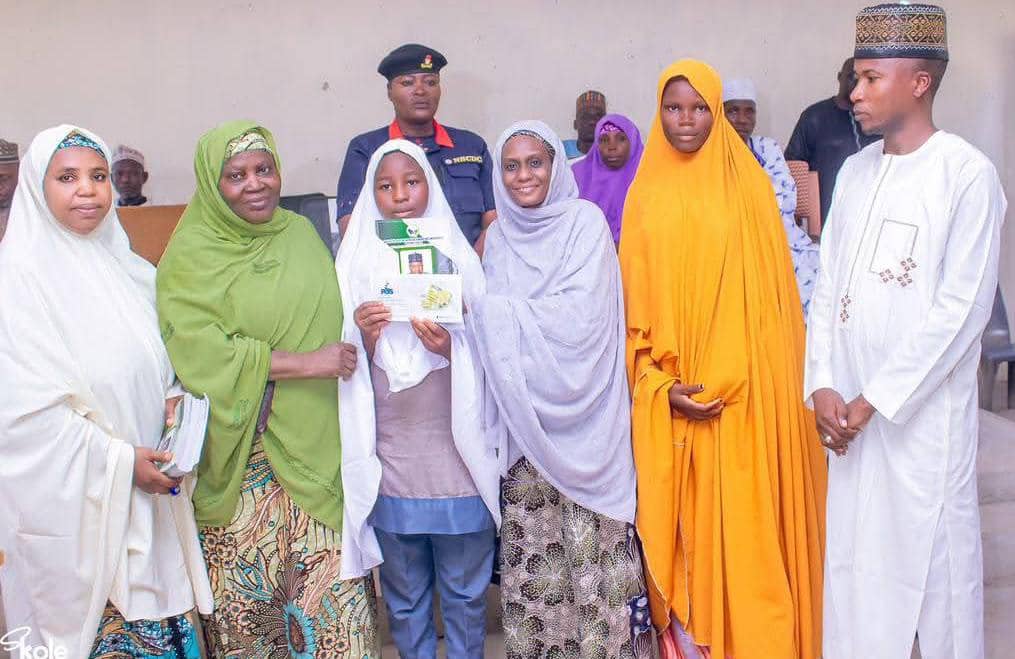
Gombe State Government has flagged-off the distribution of ATM cards to Adolescent Girls in public schools under the Conditional Cash Transfer,CCT of the Adolescent Girls Initiative for Learning and Empowerment, AGILE Project.
Speaking at the flagging off of the disbursement at Government Junior Secondary School Malamsidi central in Kwami Local Government area, the Honourable Commissioner of Education, Associate Prof Aishatu Umar Maigari said the disbursement of the CCT is part of the Governor Muhammadu Inuwa Yahaya’s zeal and passion for the girl child education in the state.
She said the concept is also geared towards supporting parents to cater for their children to remain in schools up to completion of their secondary education.
Associate Prof Aishatu Umar Maigari then assured the students that the government will continue to bring more educational policies that will further support students to pursue education with ease.
Earlier, the project coordinator of the AGILE, Dr. Amina Abdul noted that with the disbursement of the second cohort of the conditional cash transfer, the project was able to record significant improvement in enrollment and retention of students in schools across the state.
The project coordinator therefore urged parents to utilize the funds judiciously through supporting the education of their children.

WHC Solar Trains 300 Youths in Kano to Prevent Installation Errors, Fire Outbreaks

Emir Sanusi Seeks Compensation, Reallocation of Demolished Eid Ground Stalls

Gombe flags off the disbursement of the second batch of the AGILE Conditional Cash Transfer

Why Gov Abba Deserves Another Tenure

China, Nigeria Mark Friendship with Joint Cultural Mural

Zamfara Varsity ASUU Threatens Warning Strike Over FG-ASUU Agreement, Promotion Arrears

PCACC Arrests Man Over Alleged ₦4.5m Sale, Illegal Leasing of Kano Government Horse Stable

Goje’s Electoral War:The Confrontation With Tinubu,Governor Inuwa,Usman Kumo And APC candidates Ahead Of 2027

Prof Yusuf Adamu Delivers BUK’s 63rd Professorial Inaugural Lecture, Reflects on Medical Geography and Academic Legacy

Kano Monitors ₦48.9bn Projects Across Six LGAs
WHC Solar Trains 300 Youths in Kano to Prevent Installation Errors, Fire Outbreaks
Emir Sanusi Seeks Compensation, Reallocation of Demolished Eid Ground Stalls
Gombe flags off the disbursement of the second batch of the AGILE Conditional Cash Transfer
Why Gov Abba Deserves Another Tenure
China, Nigeria Mark Friendship with Joint Cultural Mural
Zamfara Varsity ASUU Threatens Warning Strike Over FG-ASUU Agreement, Promotion Arrears
PCACC Arrests Man Over Alleged ₦4.5m Sale, Illegal Leasing of Kano Government Horse Stable
Goje’s Electoral War:The Confrontation With Tinubu,Governor Inuwa,Usman Kumo And APC candidates Ahead Of 2027
Prof Yusuf Adamu Delivers BUK’s 63rd Professorial Inaugural Lecture, Reflects on Medical Geography and Academic Legacy
Kano Monitors ₦48.9bn Projects Across Six LGAs
-

 Opinion5 years ago
On The Kano Flyovers And Public Perception
-

 Features5 years ago
How I Became A Multimillionaire In Nigeria – Hadiza Gabon
-

 Opinion6 years ago
Kano As future Headquarters Of Poverty In Nigeria
-

 History6 years ago
Sheikh Adam Abdullahi Al-Ilory (1917-1992):Nigeria’s Islamic Scholar Who Wrote Over 100 Books And Journals
-

 Opinion5 years ago
My First Encounter with Nasiru Gawuna, the Humble Deputy Governor
-

 History5 years ago
The History Of Borno State Governor Professor Babagana Umara Zulum
-

 History6 years ago
The Origin Of “Mammy Market” In Army Barracks (Mammy Ochefu)
-

 News5 years ago
Federal University Of Technology Babura To Commence Academic Activities September