
News
The Pros And Cons As President Tinubu Approves 15 percent Import Duty On Fuel

By Yusuf Danjuma Yunusa
President Bola Tinubu has approved a 15 per cent import duty on petrol and diesel, a controversial move in which the government described as a tool to supporting local refining and boosting energy security, but which critics say could lead to an increase in fuel price.
The president’s approval was contained in a letter with reference no: PRES8197/HAGF/100/71/FIRS/40/88-2/NMDPRA/2, dated 21 October. The letter was addressed to the Attorney General of the Federation and Minister of Justice, Federal Inland Revenue Service (FIRS) and the Nigerian Midstream and Downstream Petroleum Regulatory Authority (NMDPRA).
The tariff allows for a 30-day window and adds to the controversy around petrol import and production in Africa’s largest oil producer.
The letter, titled ‘Re: introduction of a market-responsive import tariff framework on Premium Motor Spirit (PMS) & Diesel,’ was signed by Damilotun Aderemi, the Private Secretary of the President.
The president’s approval followed a request by FIRS Chairman, Zacch Adedeji, for the government to apply the tariff to align import costs with domestic realities.
Mr Adedeji said the duty, applied to the Cost, Insurance, and Freight (CIF) value, is expected to increase petrol prices by approximately N99.72 per litre. Despite this, Lagos pump prices are projected to remain around N964.72 per litre ($0.62), which is still lower than in neighbouring countries like Senegal, Côte d’Ivoire, and Ghana, he said.
He added that the tariff is not revenue-driven but corrective, aimed at aligning import costs with domestic realities while preserving affordability, noting that the implementation would commence after a 30-day transition window, allowing importers to adjust cargoes already in transit and ensuring a smooth rollout without market disruption.
“The core objective of this initiative is to operationalise crude transactions in local currency, strengthen local refining capacity, and ensure a stable, affordable supply of petroleum products across Nigeria aligning with Your Excellency’s Renewed Hope Agenda for security and fiscal sustainability,” the FIRS chief wrote to the president.
Nigeria currently has no publicly functioning refinery, with the Dangote refinery producing almost all of the West African giant’s locally refined petroleum products.
Although Dangote refinery insists it can produce all of Nigeria’s local petrol needs, problems with regulators and other players in the downstream oil sector have ensured that the country continues to import about 15 per cent of its petrol needs.
President Tinubu’s directive is basically to ensure that imported petrol is not significantly cheaper than that produced by Dangote refinery.
Conversely, major marketers of petroleum products yesterday warned that the introduction of the 15 per cent import duty on petrol and diesel could signal another round of fuel price increase.
The approval of the duty by President Bola Ahmed Tinubu is causing division in the downstream sector of the oil and gas industry with some economic experts applauding the move as a welcome development aimed at discouraging importation of petroleum products and supporting local refineries, while others express worry over likely hike in prices of petroleum products.
“The issue around capacity that Dangote Refinery talked about is contestable and I don’t think the capacity is there yet. So if you are imposing this duty, it means we should be prepared for a new regime of fuel price increase.
“The truth is we are not getting enough from the refinery and we know that when we order from Dangote Refinery, we don’t get it on time,” one of the major marketers who spoke in confidence said.
Speaking with journalists, the Managing Director of 11PLC (formerly Mobil), Otunba Tunji Oyebanji said, “15 per cent to the government is a lot of revenue to the government but higher prices for Nigerians.”
The president of the Independent Marketers’ Association of Nigeria (IPMAN), Alhaji Abubakar Maigandi, in a chat with the correspondent of Daily Trust said the association would make its position known on Monday.
However, a former General Secretary of IPMAN, Mike Osatuyi, welcomed the move which he stated would support investment by the local refineries.
“The purpose is mainly to protect our local refineries. For decades, Nigeria has been known for importation of petroleum products and we are used to it. We are providing employment for the foreign countries at the expense of the economy of Nigeria.
“So Dangote wants to go to 1.4m barrels per day which is going to be the biggest in the whole world. By the time it comes up, then other refineries too are coming up, BUA Refinery too is coming up, all these local refineries need to be protected.
“If we didn’t do what the president has done we would kill the local refineries. So it is a good policy.”
News
President Tinubu Declines Meeting with S’African Envoy, Directs Delegation to Foreign Affairs Minister
By Yusuf Danjuma Yunusa
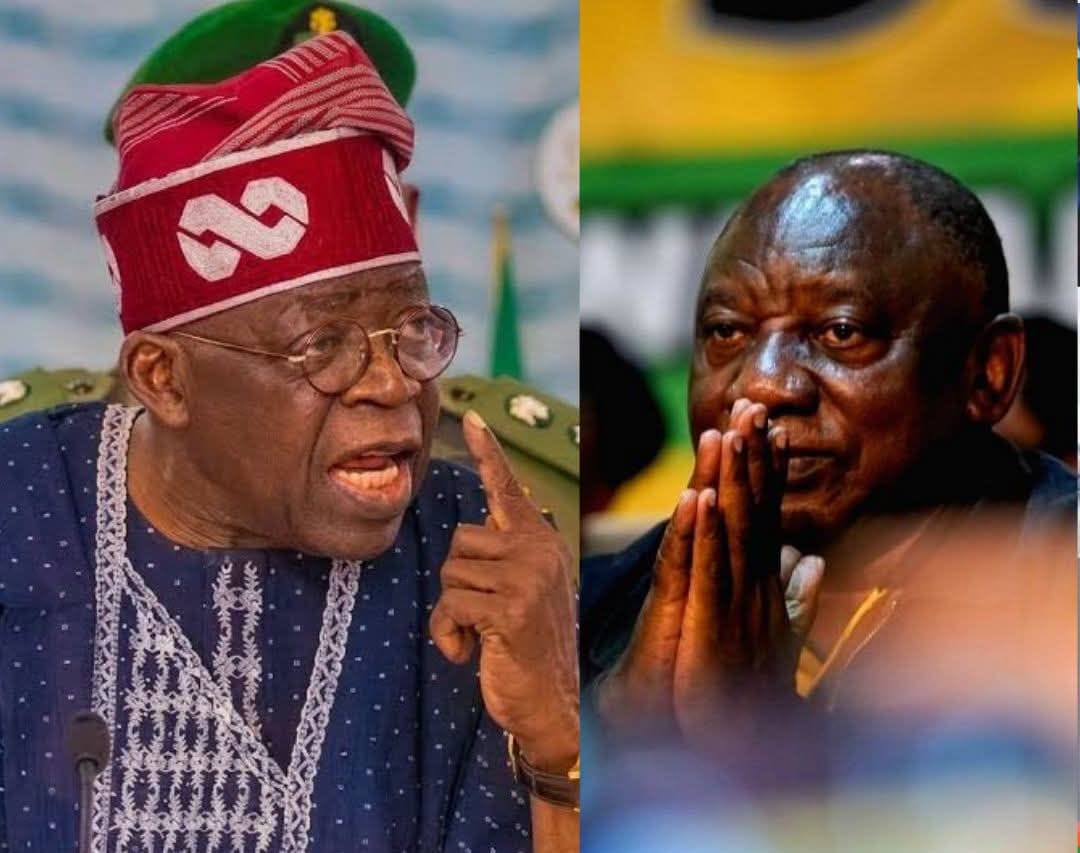
President Bola Tinubu on Monday declined to receive a special delegation from South African President, Cyril Ramaphosa, over the ongoing xenophobic attacks on Nigerians in South Africa, directing the visiting team to instead meet with the Minister of State for Foreign Affairs, Ambassador Sola Enikanolaiye.
Multiple credible Presidency sources with knowledge of the development confirmed to PUNCH Online that the delegation, led by South Africa’s Minister of International Relations and Cooperation, Ronald Lamola, had sought an audience with the President after arriving in Abuja on Friday.
Instead, Tinubu instructed them to engage with Enikanolaiye, who was appointed Minister of State for Foreign Affairs in June 2026 after Ambassador Bianca Odumegwu-Ojukwu was elevated to the substantive ministerial position following the exit of Yusuf Tuggar.
The development comes amid a diplomatic row between both countries over renewed xenophobic attacks targeting Nigerians and other African nationals in South Africa, which forced the evacuation of nearly 600 Nigerians back home.
One Presidency source said, “They actually came here on Friday wanting to see the President. But there was no prior notice.
“And we said we can’t just allow you to see the President without first asking him if he is available. So we asked, and the President said they could come on Monday.
“But when Monday came, he simply said they should go and meet the Minister of State for Foreign Affairs, Ambassador Enikanolaiye, and whatever they discuss, the Minister would come and brief him.”
A second source confirmed the President’s decision, saying, “I just confirmed it. He is not seeing them. The meeting is not happening.”
A third Presidency official added, “We don’t have that on the schedule today.”
The South African delegation reportedly remained in Abuja throughout the weekend after arriving on July 24, carrying a message from Ramaphosa.
Sources further disclosed that the Minister of Foreign Affairs, Ambassador Bianca Odumegwu-Ojukwu, who is attending official engagements in Addis Ababa, had advised that it was not an appropriate time for the President to personally receive the South African delegation while attacks on Nigerians and their businesses were still ongoing.
Receiving the South African delegation in Abuja, Enikanolaiye said Tinubu directed him to engage the envoys on resolving the crisis, stressing that the longstanding relationship between Nigeria and South Africa should not be undermined by attacks on African migrants.
“It is with profound pleasure that I welcome our brothers from South Africa. President Bola Ahmed Tinubu had actually asked us to meet with you and exchange views and perspectives on how to address and resolve the ongoing Afrophobic attacks in South Africa, of which Nigerians, and other citizens of Africa, have been victims,” he said.
The minister lamented the recurring attacks on Nigerians, recalling that such incidents had persisted for decades.
“We have seen a pattern emerge as early as 1995, 1998, 2006, 2015, 2016, 2019, 2021, 2024 and 2026. It is on record that from 2022 alone, 98 Nigerians have died in mob actions, in hate-related actions that we have called Afrophobia, because we found that the preponderant victims of this ugly situation are Africans and Nigerians in particular,” he said.
Enikanolaiye recalled Nigeria’s role in supporting South Africa’s liberation from apartheid and said the violence was inconsistent with the relationship both countries had built over the years.
He stressed that while Nigeria does not support criminality, anyone accused of committing offences should face due process rather than mob violence.
“If someone is, quote-unquote, a criminal for drug trafficking, there are rules, there are regulations for when they are arrested, prosecuted, and jailed.”
News
APC Youths Demand Nationwide Ban on Rarara’s Songs at Party Activities
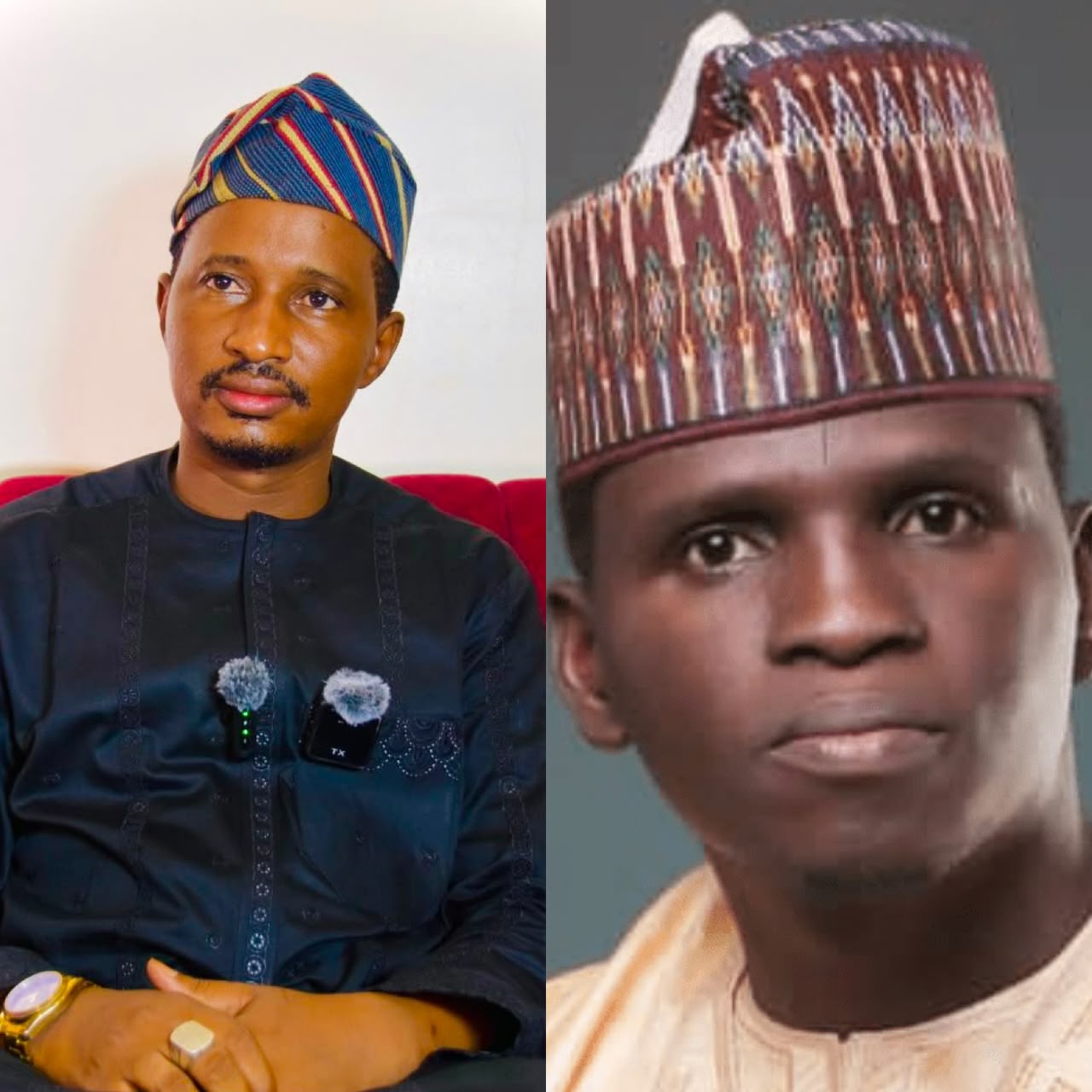
The Coalition of APC Progressive Youths has called on the leadership of the All Progressives Congress (APC) to prohibit the use of songs by popular political singer Dauda Adamu Kahutu, popularly known as Rarara, at all party activities across the national and state levels.
The group’s National Chairman, Hon. Sadiq Ali Sango, made the call in a statement issued to journalists in Abuja on Monday.
Sango alleged that Rarara’s songs have become more detrimental than beneficial to the ruling party, accusing the singer of using abusive language and divisive messages that undermine unity within the APC.
According to him, rather than promoting harmony among party members, Rarara’s style of political music has fueled hatred and deepened internal divisions.
He further alleged that the singer has repeatedly targeted senior party leaders and elders with insulting lyrics, describing such conduct as inconsistent with the values and principles of the APC.
The coalition also accused Rarara of sponsoring campaigns against the Deputy President of the Senate, Senator Barau I. Jibrin, claiming that the campaign encouraged some youths to launch personal attacks against the senator and make what it described as unfounded allegations against him.
The youth group condemned what it called Rarara’s “continuous politics of insults and character assassination,” warning that such actions could damage the party’s image ahead of future political contests.
Sango urged the APC National Working Committee (NWC) and other party stakeholders to immediately ban the use of Rarara’s songs at official party functions, rallies, and other political activities nationwide.
He added that the coalition would pursue all lawful and necessary measures to challenge what it described as conduct capable of causing disunity within the APC.
News
Hon. Abubakar Bichi Commissions 120 Health Workers in Bichi
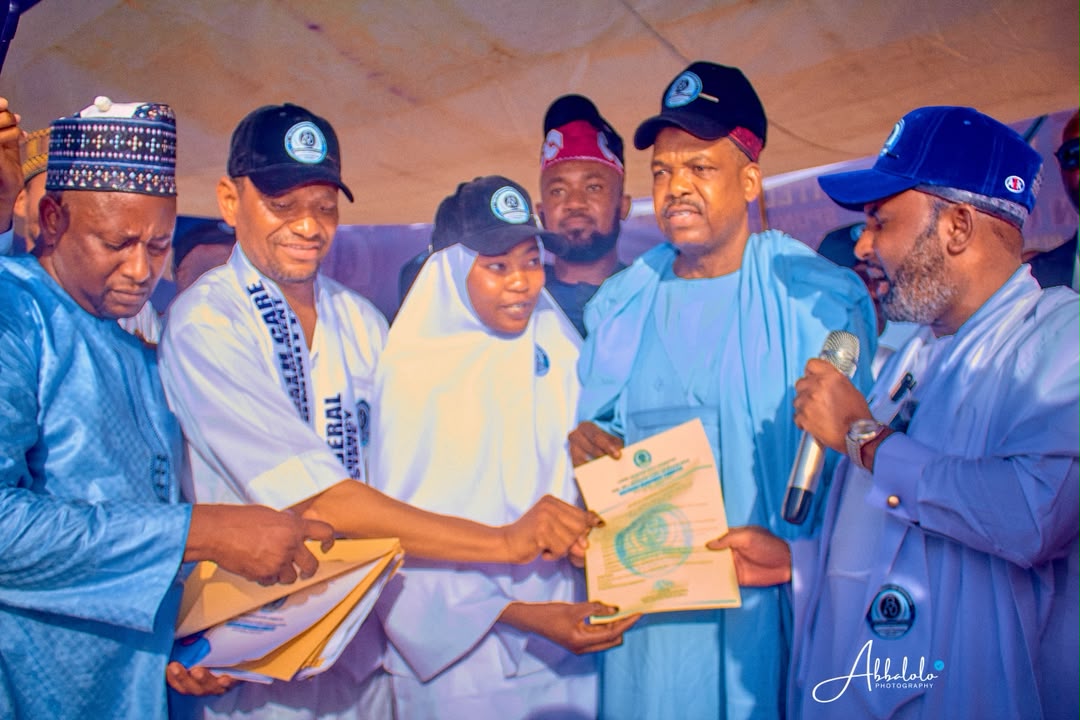
The Kabir Abubakar Bichi Foundation has commissioned 120 temporary health workers who will be deployed across primary healthcare centres in Bichi Local Government Area of Kano State.
The commissioning ceremony was led by the Member representing Bichi Federal Constituency, Hon. Abubakar Kabir Abubakar, on Saturday in Bichi. The event was attended by the Kano State Commissioner for Health, Dr. Abubakar Labaran Yusuf, alongside other dignitaries.
Speaking at the event, Hon. Abubakar Kabir Abubakar announced that the Federal Government is set to establish a new teaching hospital in Bichi Local Government Area to improve healthcare delivery.
“I recently attended meetings on education and healthcare development. As you know, we have Aminu Kano Teaching Hospital, and I want to assure you that we are working closely with the Minister of Health and the Chief Medical Director of Aminu Kano Teaching Hospital to facilitate the establishment of a new teaching hospital in Bichi,” he said.
Abubakar Kabir Abubakar added that the project is receiving strong support from President Bola Ahmed Tinubu.
“We must appreciate President Bola Ahmed Tinubu for his unwavering support for the development of the healthcare sector. We are currently working towards securing the President’s final approval for the project under this year’s budget,” he said.
Hon. Abubakar Kabir Abubakar, who also serves as the Chairman of the House Committee on Appropriations, reaffirmed his commitment to improving healthcare delivery. He disclosed that efforts are underway to upgrade Bichi General Hospital to the status of a specialist hospital in order to provide more advanced medical services and reduce pressure on major referral hospitals in Kano State.
He said “We are pleased to inform the Commissioner that we have completed the installation of equipment for the radiology department at Bichi General Hospital. The equipment includes a digital X-ray machine, 40 oxygen machines, and four dialysis machines, with an additional four dialysis machines expected soon.
“We are now awaiting the arrival of a 64-slice CT scan machine to complete the project. Once the remaining equipment arrives, we will be honoured to invite you and Governor Abba Kabir Yusuf to officially commission the upgraded facilities.
“We also plan to upgrade the surgical and operating theatre of Bichi General Hospital to meet the standards of leading hospitals across Kano State. Our goal is to strengthen healthcare delivery by reducing congestion at major referral hospitals in Kano metropolis, particularly Murtala Muhammad Specialist Hospital and Muhammad Abdullahi Wase Specialist Hospital, Nasarawa, where increasing patient numbers are placing pressure on healthcare personnel and facilities.
“As Kano’s population continues to grow, expanding and equipping secondary healthcare facilities such as Bichi General Hospital has become essential to ensuring timely access to quality healthcare for our people.”
Hon. Abubakar Kabir Abubakar also appealed to the Kano State Government to upgrade Danzabuwa and Saye Primary Healthcare Centres to General Hospitals, assuring the government of his full support in providing infrastructure and medical equipment for the facilities.
He commended the health committee, led by Professor Yusuf Muhammad, for conducting a transparent screening exercise for the newly recruited health workers.
He urged the newly commissioned workers to discharge their responsibilities with professionalism, dedication, and integrity in the service of their communities.
The lawmaker further appealed to the Kano State Government, under the leadership of Governor Abba Kabir Yusuf, to absorb the 120 temporary health workers into the state’s permanent and pensionable workforce.
He also praised Governor Yusuf for his investments in the health and education sectors, describing them as significant contributions to improving the welfare and well-being of the people of Kano State.

President Tinubu Declines Meeting with S’African Envoy, Directs Delegation to Foreign Affairs Minister

APC Youths Demand Nationwide Ban on Rarara’s Songs at Party Activities

Hon. Abubakar Bichi Commissions 120 Health Workers in Bichi

85 Religious Leaders Graduate from JNI-Alkalanci Fact-Checking Training in Gombe

From the struggle for Gombe State to life in the Senate: Senator Umar Usman Dukku reflects on politics, democracy, and his relationship with the late General Sani Abacha.

Alhaji Tijjani Rabiu Spikin: A Neighbour, Philanthropist, and Friend of Children

AI Delusion Among Students: When Smart Tools Start Replacing Real Connections, The Truth About AI And Student Life

BUK Emerges Top Performing Nigerian University In Global Ranking

Open letter to Governor Abba Kabir Yusuf on the Need To Include PCN, NAFDAC In Special Task Force On Drug Abuse And Illicit Trafficking

What Saheeba Taught Me About Waiting for Love
President Tinubu Declines Meeting with S’African Envoy, Directs Delegation to Foreign Affairs Minister
APC Youths Demand Nationwide Ban on Rarara’s Songs at Party Activities
Hon. Abubakar Bichi Commissions 120 Health Workers in Bichi
85 Religious Leaders Graduate from JNI-Alkalanci Fact-Checking Training in Gombe
From the struggle for Gombe State to life in the Senate: Senator Umar Usman Dukku reflects on politics, democracy, and his relationship with the late General Sani Abacha.
Alhaji Tijjani Rabiu Spikin: A Neighbour, Philanthropist, and Friend of Children
AI Delusion Among Students: When Smart Tools Start Replacing Real Connections, The Truth About AI And Student Life
BUK Emerges Top Performing Nigerian University In Global Ranking
Open letter to Governor Abba Kabir Yusuf on the Need To Include PCN, NAFDAC In Special Task Force On Drug Abuse And Illicit Trafficking
What Saheeba Taught Me About Waiting for Love
-

 Opinion4 years ago
On The Kano Flyovers And Public Perception
-

 Features5 years ago
How I Became A Multimillionaire In Nigeria – Hadiza Gabon
-

 Opinion6 years ago
Kano As future Headquarters Of Poverty In Nigeria
-

 History5 years ago
Sheikh Adam Abdullahi Al-Ilory (1917-1992):Nigeria’s Islamic Scholar Who Wrote Over 100 Books And Journals
-

 Opinion5 years ago
My First Encounter with Nasiru Gawuna, the Humble Deputy Governor
-

 History5 years ago
The History Of Borno State Governor Professor Babagana Umara Zulum
-

 History5 years ago
The Origin Of “Mammy Market” In Army Barracks (Mammy Ochefu)
-

 News4 years ago
Federal University Of Technology Babura To Commence Academic Activities September