
News
Former NSDC Executive Secretary Faces Legal Challenge for Violating Rules and Regulations”
ABUJA, Nigeria – Former NSDC Executive Secretary Faces Legal Challenge for Violating Rules and Regulations” a developing legal matter, Legal Option Solicitors, representing Mr. Audu Karimu, a concerned Nigerian citizen, has issued a stern reminder to the Head of Service of the Federation regarding an alleged violation of Public Service Rules (PSR) and the Sugar Regulation Council (Amendment) Act, 2015. The focus of this reminder is the conduct of Mr. Zaccheus Adedeji, the former Executive Secretary of the National Sugar Development Council (NSDC), and Mr. Auwal Abubakar Shira.
Background and Introduction: 1.1 The solicitors maintain their representation of Mr. Audu Karimu, a Nigerian patriot, and client. They draw attention to their client’s previous petition regarding the actions of Mr. Zaccheus Adedeji, the former Executive Secretary of the NSDC, and Mr. Auwal Abubakar Shira, who, despite reaching his retirement date on 11th September 2021, continues to serve in the capacity of Director Finance and Administration in the Council.
1.2 The NSDC, established through Decree No. 88, later NSDC (Amendment) Act, 2015, is subject to the Public Service Rules (PSR) in the administration of its personnel. Under these rules, staff members are to retire upon reaching thirty-five (35) years in service or sixty (60) years of age, whichever comes earlier. The Executive Secretary of the Council does not possess the authority to lawfully extend the service years of any staff unless specifically authorized by the NSDC Act and the PSR, a condition not met in this instance.
Facts of the Petition: 2.1 Mr. Zaccheus Adedeji assumed the role of Executive Secretary of the NSDC on or around 10th March 2021. However, on 15th June 2023, he was appointed Senior Special Adviser to the President on Revenue, necessitating his resignation from the NSDC position due to the prohibition of holding two public offices concurrently. Subsequently, on 15th September 2023, he was appointed Acting Chairman of the Federal Inland Revenue Service (FIRS).
2.2 On the other hand, Mr. Auwal Abubakar Shira, who held the position of Director of Finance and Administration (DFA) at the NSDC in 2021, was due to retire on 11th September 2021. However, the former Executive Secretary extended his service years without lawful authority, granting a one-year extension from 11th September 2021 to 10th September 2022. Upon this extension’s expiration, the former Executive Secretary further extended the retirement date to 10th September 2023.
2.3 Despite these extensions, the DFA has remained in office without further extension since the second extension unlawfully granted to him expired on 11th September 2023. Furthermore, the former Executive Secretary, who was supposed to vacate his position on 15th June 2023 when appointed as SA to the President, is allegedly involved in planning the further unlawful extension of the DFA’s service years or his appointment as the new Executive Secretary.
2.4 The petition alleges that both the former Executive Secretary and the DFA are scheming to further extend the DFA’s tenure in blatant violation of the NSDC Act and the PSR, which dictate the tenure of the Council’s staff. Additionally, they are doing so without obtaining relevant approvals from the appropriate authorities. This conduct not only contravenes established rules and regulations but also hinders the career growth and development of other qualified Council staff.
2.5 In addition to the alleged illegal extension of the Director’s tenure, both individuals are accused of failing to comply with basic Public Service Rules regulating the re-engagement of retired public servants through contract, particularly on grade levels below that on which they retired. If the Council deemed it necessary to re-engage the retired DFA on contract, it should have been in compliance with these rules, engaging him as a Deputy Director, not in the manner employed, extending his service for twenty-four (24) months by the former Executive Secretary.
Prayers and Request for Intervention: 3.1 Mr. Audu Karimu, through his solicitors, seeks the following interventions: a. The immediate vacation of the position of Director of Finance and Administration by Mr. Auwal Abubakar Shira.
Attachments:
The solicitors refer to their client’s earlier petition for additional context and detail.
This legal challenge underscores the importance of adhering to established rules and regulations within the public service, ensuring fairness and equity in personnel decisions.









News
Global Shapers Community Organises 13th Annual Blood Drive in Kano, Collects 108 Bags
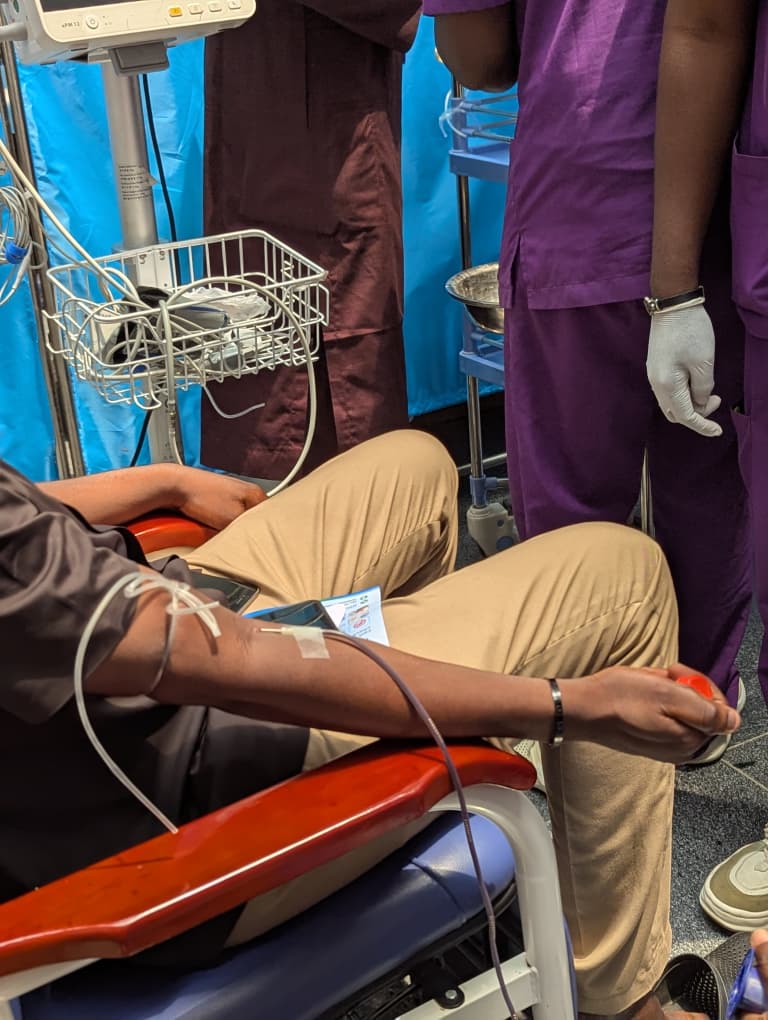
The Global Shapers Community in Kano has organised its 13th annual blood donation drive, collecting 108 bags of blood from voluntary donors to support patients undergoing treatment at health facilities in the state.
The blood donation exercise was held at the Kano Cancer Treatment Centre, located within the Muhammad Buhari Specialist Hospital in Kano, where medical personnel screened donors and collected blood for patients in need.
Speaking during the exercise, Sumayyah Umar Tofa, Curator of the Kano Global Shapers Community, said the organisation was established under the World Economic Forum’s Global Shapers initiative and has a membership of more than 10,000 young people across the world.
Tofa said the turnout for this year’s blood donation exercise exceeded the organisers’ expectations, describing the response from residents as encouraging.
She said the annual initiative was particularly important because of the persistent need for blood in hospitals, adding that the Kano chapter had continued to organise the exercise as part of its community service activities.
According to Tofa, the Kano Global Shapers Community is one of the chapters operating across different parts of Nigeria, with the organisation having a presence in 17 states.
She said the blood donation campaign had now become an annual intervention, with the Kano chapter organising its 13th edition to help address the shortage of blood available for patients requiring transfusion.
Tofa also stressed the importance of blood donation, saying that loss of blood could quickly become life-threatening if a patient does not receive timely medical intervention.
She commended the donors who came forward to support the exercise, saying their decision to donate blood could make a significant difference to patients and families facing medical emergencies.
Also speaking, Mshelia Peter Emmanuel, Lead Blood Donation Therapist at the Kano Cancer Treatment Centre, said the facility was delighted with the response to the blood donation campaign.
Emmanuel said one of the major challenges confronting cancer treatment was the lack of adequate blood, particularly because some cancer patients require transfusion during the course of their treatment.
He said the large turnout of voluntary donors was encouraging because many patients requiring blood transfusion often faced financial difficulties in obtaining it.
According to Emmanuel, the donated blood would not be given directly to patients without undergoing the required screening and testing procedures to ensure that it was safe for transfusion.
He explained that after the blood was collected and screened, it would be made available to patients who were medically eligible to receive it.
Emmanuel thanked the Global Shapers Community, the MSS and other groups and individuals who participated in the exercise, saying voluntary blood donors were effectively contributing to saving lives.
He said every person who donated blood had provided an opportunity for another person to receive life-saving treatment, particularly patients undergoing serious medical conditions such as cancer.
One of the donors, Jabir Uba Ibrahim from Sharada, said he decided to participate in the exercise as part of his contribution to society.
Ibrahim said he did not wait to be specifically called upon before volunteering, explaining that he felt compelled to contribute whenever an opportunity arose to assist other members of the community.
He said the donation exercise was timely and that although he experienced some dizziness after donating blood, medical personnel advised him to sit down, rest and take water.
Ibrahim said the exercise was his first experience of donating blood and expressed his willingness to support similar humanitarian initiatives in the future.
Another participant, Dr Sadik Ahmad, a member of the Global Shapers Community, said the organisation had made blood donation one of its recurring community service activities because of the shortage of blood in hospitals.
Ahmad said the objective of the annual campaign was to mobilise members of the public to voluntarily donate blood, which would subsequently be transferred to hospitals and made available to patients who require transfusion.
He said the current exercise formed part of the blood donation campaigns organised by the Global Shapers Community since its establishment, adding that members and members of the public had responded positively to the call for donations.
Ahmad expressed appreciation to the donors who participated in the exercise, saying the organisers were encouraged by the turnout and the willingness of people to contribute to saving lives.
The organisers said the 108 bags collected during the exercise would support efforts to improve the availability of blood for patients receiving treatment and those requiring emergency transfusion in Kano.
News
Outrage as Parents of Niger State Miners Killed in NSCDC Custody Demand Compensation

By Yusuf Danjuma Yunusa
The death of three underage artisanal miners in the custody of the Nigeria Security and Civil Defence Corps (NSCDC) in Minna, Niger State, has ignited nationwide outrage, with many Nigerians rejecting the families’ demand for compensation as premature and demanding justice instead.
The parents, who are still grappling with the loss of their children, said compensation would serve as a deterrent against abuse of power and ensure accountability among law enforcement officers. But their demand has sparked furious reactions online, with netizens accusing the system of trading justice for money.
Musa Aliyu, 50, lost two sons—Ibrahim, 17, and Abubakar, 12—in the incident. He said the boys were his major source of support, particularly in buying his medications. Aliyu has been ill for the past year.
He said the children left home peacefully on Wednesday for a mining site at Mohammed Inuwa Wushishi Housing Estate but did not return that evening.
“My wife was later informed that some miners had been arrested, so she went to the Civil Defence office near the PDP Secretariat. When she got there, she met a crowd of relatives who had also gone in search of their children,” he said.
“She was informed that our children were dead and we were asked to go to the General Hospital to identify and claim their bodies.
“These children helped me sustain my medication. They contributed money to buy drugs for me. I leave whoever is responsible for the death of my children to Allah. I believe they were killed,” he added, struggling to control his tears.
Another parent, Lawal Mohammad, lost his 15-year-old son, Suleiman. He said he tried to take food to his son on the day of the arrest but was denied access by NSCDC officers.
“We went to the civil defence office on Wednesday night and were asked to return the following day. We went back on Thursday morning to give him food, but we were told that he was dead. I was at the civil defence office when the bodies were brought out and loaded into ambulances,” he said.
“I am in pain, and I cannot forgive this. Those responsible should be made to pay compensation so as to serve as a lesson to others who abuse power.”
Mohammad, who also struggled to control his tears, said his son took to artisanal mining to earn a living and help the family. He appealed to relevant authorities to thoroughly investigate the circumstances surrounding the death and ensure anyone found responsible is held accountable.
The deaths have exposed the grim reality of artisanal mining in Nigeria, where children are often forced into dangerous work to support impoverished families. It has also renewed concerns about the conduct of security agencies and the lack of consequences for abuses.
But while the parents seek compensation, many Nigerians are insisting that justice must come first. Social media has been flooded with angry reactions.
Ufia said: “Poverty is a bastard.”
Nnanyi said: “People now trade justice for money. No way Nigeria is getting better.”
Ebuka said: “Tinubu’s bad government of poverty has damaged their brains.”
The comments reflect a deepening frustration across the country, where many believe compensation is being used to silence grieving families while those responsible for deaths in custody escape punishment.
For many Nigerians, compensation without accountability is not justice. They say the NSCDC must explain how the minors were arrested, what happened while they were in custody, and why the families were denied access to them before they died.
As of the time of this report, neither the NSCDC nor the Niger State government had issued an official statement on the incident.
For Aliyu and Mohammad, the burial of their children will not end their pain. They want answers, accountability and compensation. But a growing section of Nigerians says the priority must be justice—so that no other parent is forced to identify a child’s body at a hospital morgue after a routine trip to earn an honest living.
News
Appeal Court Upholds NDC Party Registration, Overturns Lokoja Ruling
By Yusuf Danjuma Yunusa
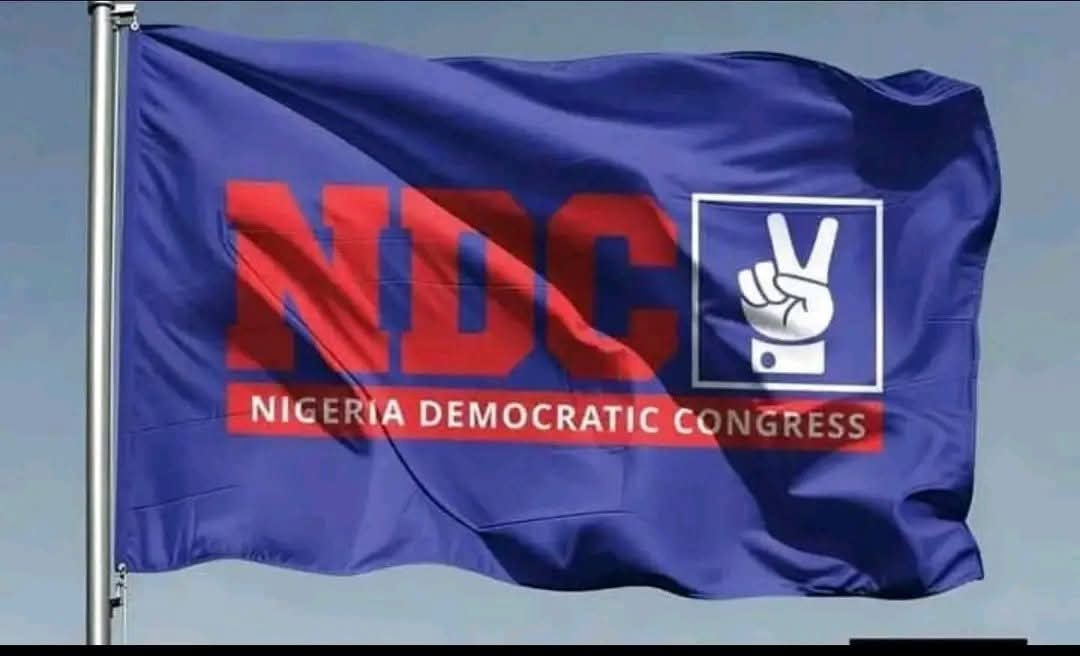
The Abuja Division of the Court of Appeal on Friday set aside a judgement of the Federal High Court that deregistered Nigeria Democratic Congress (NDC).
The two-member majority ruling held that the ruling of June 26, 2026, was an abuse of power, saying the court was wrong to sit over appeal of its own earlier judgment of December 10, 2025, which had directed the Independent National Electoral Commission (INEC) to register the NDC.
The appellate judges also dismissed the adversarial claims over the NDC’s use of a logo said to belong to another political association, the Peace Movement Party (PMP), which was the basis of Justice Isah Dashen’s in December.
Justice Okon Abang dissented in the ruling, saying he would have upheld the deregistering of the NDC, a major opposition party under which Nigerian political figure Peter Obi is contesting the presidency in 2027.

Global Shapers Community Organises 13th Annual Blood Drive in Kano, Collects 108 Bags

The AI RACE And The Future Of Humanity:Can The World Agree Before It Loses Control

Outrage as Parents of Niger State Miners Killed in NSCDC Custody Demand Compensation

Appeal Court Upholds NDC Party Registration, Overturns Lokoja Ruling

They Sprayed Something in the Cell After Putting Us Inside’: Surviving Miner Recounts Ordeal in NSCDC Custody

95% of Governor Abba Kabir Yusuf’s Promises Have Been Fulfilled — CPS Interview By Musa Diso, In Kano

Bello Sharada: A Great Writer, A Bookish Soul, Gone Too Soon

Call Me Chairman, Not Tony!’: Elumelu’s Blunt Correction of Trainee Splits Internet as Old Video Sparks Double Standard Fury

NUT Launches ‘Go Public’ Campaign to Promote Public Education in Nigeria

Nigerians Are Tired of Promises’ — CAN Demands Action on Insecurity, Hardship In Eid-el-Maulud Message
Global Shapers Community Organises 13th Annual Blood Drive in Kano, Collects 108 Bags
The AI RACE And The Future Of Humanity:Can The World Agree Before It Loses Control
Outrage as Parents of Niger State Miners Killed in NSCDC Custody Demand Compensation
Appeal Court Upholds NDC Party Registration, Overturns Lokoja Ruling
They Sprayed Something in the Cell After Putting Us Inside’: Surviving Miner Recounts Ordeal in NSCDC Custody
95% of Governor Abba Kabir Yusuf’s Promises Have Been Fulfilled — CPS Interview By Musa Diso, In Kano
Bello Sharada: A Great Writer, A Bookish Soul, Gone Too Soon
Call Me Chairman, Not Tony!’: Elumelu’s Blunt Correction of Trainee Splits Internet as Old Video Sparks Double Standard Fury
NUT Launches ‘Go Public’ Campaign to Promote Public Education in Nigeria
Nigerians Are Tired of Promises’ — CAN Demands Action on Insecurity, Hardship In Eid-el-Maulud Message
-

 Opinion5 years ago
On The Kano Flyovers And Public Perception
-

 Features5 years ago
How I Became A Multimillionaire In Nigeria – Hadiza Gabon
-

 Opinion6 years ago
Kano As future Headquarters Of Poverty In Nigeria
-

 History5 years ago
Sheikh Adam Abdullahi Al-Ilory (1917-1992):Nigeria’s Islamic Scholar Who Wrote Over 100 Books And Journals
-

 Opinion5 years ago
My First Encounter with Nasiru Gawuna, the Humble Deputy Governor
-

 History5 years ago
The History Of Borno State Governor Professor Babagana Umara Zulum
-

 History5 years ago
The Origin Of “Mammy Market” In Army Barracks (Mammy Ochefu)
-

 News4 years ago
Federal University Of Technology Babura To Commence Academic Activities September