Connect with us

News

Tuta Absoluta Ravages 300 Hectares Of Farmland In Kano

Published

on

The Federal Ministry of Agriculture and Rural Development (FMARD) yesterday said it is desperately looking for funding to tackle the current outbreak of the deadly tomato disease, known as Tuta Absoluta, which had already ravaged over 300 hectares of farmland in Kano alone.

Other states affected by the outbreak include Katsina, Kaduna, and Gombe with the possibility of further spread.

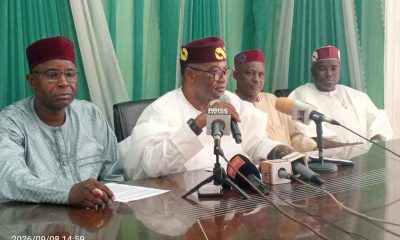
Speaking at a media briefing organised by the Nigeria Agri-Business Group (NABG) in partnership with the Dutch-funded HortNigeria Programme, Director, Horticulture, FMARD, Dr. Deola Lordbanjou, estimated the cost of the Tuta Absoluta in Kano alone at about N1.3 billion.

He said amid the current fiscal challenges, the ministry was making efforts to leverage the Tomato Levy Fund in order to respond to the crisis.

Lordbanjou also said the Ministry of Agriculture is currently in talks with the Federal Ministry of Finance to access the levy.

The FMARD director also berated tomato processors in the country for reneging in the backward integration initiative of the federal government.

Advert

According to him, the local processors were expected to uptake 50 per cent of locally grown tomatoes as their raw input adding that most of them still imported 100 per cent of raw tomato into the country, stressing that the government is currently looking into the situation.

The President, Nigeria Agri-Business Group (NABG), Chief Emmanuel Ijewere, said the losses incurred from the pest attacks had been unimaginable, pointing out that climate change had enhanced the rate at which plant pests move around the fields as a warm environment helps them to spread wider.

He said though the disease may be restricted to a number of states for now, “they don’t need a visa to go to any other state as long as the conditions are right” adding that the devastation is usually total.

He recalled that many years ago, the country had witnessed the tuta absoluta attack which was devastating.

“And they are attacking us at a time our economy is so weak,” he said.

Ijewere, said to avoid a repeat of the devastation caused by the tomato disease to smallholder farmers particularly as seen in 2016, it was imperative for key stakeholders to collaborate and harness resources needed to address the issues early and reduce the negative consequences that will be felt across the value chain- from the farmer to consumer.

Director-General, NABG, Mr. Manzo Maigari, added that farmers in affected states will have the benefit of demonstration of strategies for containment and prevention by technical officers in the field.

On his part, Executive Director, National Horticultural Research Institute (NIHORT), Dr. Mohammed Attanda, said in response to the current outbreak, the institute has developed sustainable environmentally friendly Integrated Management Packages which include biopesticide to effectively kill the egg and the damaging larvae of Tuta and Tuta Trap Tray which kill adult Tuta.

He said the institute had successfully demonstrated and trained farmers on the use of the technologies in Kano, Kaduna, Katsina, Jigawa and Plateau states as well as engaged in enlightenment programmes through the mass media in affected states.

Represented by his aide, Mr. Abiola Oladigbolu, the NIHORT boss recommended that FMARD should incorporate NIHORT sustainable tuta integrated management package for tomato production in the national tomato policy to stem the tide of the occurrence.

Among other things, he said tomato farmers should endeavour to use NIHORT Tuta integrated management package rather than the current reliance and indiscriminate application of synthetic pesticides.

On his part, National Secretary of National Tomato Growers, Processors and Marketers Association of Nigeria (NAPTAN), Alhaji Sani Danladi, said farmers are already counting their losses occasioned by the pest attack.

Essentially, Tuta Absoluta, moth family specie, is a destructive pest that destroyed many tomato farms in Nigeria in 2015.

The loss of yields led to scarcity and an increase in the cost of tomatoes a daily vegetable staple for most Nigerian families leading households to use less nutritious alternatives.

News

Jonathan Urges National Assembly to Overhaul Electoral Litigation Process, Create Specialised Court

Published

on

Good Luck Ebele Jonathan


By Yusuf Danjuma Yunusa

Former President Goodluck Jonathan has called on the National Assembly to overhaul Nigeria’s electoral litigation process by establishing a specialised constitutional court to handle election disputes.

Speaking on Wednesday in Abuja at the 70th birthday and book launch of Senator Gbenga Daniel (APC, Ogun East), Mr. Jonathan argued that a dedicated court would reduce the strain on the political system by resolving election-related cases in a single phase.

He criticised the current three-tier system for governorship disputes—moving from a tribunal to the Court of Appeal and finally to the Supreme Court—as ineffective and unnecessarily prolonged.

Recalling a landmark case from 2011, Jonathan highlighted how technicalities have historically undermined electoral justice. “I remember a particular case where someone lost an election as a governor because the law then stipulated the use of red ink to tick voters’ names,” he said.

Advert

“In an entire senatorial district, they were not provided with red pens and used available black or green pens. As a result, those votes were cancelled. The Appeal Court upheld this, even though the lower tribunal felt that a tick is a tick.”

While acknowledging that the National Assembly later amended the law to allow governorship cases to reach the Supreme Court—specifically to prevent such injustices—Jonathan noted that the amendment failed to address the length of the litigation process.

The former president urged Nigeria to draw lessons from Francophone African countries, which employ specialised constitutional courts for political matters. He proposed that if the Supreme Court must remain the final arbiter for governorship elections, the lower tribunal stage should be eliminated entirely.

“I believe the ideal thing to do, which I was considering when I was in office, was to make sure that it’s only one tribunal that listens to any litigation relating to politics. This is done, especially in the Francophone countries in Africa. They have constitutional courts. Anything about elections, only the constitutional courts take decisions,” Jonathan explained.

He also challenged the judiciary to exercise firmness in its rulings, drawing an analogy to football. “Politics is like soccer, and the judges are the referees. If the referee looks the other way, players will break legs or score with their hands,” he added.

Continue Reading

News

ADC Defies INEC, Vows to Proceed with Congresses Amid Leadership Crisis

Published

on


By Yusuf Danjuma Yunusa

Nigeria’s African Democratic Congress (ADC) has declared it will go ahead with its scheduled congresses and national convention, defying the Independent National Electoral Commission’s (INEC) decision to suspend recognition of the party’s leadership.

The party’s National Publicity Secretary, Bolaji Abdullahi, insisted that the ADC has fulfilled all legal requirements, having formally notified the electoral body of its planned events.

Advert

“We will go ahead with our congresses. We have given INEC 21 days’ notice, they have accepted. Whether they come or not, we will continue with our congresses and our convention,” Abdullahi said during an interview on Arise TV.

His remarks come just days after INEC announced it would withhold recognition of the ADC’s leadership pending the outcome of a court case related to an internal dispute within the party.

The standoff sets the stage for a potential clash between the electoral commission and the opposition party, raising fresh questions about party governance, internal democracy, and the legal limits of INEC’s oversight powers in Nigeria.

Continue Reading

News

ADC Rejects INEC’s Ruling Interpretation, Vows to Clarify Contradictions

Published

on

By Yusuf Danjuma Yunusa

The African Democratic Congress (ADC) has sharply criticized the Independent National Electoral Commission (INEC) over its interpretation of a recent Court of Appeal statement, alleging that the commission has abandoned its neutrality by siding with the federal government.

In a press release issued on Wednesday, the ADC’s National Publicity Secretary, Mallam Bolaji Abdullahi, rejected INEC’s position, describing it as “contradictory and inconsistent with facts.” The party claimed that INEC was acting under pressure from a government it characterized as “jittery” due to the ADC’s growing momentum.

Advert

“We reject INEC’s interpretation of the Court of Appeal ruling,” the statement read. “We knew that INEC was being pressured by a government that has become jittery from the ADC’s rising momentum even in the face of its relentless assault on all opposition parties.”

The ADC accused the electoral commission of caving to political pressure, asserting that it has effectively chosen to align with the government against the Nigerian people. The party vowed to publicly clarify what it called the contradictions in INEC’s statement.

According to the release, the ADC is currently reviewing its legal and political options and will announce its next steps in the coming days. The party urged its members and the public to remain steadfast.

“We are currently reviewing our options, and we shall make these known soon. Meanwhile, we call on our members and all Nigerians to remain steadfast as they await further directives,” the statement concluded, adding the slogans: “Nigeria is rising. ADC is rising.”

Continue Reading

Trending