Connect with us

News

Tuta Absoluta Ravages 300 Hectares Of Farmland In Kano

Published

on

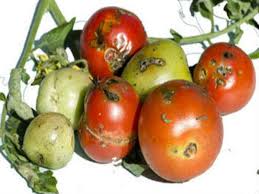
The Federal Ministry of Agriculture and Rural Development (FMARD) yesterday said it is desperately looking for funding to tackle the current outbreak of the deadly tomato disease, known as Tuta Absoluta, which had already ravaged over 300 hectares of farmland in Kano alone.

Other states affected by the outbreak include Katsina, Kaduna, and Gombe with the possibility of further spread.

Speaking at a media briefing organised by the Nigeria Agri-Business Group (NABG) in partnership with the Dutch-funded HortNigeria Programme, Director, Horticulture, FMARD, Dr. Deola Lordbanjou, estimated the cost of the Tuta Absoluta in Kano alone at about N1.3 billion.

He said amid the current fiscal challenges, the ministry was making efforts to leverage the Tomato Levy Fund in order to respond to the crisis.

Lordbanjou also said the Ministry of Agriculture is currently in talks with the Federal Ministry of Finance to access the levy.

The FMARD director also berated tomato processors in the country for reneging in the backward integration initiative of the federal government.

Advert

According to him, the local processors were expected to uptake 50 per cent of locally grown tomatoes as their raw input adding that most of them still imported 100 per cent of raw tomato into the country, stressing that the government is currently looking into the situation.

The President, Nigeria Agri-Business Group (NABG), Chief Emmanuel Ijewere, said the losses incurred from the pest attacks had been unimaginable, pointing out that climate change had enhanced the rate at which plant pests move around the fields as a warm environment helps them to spread wider.

He said though the disease may be restricted to a number of states for now, “they don’t need a visa to go to any other state as long as the conditions are right” adding that the devastation is usually total.

He recalled that many years ago, the country had witnessed the tuta absoluta attack which was devastating.

“And they are attacking us at a time our economy is so weak,” he said.

Ijewere, said to avoid a repeat of the devastation caused by the tomato disease to smallholder farmers particularly as seen in 2016, it was imperative for key stakeholders to collaborate and harness resources needed to address the issues early and reduce the negative consequences that will be felt across the value chain- from the farmer to consumer.

Director-General, NABG, Mr. Manzo Maigari, added that farmers in affected states will have the benefit of demonstration of strategies for containment and prevention by technical officers in the field.

On his part, Executive Director, National Horticultural Research Institute (NIHORT), Dr. Mohammed Attanda, said in response to the current outbreak, the institute has developed sustainable environmentally friendly Integrated Management Packages which include biopesticide to effectively kill the egg and the damaging larvae of Tuta and Tuta Trap Tray which kill adult Tuta.

He said the institute had successfully demonstrated and trained farmers on the use of the technologies in Kano, Kaduna, Katsina, Jigawa and Plateau states as well as engaged in enlightenment programmes through the mass media in affected states.

Represented by his aide, Mr. Abiola Oladigbolu, the NIHORT boss recommended that FMARD should incorporate NIHORT sustainable tuta integrated management package for tomato production in the national tomato policy to stem the tide of the occurrence.

Among other things, he said tomato farmers should endeavour to use NIHORT Tuta integrated management package rather than the current reliance and indiscriminate application of synthetic pesticides.

On his part, National Secretary of National Tomato Growers, Processors and Marketers Association of Nigeria (NAPTAN), Alhaji Sani Danladi, said farmers are already counting their losses occasioned by the pest attack.

Essentially, Tuta Absoluta, moth family specie, is a destructive pest that destroyed many tomato farms in Nigeria in 2015.

The loss of yields led to scarcity and an increase in the cost of tomatoes a daily vegetable staple for most Nigerian families leading households to use less nutritious alternatives.
News

Former Kano Federal Lawmaker Shaaban Sharada Distances Self From Barau Group’s Endorsement of New Deputy Governor

Published

on


Former federal lawmaker Shaaban Ibrahim Sharada has publicly disassociated himself from a political group linked to Senator Barau Jibrin, which reportedly convened a meeting to endorse Kano State’s new Deputy Governor.

Sharada, who represented Kano Municipal in the House of Representatives between 2019 and 2023, issued the clarification on his verified Facebook page. In the statement, he emphasized that he has no affiliation with the group and no involvement in the planned gathering.

The Facebook post

The Facebook post

“I would like to take this opportunity to distance myself from a gathering that is said to be organized on, Tuesday, by the Abba, Barau, and Sha’aban Sharada group. They plan to declare their position regarding the current situation of endorsing new Deputy Governor of Kano under the leadership of Hon. Iliyasu Koki, which has already been published in the media,” Sharada wrote.

Advert

He further stressed that he was unaware of the group’s formation and had no hand in organizing the meeting, adding that he did not even know its purpose.

The former lawmaker with prays for peace and well-being of Kano State:

“May Allah grant us health and peaceful living. Ameen, summa ameen.”

Sharada’s statement comes due to heightened political activity in Kano following the resignation of the former Deputy Governor Comrade Aminu Abdulsalam , with various factions and interest groups positioning themselves on the matter.

His distancing showcases the fluid alliances and tensions within Kano’s political landscape, particularly among figures associated with Senator Barau Jibrin.

Continue Reading

News

To Support the Family in This Difficult Time, Hon. Bichi Donates ₦100 Million to Late Colleague’s Family

Published

on


Hon. Abubakar Kabir Abubakar Bichi, Chairman of the House Committee on Appropriations and representative of Bichi Federal Constituency, has donated ₦100,000,000 (One Hundred Million Naira) to the family of his late colleague, Hon. Barrister Muhammad Hassan.

The condolence visit, led by Hon. Bichi and members of the Appropriations Committee, was held in Abuja following the passing of Hon. Hassan last Friday night at the age of 62. The late lawmaker, who represented Dawakin Kudu/Warawa Federal Constituency in Kano State, succumbed after a prolonged illness. His death has drawn widespread mourning from fellow legislators, political associates, and constituents who hailed him as a dedicated public servant committed to the welfare of his people.

Advert

During the visit, prayers were offered for the repose of his soul, with colleagues asking Allah (SWT) to forgive his shortcomings, show him mercy, and grant him Aljannatul Firdaus. The atmosphere was deeply emotional as lawmakers reflected on his contributions to governance and his enduring legacy.

Hon. Bichi’s donation of ₦100 million was described as a significant show of compassion, underscoring the bond among members of the House of Representatives and their commitment to supporting one another in times of grief. The gesture is expected to provide relief to the bereaved family as they navigate this difficult period.

The late Hon. Hassan is survived by three wives and 18 children, leaving behind a large family and a legacy of service. As condolences continue to pour in, prayers have been extended for strength and comfort to his family, colleagues, and the people of Dawakin Kudu/Warawa Federal Constituency.


Continue Reading

News

Borno Airstrike: President Tinubu Meets Service Chiefs

Published

on


By Yusuf Danjuma Yunusa

President Bola Tinubu is currently holding a security meeting with service chiefs, intelligence heads, and the Inspector-General of Police at the State House, Abuja.

The meeting, which began at about 2:00 pm on Monday, is the first item on the President’s agenda since his return to Abuja from Bayelsa State on Friday.

The emergency session comes amid heightened security concerns following the United States’ authorisation of non-emergency embassy staff to leave Abuja and a controversial military airstrike in Borno State that killed over 100 civilians.

Those in attendance at the ongoing meeting include the Chief of Defence Staff, the Chiefs of the Army, Navy, and Air Staff, the Director-General of the Department of State Services, the Director-General of the National Intelligence Agency, and the Inspector-General of Police, Tunji Disu.

The National Security Adviser, Nuhu Ribadu, is also attending the closed-door session at the Presidential Villa.

On April 8, 2026, the US State Department authorised the voluntary departure of non-emergency government employees and family members from the US Embassy in Abuja, citing a “deteriorating security situation.”

The decision placed 23 of Nigeria’s 36 states under a “Level 4: Do Not Travel” designation, the highest risk category, adding Plateau, Jigawa, Kwara, Niger, and Taraba to the list.

Advert

The US highlighted threats from Islamist insurgents in the Northeast, criminal gangs in the Northwest, and ongoing violence in parts of southern and southeastern Nigeria, including oil-producing regions.

The embassy said visa appointments in Abuja had been suspended, though the Lagos consulate continues to provide routine and emergency services.

The Federal Government said the travel alert was guided by US internal protocols and did not reflect the overall security situation across Nigeria.

“While we acknowledge isolated security challenges in some areas, there is no general breakdown of law and order, and the vast majority of the country remains stable,” Minister Mohammed Idris stated.

The security meeting also comes hours after a Nigerian Air Force strike targeting Boko Haram terrorists hit Jilli Market along the Borno-Yobe border on Saturday, April 11, 2026, killing over 100 civilians, including children, and injuring many others.

Amnesty International cited survivors as saying at least 100 people were killed in the airstrike, with some reports putting the death toll as high as 200.

The Air Force acknowledged conducting “precision mop-up airstrikes on identified terrorist locations” in the Jilli axis of Borno State but made no reference to hitting a civilian market.

However, the Presidency defended the operation.

Speaking with Bloomberg earlier on Monday, Special Adviser to the President on Media and Publicity, Temitope Ajayi, said, “The market was a legitimate military target because it has been turned into a logistics and trading hub by Boko Haram and ISWAP terrorists.”

Amnesty International condemned the strike, calling for an independent investigation and describing it as evidence of “the Nigerian military’s shocking disregard for the lives of those it supposedly exists to protect.”

Military air raids have killed at least 500 civilians since 2017, according to multiple reports, with failures in intelligence gathering and coordination between ground forces and air assets cited as contributing factors.

Nigeria is battling multiple security threats across its six geopolitical zones, including Boko Haram and Islamic State West Africa Province insurgency in the Northeast, banditry and kidnapping in the Northwest and North-Central regions, and separatist violence in the Southeast.

Major attacks in 2026 include the February 3 massacre in Woro, Kwara State, where over 100 people were killed and 176 kidnapped, and multiple mass abductions across northern states.

Amnesty International reported that at least 1,100 people were abducted between January and April 2026, though the Police disputed the figure as unverified.

Continue Reading

Trending