
News
Hanifa’s Judgement: Ganduje will not renege commitment to assent death warrant.

Kano state government has assured commitment to accomplish all legal proceedings on the conviction of Abdulmalik Tanko and Hashimu Isiyaku, killers of Hanifa Abubakar.
Justice Usman Na’aba of Kano state high court recently found the prime suspect and his accomplice guilty of kidnapping the six years old pupil and sentence both to death by handing.
Besides, the capital punishment, court committed the Abddulmalik and Hashimu to five years jail term for guilty of other three charges in the counts.
However, the third defendant, Fatima Musa was sentenced to two years imprison after found guilty of criminal conspiracy and attempted kidnapping.
In the wake of the prosecution, Governor Abdullahi Umar Ganduje vowed to assent to possible death warrant as soon as convicted.
However, the criminal trial bordered on kidnapping, attempted kidnapping, concealment, abatement, and criminal conspiracy, that was concluded within the space of six months is generating fresh concern.
Two Days After Kano Tragedy,8 Year Old Girl Kidnapped And Killed In Zaria
The growing concern is peddling on whether or not Governor Abdullahi Umar Ganduje would actually the pledge made on signing the death warrant of the convicts, if condemned to death.
Citing cases of pending trials, those mounting concern are worried that culprits in the Hanifa’s case may finally regain freedom after years deliberate incarceration. The anxiety was based on the fact that no executive Governor has signed similar death warrant.
Reacting to the development, Attorney General and Commissioner for Justice in Kano, Musa Abdullahi Lawan allayed the public concern just as he reassured Governor Ganduje’s readiness to fulfill his promise.
Lawan reminded that though, the Nigerian Correctional Service is responsibility for issuance of the certificate, he said such provision would only be provided after the expiration of 90 days of appeal.
The Attorney General explained that the despite the conviction, the two convicts have rights to seek appeal against the lower court judgement.
Speaking with journalists, Lawan said ” The court has passed judgement sentence two of the accused to death by hanging and the Governor has promised to sign the death warrant, so we are waiting for the 90 days window period for appeal before we do the needful.
” The constitution allows and given the convicts rights of appeal about three months window period. Remember when this trial started we promised Nigeria the commitment to prosecute the case to the logical conclusion and as speedy as possible and by the will of God that happened.
In six months, the trial judge concluded the case within six months. This is commendable. So if there is appeal, we would remind the public that government is ready for the appeal at any given time. Not only that, we would make sure the trial and judgement is given equal commitment and speedy completion. I can assured the public that we are matching the trial with all sense of responsibility and seriousness”. AG noted.
He added that, “For the people raising questions on whether the Judgement would be executed or not, all I can say is the law is the law. We would wait for after the 90 days grace of appeal. If they appeal fine we would equally swing to action if they did not, as soon as the waiting period expired the governor will do the needful












News
IITA Trains Over 1,800 Farmers on Modern Farming Techniques in Kano
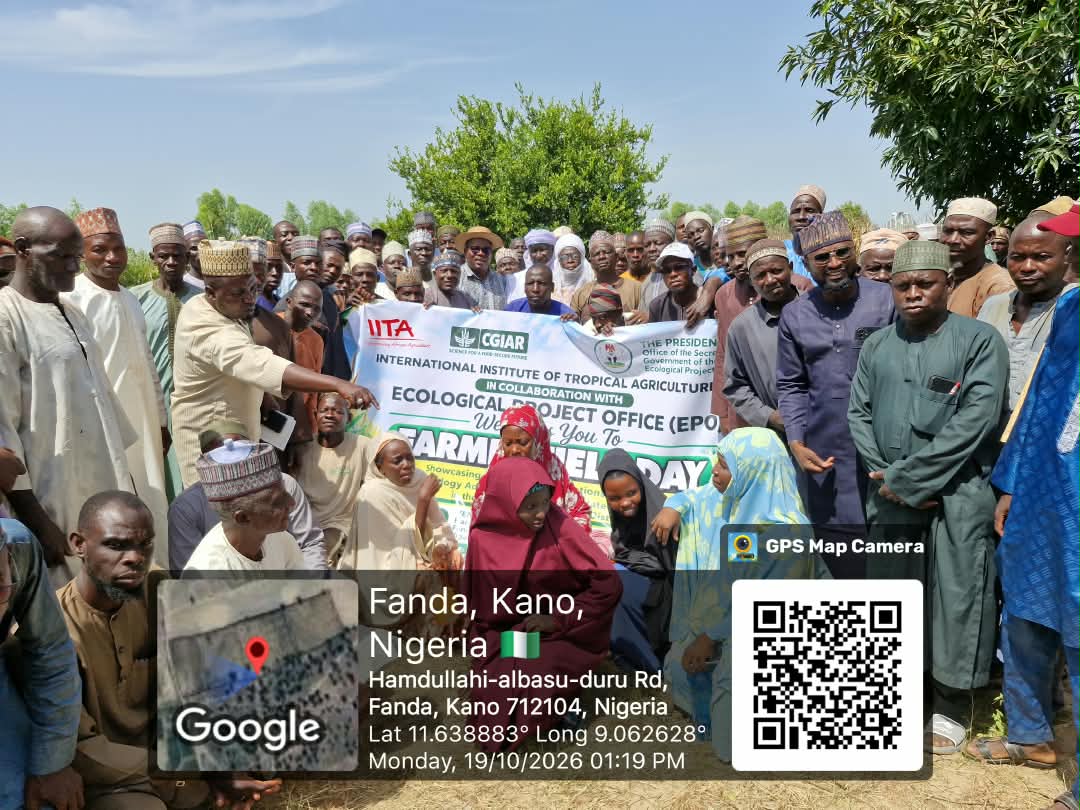
The International Institute of Tropical Agriculture (IITA), in collaboration with Nigeria’s Ecological Project Office (EPO), has trained more than 1,800 farmers in Kano State on modern farming techniques aimed at increasing crop yields and improving food production.
The programme covered farmers from 16 local government areas in Kano South Senatorial District, equipping them with modern agricultural practices to improve farm productivity and address challenges associated with farming, particularly during the dry season.
The training and demonstration of improved farming technologies took place in Hamdullahi community, Albasu Local Government Area, where farmers were introduced to improved crop varieties and other techniques for achieving higher yields.
Speaking at the event, IITA Project Coordinator, Professor Lucky Omoigui, said the training was designed to enhance farmers’ knowledge of improved seed varieties and modern agricultural practices.
He disclosed that more than 1,800 people had benefited from the programme, expressing optimism that the knowledge gained would encourage dry-season farming and boost food production.
Omoigui urged the participating farmers to apply the knowledge acquired to improve their farming practices and increase crop yields.
As part of the programme, the farmers visited demonstration farms, where they were shown modern techniques for cultivating crops, including cowpeas, maize, soybeans, groundnuts, sorghum and rice.
Speaking on behalf of EPO, Bashir Ibrahim Umar said agriculture plays a vital role in poverty reduction and job creation, particularly for young people in Nigeria.
He stressed the need for sustained farmer awareness campaigns and access to agricultural knowledge to encourage the adoption of modern farming technologies and improve livelihoods.
Also speaking, Garba Ayuba, who represented the Chairman of Albasu Local Government Area, Garba Aliyu Hungu, expressed satisfaction with the programme and urged farmers to put the techniques they had learnt into practice.
Similarly, the Gaya Zonal Director of the Kano State Agricultural and Rural Development Authority (KNARDA), Danjuma Uba, commended the farmers for their interest in learning modern agricultural practices.
He emphasised that collaboration between agricultural development agencies and farmers was essential to ensuring the sustainable adoption of modern farming technologies.
In his remarks, Alhaji Saidu Abdulkadir Hamdullahi, whose farm was used to demonstrate the improved crop varieties, said some people had previously doubted the possibility of achieving successful crop production during the dry season.
However, he expressed surprise and delight at the results achieved on his farm, saying the experience had boosted his confidence in dry-season farming.
He thanked IITA and its partners for the training, noting that the programme had improved farmers’ knowledge of seed planting, fertiliser application and other modern agricultural practices.
According to him, the new knowledge would help farmers increase productivity and improve their income.
The initiative forms part of broader efforts to strengthen the agricultural sector by encouraging farmers to adopt modern technologies to improve food production and reduce poverty in Nigeria, particularly in areas facing water shortages.
IITA Technical Support through the Ecological Project Office to promote the best climate-smart agricultural practices around the dams to boost food production and increase the income of smallholder farmers in the Kano South Senatorial District
The International Institute of Tropical Agriculture (IITA) is collaborating with the Ecological Project Office (EPO) to leverage the Federal Government’s rehabilitation and expansion of irrigation infrastructure in the Kano irrigation project, covering Tiga Dam, Challawa Gorge Dam, and Kafin-Chiri Dam in the Kano South Senatorial District, to promote sustainable irrigation and dry-season farming to boost agricultural productivity and increase the income of smallholder farmers. The collaboration under the project “Community-based Engagement on Sustainable Agriculture and Biodiversity Restoration for the Kano Irrigation Scheme” is being implemented across the 16 Local Government Areas (LGAs) surrounding the dams (comprising Ajingi, Garko, Bunkure, Doguwa, Tudun Wada, Karaye, Gaya, Albasu, Kibiya, Rogo, Kiru, Wudil, Bebeji, Sumaila, Takai, and Rano), covering 155 communities.
The project interventions aim to boost year-round farming by combining irrigation with climate-smart practices to increase productivity and income, enhance food security, and improve the livelihoods of smallholder farmers. A total of 1,890 farmers, 20% of whom are women, have been trained in Integrated Soil Fertility Management (ISFM), climate-smart irrigation and water-harvesting technologies, and youth entrepreneurship in climate-smart agricultural practices across the 16 LGAs to enhance their resilience to climate-related vulnerabilities.
Participating communities have witnessed increased farming activities and improved access to and use of climate-smart agricultural technologies, contributing to increased productivity, income, and food security.
News
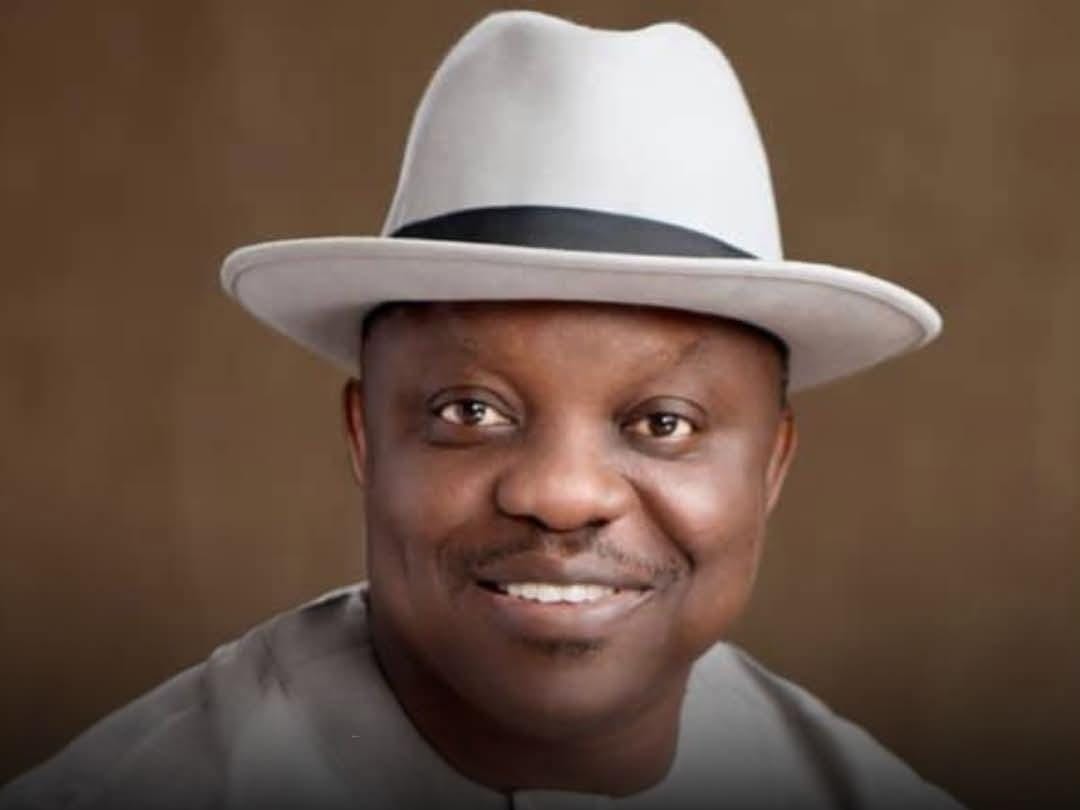
Former Delta State Governor, Emmanuel Uduaghan, Dies At 71
By Yusuf Danjuma Yunusa
Former Delta State Governor, Dr Emmanuel Eweta Uduaghan, has reportedly passed away at the age of 71.
Uduaghan, who led Delta State for two terms between 2007 and 2015, reportedly died on the morning of Monday, October 19, 2026.
His death was announced in a statement issued by the family and signed by Toju Anire Uduaghan on their behalf.
The family described his passing as a painful loss, noting that his contributions and years of service left a lasting impact on individuals and communities across Delta State and Nigeria.
“He was a source of strength, a father figure, a beloved brother and uncle, and a respected elder. We will deeply miss his presence and forever cherish the memories and legacy he leaves behind,” the statement read.
Before becoming governor, Uduaghan served as Delta State Commissioner for Health from 1999 to 2003 and later held the position of Secretary to the State Government from 2003 to 2007.
He assumed office as governor in 2007 and spent eight years leading the state, with a focus on advancing human development and infrastructure.
While mourning their loss, the family expressed gratitude to God for his life and the service he rendered, while offering prayers for strength and comfort for those grieving his passing.
“Your memory will forever remain in our hearts, and your legacy will endure in the lives of those you touched,” the statement added.
News
Astute Civil Society Raises Concern Over Exclusion of Gubernatorial Candidates
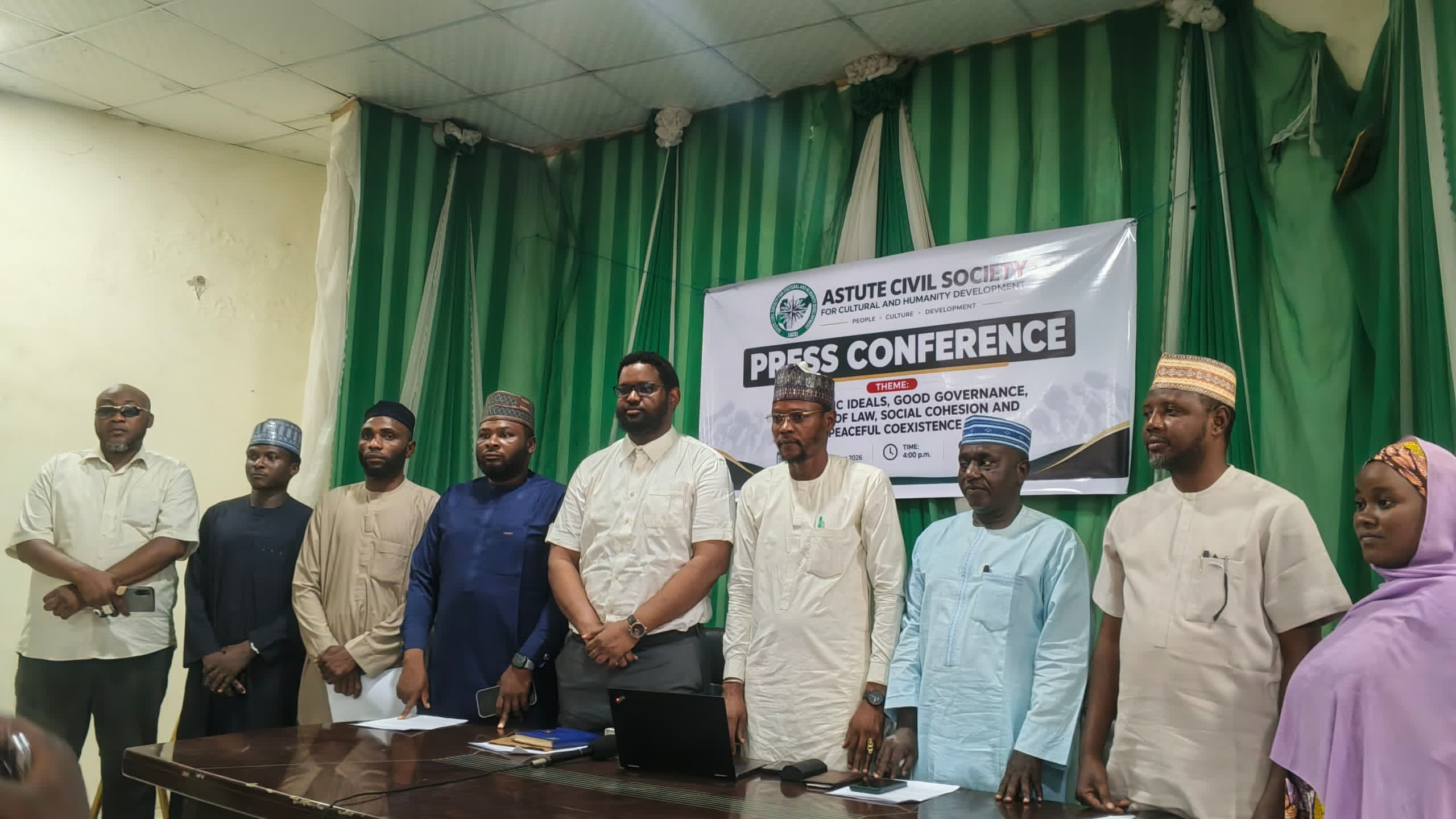
The Astute Civil Society for Cultural and Humanity Development has expressed concern over the exclusion of some governorship candidates from the Independent National Electoral Commission’s (INEC) final list of candidates for the 2027 general elections, calling for transparency, fairness and a review of disputed cases.
Comrade Ibrahim Ali, who represented the organisation, stated this on Saturday while addressing journalists at the Nigeria Union of Journalists (NUJ) Secretariat, Kano, during a press conference on democratic principles, electoral fairness, the rule of law and peaceful coexistence.
Ali said the organisation was concerned about reports that several candidates had been omitted from INEC’s final list, including Kano State Deputy Governor Aminu Abdussalam Gwarzo and his running mate, Mustapha Rabiu Kwankwaso.
He said similar concerns had emerged in other states, particularly Gombe and Ogun, where the Peoples Democratic Party’s governorship candidates, Isa Ali Pantami and Oladipupo Adebutu, popularly known as Ladi Adebutu, alongside his running mate, were reportedly affected by the omissions.
According to Ali, the developments had attracted public attention and raised questions about the circumstances surrounding the affected candidates’ nominations and their exclusion from the final list.
The civil society organisation acknowledged that INEC had attributed the exclusions to compliance with statutory requirements relating to political party membership registers, following a recent Supreme Court judgment.
However, Ali said the organisation recognised the importance of complying with electoral laws and respecting judicial decisions while insisting that disputed cases should be examined fairly and transparently.
He maintained that the organisation was not demanding special treatment for any candidate or political party but was advocating a process that would allow relevant facts, submitted evidence and applicable legal provisions to be considered before conclusions were reached.
“Our position is simple: compliance with the law must be upheld, and where an omission is disputed, the facts should be examined fairly and the outcome clearly communicated,” Ali said.
He added that no candidate should automatically be presumed eligible simply because an omission was challenged, just as no disputed exclusion should be treated as beyond review without considering the relevant facts and provisions of the law.
Ali urged INEC to establish a fair, transparent and case-specific review process for affected candidates and political parties, stressing that electoral authorities had a responsibility to administer the electoral process impartially and consistently.
He said democracy depended on institutions that applied the law fairly, political parties that fulfilled their statutory obligations and candidates who met the prescribed requirements.
The organisation further called on INEC to communicate clearly with affected political parties, examine properly submitted complaints within the applicable timelines and take corrective action wherever the facts and law justified such steps.
Ali noted that transparent handling of the disputed cases would help strengthen public confidence in the electoral commission and demonstrate that electoral administration was guided by evidence, due process and impartiality.
On the implications of the controversy for peace and stability, he warned that unresolved electoral disputes could undermine public trust, deepen mistrust among political stakeholders and create avoidable tensions within communities.
He observed that Kano State, like other parts of Nigeria, had a diverse population with competing political interests and strong expectations regarding democratic participation, making transparent communication of electoral decisions particularly important.
According to him, uncertainty surrounding the exclusion of candidates could generate public anxiety, especially where affected political parties and their supporters believed their concerns had not received adequate consideration.
Ali, however, stressed that the organisation did not intend to alarm the public, assign blame or threaten any institution, but rather to encourage the timely, lawful and peaceful resolution of electoral disputes.
He urged political parties, candidates, their supporters, civil society organisations and members of the public to remain calm, exercise restraint and pursue their grievances through established legal and administrative channels.
The organisation also cautioned political actors against allowing differences over electoral matters to degenerate into hostility, emphasising that peace, national unity and democratic progress should take precedence over partisan interests.
As part of its recommendations, the group called on INEC to undertake a thorough review of disputed exclusions involving candidates and political parties that maintained they had fulfilled the applicable statutory requirements.
It also urged the commission to provide clear, case-specific explanations whenever a candidate was excluded, including references to the relevant legal provisions and the facts informing the decision.
Ali said that where a review established that an exclusion resulted from an error, INEC should take appropriate corrective measures, provided such action was permitted under the applicable legal framework.
The organisation further urged all political parties, candidates and public institutions to respect the rule of law and comply with lawful court decisions, noting that electoral disputes should be resolved through established procedures rather than inflammatory public statements.
It also called on relevant institutions to communicate transparently and act impartially to protect public confidence in the electoral process ahead of the 2027 general elections.
Reaffirming the organisation’s position, Ali said its intervention was not an endorsement of any political party or candidate but a call for an electoral process in which the law was respected, legitimate concerns received fair consideration and public institutions remained accountable to citizens.
He also urged the media to report electoral developments accurately and responsibly, saying journalists had an important role to play in informing the public, promoting accountability and creating an atmosphere conducive to peaceful democratic participation.
Ali called on INEC to ensure that disputed exclusions were addressed promptly and transparently, while urging political stakeholders and citizens to place the interests of their communities and the country above partisan differences.
He said the organisation remained committed to promoting democratic principles, cultural and human development, peaceful coexistence and responsible civic engagement as Nigeria prepared for another electoral cycle.

IITA Trains Over 1,800 Farmers on Modern Farming Techniques in Kano

Former Delta State Governor, Emmanuel Uduaghan, Dies At 71

Astute Civil Society Raises Concern Over Exclusion of Gubernatorial Candidates

WHC Solar Trains 300 Youths in Kano to Prevent Installation Errors, Fire Outbreaks

Emir Sanusi Seeks Compensation, Reallocation of Demolished Eid Ground Stalls

Zamfara Varsity ASUU Threatens Warning Strike Over FG-ASUU Agreement, Promotion Arrears

PCACC Arrests Man Over Alleged ₦4.5m Sale, Illegal Leasing of Kano Government Horse Stable

Kano Monitors ₦48.9bn Projects Across Six LGAs

Goje’s Electoral War:The Confrontation With Tinubu,Governor Inuwa,Usman Kumo And APC candidates Ahead Of 2027

Prof Yusuf Adamu Delivers BUK’s 63rd Professorial Inaugural Lecture, Reflects on Medical Geography and Academic Legacy
IITA Trains Over 1,800 Farmers on Modern Farming Techniques in Kano
Former Delta State Governor, Emmanuel Uduaghan, Dies At 71
Astute Civil Society Raises Concern Over Exclusion of Gubernatorial Candidates
WHC Solar Trains 300 Youths in Kano to Prevent Installation Errors, Fire Outbreaks
Emir Sanusi Seeks Compensation, Reallocation of Demolished Eid Ground Stalls
Zamfara Varsity ASUU Threatens Warning Strike Over FG-ASUU Agreement, Promotion Arrears
PCACC Arrests Man Over Alleged ₦4.5m Sale, Illegal Leasing of Kano Government Horse Stable
Kano Monitors ₦48.9bn Projects Across Six LGAs
Goje’s Electoral War:The Confrontation With Tinubu,Governor Inuwa,Usman Kumo And APC candidates Ahead Of 2027
Prof Yusuf Adamu Delivers BUK’s 63rd Professorial Inaugural Lecture, Reflects on Medical Geography and Academic Legacy
-

 Opinion5 years ago
On The Kano Flyovers And Public Perception
-

 Features5 years ago
How I Became A Multimillionaire In Nigeria – Hadiza Gabon
-

 Opinion6 years ago
Kano As future Headquarters Of Poverty In Nigeria
-

 History6 years ago
Sheikh Adam Abdullahi Al-Ilory (1917-1992):Nigeria’s Islamic Scholar Who Wrote Over 100 Books And Journals
-

 Opinion5 years ago
My First Encounter with Nasiru Gawuna, the Humble Deputy Governor
-

 History5 years ago
The History Of Borno State Governor Professor Babagana Umara Zulum
-

 History6 years ago
The Origin Of “Mammy Market” In Army Barracks (Mammy Ochefu)
-

 News5 years ago
Federal University Of Technology Babura To Commence Academic Activities September