
Friday Sermon
Friday Sermon] How To Bring A Real, Permanent, Sustainable, Useful And Beneficial Change!
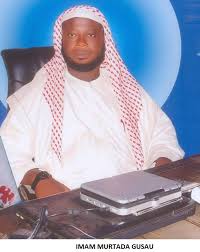
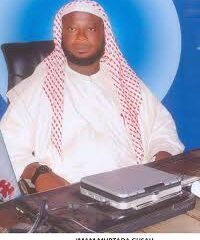
By Imam Murtadha Gusau
In the name of Allah, the Most Gracious, the Most Merciful
Verily, all praise is for Allah. We praise Him, we seek His assistance and we ask for His forgiveness. And we seek refuge in Him from the evils of our selves. Whoever Allah guides, none can misguide. Whoever He misguides, none can guide. And I bear witness that there is no deity other than Allah and I bear witness that Muhammad is His servant and messenger.
Dear brothers and sisters! Allah Almighty says:
“Indeed, Allah will not change the condition of a people until they change what is in themselves.” [Qur’an, 13:11]
Respected servants of Allah! The topic I’d like to discuss today in my sermon is about real change not empty change.
If we look at the best companies in the world, many of you work in those very companies. Change is very important. Adapting to change, adapting to the economic hardship, adapting to whatever’s going on, being able to become better and better, looking at feedback from customers. Looking at what the market is saying and how to match what the market needs.
The best teachers – they don’t teach every lesson the same way. They’re always wondering: how can we be better? How can we teach better?
The best athletes, every shot they take, they’re learning for the next shot. And they’re not afraid of taking those shots. For example, Michael Jordan said you miss 100% of the shots you don’t take.
You don’t take a shot, you can’t make it. So how can you learn from every single shot that you try to make? And as Muslims, how do we be better Muslims? How can we make change? Not only for ourselves, but for our families and for our community and for our countries and for our global Muslim Ummah, which especially now is hurting more than ever because of what’s going on (insecurity).
The Masjid al-Aqsa in Palestine – may Allah help our brothers and sisters there. What’s going on in China with the persecution of Muslims there, and in Burma and so many other places. As Muslims, it’s so important for us to understand the process of change and how to effect change. And to ensure that this isn’t just be something we preserve for our professional life.
Many of us are really good at our professional life, where we talk about these kinds of things, but how can we bring that ability to manage change and that ability to make change? How can we bring that to, not only our Muslim brothers, not only our community, not only our families, but to ourselves.
And if we look at our history, if we look at the reason that the Qur’an tells us for why we came to this earth, it was a process of change. Shaitan (Satan) was unable to change his view. Iblis was unable to change his mindset. He was unable to seek forgiveness and learn from his mistake. He was unable to be better.
He was unable to let go of his ego and his arrogance. And so he became Ar- Rajim – the cursed one. If we look at Prophet Adam and Hawwa’, they changed. They sought forgiveness. They learned from their mistake. And that’s what brings us here to earth – the process of change.
A lot of times we fear change. We fear that question: “what will happen when?” When COVID-19 started, how many people were so afraid of what’s going to happen? We were all stressed out about whatever is going to transpire. So having that trust in Allah throughout that process is incredibly important.
And I’d like to discuss how our beloved Prophet Muhammad (Peace be upon him) made change. Of course he made change in so many ways, but what are some of the things that we can discuss in the time that we have?
How did the Prophet (Peace be upon him) spark this civilisation that, in one hundred years, spread from the coasts of West Africa to China, in such a short amount of time? How did that happen so quickly? How was the Prophet (Peace be upon him) able to change a very rough society, a tribal society in the middle of the desert, with very few resources? Most people could not read or write. He himself could not read or write. How did the Prophet (Peace be upon him) make change with such huge obstacles and challenges where he could not even count on his own family members for support? Where his own uncles, his own family members – the Quraish, Abu Lahab – his own family members were against him. So, in the face of such challenges and seemingly unsurmountable obstacles, how did the Prophet (Peace be upon him) was able to actually affect change? And so let’s take a look.
The first thing that we notice about the Prophet (Peace be upon him) process is that the change did not happen all at once. It was not something that the expectation was that, as soon as Prophet Muhammad (Peace be upon him) says it, then it must happen and that’s it, and there’s nothing anyone can do about it. But rather, it was known that this is going to be a long-term mission, but there was a vision behind this.
There’s a set of steps that needed to take place, and each step was important on the journey. It wasn’t just about the end, but it was also about the means to get there. And that’s why I encourage all of us and anyone who want to bring real change to read the history of the life of the Prophet Muhammad (Peace be upon him). What did he go through and how was he able to make the change that he did?
What we see is a gradual change. Take something simple, like the prohibition of alcohol. It’s a very simple case where it did not come down all at once, but rather it came down gradually.
Also because, in the time of Makkah, the Muslims were not allowed to fight back. They were in Makkah. They were amongst the oppressors. The permission only came once they were in Madinah, and they could actually defend themselves and they could actually protect themselves.
And so this process has to be gradual. And yes, there’s, short-term things we can do and that we should do, but we must realise that it is a process that takes time.
The second thing we see in the way of the Prophet Muhammad (Peace be upon him) is that he approached things with a kinder way, with a gentler way. He could have been very authoritative, and he could have taken actions very harshly, but rather he tried his best to find the kinder way. And that is why, Allah Almighty says:
“If you were harsh and they would have ran away from you. But it was by the mercy of Allah that you were gentle to them.” [Qur’an, 3:159]
That was a part of his character. So, how can you approach things in a nuanced way? How can you approach things with gentleness? Realise that things aren’t what they seem.
The example of the man who urinated in the mosque, the bedouin man – the rest of the companions were ready to jump at him, but the Prophet (Peace be upon him) told them to let him finish and then they cleaned it up. Then that man accepted Islam. Or the example of the Jewish man and who came to test the Prophet (Peace be upon him) grabbed his shirt, and asked him for his debt and Umar was ready to jump at the guy, and Prophet (Peace be upon him) said:
“Wait, pay him his debt and pay him extra because you scared him.”
The Prophet (Peace be upon him) found ways. He was just, but he also tried his best to find the gentle way.
The third thing that the Prophet (Peace be upon him) did is that he brought in others. He had his Sahabah – the companions. The Prophet (Peace be upon him) did not try to do everything on his own. A lot of times, we have a great idea where we think, “I don’t need help from anybody else. Let me just do this by myself.” But actually, the Prophet (Peace be upon him) built a strong community. He realised that his efforts were not enough by himself. He would not be able to do it. He would need so many people with so many different talents and abilities and skills. He realised that he needed an Ummah. And this is what Allah commanded him to do. But it’s not enough just to have these solo activities that is approached at a large scale at the Ummah level.
The Prophet (Peace be upon him) was also told by Allah that every single member of that Ummah is important. The first martyr in Islam was a woman. By the name of Sumayyah. She was the first one who died for the sake of Islam. Every single person was important to the Prophet (Peace be upon him) in seeing that change play out. In the Qur’an, Allah tells us:
“Do not only turn your attention to those who are wealthy and powerful, but keep in mind the blind person and keep in mind the poor person.“
And Prophet (Peace be upon him) has even told us this. And so every member of that Ummah mattered.
And then we also have very familiar story in the Qur’an. The story of Prophet Dawud and Jalut – the story of a Supreme army. We have Prophet Dawud with his small group of followers, and he is able to, against the odds, defeat Jalut. Allah helps Prophet Dawud, and we see this in the time of the Prophet Muhammad (Peace be upon him) too. We see this at the battle of Badr, and at the battle of Uhud. We see it time and time again. The Muslims were small in number, yet they are able to succeed with the help of Allah and by the permission of Allah and by the wisdom of Allah.
We see this in the story of Prophet Musa that, even though Allah did such incredible miracles for Prophet Musa, Prophet Musa was still told to act in the way that he could. Prophet Musa was told to go to Fir’aun (Pharaoh) and to speak to him. And Prophet Musa was worried. He said:
“What about my speech, ya Allah? My speech is muffled. I’m not a good speaker. I’m not eloquent. Send Harun, my brother.”
Prophet Musa had all kinds of fears of failure in those situations. Allah Almighty told him:
“And speak unto him a gentle word, that peradventure he may heed or fear.” [Qur’an, 20:44]
Even though Fir’aun (Pharoah) did not listen, many of the followers of Pharoah listened. A lot times, we think we know what the result should be. We think that we know what the result in our minds, that is what the result should be. And that is the only way forward because that result seems so far out of reach. We don’t even want to take action. But the fact is, once we start taking those steps, Allah will open doors that we have never seen before. Allah will open doors for us that we would not even have considered. And that is why Allah Almighty says:
“And whosoever kept his duty to Allah, Allah will appoint a way out for him.” [Qur’an, 65:2]
The one who is mindful of Allah, the one who sticks to their principles and values, Allah finds for them a way. And so our part is to take those steps towards change on an individual level, in order to better ourselves.
So what is that simple step that I can take today to be a better Muslim? How can I continue what I was doing in the month of Ramadan? How can I
be a better father, a better mother? What are the steps that I can take work? What talents do I have? What skills do I have that I can offer to my community?Alhamdulillah, we are so privileged the amount of talent that we have in this community? I would say that we actually have a responsibility to the rest of the Ummah.
We have a responsibility to the rest of the Ummah, the minds and the talents that are in this Mosque right now, that are in this community right now, have a responsibility to the rest of the Ummah. So how are we using the Allah-given skills, the skills that Allah has given us, how are you using that to change our community for the better? And it’s not just finances. It’s not just finances. It’s not just about, “oh, Allah, we’ll send someone to help us.” No, we have to be the real change. And that is why Allah Almighty says:
“Indeed, Allah will not change the condition of a people until they change what is in themselves.” [Qur’an, 13:11]
Allah does not change our status until we change ourselves. So what are the gradual steps that we can take to make change? What are the things that we can do to start making that change? Yes, we did it in Ramadan. We did things that we don’t normally do the rest of the year. We were able to do them in Ramadan and yes, it was tiring and yes, it was hard and yes, it was difficult, but we know that if we got that one night, Lailatul-Qadr, if we were able to get that reward of Ramadan as the Prophet (Peace be upon him) said, then:
“That Allah may forgive you of your sins that which is past.” [Qur’an, 48:2]
All of our previous sins or mistakes are forgiven and that is the reward of Ramadan. So nothing worth it is easy. And there is hardship, you know, when we’re born and we’re young, when we’re children, we want to learn. When we have our own children we see how curious they are. They want to do something, they want to learn, they want to do things themselves. From childhood, we want to improve and be better, but then the failures come and then we start to fear what will happen. And we’re not as courageous as we used to be.
How can we bring that energy back? In order to make a real change, not only for ourselves and for our family, but for our whole Ummah, for our countries and for the entire Muslim nation.
I ask Allah that he helps us to do that. And he helps us to affect change and learn how to make that change, and then apply that in our lives, and I ask Allah that he guides us by his book in the way of his Prophet (Peace be upon him), ameen.
Dear brothers and sisters! In addition to the things that I mentioned about how we can start to take changes, make changes in our own lives. There’s something really short-term, my brothers and sisters, that is really important for us to understand. How can we help our brothers and sisters everywhere in the world? What is it that we can do?
The first thing that we should do is make Du’a for them. Are we actually remembering them in our Du’as? Are we even making Du’as since Ramadan? And when we make Du’a, do we make it with yaqin (certainty) and with conviction. Let’s make Du’a for our brothers and sisters who are in the hands of terrorists, armed bandits and kidnappers, and all across the way world. Those that are suffering and depressed. May Allah alleviate their suffering and their pricing. May Allah set them free and give them justice, ameen.
The second thing we can do is to make this a topic of discussion in our families and to not shy away from that. Go out and say, “Let’s, as a family, instead of watching Godzilla vs King Kong tonight, let’s watch about the Islamic history. Let’s learn our own history.” A lot of times, we don’t even know our own history. When I went to school, I learned Northern Nigeria history. I learned Nigeria history. Again. I learned Islamic history. World history had two pages of Islam, two pages of Egypt and Pharaoh.
We don’t even know our own history. And our history is our memory and our memory is what makes us, so we need to learn about ourselves. We need to learn about where we came from. We need to teach our children about where we came from and what our history is. We should learn about the history of Muslims in this country and how Muslims came to this country. Why do the conflicts that exist? Why are they happening?
The third thing we can do is to write to our leaders and politicians. I know that seems like such a far off thing, writing to our leaders and politicians. What does that even mean? It seems like such an inaccessible thing, but I’ll tell you that it’s something that I feel in our community has been more accessible to me than I’ve ever seen before. These politicians and representatives have come to this mosque.
They have come here looking for our votes and saying we should hold them to it. We should tell them what we want to see. And we especially should support those who have come out in support of our people, our brothers and sisters. We should make sure that we are behind them and that we support them, irrespective of their region or tribe.
The fourth thing we can do is to go out to these events. We should go to what’s going on. We should make sure that our voices are heard. Our presence is felt because that’s what people see. That’s what people see – the images, the pictures, the media.
The fifth thing we can do is vote with our money. What are the products that we buy? Where are they coming from? And so I ask Allah that He helps us to do that. I ask Allah that He helps our brothers and sisters who are in the hands of terrorists, armed bandits and kidnappers, where they’re persecuted innocently.
May Allah set them free and grant them justice. May Allah grant them strength and courage. May Allah protect them and their families. May Allah guide them. May Allah strengthen us to do what we need to do. May Allah guide us in our youth. may Allah guide our elders, the men, and the women.
May Allah accept those who have passed. May Allah except him into his forgiveness and his mercy. May Allah give their families patience. May Allah grant us Jannatul-firdaus and reunite us with them and raise us with the Prophets and the martyrs and the Salihin and the righteous one, ameen.
Respected servants of Allah! Indeed, Allah orders justice and good conduct and giving to relatives and forbids immorality and bad conduct and oppression. He admonishes you that perhaps you will be reminded.
Remember Allah, the Great – He will remember you. Thank Him for His favours – He will increase you therein. And seek forgiveness from Him – He will forgive you. And be conscious of Him – He will provide you a way out of difficult matters. And, establish the prayer.
All praises and thanks are due to Allah alone, Lord of the worlds. May the peace, blessings and salutations of Allah be upon our noble Messenger, Muhammad, and upon his family, his Companions and his true and sincere followers.
Murtadha Muhammad Gusau is the Chief Imam of Nagazi-Uvete Jumu’ah and the late Alhaji Abdur-Rahman Okene’s Mosques, Okene, Kogi State, Nigeria. He can be reached via: gusauimam@gmail.com or +2348038289761.
This Jumu’ah Khutbah (Friday sermon) was prepared for delivery today, Friday, Dhul-Hijjah 30, 1443 AH (July 29, 2022)





Friday Sermon
Friday Sermon: True Dignity Comes Not From Possessions Or Power, But From Submission To Allah Almighty!

By Imam Murtadha Gusau-Okene
Thursday, September 04, 2025
In the Name of Allah, the Beneficent, the Merciful
All praise is due to Allah, Who guided us to Islam, and prayers and peace of Allah be upon the best of all Prophets and Messengers, our beloved Prophet, Muhammad, and upon all his family members and Companions.
Dear brothers and sisters! One of the most profound aspects of the Prophet Muhammad (Peace be upon him) is that despite being Allah’s beloved, the final Messenger, leader of nations, and the most influential human in history, he always identified himself first as a servant of Allah (Abdullah).
Servitude (Ubudiyyah) to Allah is the highest rank a believer can attain higher than kingship, leadership, fame, or wealth. The Prophet Muhammad (Peace be upon him) embodied this perfectly. While rulers of history gloried in palaces and armies, he (Peace be upon him) gloried in humility, worship, and obedience.
This identity is especially relevant today. In an age of self-promotion, materialism, and status-seeking, people measure worth by wealth, titles, or followers. The Prophet Muhammad (Peace be upon him) showed that true dignity comes not from possessions or power but from submission to Allah Almighty.
By studying him as a servant of Allah, we learn how to surrender the ego, seek Allah’s pleasure in all actions, and live an Allah-centred life.
The Noble Qur’an repeatedly honours the Prophet Muhammad (Peace be upon him) by calling him a servant (Abd). Allah the Most High says:
“Exalted is He who took His servant by night from al-Masjid al-Haram to al-Masjid al-Aqsa…” [Qur’an, 17:1]
“And indeed, when the servant of Allah stood up supplicating Him, they almost became about him a compacted mass.” [Qur’an, 72:19]
“Blessed is He who sent down the Criterion upon His servant that he may be to the worlds a warner.” [Qur’an, 25:1]
Notice that at the moments of greatest honour the Isra’i and Mi‘raj, the revelation of the Qur’an, and his Da‘awah Allah described him first as His servant. This shows that servitude is the most dignified identity.
The Prophetic Hadith further reinforces this:
The Prophet Muhammad (Peace be upon him) said:
“Do not exaggerate in praising me as the Christians praised the son of Mary (Isa/Jesus), for I am only a servant. So call me the servant of Allah and His Messenger.” [Bukhari]
Aisha (may Allah be pleased with her) reported that:
“The Messenger of Allah would be in the service of his family, and when the time for prayer came, he would go out to pray.” [Bukhari]
His greatness was not in worldly kingship, but in being Allah’s devoted servant.
Although he (Peace be upon him) was the Messenger of Allah, the leader of all believers, and followed by thousands, the Prophet Muhammad (Peace be upon him) lived with extraordinary simplicity. He never considered himself above ordinary people, nor did he surround himself with the luxuries of kings and rulers. Instead, his life reflected humility, detachment from worldly possessions, and complete servitude to Allah.
His home was made of modest mud-brick rooms, roofed with palm branches. His furniture was minimal often a mat of woven palm fibres or a leather cushion filled with palm leaves. Many nights passed with no cooked food in his household. Aisha (may Allah be pleased with her) once said that sometimes a whole month would pass with nothing in the Prophet’s house but water and dates. Yet he (Peace be upon him) never complained. Rather, he thanked Allah and remained patient.
One of the most touching moments was when Umar Ibn Al-Khattab (may Allah be pleased with him) entered the Prophet’s room and saw him lying on a rough mat. The mat had left deep marks on his back, and there was little else in the room just a few barley grains, a hanging water skin, and some simple belongings. Umar (RA) could not hold back his tears. He said:
“O Messenger of Allah, the kings of Persia and Byzantium live in splendour, resting on silk and surrounded by wealth, while you the Messenger of Allah sleep on this rough mat?” The Prophet (Peace be upon him), however, smiled calmly and replied: “What have I to do with this world? My relationship with this world is like that of a traveller who stops under the shade of a tree for a short while, then rises and leaves it behind.” [Tirmidhi]
This single statement captures his entire outlook on life. The world was temporary, like a tree offering shade on a long journey. His real focus was the Hereafter, and he lived as a humble servant of Allah, not as a king seeking luxury.
His humility was not only in his possessions but in his daily conduct. He (Peace be upon him) sat with his companions on the ground, ate simple food, and never separated himself from the poor. He would accept invitations even from the humblest in society. At home, he mended his own clothes, milked goats, and carried out chores. Aisha (RA) said:
“He was in the service of his family.”
Visitors to Madinah often could not distinguish him from his companions because of his modest dress and simple manner. He was approachable, gentle, and without arrogance. Even when wealth from victories and conquests flowed into Madinah, he did not keep it for himself but gave it to the poor, needy, widows, and orphans.
The Prophet Muhammad (Peace be upon him) could have chosen grandeur. He was offered kingship and wealth but chose to live as a servant of Allah. His life was a living reminder that dignity lies not in possessions but in closeness to Allah.
In our today’s society, success is often measured by positions, possessions, titles, or public recognition. Servitude is misunderstood as weakness, instead of recognising it as ultimate strength. Pride is rooted in wealth and status, rather than in submission to Allah.
The Prophet Muhammad (Peace be upon him) offered a radically different vision: the highest honour is being a servant of Allah.
Pride and arrogance rooted in wealth and status.
Neglect of family and community service due to career pressures.
Misunderstanding servitude as weakness, instead of recognising it as ultimate strength.
Prophet Muhammad (Peace be upon him) taught his followers that:
● Humility is strength, not weakness.
● Serving family and community is worship.
● True leadership is rooted in servitude.
● Every believer’s ultimate identity is Abdullah — the servant of Allah.
By embracing this role, we find dignity not in worldly recognition, but in closeness to Allah. The Prophet Muhammad (Peace be upon him) showed that the path to greatness lies in humility, obedience, and service.
In summary, our beloved leader, Prophet Muhammad (Peace be upon him) said about himself that he was a “servant and Messenger of Allah.” He emphasised his humanity and servitude to Allah, even stating he was not a new thing among Messengers but a plain warner following Allah’s revelations. He also taught that his followers should love him more than themselves but not to elevate him beyond his true position as a human Messenger and servant of Allah.
He (Peace be upon him) said:
“I am only a servant and Messenger of Allah.”
When praised by his companions, Prophet Muhammad (Peace be upon him) would remind them of his status, preventing them from raising him above his divinely assigned position.
In the Noble Qur’an, he is described as saying:
“I am not a new thing among the Messengers of Allah nor do I know what will be done with me or with you. I only follow that which is revealed to me, and I am but a plain warner.” [Qur’an, 46:9]
His message was for the afterlife and to inform people about the good message of Islam, rather than seeking worldly power or kingship.
He stated that his sole role was to follow the revelations sent to him by Allah, as he was a Messenger to all people of the world.
The Prophet Muhammad (Peace be upon him) taught that a true believer must love him more than they love themselves to perfect their Iman (faith).
However, he simultaneously stressed that this love should not elevate him beyond his position as a human Messenger, a point he would reiterate to his followers.
Finally, let us all understand that, our beloved Master, Prophet Muhammad (Peace be upon him) described himself as a warner and not a new thing among Messengers, emphasising that he was just a Messenger following Allah’s revelations, not the originator of the message. He also stated that he had no special knowledge of the future, only the revealed message he was tasked to deliver. He was not divine, but rather a servant of Allah and one who submitted to Allah’s will.
Therefore the Prophet Muhammad (Peace be upon him) is:
● A Plain Warner: The Qur’an states that he said:
“I am but a plain warner.”
● Not a New Messenger: He declared:
“I am not a new thing among the Messengers.”
● No Divine Knowledge: He stated that he did not know what would be done with him or with others.
● A Follower of Revelation: He was clear that he only followed what was revealed to him by Allah.
● A Human Servant of Allah: He presented himself as a human being, the final Prophet in a long chain of Messengers, and a servant of Allah.
The Prophet Muhammad (Peace be upon him) said:
“I’m but a servant of Allah. I eat as a servant eats and sit as a servant sits.” [Imam Al-Baihaqi in Shu’ab al-Iman]
Wassalamu alaikum wa rahmatullah wa bara ka tuh
All praise is due to Allah, the Lord of the worlds. Prayers, peace and mercy are upon our beloved master, Muhammad, the son of Abdullah (Peace be upon him), his family and Companions.
Murtadha Muhammad Gusau is the Chief Imam of Nagazi-Uvete Jumu’ah and the late Alhaji Abdur-Rahman Okene’s Mosques, Okene, Kogi State, Nigeria. He can be reached via: gusauimam@gmail.com or +2348038289761 or +2348024192217.
Friday Sermon
Friday Sermon: How Selfishness Poses A Great Dangers To Our Nations!

Friday Sermon
Friday Sermon: The Important Message On Sacrificing An Animal During Eid-ul-Adha

Senate Passes Barau’s Bill to Provide Legal Framework for Yusuf Maitama Sule Federal University of Education, Kano

APC London branch confers development award on Gov Abba Kabiru Yusuf

Kano Monitors ₦48.9bn Projects Across Six LGAs

Muhammad Hussari Makes INEC Final List as APM Governorship Candidate in Kano

Nonagenarian Zulai Yusuf Is Dead

Zamfara Varsity ASUU Threatens Warning Strike Over FG-ASUU Agreement, Promotion Arrears

PCACC Arrests Man Over Alleged ₦4.5m Sale, Illegal Leasing of Kano Government Horse Stable

Goje’s Electoral War:The Confrontation With Tinubu,Governor Inuwa,Usman Kumo And APC candidates Ahead Of 2027

Prof Yusuf Adamu Delivers BUK’s 63rd Professorial Inaugural Lecture, Reflects on Medical Geography and Academic Legacy

Al-Istiqama University to Hold Convocation, Honours Late Aminu Dantata, Sheikh Ibrahim Khalil
Senate Passes Barau’s Bill to Provide Legal Framework for Yusuf Maitama Sule Federal University of Education, Kano
APC London branch confers development award on Gov Abba Kabiru Yusuf
Kano Monitors ₦48.9bn Projects Across Six LGAs
Muhammad Hussari Makes INEC Final List as APM Governorship Candidate in Kano
Nonagenarian Zulai Yusuf Is Dead
Zamfara Varsity ASUU Threatens Warning Strike Over FG-ASUU Agreement, Promotion Arrears
PCACC Arrests Man Over Alleged ₦4.5m Sale, Illegal Leasing of Kano Government Horse Stable
Goje’s Electoral War:The Confrontation With Tinubu,Governor Inuwa,Usman Kumo And APC candidates Ahead Of 2027
Prof Yusuf Adamu Delivers BUK’s 63rd Professorial Inaugural Lecture, Reflects on Medical Geography and Academic Legacy
Al-Istiqama University to Hold Convocation, Honours Late Aminu Dantata, Sheikh Ibrahim Khalil
-

 Opinion5 years ago
On The Kano Flyovers And Public Perception
-

 Features5 years ago
How I Became A Multimillionaire In Nigeria – Hadiza Gabon
-

 Opinion6 years ago
Kano As future Headquarters Of Poverty In Nigeria
-

 History5 years ago
Sheikh Adam Abdullahi Al-Ilory (1917-1992):Nigeria’s Islamic Scholar Who Wrote Over 100 Books And Journals
-

 Opinion5 years ago
My First Encounter with Nasiru Gawuna, the Humble Deputy Governor
-

 History5 years ago
The History Of Borno State Governor Professor Babagana Umara Zulum
-

 History6 years ago
The Origin Of “Mammy Market” In Army Barracks (Mammy Ochefu)
-

 News5 years ago
Federal University Of Technology Babura To Commence Academic Activities September