
News
Obasanjo Recalls Asaba Massacre, Urges Forgiveness
By Yusuf Danjuma Yunusa
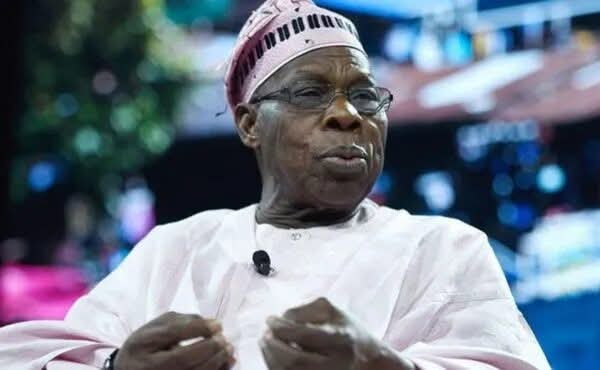
Former President Olusegun Obasanjo has described the 1967 Asaba Massacre as one of the most painful and terrible episodes of the Nigerian Civil War.
Obasanjo spoke virtually on Wednesday as chairman of the 59th anniversary memorial held in Asaba, the Delta State capital.
He said the occasion marked the remembrance of “one very sad aspect” of the civil war, adding that the war itself was an unfortunate event that should never have happened.
“But the Asaba Massacre, as it is called, was one of the most painful, one of the most terrible aspects of that war,” he said.
Obasanjo said he was moved to tears after receiving documents on the massacre from Chuks Nduka-Eze, convener of the Asaba Massacre Memorial. He added that he was saddened such an event occurred “in my own country, in my lifetime.”
The former military head of state urged survivors and victims’ families to embrace forgiveness and reconciliation. “To all of you assembled: let us keep one thing in mind — forgiveness, forgiveness, and forgiveness again,” he said. He also called for the tragedy to be remembered as part of efforts to prevent a recurrence.
In response, Epiphany Azinge, the Asagba of Asaba, said the community could forgive without forgetting the massacre or abandoning its demand for accountability. “We may not forget, but certainly, we have to forgive,” he said.
The monarch, however, said there could be no closure or healing until a sitting Nigerian president publicly apologised to the people of Asaba. “There will be no closure, there will be no healing until a sitting President — not an ex-President, but a sitting President — publicly apologises to us,” he said. He noted that former military Head of State Yakubu Gowon had apologised while out of office.
Azinge also questioned Obasanjo’s appeal for Nigerians to say “never again,” recalling the Odi killings during Obasanjo’s administration. “Coming from him, I was a bit taken aback. How long do we say ‘never again’? But it happened at Odi,” he said.
Despite his demand for a presidential apology, Azinge publicly proclaimed forgiveness for the family of Colonel Ibrahim Taiwo, who was associated with the military operation during the massacre. “On behalf of the Asaba community, and as the prescribed authority — the Asagba of Asaba — I hereby publicly proclaim that we have forgiven the Taiwo family,” he said.
The monarch said the community had accepted the apology offered by retired Major General Ahmed Taiwo, son of Colonel Taiwo. Taiwo had expressed regret and apologised on behalf of his father and family for any act, omission or commission that contributed to the massacre. “I know it will not right the wrong, but I believe and pray it is a start towards reconciliation,” he said.
The 59th anniversary memorial also called for national recognition of the massacre and the establishment of a permanent memorial centre ahead of next year’s 60th anniversary.
The Asaba Massacre occurred between October 5 and 7, 1967, in Asaba, present-day Delta State, during the Nigerian Civil War. It targeted civilians in Asaba, most of them Igbo, and was carried out by the Nigerian Army’s Second Infantry Division.









News
ADC Alleges Plot to Pressure INEC to Postpone 2027 Presidential Election
By Yusuf Danjuma Yunusa
The African Democratic Congress (ADC) presidential campaign council has alleged a plot to pressure the Independent National Electoral Commission (INEC) to postpone the January 16, 2027 presidential election over the Ebola outbreak.
In a statement issued on Wednesday, Phrank Shaibu, director of strategic communication of the campaign council, said the opposition party had received information that Joash Amupitan, INEC chairman, could be summoned to the Presidential Villa and instructed to change the election date.
Shaibu, however, did not provide details or evidence to substantiate the allegation.
The ADC campaign council spokesperson urged President Bola Tinubu to abandon any alleged attempt to alter the election timetable, saying he should seek re-election through the ballot box rather than postpone the poll.
“Professor Joash Amupitan must refuse any instruction to change the timetable and immediately make any such approach public,” the statement reads.
“The election date belongs to Nigerians. It must not be rewritten behind closed doors at the Villa.
“Nigerians have endured three and a half years of soaring prices, shrinking incomes and relentless hardship. They have the right to judge this government at the ballot box on 16 January.
“A government that has made life this difficult for Nigerians must not be allowed to postpone its day of judgment.”
While acknowledging that Ebola was a serious public health concern, Shaibu cautioned against using the outbreak as a justification for delaying the election.
He called on health professionals to sustain containment efforts and urged INEC to take necessary measures to protect voters and election workers.
The council spokesperson also cited comments by Jide Idris, director-general of the Nigeria Centre for Disease Control and Prevention (NCDC), who said there was no current reason to postpone the 2027 general election over the outbreak.
“As of now, there is no need for that. We in the health sector will not use disease issues as a political weapon,” Idris said on Monday.
Shaibu called on INEC, domestic observers and international election monitors to scrutinise any proposal to change the election timetable.
He said any such proposal should be made openly, backed by published health evidence and subjected to public scrutiny.
On Sunday, Adewole Adebayo, presidential candidate of the Social Democratic Party (SDP), cautioned against postponing the election or cancelling political campaigns over the outbreak.
Speaking at a dinner organised by the SDP presidential campaign council in Abuja, Adebayo said a single confirmed case was insufficient to justify shutting down public activities.
News
Atiku Alleges Tinubu Is Using Saudi Trip to Conceal France Visit, Demands Full Itinerary
By Yusuf Danjuma Yunusa
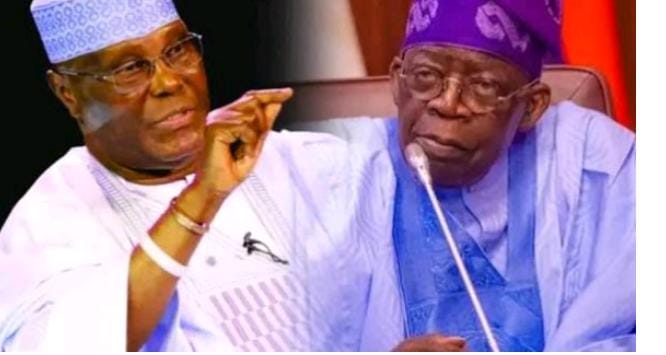
Former Vice President Atiku Abubakar has accused President Bola Tinubu of using his announced Umrah pilgrimage to Saudi Arabia to conceal an alleged trip to France, demanding that the Presidency disclose the President’s full itinerary.
Atiku also questioned whether the trip was connected to Tinubu’s health and a reported $20bn loan request involving a French business partner, calling on the Presidency to address the issues and provide Nigerians with clear explanations.
The former vice-president made the allegations in a statement issued on Wednesday by Phrank Shaibu, Director of Strategic Communication of the African Democratic Congress (ADC) Presidential Campaign Council.
According to Atiku, intelligence available to him suggested that Tinubu might make a brief appearance in Makkah before proceeding to France. He, however, did not provide details of the intelligence to support the claim.
Atiku challenged the Presidency to release current, date-stamped photographs and videos showing Tinubu at the Kaaba and participating in the rites of Umrah daily if the pilgrimage was genuinely intended to seek divine intervention for Nigeria.
He said he and other Nigerians would join the President in prayers for the country’s peace and progress, but warned against invoking the name of Allah in vain.
Atiku maintained that the President’s itinerary and the funding of the trip were matters of public interest, arguing that Nigerians deserved transparency regarding official engagements undertaken in the country’s name.
He urged the Presidency to respond to the questions and provide verifiable evidence of the President’s activities during the pilgrimage.
News
FG Approves N70,000 Monthly Transport Intervention for Public Workers
By Yusuf Danjuma Yunusa
The Federal Government has approved a N70,000 monthly transport intervention for public service workers across all levels for six months, beginning in November 2026, to cushion the impact of rising living costs.
The approval was one of the resolutions reached at a conciliation meeting between the Federal Government and the leadership of the Nigeria Labour Congress in Abuja on Tuesday, following renewed pressure from organised labour over the cost of living, workers’ welfare and outstanding agreements.
The government also approved the payment of peculiar allowance arrears, effective from May 1, 2026, in three equal monthly instalments beginning in November.
However, the parties failed to agree on the effective date for implementing the national minimum wage, although they agreed that the Minimum Wage Negotiation Committee would be constituted and commence meetings immediately.
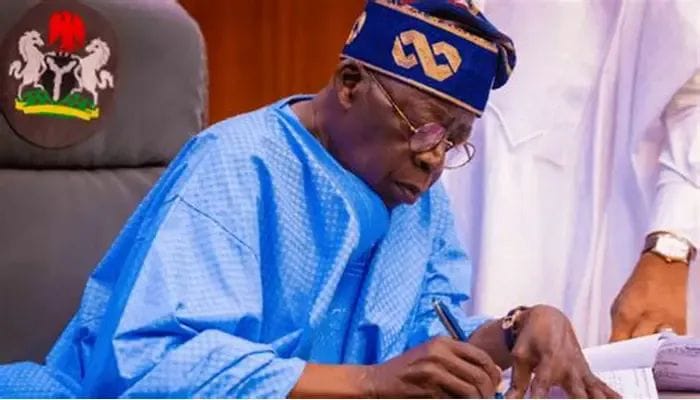
The resolutions were contained in a memorandum of understanding signed at the end of the meeting by the Director-General of Budget, Timi Yakubu; NLC President, Joe Ajaero; the Permanent Secretary, Service Welfare Office, Office of the Head of the Civil Service of the Federation, Dr Garba Abdul S.U.; and the Minister of Labour and Employment, Dr Muhammad Maigari Dingyadi.
The document, titled ‘Resolutions Reached at a Conciliation Meeting Held at Federal Ministry of Labour and Employment Between the Federal Government and the Leadership of Nigeria Labour Congress on Tuesday, 27th October, 2026’, outlined agreements on minimum wage negotiations, transport support, outstanding allowances, health workers’ remuneration, tax relief and hazard allowances for agricultural officers.
The meeting followed an earlier conciliation session held on October 22, 2026, convened by the Federal Ministry of Labour and Employment to address disagreements between the government and organised labour.
On the transport intervention, the document stated, “That transport intervention of Seventy Thousand Naira (N70,000) commencing from November 2026 would be paid across all levels for a period of six months.”
The document did not specify the payment date within each month or provide details of the administrative arrangements for disbursement.
The agreement comes amid continuing concerns over transportation costs and the prices of other essential goods following the removal of the petrol subsidy in May 2023, which contributed to rising living costs across the country.
Organised labour has repeatedly demanded measures to ease the economic pressure on workers, including reductions in petrol prices, improved wages and the implementation of outstanding welfare agreements.
The memorandum also noted the NLC leadership’s concerns about the government’s handling of its demands.
Addressing the disagreement, it stated that the NLC leadership “expressed concern over the Federal Government’s attitude towards the above issues.”
It added that the Federal Government, in response, “stated that it fully respect the right of the Congress to advocate for improved working conditions for Nigerian workers, and is genuinely trying to address every aspect of it through a structured intervention.”
On the national minimum wage, the parties agreed that the Minimum Wage Negotiation Committee would be constituted and commence meetings immediately.
However, the effective date of implementation remained unresolved.
The document stated, “It was agreed that the Minimum Wage Negotiation Committee would be constituted and commence meeting immediately. It should however be noted that there is a disagreement on the effective date of implementation.”
The disagreement leaves a key issue outstanding despite the commitment to begin negotiations without delay.
The national minimum wage became a major issue in 2024 when the Federal Government and organised labour negotiated an increase in the statutory minimum monthly wage from N30,000 to N70,000. The new rate was subsequently enacted into law through the National Minimum Wage Act.

ADC Alleges Plot to Pressure INEC to Postpone 2027 Presidential Election

Atiku Alleges Tinubu Is Using Saudi Trip to Conceal France Visit, Demands Full Itinerary

RE: Abba Anwar and the Anywhere Belle Face Syndrome: The Business of Cash-and-Carry Criticism Against Sen. Barau
Abba Anwar and the Anywhere Belle Face Syndrome: The Business of Cash-and-Carry Criticism Against Sen. Barau

FG Approves N70,000 Monthly Transport Intervention for Public Workers

Kano Monitors ₦48.9bn Projects Across Six LGAs

PCACC Arrests Man Over Alleged ₦4.5m Sale, Illegal Leasing of Kano Government Horse Stable

Kano Spends ₦10.36bn on Hospitality, Sitting Allowances, Others in Six Months

Goje’s Electoral War:The Confrontation With Tinubu,Governor Inuwa,Usman Kumo And APC candidates Ahead Of 2027

Open The Social Sciences “A Tribute to a Heterodox Scholar: Mallam Ibrahim Muazzam
ADC Alleges Plot to Pressure INEC to Postpone 2027 Presidential Election
Atiku Alleges Tinubu Is Using Saudi Trip to Conceal France Visit, Demands Full Itinerary
RE: Abba Anwar and the Anywhere Belle Face Syndrome: The Business of Cash-and-Carry Criticism Against Sen. Barau
Abba Anwar and the Anywhere Belle Face Syndrome: The Business of Cash-and-Carry Criticism Against Sen. Barau
FG Approves N70,000 Monthly Transport Intervention for Public Workers
Kano Monitors ₦48.9bn Projects Across Six LGAs
PCACC Arrests Man Over Alleged ₦4.5m Sale, Illegal Leasing of Kano Government Horse Stable
Kano Spends ₦10.36bn on Hospitality, Sitting Allowances, Others in Six Months
Goje’s Electoral War:The Confrontation With Tinubu,Governor Inuwa,Usman Kumo And APC candidates Ahead Of 2027
Open The Social Sciences “A Tribute to a Heterodox Scholar: Mallam Ibrahim Muazzam
-
 Opinion5 years ago
On The Kano Flyovers And Public Perception
-

 Features5 years ago
How I Became A Multimillionaire In Nigeria – Hadiza Gabon
-
 Opinion6 years ago
Kano As future Headquarters Of Poverty In Nigeria
-
 History6 years ago
Sheikh Adam Abdullahi Al-Ilory (1917-1992):Nigeria’s Islamic Scholar Who Wrote Over 100 Books And Journals
-
 Opinion5 years ago
My First Encounter with Nasiru Gawuna, the Humble Deputy Governor
-
 History5 years ago
The History Of Borno State Governor Professor Babagana Umara Zulum
-
 History6 years ago
The Origin Of “Mammy Market” In Army Barracks (Mammy Ochefu)
-
 News5 years ago
Federal University Of Technology Babura To Commence Academic Activities September