
News
Return Airlift of Nigerian Pilgrims Begins as Kano Finalises Arrangements for Smooth Homeward Journey
By Lamara Garba
The return airlift of Nigerian pilgrims from the Kingdom of Saudi Arabia has commenced, with the first batch of 560 pilgrims from Nasarawa State departing King Abdulaziz International Airport, Jeddah, on Wednesday for Abuja.
The flight, operated by Max Air, took off at exactly 9:27 a.m. Saudi time, marking the beginning of the inbound phase of the 2026 Hajj operations following the successful completion of the pilgrimage rites.
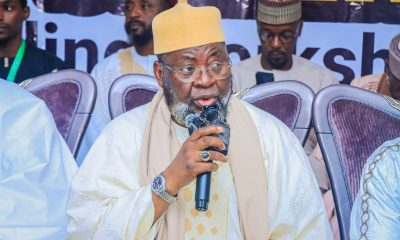
As the homebound journey begins, the Kano State Amirul Hajj and Emir of Gaya, Alhaji Dr. Aliyu Ibrahim Abdulkadir, has assured pilgrims from the state that adequate arrangements have been concluded to guarantee a smooth and hitch-free return to Nigeria.
Speaking during a visit to Kano pilgrims at their accommodation centres in Makkah, the Amirul Hajj said officials of the Kano State Government, through the Kano State Pilgrims Welfare Board, are working closely with the National Hajj Commission of Nigeria (NAHCON) and airline operators to ensure seamless airlift operations.
According to him, the commencement of the return journey by pilgrims from Nasarawa State signals the beginning of the final phase of the Hajj exercise, adding that Kano pilgrims should remain calm and continue with acts of worship while awaiting their scheduled flights.
“We have been following developments closely and are satisfied with the level of preparations being made. We want to assure our pilgrims that every necessary arrangement is being put in place to ensure a smooth return to Nigeria. There should be no fear of delays as we are maintaining close contact with NAHCON and the airline operators responsible for the airlift,” he said.
Dr. Abdulkadir explained that although the responsibility for transporting pilgrims back to Nigeria rests primarily with NAHCON and the designated airlines, the Kano State Pilgrims Welfare Board remains actively engaged with all stakeholders to safeguard the interests of pilgrims from the state.
“While the return airlift is not directly the responsibility of the Kano State Pilgrims Welfare Board, we consider it our obligation to liaise continuously with the relevant authorities to ensure that the process is seamless and that our pilgrims are not subjected to unnecessary hardship,” he stated.
The Amirul Hajj also advised pilgrims to strictly adhere to airline baggage regulations, warning that anyone who exceeds the approved luggage allowance may face difficulties during check-in procedures.
“I want to urge all our pilgrims to carefully observe the luggage guidelines issued by the airlines. Anyone who carries excess baggage beyond the approved weight should not blame anybody if such luggage is rejected by airline officials at the airport. Let us all cooperate to ensure a smooth operation,” he cautioned.
He further reminded the pilgrims that the remaining days of their stay in the Holy Land should be devoted to prayer, reflection and other acts of worship.
Describing Makkah as a city specially blessed by Allah, he urged the pilgrims to intensify prayers for peace, unity and progress in Nigeria.
“The time we have left here should not be wasted on frivolous activities. Makkah is a sacred and blessed city where prayers are answered. We should intensify our prayers for ourselves, our families, our leaders and our country. Nigeria is in need of peace, stability and prosperity, and we must continue to seek Allah’s intervention for our nation,” he said.
Meanwhile, data obtained from NAHCON showed that two additional return flights have been scheduled for Thursday, conveying pilgrims from Kebbi and Ogun states aboard Flynas, one of the airlines designated for the 2026 Hajj operations.
NAHCON’s Head of Aviation, Alhaji Habib Bello, had earlier announced the commencement of the return flights and appealed to pilgrims to comply with baggage regulations to avoid unnecessary delays.
He said each pilgrim is entitled to two checked bags weighing 23 kilograms each and one hand luggage weighing eight kilograms, warning that non-compliance could result in delays or removal from flight manifests.
According to him, pilgrims are also required to notify officials at least 48 hours before departure to facilitate passport release, baggage processing and transportation arrangements.
The flight schedule for the return of Kano pilgrims is yet to be released by the commission. Kano pilgrims were among the last contingents to arrive in Saudi Arabia during the outbound airlift and are therefore expected to be among the later groups to depart.
Statistics from the NAHCON control room indicate that a total of 38,888 Nigerian pilgrims were transported to Saudi Arabia during the outbound phase of the operation.
The pilgrims were conveyed in 98 flights conducted over a period of 19 days by four designated carriers.
Max Air transported the highest number with 14,701 pilgrims in 31 flights, while Flynas airlifted 11,005 pilgrims in 30 operations. Umza Aviation conveyed 6,917 pilgrims in 16 flights, while Air Peace transported 6,265 pilgrims in 21 flights.
Further analysis of the data shows that 24,159 male pilgrims and 14,729 female pilgrims participated in the 2026 Hajj exercise.
Kebbi State recorded the highest number of pilgrims with more than 4,000 participants, followed by Kano State with 3,603 pilgrims. Cross River State had the smallest contingent with 15 pilgrims, while Bayelsa State sent 17 pilgrims. Abia, Akwa Ibom, Anambra and Ebonyi states did not participate in this year’s pilgrimage.










News
Tinubu Says Dangote Group Performs Excellently in Driving Economy
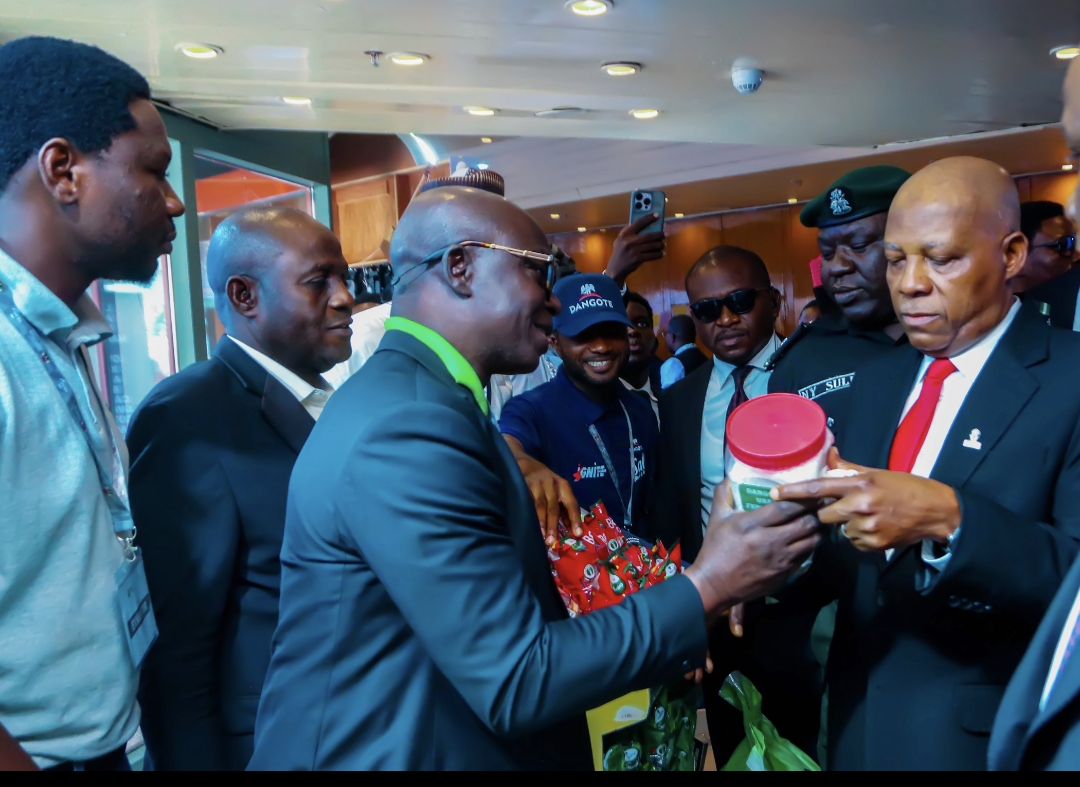
President Bola Ahmed Tinubu has commended the Dangote Group for its significant contribution to Nigeria’s economic growth, citing the conglomerate’s strategic investments in key sectors as instrumental in boosting domestic production, creating jobs, reducing dependence on imports, conserving foreign exchange and strengthening the country’s industrial capacity.
The President gave the commendation during a visit to the Dangote Group pavilion at the ongoing 32nd Nigeria Economic Summit at the Transcorp Hilton, Abuja, on Monday. He was represented at the event by Vice President Kashim Shettima.
Tinubu praised the Group’s performance across its business operations, highlighting the critical role of private-sector investments in expanding productive capacity, stimulating economic activities and supporting national development.
The Dangote Group has investments spanning cement manufacturing, fertiliser production, sugar refining, salt processing and petroleum refining.
These investments contribute to local value addition, employment generation and the development of domestic supply chains, while supporting efforts to reduce Nigeria’s dependence on imported products.
He said his administration is creating conditions for public and private sectors to invest, expand and generate productive employment.
Dangote Group is the second biggest employer of labour after the federal government.
The 2026 Nigeria Economic Summit, themed “Growth That Works: Delivering Jobs, Productivity and Shared Prosperity,” was declared open by the President, who used the occasion to defend the Federal Government’s ongoing economic reforms and emphasise the importance of industrial harmony and private-sector-led growth.
The summit brings together policymakers, business leaders, investors and other stakeholders to discuss practical strategies for accelerating economic growth, improving productivity, generating employment and ensuring that the benefits of economic expansion reach more Nigerians.
The President’s commendation underscores the importance of sustained collaboration between government and the private sector in building a more productive, competitive and resilient Nigerian economy.
He said Nigeria has performed below its potentials for far too long, but “there is no shortcut for economic development.”
We came to rewrite the story of a nation that has performed below its potentials for far too long,” he said.
Through its investments in strategic industries, the Dangote Group remains a major private-sector participant in Nigeria’s industrialisation drive, with the potential to deepen local manufacturing, strengthen supply chains and support the country’s broader economic development objectives.
Through the Dangote Group’s diversified operations, the conglomerate has established a substantial presence across critical sectors of the economy, providing products and services that support construction, agriculture, manufacturing, energy and other productive activities.
One of its investments is the Dangote Petroleum Refinery and Petrochemicals complex in Lagos, which has the potential to transform Nigeria’s downstream petroleum industry by increasing domestic refining capacity and reducing the country’s reliance on imported refined petroleum products.
News
Court Dismisses El-Rufai’s No-Case Submission in Ribadu Phone-Tapping Trial, Orders Defence
By Yusuf Danjuma Yunusa
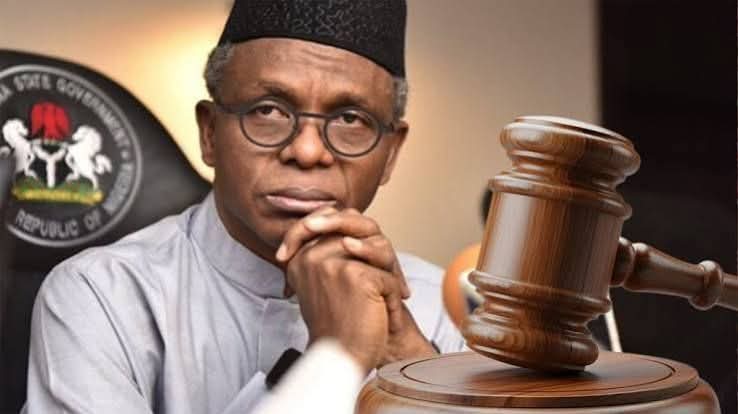
The Federal High Court in Abuja on Monday dismissed a no-case submission filed by former Gov. Nasir El-Rufai of Kaduna State in his ongoing trial over alleged unlawful interception of the telephone communications of the National Security Adviser, NSA, Nuhu Ribadu.
Justice Joyce Abdulmalik, in a ruling, held that the State Security Service, SSS, had placed before the court sufficient evidence to warrant the court to call on the ex-governor to enter his defence if he so desires.
The judge, therefore, ordered El-Rufai, the sole defendant in the charge, to enter his defence.
The defendant had opted for a no-case submission after the SSS closed its case by calling two witnesses.
Mr El-Rufai, through his counsel, Akinyemi Aremu, had urged the court to hold that the prosecution had failed to establish a case requiring the former governor to enter a defence.
In response, the SSS lawyer, Oluwole Aladedoye, SAN, adopted their counter affidavit in opposition to the no-case submission.
Mr Aladedoye argued that the defence failed to address Exhibit “B”, which the prosecution said contained El-Rufai’s alleged admission concerning the tapping of Ribadu’s phone.
He submitted that since the prosecution had established a prima facie case against El-Rufai, the defendant was required by law to enter his defence.
News
JIBWIS Calls For Arrest,Investigation Of Man In JIBWIS Uniform Over Viral Video Threatening Attack On Enugu On Sunday
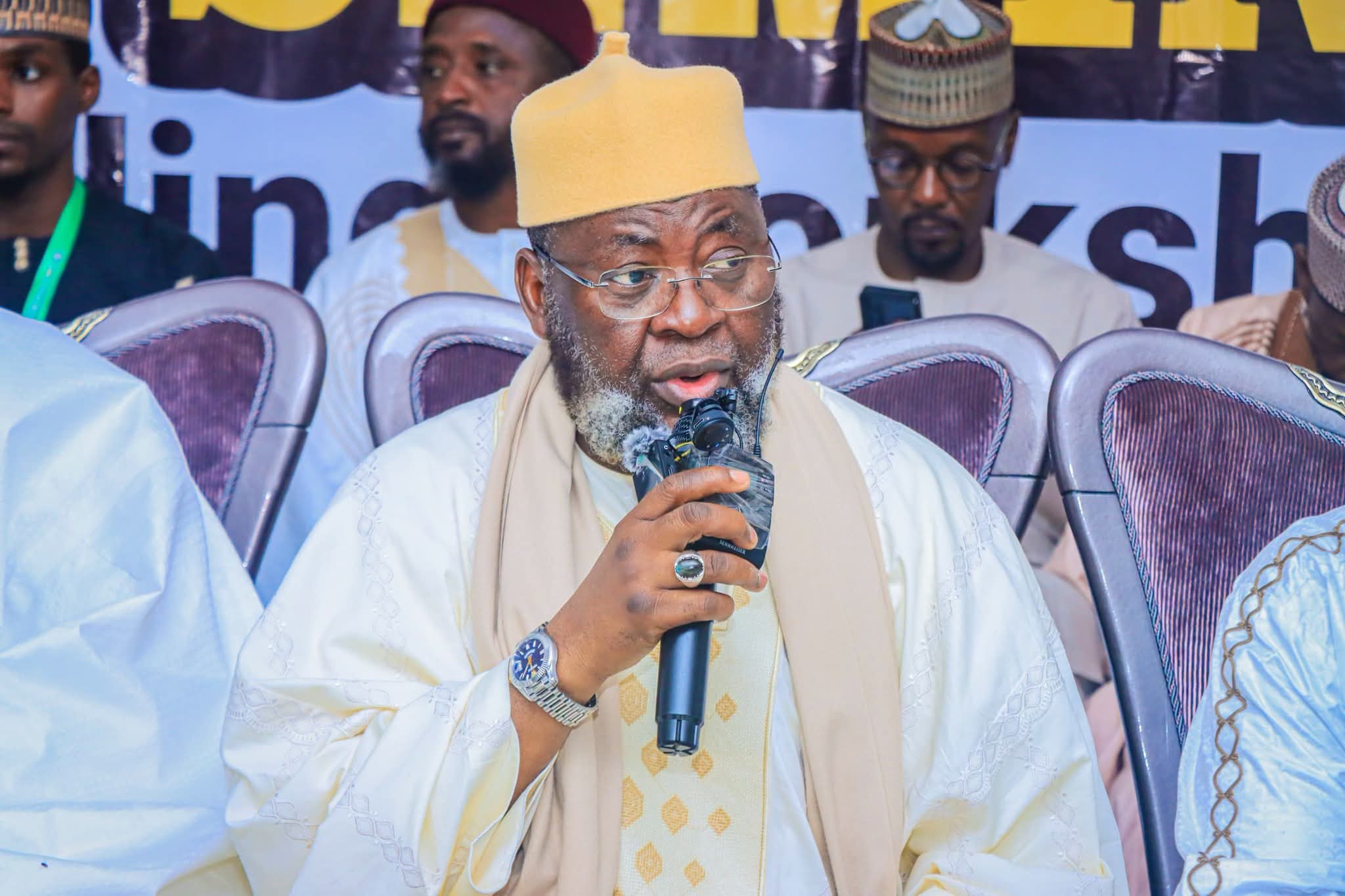
The National Chairman of Jama’atu Izalatil Bid’ah Wa Iqamatis Sunnah (JIBWIS), Sheikh Abdullahi Bala Lau, has strongly condemned a viral video showing a man dressed in the uniform of the organisation’s First Aid Group, participating in a jogging exercise and chanting provocative statements calling for AK-47 rifles to be given to them to enable them to travel to Enugu on Sunday and carry out an attack.
Reacting to the disturbing development, Sheikh Bala Lau called on the Department of State Services (DSS), the Nigeria Police Force and other relevant security agencies to immediately investigate the incident, identify those responsible and ensure that anyone found culpable is brought to justice in accordance with the law.
The National Chairman categorically dissociated JIBWIS from the inflammatory statements, stressing that such expressions of violence, intimidation and threats against any community are completely alien to the principles, teachings and objectives upon which the organisation was established.
He emphasised that wearing the uniform of the JIBWIS First Aid Group or appearing among its members does not automatically establish that an individual is acting on behalf of the organisation or with its authorisation.
Sheikh Bala Lau further expressed concern that the incident could represent a deliberate attempt by individuals or external interests to misrepresent the organisation and damage its longstanding reputation. He therefore urged security agencies to thoroughly investigate the circumstances surrounding the video, including the identity, affiliation and possible motives of those involved.
The Chairman recalled that JIBWIS recently organised an international conference in Abuja, bringing together Christian leaders, Muslim scholars from different Islamic schools of thought, prominent personalities and participants from different parts of the world, with the central objective of promoting interfaith dialogue, mutual understanding, religious tolerance and peaceful coexistence.
He questioned how an organisation that has consistently invested its resources, leadership and institutional efforts in building bridges across religious and ethnic divides could reasonably be associated with statements advocating violence against fellow Nigerians.
For approximately 48 years since its establishment, JIBWIS has remained committed to the propagation of authentic Islamic teachings, the promotion of the Sunnah of Prophet Muhammad (SAW), moral reformation, education, humanitarian services and the peaceful coexistence of people irrespective of their religious, ethnic or geographical backgrounds.

Tinubu Says Dangote Group Performs Excellently in Driving Economy

Court Dismisses El-Rufai’s No-Case Submission in Ribadu Phone-Tapping Trial, Orders Defence

JIBWIS Calls For Arrest,Investigation Of Man In JIBWIS Uniform Over Viral Video Threatening Attack On Enugu On Sunday

Ebola: NCDC to Provide N100,000 Weekly Allowance for Isolated People

IGP Proposes 200% Gratuity, Pension for Retired Officers

PCACC Arrests Man Over Alleged ₦4.5m Sale, Illegal Leasing of Kano Government Horse Stable

Kano Monitors ₦48.9bn Projects Across Six LGAs

Kano Spends ₦10.36bn on Hospitality, Sitting Allowances, Others in Six Months

Goje’s Electoral War:The Confrontation With Tinubu,Governor Inuwa,Usman Kumo And APC candidates Ahead Of 2027

Open The Social Sciences “A Tribute to a Heterodox Scholar: Mallam Ibrahim Muazzam
Tinubu Says Dangote Group Performs Excellently in Driving Economy
Court Dismisses El-Rufai’s No-Case Submission in Ribadu Phone-Tapping Trial, Orders Defence
JIBWIS Calls For Arrest,Investigation Of Man In JIBWIS Uniform Over Viral Video Threatening Attack On Enugu On Sunday
Ebola: NCDC to Provide N100,000 Weekly Allowance for Isolated People
IGP Proposes 200% Gratuity, Pension for Retired Officers
PCACC Arrests Man Over Alleged ₦4.5m Sale, Illegal Leasing of Kano Government Horse Stable
Kano Monitors ₦48.9bn Projects Across Six LGAs
Kano Spends ₦10.36bn on Hospitality, Sitting Allowances, Others in Six Months
Goje’s Electoral War:The Confrontation With Tinubu,Governor Inuwa,Usman Kumo And APC candidates Ahead Of 2027
Open The Social Sciences “A Tribute to a Heterodox Scholar: Mallam Ibrahim Muazzam
-

 Opinion5 years ago
On The Kano Flyovers And Public Perception
-

 Features5 years ago
How I Became A Multimillionaire In Nigeria – Hadiza Gabon
-

 Opinion6 years ago
Kano As future Headquarters Of Poverty In Nigeria
-

 History6 years ago
Sheikh Adam Abdullahi Al-Ilory (1917-1992):Nigeria’s Islamic Scholar Who Wrote Over 100 Books And Journals
-

 Opinion5 years ago
My First Encounter with Nasiru Gawuna, the Humble Deputy Governor
-

 History5 years ago
The History Of Borno State Governor Professor Babagana Umara Zulum
-

 History6 years ago
The Origin Of “Mammy Market” In Army Barracks (Mammy Ochefu)
-

 News5 years ago
Federal University Of Technology Babura To Commence Academic Activities September