
News
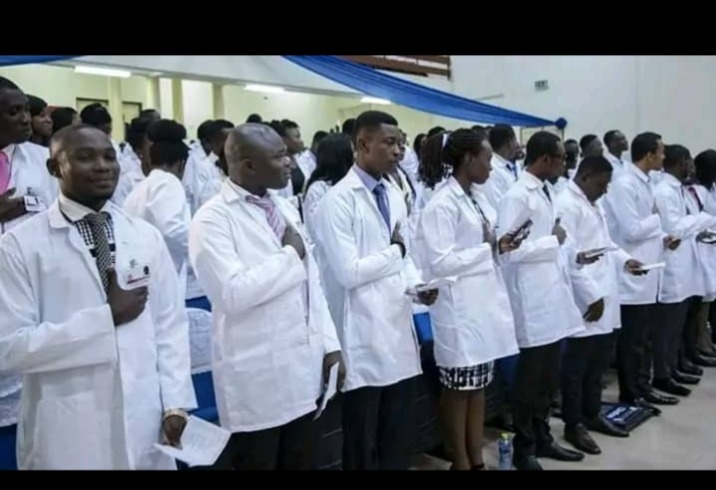
Special Report: Inside Story of Nigeria’s Deteriorating Health System
By Yusuf Danjuma Yunusa
In June 3, 2025, a female patient admitted to the National Hospital, Abuja, battled with her life before giving up the ghost. It was not because she was brought into the hospital late, rather, it was due to shortage of staff at the said hospital.
In the presence of the deceased children, other patients in the same ward, and their visitors, the deceased struggled nearly 3 hours while doctors and medical staff that were supposed to be on duty that very night were no where to be found.
The children and the husband of the deceased, in their helpless state, made arrangements and took the remains of her from the hospital.
The other patients in the ward were visibly angry for such incident to have happened while there could possibly be a way to keep the woman alive if the staff on duty were available.
This incident took place from 11pm on the 2 of June to some minutes after 2am in the morning of the 3 of June, 2025, at the female ward of the National Hospital, Abuja.
While the incident was ongoing, our correspondent was present at the ward because his mother was also admitted to the hospital.
Out of curiosity, and in a quest to get answers to some disturbing questions relating to the ugly incident, the journalist headed to the office of the Medical Director of the hospital. Although, he was told by the Director’s personal assistant that he was not on seat, that he should come back after Eid-ul- Adha celebration.
However, the journalist was fortunate enough to have answers to some of the questions from one of the senior medical staff of the hospital.
What Were The Questions, And What Were The Answers?
From the journalist’s observation that very night at the female ward of the hospital, there were shortages of medical equipment, and the ones available were of no standard and quality.
So, he asked the medical staff why there was such situation in a hospital as National Hospital, the response was that the hospital Management has, severally, written to the health ministry for a well thought out revamping measures for the hospital. But each time such letter is being written, the Management either get “we are on it” response or silence from the ministry.
Also, among the questions was the reason for staff being unavailable on duty. The response was that the nation at large, not only the hospital, is experiencing brain drain in the health sector, and that is affecting the effective operations of the hospital every now and then.
He further explained that it might be that those on duty that very night might be attending to some other patients in other wards at the same time that period. A situation, he said, wouldn’t be possible for two or three staff to handle.
The journalist, after the session with the man, arrived at a conclusion that the government is not doing enough in the health sector of the country.
In another news, on the 7th of January, 2026, news broke that the son of one of the Nigeria’s finest writers, Chimamanda Adichie, dir4fed in a hospital in Lagos due to negligence of the medical staff attending to the child.
In a statement, Adichie said her son was taken to Euracare Hospital for an MRI scan and the insertion of a central line, during which he was sedated but was not properly monitored after being administered propofol, leading to complications including loss of responsiveness, seizures, and cardiac arrest.
“We brought in a child who was unwell but stable and scheduled to travel the next day. We came to conduct basic procedures. And suddenly, our beautiful little boy was gone forever. It is like living your worst nightmare. I will never survive the loss of my child,” she wrote.
“We were in Lagos for Christmas. Nkanu had what we first thought was just a cold, but soon turned into a very serious infection and he was admitted to Atlantis hospital.”
“He was to travel to the US the next day, January 7th, accompanied by Travelling Doctors. A team at Johns Hopkins was waiting to receive him in Baltimore. The Hopkins team had asked for a lumbar puncture test and an MRI. The Nigerian team had also decided to put in a ‘central line’ (used to administer iv medications) in preparation for Nkanu’s flight. Atlantis hospital referred us to Euracare Hospital, which was said to be the best place to have the procedures done.
“The morning of the 6th, we left Atlantis hospital for Euracare, Nkanu carried in his father’s arms. We were told he would need to be sedated to prevent him from moving during the MRI and the ‘central line’ procedure.
“I was waiting just outside the theater. I saw people, including Dr M, rushing into the theater and immediately knew something had happened.
“A short time later, Dr M came out and told me Nkanu had been given too much propofol by the anesthesiologist, had become unresponsive and was quickly resuscitated. But suddenly Nkanu was on a ventilator, he was intubated and placed in the ICU. The next thing I heard was that he had seizures. Cardiac arrest. All these had never happened before. Some hours later, Nkanu was gone.
“It turns out that Nkanu was NEVER monitored after being given too much propofol. The anesthesiologist had just casually carried Nkanu on his shoulder to the theater, so nobody knows when exactly Nkanu became unresponsive.
“How can you sedate a sick child and neglect to monitor him? Later, after the ‘central line’ procedure, the anesthesiologist casually switched off Nkanu’s oxygen and again decided to carry him on his shoulder to the ICU!
“The anesthesiologist was CRIMINALLY negligent. He was fatally casual and careless with the precious life of a child. No proper protocol was followed,” parts of her statements read.
Adichie further disclosed that they have gathered that the same anesthesiologist has been carrying out same style of medication on different children that had been brought there for care.
“We have now heard about two previous cases of this same anesthesiologist overdosing children. Why did Euracare allow him to keep working? This must never happen to another child.”
Commenting on this incident, a Yola-based anesthesiologist, Dr. Raji Bello, expressed sympathy on the passing of Adichie’s son, and avoided commenting on the said negligence of the involved doctor. But he emphasized that the medical procedures involved are generally safe when performed by trained professionals, cautioning against public misunderstanding of isolated tragedies.
“This is not true. Medications that are used in hospitals have already undergone rigorous approval processes and they are being used because they have been found to be safe in trained and experienced hands. Yes, some medications have been withdrawn after approval because of new information regarding safety but these instances are rare considering the total number of medications in use and it usually happens to medications that are relatively new,” Dr. Raji asserted.
“Propofol, MRI sedation and central line placement are all safe in trained and experienced hands. They have been linked to the death of this child not because they are inherently unsafe but because of specific associated circumstances which may not be applicable in other situations,” he added.
An introspection into the argument of Dr. Raji will reveal to one that the whole issue boils down to the country having trained, experienced, and competent hands to handle the health sector. And it further reveals again that the brain drain menace in which the country is facing is what resulted into quack and inexperienced medical personnels being left for the country to deal with.
Furthermore, lately there have been reports that patients across the Federal Capital Territory are expressing concerns over skeletal services in general hospitals, citing closed pharmacies, absent laboratory staff, and minimal attendance by medical personnel across various healthcare facilities in Abuja.
At Kubwa General Hospital, one Rotimi Raheem said on Thursday, January 8, 2026, that all hospital pharmacies were locked and that laboratory technicians were not on duty, leaving patients unable to access essential medical services.
Similarly, at Wuse General Hospital, according to News Agency of Nigeria, Ibeto Onakwe reported that medical workers at emergency units were largely absent, adding that only a few doctors were seen moving around without attending to patients’ urgent medical needs.
At Nyanya General Hospital, Idris Yahuri, said administrative officers responsible for issuing patient files were missing from their posts, making it impossible for patients to access old medical records when necessary for treatment.
Responding to the development, Adewale-Adeleye Premiere, president of the Association of Resident Doctors at the University of Abuja Teaching Hospital, said the shortages were primarily due to insufficient staffing across most hospitals in Abuja.
He warned that the exodus of health workers from the country was alarming, urging the government to act swiftly to prevent the healthcare system from being overwhelmed and medical services from collapsing.
“In my own centre, UATH, resident doctors used to number between 500 and 600, but currently there are only about 220 doctors, significantly reducing the hospital’s capacity to provide healthcare for patients across the Middle Belt,” he stated.
Mr Premiere added that many doctors left for countries such as the UK, Dubai, or Saudi Arabia, increasing workload pressure on those remaining and reducing the quality of healthcare delivery across federal medical institutions.
He warned that for every doctor who left, the burden on remaining staff increased exponentially, and though doctors were not currently on strike, they might consider industrial action to press for improved working conditions and support.
Talking about strike in the health sector of the country, this newspaper has observed that the other members in the health ministry aside resident doctors, JOHESU, is currently on strike. Part of their grievances is that the government is not paying attention to their welfarism. And that includes good pay or renumeration which in turn can discourage them from leaving the country just like those who have left.
JOHESU members—including nurses, pharmacists, laboratory scientists, and allied health professionals—are essential to hospital operations. Their absence critically weakens service delivery, even where emergency units remain open.
What Could Be The Solution To The Problems in Nigeria’s Health Sector?
Speaking with a health practitioner, Dr. Demola Ahmed, he suggested that the government should declare a state of emergency in the health sector, citing continuous cases of loss of lives due to either incompetence or shortages of staff.
He said when that is done the government should “establish a permanent, independent commission for health sector remuneration to prevent recurrent strikes and ensure sustainable revamping of infrastructural needs of hospitals in order to deliver quality services.”
Dr. Ahmed also mentioned that the commission to be established should also be responsible for sanctioning medical personnels in private hospitals that indulge negligence or that have been found guilty of such behavior.
“Just like Hisbah in Kano that has been established solely for monitoring and enforcing morality in the state, Nigeria’s health sector can come up with something like that to monitor hospitals and their activities so that orderliness can be revived and sustained,” he said.
The Cardiologist concluded by saying that sustained investment in both health workers and infrastructure in the hospitals across the country will be the only solution to ending brain drain, inefficient and inexperienced medical personnels, and taming of negligence.













News
APC Denies Plot to Assassinate Atiku, Urges Security Agencies to Question Timi Frank
By Yusuf Danjuma Yunusa
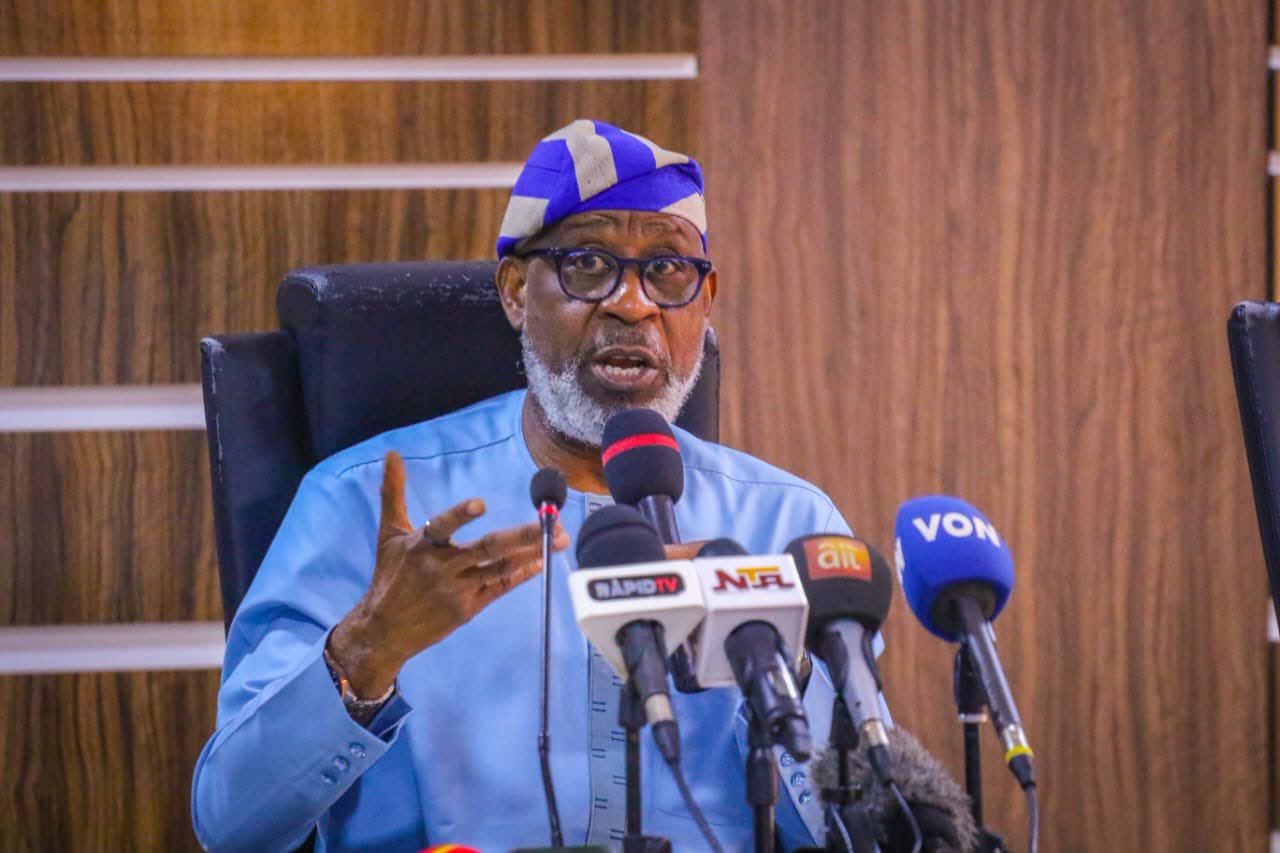
The All Progressives Congress Presidential Campaign Council has denied allegations that the Nigerian Government is plotting to assassinate former Vice President Atiku Abubakar, the ADC presidential candidate, and called on security agencies to invite Timi Frank to substantiate the claim.
In a statement signed by its spokesperson, Dele Alake, dated October 20, 2026, the council said:
“Our attention has been drawn to the statement by Timi Frank, a member of the African Democratic Congress, alleging that the Nigerian Government is plotting to assassinate former Vice President Atiku Abubakar, the Presidential candidate of the ADC. This is a grave allegation that Mr Frank must prove. We thus urge security agencies to invite him to substantiate the allegation, given its gravity and the urgent need to preserve life.”
The council also rejected any involvement by the presidency or the APC Campaign Council, stating:
“We categorically reject the claim that the presidency of Nigeria or the APC Campaign Council is involved in any plot to assassinate former Vice President Atiku Abubakar or any opposition figure.”
It further dismissed as false claims that security personnel attached to Atiku had been withdrawn, saying the former vice president is protected by the police and the Department of State Security. According to the statement, President Bola Tinubu recently directed security agencies to reinforce and increase protection for all presidential, vice-presidential, governorship and deputy governorship candidates across the country.
The council said security around the ADC presidential candidate had never been compromised and that, as a former vice president, Atiku enjoys two levels of state-funded security protection, which the statement said Tinubu had increased ahead of the 2027 general elections.
It urged candidates, parties and supporters to be factual and responsible in public statements and to avoid utterances that could trigger avoidable tension, accusing Frank of “typical opposition rabble-rousing.”
News
Kano Youths Condemn Lawmaker Over Alleged Mockery of Governor Yusuf

Concerned youths of Gama Ward in Nassarawa Local Government Area of Kano State have condemned the member representing Nassarawa Local Government in the Kano State House of Assembly, Hon. Bello Ali Yusuf, over an alleged act of mockery directed at Governor Abba Kabir Yusuf.
The youths, in a gathering on Tuesday, October 20, 2026, said they were displeased with the lawmaker’s reported action of holding the ear of a live rabbit in the presence of his supporters, which they alleged was intended to ridicule the governor.
Addressing journalists during a peaceful press briefing, the youths described the incident as disrespectful to the office of the governor and contrary to the cultural values and traditions of Gama Ward and the wider Kano community.
According to the group, the alleged conduct was undemocratic and unbecoming of an elected representative, adding that public officeholders should demonstrate maturity, decorum and respect for democratic institutions in their political engagements.
The Concerned Gama Youth further expressed concern that the incident could create unnecessary political tension and undermine the prevailing peace in the state.
They maintained that political disagreements should be handled through constructive engagement and democratic processes rather than actions they considered capable of ridiculing public officeholders.
NIGERIAN TRACKER reports that the group also reaffirmed its support for Governor Yusuf, commending his administration for what it described as people-oriented projects executed in Gama Ward and other parts of Nassarawa Local Government Area.
Specifically, the youths highlighted the construction of the road linking Gwagwarwa to Gama Hotel, describing the project as an important intervention that had improved transportation and eased movement within the community.
While addressing the press the group’s Secretary-General, Comrade Auwal Garba Gama, the road had also contributed to economic activities and improved access for residents.
The youths said the project demonstrated the governor’s commitment to infrastructure development and the welfare of residents of Gama Ward, adding that they appreciated the administration’s efforts to address the community’s needs.
Consequently, the group called on the leadership of the Kano State House of Assembly to investigate the incident and take what it described as immediate and decisive disciplinary action against Bello Ali Yusuf.
The youths argued that the alleged conduct had the potential to bring the legislature into disrepute, urging the Assembly’s leadership to ensure that elected representatives upheld the standards expected of public officeholders.
They also appealed to community leaders, political stakeholders and residents of Gama Ward to continue supporting the governor’s administration while maintaining peace and mutual respect despite political differences.
The group urged residents to remain law-abiding and avoid actions that could escalate political disagreements, while calling on them to pray for the success of the governor’s administration.
The secretary also reaffirmed the group’s solidarity with Gama Ward, Nassarawa Local Government Area and Kano State.
News
IITA Trains Over 1,800 Farmers on Modern Farming Techniques in Kano

The International Institute of Tropical Agriculture (IITA), in collaboration with Nigeria’s Ecological Project Office (EPO), has trained more than 1,800 farmers in Kano State on modern farming techniques aimed at increasing crop yields and improving food production.
The programme covered farmers from 16 local government areas in Kano South Senatorial District, equipping them with modern agricultural practices to improve farm productivity and address challenges associated with farming, particularly during the dry season.
The training and demonstration of improved farming technologies took place in Hamdullahi community, Albasu Local Government Area, where farmers were introduced to improved crop varieties and other techniques for achieving higher yields.
Speaking at the event, IITA Project Coordinator, Professor Lucky Omoigui, said the training was designed to enhance farmers’ knowledge of improved seed varieties and modern agricultural practices.
He disclosed that more than 1,800 people had benefited from the programme, expressing optimism that the knowledge gained would encourage dry-season farming and boost food production.
Omoigui urged the participating farmers to apply the knowledge acquired to improve their farming practices and increase crop yields.
As part of the programme, the farmers visited demonstration farms, where they were shown modern techniques for cultivating crops, including cowpeas, maize, soybeans, groundnuts, sorghum and rice.
Speaking on behalf of EPO, Bashir Ibrahim Umar said agriculture plays a vital role in poverty reduction and job creation, particularly for young people in Nigeria.
He stressed the need for sustained farmer awareness campaigns and access to agricultural knowledge to encourage the adoption of modern farming technologies and improve livelihoods.
Also speaking, Garba Ayuba, who represented the Chairman of Albasu Local Government Area, Garba Aliyu Hungu, expressed satisfaction with the programme and urged farmers to put the techniques they had learnt into practice.
Similarly, the Gaya Zonal Director of the Kano State Agricultural and Rural Development Authority (KNARDA), Danjuma Uba, commended the farmers for their interest in learning modern agricultural practices.
He emphasised that collaboration between agricultural development agencies and farmers was essential to ensuring the sustainable adoption of modern farming technologies.
In his remarks, Alhaji Saidu Abdulkadir Hamdullahi, whose farm was used to demonstrate the improved crop varieties, said some people had previously doubted the possibility of achieving successful crop production during the dry season.
However, he expressed surprise and delight at the results achieved on his farm, saying the experience had boosted his confidence in dry-season farming.
He thanked IITA and its partners for the training, noting that the programme had improved farmers’ knowledge of seed planting, fertiliser application and other modern agricultural practices.
According to him, the new knowledge would help farmers increase productivity and improve their income.
The initiative forms part of broader efforts to strengthen the agricultural sector by encouraging farmers to adopt modern technologies to improve food production and reduce poverty in Nigeria, particularly in areas facing water shortages.
IITA Technical Support through the Ecological Project Office to promote the best climate-smart agricultural practices around the dams to boost food production and increase the income of smallholder farmers in the Kano South Senatorial District
The International Institute of Tropical Agriculture (IITA) is collaborating with the Ecological Project Office (EPO) to leverage the Federal Government’s rehabilitation and expansion of irrigation infrastructure in the Kano irrigation project, covering Tiga Dam, Challawa Gorge Dam, and Kafin-Chiri Dam in the Kano South Senatorial District, to promote sustainable irrigation and dry-season farming to boost agricultural productivity and increase the income of smallholder farmers. The collaboration under the project “Community-based Engagement on Sustainable Agriculture and Biodiversity Restoration for the Kano Irrigation Scheme” is being implemented across the 16 Local Government Areas (LGAs) surrounding the dams (comprising Ajingi, Garko, Bunkure, Doguwa, Tudun Wada, Karaye, Gaya, Albasu, Kibiya, Rogo, Kiru, Wudil, Bebeji, Sumaila, Takai, and Rano), covering 155 communities.
The project interventions aim to boost year-round farming by combining irrigation with climate-smart practices to increase productivity and income, enhance food security, and improve the livelihoods of smallholder farmers. A total of 1,890 farmers, 20% of whom are women, have been trained in Integrated Soil Fertility Management (ISFM), climate-smart irrigation and water-harvesting technologies, and youth entrepreneurship in climate-smart agricultural practices across the 16 LGAs to enhance their resilience to climate-related vulnerabilities.
Participating communities have witnessed increased farming activities and improved access to and use of climate-smart agricultural technologies, contributing to increased productivity, income, and food security.

APC Denies Plot to Assassinate Atiku, Urges Security Agencies to Question Timi Frank

Kano Youths Condemn Lawmaker Over Alleged Mockery of Governor Yusuf

IITA Trains Over 1,800 Farmers on Modern Farming Techniques in Kano

Former Delta State Governor, Emmanuel Uduaghan, Dies At 71

Astute Civil Society Raises Concern Over Exclusion of Gubernatorial Candidates

Zamfara Varsity ASUU Threatens Warning Strike Over FG-ASUU Agreement, Promotion Arrears

PCACC Arrests Man Over Alleged ₦4.5m Sale, Illegal Leasing of Kano Government Horse Stable

Kano Monitors ₦48.9bn Projects Across Six LGAs

Goje’s Electoral War:The Confrontation With Tinubu,Governor Inuwa,Usman Kumo And APC candidates Ahead Of 2027

Prof Yusuf Adamu Delivers BUK’s 63rd Professorial Inaugural Lecture, Reflects on Medical Geography and Academic Legacy
APC Denies Plot to Assassinate Atiku, Urges Security Agencies to Question Timi Frank
Kano Youths Condemn Lawmaker Over Alleged Mockery of Governor Yusuf
IITA Trains Over 1,800 Farmers on Modern Farming Techniques in Kano
Former Delta State Governor, Emmanuel Uduaghan, Dies At 71
Astute Civil Society Raises Concern Over Exclusion of Gubernatorial Candidates
Zamfara Varsity ASUU Threatens Warning Strike Over FG-ASUU Agreement, Promotion Arrears
PCACC Arrests Man Over Alleged ₦4.5m Sale, Illegal Leasing of Kano Government Horse Stable
Kano Monitors ₦48.9bn Projects Across Six LGAs
Goje’s Electoral War:The Confrontation With Tinubu,Governor Inuwa,Usman Kumo And APC candidates Ahead Of 2027
Prof Yusuf Adamu Delivers BUK’s 63rd Professorial Inaugural Lecture, Reflects on Medical Geography and Academic Legacy
-

 Opinion5 years ago
On The Kano Flyovers And Public Perception
-

 Features5 years ago
How I Became A Multimillionaire In Nigeria – Hadiza Gabon
-

 Opinion6 years ago
Kano As future Headquarters Of Poverty In Nigeria
-

 History6 years ago
Sheikh Adam Abdullahi Al-Ilory (1917-1992):Nigeria’s Islamic Scholar Who Wrote Over 100 Books And Journals
-

 Opinion5 years ago
My First Encounter with Nasiru Gawuna, the Humble Deputy Governor
-

 History5 years ago
The History Of Borno State Governor Professor Babagana Umara Zulum
-

 History6 years ago
The Origin Of “Mammy Market” In Army Barracks (Mammy Ochefu)
-

 News5 years ago
Federal University Of Technology Babura To Commence Academic Activities September