
News
Shari’ah Council, Lawmakers Raise Alarm Over Grave Discrepancies in Gazetted Tax Laws
By Yusuf Danjuma Yunusa
The Supreme Council for Shari’ah in Nigeria (SCSN) has demanded for a probe into the discrepancies between the tax bills passed by the National Assembly and the one gazzated and signed into law by President Bola Ahmed Tinubu.
Hon. Abdulsammad Dasuki (PDP Sokoto), a member of the House of Representatives, on Wednesday, raised a matter of privilege on the floor of the House, alleging discrepancies between the tax laws passed by the National Assembly and the versions subsequently gazetted and made available to the public.
Standing under Order Six, Rule Two of the House Rules on a Point of Privilege, Dasuki told the House that his legislative privilege had been breached, insisting that the content of the tax laws as gazetted did not reflect what lawmakers debated, voted on and passed on the floor of the House.
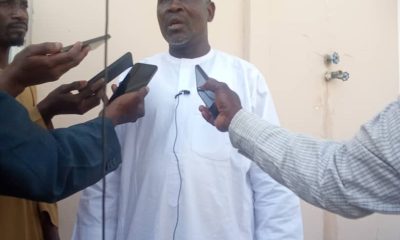
However, in a statement on Thursday NafiuBaba-Ahmad, the Secretary General
of Council, said that the Council noted the alleged additional clauses and other substantial material alterations appearing in the gazetted tax laws signed by the President with utmost seriousness.
The statement added that the additions were neither debated nor approved by the National Assembly.
The statements read, “If established, this represents a grave and egregious constitutional infraction with far-reaching implications for democracy, governance, economic stability, and public trust.
“Given the profound impact of tax legislation on the lives, livelihoods of ordinary citizens, businesses, and religious, social, and economic obligations of Nigerians, the Supreme Council for Shari’ah in Nigeria actively monitored and contributed immensely throughout the legislative process of considering these tax reform bills at the National Assembly. Our engagements were guided by the need to ensure fairness, equity, transparency, constitutional compliance, and protection of the public interest.
“The Council is therefore shocked and deeply disturbed by allegations on the floor of the House of Representatives that what Nigerians collectively debated, scrutinised, and agreed upon through their elected representatives may have been altered at the executive level.
“Such action, if established ,tantamounts to tampering with the sovereign will of the Nigerian people and undermines the very foundation of constitutional governance.”
Accordingly, the council called on all stakeholders, in particular, the leadership of the National Assembly — the Speaker of the House of Representatives, Rt. Hon. Tajuddeen Abbas, and the President of the Senate, Senator Godswill Akpabio — to rise to their constitutional responsibilities by ensuring that these claims are transparently examined and appropriate actions taken before the commencement of the Tax Laws, on the 1 January, 2026.
The statement added, “Nigerians deserve respect, transparency, and fidelity to due process. Members of the National Assembly must be allowed, without hindrance, to conduct a critical, open, and transparent comparison between the harmonised bills passed by both chambers and the versions that were eventually gazetted, in order to establish the nature, extent, and impact of any alterations.
“The consequences of such alleged infractions are grave. They include erosion of public confidence in democratic institutions, weakening of the doctrine of separation of powers, exposure of the affected laws to constitutional challenges, economic uncertainty, and loss of investor confidence. Most critically, they set a dangerous precedent where laws become negotiable instruments rather than binding outcomes of democratic deliberation.
“Tax laws, by their compulsory nature, demand the highest level of constitutional integrity and procedural fidelity. Nigerians cannot be expected to comply with fiscal obligations arising from laws whose authenticity and legislative origin are in doubt. The Council therefore urges that this matter be treated with urgency, sincerity, and transparency in order to preserve constitutional order, protect institutional credibility, and reaffirm the supremacy of the Nigerian Constitution.
“Nigeria’s democracy must not be undermined by executive overreach or procedural shortcuts. The will of the people, as expressed through the National Assembly, must be respected and defended.”










News
Sallah Thanksgiving: NUJ President Commends Kano Correspondents’ Chapel For Fostering Love, Unity Among Journalists
The National President of the Nigeria Union of Journalists (NUJ),
Comrade Alhassan Yahya, has commended the leadership of Kano Correspondents’ Chapel, NUJ, for providing platforms and occasions that foster love, unity and progress among journalists.
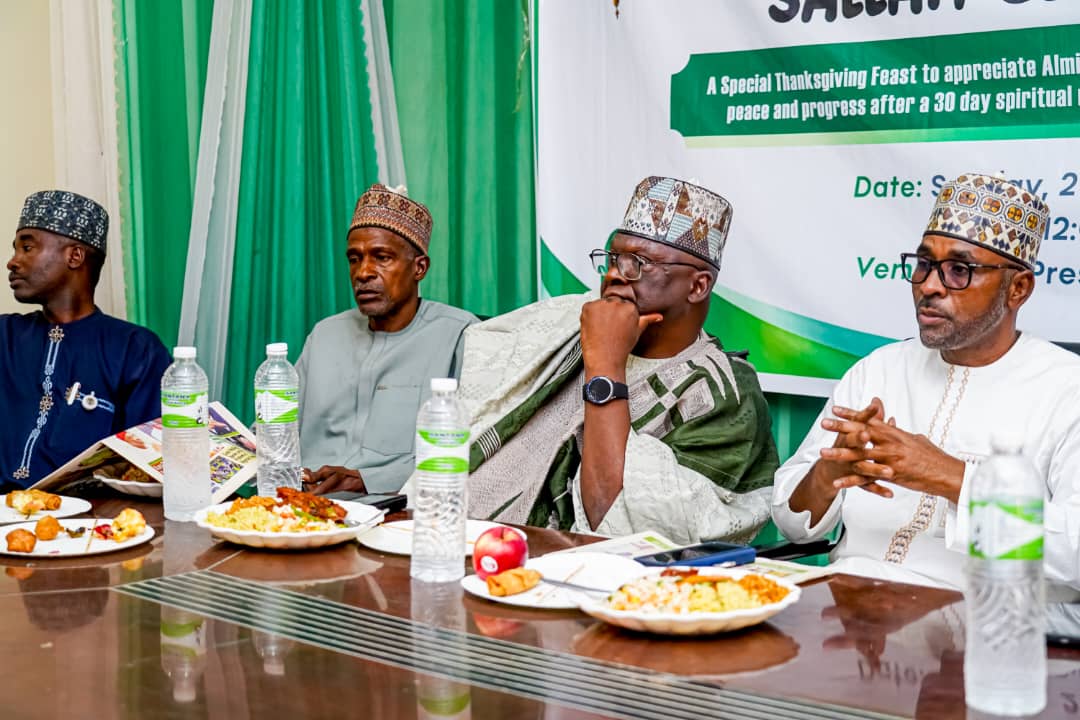
Comrade Yahya stated this at Kano Press Centre, on Sunday, during the 2026 Eid-El-Fitr Sallah Celebrations, Thanksgiving And Special Prayers Ceremony, organized by Kano Correspondents’ Chapel, NUJ, to appreciate God for the successful month long Ramadan fasting period and the Eid-El-Fitr Sallah celebrations.
The NUJ National President used the occasion to urge journalists to reflect on the true meaning of the occasion and promote unity, peace, and tolerance, among themselves, in the course of their profession.
Represented by former chairman of Kano NUJ and a member of NUJ National Board of Trustees, Comrade Abbas Ibrahim, the NUJ National President, who said he has been impressed over the activities of Kano NUJ Correspondents’ Chapel, within the last one year, under the leadership of Comrade Murtala Adewale, emphasized the importance of compassion, unity, and addressing national challenges, particularly food security and insecurity.
Comrade Alhassan Yahya urged other NUJ chapels to draw inspiration from Kano Correspondents’ Chapel’s unity and camaraderie, highlighting their event as a model for promoting peace and solidarity among journalists.
He encouraged other chapels to organize similar events, fostering a sense of community and cooperation, which is essential for the growth and development of the journalism profession.
In his remarks, chairman of the occasion, a Professor of Communication in Bayero University, Kano (BUK), Prof. Yakubu Mai Nasara Kurfi, described the event as not only inspiring, but heart-warming, while urging the Kano Correspondents’ Chapel leadership to sustain the tempo.
Prof. Mai Nasara Kurfi congratulated the Kano Correspondents’ Chapel executive members for their foresight to organize the event, and promised to borrow a leaf from them as he planned to introduce such occasion in the Faculty of Communication, BUK.
The Professor of Communication also used the occasion to canvass for collaboration and synergy among the NUJ, working journalists and the Faculty of Communication, BUK, so as to ensure training and re-training of both working journalists and student journalists for enhancement of the journalism profession.
The chairman of NUJ in Kano state, Comrade Suleiman Abdullahi Dederi, who was represented by the Vice Chairman, Comrade Mustapha Gambo, noted that the event was not only a Thanksgiving for the successful Ramadan and celebration of the Eid El Fitr, but a symbol of unity and togetherness among members of Kano Correspondents’ Chapel, and the larger Kano NUJ family.
“This even is so special because some of the prominent scholars and practitioners in the media are here. I want to thank and commend the leadership of the Kano Correspondents’ Chapel for organizing this event,” he said.
In his speech, chairman of NUJ Kano Correspondents’ Chapel, Comrade Murtala Adewale, described the event as not just a celebration, but a moment to reflect on Allah’s countless mercies—granting us the strength, patience, and opportunity to observe the holy month.
According to him: “Ramadan has been a period of spiritual renewal, sacrifice, and discipline. It has reminded us of the importance of empathy, humility, and self-restraint. As journalists, these values resonate deeply with our professional responsibilities—to be fair, truthful, and guided by integrity in all that we do.
“This gathering also serves as an avenue to strengthen our unity as members of the Chapel. In the midst of our demanding schedules and the pressures of the profession, moments like this allow us to reconnect, share, and reinforce the bond that holds us together.”
He encouraged all imbibe the lessons of Ramadan, and continue to embody patience, kindness, and responsibility, “in our daily lives and in our reportage. Our society looks up to us, and we must remain committed to promoting peace, truth, and understanding.
“I sincerely appreciate all our invited guests and well-wishers who have joined us today. Your presence is a testament to the strong relationships we have built over time, and we do not take it for granted. As we share this special breakfast, let us also remember those who are less privileged and continue to extend a helping hand, as taught during the holy month.”
The event was designed as a special Thanksgiving feast to appreciate Almighty Allah for His mercies and offer prayers for peace and progress, after a 30-day spiritual rejuvenation in the fasting month of Ramadan.
News
Breaking: Kwankwaso Resigns from NNPP
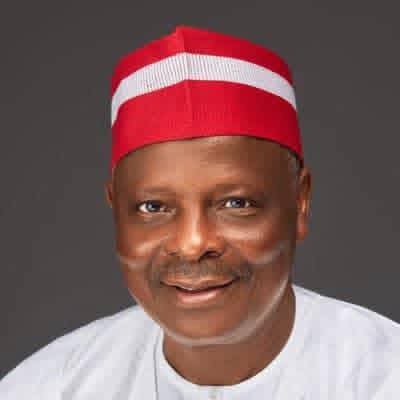
Former Governor of Kano State and 2023 Presidential Candidate of the New Nigeria People’s Party (NNPP), Senator Rabiu Musa Kwankwaso, has announced his resignation from the party. The declaration was made through a statement posted on his verified Facebook page earlier today.
Kwankwaso, who served as the NNPP’s National Leader and spearheaded its presidential campaign in the 2023 general elections, described the decision as “not an easy one.” He explained that his departure was driven by the need for “strategic realignment” in Nigeria’s evolving political landscape.
“Considering the current trajectory of the nation’s political landscape, which calls for strategic realignment, I have found it necessary to identify with another political platform that offers the best opportunity to effectively change the nation,” Kwankwaso stated.
In his resignation letter, Kwankwaso expressed gratitude to the NNPP’s leadership, including National Chairman Ajuji Ahmed, the National Working Committee, Board of Trustees, and members across all levels of the party. He also acknowledged the unwavering support of the Kwankwasiyya Movement, his loyal political base, pledging continued collaboration toward building “a better and more prosperous future for our dear nation.”
Kwankwaso’s exit marks a significant moment for the NNPP, which rose to prominence under his leadership and made notable gains in the 2023 elections. His next political move is expected to reshape alignments ahead of the 2027 general elections, though he has yet to disclose the platform he intends to join.
Political analysts suggest that Kwankwaso’s resignation could trigger a wave of defections within the NNPP, particularly among members of the Kwankwasiyya Movement, who have historically followed his political trajectory.
News
Northern Youth Group Backs Doguwa for Kano APC Leadership, Urges National Role
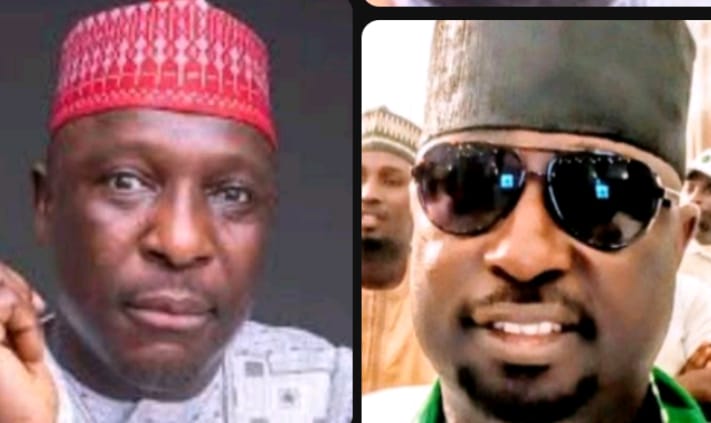
The Northern Youths Merger Groups under the All Progressives Congress (APC) has congratulated Hon. Umar Haruna Doguwa on his election as the APC State Chairman in Kano.
In a statement, the group’s National Coordinator, Hon. Musa Mujahid Zaitawa, described Doguwa as a hardworking and experienced politician capable of leading the party to victory.
The group highlighted Doguwa’s track record, noting his four-time leadership of political parties in Kano, as well as his service in two commissioner roles. According to the group, his vast experience will significantly contribute to the success of the APC.
The Northern Youths Merger Groups also called on APC stakeholders to nominate and support Doguwa for appointment as Chairman of the APC States Chairmen Forum, which comprises representatives from all 36 states and the Federal Capital Territory.
They expressed confidence that such an appointment would strengthen efforts toward securing victory for President Bola Ahmed Tinubu and the APC in the 2027 general elections, particularly in the North-West region.
The group further noted that the North-West zone is expected to deliver massive votes in the 2027 elections, describing it as one of the APC’s strongest strongholds with seven sitting governors.
They emphasized that Doguwa’s leadership, experience, and political influence would play a crucial role in ensuring the party’s success in both the presidential and gubernatorial elections.

Sallah Thanksgiving: NUJ President Commends Kano Correspondents’ Chapel For Fostering Love, Unity Among Journalists

Breaking: Kwankwaso Resigns from NNPP

Northern Youth Group Backs Doguwa for Kano APC Leadership, Urges National Role

Kwankwaso to Join ADC on Monday

Radiographers Kick Against Controversial Health Bills, Demand Immediate Withdrawal

The Governor Who Chose His People Over His Politics: Abba Yusuf and the Moral Courage Behind Kano First

FREEDOM OF SPEECH, NOT FREEDOM FROM CONSEQUENCE: A CITIZEN’S CALL FOR RESPONSIBLE PUBLIC COMMENTARY
Restoring the Glory That Was Always There: Governor Abba Kabir Yusuf and the Historical Vision Behind Kano First

Tinubu to Swear in Olatunji Disu as Inspector-General of Police on Wednesday

NDLEA Clarifies: Drug Case Against Abba Kyari Still Active After Court Discharge
Sallah Thanksgiving: NUJ President Commends Kano Correspondents’ Chapel For Fostering Love, Unity Among Journalists
Breaking: Kwankwaso Resigns from NNPP
Northern Youth Group Backs Doguwa for Kano APC Leadership, Urges National Role
Kwankwaso to Join ADC on Monday
Radiographers Kick Against Controversial Health Bills, Demand Immediate Withdrawal
The Governor Who Chose His People Over His Politics: Abba Yusuf and the Moral Courage Behind Kano First
FREEDOM OF SPEECH, NOT FREEDOM FROM CONSEQUENCE: A CITIZEN’S CALL FOR RESPONSIBLE PUBLIC COMMENTARY
Restoring the Glory That Was Always There: Governor Abba Kabir Yusuf and the Historical Vision Behind Kano First
Tinubu to Swear in Olatunji Disu as Inspector-General of Police on Wednesday
NDLEA Clarifies: Drug Case Against Abba Kyari Still Active After Court Discharge
-

 Opinion4 years ago
On The Kano Flyovers And Public Perception
-

 Features5 years ago
How I Became A Multimillionaire In Nigeria – Hadiza Gabon
-

 Opinion5 years ago
Kano As future Headquarters Of Poverty In Nigeria
-

 History5 years ago
Sheikh Adam Abdullahi Al-Ilory (1917-1992):Nigeria’s Islamic Scholar Who Wrote Over 100 Books And Journals
-

 Opinion4 years ago
My First Encounter with Nasiru Gawuna, the Humble Deputy Governor
-

 History5 years ago
The Origin Of “Mammy Market” In Army Barracks (Mammy Ochefu)
-

 History4 years ago
The History Of Borno State Governor Professor Babagana Umara Zulum
-

 News4 years ago
Federal University Of Technology Babura To Commence Academic Activities September