
News
SPECIAL REPORT:“Nigeria’s Democracy and the Endless Cycle of One-Party Dominance”
A historical analysis reveals how Nigeria’s democracy repeatedly succumbs to one-party dominance, with the current regime being worst as it perfects the playbook of past eras.
By Yusuf Danjuma Yunusa
Dominant-party politics—where one party consistently controls political power while opposition exists but faces significant systemic disadvantages—has manifested at various points in Nigeria’s political history. While the current situation under President Bola Tinubu’s APC-led administration is evidently worst as it shows concerning trends toward a total dominance, historical precedents exist, particularly during the First Republic and the prolonged military eras that indirectly shaped party systems.
In The First Republic(1963-1966)
Nigeria’s first experiment with multiparty democracy effectively functioned as a “three-dominant-party system” at the regional level:
If checked critically in the Northern region as at that time, the Northern People’s Congress (NPC) held virtually unassailable dominance, leveraging the feudal structure, ethnic solidarity (Hausa-Fulani), and control of Native Authority police and taxation. Opposition parties like the Northern Elements Progressive Union (NEPU) were systematically marginalized.
While in the Western region, the Action Group (AG) under Chief Obafemi Awolowo dominated until the 1962–63 crisis, which split the party and led to a federal government-backed takeover by the Nigerian National Democratic Party (NNDP).
In the Eastern region the National Council of Nigerian Citizens (NCNC) held sway, though with more competitive politics than the North.
It’s worth noting that this was regionalized dominance rather than a single nationwide dominant party. The federal government was a fragile NPC-NCNC coalition.
In The Second Republic(1979-1983)
The National Party of Nigeria (NPN) emerged as a nationwide dominant party in the second republic.
It won the presidency with Shehu Shagari as its candidate without a clear popular majority. But through patronage, co-optation of opponents (“boarding the bus”), and control of federal resources, the NPN gained “surprise” gubernatorial victories and parliamentary seats, particularly in the 1983 elections—which was widely viewed as heavily rigged.
It used federal might to unseat opposition governors, a good example of it which is the Ondo State saga, through controversial judicial processes.
National Party of Nigeria(NPN) had a parallel mode of operations to today’s administration of President Tinubu. The party was also a broad, pragmatic coalition of elites from multiple regions–like the APC–using control of the petroleum boom economy to reward loyalty and fellowship.
In the military era, there usually would be nothing as party politics. Military rule suppressed party politics entirely but orchestrated networks and a centralized federal might that later shaped civilian dominant-party tendencies.
This was evident in the 1989–1993 two-party experiment (SDP and NRC) imposed by Gen. Babangida. It was an artificial, state-created duopoly—not genuine multiparty competition.
The Fourth Republic(1999-Present Day)
The Peoples Democratic Party(PDP) was the first national dominant party in the history of Nigeria.
The party held the Presidency, National Assembly majority, and most governorships for 16 consecutive years.
It employed massive patronage, control of INEC and security forces, and corruption of electoral processes especially under the 2007 election, described as “do-or-die” by President Obasanjo.
Opposition victories were rare to see with only Lagos, ANPP strongholds as the opposition voice. Although victories were possible, just that there were rare, it showed that the system was competitive, authoritarian rather than full one-party rule.
Dominance ended in 2015 due to internal fragmentation (the 2013–14 defection of the “nPDP” bloc to APC) and widespread public discontent over insecurity and corruption, not via a level playing field.
In 2015, APC’s era came and won the presidency (Buhari) and, by 2023, controlled 22 of 36 states.
By 2024 till this very moment in 2025, the ruling APC has been massively receiving politicians from the main opposition PDP and others into its fold. The most recent of it was the defection of governor Fubara of Rivers State.
The tsunami has left the PDP with just 5 governors now: governor Fintiri of Adamawa State, Dauda Lawal of Zamfara State, Caleb Muftwang of Plateau State, governor Seyi Makinde of Oyo State, and Bala Mohammed of Bauchi State.
Governor Agbu Kefas of Taraba State and governor Adeleke of Osun State would have been the sixth and seventh governors for the party respectively, but reports have it that the former has also defected to the APC. Although, official declaration for that is yet to happen as it has been scheduled to hold next year January, 2026.
While governor Adeleke has officially joined the Accord Party and has picked the gubernatorial form for his second tenure.
Reports also have it that governor Caleb Muftwang of Plateau State is one step away from joining the ruling All Progressives Congress, citing heightened differences between him and some of the state executives of APC as the impediment to his official alignment.
The party, APC, now commands a supermajority capable of constitutional amendments without opposition support with 73 Senators and 175 Representatives.
It has also 28 governors in total, leaving the opposition parties with 8.
5–for PDP
1–for LP
1–for NNPP
1–for Accord Party
The Mechanisms of Dominance
Speaking with a public affairs analyst and political scientist, Austin Patrick, he shared that history has shown that financial advantage has been the tool in which ruling party use to dominate since democratic era.
“The control of oil revenues, state contracts, the capture of NNPC, CBN, and other agencies; alleged use of anti-graft agencies to pressure opponents are different mechanisms in which the ruling party use to dominate.”
He continued, “we all know that the Okowa case with the EFCC will no longer come to the public after his defection to the APC.”
Mr. Austin also emphasized on the judicial favouritism which the country has been witnessing in recent times, citing the position of court as the final arbiter in recent times.
“Courts now play an unprecedented role in determining election winners—over 80% of petitions in the 2023 cycle were dismissed on technicalities rather than merits,” he said.
On the other hand, Dr. Kabir Sufi, who is also a political analyst, opined that the APC’s dominance is largely attributed to structural advantages and the factions in the opposition parties.
“Well, the combination of the APC’s usage of structural advantages and fragmentation of the opposition contribute to how bigger and wider the ruling party has become.”
He also highlighted on the rumor by many Nigerians that the said fragmentation and weakness of the opposition is largely the orchestration of the APC itself.
The Dangers Of One-Party System
Dr. Sufi asserted that the dangers of one party system is largely on democracy itself rather than intergovernmental relations and federalism spirit.
“The implications are mostly for democracy itself, it’s not allowing the opposition to thrive.”
“The advantages in which oppositions are to enjoy are not actually realistic,” he added.
Although Dr. Sufi acknowledged that there are a lot of factors that have allowed the situation to become what it is today.
Meanwhile, Mr. Austin was of the opinion that the danger of one party system is ultimately accountability erosion.
“Weak opposition breeds legislative and fiscal oversight.”
He noted that with no external threat, APC may become more autocratic, stifling pragmatic democracy.
Mr. Austin also stated that one party dominance contributes to voter apathy among citizens.
“The belief that elections don’t change outcomes may depress turnout and fuel political violence.”
Moreover, Dr. Sufi, when asked if the opposition have any chance to unsit the APC in the coming 2027 presidential election, said that:
“With the wave of defections to the APC, the task may be getting harder for the opposition unless if there’s an implosion within APC.”
Summarily, while it’s evident that Nigeria is on the verge of becoming a one-party nation, it’s worth noting that it’s not yet completely a one-party state. Multiple parties still exist and compete, but it exhibits clear dominant-party authoritarian characteristics similar to the PDP’s peak (2003–2011).
The difference is that the current opposition is more fragmented and demoralized than in the past.
A thorough examination will reveal to one that dominant-party politics in Nigeria follows a cyclical pattern: a party gains power, uses state resources to entrench itself, becomes corrupt and fragmented, then collapses from internal splits rather than electoral defeat. The APC appears to be in the entrenchment phase, Nigerian Tracker News observed.
Yusuf Danjuma Yunusa is a freelance journalist and a reporter with the Nigerian Tracker News. He can be reached via: theonlygrandeur@gmail.com or 07069180810










News
BREAKING: El-Rufai Released Following Mother’s Death, Son Alleges Unlawful Detention
By Yusuf Danjuma Yunusa
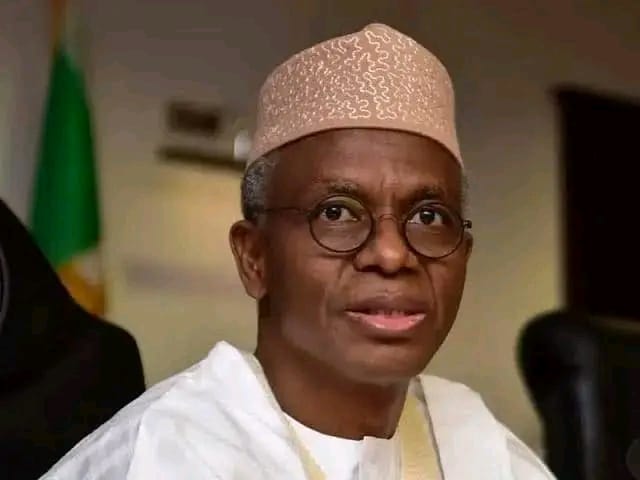
Nasir El-Rufai, the former governor of Kaduna State, has returned home after what his family describes as a period of detention, just in time for the funeral of his late mother.
His son, Bashir El-Rufai, confirmed the development in a post on X (formerly Twitter), stating that his father had been released. Bashir characterized the detention as “unlawful and illegal,” and directed sharp criticism at the agency involved, referring to it as “one of the most corrupt agencies in the Federal Republic of Nigeria that is a lame excuse of a pathetic institution.”
The former governor had reportedly presented himself to the Economic and Financial Crimes Commission (EFCC) on February 16 for questioning. According to Bashir’s account, El-Rufai was held by the commission until his release prior to the funeral.
News
Breaking:Kano Deputy Governor Resigns
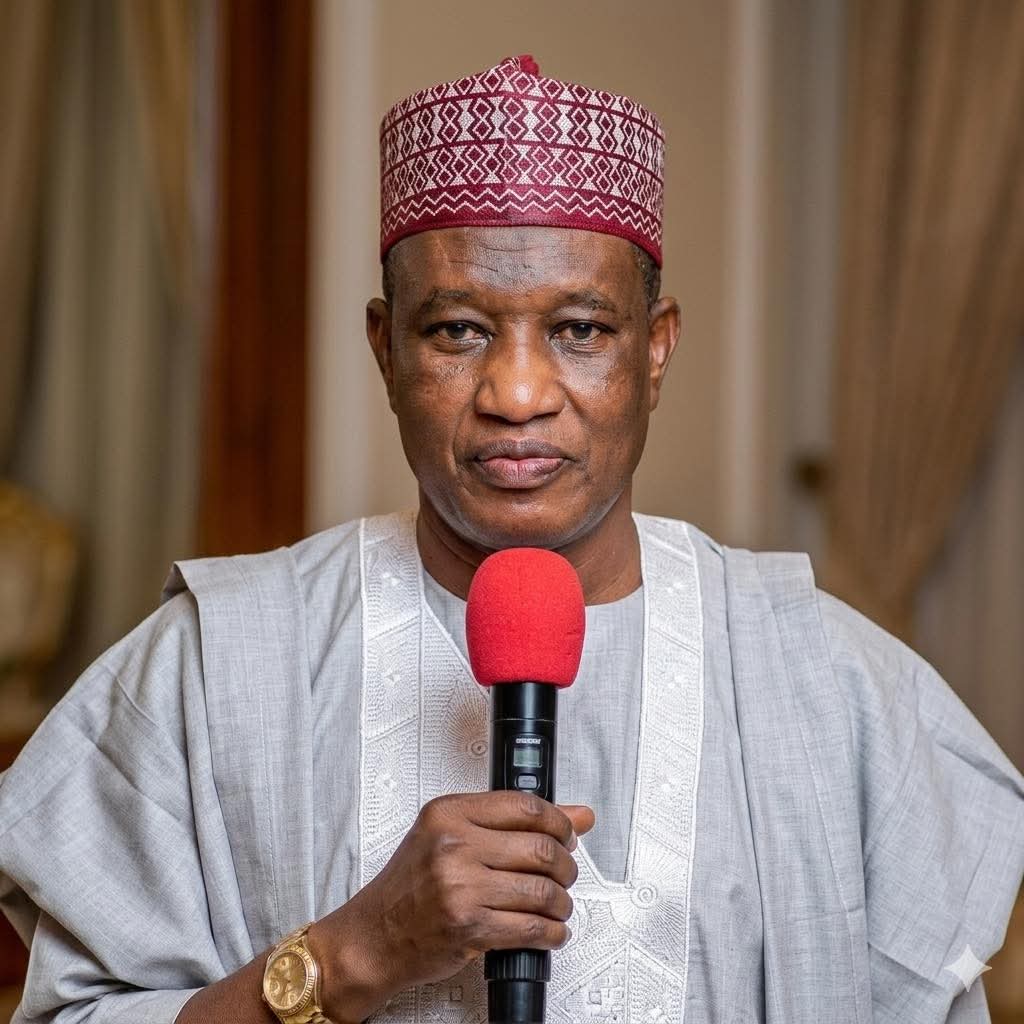
The Kwankwasiyya Movement has announced the resignation of the Deputy Governor of Kano State Comrade Aminu Abdulsalam Gwarzo, stating that the decision was formally communicated to the public in a press release issued on Friday and signed by its spokesperson, Dr. Habibu Sale Mohammed.
According to the statement, the resignation was taken “in the overall interest of the people and the stability of governance” in the state, with the movement noting that recent developments had significantly limited the Deputy Governor’s ability to fully discharge the responsibilities of the office.
The movement also addressed the ongoing issues involving the Kano State House of Assembly, emphasizing that the Deputy Governor’s decision to step down should not be interpreted as an admission of any allegations raised against him, and insisting that he continues to maintain his innocence.
Describing the move as one of “statesmanship,” the statement said the resignation was intended to reduce political tension and prevent further disruptions to governance and development efforts in Kano State, while demonstrating a commitment to peace and political maturity.
The Kwankwasiyya Movement further disclosed that the former Deputy Governor plans to redirect his focus toward strengthening the movement’s internal structures and strategies, particularly as political actors begin positioning ahead of Nigeria’s 2027 general elections.
The statement added that this renewed engagement would involve rebuilding party frameworks and pursuing strategic realignments aimed at promoting what it described as people-oriented leadership, social justice, and sustainable development.
The movement called on its supporters and residents of Kano State to remain calm, law-abiding, and committed to democratic principles, assuring the public that additional details regarding the resignation would be communicated in due course, according to the spokesperson.
Comrade Aminu Abdulsalam Gwarzo the Deputy Governor has been enmeshed in a political battle with his boss Governor Abba Kabir Yusuf since the Governor defected to the All Progressives Congress without the blessing of the NNPP National leader Senator Rabiu Musa Kwankwaso.
Recently the Kano state House of Assembly has issued Impeachment notice on Comrade Aminu Abdulsalam Gwarzo over allegation of corruption.
News
Hajiya Umma El-Rufai, Mother of Former Kaduna Governor, Passes Away
By Yusuf Danjuma Yunusa
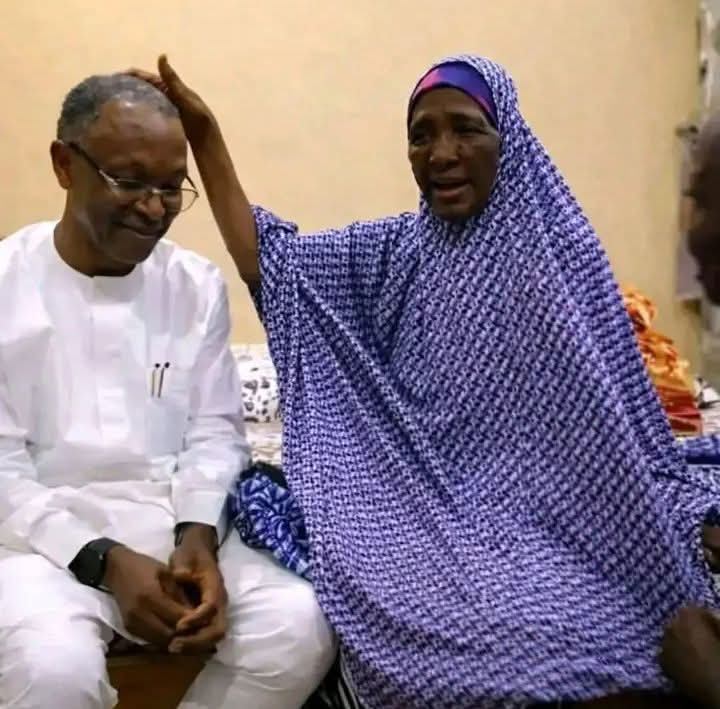
Hajiya Umma El-Rufai, the mother of former Kaduna State governor, Mallam Nasir El-Rufai, has died.
According to family sources, she passed away on Friday afternoon. While details surrounding her death remain unclear at this time, the family has since confirmed the sad event.
The announcement was made public by her grandson, Bello El-Rufai, in a statement shared on Facebook. The statement read:
“Inna lillahi wa inna ilayhi raji’un. From Allah SWT we came and to Him we shall all return.
I would like to inform the public of the demise of my grandmother, Hajiya Umma El-Rufai, who passed away a few hours ago.
She is the biological mother of our father, Mallam Nasir El-Rufai. We are grateful for the life she lived and pray that Allah SWT bless her gentle soul.
May He bless the souls of the parents we have lost. On behalf of our family, we seek your prayers. Thank you.”
The family is expected to release further details regarding funeral arrangements in due course.

APC National Convention : How DSP Barau Displays Political Sagacity, Deep Knowledge of Democracy Before President Tinubu, Others

BREAKING: El-Rufai Released Following Mother’s Death, Son Alleges Unlawful Detention

Breaking:Kano Deputy Governor Resigns

Hajiya Umma El-Rufai, Mother of Former Kaduna Governor, Passes Away

ASUU Threatens Nationwide Shutdown

The Governor Who Chose His People Over His Politics: Abba Yusuf and the Moral Courage Behind Kano First

FREEDOM OF SPEECH, NOT FREEDOM FROM CONSEQUENCE: A CITIZEN’S CALL FOR RESPONSIBLE PUBLIC COMMENTARY

Press Freedom: IPI Nigeria Calls on New Acting IGP to End Police Harassment of Journalists
Tinubu to Swear in Olatunji Disu as Inspector-General of Police on Wednesday
Restoring the Glory That Was Always There: Governor Abba Kabir Yusuf and the Historical Vision Behind Kano First
APC National Convention : How DSP Barau Displays Political Sagacity, Deep Knowledge of Democracy Before President Tinubu, Others
BREAKING: El-Rufai Released Following Mother’s Death, Son Alleges Unlawful Detention
Breaking:Kano Deputy Governor Resigns
Hajiya Umma El-Rufai, Mother of Former Kaduna Governor, Passes Away
ASUU Threatens Nationwide Shutdown
The Governor Who Chose His People Over His Politics: Abba Yusuf and the Moral Courage Behind Kano First
FREEDOM OF SPEECH, NOT FREEDOM FROM CONSEQUENCE: A CITIZEN’S CALL FOR RESPONSIBLE PUBLIC COMMENTARY
Press Freedom: IPI Nigeria Calls on New Acting IGP to End Police Harassment of Journalists
Tinubu to Swear in Olatunji Disu as Inspector-General of Police on Wednesday
Restoring the Glory That Was Always There: Governor Abba Kabir Yusuf and the Historical Vision Behind Kano First
-

 Opinion4 years ago
On The Kano Flyovers And Public Perception
-

 Features5 years ago
How I Became A Multimillionaire In Nigeria – Hadiza Gabon
-

 Opinion5 years ago
Kano As future Headquarters Of Poverty In Nigeria
-

 History5 years ago
Sheikh Adam Abdullahi Al-Ilory (1917-1992):Nigeria’s Islamic Scholar Who Wrote Over 100 Books And Journals
-

 Opinion4 years ago
My First Encounter with Nasiru Gawuna, the Humble Deputy Governor
-

 History5 years ago
The Origin Of “Mammy Market” In Army Barracks (Mammy Ochefu)
-

 History4 years ago
The History Of Borno State Governor Professor Babagana Umara Zulum
-

 News4 years ago
Federal University Of Technology Babura To Commence Academic Activities September