
News
Battle Against Corruption Is Like Fighting Colombian Drug Cartels, Says Kano Anti-Corruption Tzar
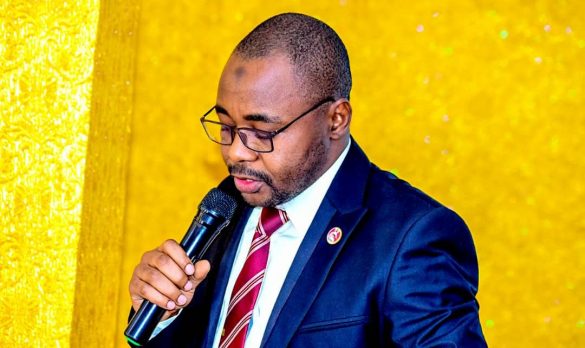
The fight against corruption in Nigeria is as dangerous as fighting armed Colombian drug cartels, former Chairman of Kano State Public Complaints and Anti-Corruption Commission (PCACC), Muhyi Magaji Rimin Gado, has said.
The Medellín Cartel led by Pablo Escobar and the Cali Cartel dominated cocaine trafficking, leading Colombia to vast illicit wealth for the few whose crimes promoted corruption, violence, mass public revenge, and prolonged bloody gunfights with the authorities. The PCACC was established in April 2005 to fight corruption in Kano State.
Mr. Magaji also warned that the increase in violence and banditry in the North is partly linked to the naked abuse and stealing of public funds by corrupt officials whose self-serving policies create a stagnant pool of poverty and human misery from which criminals find many potential recruits.
He said it was when he started investigating corruption petitions, doing his statutory duties, that he discovered the suspect companies were linked to his former Kano State Governor, Abdullahi Ganduje, discovering that a lot of Public-Private Partnership Initiatives were actually linked to the former Governor. He said he also discovered billions of illicit funds relating to the state’s Internally Generated Revenue (IGR), especially concerning fraudulent land rents.
The anti-corruption crusader said his experience while investigating an avalanche of corruption cases in Kano indicated that corrupt politicians are like cancerous ailments that should be removed through a painful but necessary surgical operation before Nigeria can reclaim her pride in the comity of nations.
He said Nigerians should explore democratic opportunities to the brim by casting their votes against a league of corrupt elites that have sold the birthrights of the people.
He said his decision to investigate the looting of billions of public funds in Kano State under former Governor Abdullahi Ganduje spurred ceaseless threats to his life and that of his family, culminating in his arrest last week Friday by tens of armed security guards who drove him from Kano to Abuja in the night where he was locked up. He said for 17 hours he and his family were subjected to harrowing experiences. He said the armed men bundled him into a vehicle where he was sandwiched between armed policemen who drove in the night from Kano to Abuja in order to gag him. He said if armed bandits had attacked the convoy, there was only a slim chance that any of them would escape.
“The cases I started investigating in Kano involved billions of public funds diverted by public officials. They are desperate to kill in order to sit on stolen funds. They are as dangerous as drug cartels in Colombia. Fighting them is like fighting drug lords.”
He said corruption cannot be fought effectively when law enforcement agents are compromised by the same corrupt politicians who have no respect for accountability.
Rimin Gado said some policemen are currently being used against him by powerful but stupendously corrupt politicians who feed on the misery of the toiling masses. He said he was deeply concerned that the Police initiated criminal investigation into a judicial process, duly initiated under Section 211 of the Nigerian Constitution, and that it is prejudicial for the police to hunt and malign someone who has filed corruption charges on behalf of the State against politicians that consistently ruin the frontiers of democracy and human prosperity.
“I was given fiat by the Attorney General to prosecute allegations of offenses against the laws of Kano State. Why arrest me for doing what I have a legal duty to do? Why not arrest the State if they can?
“The police have no legal or moral reasons to enquire about what is already before the Court of Law, especially a criminal matter which the court had already taken cognizance of,” he said.
He spoke as a Keynote Speaker on the topic Youth as Catalyst of Integrity: Building a Corruption-Free Future for Nigeria, at the Public Presentation of the 19th Edition of the Compendium on 100 Profile Corruption Cases in Nigeria held in Lagos on Tuesday. The event was organised by the Human and Environmental Development Agenda (HEDA Resource Centre) in partnership with local and international groups to mark this year’s International Anti-Corruption Day celebration. The theme of the conference was Uniting with Youth Against Corruption: Shaping Tomorrow’s Integrity.
Rimin Gado said from his experience in Kano, corrupt politicians are as vicious as the world’s most violent drug lords who are prepared to kill and burn the country down rather than face justice or give up their crimes. He said prosperity and development in Nigeria would remain stunted as long as corrupt actors dominate the political economy.














News
Breaking:Kano Deputy Governor Resigns
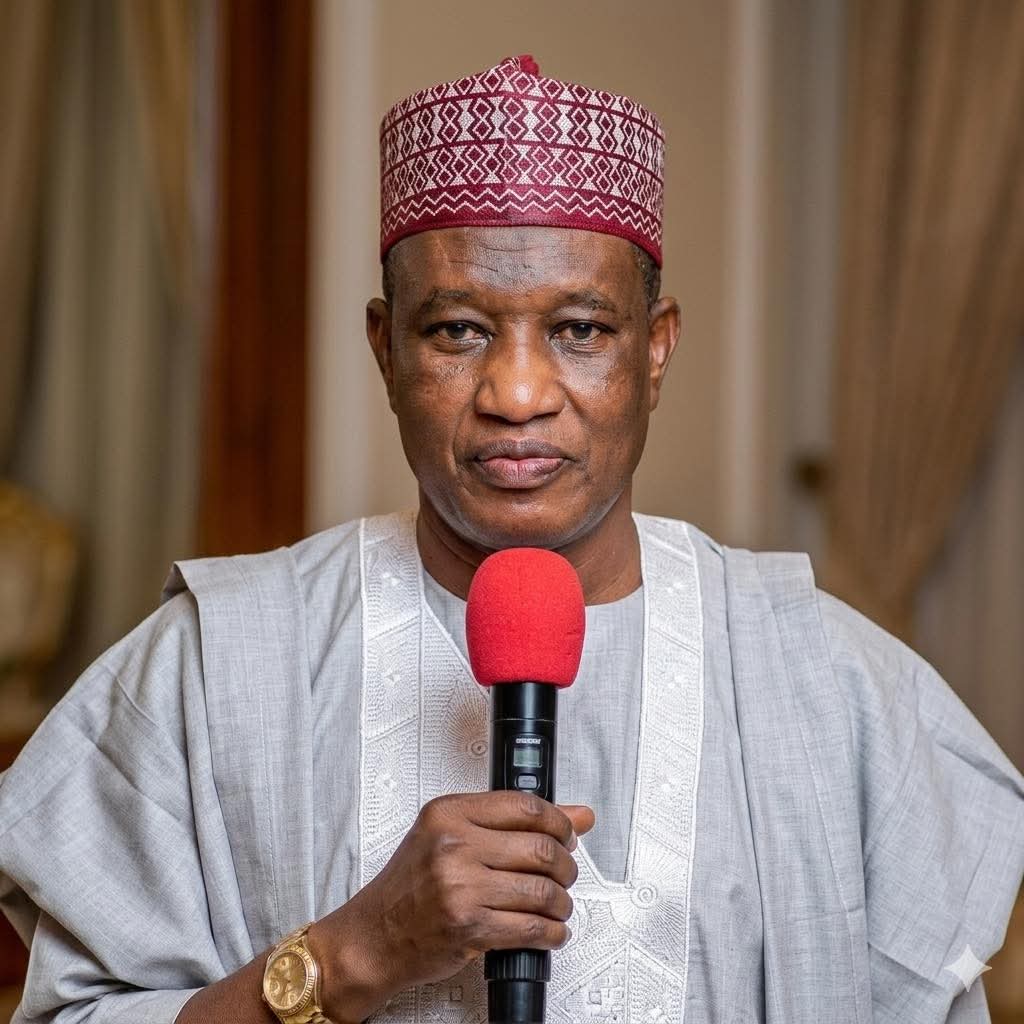
The Kwankwasiyya Movement has announced the resignation of the Deputy Governor of Kano State Comrade Aminu Abdulsalam Gwarzo, stating that the decision was formally communicated to the public in a press release issued on Friday and signed by its spokesperson, Dr. Habibu Sale Mohammed.
According to the statement, the resignation was taken “in the overall interest of the people and the stability of governance” in the state, with the movement noting that recent developments had significantly limited the Deputy Governor’s ability to fully discharge the responsibilities of the office.
The movement also addressed the ongoing issues involving the Kano State House of Assembly, emphasizing that the Deputy Governor’s decision to step down should not be interpreted as an admission of any allegations raised against him, and insisting that he continues to maintain his innocence.
Describing the move as one of “statesmanship,” the statement said the resignation was intended to reduce political tension and prevent further disruptions to governance and development efforts in Kano State, while demonstrating a commitment to peace and political maturity.
The Kwankwasiyya Movement further disclosed that the former Deputy Governor plans to redirect his focus toward strengthening the movement’s internal structures and strategies, particularly as political actors begin positioning ahead of Nigeria’s 2027 general elections.
The statement added that this renewed engagement would involve rebuilding party frameworks and pursuing strategic realignments aimed at promoting what it described as people-oriented leadership, social justice, and sustainable development.
The movement called on its supporters and residents of Kano State to remain calm, law-abiding, and committed to democratic principles, assuring the public that additional details regarding the resignation would be communicated in due course, according to the spokesperson.
Comrade Aminu Abdulsalam Gwarzo the Deputy Governor has been enmeshed in a political battle with his boss Governor Abba Kabir Yusuf since the Governor defected to the All Progressives Congress without the blessing of the NNPP National leader Senator Rabiu Musa Kwankwaso.
Recently the Kano state House of Assembly has issued Impeachment notice on Comrade Aminu Abdulsalam Gwarzo over allegation of corruption.
News
Hajiya Umma El-Rufai, Mother of Former Kaduna Governor, Passes Away
By Yusuf Danjuma Yunusa
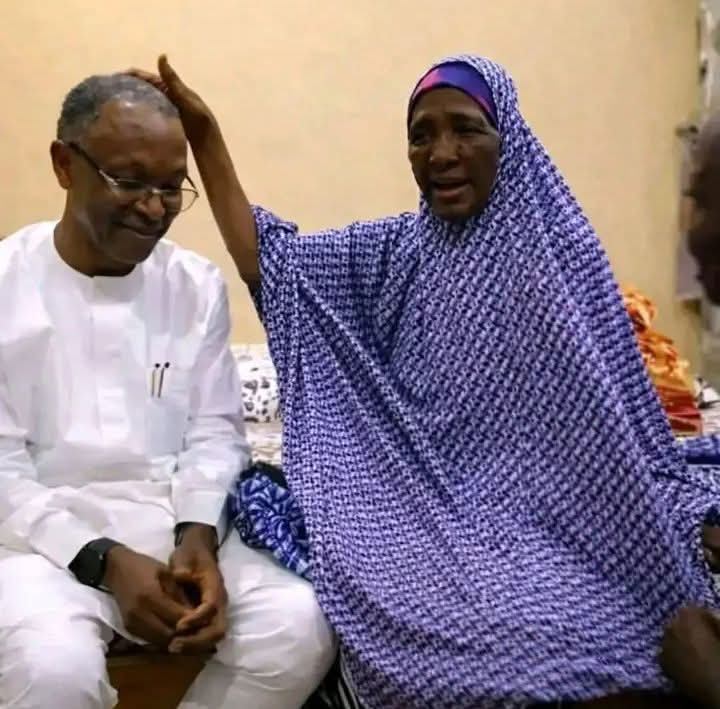
Hajiya Umma El-Rufai, the mother of former Kaduna State governor, Mallam Nasir El-Rufai, has died.
According to family sources, she passed away on Friday afternoon. While details surrounding her death remain unclear at this time, the family has since confirmed the sad event.
The announcement was made public by her grandson, Bello El-Rufai, in a statement shared on Facebook. The statement read:
“Inna lillahi wa inna ilayhi raji’un. From Allah SWT we came and to Him we shall all return.
I would like to inform the public of the demise of my grandmother, Hajiya Umma El-Rufai, who passed away a few hours ago.
She is the biological mother of our father, Mallam Nasir El-Rufai. We are grateful for the life she lived and pray that Allah SWT bless her gentle soul.
May He bless the souls of the parents we have lost. On behalf of our family, we seek your prayers. Thank you.”
The family is expected to release further details regarding funeral arrangements in due course.
News
ASUU Threatens Nationwide Shutdown
By Yusuf Danjuma Yunusa
The Academic Staff Union of Universities has warned the Federal Government of Nigeria to immediately implement the newly approved salary structure for university lecturers or face a possible nationwide shutdown of public universities.
The union issued a four-day ultimatum on Thursday, with its president, Christopher Piwuna, saying failure to act within the deadline would trigger a strong response.
Speaking at Sa’adu Zungur University in Bauchi State, Piwuna said the government must begin payment under the new salary arrangement without further delay.
“We have issued a four-day ultimatum from today to the federal government to commence payment of the newly approved salary structure. Failure to comply will attract a strong response from the union,” he said.
The warning comes months after ASUU and the federal government signed a renegotiated agreement in January, aimed at resolving long-standing disputes and preventing the recurring strikes that have plagued Nigeria’s university system.
At the heart of the agreement is a revised salary structure designed to improve lecturers’ welfare and finally address issues stemming from the controversial 2009 FG-ASUU pact, which remained largely unimplemented for years.

Breaking:Kano Deputy Governor Resigns

Hajiya Umma El-Rufai, Mother of Former Kaduna Governor, Passes Away

ASUU Threatens Nationwide Shutdown

APC Convention:FG Orders Remote Work for Offices Near Eagles Square

Nigeria’s Power Supply to Improve in Two Weeks as Gas Pipeline Work Nears Completion

The Governor Who Chose His People Over His Politics: Abba Yusuf and the Moral Courage Behind Kano First

FREEDOM OF SPEECH, NOT FREEDOM FROM CONSEQUENCE: A CITIZEN’S CALL FOR RESPONSIBLE PUBLIC COMMENTARY

Press Freedom: IPI Nigeria Calls on New Acting IGP to End Police Harassment of Journalists
Tinubu to Swear in Olatunji Disu as Inspector-General of Police on Wednesday
Restoring the Glory That Was Always There: Governor Abba Kabir Yusuf and the Historical Vision Behind Kano First
Breaking:Kano Deputy Governor Resigns
Hajiya Umma El-Rufai, Mother of Former Kaduna Governor, Passes Away
ASUU Threatens Nationwide Shutdown
APC Convention:FG Orders Remote Work for Offices Near Eagles Square
Nigeria’s Power Supply to Improve in Two Weeks as Gas Pipeline Work Nears Completion
The Governor Who Chose His People Over His Politics: Abba Yusuf and the Moral Courage Behind Kano First
FREEDOM OF SPEECH, NOT FREEDOM FROM CONSEQUENCE: A CITIZEN’S CALL FOR RESPONSIBLE PUBLIC COMMENTARY
Press Freedom: IPI Nigeria Calls on New Acting IGP to End Police Harassment of Journalists
Tinubu to Swear in Olatunji Disu as Inspector-General of Police on Wednesday
Restoring the Glory That Was Always There: Governor Abba Kabir Yusuf and the Historical Vision Behind Kano First
-

 Opinion4 years ago
On The Kano Flyovers And Public Perception
-

 Features5 years ago
How I Became A Multimillionaire In Nigeria – Hadiza Gabon
-

 Opinion5 years ago
Kano As future Headquarters Of Poverty In Nigeria
-

 History5 years ago
Sheikh Adam Abdullahi Al-Ilory (1917-1992):Nigeria’s Islamic Scholar Who Wrote Over 100 Books And Journals
-

 Opinion4 years ago
My First Encounter with Nasiru Gawuna, the Humble Deputy Governor
-

 History5 years ago
The Origin Of “Mammy Market” In Army Barracks (Mammy Ochefu)
-

 History4 years ago
The History Of Borno State Governor Professor Babagana Umara Zulum
-

 News4 years ago
Federal University Of Technology Babura To Commence Academic Activities September