
Politics
Senator Barau and Endorsement (s) Palaver : An Assessment
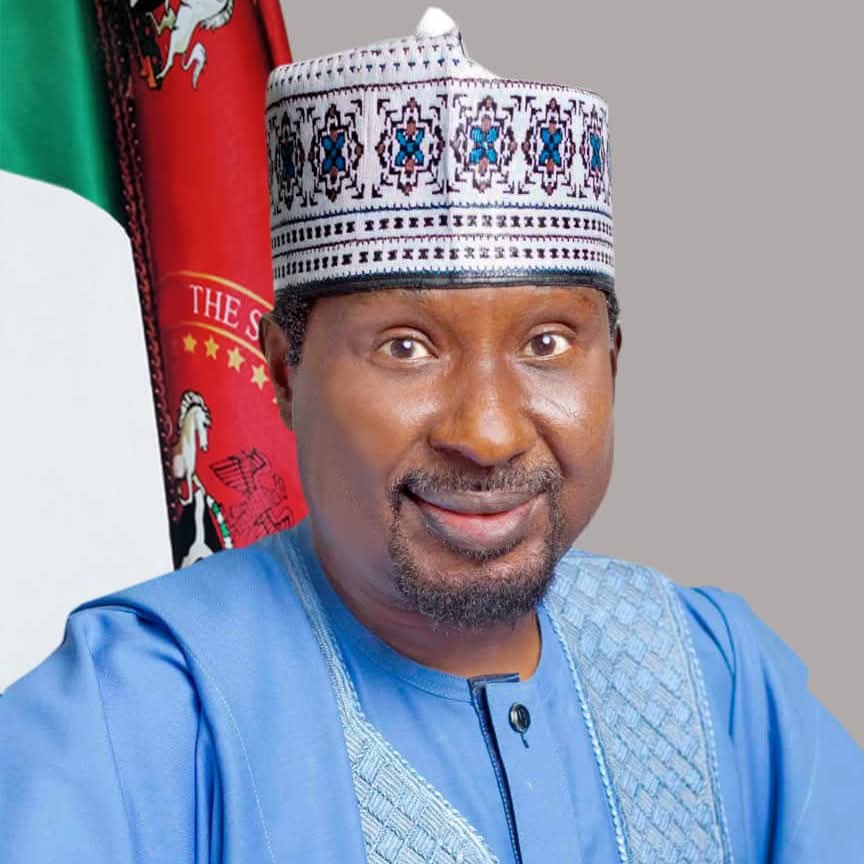
By Abba Anwar
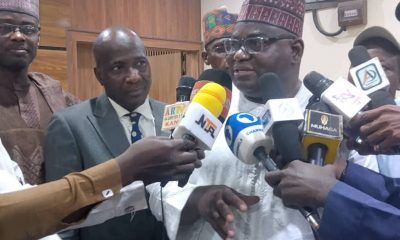
Recent events concerning endorsement of the Deputy Senate President, Distinguished Senator Barau I Jibrin, CFR, by the former Chairmen of local governments in Kano state, for the position of a governor, is not only attractive, the endorsement is a picture depicting what to come and what not to come.
Though some Chairmen came out immediately, to dissociate selves from the endorsement story, I still believe that, those who were with the DSP at the endorsement table, have every tight to make their own political choices. Yes political choice is a right ascribe to all citizens by laws, rules and regulations governing political behaviors of the citizenry.
Take it or leave it, such endorsements, including the one from the part of the former Commissioners, who served under the former Governor Abdullahi Umar Ganduje, CON, were not in place by nature or accident. Yes some of the Commissioners came out to dismiss, the endorsement, as did by some former Chairmen.
The thing is, Barau, Nasiru Yusuf Gawuna and Murtala Sule Garo, among others, have every right to contest for any position, come 2027 political rainy season. Even those who may have interest and waiting for the time and situation, to become deciding factors (raba gardama), they too, have an equal right to contest alongside Barau, Gawuna and Garo.
The debate about will it be Barau or Gawuna or Garo or any other person, is dependent upon examined chances, opportunities and rightful political behavior of the major actors. While a SWOT analysis can provide clearer platform for good assessment, individual belief in the real project, can also strengthen the entire process.
By SWOT analysis I mean, both the leadership and followership within the realm of All Progressives Congress (APC) and other non-APC people, including mere voters, those who only appear to cast vote during elections, but do not belong to any political party, demand to gauge and weigh individual preference concerning Strength, Weaknesses, Opportunities and Threats (SWOT), then the real picture of who is likely to win or lose and election will emerge.
For example, one cannot still take away credits like attachment to grassroot, link with all segments of the party, deeply entrenched state visibility, frankness in all matters, display of clear direction to all people he relates with, real and genuine Tawakkul (giving everything to Allah), kalamu waheed (keeping his words), if you like and remembering his people under sun under rain, from Garo.
For Barau, you cannot take away from him qualities like, deep knowledge of national politics, more knowledgeable about worldview, carrying many things on his head, to the point that many see him as an always – busy-leader, who quickly forgets those around him, because he plans for their better tomorrow, very productive representative whose primary constituency is always in his chest and an a dear leader with an infrastructural-mind. You see structures everywhere courtesy him.
As for Gawuna, my reader and I, cannot take away from him qualities like, very charismatic, gorgeous, whose political gorgeousness takes him closer to people, particularly urban dwellers, receptive and accomodative appearance, from the first look at him, smily face, signifying open mind and simple.
My assessment of these gentlemen is how people see them. While I will not say a word on their shortcomings, because some could be subjective positions from people’s view, mine is just to give advice to the party, both leaders and followers and the endorsement process.
Lest I forget, left to me, Barau will be more productive when fixed in higher position there. Is just a matter of lobbying. If at all, we have good lobbyists from Kano, now. Any position above his current position. Or similar, with more impact. Mention any position that comes to your mind. This is my understanding of his self development. But one shouldn’t be shielded from his political choice. Yes agreed, he can be fix in all positions.
From the look of things, Gawuna – Garo ticket may not hold millions of litters of water. Hence, not a switchover of the duo’s ticket, but a provision of level playing ground, where each one of them has equal right and opportunity to contest for the gubernatorial seat. Whoever emerges at the intra – party election, can get the full support of the other. This, to me, is doable. Still Gawuna and Garo should have access and right to their freewill.
At the same time, those who appear to be cowards, politically, like Inuwa Waya, should be re-invited to rejoin the party and the race. At least for the life saving intervention of their political survival and strategy. Even if Waya is patiently waiting for any opportunity for returning match against those who alleged to have deceived him in the past, I think he should be patient enough to slug it out from within. He alone, for his political survival, is entitled to his democratic choice.
Kano’s gubernatorial race come 2027, may not witness anything close to an upcoming of a dark horse or dark horses in the race. Unless if a dark horse is abruptly coming from the other side of the table. I may be right or wrong. I also stand to be corrected.
For all aspirants, kindly remind yourselves the simple, bitter and indisputable truth that, resources alone are not always determining factor for political victory. What depicts this polical historicity are the cases of the period of the first civilian governor of old Kano state, Muhammad Abubakar Rimi. Followed by Malam Ibrahim Shekarau’s period.
Though during Rimi one could argue that, there was refined political ideology, as a driving force for democratic culture, democracy and political behavior for all the then political parties. But during Shakarau, political ideology was utterly absent compared to Rimi’s time. But there was a movement, called Guguwar Buhari or at best Buhariyya movement. In all the two scenarios nowhere, resources alone gave victory.
Politics goes with time, happenings, breaking situations, political development, existing structures, level of engagement and genuine realities at play. So 2027 will definitely not come with fresh polical ideology and Guguwar Buhari. But, and but, there could be a more fresher development that can take the centrestage.
Endorsement, endorsement and endorsement. I have no problem with any form of endorsement. But proponents of endorsement should be wise enough to play their cards in a way that they will not be swindled. I mean endorsement to any individual must be vigilant, strategic and cautious.
Come to think of these scenarios. Barau- Baffa Dan Agundi ticket, Garo-Zaura ticket, Gawuna-Garo ticket. A food for thought to all.
While Kano is bigger than imposition of candidates, President Bola Ahmed Tinubu is not a new entrant into political struggle and fight for sustainable democracy, if Kano APC will not and is not ready to work together, it is very simple for Tinubu to uproot them from the stage and replace them with any choice he deems fit.
My take. Where Garo can make a no-nonsense Governor, where discipline reigns, Gawuna can make a modern Governor, where charisma reigns and Barau can make a clever Governor whose attachment to all can be not strong and temporary, with sound knowledge of national politics.
Anwar writes from Kano
Thursday, 4th December, 2027







Politics
REJOINDER: The Fallacy of the “Commander” and the Burden of Integrity
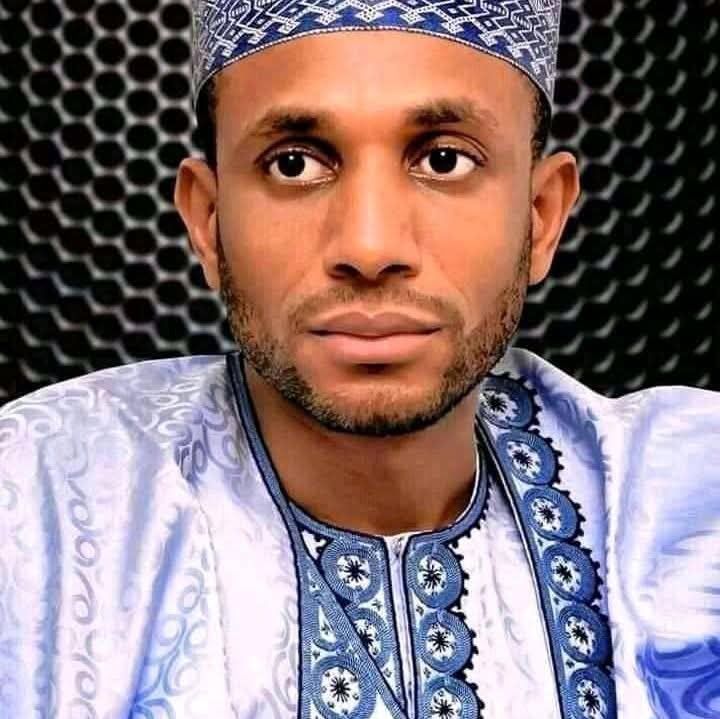
By Halima Isyaku Dantsoho
I read with a mix of amusement and concern the defense of Hon. Murtala Sule Garo by Hadi Abdullahi Muhammad, which attempts to frame the valid scrutiny of a public figure as a mere product of “internal power struggles.” While it is convenient to label every criticism a “media trial,” we must confront the reality that leadership is a sacred trust, not a reward for street mobilization. To suggest that Garo is the ideal choice for Deputy Governor—particularly in the wake of the recent political shift that saw Governor Abba Kabir Yusuf move to the APC—is to ignore the very “storm” the author claims to see. The vacancy in the Deputy Governor’s office exists because Kano is attempting to move past a season of distraction following the resignation of the former occupant; why then would the state replace a controversy with a liability? We are talking about a man who remains entangled in significant litigation regarding his past tenure as Commissioner, and to elevate such an individual to the second-highest office in the state would be like putting out a fire with petrol. It would lock the administration into a permanent state of legal defense, ensuring that the coming years are spent in courtrooms rather than on the construction of a better Kano.
The author praises Garo as a “Commander” of the grassroots, yet in a state as economically vital as ours, “mobilization” is not a substitute for administrative integrity. The “grassroots” of which he speaks—the traders, farmers, and youths—are the primary victims when public funds are allegedly mismanaged at the local government level. True loyalty to the base is shown through transparent governance and the systemic protection of public wealth, not through the strategic distribution of startup tools during an election cycle. If the APC national leadership and President Bola Ahmed Tinubu are truly committed to a “Renewed Hope” agenda, they must recognize that elevating a figure with such unresolved legal narratives contradicts the very integrity the party must represent in this new era. Perfection may not be the standard, but accountability is. Fairness does not mean ignoring a mountain of evidence in favor of political popularity; it means letting the courts decide a man’s fate before he is granted the prestige of high office. Kano has moved forward into a new political era, and it is time our leadership choices reflected a future built on stability rather than a return to the controversies of the past.
Halima Isyaku Dantsoho wrote from Kano.
Politics
Kano’s Quest for an Alternative with Ibrahim Ali Amin Little, By Adnan Mukhtar
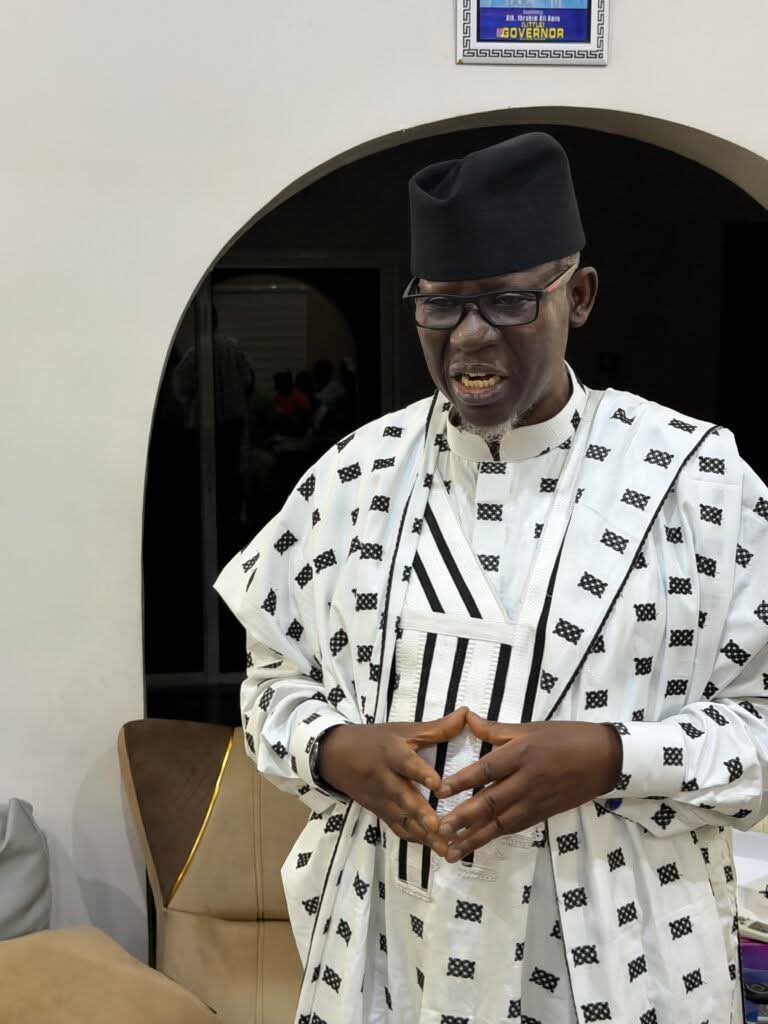
My recent article titled “Ibrahim Little: The Man Fit for the Job” has opened the eyes of many young men and women, particularly those in the Gen Z category, to the personality and potential of Alhaji Ibrahim Ali Amin. He is a man of calibre and a true embodiment of competence for the enormous responsibility of leading Kano, the commercial hub of Northern Nigeria.
The quest for a credible alternative in Kano’s political space began last year when my political mentor and principal declared his intention to contest for the governorship. The name Ibrahim Ali Amin Little has, however, been a household name in Kano politics since the year 2000.
He is involved in politics not for material gain, but out of a genuine passion for investing in the lives of the people. As a businessman with a proven track record, he brings a different perspective to governance. Since 1999, most of Kano’s governors have emerged from the civil service sphere. Despite Kano’s status as a commercial centre, the state has witnessed a form of economic stagnation, largely due to insufficient emphasis on business-driven policies and economic innovation.
When I speak of an “alternative,” I refer to an independent-minded individual who is well-versed in administration and economic management.
Kano cannot be entrusted to someone who lacks a deep understanding of its economic realities. Since 1999, governance in the state has largely revolved around a single model road construction and the awarding of contracts, often without corresponding long-term economic impact.
True governance goes beyond infrastructure. It involves prioritising education by employing competent teachers, strengthening the healthcare sector especially primary healthcare centres with adequate and qualified medical personnel, and creating sustainable systems that improve the quality of life for citizens. These are the real indicators of governance. The question, however, remains: where does Kano stand in all of this?
Unfortunately, very few aspirants are addressing these critical issues except Ibrahim Little. As one of his closest aides, I can confidently say that his priorities are clear and people-oriented. His daily engagements revolve around questions such as: How can we identify and nurture talent? How can Kano become a true industrial hub? How can we establish an independent power supply for the state? And how can we revitalise and boost agricultural productivity?
These are not just talking points for him, they are guiding principles. His interest lies in the development of Kano, not in personal gain or the accumulation of state resources.
At this critical moment, Ibrahim Ali Amin Little stands as the alternative Kano needs.
Adnan Mukhtar
Is a Doctoral Candidate at Northwest University, Kano
Politics
Pardoning accused politicians healthy political evolution in Nigeria— Garo
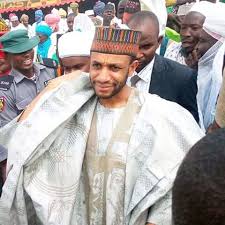
Alhaji Murtala Sule Garo, a prominent politician and grassroots mobiliser in Kano State, says it is healthy political evolution that politicians are being granted pardon in Nigeria.
Garo, who fielded questions from newsmen in Kano, also noted that repentant and forgiven politicians are allowed to actively participate in politics to add valour and strengthen democracy.
He was reacting to allegations over his involvement in financial sleaze while serving as Commissioner for Local Government and Chieftaincy Affairs in Kano during the administration of Dr. Abdullahi Umar Ganduje.
Garo acknowledged desperate attempts by his adversaries to malign him and whittle down his growing political profile.
Garo, popularly known as MSG, was a Deputy Governorship candidate during the 2023 general election and Commissioner for Local Government and Chieftaincy Affairs.
He claimed that local councils in the state witnessed phenomenal development when he served as Commissioner for Local Government Affairs.
However, Sule Garo explained that the allegations of diversion of public funds for personal use have collapsed in the eyes of the Constitution and extant laws of Nigeria.
The existing constitutional provisions and laws averred that an accused person is presumed innocent until proven otherwise by a court of competent jurisdiction.
“Therefore, my media trial ran afoul of the law. Moreso, the allegations were not preferred against him but a group of suspects.
“Besides, the Kano State Government, being the complainant, has not shown interest in prosecuting me.
Another charge brought against me was dismissed by the court even as the state government decided to forgive me,” Garo claimed.
He cited for instance that Hon. Faruk Lawan and Alhaji Aminu Dabo, former Managing Director of NPA, were pardoned by the system and are actively participating in politics.
The politician therefore appealed to the good people of Kano State and other interested parties to disregard any malicious allegation against him because of his innocence before the law court and forgiveness by the state government.

NCC to Enforce Subscriber Compensation for Poor Telecom Service

ADC Leadership Tussle Worsens as Third Faction Emerges, Rejects Nafiu Camp, Mark’s Coalition

AN OPEN LETTER TO THE PRESIDENT OF THE FEDERAL REPUBLIC OF NIGERIA

Internal Crisis Deepens in Jigawa APC as High-Profile Defections Threaten Party Cohesion

OPINION:Bauchi ,A Paradise for Immunity Seekers? How Alleged Corrupt Politicians Are Eyeing Government House

ADC Leadership Crisis: State Chairmen to Elect Caretaker Committee on Tuesday

Governor Abba Kabir Yusuf Holds Exclusive Prerogative to Choose Deputy – Malam Inuwa Waya

The Governor Who Chose His People Over His Politics: Abba Yusuf and the Moral Courage Behind Kano First
Restoring the Glory That Was Always There: Governor Abba Kabir Yusuf and the Historical Vision Behind Kano First

Table Water Producers Increase New Price for Sachet Water in Kano
NCC to Enforce Subscriber Compensation for Poor Telecom Service
ADC Leadership Tussle Worsens as Third Faction Emerges, Rejects Nafiu Camp, Mark’s Coalition
AN OPEN LETTER TO THE PRESIDENT OF THE FEDERAL REPUBLIC OF NIGERIA
Internal Crisis Deepens in Jigawa APC as High-Profile Defections Threaten Party Cohesion
OPINION:Bauchi ,A Paradise for Immunity Seekers? How Alleged Corrupt Politicians Are Eyeing Government House
ADC Leadership Crisis: State Chairmen to Elect Caretaker Committee on Tuesday
Governor Abba Kabir Yusuf Holds Exclusive Prerogative to Choose Deputy – Malam Inuwa Waya
The Governor Who Chose His People Over His Politics: Abba Yusuf and the Moral Courage Behind Kano First
Restoring the Glory That Was Always There: Governor Abba Kabir Yusuf and the Historical Vision Behind Kano First
Table Water Producers Increase New Price for Sachet Water in Kano
-

 Opinion4 years ago
On The Kano Flyovers And Public Perception
-

 Features5 years ago
How I Became A Multimillionaire In Nigeria – Hadiza Gabon
-

 Opinion5 years ago
Kano As future Headquarters Of Poverty In Nigeria
-

 History5 years ago
Sheikh Adam Abdullahi Al-Ilory (1917-1992):Nigeria’s Islamic Scholar Who Wrote Over 100 Books And Journals
-

 Opinion4 years ago
My First Encounter with Nasiru Gawuna, the Humble Deputy Governor
-

 History5 years ago
The Origin Of “Mammy Market” In Army Barracks (Mammy Ochefu)
-

 History4 years ago
The History Of Borno State Governor Professor Babagana Umara Zulum
-

 News4 years ago
Federal University Of Technology Babura To Commence Academic Activities September