
News
World Cup 2026: Journalists Urged to Promote Peace Through Sports at Sahel Sports Interactive Session
Abbas Yushau Yusuf
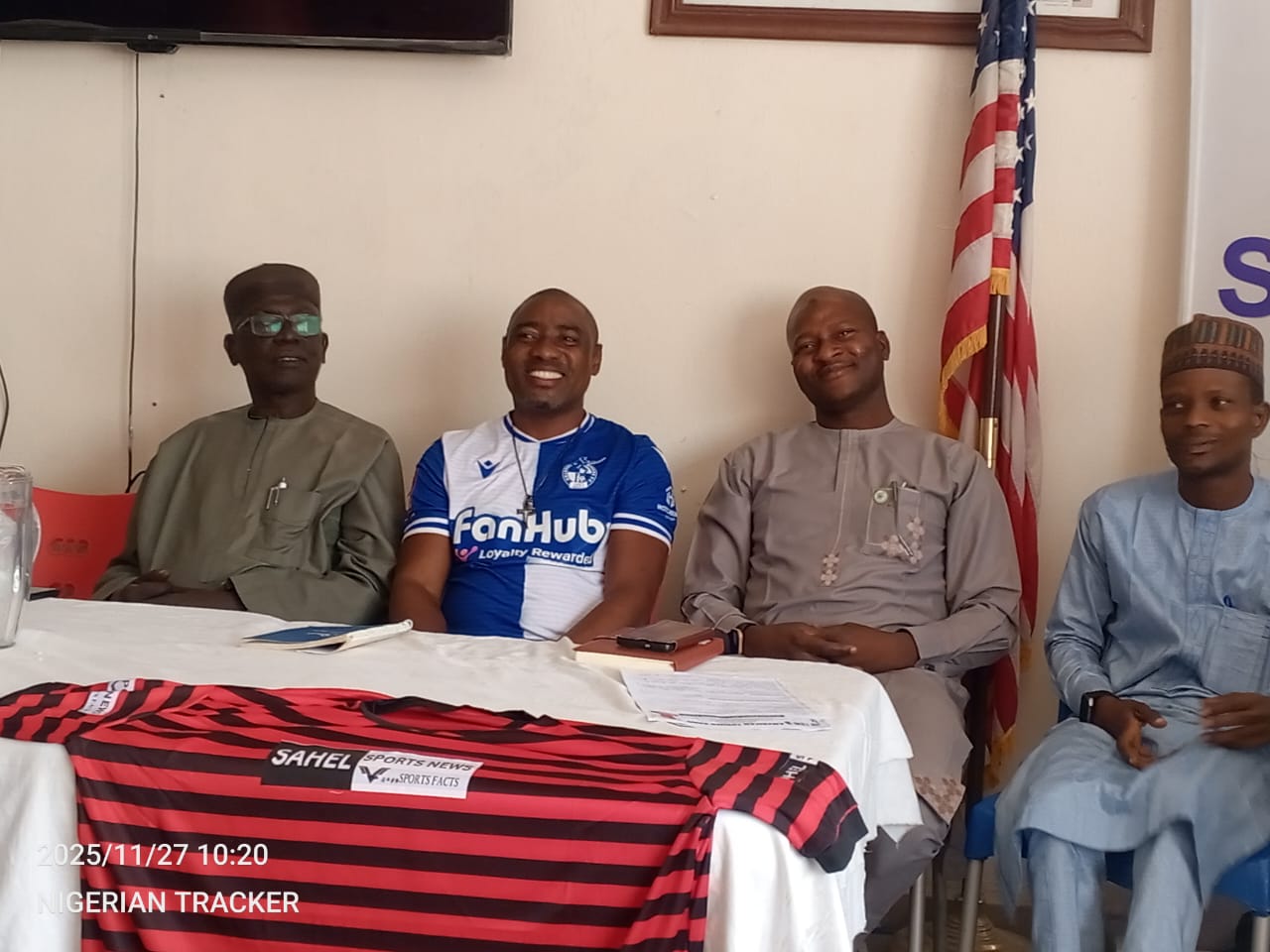
Journalists have been urged to use their platforms to promote peace and unity through sports as preparations intensify ahead of the 2026 FIFA World Cup. The call was made during an interactive media session organized by Sahel Sports News in collaboration with the Kano State Library Board, and powered by the Fortress Centre for Human Rights and Peace Advocacy (FOCHPA) and the Peace Initiative Network (PIN).
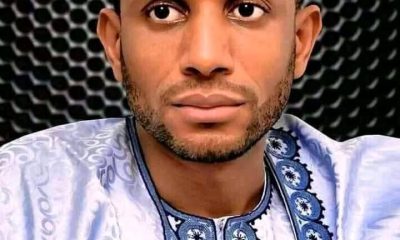
Delivering a keynote paper, Comrade Abbas Ibrahim, former Chairman of the Nigeria Union of Journalists (NUJ), Kano Council, emphasized the critical role of journalists in shaping narratives that foster peace. He noted that failure should not be seen as the opposite of success but rather as part of the journey toward achieving it.
“Failure is when you stop trying,” Ibrahim said. “Sports writers should write stories that promote peace among rival groups. We must check our words carefully, because the words we use can either build peace or fuel conflict.”
He recalled the tragic role of hate speech in the Rwandan genocide, where radio broadcasts incited violence that led to the massacre of over 800,000 Tutsis in just 100 days. He praised Rwanda’s post-genocide reforms under President Paul Kagame, which have fostered reconciliation and unity, including intermarriages between Hutus and Tutsis.
“As journalists, we should stop taking sides when writing stories. We must rise and preach peace, setting our emotions aside to promote unity,” Ibrahim added.
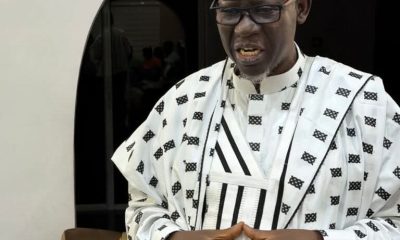
The Chairman of the Youth Sports Federation of Nigeria (YSFON), Alhaji Abdullahi Aliyu Sumaila, commended the organizers, stressing that peace-building through sports is vital at a time when insecurity threatens communities.
“It is time for journalists to promote peace and encourage youth to engage in sports. With well-grounded initiatives, we can emphasize collaboration among communities and educate the citizenry. We are ready to work with journalists to promote peace,” Sumaila said.
In his remarks, Rilwanu Idris Maliksawa Garu, a member of the National Executive Committee of the Sports Writers Association of Nigeria (SWAN), lamented Nigeria’s absence from the 2026 World Cup.
“Missing Nigeria in the 2026 World Cup is bad news for journalists and for the country. The NFF must go back to the grassroots to recruit national players. It should be a balanced process, 50-50, to ensure fairness and quality,” Garu stated.
Representing the Peace Initiative Network, Mr. Friday highlighted the unifying power of sports across cultural divides.
“Sports foster unity, teamwork, tolerance, and respect. It has the power to break barriers and bring people together. Among the youth, there are immense talents that can be nurtured through sports,” he said.
The Executive Secretary of the Kano State Library Board, Garba Ado Zakirai, pledged his support for the initiative, while Dr. Abdulgafar Oladimeji, News Editor of Sahel Sports News, emphasized the importance of professionalism in journalism.
“For journalists to achieve great feats in this profession, they must build themselves professionally and uphold the ethics of the craft,” Oladimeji said.
The interactive session urges intersection between sports, journalism, and peace-building. With Nigeria missing out on the 2026 World Cup, participants agreed that journalists have a responsibility not only to report sports but also to use their platforms to promote unity, resilience, and hope in society.







News
Nigeria’s Opposition Coalition: Navigating Leadership Tussles, Candidate Selection, and the Road to 2027
By Yusuf Danjuma Yunusa
The Nigerian political landscape is currently simmering with uncertainty as the country’s embattled opposition coalition grapples with a series of interconnected dilemmas. From internal party squabbles to the high-stakes question of a presidential candidate capable of unseating incumbent Bola Ahmed Tinubu in 2027, the coalition’s path forward is anything but straightforward. This report provides a detailed examination of the key fault lines within the opposition, the strategic calculations underway, and the prospects for a unified challenge against the All Progressives Congress (APC).
The Party Allegiance Conundrum: Stay or Abandon the ADC?
At the heart of the opposition’s immediate crisis is the question of which political platform to adopt. The coalition had previously coalesced around the African Democratic Congress (ADC), but the party has since become deeply factionalised, raising doubts about its viability as a vehicle for a credible electoral challenge. Alternatives such as the New Democratic Congress (NDC) and the People’s Redemption Party (PRP) have been floated as potential replacements.
After intense internal deliberations, coalition leaders have resolved not to abandon the ADC at this critical juncture. Their reasoning rests on two pillars. First, they argue that considerable resources—financial, organisational, and political—have already been invested in building the ADC into a formidable opposition force ahead of the 2027 general election. Second, they contend that the ruling APC’s strategy of suppressing opposition platforms is not unique to the ADC. In their view, leaving the ADC for another party without first cleansing it of “bad eggs” would only export the same dysfunction to any new vehicle. Therefore, calls to exit solely because of the ongoing leadership tussle have been firmly rejected.
The Presidential Candidate Puzzle: Atiku, Obi, Kwankwaso, or Amaechi?
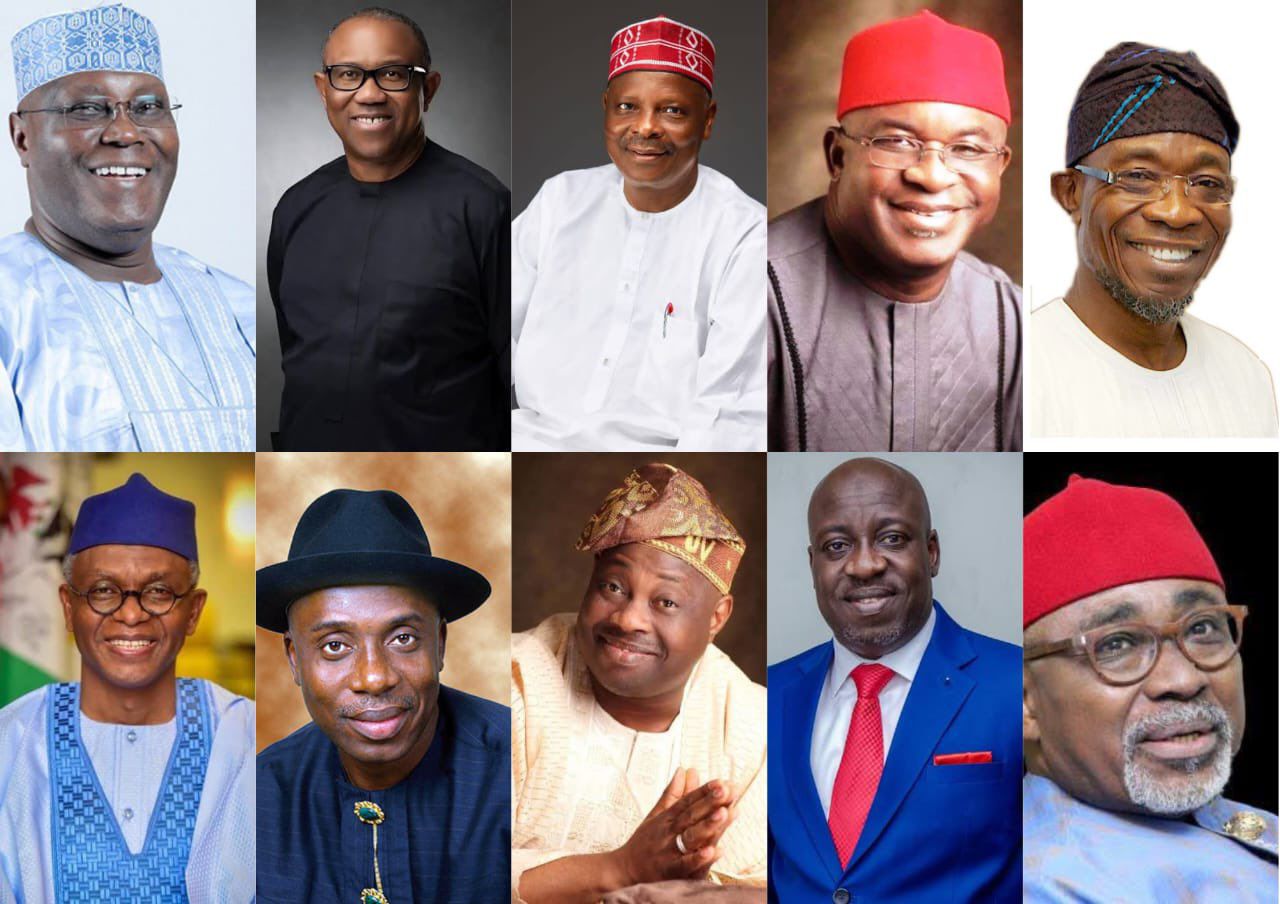
Beyond the party platform issue lies an even more contentious dilemma: who will fly the coalition’s flag as presidential candidate. The quartet of political heavyweights—former Vice President Atiku Abubakar (PDP), former Governor of Anambra Peter Obi (Labour Party/ADC), former Governor of Kano Rabiu Kwankwaso (NNPP), and former Minister of Transport Rotimi Amaechi (APC defector)—each command significant followings. Yet their rivalry threatens to fragment the coalition before it can even take shape.
The Atiku-Obi Ticket Proposition
Political pundits have suggested that the coalition’s strongest chance lies in reviving the 2019 formula: Atiku as presidential candidate and Peter Obi as his running mate. Proponents argue that this combination balances regional and ethnic considerations—Atiku drawing from the north-east and Obi from the south-east—while leveraging the name recognition of both figures. The ticket would also present a direct contrast to President Tinubu’s southern Muslim identity.
The Kwankwaso-Obi Counterproposal
Observers have countered that the electorate may be suffering from “Atiku fatigue,” noting that the former vice president has contested every election cycle since 2007 without success. These analysts argue that it is time for Atiku to step aside and allow a Kwankwaso-Obi pairing, with Kwankwaso at the top and Obi as his deputy. They believe that Kwankwaso’s northern grassroots appeal, combined with Obi’s youth and digital following, could replicate the “outsider” energy that propelled Obi to third place in 2023.
The Obedient Movement’s Resistance and Obi’s Stated Position
The permutations become more fraught once the Obedient Movement—the sprawling, youth-led network that propelled Peter Obi to unexpected prominence in 2023—is factored in. The movement has been unequivocal: Peter Obi will not deputise for anyone. Its leaders view Obi not merely as a candidate but as the embodiment of a generational and governance reform movement. Any suggestion that he accept a vice-presidential slot is met with fierce resistance.
For his part, Peter Obi has repeatedly stated that he will be on the 2027 presidential ballot as a flag bearer of a party. Observers have interpreted this stance in two ways. Either he remains committed to his previous political platform—the Labour Party, which gave him the ticket in 2023—or he has prepared an alternative in the event that the coalition’s chosen vehicle (the ADC) becomes unworkable.
Speculation of an Obi Exit from ADC
With the ADC’s leadership crisis now fully manifest, social media and political circles are rife with speculation that Obi may soon abandon the ADC altogether. The most likely destination is a return to the Labour Party, where he still enjoys substantial institutional loyalty. However, other unnamed parties are also said to be under consideration. The coalition’s ability to hold together could hinge on whether Obi decides to remain within the fold or strike out on his own.
The Electability Question: Can Obi Defeat President Tinubu?
Beyond the internal machinations, analysts are divided on whether Peter Obi—even if he secures a presidential ticket—can actually defeat President Bola Ahmed Tinubu in 2027.
The Case for Obi’s Victory
Proponents of Obi’s electability point to the momentum he generated in 2023, when he captured over six million votes despite running on a relatively unknown party platform. They argue that if that momentum remains intact—and if he selects a northern Muslim as his running mate to balance the ticket—he could defeat Tinubu. The reasoning rests heavily on the north’s growing disillusionment with the president. Tinubu’s economic policies, including the removal of fuel subsidies and unification of exchange rates, have triggered steep inflation and a cost-of-living crisis. Furthermore, political observers note that Tinubu’s administration has engaged in what many northern elites perceive as the political persecution of prominent northern figures, allegedly to neutralise potential challengers from the region. This combination of economic pain and political marginalisation, they argue, could drive a decisive northern rejection of the incumbent.
The Counterargument: Obstacles to an Obi-Led Ticket
Opposing analysts offer a sobering rebuttal. They note that any ticket with Obi at the top would require a northern politician to accept the vice-presidential slot. But among the coalition’s leading lights—Atiku, Kwankwaso, and even Amaechi—none are likely to subordinate themselves to Obi. Atiku sees himself as the elder statesman and natural standard-bearer. Kwankwaso commands his own northern power base and has little interest in playing second fiddle. Consequently, the prediction that Obi could defeat Tinubu, while not impossible, rests on a political alignment that currently shows no signs of materialising. Without a willing and credible northern running mate, Obi’s chances remain speculative at best.
The Nigerian opposition coalition stands at a defining moment. It has chosen to stay and fight for control of the factionalised ADC, rejecting the easier path of switching to a new platform. Yet that decision may prove pyrrhic if the leadership tussle continues to drain energy and credibility. Simultaneously, the unresolved question of a presidential candidate threatens to fracture the alliance before it can present a united front. Peter Obi’s unwillingness to play a subordinate role, coupled with the Obedient Movement’s intransigence, creates a high-stakes bargaining environment. Meanwhile, the coalition’s ultimate viability depends on whether it can translate anti-Tinubu sentiment—particularly in the north—into a coherent electoral strategy.
As 2027 approaches, the opposition would do well to remember that Nigerians are watching not only for charisma but for competence, unity, and a credible plan to address the nation’s deepening economic and security challenges. The current web of dilemmas, if left unresolved, may hand President Tinubu a second term by default.
News
INEC Urges Broadcasters to Uphold Fairness Ahead of 2027 Elections
By Yusuf Danjuma Yunusa
The Independent National Electoral Commission has underscored the critical role of broadcast media in safeguarding electoral integrity, urging broadcasters to uphold fairness, professionalism, and accuracy ahead of the 2027 general elections.
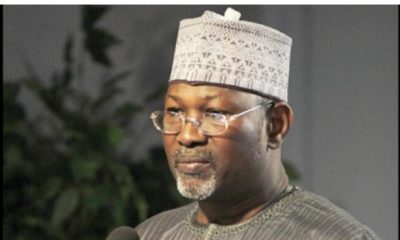
Addressing the 81st General Assembly of the Broadcasting Organisations of Nigeria on Wednesday in Abuja, the INEC chairman, Prof. Joash Amupitan, stressed that the management of the airwaves under the Electoral Act 2026 would be decisive in shaping public trust and democratic outcomes.
Amupitan noted that the growing influence of broadcast platforms has made it central to political communication.
He warned, saying, “Your airwaves have become the primary infrastructure of our democracy. If they are clear, the nation sees the truth; if they are clouded by misinformation, the sovereign will of the people is threatened.”
Amupitan highlighted key provisions of the Electoral Act 2026, particularly those mandating equal access to media platforms and prohibiting the misuse of state-owned media.
He explained that “state apparatus, including the media, shall not be employed to the advantage or disadvantage of any political party or candidate at any election”.
He also emphasised that media time shall be allocated equally among the political parties or candidates at similar hours of the day.
Amupitan further cautioned against inflammatory political messaging, citing the law, which states that “a political campaign or slogan shall not be tainted with abusive language directly or indirectly likely to injure religious, ethnic, tribal or sectional feelings.”
The commission also reiterated restrictions on campaign broadcasts close to election day, noting that “any person, print or electronic medium that broadcasts, publishes, advertises or circulates any material within 24 hours immediately preceding or on polling day commits an offence under this Act.”
While acknowledging the reforms introduced by the new law, the INEC chairman raised concerns over enforcement gaps, regulatory overlap, and the growing influence of digital media, warning that these challenges could undermine the effectiveness of the legal framework.
He called for stronger collaboration between regulators and industry players, proposing an alliance involving INEC, BON, security agencies, and the judiciary to ensure compliance and accountability.
With the countdown to the 2027 elections underway, the Commission disclosed that “283 days remain until the Presidential and National Assembly Elections on January 16, 2027,” and “304 days to go” before the governorship and state assembly polls.
News
Isoko Traditional Rulers Divided Over 250 Million Offer To Confer Chieftaincy Title On Senatorial Aspirant
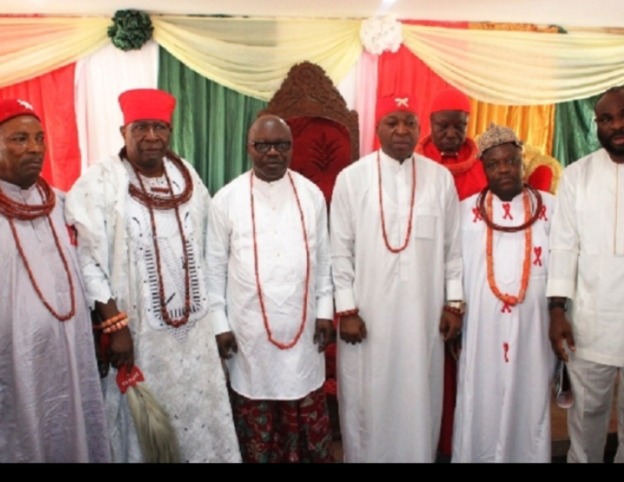
Isoko Traditional Rulers Divided Over 250 Million Offer To Confer Chieftaincy Title On Senatorial Aspirant
A Delta South Senatorial candidate in a desperate bid to garner endorsements has made an offer of a whopping N250 million to Isoko Traditional Rulers for conferment of an omnibus Chieftaincy Title on him, insisting that he had never had one.
The offer is however been rebuffed by some of the notable Kings, who view the offer as a “Greek gift”, and vowed to stonewall it, while the other group is desperate to have their hands in the bounty.
A traditional ruler, who crave for anonymity said: “you are offering a hefty N250 million for a chieftaincy title at the eleventh hour when in normal circumstances it should be free based on your performances while in office.
Frantic efforts are being made to get the integrity group of traditional rulers on board to grant the Senatorial Candidate his wish through intensive lobbying.
The traditional rulers are said to be consulting amongst themselves whether to accept the offer.
Isoko is made up of 17 autonomous clans, each with its own authority to confer chieftaincy on deserving sons and daughters.
Last week Saturday, Senator Joel Onowakpo Thomas, representing Delta South gathered some traditional rulers, politicians and Isoko Development Union (IDU) at his country home, Emede in Isoko South and got an endorsement for a second term come 2027.
The endorsement had not gone down well with the generality of Delta South, especially the people of the two local governments in Isokoland as it has been heavily criticized.

Nigeria’s Opposition Coalition: Navigating Leadership Tussles, Candidate Selection, and the Road to 2027

INEC Urges Broadcasters to Uphold Fairness Ahead of 2027 Elections

Isoko Traditional Rulers Divided Over 250 Million Offer To Confer Chieftaincy Title On Senatorial Aspirant

A Remarkable Homecoming: Kano Unites in Support of Abba Kabiru Yusuf, Signaling a Strong Endorsement for Bola Ahmed Tinubu in 2027

Kwankwaso, Atiku, Amaechi, Obi, Others Match-Out in Peaceful Protest at INEC’s Headquarters

ADC Leadership Crisis: State Chairmen to Elect Caretaker Committee on Tuesday

Governor Abba Kabir Yusuf Holds Exclusive Prerogative to Choose Deputy – Malam Inuwa Waya

Restoring the Glory That Was Always There: Governor Abba Kabir Yusuf and the Historical Vision Behind Kano First

DSP Barau As A Global Citizen, His Recent Global Engagements

NUJ Kano Online Chapel Tightens Membership Standards, Approves 31 Applicants After Rigorous Screening
Nigeria’s Opposition Coalition: Navigating Leadership Tussles, Candidate Selection, and the Road to 2027
INEC Urges Broadcasters to Uphold Fairness Ahead of 2027 Elections
Isoko Traditional Rulers Divided Over 250 Million Offer To Confer Chieftaincy Title On Senatorial Aspirant
A Remarkable Homecoming: Kano Unites in Support of Abba Kabiru Yusuf, Signaling a Strong Endorsement for Bola Ahmed Tinubu in 2027
Kwankwaso, Atiku, Amaechi, Obi, Others Match-Out in Peaceful Protest at INEC’s Headquarters
ADC Leadership Crisis: State Chairmen to Elect Caretaker Committee on Tuesday
Governor Abba Kabir Yusuf Holds Exclusive Prerogative to Choose Deputy – Malam Inuwa Waya
Restoring the Glory That Was Always There: Governor Abba Kabir Yusuf and the Historical Vision Behind Kano First
DSP Barau As A Global Citizen, His Recent Global Engagements
NUJ Kano Online Chapel Tightens Membership Standards, Approves 31 Applicants After Rigorous Screening
-

 Opinion4 years ago
On The Kano Flyovers And Public Perception
-

 Features5 years ago
How I Became A Multimillionaire In Nigeria – Hadiza Gabon
-

 Opinion5 years ago
Kano As future Headquarters Of Poverty In Nigeria
-

 History5 years ago
Sheikh Adam Abdullahi Al-Ilory (1917-1992):Nigeria’s Islamic Scholar Who Wrote Over 100 Books And Journals
-

 Opinion4 years ago
My First Encounter with Nasiru Gawuna, the Humble Deputy Governor
-

 History5 years ago
The Origin Of “Mammy Market” In Army Barracks (Mammy Ochefu)
-

 History4 years ago
The History Of Borno State Governor Professor Babagana Umara Zulum
-

 News4 years ago
Federal University Of Technology Babura To Commence Academic Activities September