
News
SPECIAL REPORT:A Nation Afraid to Count Itself: The Lingering Shadows of Nigeria’s Unfinished Censuses”
By Yusuf Danjuma Yunusa
Nigeria’s population censuses have always been more than a mere headcount; they are a high-stakes political and ethnic exercise where numbers translate directly into power and resources. Nigerian Tracker News has gathered. A deep analysis of census records from the past to the present will help us grasp the nature of the Nigeria’s Population Census with leadership structure but which has, over the time, proven inactive.
Revisiting The Past
Pre-Independence Context
1866, 1871, 1896: Early censuses conducted by British colonial authorities were primarily in the Lagos area and the Southern protectorates. They were rudimentary and unreliable.
1952/53: This was said to be the first modern, nationwide census. It recorded a total population of 30.4 million, with the North (16.8 million) having a larger population than the South (13.6 million). This result already sowed the seeds of regional competition, establishing a demographic and political dominance for the North that would define future contests.
Post Independence Censuses
1. 1963 Census: The counting exercise for this particular year was conducted just three years after independence by the Prime Minister Abubakar Tafawa Balewa’s government. The country was a fragile federation of three regions: Northern, Eastern, and Western.
The Exercise & Controversy:
The preliminary results showed a massive population increase, which was statistically improbable.
The Eastern Region government, led by Dr. Michael Okpara, vehemently rejected the figures, alleging monumental inflation of numbers in the Northern Region.
The census board itself was divided along regional lines and failed to agree on a final figure.
Ultimately, the federal government unilaterally ratified the results.
Official Result: 55.6 million.
Northern Region: 29.8 million
Eastern Region: 12.4 million
Western Region: 10.3 million
Mid-Western Region: 2.5 million (newly created as at then)
Legacy & Impact: The 1963 census was never fully accepted. Its credibility was shattered, and it set a dangerous precedent where census figures were seen as a tool for political supremacy rather than a factual demographic exercise. This controversy was one of the many factors that eroded inter-ethnic trust and contributed to the tensions leading to the 1966 coup and the Civil War (1967-1970).
2. 1973 Census: The Cancelled Count
It was conducted under the military government of General Yakubu Gowon, after the Civil War. The country was now divided into 12 states, partly to dilute regional power blocs.
The Exercise & Controversy:
The exercise was meticulously planned and widely considered to be better executed than the 1963 census.
However, when the results were compiled, they showed a pattern similar to 1963: a huge population growth in the North that maintained its numerical superiority.
The results were so politically explosive and hotly contested by states in the former Southern regions that the government faced a major crisis.
The Outcome: CANCELLED. In 1975, the new military government under General Murtala Mohammed announced that the results were “incredible” and politically unacceptable. They decided to retain the 1963 figures for official purposes, a stunning admission of failure.
Legacy & Impact: The cancellation of the 1973 census was a clear signal that no government, military or civilian, could withstand the political firestorm of a disputed census. It entrenched the idea that an accurate count was perhaps impossible and that the 1963 figures, however flawed, had become a frozen “political truth.”
3. 1991 Census: The “Settlement” Under the Military
This was conducted 18 years after the failed 1973 exercise, under the military regime of General Ibrahim Babangida. The country now had 30 states and a Federal Capital Territory (Abuja).
The Exercise & Controversy:
Determined to avoid past mistakes, the Babangida government invested heavily in technology and logistics. It was the first census to use machine-readable forms and advanced data processing.
The exercise was conducted under a tense atmosphere, but the military’s tight control limited open contestation.
While still controversial, the level of dispute was significantly lower than in 1963 and 1973. Many analysts saw it as a political “settlement” enforced by the military.
Official Result: 88.9 million.
Legacy & Impact: The 1991 census was the first and only post-independence census to be officially accepted and used for planning for a significant period. Its relative acceptance was largely attributed to the coercive power of the military government which suppressed dissent. It provided a 15-year baseline that was considered the most credible Nigeria had managed, until it was superseded.
4. 2006 Census: The Last Attempt in a Young Democracy
This exercise was carried out under the civilian administration of President Olusegun Obasanjo. It was the first census in the Fourth Republic, with a more open and democratic atmosphere, which also allowed for louder contestations.
The Exercise & Controversy:
A major controversy erupted even before the count began over the inclusion of “Ethnicity” and “Religion” in the questionnaire. Northern groups argued for their inclusion, while Southern and Christian groups feared the data would be used for political and religious discrimination.
The federal government, in a compromise, removed these two sensitive questions.
The actual count was marred by logistical issues, allegations of double-counting, and inflation in various states.
Despite the controversies, the National Population Commission (NPC) proceeded to release the results.
Official Result: 140.0 million.
The results showed the North maintaining a higher population than the South.
Legacy & Impact: The 2006 census was accepted by the federal government for official use, but its credibility has been consistently questioned by politicians, academics, and civil society groups. It remains the most recent census, meaning Nigeria is currently using 18-year-old data for critical governance, revenue allocation and planning. Its flaws are a primary reason for the hesitation to conduct a new one.
2016: The National Population Commission (NPC) announced plans for a new census in 2018. The plan was later shelved, citing a lack of funding and political will.
2022-2023: Under President Muhammadu Buhari, the NPC conducted a pilot census and vigorously advocated for a national census in 2023, immediately after the general elections. The exercise was fully planned and budgeted for.
Postponement (2023): In May 2023, the incoming administration of President Bola Tinubu postponed the census indefinitely. The reasons cited included the need for the new government to settle in and the pressing issue of national security, which would prevent a credible count in many conflict-ridden parts of the country.
This narration reveals a clear pattern that every census in Nigeria’s history has been engulfed in controversy, driven by the inescapable link between population numbers and the distribution of political power and economic resources. The failure to hold a credible census since 2006 is not an anomaly but a continuation of this deeply entrenched political dilemma.
Expert Sheds More Light; Brands The Failure Since 2006 As A Systematic One
A public affairs analyst, Dr. Ibikunle Taofeek, categorically stated that successive governments have failed to conduct a census not because of a single reason, but because of a perfect storm of interconnected factors:
The political and ethnic stakes are so high that any outcome will be violently contested.
There is a fundamental lack of trust in the state’s ability to be an honest broker.
The logistical and financial costs are enormous.
The security environment in many parts of the country makes a credible count practically impossible.
“Until there is a broad national consensus that de-emphasizes the use of census data for resource allocation and political representation and rebuilds trust in the process—perhaps through heavy reliance on transparent digital technology and international oversight—the incentive for any sitting government to risk the political explosion of a new census will remain exceedingly low. The path of least resistance, and indeed, political survival, has been to simply kick the can down the road,” he said.
Speaking on outdated data and their inadequacies, Dr. Taofeek said that the NPC has always been faced with the challenges of starting from the scratch whenever the exercise is scheduled to hold, thereby making it time consuming and expensive.
“The foundational data needed for a census—detailed maps, satellite imagery, and a reliable digital identity system—are either incomplete or outdated. The NPC often has to start from scratch with mapping, which is time-consuming and costly.”
Responding to questions on the funding constraints of the exercise, the expert disclosed that the daunting task of some competing national priorities like security, fuel subsidy and infrastructure has made it inconvenient to fund the census exercise which most times amount to billions of Naira to execute.
“Honestly, a credible census is exorbitantly expensive, costing billions of Naira. In a context of competing national priorities like security, fuel subsidies, and infrastructure, governments often find it easier to postpone this costly exercise, especially when the political fallout is guaranteed.”
Consequences of The Failure
Having known the reasons behind the failure, it is worth recommending to have the consequences outlined as well, so that the appropriate authorities will take heed and act accordingly.
An Economist, AbdulWahab Lukman, emphasized that there’s no how a country will efficiently allocate resources in a country as wide and diverse as Nigeria without having the accurate population data of people in a particular demography.
“When you don’t know how many people live in a country or even where they are, it becomes difficult to allocate resources efficiently.”
He continued, “absence of accurate population data seriously weakens the foundation of economic planning because almost every key indicator relies on it.
For instance, government budgets for health, education, and infrastructure end up being either overstretched or underutilized. Inflation data also, can become misleading because consumption patterns vary widely across different population groups, and without reliable population data, policymakers can’t tell where price pressures are truly coming from in order to design effective policies to address that.”
Mr. AbdulWahab, while speaking on the consequences of inaccurate population data on GDP per capita, maintained that it loses its essence when population estimates are mistaken.
“If the population is undercounted, GDP per capita will appear higher than it actually is, giving a false impression of prosperity. Conversely, an overcount makes the economy look weaker than it is. In both cases, poor data distorts reality and leads to policies that miss the mark.”
AbdulWahab concluded by stating that without reliable population figures, economic planning becomes “a guessing game rather than a strategy.”
Meanwhile, the Chairman of the National Population Commission, Nasir Kwarra, on 28 of October, 2025, officially concluded his five-year tenure and handed over leadership of the Commission to the Federal Commissioner representing Niger State, Muhammad Dattijo.
Dattijo will serve as acting Chairman pending the swearing-in of Aminu Yusuf by President Bola Tinubu.
The brief but symbolic handover ceremony took place at the NPC Headquarters in Abuja and was attended by Federal Commissioners, the Director-General, Directors, and staff of the Commission.
The incoming substantive Chairman, whose swearing-in is awaited, is expected to steer the commission toward completing the country’s long-delayed census, which is crucial for evidence-based planning and equitable national development.
Yusuf Danjuma Yunusa is a freelance journalist and a reporter with the Nigerian Tracker News. He can be reached via: 07069180810 or theonlygrandeur@gmail.com









News
JUST IN: El-Rufai Detained as Bail Ruling Adjourned to April 14
By Yusuf Danjuma Yunusa
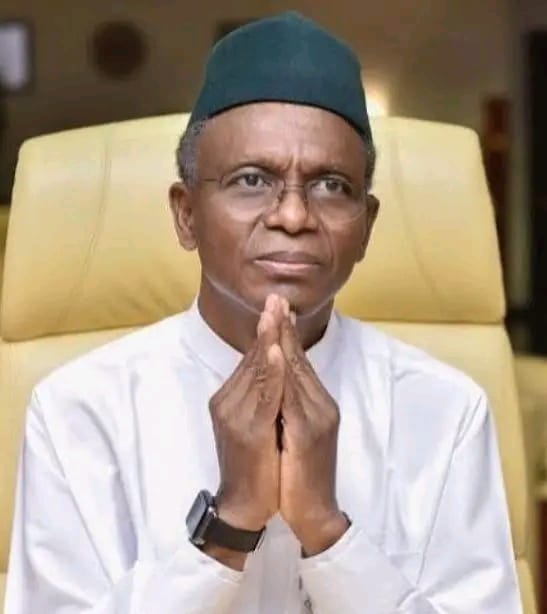
Operatives of the Department of State Services on Wednesday took former Kaduna State governor, Nasir El-Rufai, into custody moments after proceedings at the Federal High Court in Kaduna.
El-Rufai, standing trial over alleged corruption, had just concluded a hearing on his bail application filed by the Independent Corrupt Practices and Other Related Offences Commission when DSS operatives bundled him into a waiting vehicle and drove him away, reportedly heading to Abuja.
A heavy DSS presence around the court before the hearing had fuelled speculation that the former governor might be taken into custody.
Security sources said vehicles had been strategically positioned around the court prior to proceedings.
El-Rufai had arrived at the court at about 9:05 a.m. in a Hilux van, drawing attention from security personnel and observers.
Speaking to journalists after the proceedings, lead defence counsel, Oluwole Iyamu (SAN), confirmed that the court had fixed April 14 for ruling on the bail application.
“The bail application was argued and responded to, and the ruling has been fixed for April 14.
“We look forward to that day. We are hopeful. We have put our arguments before the court, and this is a court of justice.
“We await the decision of the court,” he added.
He also noted that the defence team is prepared for a related case scheduled for April 10 at the Federal High Court in Abuja, describing it as “a separate matter.”
“That is a separate matter. As lawyers, we are ready. We have filed all necessary processes and will be in court. That is the DSS matter,” he said.
News
Court Ends NNPP Crisis, Restores Party Leadership to Founder
The Court of Appeal sitting in Owerri has delivered a decisive judgement in the protracted leadership crisis within the New Nigeria People’s Party (NNPP), affirming Boniface Okechukwu Aniebonam as the recognised leader of the party.
In its ruling, the appellate court set aside an earlier decision of the Abia State High Court in Uzuakoli, which had vacated its previous judgement delivered in favour of the faction led by Aniebonam.
The appellate court held that the lower court erred in granting a motion that effectively reversed its own earlier judgement, thereby upholding all three grounds of appeal filed by the Aniebonam-led faction.
The dispute stems from a November 2024 judgement of the Uzuakoli High Court in Suit No. HUZ/11/2024, which had recognised the Board of Trustees of the NNPP under Aniebonam. However, in June 2025, the same court granted an application that set aside that ruling, following a motion filed by Rabi’u Musa Kwankwaso.
Dissatisfied with the reversal, the Aniebonam faction approached the Court of Appeal in Owerri (Appeal No. CA/OW/271/2025), arguing that the trial judge lacked the jurisdiction to sit on appeal over his own judgement.
Delivering its verdict, the Court of Appeal agreed with the appellants, restoring the earlier judgement and effectively recognising Aniebonam as the legitimate leader of the party he founded in 2001.
Legal representation in the matter saw Onitsha-based senior counsel, Sir Azubike Anazor, appear for Aniebonam, while Abuja-based Eyitayo Fatogun, SAN, represented Kwankwaso.
The NNPP, which fielded Kwankwaso as its presidential candidate in the 2023 general elections, has been embroiled in internal disputes over its leadership structure, with rival factions laying claim to control of the party.
News
JUST IN: Adelabu Resigns as Power Minister to Pursue Oyo Governorship Bid
By Yusuf Danjuma Yunusa
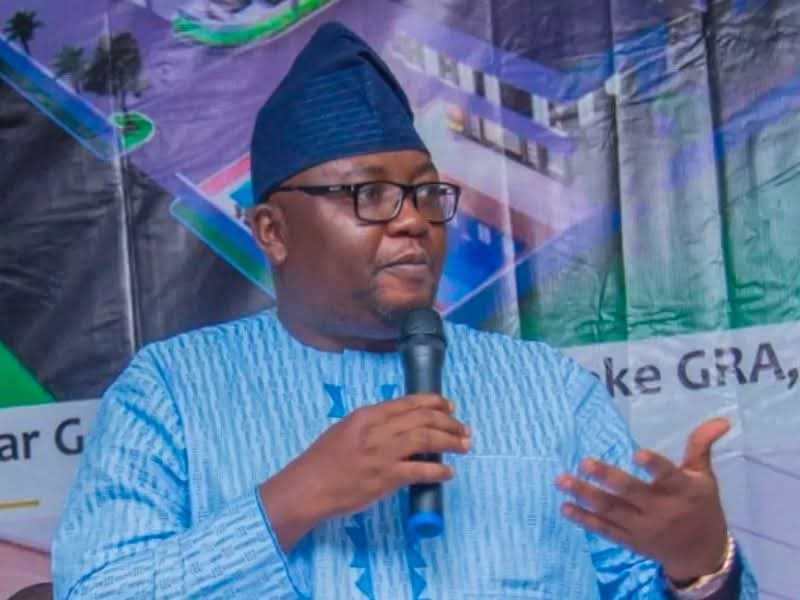
The Minister of Power, Adebayo Adelabu, has resigned his appointment to focus on his governorship ambition in Oyo State.
Adelabu disclosed this in a resignation letter addressed to the President Bola Ahmed Tinubu on Tuesday, and routed through the Secretary to the Government of the Federation.
In the letter titled “Resignation as Honourable Minister of Power”, Adelabu expressed gratitude to the President for the opportunity to serve in his administration.
He said it was a privilege to contribute to efforts aimed at strengthening Nigeria’s power sector in line with the administration’s Renewed Hope Agenda.
Adelabu added that his decision to step down was to enable him fully pursue his aspiration to contest for the office of Governor of Oyo State.
He noted that the move would allow him to dedicate his time and resources to the political ambition.
The former minister also conveyed his appreciation and respect to the President for the confidence reposed in him during his tenure.

JUST IN: El-Rufai Detained as Bail Ruling Adjourned to April 14

Court Ends NNPP Crisis, Restores Party Leadership to Founder

Why Nura Manu Soro should be APC candidate in Bauchi State come 2027

JUST IN: Adelabu Resigns as Power Minister to Pursue Oyo Governorship Bid

After Kwankwaso Joins ADC, Party Alleges Plot by APC, Senior Lawyers to Force INEC Into Illegal Takeover

The Governor Who Chose His People Over His Politics: Abba Yusuf and the Moral Courage Behind Kano First

Governor Abba Kabir Yusuf Holds Exclusive Prerogative to Choose Deputy – Malam Inuwa Waya
Restoring the Glory That Was Always There: Governor Abba Kabir Yusuf and the Historical Vision Behind Kano First

Tinubu to Swear in Olatunji Disu as Inspector-General of Police on Wednesday

NDLEA Clarifies: Drug Case Against Abba Kyari Still Active After Court Discharge
JUST IN: El-Rufai Detained as Bail Ruling Adjourned to April 14
Court Ends NNPP Crisis, Restores Party Leadership to Founder
Why Nura Manu Soro should be APC candidate in Bauchi State come 2027
JUST IN: Adelabu Resigns as Power Minister to Pursue Oyo Governorship Bid
After Kwankwaso Joins ADC, Party Alleges Plot by APC, Senior Lawyers to Force INEC Into Illegal Takeover
The Governor Who Chose His People Over His Politics: Abba Yusuf and the Moral Courage Behind Kano First
Governor Abba Kabir Yusuf Holds Exclusive Prerogative to Choose Deputy – Malam Inuwa Waya
Restoring the Glory That Was Always There: Governor Abba Kabir Yusuf and the Historical Vision Behind Kano First
Tinubu to Swear in Olatunji Disu as Inspector-General of Police on Wednesday
NDLEA Clarifies: Drug Case Against Abba Kyari Still Active After Court Discharge
-

 Opinion4 years ago
On The Kano Flyovers And Public Perception
-

 Features5 years ago
How I Became A Multimillionaire In Nigeria – Hadiza Gabon
-

 Opinion5 years ago
Kano As future Headquarters Of Poverty In Nigeria
-

 History5 years ago
Sheikh Adam Abdullahi Al-Ilory (1917-1992):Nigeria’s Islamic Scholar Who Wrote Over 100 Books And Journals
-

 Opinion4 years ago
My First Encounter with Nasiru Gawuna, the Humble Deputy Governor
-

 History5 years ago
The Origin Of “Mammy Market” In Army Barracks (Mammy Ochefu)
-

 History4 years ago
The History Of Borno State Governor Professor Babagana Umara Zulum
-

 News4 years ago
Federal University Of Technology Babura To Commence Academic Activities September