
Opinion
Agbese:Wise, Intrepid, Fearless-Dare Babarinsa
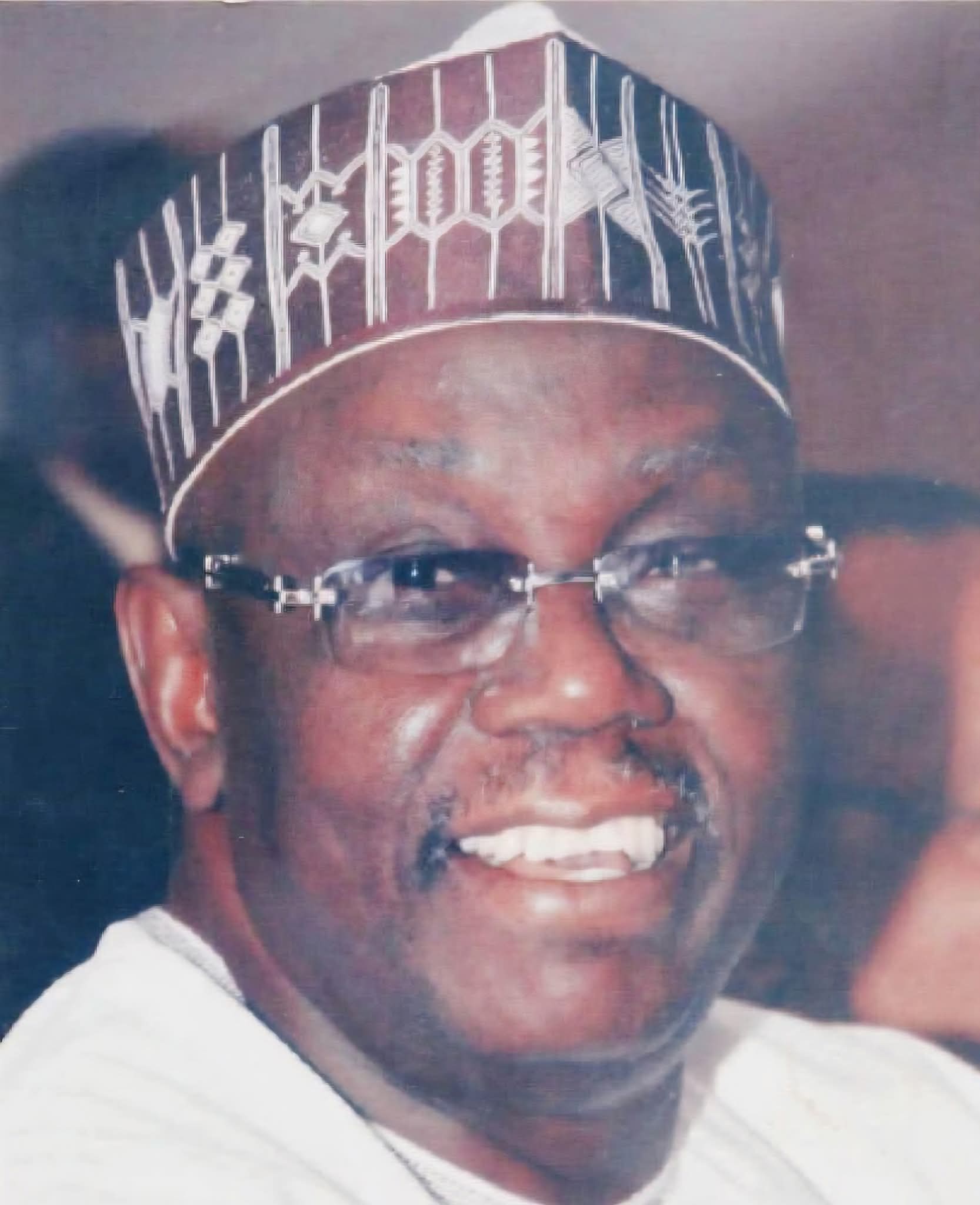
Dare Babarinsa, CON
Chairman, Gaskia Media Ltd
I first met Oga Dan Agbese in 1984 during the preparatory days of Newswatch, the pioneering Nigerian newsmagazine. Before then, his reputation had preceded him as one of the stars among the alumni of our Department of Mass Communication of the University of Lagos, UNILAG. Then we met at the home of Dele Giwa, off Obafemi Awolowo Way, Ikeja, where I had gone to meet the four editors who were destined to shape our lives.
Agbese was the only one I did not really know among them then. He had the reputation of being the man writing the Candido column in the old New Nigerian newspapers, a great institution that dominated our growing up years that is now regarded as Nigerian Journalism Golden Age. Candido, the man behind the mask, column was said to have been created by Alhaji Adamu Ciroma, one of Agbese’s illustrious predecessors as editor of the New Nigerian. Here was he now before me in flesh and blood! We were to work together for five giddy years. His influence was to remain with me forever.
Newswatch early years was dominated by big dreams. I was among the four first editorial staff of Newswatch; Rolake Omonubi, Dele Olojede, Wale Oladepo and I. Among the four founders, three of them were already well known to those of us coming from the stable of the Concord Group of Newspapers. Ray Ekpu was already a famous editor who ran the Sunday Times with so much vigour and creativity that the old conservative elements of President Shehu Shagari’s government felt very uncomfortable with him. He was forced out and, in the end, resurfaced as the chairman of the editorial board of the Concord Group founded by that great man, Chief Moshood Abiola.
When I was a student at Unilag, Dele Giwa, as the feature editor of the Daily Times, was the man who made me a stringer for the paper. I was introduced to him by my friend and roommate, Waheed Olagunju, who later became the Managing Director of the Bank of Industry. I was writing a column for the Daily Times called Campus News every Friday. Yakubu Mohammed, the editor of the National Concord, was the one who employed me and Oladepo in November 1982. Mohammed was also the one Oladepo and I followed into Newswatch. The man we did not know before was Agbese.
We soon found Agbese to be in a special class of his own. To him, journalism was science. To him, a journalist needs to be precise and unambiguous. He should employ brevity if it would convey a clearer meaning than circumlocution. He writes as he speaks; with precision and wisdom. He put himself under the rigour of proof and demanded the same from us. When we encounter Oga Agbese, we knew we were in a special master’s class of journalism. He taught us a lot. He demanded beauty of expression; not of flowery language, but of the kind of words that convey greater truth than the best photographs and paintings. He was a special kind of artist.
Like his other colleagues, Agbese regarded journalism as an instrument of service to Nigeria and humanity. He was resolute, resourceful and intrepid in the pursuit of his calling as a first-class journalist. He believed in journalism as a pillar of any thriving democracy. He put himself in the line of fine for his belief. He was fearless. Therefore, he was one of the heroes who gave us democracy. He endured with dignity and courage the constant harassment and intimidations during the military era. In the formative years of Newswatch, he was designated the managing director until our editors decided to combine the office of Chief Executive and Editor-in-Chief and Dele Giwa was allowed to hold the two offices.
But the journey was meant to be turbulent. What was meant to be a professional business concerns soon became a serious struggle with the operators of the Nigerian state. On October 19, 1986, less than two years after Newswatch hit the news stand, Dele Giwa was killed with a parcel bomb and our life was changed for ever. Our editors were at the centre of the storm. The echo of that bomb still rings in our ears till today.
Less than one year after Giwa was killed, Newswatch carried a story on a panel report on the draft Constitution that would guide the Third Republic. The military regime of General Ibrahim Babangida seems to have been looking for any excuse to pounce on the media house. This exclusive story, which is based on the truth, was the excuse the regime used to outlaw Newswatch. It passed a special decree, called the Newswatch Prohibition Decree, declaring that even the media house cannot seek redress in the court of law, declaring that “notwithstanding anything written in the Constitution or any other law,” Newswatch remained banned. It was the beginning of Newswatch Second Session. I remember Oga Dan and his colleagues, corralled in front of our office at Oregun Road, surrounded by security agents as they were being prepared for detention.
But no prison could keep the soul of a great person in bondage. Despite the travails and vicissitude of those days, Agbese and his colleagues stood tall. Agbese was figure of serenity under pressure, including the pressure of deadlines. He demanded from us his subordinates, the exactness of science and would not allow any fussy language to escape his scalpel as an editor. He demanded what he gave. His column, brimming with wits and wisdom, was a pilgrimage into Nigerian history and society. His thoughts, deep and clairvoyant, ring with candour and bitter truth. He was the one who described Chief Obafemi Awolowo as “the best President Nigeria never had,” in an essay he wrote to mark Awo’s 78th birthday. When Awo died on May 9, 1987, Chief Emeka Odumegwu-Ojukwu, was to quote him without attribution. Agbese was an original thinker who thought us to value critical thinking.
In October 1990, I went to inform him that I would be resigning. By that time, it had become an open secret that I and four of my colleagues were planning to start another magazine, TELL. He invited me to his house and we held a long discussion in his private study. It was an intimate moment and our discussion was frank. I learnt a lot of lessons on how to treat subordinates from the great men who led us in those giddy years at Newswatch.
I am indebted to Agbese. I learnt Mass Communications in Unilag, but the great men of Newswatch thought me journalism. Agbese was deep. His solidity and courage give the impression of timelessness. You have the feeling that nothing can scare him and when you enter his office, he would raise his head, with his glasses perched on his nose, you are confronted with something almost spiritual. Agbese had a presence filled with ethereal force, creative and comforting. He transmits his aura with effortless ease. He was a great man.
My memoir, One Day and A Story, published by Gaskia Media Ltd in 2016, was based on my five years tour of duty in Newswatch. After it was published, I went to my bosses at their new office on Acme Road to present copies. I was received enthusiastically. Our former General Editor, Olusoji Akinrinade, joined Agbese, Ekpu and Mohammed to give me a royal welcome. I am happy that I had maintained a cordial relationship with my old bosses over the years. Some years ago, when I approached Mr Mohammed to come and serve on the Advisory Board of Gaskia Media Ltd, he readily agreed.
Recently I visited him at home to congratulate him on the publication of his enthralling autobiography, Beyond Expectations. With the death of Agbese, a significant chapter of that book has closed.
But Agbese, like all great thinkers and writers, would always be with us. His corpus of works, which includes, Babangida: Military, Politics and Power in Nigeria, The Reporter’s Companion, and The Art and Craft of Column Writing, would ensure that down the centuries, future journalists, historians and youths, would continue to cherish the depth of his thoughts, the profundity of his knowledge and the sheer beauty of his rendering.
Now, he has embraced mortality, the ultimate fate of all of us, so that he can inherit immortality. His magnificent wife, Aunty Rose, and wonderful children, should take solace that the patriarch completed his assignment on this side of the Great Divide. When he was with us, he was blessed with the wisdom of the ages like a living ancestor. Finally, he has become a true ancestor. May his valiant soul find eternal rest.









Opinion
IT IS OVER: Gov Yusuf Ends 50-Year BUK Land Crisis Ushering Progress for 6,000 Families
By Abba Anwar
Fifty years of litigation, mistrust, protests and painful loss came to an end yesterday as the Kano State Government formally resolved the protracted land dispute between Bayero University Kano and the people of Rimin Zakara, Rijiyar Zaki and adjoining communities.
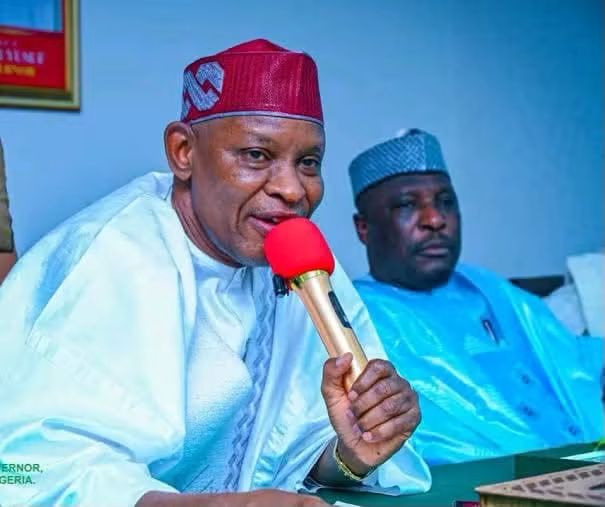
At a historic meeting attended by government officials, university authorities, traditional rulers and community representatives, Governor Alhaji Abba Kabir Yusuf declared the crisis over and unveiled a settlement built on “… justice with compassion” that protects both institutional development and innocent families.”
Commissioner for Public Procurement, Projects Monitoring and Evaluation, Nura Iro Ma’aji, represented the Governor, Commissioner for Land and Physical Planning, Abdujjabbar Muhammad Umar was there, Prof Ahmad Muhammad Tsauri, represented the Vice Chancellor of BUK and the people of Rimin Zakara, were led to the venue by Alhaji Baba Habu.
The exceptional effort is a clear testimony that Governor Yusuf’s administration is a peace-loving one which chooses resolution over confrontation.
Just as he said the settlement reflects the core philosophy of his administration, in an effort to confront inherited problems, restore institutions, protect ordinary citizens and deliver practical solutions to a lingering crisis. Which sometime in the past claimed innocent lives.
“We are not here to recount the history of Rimin Zakara. We are here to close it. For almost half a century, this crisis survived successive administrations. When we assumed office, we made a simple commitment, that we would not run away from difficult problems simply because they were inherited,” he emphasized.
The Commissioner for Land and Physical Planning, Umar, explained that a High-Level Committee was constituted after violent confrontations in early 2025 made it clear the dispute had become “… a serious issue of justice, public security, institutional development and community stability.”
He hinted that, after verifying more than 6,000 claims, examining historical records and conducting surveys, the Executive Council approved a settlement guided by one principle, that is to protect BUK, compensate genuine victims, restore peace and bring the dispute permanently to an end.
Under the informed terms of peace, it was positioned that, it would be land for BUK, plots and compensation for the People. An excellent crisis resolution strategy, commended by all and sundry.
The agreement made sure that BUK is protected. Where more than 85 per cent of Bayero University Kano’s landholding is preserved for future academic, research, residential and infrastructural development. The University made a significant sacrifice by accepting the excision of portions of land originally reserved for expansion.
Agreement further paved way for community resettlement. Where residential plots have been reserved and allocated to verified beneficiaries in the approved Rimin Zakara/Rijiyar Zaki and Jajira/Garun-Iya schemes.
Part of the agreement maintains that compensation should be ongoing. As monetary compensation for eligible claims and structures is being processed by the Ministry of Land and Physical Planning. Government has committed Billions of Naira for compensation, resettlement, planning, surveying and infrastructure.
Governor Yusuf warned henceforth that the decision to compensate was humanitarian, not a validation of illegal sales. “Thousands of people bought land in good faith from persons who had no lawful authority to sell it. Many invested their life savings. The strict application of the law without regard to these circumstances could throw thousands of families into a catastrophic situation.”
Only a government with human face can think this way. Or similarly. This good work on compassionate ground means a lot for electoral victory, come 2027. In fact some of the people who made speeches from the part of the community leaders, made it very clear that, their votes and those they control, would be in favour of Governor Yusuf. This was said without any hesitation, whatsoever.
What is worth celebrating in the resolution of Governor Yusuf’s 50-year BUK-Rimin Zakara land dispute is while Kano State has resolved its land dispute, several other states continue to grapple with age-long land conflicts that have lasted five decades and more without final resolution. This speaks volumes about Governor’s capacity, clean mind and strong political will in serving his people.
For example in Cross River/Ebonyi there is Adadama vs Amaegwu dispute. It is a story of a farmland dispute dating back to 1960. In April 2025, the crisis claimed 11 lives and displaced over 2,000 people. Despite a 2024 communique by both state governments, violence has continued. Which shows how strong is Kano’s strategy.
In Ebonyi–Ezza vs Ezillo/Iyionu, it is a land dispute of over 50 years old, with a major serious clash in 2008 that displaced communities for 18 years. In March 2026, displaced persons petitioned Gov. Nwifuru for resettlement. Clashes and abductions were still reported in 2024. These are the kind of scenarios Kano’s current administration averted. Kudos Mr Governor!
The Ogun/Oyo–Odeda boundary dispute that was rooted in colonial 1926 boundaries. In May 2025, the Ogun State House of Assembly again urged the National Boundary Commission to urgently delineate the border after allegations of forceful land acquisition and tampering with boundary pillars. Serious clashes were witnessed which caused some loses. In Kano, under Governor Yusuf, similar ugly situation has been averted.
While Imo–Mgbirichi/Abakuru vs 34 Artillery Brigade caused serious misunderstanding, where land acquired in 1977/78 is the causative agent. Communities protested in 2024 over alleged encroachment “up to backyards of houses.” A Defence Headquarters delegation visited in 2024 for dialogue, but the dispute remains unresolved. Kano’s Model is therefore one of the best in the country.
Kano’s settlement therefore stands out as one of the few instances where a decades-old land crisis has been decisively closed through compensation, resettlement and legal backing. A vote of confidence and thank is naturally directed at Commissioner Umar.
His genuine commitment and political will as copied from the Governor, gave him all the necessary guts and straightforwardness in mending the tore parts of Rimin Zakara and its surroundings, as related to BUK, as an institution.
To unveil some of the commendable strategic points to the gathering, the Commissioner added that government would reissue compensation cards directly to verified beneficiaries and that anyone who exploited the process badly would face legal action. Campassion not weakness indeed.
The resolution followed lawful process that was backed by Law and enforced for development. The settlement is reinforced by the judgment of High Court No. 11 in Suit No. K/M1638/2026 delivered on 18th August 2026, which declared the acquisition lawful and directed government to compensate verified claims. What the state is currently doing is just that.
Part of the resolution process suggests that with effect from 31st August 2026, all land within BUK’s demarcated boundaries would be protected exclusively for the university. Government infrastructure corridors will also be secured. The Governor warned that “Our compassion must never be mistaken for weakness.” And that obstruction or fresh encroachment would be met with firm enforcement.
In what I termed as from crisis to progress: the bigger vision, it is noteworthy to know that the Governor linked the resolution to his administration’s wider development agenda, emphasizing that peace is the foundation for progress.
Touching other areas he acknowledged that “… In Education, we declared a State of Emergency. In Health, we introduced free caesarean-section services. In Water, we approved ₦21.89 billion for Challawa and Tamburawa plants. In Agriculture, we gave ₦1 billion in free fertiliser to 52,800 farmers. In Roads, we are rehabilitating 17 metropolitan roads.”
While he further elaborated that “This is the same spirit in which we approached BUK–Rimin Zakara. We are rebuilding confidence in government’s capacity to solve difficult problems,” he then commended BUK’s Vice-Chancellor, Governing Council and management for their “… patience, maturity and genuine commitment to peace… ” and urged Rimin Zakara, Rijiyar Zaki communities, traditional and religious leaders to safeguard the agreement.
The Governor who was represented by the Commissioner for Public Procurement, Projects Monitoring and Evaluation, Ma’aji,, got a standing ovation when he said, “Today, by the grace of Almighty Allah, a crisis of five decades has an end. Now is the time to move from crisis to development, and from dispute to progress.”
With this all-encompassing peace deal of 50 years long, there are attendant benefits attached to it.
The resolution will definitely yield security and stability. While ending the decades of confrontation, litigation and community tension, peace will now reign in the community and other surrounding communities. This is peace at work.
As a cool way for institutional growth, BUK can now proceed with lecture theatres, laboratories, hospitals and hostels without encumbrances. Resolution gives peace a chance. Corridor for shelter and livelihood now comes to the fore. Thousands of families who bought land in good faith now have legal plots and a path to compensation.
Through the Commissioner for Land, Umar, the thrust of urban planning strategy can now proceed without any hindrance from these communities. The era of proper layouts, roads and infrastructure without illegal sub-division, that remained elusive for decades, is now in place. And indeed investor confidence is restored. Where a clear legal boundary restores confidence in land administration and public institutions in Kano. Weldone the people’s Governor.
Both BUK and Rimin Zakara representatives, Prof Tsauni and Habu, commended the effort of the the Commissioner for Land, Umar, in his unrelenting efforts during the crisis and during the resolution exercises. Assuring that the Commissioner got the courage as a result of the goodwill spirit he got from the Governor. Letters of Grant were distributed to the members of the communities affected. As compensation and other verifications are on top gear.
Anwar writes from Kano
Tuesday, 1st September, 2026
Opinion
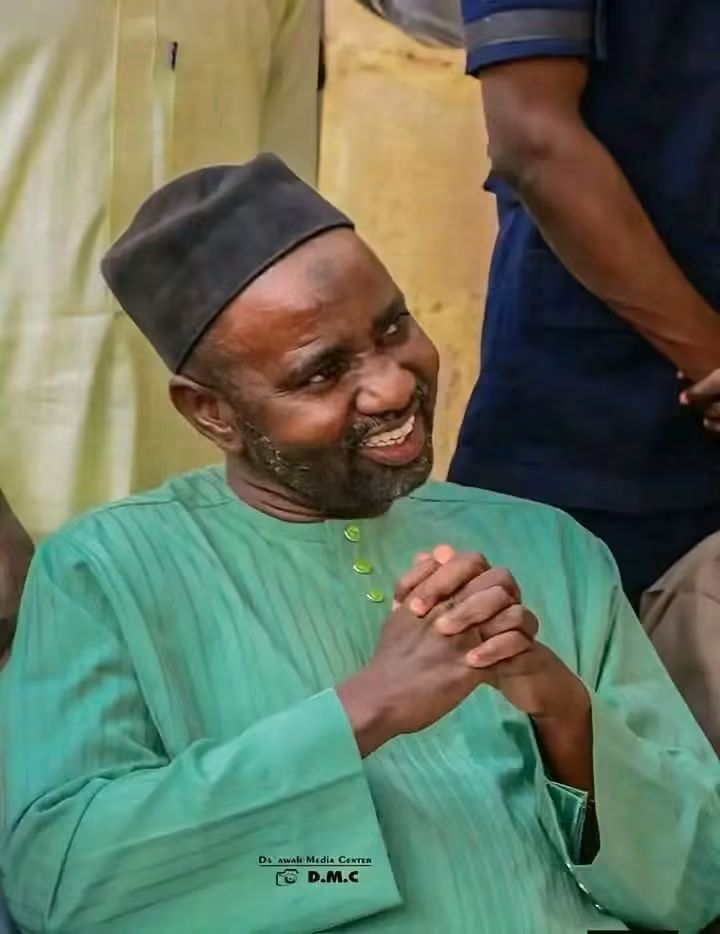
Bello Sharada: A Great Writer, A Bookish Soul, Gone Too Soon
By Abba Anwar
I received the information about the sad and peaceful passing of a great writer and one of the bookish minds amongst his peers, whose writings, as a commentator, cut across our culture, governance, politics, geography and religious thought, as very shocking and unbearable!
Before the few paragraphs coming below, let me express my condolences to his immediate family first, then the former Governor of Kano State, Malam Ibrahim Shekarau, Malam Aminu Gusau, Malam Abubakar Mujahid, Malam Aminu Inuwa Muhammad, Malam Nura Adam Galadanchi, Malam Nafi’u Zangon Barebari, Malam Ibrahim Ado-Kurawa, Malam Ahmad Shu’aibu, Malam Muhammad Bakari Mika’il, all workers and volunteers of Al-Tajdid Hausa newspaper and all workers of Al-Tajdid Pharmacy, Sabon Titi.
A great loss of this magnitude is heartbreaking and very difficult to cope with. I first came to know Bello Sharada for close to three decades now. When struggle was the order of the day. Our youthful exuberance was glaringly visible and energizing.
From day one I understood that Malam Bello had a flair for writing. Especially on Islamic revivalism and struggle. Since then I knew he loved reading, reading and more reading. At later days, apart from comments on Islamic development, he also resorted to further engage in social and political commentary. Especially after the return of democracy in the country, in 1999.
As calmed and reserved as he was, he still liked discussions on politics, economy and governance. He didn’t hide his feelings about our nation, at the level of leadership and followers. Not minding whose ox was gored. So long as he believed with an opinion, after thorough research and discussions, he wrote his inner feeling for the public. Go and check some of his writings.
He did not hold back in amplifying what his conscience was clear on. As typical writers behave, they highlight certain traits that go down well with you today. And tomorrow they articulate what may not be palatable for your table. You know why? They don’t look at personalities, but other abstract realities. They observe attitudes, behaviors and realities.
Malam Bello was an embodiment of simplicity, good human relations, upright, and open discussions around many issues. The way he talked to other people gave insight of the kind of person he was. Very polite and selectively reserved. He related with people with respect and embracing engagement.
The way he handled Al-Tajdid newspaper was amazing and appealing. The editorial contents were catchy and convincing. As a religious source for information around us, then, amongst Hausa readers, there was semblance, to a higher degree, of objectivity and fairness in its reportage and other analyses.
He was glued to Al-Tajdid newspaper, that came to newsstand to offer an alternative to Sheikh Ibrahim Zakzaky’s Al-Mizan, that was managed by a good friend of mine Malam Danjuma Katsina. Whether Al-Tajdid was able to counter Al-Mizan to size, was a different story for another day. But today we are mourning the demise of our good friend of great substance.
As quintessential as he was, Malam Bello, was always in the social media and in the air via radio stations, creating awareness on many issues affecting our society. Be it from the lens of our religion or our culture, governance and leaders, followers and other societal settings. His major and particular interest was to see that our people are informed and wise enough to understand realities of life.
There was a scenario between the two of us when he once met me in my office, when I was the Features Editor of Triumph Newspaper, around 2005 and 2006, that time Al-Tajdid Islamic movement was, I think 10 years of 15 years at the time, I can’t remember the years vividly, he brought literature on how the movement started up to the time he met me in the office.
For younger readers, Al-Tajdid was a splinter group, exited from Sheikh Zakzaky’s movement many decades ago. The group then was led by people like Malam Abubakar Mujahid Zaria, Malam Aminu Gusau, Malam Ahmad Shu’aibu, Malam Aminu Inuwa Muhammad, Malam Nura Adam, Malam Nafi’u Zangon Barebari, amongst others.
Back to my office. When Malam Bello met me he put all the papers about Al-Tajdid history and said “Malam Abba we are celebrating the birth of Al-Tajdid. We need an article to be written by you, the Editor, and published in tomorrow’s or next tomorrow’s Triumph Newspaper please. I know you can do it. So I will tell my people that I gave you. So that they can expect it probably tomorrow.”
We laughed and he left. To Allah be the glory I worked hard and made sure it was published the following day. The very time he came calling I was busy editing four pages of articles for the following day publication. Because I always edited four pages daily. For the Daily paper and sometimes, but in rare cases, one or two pages for the Sunday Triumph.
But Allah Helped, I went through the literature brought by Malam Bello, I was able to finish the write – up and went back to three out of the four articles. Because Malam Bello’s work replaced the fourth page.
May Allah forgive all his shortcomings and accept all his good deeds. May Allah reward him with Jannatul-Fiddaus. May Allah guide his family as he exited from this world.
To the family specifically, please don’t let his library, his study room die a natural death.
Allah Ya jikan Malam Bello Sharada.
Anwar writes from Kano
Sunday, 30th August, 2026
Opinion
Re: “Kano Spends #26.5BN On Govt House,Governors Office, Travels In Six Months
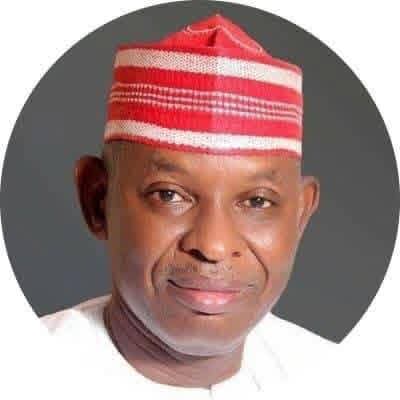
Setting the Records Straight from the Published Budget Performance Report
By Hon. Muhammad Sanusi S. Kiru, FCIA
As a citizen of Kano State with an abiding interest in good governance, transparency and responsible public discourse, I consider it necessary to independently examine the figures currently circulating under the headline: “Kano Spends ₦26.5bn on Govt House, Governor’s Office, Travels in Six Months.”
Public expenditure must be subjected to scrutiny. The media has an indispensable responsibility to hold governments and public institutions accountable. However, such scrutiny achieves its purpose only when figures extracted from official financial documents are presented within their correct accounting and administrative context.
I have therefore examined the Kano State Second Quarter 2026 Budget Performance Report, the publicly available document from which the figures in the report appear to have been derived. My review reveals a number of important facts which members of the public deserve to know.
I. THE ₦25.869 BILLION IS NOT THE GOVERNOR’S PERSONAL EXPENDITURE
The official Budget Performance Report indeed contains an expenditure figure of approximately ₦25.869 billion under the broader Government House administrative classification.
However, this classification is not synonymous with the personal expenditure of the Governor, nor does the amount represent expenditure exclusively incurred by the Governor’s immediate office.
Rather, it is an umbrella administrative classification encompassing several offices, directorates, agencies and governmental functions.
It would therefore be misleading to interpret or present the entire ₦25.869 billion as money spent personally by the Governor or exclusively by his immediate office.
II. GOVERNMENT HOUSE PROPER RECORDED APPROXIMATELY ₦3.288 BILLION
A closer examination of the same official document shows that Government House proper, under administrative code 011100100100, recorded cumulative expenditure of approximately ₦3.288 billion as at June 2026.
This was against an approved annual provision of approximately ₦39.514 billion, meaning that only about 8.3 per cent of the annual provision had been utilised at the end of the first six months.
This distinction is fundamental.
The difference between the ₦3.288 billion expenditure attributable to Government House proper and the ₦25.869 billion aggregate expenditure under the wider administrative classification should not be overlooked in any objective analysis.
III. THE ₦25.869 BILLION COVERS SEVERAL ESTABLISHMENTS
The broader ₦25.869 billion figure incorporates expenditure attributable to several establishments and governmental functions administratively grouped under Government House.
These include, among others, the Deputy Governor’s Office, Protocol Directorate, Media and Publicity establishments and other offices and agencies.
For example, the official report indicates that approximately ₦4.471 billion recorded under the Deputy Governor’s Office was capital expenditure. The Protocol Directorate also accounts for a substantial component of expenditure contained within the broader administrative classification.
These are distinct governmental expenditures and should not be portrayed as the Governor’s personal expenditure.
IV. THE ₦626.95 MILLION DESCRIBED AS “TRAVEL”
The additional figure of approximately ₦626,947,782.13 deserves particular attention.
The amount does appear in the official Q2 2026 Budget Performance Report. However, examination of the underlying document shows that the figure appears under the Primary Healthcare expenditure reporting section, specifically against Local Travel and Transport: Training.
This raises a legitimate question as to the basis for adding the ₦626.95 million to the broader Government House administrative expenditure to arrive at the headline figure of approximately ₦26.5 billion.
If the expenditure is classified in the official document under Primary Healthcare and relates to local travel and transport for training, it should not be presented in a manner capable of creating the impression that the amount represents the Governor’s travel expenditure.
V. THE COMPARABLE EXPENDITURE ACTUALLY DECLINED
There is another important fact which deserves equal prominence.
The broader Government House administrative expenditure reportedly stood at approximately ₦28.84 billion during the first six months of 2025, compared with approximately ₦25.87 billion during the corresponding period of 2026.
This represents a reduction of approximately ₦2.97 billion, or about 10.3 per cent.
The year-on-year comparison therefore indicates a decline rather than an escalation in expenditure under the broader administrative classification.
MY FINDING
Having examined the underlying figures, my considered view is that the headline “Kano Spends ₦26.5 Billion on Govt House, Governor’s Office, Travels in Six Months” requires substantial clarification and context.
The ₦25.869 billion figure is contained in the official Budget Performance Report, but it represents expenditure under a broader administrative classification encompassing several offices, agencies, directorates and governmental functions. Government House proper recorded approximately ₦3.288 billion.
Similarly, the additional ₦626.95 million presented as travel expenditure appears in the official document under a Primary Healthcare expenditure section relating to Local Travel and Transport: Training. It should therefore not, without further evidence, be interpreted as the Governor’s travel expenditure.
Furthermore, the comparable broader administrative expenditure declined from approximately ₦28.84 billion in the first half of 2025 to ₦25.87 billion in the first half of 2026, representing a reduction of about 10.3 per cent.
Accountability is not served by shielding government from scrutiny. Neither is it served by presenting legitimate public expenditure figures without their necessary administrative and accounting context.
As citizens, we must continue to demand prudence, transparency and accountability from those entrusted with public resources. In the same spirit, public discourse—particularly on matters involving billions of naira of taxpayers’ money—must be anchored on accuracy, context and fairness.
The records are public. The figures can be verified. Let the facts speak for themselves.
Hon. Muhammad Sanusi S. Kiru, FCIA
Concerned Kano Citizen

Uber Shutdowns Operations in Nigeria

Author of ‘Rich Dad Poor Dad’ Languishes in Billion Dollar Debt

Maulud: Best Choice Specialist Hospital Congratulates Kano Governor, Muslims Globally

Kenyan Newspaper Links Editor’s Abduction to President Ruto

UN Assembly: Nigeria Affirms Nuclear-Free Status, Seeks Overhaul of UN Domestic Jurisdiction Rule

From World’s 9th Most Populous City to Perfect: As Gov Yusuf Revisits Kano Master Plan

95% of Governor Abba Kabir Yusuf’s Promises Have Been Fulfilled — CPS Interview By Musa Diso, In Kano

Kano Islamic Scholar Declares Kano Widow Marriage Programme ‘Haram’, Urges Government to Stop It

We’re aware of your clandestine meetings with Lulu-Briggs, 𝐏𝐢𝐝𝐨𝐦𝐬𝐨𝐧, CRP uncovers ex-MD of NDDC, Nunieh

Review of Police Officers’ Salaries Underway–FG
Uber Shutdowns Operations in Nigeria
Author of ‘Rich Dad Poor Dad’ Languishes in Billion Dollar Debt
Maulud: Best Choice Specialist Hospital Congratulates Kano Governor, Muslims Globally
Kenyan Newspaper Links Editor’s Abduction to President Ruto
UN Assembly: Nigeria Affirms Nuclear-Free Status, Seeks Overhaul of UN Domestic Jurisdiction Rule
From World’s 9th Most Populous City to Perfect: As Gov Yusuf Revisits Kano Master Plan
95% of Governor Abba Kabir Yusuf’s Promises Have Been Fulfilled — CPS Interview By Musa Diso, In Kano
Kano Islamic Scholar Declares Kano Widow Marriage Programme ‘Haram’, Urges Government to Stop It
We’re aware of your clandestine meetings with Lulu-Briggs, 𝐏𝐢𝐝𝐨𝐦𝐬𝐨𝐧, CRP uncovers ex-MD of NDDC, Nunieh
Review of Police Officers’ Salaries Underway–FG
-

 Opinion5 years ago
On The Kano Flyovers And Public Perception
-

 Features5 years ago
How I Became A Multimillionaire In Nigeria – Hadiza Gabon
-

 Opinion6 years ago
Kano As future Headquarters Of Poverty In Nigeria
-

 History5 years ago
Sheikh Adam Abdullahi Al-Ilory (1917-1992):Nigeria’s Islamic Scholar Who Wrote Over 100 Books And Journals
-

 Opinion5 years ago
My First Encounter with Nasiru Gawuna, the Humble Deputy Governor
-

 History5 years ago
The History Of Borno State Governor Professor Babagana Umara Zulum
-

 History5 years ago
The Origin Of “Mammy Market” In Army Barracks (Mammy Ochefu)
-

 News4 years ago
Federal University Of Technology Babura To Commence Academic Activities September