
Politics
The Rise of Mamdani: Power Returns to the People

By Zubair A. Zubair
The rise of Ugandan-born American politician Zohran Mamdani marks a new dawn for young people and the working class worldwide. His historic victory as Mayor of New York City, one of the richest cities in the world with a GDP of $1.3 trillion and home to more billionaires than any other, has proven that integrity, courage, and vision can triumph over prejudice, wealth, and propaganda.
Mamdani, a proud member of the Democratic Party and the Democratic Socialists of America, has served as a representative of New York’s 36th District (Astoria, Queens) since 2021. Despite facing intense opposition from billionaires, far-right groups, and the storm of Islamophobia and racism, he emerged victorious. They called him names, labeled him a “terrorist,” and even linked him to 9/11 in a desperate bid to destroy his reputation. But truth prevailed.
Mamdani’s win wasn’t about religion, race, or origin. It was about solutions. The son of an Indian film producer and a Ugandan professor, Mamdani connected deeply with the struggles of ordinary New Yorkers. He campaigned tirelessly, offered practical answers to real problems, and showed the people that leadership is about service not privilege. His victory was a victory for integrity, competence, and courage.
This inspired me to reflect on my own country, Nigeria. If New Yorkers could look beyond race, faith, and origin to elect the right person, why can’t we? We, too, can build a nation where merit matters more than tribe or religion. Our divisions; ethnic, religious, and political have long held us back. Yet, as Martin Luther King Jr. said, “Darkness cannot drive out darkness; only light can do that. Hate cannot drive out hate; only love can do that.”
Nigeria needs love, unity, and a new generation of leaders; young, visionary, and patriotic. We must remove the barriers of hate and division that the political elite use to manipulate us. As Mark Twain wisely said, “Patriotism is supporting your country all the time, and your government when it deserves it.” And as Charles de Gaulle noted, “Patriotism is when love of your own people comes first; nationalism, when hate for people other than your own comes first.”
I dream of a Nigeria where an Igbo man can become governor in Kano, a Yoruba woman in Sokoto, or a Hausa/Fulani leader in Lagos and no one questions their right to serve. That would be the true mark of progress and national unity.
My mentor, Dr. Nelson Aluya, a Nigerian-American physician and advocate for youth leadership, always emphasizes the importance of young people taking part in politics. Mamdani’s success proves that change is possible, that young people can rise to power and lead with integrity.
As Abraham Lincoln said, “The ballot is stronger than the bullet.” It’s time for the youth to realize that power belongs to the people. We must organize, participate, and believe in our ability to lead. You don’t need billions to win, you need a clear vision, an understanding of your people’s problems, and the courage to provide solutions.
If Mamdani can do it, you and I can too. It’s time for young Africans to take charge of our destiny, reclaim our politics from the elite, and build nations that work for everyone.
Zubair A. Zubair writes from Kano, Nigeria.
He can be reached at Zubairkano118@gmail.com











Politics
REJOINDER: The Fallacy of the “Commander” and the Burden of Integrity
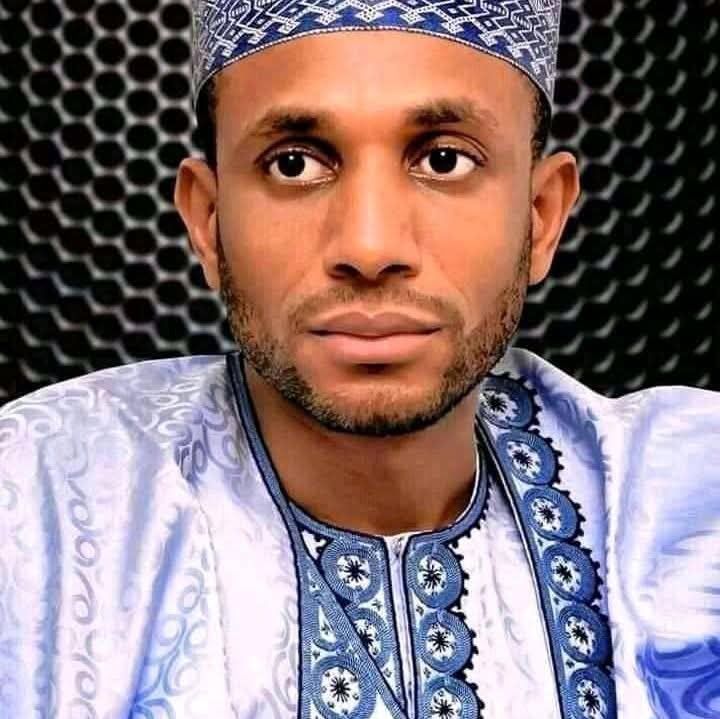
By Halima Isyaku Dantsoho
I read with a mix of amusement and concern the defense of Hon. Murtala Sule Garo by Hadi Abdullahi Muhammad, which attempts to frame the valid scrutiny of a public figure as a mere product of “internal power struggles.” While it is convenient to label every criticism a “media trial,” we must confront the reality that leadership is a sacred trust, not a reward for street mobilization. To suggest that Garo is the ideal choice for Deputy Governor—particularly in the wake of the recent political shift that saw Governor Abba Kabir Yusuf move to the APC—is to ignore the very “storm” the author claims to see. The vacancy in the Deputy Governor’s office exists because Kano is attempting to move past a season of distraction following the resignation of the former occupant; why then would the state replace a controversy with a liability? We are talking about a man who remains entangled in significant litigation regarding his past tenure as Commissioner, and to elevate such an individual to the second-highest office in the state would be like putting out a fire with petrol. It would lock the administration into a permanent state of legal defense, ensuring that the coming years are spent in courtrooms rather than on the construction of a better Kano.
The author praises Garo as a “Commander” of the grassroots, yet in a state as economically vital as ours, “mobilization” is not a substitute for administrative integrity. The “grassroots” of which he speaks—the traders, farmers, and youths—are the primary victims when public funds are allegedly mismanaged at the local government level. True loyalty to the base is shown through transparent governance and the systemic protection of public wealth, not through the strategic distribution of startup tools during an election cycle. If the APC national leadership and President Bola Ahmed Tinubu are truly committed to a “Renewed Hope” agenda, they must recognize that elevating a figure with such unresolved legal narratives contradicts the very integrity the party must represent in this new era. Perfection may not be the standard, but accountability is. Fairness does not mean ignoring a mountain of evidence in favor of political popularity; it means letting the courts decide a man’s fate before he is granted the prestige of high office. Kano has moved forward into a new political era, and it is time our leadership choices reflected a future built on stability rather than a return to the controversies of the past.
Halima Isyaku Dantsoho wrote from Kano.
Politics
Kano’s Quest for an Alternative with Ibrahim Ali Amin Little, By Adnan Mukhtar
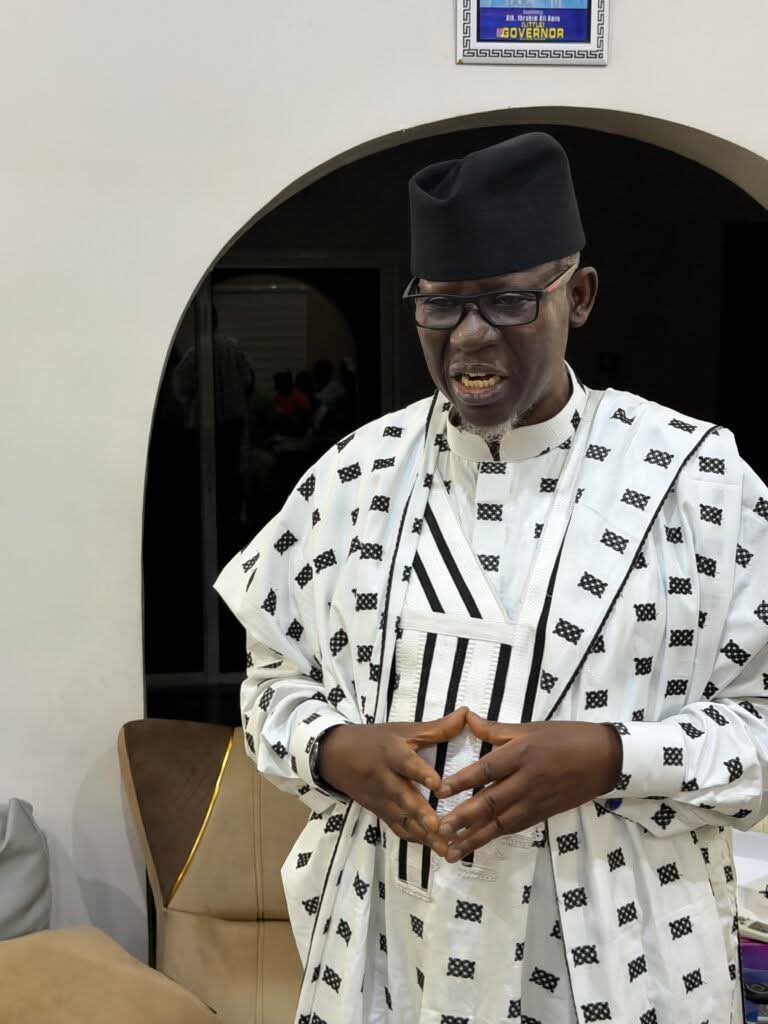
My recent article titled “Ibrahim Little: The Man Fit for the Job” has opened the eyes of many young men and women, particularly those in the Gen Z category, to the personality and potential of Alhaji Ibrahim Ali Amin. He is a man of calibre and a true embodiment of competence for the enormous responsibility of leading Kano, the commercial hub of Northern Nigeria.
The quest for a credible alternative in Kano’s political space began last year when my political mentor and principal declared his intention to contest for the governorship. The name Ibrahim Ali Amin Little has, however, been a household name in Kano politics since the year 2000.
He is involved in politics not for material gain, but out of a genuine passion for investing in the lives of the people. As a businessman with a proven track record, he brings a different perspective to governance. Since 1999, most of Kano’s governors have emerged from the civil service sphere. Despite Kano’s status as a commercial centre, the state has witnessed a form of economic stagnation, largely due to insufficient emphasis on business-driven policies and economic innovation.
When I speak of an “alternative,” I refer to an independent-minded individual who is well-versed in administration and economic management.
Kano cannot be entrusted to someone who lacks a deep understanding of its economic realities. Since 1999, governance in the state has largely revolved around a single model road construction and the awarding of contracts, often without corresponding long-term economic impact.
True governance goes beyond infrastructure. It involves prioritising education by employing competent teachers, strengthening the healthcare sector especially primary healthcare centres with adequate and qualified medical personnel, and creating sustainable systems that improve the quality of life for citizens. These are the real indicators of governance. The question, however, remains: where does Kano stand in all of this?
Unfortunately, very few aspirants are addressing these critical issues except Ibrahim Little. As one of his closest aides, I can confidently say that his priorities are clear and people-oriented. His daily engagements revolve around questions such as: How can we identify and nurture talent? How can Kano become a true industrial hub? How can we establish an independent power supply for the state? And how can we revitalise and boost agricultural productivity?
These are not just talking points for him, they are guiding principles. His interest lies in the development of Kano, not in personal gain or the accumulation of state resources.
At this critical moment, Ibrahim Ali Amin Little stands as the alternative Kano needs.
Adnan Mukhtar
Is a Doctoral Candidate at Northwest University, Kano
Politics
Pardoning accused politicians healthy political evolution in Nigeria— Garo
Alhaji Murtala Sule Garo, a prominent politician and grassroots mobiliser in Kano State, says it is healthy political evolution that politicians are being granted pardon in Nigeria.
Garo, who fielded questions from newsmen in Kano, also noted that repentant and forgiven politicians are allowed to actively participate in politics to add valour and strengthen democracy.
He was reacting to allegations over his involvement in financial sleaze while serving as Commissioner for Local Government and Chieftaincy Affairs in Kano during the administration of Dr. Abdullahi Umar Ganduje.
Garo acknowledged desperate attempts by his adversaries to malign him and whittle down his growing political profile.
Garo, popularly known as MSG, was a Deputy Governorship candidate during the 2023 general election and Commissioner for Local Government and Chieftaincy Affairs.
He claimed that local councils in the state witnessed phenomenal development when he served as Commissioner for Local Government Affairs.
However, Sule Garo explained that the allegations of diversion of public funds for personal use have collapsed in the eyes of the Constitution and extant laws of Nigeria.
The existing constitutional provisions and laws averred that an accused person is presumed innocent until proven otherwise by a court of competent jurisdiction.
“Therefore, my media trial ran afoul of the law. Moreso, the allegations were not preferred against him but a group of suspects.
“Besides, the Kano State Government, being the complainant, has not shown interest in prosecuting me.
Another charge brought against me was dismissed by the court even as the state government decided to forgive me,” Garo claimed.
He cited for instance that Hon. Faruk Lawan and Alhaji Aminu Dabo, former Managing Director of NPA, were pardoned by the system and are actively participating in politics.
The politician therefore appealed to the good people of Kano State and other interested parties to disregard any malicious allegation against him because of his innocence before the law court and forgiveness by the state government.

Kwankwaso, Atiku, Amaechi, Obi, Others Match-Out in Peaceful Protest at INEC’s Headquarters

ADC Crisis: Kwankwaso Seeks Intervention of Gombe Emir

Shekarau In APC, Morale Booster For Governor Abba

NCC to Enforce Subscriber Compensation for Poor Telecom Service

ADC Leadership Tussle Worsens as Third Faction Emerges, Rejects Nafiu Camp, Mark’s Coalition

ADC Leadership Crisis: State Chairmen to Elect Caretaker Committee on Tuesday

Governor Abba Kabir Yusuf Holds Exclusive Prerogative to Choose Deputy – Malam Inuwa Waya

The Governor Who Chose His People Over His Politics: Abba Yusuf and the Moral Courage Behind Kano First
Restoring the Glory That Was Always There: Governor Abba Kabir Yusuf and the Historical Vision Behind Kano First

Table Water Producers Increase New Price for Sachet Water in Kano
Kwankwaso, Atiku, Amaechi, Obi, Others Match-Out in Peaceful Protest at INEC’s Headquarters
ADC Crisis: Kwankwaso Seeks Intervention of Gombe Emir
Shekarau In APC, Morale Booster For Governor Abba
NCC to Enforce Subscriber Compensation for Poor Telecom Service
ADC Leadership Tussle Worsens as Third Faction Emerges, Rejects Nafiu Camp, Mark’s Coalition
ADC Leadership Crisis: State Chairmen to Elect Caretaker Committee on Tuesday
Governor Abba Kabir Yusuf Holds Exclusive Prerogative to Choose Deputy – Malam Inuwa Waya
The Governor Who Chose His People Over His Politics: Abba Yusuf and the Moral Courage Behind Kano First
Restoring the Glory That Was Always There: Governor Abba Kabir Yusuf and the Historical Vision Behind Kano First
Table Water Producers Increase New Price for Sachet Water in Kano
-

 Opinion4 years ago
On The Kano Flyovers And Public Perception
-

 Features5 years ago
How I Became A Multimillionaire In Nigeria – Hadiza Gabon
-

 Opinion5 years ago
Kano As future Headquarters Of Poverty In Nigeria
-

 History5 years ago
Sheikh Adam Abdullahi Al-Ilory (1917-1992):Nigeria’s Islamic Scholar Who Wrote Over 100 Books And Journals
-

 Opinion4 years ago
My First Encounter with Nasiru Gawuna, the Humble Deputy Governor
-

 History5 years ago
The Origin Of “Mammy Market” In Army Barracks (Mammy Ochefu)
-

 History4 years ago
The History Of Borno State Governor Professor Babagana Umara Zulum
-

 News4 years ago
Federal University Of Technology Babura To Commence Academic Activities September