
News
Katsina APC Prays For Senator Abu Ibrahim @80

Katsina APC Deputy Chairman Bala Habu Musawa Leads Grand Prayer and Charity in Honour of Distinguished Senator Abu Ibrahim at 80
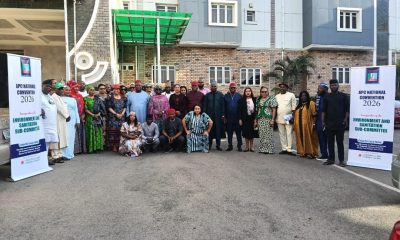
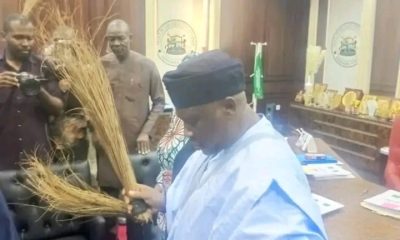
In an atmosphere filled with gratitude, unity, and reverence, political associates, clerics, family members, and well-wishers gathered to celebrate the 80th birthday of Distinguished Senator Abu Ibrahim a man described as a fountain of inspiration and selfless service.
The special event was organized by the Deputy Chairman of the All Progressives Congress (APC) in Katsina State, Bala Habu Musawa and other will wishers, who led prayers, charity donations to orphans, and reflections on the Senator’s enduring legacy.
Speaking during the occasion, Bala Habu Musawa said:
“We gather here today in an atmosphere of gratitude, unity, and reverence to celebrate a man whose life is a fountain of inspiration and selfless service Distinguished Senator Abu Ibrahim as he graciously attains the age of eighty years.
This gathering is not about politics, but about prayers, thanksgiving, and reflection a humble effort to honor a father, mentor, and statesman who has touched countless lives with his wisdom, patience, and generosity.
Allah is our witness that this noble thought came from within us, and his devoted family members. We collectively agreed that it was necessary to organize this special prayer gathering in honor of our father and leader, Distinguished Senator Abu Ibrahim, as he marks 80 remarkable years of life.
We also resolved to reach out to at least one hundred orphans, some living close to his residence, by offering them modest gifts and charity. We have invited our learned clerics to lead prayers of goodwill and blessings so that Allah may include us in their supplications that we may live with the kind of noble character and humility that our father, Senator Abu Ibrahim, embodies.
Even if we cannot fully reach his level of greatness, we pray that we may at least walk in his footsteps with dignity, self-respect, and the grace he represents. We pray that just as people have benefitted from his generosity, others too may one day benefit from ours, even after our time on earth.
Everything we have become today, whether in Katsina State or anywhere in Nigeria, is through the guidance, mentorship, and support of Senator Abu Ibrahim. He lifted us when we were unknown; he honored us and gave us the platform to grow. Today, we hold our heads high in Katsina, proud of who we are because of him.
Even when people identify us, they say, ‘Those are the children of Bala,’ but at the end of the day, we are always known as ‘the household of Habu Ibrahim.’
Now that our father and mentor has reached old age, we too have matured and grown in our own capacities. Though we strive to emulate him, we can never truly match the greatness of Senator Abu Ibrahim. His patience, wisdom, and integrity are unmatched.
When we first knew him, he was already advanced in age, yet full of discipline and principle. As for us, we are still young, still learning, still growing. But Senator Abu has always been a true elder a man of his word, a man of truth. When he speaks, one never suspects political flattery; he speaks sincerely, from the heart. He is not a man chasing after the pleasures or wealth of the world a virtue that clearly distinguishes him from most of us today.
Even after serving two or three terms in the Senate, he owns no personal mansions beyond the official houses in Kaduna and Katsina provided by the government. Only recently did his elder sons build their own house in Abuja. Throughout his years in the capital, he lived in a rented apartment despite his long service in politics.
I remember vividly one day when he came to my house and, seeing the large house I had built, he looked surprised and said jokingly, ‘Bala, do you ever think you will die? Otherwise, why have you built such a big house?’ That is the kind of fatherly counsel he gives reminding us of humility and legacy.
In today’s generation, people measure success by the height of their buildings, but during his time, it was not like that. Let’s not forget, he once served as one of the pioneer directors of Abuja when the city was first being developed. Yet despite that opportunity, he owned no plot of land, simply because worldly acquisition was never his concern.
When he entered politics, it was purely as a servant of God and humanity, not a seeker of gain. He even won elections under the opposition, and through Allah’s grace, he triumphed. During the PDP era, even when the ruling party tried to unseat him, they could not succeed, for Allah stood firmly by him.
Every week, without fail, Senator Abu Ibrahim could be found in his constituency attending funerals, visiting the sick, and participating in weddings of the very people who voted for him. His closeness to the people built unshakable trust and love, to the point that they repeatedly re-elected him.
And when the time came for him to step aside, he did not cling to power. He said, ‘My body is tired; let the younger ones take over.’ Since he vacated that seat, no one has been able to replicate his achievements in the Funtua zone. Many have tried, but their performances fall short because the dignity and humility with which he served are rare.
Indeed, every person who occupies that seat after him is only borrowing his name, for the legacy of Senator Abu Ibrahim refuses to fade.
These are the values he instilled in us integrity, modesty, service, and fairness. Whenever he was given the opportunity to nominate people for government positions, he never promoted his biological children. Instead, he uplifted others.
I remember vividly during Governor Masari’s administration when an alliance was formed between Masari and Senator Abu Ibrahim. Each was asked to submit names for commissioner slots. Senator Abu did not submit his son Muhammadu’s name, nor any relative’s. Instead, he nominated hardworking party loyalists like Hamza Sule Faskari and Hamza Burodo both of whom have continued to serve Katsina State honorably to this day.
Yet, the Senator has many capable sons Muhammadu, Engr. Yahaya, Ibrahim, and Ahmad all qualified to hold any public office. But he never imposed them.
Contrast that with other politicians like the late Kanti Bello, who gave his son Mustafa a commissioner’s slot, and Sada Ilu, who also nominated his own son. Senator Abu Ibrahim never did that. Instead, he brought up people like us his political children and encouraged us to continue the struggle.
Even now, under President Bola Ahmed Tinubu, who is his close ally and friend, Senator Abu remains deeply respected. In fact, among all northern leaders, Tinubu’s closest northern friend has always been Abu Ibrahim. The President himself once said that Muhammadu was ‘his son,’ not just Senator Abu’s and that was why he personally insisted that Muhammadu must be appointed into his government.
Muhammadu, who had never even worked in government being a private businessman, following his father’s teachings was appointed only because Tinubu insisted, saying, ‘He is my son.’
All these are proofs of the honor and respect our father commands. And for that reason, we, his political sons and loyalists, have never been ungrateful. Wherever his name is mentioned, we stand in defense of it. From the days of politics until now, his name commands respect and affection.
That is why we decided to organize this charity and prayer event to support orphans and offer prayers for his long life and continued blessings. Even if all we can provide is a day’s meal, our intention is sincere that Allah accepts our efforts, grants his wishes, and strengthens him with good health and longevity.
Our gathering is not political in nature. It is about celebrating 80 years of wisdom, service, and humanity.
Eighty years is no small achievement, especially for a man who still recognizes everyone and remembers everything clearly. Even now, as I speak, I hear he has traveled for Umrah to thank Allah for His countless blessings.
Therefore, as his sons and brothers, it is only fitting that we thank Allah for preserving him and pray for his continued strength and peace.
Let this be a lesson to all of us that whoever does good shall surely leave behind a lasting legacy. Whoever emulates his character will end his journey in honor.
We too are now raising our own children, just as he raised us. People already identify them by saying, ‘These are Bala’s sons the next generation of Abu’s family.’ Hence, it is our duty to pass on these values.
This prayer and charity we organize today are from our pockets and hearts, and everyone who wishes may also organize similar prayers in their own towns. For Senator Abu Ibrahim belongs to every community across the Funtua Zone he has touched lives everywhere.
Whoever organizes such an event will have our representation and our appreciation. What our father needs most now is not wealth, but prayers and goodwill.
As long as such prayers are offered, our hearts are fully happy and we shall continue to pray that Allah grants us the patience, discipline, and humility that our father has always shown for patience is one of his greatest virtues.
We are only human; sometimes youth brings mistakes, but we seek Allah’s forgiveness and guidance. For in truth, anyone who wishes to attain greatness must first master patience and humility.
And if Allah blesses us with even a fraction of the patience, courage, and integrity of Senator Abu Ibrahim, then surely, by His grace, we shall succeed in this world and in the Hereafter.”
“Finally, I wish to apologize to the family members of Distinguished Senator Abu Ibrahim who were not invited to this gathering. This event was a private, indoor occasion. However, very soon, when a grand public celebration is organized, they will surely take the front seats while we, the organizers, will humbly stay behind.
Let me also give an example with our leader, our model of justice and humility, His Excellency Governor Malam Dikko, who is himself a proud son of Senator Abu Ibrahim. Had he been invited, I am certain nothing would have stopped him from attending.
We all know that in today’s Nigeria, Malam Dikko stands out as a shining example a governor of dignity, compassion, and genuine concern for the common people. His constant message is always about serving God, loving one another, and supporting the less privileged.
Therefore, our only words for His Excellency Malam Dikko are prayers for long life, good health, and continued wisdom. We also pray that Allah grants him another opportunity to lead again, for he has truly mastered the art of governance and progress.
We sincerely hope that one day, by Allah’s will, he too will reach the age of eighty, and people will gather to celebrate and remember his good deeds and selfless service to humanity for indeed, his leadership is already visible and deeply commendable
In his closing remarks, Bala Habu Musawa called on politicians of nowadays to emulate the good character, humility, and selfless service of Distinguished Senator Abu Ibrahim, saying such virtues remain the true measure of leadership and legacy.










News
Kenyan Presidential Aspirant Warns Dangote: ‘Don’t Rush Lamu Refinery, I’ll Send You Back to Nigeria’
By Yusuf Danjuma Yunusa
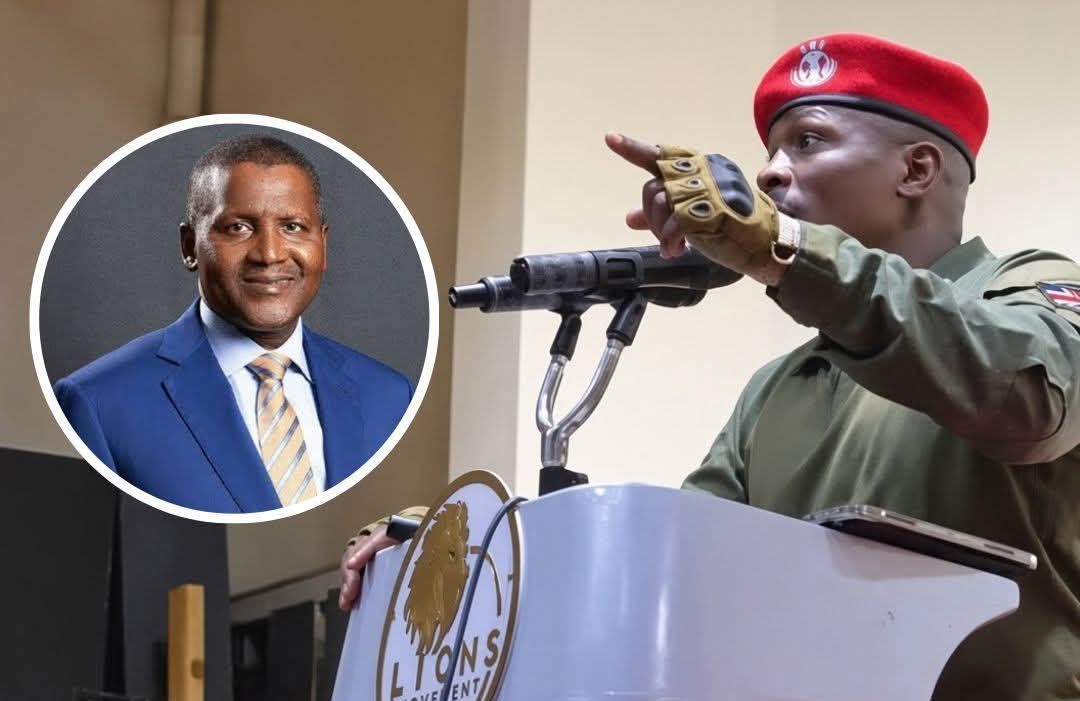
A man identified in a viral video as Kenyan presidential aspirant Patrick Osoi has sparked a heated online debate after warning Nigerian billionaire Aliko Dangote not to rush into establishing an oil refinery in Lamu, saying he would send the businessman back to Nigeria if elected president.
In the clip, said to have been recorded at a Lions Movement event, Osoi says: “I want to tell Aliko Dangote, please don’t rush to start the refinery because, when I’m sworn in as President of Kenya next year, you will be heading back to Nigeria.”
The remarks appear to reference a proposed $16 billion refinery project in Lamu, a coastal county that Kenya has promoted as a future hub for oil and gas infrastructure. Osoi argued that Kenyan investors have the capacity to build and run such a facility without foreign ownership.
“We don’t need to beg foreigners to develop our resources,” he said, according to a partial transcript of the video. “Kenyans can do it.”
The video has been shared widely on Facebook, X and WhatsApp, drawing mixed reactions. Supporters praised Osoi for what they called a bold defense of economic sovereignty. Critics warned that the comments could scare off foreign investors and strain Kenya’s diplomatic and trade ties with Nigeria.
Dangote, Africa’s richest man and chairman of Dangote Group, has not publicly responded to the clip. His conglomerate operates one of the world’s largest single-train refineries in Nigeria and has investments in cement, sugar, fertilizer and petroleum across Africa.
The Kenyan government has not commented on the video. It was not immediately clear whether the Lamu refinery project involving Dangote is still active or whether Osoi’s remarks reflect any official policy.
Political analysts say the controversy underscores growing public debate in Kenya over foreign investment, local content and control of natural resources ahead of the next general election, expected in 2027.
News
NDC’s Kano Governorship Candidate Gwarzo Missing From INEC Final List
By Yusuf Danjuma Yunusa
The National Democratic Congress (NDC) governorship candidate in Kano State, Aminu Abdussalam Gwarzo, is absent from the final list of governorship candidates released by the Independent National Electoral Commission (INEC).
The three-page list, signed by INEC Secretary Rose Oriaran-Anthony, contains 17 governorship candidates and their running mates for the Kano election, but neither Gwarzo nor any other NDC candidate appears on it.
Those listed include Governor Abba Kabir Yusuf of the All Progressives Congress (APC), Abacha Muhammed Sani of the Peoples Democratic Party (PDP), and candidates from the African Democratic Congress (ADC), Labour Party (LP), Social Democratic Party (SDP), Action Alliance (AA), African Action Congress (AAC), Action Democratic Party (ADP), All Progressives Grand Alliance (APGA), Allied Peoples Movement (APM), and New Democratic Party (NDP), among others.
The document provides the names, political parties, ages, genders, and educational qualifications of the candidates and their deputy governorship candidates.
INEC did not state why the NDC candidate was omitted, and the published list does not indicate whether the omission is connected to the party’s nomination process, documentation, or another issue.
The development raises questions about the NDC’s participation in the Kano governorship election, although the list alone does not establish the reason for Gwarzo’s absence.
News
Dawakin Tofa Academic Forum Holds Maiden Heroes Day, Honours Former Kano Governor
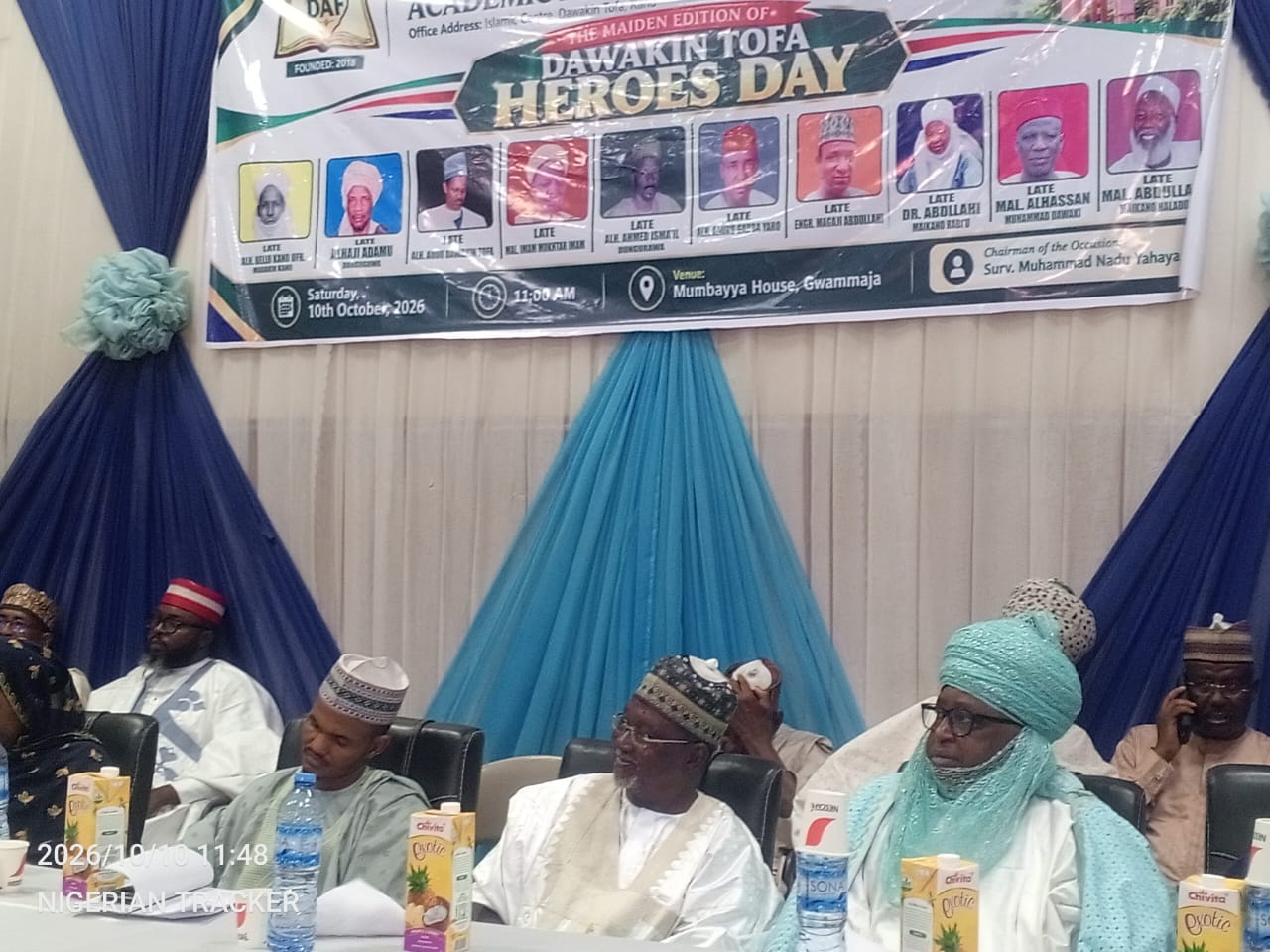
The Dawakin Tofa Academic Forum has held its maiden Heroes Day and awards ceremony, honouring 10 distinguished late indigenes of Dawakin Tofa Local Government Area of Kano State for their contributions to education, public service, politics, community development and other fields.
The event, organised by the Dawakin Tofa Academic Forum, brought together academics, community leaders, elders and other stakeholders to celebrate the legacies of prominent personalities who contributed to the development of Dawakin Tofa, Kano State and Nigeria.
Speaking at the ceremony, the chairman of the forum, Dr Junaidu Danladi, said the organisation was established in 2018 to bring together educated indigenes of Dawakin Tofa, including professors, associate professors and other professionals from tertiary institutions.
Danladi said the forum had grown significantly since its establishment, with more than 100 members committed to promoting educational development and recognising individuals whose contributions had positively shaped the community.
He said the maiden Heroes Day was organised to preserve the history of Dawakin Tofa and ensure that the achievements of its prominent sons were documented and remembered by present and future generations.
In his remarks, Surveyor Muhammad Nadu Yahaya, an elder and former commissioner for lands, budget and planning, described the initiative as a timely and commendable development, saying the recognition of distinguished personalities from Dawakin Tofa was long overdue.
Yahaya said the forum represented the intellectual elite of Dawakin Tofa, whose members had demonstrated a commitment to advancing the community through knowledge, innovation and public service.
He commended the organisers for introducing the Heroes Day initiative, describing the selected award recipients as eminent personalities whose influence extended beyond Dawakin Tofa to Kano State and Nigeria.
Yahaya also called on the people of Dawakin Tofa to make additional efforts to distinguish the local government through educational advancement, community development and other innovative initiatives.
He prayed for Allah’s blessings upon the award recipients and the organisers, urging the forum to sustain the programme as an annual event that would inspire younger generations.
Similarly, Madakin Kano, Yusuf Nabahani Cigari, commended the Dawakin Tofa Academic Forum for recognising the achievements of the community’s late prominent figures.
Cigari said Dawakin Tofa was blessed with accomplished individuals across politics, the economy and public service, adding that the local government had a rich history of producing personalities who contributed to the development of Kano State and the country.
He urged the people of Dawakin Tofa to remain united and work collectively towards the progress of their community, stressing the importance of preserving its heritage and celebrating its achievements.
The former chairman of the Dawakin Tofa Academic Forum, Dr Ameer Abdul Aziz, presented the profiles and contributions of the personalities selected for the maiden edition of the Heroes Day.
Abdul Aziz explained that hundreds of deserving indigenes could be considered for recognition, but the forum selected 10 individuals for the inaugural edition, with the intention of honouring more distinguished personalities in subsequent editions.
Among those honoured was Bello Kano, also known as Madakin Kano, who was born in 1907 and died in 1987. Abdul Aziz said Bello Kano began his career in education as an assistant teacher before rising to become a headteacher at a middle school.
According to Abdul Aziz, Bello Kano also served in different administrative and legislative capacities and contributed to the establishment of primary and post-primary schools in Dawakin Tofa, helping to expand access to education in the area.
Another recipient was Alhaji Adamu Danguguwa, who lived from 1913 to 1988. Abdul Aziz said Danguguwa acquired Qur’anic education and later attended Samaru Agricultural School, where he received agricultural training.
The forum also recognised a former governor of Kano State, “Alhaji Abdu Dawakin Tofa,” born in 1932 and died in 2003, who studied at Kansas University in the United States and served as commissioner for agriculture, deputy governor and governor of Kano State from May to October 1983.
The late Imam of Dawakin Tofa, Mukhtar Iman, who lived from 1935 to 2008, was also honoured for his contributions to reconciliation and efforts to combat illiteracy, according to Abdul Aziz.
The forum recognised Ahmad Ismail Dungurawa, who lived from 1945 to 2008, for his role in struggles for justice and his efforts to promote the interests of ordinary people.
Another award recipient, Aminu Garba Yaro, was celebrated for his generosity and support for children, including assistance to young people seeking educational opportunities. Abdul Aziz said Yaro, who worked with United Bank for Africa, made contributions to the welfare and advancement of others.
The forum also honoured Engineer Magaji Abdullahi, a water engineer who lived from 1947 to 2016, for his contributions to Dawakin Tofa, Kano State and Nigeria. Abdul Aziz said Abdullahi’s professional work and services had made a lasting impact on the community ,a prominent politician and a former Deputy Governor of Kano state from 2003 to 2007.
Abdullahi Maikano Rabiu, who lived from 1949 to 2021, was recognised for his commitment to supporting students, including those he knew personally and others who approached him for assistance, according to Abdul Aziz.
Abdul Aziz described Rabiu as a compassionate individual and a man of wisdom whose generosity helped many people pursue their educational ambitions.
The forum also honoured Alasan Dawakin, who was born in 1946 and died in 2023, for dedicating about five decades of his life to teaching and learning, according to the former chairman.
Another honouree was Malam Abdullahi Maikano, who lived from 1942 to 2023, in recognition of his contributions to the community.
The organisers said the Heroes Day was designed not only to honour the achievements of the deceased personalities but also to encourage younger generations to emulate their commitment to education, service, integrity and community development.
The maiden edition marked an effort by the Dawakin Tofa Academic Forum to document the history of prominent indigenes and establish a platform for celebrating individuals whose contributions might otherwise be forgotten.
The forum is expected to use the initiative to strengthen community ties, promote educational values and encourage the emergence of future leaders committed to the development of Dawakin Tofa and Kano State.

Kenyan Presidential Aspirant Warns Dangote: ‘Don’t Rush Lamu Refinery, I’ll Send You Back to Nigeria’

NDC’s Kano Governorship Candidate Gwarzo Missing From INEC Final List

Dawakin Tofa Academic Forum Holds Maiden Heroes Day, Honours Former Kano Governor

Atiku Slams Tinubu Over 30-Day Petrol Discount, Demands Answers on Day 31

Kano Local Government Finance Deputy Director, Balarabe Muhammad, Dies

Zamfara Varsity ASUU Threatens Warning Strike Over FG-ASUU Agreement, Promotion Arrears

PCACC Arrests Man Over Alleged ₦4.5m Sale, Illegal Leasing of Kano Government Horse Stable

Goje’s Electoral War:The Confrontation With Tinubu,Governor Inuwa,Usman Kumo And APC candidates Ahead Of 2027

Prof Yusuf Adamu Delivers BUK’s 63rd Professorial Inaugural Lecture, Reflects on Medical Geography and Academic Legacy

Al-Istiqama University to Hold Convocation, Honours Late Aminu Dantata, Sheikh Ibrahim Khalil
Kenyan Presidential Aspirant Warns Dangote: ‘Don’t Rush Lamu Refinery, I’ll Send You Back to Nigeria’
NDC’s Kano Governorship Candidate Gwarzo Missing From INEC Final List
Dawakin Tofa Academic Forum Holds Maiden Heroes Day, Honours Former Kano Governor
Atiku Slams Tinubu Over 30-Day Petrol Discount, Demands Answers on Day 31
Kano Local Government Finance Deputy Director, Balarabe Muhammad, Dies
Zamfara Varsity ASUU Threatens Warning Strike Over FG-ASUU Agreement, Promotion Arrears
PCACC Arrests Man Over Alleged ₦4.5m Sale, Illegal Leasing of Kano Government Horse Stable
Goje’s Electoral War:The Confrontation With Tinubu,Governor Inuwa,Usman Kumo And APC candidates Ahead Of 2027
Prof Yusuf Adamu Delivers BUK’s 63rd Professorial Inaugural Lecture, Reflects on Medical Geography and Academic Legacy
Al-Istiqama University to Hold Convocation, Honours Late Aminu Dantata, Sheikh Ibrahim Khalil
-

 Opinion5 years ago
On The Kano Flyovers And Public Perception
-

 Features5 years ago
How I Became A Multimillionaire In Nigeria – Hadiza Gabon
-

 Opinion6 years ago
Kano As future Headquarters Of Poverty In Nigeria
-

 History5 years ago
Sheikh Adam Abdullahi Al-Ilory (1917-1992):Nigeria’s Islamic Scholar Who Wrote Over 100 Books And Journals
-

 Opinion5 years ago
My First Encounter with Nasiru Gawuna, the Humble Deputy Governor
-

 History5 years ago
The History Of Borno State Governor Professor Babagana Umara Zulum
-

 History6 years ago
The Origin Of “Mammy Market” In Army Barracks (Mammy Ochefu)
-

 News5 years ago
Federal University Of Technology Babura To Commence Academic Activities September