
News
APSF Reaffirms Support for Tinubu’s Renewed Hope Agenda at Stakeholders’ Meeting
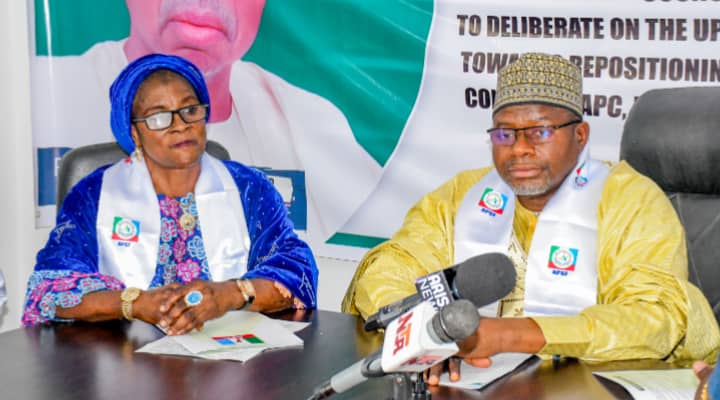
The All Progressive Stakeholders Forum (APSF) has reiterated its commitment to advancing President Bola Ahmed Tinubu’s Renewed Hope agenda, pledging to serve as a bridge between political leaders and the people.
This declaration was made during a high-level Stakeholders’ Advisory Council meeting held under the leadership of Sokoto State Governor, Dr. Ahmad Aliyu Sokoto.
Speaking at the event, APSF National Chairperson, Dr. Maryam Yunusa Danjaki, emphasized the group’s mission to deepen internal democracy, strengthen progressive forces within the All Progressives Congress (APC), and ensure the party’s continued success beyond 2027.
“Our goal is to continue to be a bridge between leaders and the people and to be instrumental in ensuring the truth,” Dr. Danjaki stated. “Today’s meeting is not just symbolic—it is strategic. With God’s guidance and the leadership of Governor Sokoto, we are equipped with the wisdom and courage to support President Tinubu’s vision.”
She praised the dedication of the Advisory Council members, describing them as “the benchmark of wisdom and experience” that will guide APSF’s journey to consolidate its platform, expand its reach, and translate the Renewed Hope promise into lasting political success.
Dr. Danjaki affirmed that APSF is fully prepared to play its role in national development. “Our platform is solid. Our strategy is sharp. Our resolve is unwavering. With this Council, we will not only uphold but continue to renew the promise of hope beyond 2027,” she said.
She concluded by thanking attendees for their commitment and support, noting that the meeting was organized to lay the groundwork for the upcoming broader Stakeholders’ Meeting of the organization.
News
Court Directs ICPC to Produce El-Rufai for Next Hearing
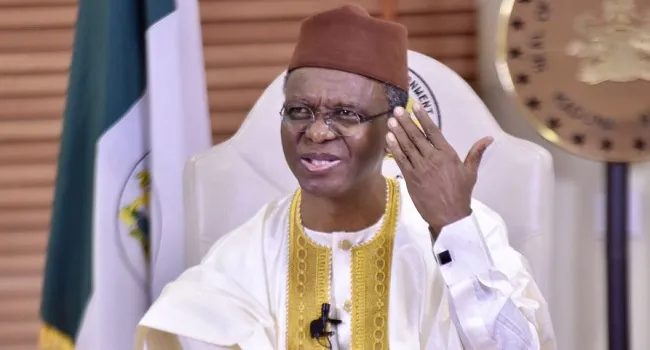
The Kaduna State High Court on Monday directed the Independent Corrupt Practices and Other Related Offences Commission (ICPC) to produce former Kaduna State Governor Nasir Ahmad El-Rufai for the next hearing in his trial.
Justice Darius Khobo gave the directive while adjourning proceedings after counsel for the defence and the prosecution agreed to the adjournment.
Speaking before the court, ICPC lead counsel, Ayodeleji Adelukpe, SAN, explained that the defence had requested an adjournment to enable its lead counsel, Paul Erokoro, SAN, to attend the swearing-in ceremony for a new set of Senior Advocates of Nigeria at the Supreme Court.
Adelukpe said Erokoro had sent him a WhatsApp message requesting that the proceedings scheduled for Monday and Tuesday be vacated, followed by a telephone call to explain the request.
He said he agreed to the adjournment for Monday out of respect for Erokoro and in recognition of the importance of the Supreme Court event but proposed that the case continue on Tuesday.
According to him, he suggested 10 a.m. for the continuation of proceedings, subject to the judge’s approval, but Erokoro requested that the sitting be fixed for noon.
The ICPC counsel, however, expressed surprise that El-Rufai was also absent from court, saying the communication he received from the defence counsel did not indicate that the defendant would be unavailable.
Adelukpe told the court that the information available to him was that El-Rufai would not attend because he wanted to review the results of his medical tests.
The court subsequently adjourned the proceedings until Tuesday and directed the ICPC to produce the former governor at the next hearing.
News
2027: Nigeria Forward Calls for Issue-Based Campaigns, Warns Against Personal Attacks
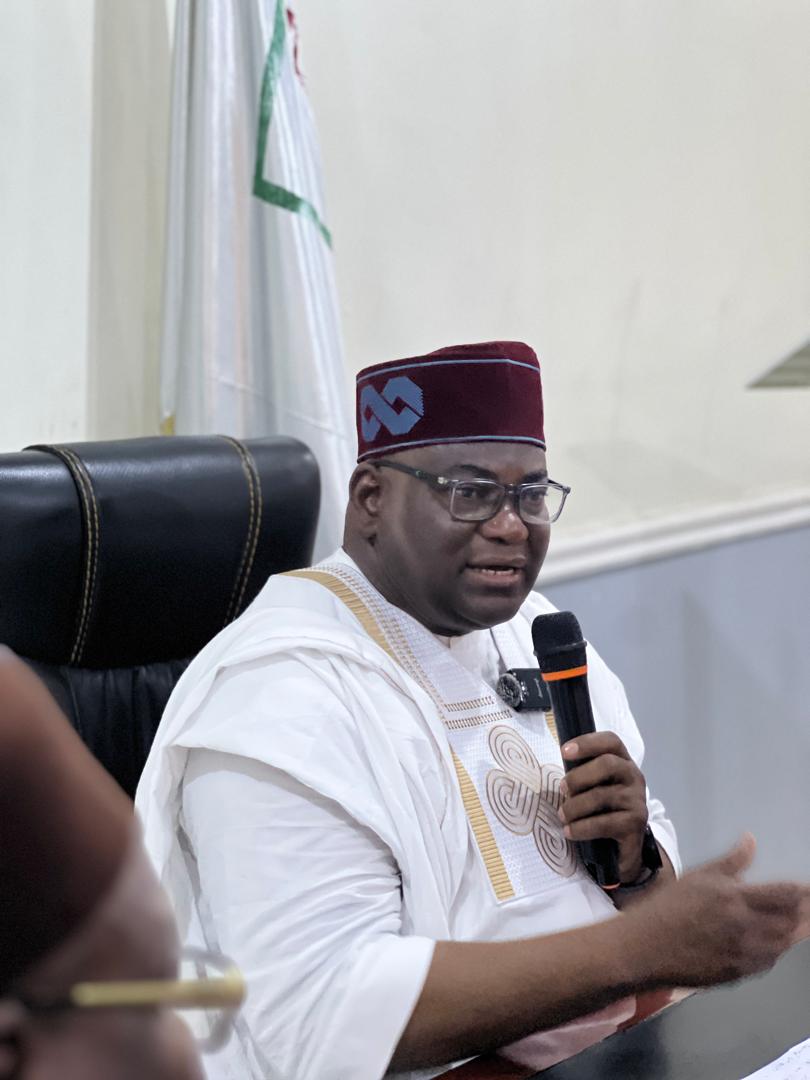
Nigeria Forward, a national socio-political group, has urged politicians and political parties participating in the 2027 general elections to focus on issue-based campaigns and refrain from hate speech, personality attacks and dangerous rhetoric capable of threatening national unity and peaceful coexistence.
In a press release issued on Monday, October 12, 2026, the group called on political candidates, parties and other stakeholders to conduct their campaigns responsibly by prioritising policies, manifestoes and programmes that address the needs of Nigerians.
The group’s position was contained in a statement issued by its Directorate of Communications and Strategy in response to the commencement of public political campaigns ahead of the 2027 general elections.
According to Nigeria Forward, the growing tendency among some political stakeholders to engage in personal attacks rather than discuss policies and governance issues could undermine peaceful coexistence and deepen divisions across the country.
The organisation expressed concern over what it described as campaigns of calumny, character assassination and other negative political practices, warning that such tendencies could turn the political environment into an arena for personality clashes rather than a platform for exchanging ideas.
Nigeria Forward maintained that election campaigns should provide voters with an opportunity to assess candidates based on their policies, proposed programmes, leadership priorities and capacity to address the country’s challenges.
The group also criticised the alleged abuse of the media space, particularly digital platforms, which it said some political actors and groups use to spread fake news, hate speech and misinformation in pursuit of political advantage.
It called on politicians and their supporters to exercise restraint in their use of social media and other communication channels, stressing that the dissemination of misleading information could heighten tensions and weaken public trust during the electioneering period.
While acknowledging that the pursuit of political power is a legitimate feature of democracy, Nigeria Forward said political ambitions should be pursued with decency, decorum, mutual respect, responsibility and patriotism.
The organisation urged Nigerian politicians to draw lessons from established democracies where, according to the group, election campaigns focus on issues, manifestoes, policies and programmes intended to improve the welfare of the electorate.
“Our politicians must take a cue from their contemporaries in the advanced and developed democracies, where electioneering campaigns are based on issues, manifestoes, policies and programmes that are intended to be implemented for the benefit of the electorates,” the statement said.
Nigeria Forward further called on political leaders to demonstrate a sense of responsibility and patriotism in their conduct as the country approaches the 2027 elections.
The group said responsible political engagement would encourage voters to embrace patriotism and civic responsibility, while placing national unity, peace and development above partisan interests.
“Our politicians must show sense of responsibility and patriotism in their approach towards the 2027 electioneering campaign activities, thereby setting the pace and tune for a more responsive and patriotic electorates that are alive to their responsibility of being patriotic and committed citizens whose focus is national unity, peace and development,” the statement added.
The organisation also appealed to individuals, corporate organisations, civil society groups and other well-meaning Nigerians to hold politicians accountable for their public statements and actions, particularly where such conduct could promote division among citizens.
According to Nigeria Forward, sustained public scrutiny of political rhetoric and campaign activities would help promote responsible political participation and discourage conduct capable of threatening national cohesion ahead of the elections.
The group said all stakeholders had a responsibility to contribute to a peaceful electoral environment by encouraging issue-based debates and rejecting inflammatory statements that could undermine democratic engagement.
It further expressed the hope that greater accountability and responsible campaigning would contribute to the emergence of leaders committed to democratic principles, national unity and peaceful coexistence.
The statement was signed by Comrade Ibrahim Abdullahi Waiya, PhD, Co-Convener of Nigeria Forward.
News
Beyond Connectivity: How a Community Network Is Changing Life in Dakwa
By Ali Sabo
Dakwa is the kind of community that can easily be overlooked in Nigeria’s digital story.
Located along the Zuba–Dei-Dei–Zuma corridor of the Federal Capital Territory, the agrarian community is only about 29 kilometres from Abuja, yet proximity to the nation’s capital has not always translated into access to reliable and affordable internet. For many residents, particularly young people, accessing the opportunities of the digital world meant looking beyond their immediate environment.
That is beginning to change.
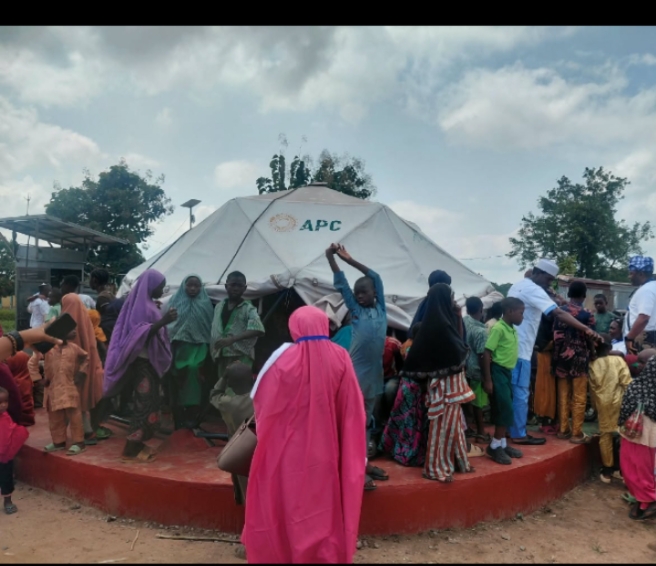
Through the efforts of the Centre for Information Technology and Development (CITAD), the Association for Progressive Communications (APC), Hello World and 48 Percent, a community network and internet hub was established in Dakwa, bringing affordable connectivity closer to residents and creating a space where people can use the internet for learning, communication and accessing opportunities.
But the real story of the Dakwa Community Network is not the infrastructure. It is what the people of Dakwa are beginning to do with it.
During a recent visit to the community, the District Head of Dakwa, Alhaji Shuaibu Samu, described the intervention as a “life-changing opportunity” for residents.
His description is rooted in what the community experienced before the hub came into existence.
“Before the establishment of this facility, access to reliable and affordable internet was a major challenge for our people.”
For a community increasingly connected to a world where education, employment, communication and access to information are moving online, that challenge carries consequences. Being offline or poorly connected does not simply mean having no internet. It can mean missing opportunities that others take for granted.
Today, Samu says the situation is changing.
“Now, our youths can access information, learn new skills and explore opportunities online without having to travel far from the community.”
That statement captures perhaps the most important change taking place in Dakwa: the world of opportunities is becoming physically closer to the people who live there.
A window beyond Dakwa
For Ismail Shuaibu, a Community Champion at the hub, the facility has already become part of the community’s daily life.
He explained that young people now use the hub to study, search for jobs, access online opportunities and communicate with others.
“Many young people now come here to study, search for jobs, access online opportunities and communicate with others.”
These may sound like simple activities. But in a community where reliable and affordable internet was previously a major challenge, they represent something much bigger.
A young person who comes to the hub to search for a job is no longer limited to opportunities advertised within the community. A student who comes to study can access information and learning resources that may not be available locally. Someone looking for information can reach beyond the boundaries of Dakwa and engage with a much wider world.
In that sense, the community network is not merely connecting devices. It is expanding people’s horizons.
From a project to a community asset
Perhaps equally important is the way residents are beginning to see the facility.
Ismail explained that the hub operates through a community-driven model, with users paying a small fee that contributes to maintaining the equipment and keeping the service running.
“The idea is for the community to see this as its own facility. The small amount paid by users helps us maintain the equipment and provide the service continuously.”
This is significant.
Many development interventions struggle after external support ends because the communities that benefit from them were not sufficiently involved in their ownership or management. Dakwa is attempting a different path: making the community part of the solution.
The District Head has also called on residents to take ownership of the facility and support efforts to keep it operational.
That sense of ownership could ultimately determine whether the digital opportunity created in Dakwa becomes a temporary intervention or a lasting community institution.
The real measure of digital inclusion
Dakwa’s experience offers a broader lesson about digital inclusion in Nigeria.
For years, discussions about the digital divide have often focused on infrastructure, broadband coverage and the number of people connected to the internet. These are important measures, but they do not tell the whole story.
The more important question is: What changes when people get connected?
In Dakwa, the early answers are emerging from the residents themselves: young people are studying, searching for jobs, accessing opportunities, communicating and becoming more familiar with digital tools and online services.
The organisations that helped bring the community network into existence deserve recognition for creating that opportunity. But the most important voices in determining its impact are those of the people who now use it.
And their testimonies suggest that something deeper than internet access is taking place.
Dakwa is beginning to discover that distance does not necessarily have to determine opportunity.
A young person can live in a community outside the centre of Abuja and still search for employment online. A student can access learning resources without travelling to the city. A resident can communicate, find information and explore opportunities that were previously difficult to reach.
That is what meaningful connectivity should ultimately achieve.
The success of Dakwa’s community network will not be measured simply by how many people connect to it. It will be measured by how many possibilities people discover because they can.
And perhaps that is the most important transformation happening in Dakwa: the internet is not only bringing the wider world into the community. It is giving the people of Dakwa a stronger opportunity to reach out and participate in that world.
Ali Sabo is the Campaign and Communication Officer of the Centre for Information Technology and Development and can be reached at asabo@citad.org

Court Directs ICPC to Produce El-Rufai for Next Hearing

2027: Nigeria Forward Calls for Issue-Based Campaigns, Warns Against Personal Attacks

Beyond Connectivity: How a Community Network Is Changing Life in Dakwa

Kenyan Presidential Aspirant Warns Dangote: ‘Don’t Rush Lamu Refinery, I’ll Send You Back to Nigeria’

NDC’s Kano Governorship Candidate Gwarzo Missing From INEC Final List

Zamfara Varsity ASUU Threatens Warning Strike Over FG-ASUU Agreement, Promotion Arrears

PCACC Arrests Man Over Alleged ₦4.5m Sale, Illegal Leasing of Kano Government Horse Stable

Goje’s Electoral War:The Confrontation With Tinubu,Governor Inuwa,Usman Kumo And APC candidates Ahead Of 2027

Prof Yusuf Adamu Delivers BUK’s 63rd Professorial Inaugural Lecture, Reflects on Medical Geography and Academic Legacy

Al-Istiqama University to Hold Convocation, Honours Late Aminu Dantata, Sheikh Ibrahim Khalil
Court Directs ICPC to Produce El-Rufai for Next Hearing
2027: Nigeria Forward Calls for Issue-Based Campaigns, Warns Against Personal Attacks
Beyond Connectivity: How a Community Network Is Changing Life in Dakwa
Kenyan Presidential Aspirant Warns Dangote: ‘Don’t Rush Lamu Refinery, I’ll Send You Back to Nigeria’
NDC’s Kano Governorship Candidate Gwarzo Missing From INEC Final List
Zamfara Varsity ASUU Threatens Warning Strike Over FG-ASUU Agreement, Promotion Arrears
PCACC Arrests Man Over Alleged ₦4.5m Sale, Illegal Leasing of Kano Government Horse Stable
Goje’s Electoral War:The Confrontation With Tinubu,Governor Inuwa,Usman Kumo And APC candidates Ahead Of 2027
Prof Yusuf Adamu Delivers BUK’s 63rd Professorial Inaugural Lecture, Reflects on Medical Geography and Academic Legacy
Al-Istiqama University to Hold Convocation, Honours Late Aminu Dantata, Sheikh Ibrahim Khalil
-

 Opinion5 years ago
On The Kano Flyovers And Public Perception
-

 Features5 years ago
How I Became A Multimillionaire In Nigeria – Hadiza Gabon
-

 Opinion6 years ago
Kano As future Headquarters Of Poverty In Nigeria
-

 History5 years ago
Sheikh Adam Abdullahi Al-Ilory (1917-1992):Nigeria’s Islamic Scholar Who Wrote Over 100 Books And Journals
-

 Opinion5 years ago
My First Encounter with Nasiru Gawuna, the Humble Deputy Governor
-

 History5 years ago
The History Of Borno State Governor Professor Babagana Umara Zulum
-

 History6 years ago
The Origin Of “Mammy Market” In Army Barracks (Mammy Ochefu)
-

 News5 years ago
Federal University Of Technology Babura To Commence Academic Activities September