
Opinion
When Brilliance is Mocked: The ₦200,000 Reward that Shamed Nigeria-Lamara Garba

By: Lamara Garba Azare
In the theatre of nations, where countries display what they value most, Nigeria once again played the wrong script. On the 28th of August, 2025, the Federal Government stood before the world and, with fanfare, announced a ₦200,000 cash reward for Nafisa Abdullahi, a 17-year-old girl from Yobe State, who had just conquered the globe at the TeenEagle Global English Championship in London.
It should have been a moment of national pride the triumph of intellect, the victory of knowledge, the vindication that Nigerian children, though raised in broken classrooms with tattered textbooks, can still outshine peers from nations where education is richly funded. Instead, the moment was reduced to farce.
The prize was ₦200,000. Not a scholarship. Not a lifelong educational support package. Not even a promise of sustained recognition. Just ₦200,000 money that vanishes before the ink on a bank teller’s slip dries. And shamelessly, the same government invited the girl and her parents to travel all the way from Damaturu to Abuja for the presentation. Anyone who knows the realities of transportation, accommodation, and feeding on such a trip will realise that the ₦200,000 reward barely covers the expenses of the journey itself. By the time they return to Yobe, how much of the so-called “national honour” will be left? This is not recognition. This is mockery.
The insult was sharper because of what came before. Just weeks earlier, the same government gave $100,000 each over ₦160 million to Nigerian athletes who returned victorious from global tournaments. Sportsmen celebrated like kings, while a girl who carried Nigeria’s flag through intellect was treated like a beggar appeased with coins. This contrast is not just unfair. It is a scandal. It is a window into the soul of a government that speaks loftily of education but starves it in practice.
Sports have their place. Football unites nations; athletes inspire. But is it not education that sustains nations long after the cheers in the stadium fade? When Nigeria gave ₦160 million to footballers, it was hailed as generosity. When Nigeria gave ₦200,000 to Nafisa, it exposed a tragic hierarchy of values: here, knowledge is cheap. Here, intellect is disposable. Here, the very foundation of progress is treated as an afterthought.
₦200,000 in today’s Nigeria barely covers a semester’s tuition in a private university. It cannot buy a modest laptop and a year’s reliable internet. It cannot even cover the travel expenses for Nafisa to attend the very competition she conquered, had sponsors not intervened. Meanwhile, ₦160 million is enough to pay for a PhD at Harvard, buy a house in Abuja, and still have funds left to establish a scholarship foundation. This is not about envying athletes. It is about exposing the imbalance in our governance. Why is brawn valued more than brain? Why is intellect seen as unworthy of investment?
This ₦200,000 reward is not just a mistake; it is a philosophy — the philosophy of spectacle over substance. Governments love the visibility of sports victories: stadiums roar, cameras flash, politicians clap. Intellectual triumphs, by contrast, are quieter, less glamorous, and less “profitable” politically. So they are dismissed with tokenism. Yet, it is ideas, not athletics, that build civilizations. Japan rose from the ashes of war not through football, but through science and education. South Korea transformed from poverty to prosperity by grooming engineers, doctors, and innovators. Singapore became a global giant by making education sacred. Nigeria, however, prefers medals to minds, applause to intellect, noise to knowledge.
Imagine if Nafisa’s victory had been met with a life-changing scholarship perhaps to study at one of the world’s leading universities. Imagine if the government had created an “Intellectual Heroes Fund” to support students who conquer global competitions. Imagine if the President himself had hosted her in Aso Rock and told every Nigerian child watching: See what books can do. This is the path to greatness. Instead, Nafisa received ₦200,000 less than what a minister might spend on a single lunch. Her victory, which could have been a rallying point for millions of children, was reduced to a footnote in the news.
Nafisa’s story is not just about her. It is a metaphor for the Nigerian child. In every rural school where pupils sit under leaking roofs, in every city classroom where teachers go unpaid for months, the same message echoes: education is not valued here. How many brilliant youths have fled abroad with their talents because at home they were mocked with crumbs? How many have settled for mediocrity because their society told them that brains don’t matter? When the government presented ₦200,000 to Nafisa, it was not just a gift. It was a signal loud and clear that excellence in education is worth less than a handshake.
Nigerians, long used to disappointment, still found this too much to swallow. Social media exploded with outrage. One father wrote online: “My daughter saw this story and asked me, Daddy, is it better to be a footballer than to be intelligent? I had no answer.” That is the damage done not just the insult to Nafisa, but the discouragement of millions of children who now see that the path of books leads only to mockery.
Elsewhere in the world, intellectual triumphs are immortalized. Pakistan rallied behind Malala Yousafzai, and today she is a Nobel laureate. India celebrates its top students with scholarships and mentorship. Rwanda invests heavily in its brightest minds. Nigeria, by contrast, splashes billions on politicians’ allowances and football banquets, but offers mere tokens to its intellectual heroes.
This is bigger than Nafisa. It is about the soul of Nigeria. A country that trivializes education cannot develop. A country that rewards muscle over mind will remain trapped in mediocrity. A country that mocks brilliance will drive its best and brightest away. What is needed is not token cash rewards but a shift in philosophy a recognition that investing in education is not charity but national survival.
And yet, Nafisa’s victory must not be lost in the scandal. Despite the mockery of ₦200,000, she remains a shining light. She has proven that Nigerian children can rise above poverty and neglect to shine before the world. Her triumph must inspire, not depress. Let every child know: your worth is not determined by the crumbs offered by government. Knowledge is priceless. Brilliance is its own reward.
In the end, it is Nigeria, not Nafisa, that has been shamed. A nation that rewards genius with peanuts has revealed its poverty of vision. But history is clear: nations that neglect education collapse under ignorance, while those that nurture it rise to greatness. One day, Nigeria will remember that it once mocked brilliance with ₦200,000 and perhaps by then, it will understand the true cost of its shame.
Opinion
Between Sabotage and Scepticism: Why Nigeria’s Oil Dream Keeps Stalling

By Halima Aminu
Governments do not only govern, they communicate governance. And in Nigeria’s oil and gas sector, the distance between what the government says it is doing and what its strategies are actually delivering has become one of the most consequential communication failures in the country’s recent economic history. Evaluating the Nigerian government’s strategies to increase oil and gas production is therefore not merely a matter of counting barrels. It is a matter of examining how those strategies are framed, how credibly they are communicated to critical stakeholders, and whether the outward narrative is supported by institutional reality on the ground.
The government’s dominant communication frame around oil and gas recovery has been one of triumphant reversal. Official figures show that national crude output, which had collapsed to dangerously low levels around 960,000 barrels per day in 2022 among the worst in Nigeria’s recent production history has climbed back to an average of approximately 1.71 million barrels per day in 2025, with peaks approaching 1.84 million barrels per day. As a communication strategy, this frame is deliberately constructed to project momentum, competence, and institutional control three attributes any government managing a resource-dependent economy urgently needs its investors and citizens to associate with its leadership.
The problem with this framing is not that the numbers are fabricated. The problem is that production recovery, presented in isolation, is a selective narrative. It tells the audience what improved without adequately explaining what remains structurally broken. Strategic communication theory draws a clear distinction between impression management projecting a preferred image and genuine credibility-building, which demands alignment between message and demonstrable reality. Nigeria’s government is currently far more invested in the former than the latter, and sophisticated investors, who are the primary audience for this messaging, are professionally trained to detect that gap.
The Petroleum Industry Act of 2021 represents the most structurally significant legislative intervention in Nigeria’s energy sector in decades, and its potential is genuine. Its gas fiscal incentives have begun attracting new production-sharing arrangements with international partners. Its Host Community Development Trust framework had channelled substantial funding into hundreds of community projects across the Niger Delta by late 2025 a structural attempt to address the root communication breakdown between oil-producing communities and the Nigerian state, rather than merely managing its symptoms.
Yet even here, the government’s communication strategy reveals a persistent weakness. Five years after the PIA’s enactment, the law has succeeded in restructuring institutional forms creating new regulatory bodies, new oversight frameworks, new corporate structures. What it has not yet succeeded in doing is restructuring institutional culture. Rules exist on paper that are not consistently enforced in practice. Transparency mechanisms are in place that are not routinely populated with verifiable data. Approval processes have been reformed structurally but remain administratively slow in execution.
Nigeria’s oil is real. Its gas reserves, among the largest in the world, are real. Its production recovery, partial and structurally fragile as it remains, is real. What is not yet real not convincingly, not sustainably is the institutional framework that would make those assets fully and rationally investable at the scale the country requires. And what is equally not yet real is a government communication strategy sophisticated enough to build the credibility that framework needs to be believed.
Until Nigeria’s government understands that the long-term persuasiveness of its oil and gas strategy depends as much on how it communicates as on what it does and that impression management is not a substitute for institutional accountability the oil dream will continue to do what it has always done: inspire at the announcement stage, disappoint at the delivery stage, and leave Nigeria perpetually situated between sabotage on the ground and scepticism in the boardrooms of the investors it cannot afford to keep losing.
Aminu Halima
Department of Development and Strategic Communication
200 Level
Opinion
962 Forfeited Homes: Why Aliyu’s ICPC Is Beginning To Redefine What Asset Recovery Means
By Mahmoud Ibrahim Kwari
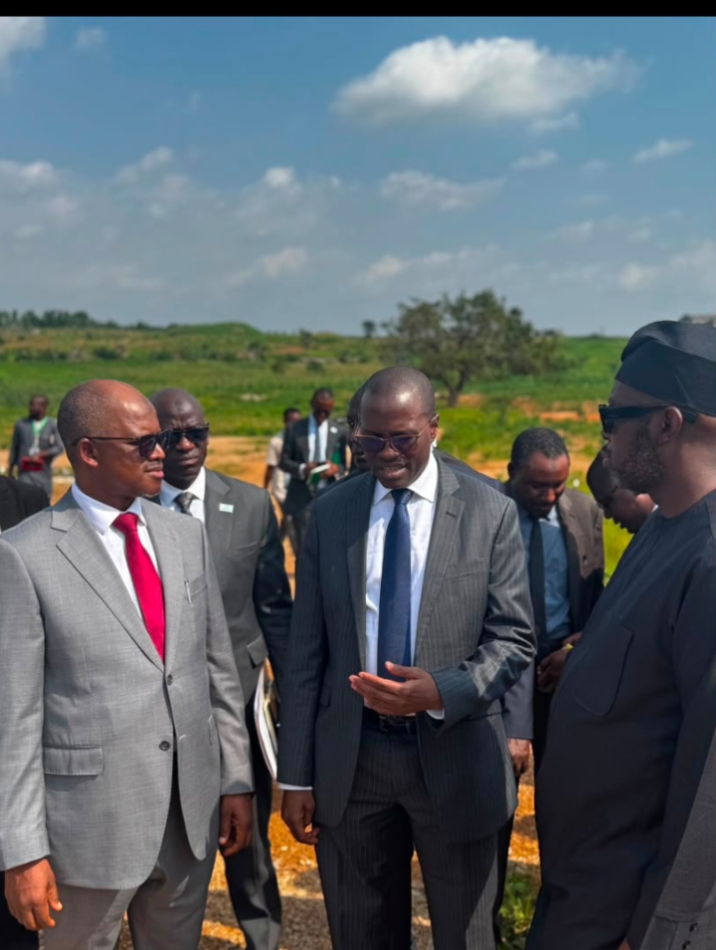
WHEN corruption assets are recovered, the real question is not simply how much was seized, how many properties were forfeited or how many cases were filed. The more important question is what happens to those assets afterwards. In the Kaba District of Abuja, the answer is beginning to take a more meaningful shape: land linked to an alleged $65 million housing project, covering about 27.92 hectares, is now back in public hands with the prospect of delivering 962 housing units to Nigerian families.
The Independent Corrupt Practices and Other Related Offences Commission (ICPC), under its Chairman, Dr. Musa Adamu Aliyu, SAN, formally handed over the forfeited landed properties at Kaba District to the Federal Mortgage Bank of Nigeria (FMBN), following a final forfeiture order of the Federal High Court. Beyond the ceremony itself, the development offers an opportunity to examine a bigger question: what should integrity and progress look like in Nigeria’s anti-corruption campaign?
The answer, perhaps, lies in the transformation of recovered assets from symbols of corruption into instruments of public good.
The handover took place on Tuesday, the twenty first of July, 2026 at the site of the Goodluck Jonathan Estate in Kaba District, Abuja, with Dr. Aliyu leading the ICPC delegation and the Managing Director and Chief Executive Officer of FMBN, Mr. Shehu Usman Osidi, alongside senior officials of both institutions, witnessing the event.
For Dr. Aliyu, the occasion was more than an administrative transfer of land. It represented what asset recovery should ultimately accomplish in a country where the public has often watched recovered properties remain locked in legal, administrative or bureaucratic limbo.
The ICPC chairman made a particularly important point: asset recovery without proper management is incomplete.
That principle deserves attention.
For years, Nigeria’s anti-corruption conversation has largely revolved around arrests, investigations, prosecutions, convictions and forfeitures. Those are important components of accountability. But the public benefit of anti-corruption efforts becomes much more tangible when an asset recovered from an alleged unlawful activity is returned to productive use.
The Kaba project therefore provides an interesting test case.
The land was originally part of a housing project conceived by FMBN in 2012. The project was financed through a $65 million loan facility secured by Good Earth Power Nigeria Limited in partnership with an American firm and was intended to produce 962 housing units.
According to the ICPC, investigations established that the loan was completely diverted, with no housing units constructed, while some of the funds were allegedly routed through Bureaux de Change and taken outside the country.
That story is sadly familiar in Nigeria: a project is conceived for the public good, financing is secured, expectations are raised, but somewhere along the line, the purpose for which the money was provided disappears.
What makes the Kaba development different is the possibility that the story could now end differently.
Instead of the land remaining abandoned, the Federal High Court has directed that it be returned to FMBN, the institution identified as the victim of the alleged unlawful activity. More importantly, the court directed ICPC and FMBN to monitor and supervise the construction of the proposed 962 housing units to completion and ensure their allocation to the intended end users.
That is where the real significance of the development lies.
The court’s order, granted on December 11, 2025, by Justice M. G. Umar of the Federal High Court, Abuja Judicial Division, in Suit No. FHC/ABJ/CS/1124/2025, ordered the final forfeiture of two plots in Cadastral Zone D12, Kaba District.
One of the plots measures approximately 122,015.80 square metres, while the other measures about 157,198.30 square metres. Together, they constitute the land on which the housing project is expected to rise.
The court also directed the Federal Republic of Nigeria, through ICPC, to facilitate the handover of the properties to FMBN and mandated the two institutions to supervise the development of the housing estate.
A joint committee is expected to oversee the process, with ICPC’s Constituency and Executive Project Tracking Division representing the Commission.
This is where the leadership style of Dr. Aliyu becomes relevant.
His emphasis on the productive use of recovered assets reflects an understanding that Nigerians are increasingly interested in outcomes rather than headlines.
The public does not simply want to hear that billions of naira or valuable properties have been recovered. Nigerians want to know what those recoveries eventually mean for ordinary people.
A recovered house should become a house. Recovered land should become productive land. Recovered funds should return to the public through projects that improve lives.
In the case of Kaba, the proposed 962 housing units provide an unusually clear measure of success.
If the homes are completed, properly allocated and occupied by the intended beneficiaries, the project will demonstrate how anti-corruption enforcement can move beyond punishment and become an instrument of development.
It will also provide a powerful answer to those who sometimes question the practical value of asset recovery.
It is against this backdrop that the growing institutional recognition of Dr. Aliyu’s leadership at the ICPC becomes noteworthy.
The recent encounter with some police officers that mounted an illegal check point to extort money from motorists in Abuja, has attested to the integrity of the ICPC’s boss where he has shown practical example of what he preaches as the head of Anti-graft Agency.
The officers extorted N53,000 from him and he followed them very closely, and told someone to send the money to him upon the officers’ demand.
They took the ICPC Chair to a POS, where he paid the charges, while the officers withdrew the money and shared it among themselves, after which he reported them to the police authority.
At a press conference few days after the incidence, the FCT Commissioner of Police confirmed that the suspects carried out the act outside their duty post, and that they converged from various divisions and moved to the Banex Plaza area of Abuja City, where they mounted a checkpoint.
He said the four suspects perpetrated the act and ran away before they were declared wanted and arrested.
“We are going to make sure that they are severely punished, while those to be dismissed will definitely be dismissed. This I can assure you” said the police Commissioner.
This is a great test to personal integrity and commitment to fight corruption by Dr Aliyu, which was reflected and extended to institutional leadership by example.
Prior to this, the Chairman has received commendations from different quarters, including recognition attributed to the Senate Committee on Federal Character and Inter-Governmental Affairs for transparency, accountability and inclusiveness during National Assembly oversight engagements.
The United Nations Office on Drugs and Crime (UNODC) has also been associated with commendation of the Commission’s drive in asset recovery, efforts to close systemic loopholes and its attention to accountability at the grassroots and local-government levels.
There have also been commendations surrounding ICPC’s collaboration with the Federal Road Safety Corps and efforts to introduce integrity-focused reforms and contactless systems in the transport sector, aimed at reducing opportunities for corrupt practices.
But perhaps the most striking feature of Aliyu’s tenure is not necessarily the commendations themselves. It is the apparent effort to connect anti-corruption enforcement with institutional reform.
That distinction matters.
An anti-corruption agency cannot arrest its way out of corruption. It cannot prosecute its way out of corruption either. Sustainable progress requires prevention, institutional strengthening, technology, transparency, accountability and consequences for wrongdoing.
This appears to be one of the areas where Aliyu has sought to leave an imprint.
The Commission has pursued technology-driven prevention mechanisms, including digital scorecards and AI-powered public reporting tools, while the chairman has advocated greater responsibility among judges, lawyers as well as tertiary institutions as moral gatekeepers and drivers of empirical research into illicit financial flows.
These initiatives may not always generate the drama associated with high-profile arrests, but they are potentially more important in the long run.
There is also another aspect of Aliyu’s leadership that deserves consideration.
During his inaugural press briefing in Abuja, the ICPC chairman made an unusual commitment. He said he would personally participate in the prosecution of major cases.
“I will lead by example,” he said, pledging to personally appear in ICPC cases in court.
He described the commitment as an effort to demonstrate that integrity, accountability and transparency must become part of the fabric of Nigerian society.
He subsequently fulfilled that pledge by personally appearing at a High Court in Kano in a case involving allegations of fund misappropriation by the Kano State Government through its 44 local government caretaker chairmen.
The significance of that decision was not simply that the chairman appeared in court. It was the message that the head of an anti-corruption institution was willing to put his professional reputation and legal expertise behind the cases being pursued by his organization.
That is what leading from the front means.
The case itself generated considerable legal controversy.
The defendants, including the state Commissioner for Local Government and Deputy Governor, had previously obtained an interim court order restraining ICPC from conducting further investigations, summoning or interrogating individuals involved in the matter.
Their lawyers also challenged the jurisdiction of the Commission and argued that multiple agencies investigating the same matter amounted to “forum shopping” and an “abuse of court process.”
They further alleged that ICPC had breached an earlier injunction by continuing its investigation.
Aliyu, however, challenged the legal standing of the caretaker chairmen, relying on a Supreme Court position concerning the legality of appointing caretaker chairmen in place of democratically elected local government officials.
The chairman’s argument was straightforward: those holding positions whose legality was itself under challenge could not, in his view, use the legal system as a shield against accountability.
The allegations remain subject to judicial determination, and the courts will ultimately decide the substantive issues.
Yet the episode demonstrated Aliyu’s willingness to personally engage with difficult institutional and legal questions rather than leave everything to subordinates.
This brings us back to Kaba.
The 962-unit housing project could become one of the clearest demonstrations of what successful asset recovery should look like.
The land, according to the ICPC, had remained unutilised after the original housing project failed to materialise. FMBN’s Managing Director, Shehu Osidi, acknowledged this when he thanked ICPC for recovering and handing over the property for its intended purpose.
He noted that the land had been abandoned and left unused for some time, describing the ICPC’s intervention as evidence of a commitment to protecting public assets and ensuring that forfeited properties are put to productive use for Nigerians.
That is a powerful endorsement because it speaks to the ultimate purpose of recovery.
The ICPC chairman’s position that the success of the Kaba intervention should be judged by the completion and fair allocation of the homes is therefore particularly important.
The project should not be allowed to become another abandoned estate.
The land has been recovered. The court has provided the legal framework. FMBN has taken possession for the intended purpose. ICPC has been mandated to monitor the process.
The next stage is delivery. And delivery is where integrity is ultimately tested.
There is a temptation in public life to measure leaders by the number of arrests they make, the value of properties they recover or the number of high-profile cases they announce.
Those figures matter, but they are not the whole story.
The deeper measure is whether institutions become stronger under their leadership and whether ordinary Nigerians can eventually feel the impact of their work.
For Aliyu, the Kaba project presents precisely such an opportunity.
If 962 families eventually move into homes built on land recovered through an anti-corruption process, the story will no longer be merely about forfeiture.
It will be about restitution.
It will be about taking something allegedly diverted from its original purpose and restoring it to the purpose for which it was intended.
It will also demonstrate that the fight against corruption does not have to end in a courtroom.
It can end in a school, a hospital, a road, a factory or, in this case, a home.
That is why the Kaba District development deserves to be followed closely.
The responsibility now falls on both ICPC and FMBN to ensure that the process remains transparent, properly supervised and insulated from the very abuses that necessitated the recovery in the first place.
The joint committee must do more than exist on paper. It must track progress, identify obstacles, ensure compliance and provide Nigerians with credible information about the development.
The intended beneficiaries must also remain at the centre of the process.
A housing estate recovered for the public must ultimately serve the public.
The broader lesson is that integrity in public office should not be defined merely by the absence of personal corruption.
Integrity should also mean doing the right thing with public power.
It should mean recovering what belongs to the people and ensuring that it is not lost again through bureaucratic neglect.
It should mean prosecuting cases fairly, strengthening institutions, closing loopholes, embracing technology and ensuring that recovered assets deliver measurable benefits.
This is why the Kaba handover represents more than another event in the calendar of the ICPC.
It offers a practical illustration of the intersection between integrity and progress.
Dr. Musa Adamu Aliyu’s leadership will ultimately be judged not by the rhetoric surrounding his tenure but by what remains after it.
If the 962 homes rise from the Kaba landscape, if they are completed to the required standards, if they reach the families for whom they were intended, and if the process remains transparent from beginning to end, then the ICPC would have achieved something more significant than recovering land.
It would have shown Nigerians what recovered public wealth can become.
And that may be one of the most persuasive forms of anti-corruption advocacy possible: not merely telling Nigerians that corruption has consequences, but showing them that accountability can produce progress.
For News Point Nigeria, that is the bigger story behind Kaba not simply the land that was forfeited, but the homes that could rise from it; not simply the alleged wrongdoing that led to the forfeiture, but the public good that should emerge from the recovery.
The true victory will be when Nigerians can look at the completed 962-unit estate and say: this is what recovered public assets are supposed to do.
Kwari, a journalist writes from Abuja.
Opinion
The Weight of a School Bag Is Not the Weight of Knowledge

By IBRAHIM ONYINOYI SALIMAT
The final school bell rings, and twelve-year-old Tunde begins the long walk home with a school bag heavy enough to bend his shoulders. Inside are textbooks, notebooks, and a pile of assignments due the very next morning. After a full day of lessons, he hurriedly eats his meal and spends the rest of the evening racing against time, driven not by the joy of learning but by the fear of punishment for an incomplete assignment. By the time he is done, his mind is too exhausted to read ahead, explore ideas beyond the classroom, or simply enjoy the childhood every child deserves with friends and family. The next morning, he returns to school with neatly completed assignments, yet perhaps with little or no genuine understanding of what he is said to have learned.
If this routine has become our definition of academic success, then Nigeria must ask itself a difficult question: Are we raising critical thinkers and innovators, or are we merely producing children who complete tasks to avoid punishment, earn their teachers’ praise, and pass the next examination?
Behind the walls of many Nigerian classrooms lies a silent crisis that is often mistaken for academic excellence. The education system has gradually become more concerned with how much students can memorize than with how well they understand, analyze, and apply knowledge. Success is frequently measured by examination scores, completed assignments, and neatly copied notes rather than by problem-solving ability and intellectual curiosity.
Some educators argue that homework develops discipline and reinforces classroom learning. This is true when homework is purposeful and reasonably assigned. However, excessive academic workload often defeats its own purpose by leaving students with little time for rest, reflection, independent reading, or meaningful engagement with what they have learned. Instead of inspiring curiosity, it encourages students to work against the clock simply to avoid punishment or criticism.
This concern is supported by evidence. According to , millions of children continue to face learning challenges despite increased school attendance, demonstrating that time spent in school alone does not guarantee quality learning. Similarly, findings from the have consistently shown that effective education depends more on the quality of teaching and students’ understanding than on excessive academic workload.
Another challenge is that many classrooms still promote one-way communication, where the teacher speaks and the students listen. Learners are expected to accept information without questioning, exploring alternative ideas, or engaging in meaningful discussions. Over time, this weakens confidence, suppresses curiosity, and produces graduates who can recall information but struggle to think independently or solve practical problems.
The consequences extend far beyond the classroom. Students gradually begin to associate education with stress rather than discovery, fear rather than confidence, and obedience rather than initiative. As these learners become graduates, many find it difficult to adapt their knowledge to real-life challenges, contribute fresh ideas, or compete effectively in an increasingly knowledge-driven global economy.
Ultimately, the quality of a nation’s education determines the quality of its workforce, leadership, and national development. When an education system produces individuals who are trained primarily to pass examinations rather than solve problems, society bears the consequences through reduced productivity, limited innovation, and slower progress. By contrast, an education system that encourages critical thinking, ethical values, creativity, and effective communication is more likely to produce responsible citizens, competent professionals, and accountable leaders.
Addressing these challenges requires more than minor adjustments; it demands a bold rethinking of what education should achieve in Nigeria. The goal should no longer be to produce students who merely excel in examinations but to nurture individuals who can think independently, communicate effectively, solve problems creatively, and contribute meaningfully to society.
The first step is to invest in continuous teacher development. Teachers should be equipped not only with subject knowledge but also with modern teaching methods that encourage discussion, collaboration, and active participation. Classrooms should become spaces where students feel confident to ask questions, express opinions, and learn from their mistakes without fear of humiliation or intimidation.
Equally important is the need to make classroom learning more engaging and practical while reducing excessive homework. If students spend most of their day in school, then the classroom should remain the primary environment for meaningful learning. Lessons should incorporate experiments, projects, debates, presentations, case studies, and problem-solving activities that help students understand concepts rather than memorize facts. Homework should reinforce classroom learning, not replace it.
Schools should also recognize that leisure is an essential part of education, not a distraction from it. Sports, reading, music, drama, debate, and other extracurricular activities help students develop confidence, leadership, teamwork, emotional resilience, and creativity qualities that are just as important as academic achievement in today’s world.
Furthermore, assessment methods should shift from rewarding rote memorization to evaluating students’ ability to analyze, apply knowledge, and develop practical solutions to real-world challenges. Such an approach will prepare learners not only for examinations but also for higher education, employment, and responsible citizenship.
Finally, sustainable educational reform depends on effective strategic communication. Government agencies, school administrators, teachers, parents, students, and communities must communicate openly and work together to ensure that educational policies are clearly understood and effectively implemented. When stakeholders share a common vision, reforms become more practical, transparent, and sustainable.
Nigeria’s future will not be determined solely by the number of schools it builds or the number of students who pass examinations. It will be shaped by the quality of minds nurtured within those schools. A nation that values curiosity over fear, understanding over memorization, and innovation over routine is preparing its young people not merely to earn certificates but to transform society.
The weight of a school bag should never be mistaken for the weight of knowledge. True education is measured not by how much students carry home, but by how much they understand, question, create, and contribute.
IBRAHIM ONYINOYI SALIMAT
200 LEVEL DEVELOPMENT AND STRATEGIC COMMUNICATION STUDENT, UNIVERSITY OF ABUJA.

Osun State Governorship Election: Preliminary Report on Digital Access, Political Parties’ Websites Availability, Data and Privacy Breach Using PAWSOM-Monitor

1.9m PVCs Collected for Osun Guber Poll, INEC Discloses

2027: Atiku Approaches Court, Seeks Tinubu’s Disqualification over Names, Certificate Controversy

Arewa Youths Fireback At Kwankwaso Over Attack On Sheikh Jingir,Muslim-Muslim Ticket

NYSC Distances Self from NANS Proposed N200 Mobilisation Levy

How Kano Digitized Land Turns N50m to N750m Monthly
Kano Governor Yusuf Shortlisted for Africa’s SANKOFA Award of Excellence in Infrastructural Development

Beyond the Numbers: What the Ekiti 2026 Governorship Results Reveal About Coalition Politics and Path to 2027

From the struggle for Gombe State to life in the Senate: Senator Umar Usman Dukku reflects on politics, democracy, and his relationship with the late General Sani Abacha.

Borders, Visas and the Beautiful Game: How U.S. Immigration Policies Shaped Global Perceptions During the 2026 FIFA World Cup
Osun State Governorship Election: Preliminary Report on Digital Access, Political Parties’ Websites Availability, Data and Privacy Breach Using PAWSOM-Monitor
1.9m PVCs Collected for Osun Guber Poll, INEC Discloses
2027: Atiku Approaches Court, Seeks Tinubu’s Disqualification over Names, Certificate Controversy
Arewa Youths Fireback At Kwankwaso Over Attack On Sheikh Jingir,Muslim-Muslim Ticket
NYSC Distances Self from NANS Proposed N200 Mobilisation Levy
How Kano Digitized Land Turns N50m to N750m Monthly
Kano Governor Yusuf Shortlisted for Africa’s SANKOFA Award of Excellence in Infrastructural Development
Beyond the Numbers: What the Ekiti 2026 Governorship Results Reveal About Coalition Politics and Path to 2027
From the struggle for Gombe State to life in the Senate: Senator Umar Usman Dukku reflects on politics, democracy, and his relationship with the late General Sani Abacha.
Borders, Visas and the Beautiful Game: How U.S. Immigration Policies Shaped Global Perceptions During the 2026 FIFA World Cup
-

 Opinion4 years ago
On The Kano Flyovers And Public Perception
-

 Features5 years ago
How I Became A Multimillionaire In Nigeria – Hadiza Gabon
-

 Opinion6 years ago
Kano As future Headquarters Of Poverty In Nigeria
-

 History5 years ago
Sheikh Adam Abdullahi Al-Ilory (1917-1992):Nigeria’s Islamic Scholar Who Wrote Over 100 Books And Journals
-

 Opinion5 years ago
My First Encounter with Nasiru Gawuna, the Humble Deputy Governor
-

 History5 years ago
The History Of Borno State Governor Professor Babagana Umara Zulum
-

 History5 years ago
The Origin Of “Mammy Market” In Army Barracks (Mammy Ochefu)
-

 News4 years ago
Federal University Of Technology Babura To Commence Academic Activities September