
News
Kano’s Kabir Yusuf: Best Pension-Paying Governor, Says Tonnie Iredia
Retired public servants as distinct from political office holders in Nigeria live in penury. The value of their pensions is not only too little for survival, disbursements are never regular leading to huge arrears of the otherwise meagre entitlements of retirees.
At the beginning of a new administration at federal and subnational levels in Nigeria in 2023, no less than 21 states of the federation reportedly owed retirees as much as N790billion inherited pensions and gratuities.
According to detailed findings by a team of Vanguard Newspaper reporters, only Kaduna and Kebbi states were up to date in the payment of pensions and gratuities to their retirees. All others led by Rivers and Benue states were ridiculously indebtedto the tune of N119 billion and N100 billion respectively.
Although the federal government often displayed a ‘father Xmas’ approach in bailing states out of financial problems, the government at the centre had itself failed to implement pension adjustments under the Contributory Pension Scheme, CPS, since the scheme’s inception some two decades ago.
It was therefore not only states that were owing retirees, the federal government did not perform better. Indeed, by July 1, 2024, that is more than a year in office by the present administration federal retirees alone were owed about N230bn pension arrears.
The rationale for the government’s neglect of citizens who had spent the better part of their lives serving the nation has remained inexplicable. Some states only pay current debts while pushing forward the inherited liabilities.
The few states that tried to clear the mounting indebtedness were visibly half-hearted in implementing the policy. It is against this backdrop that Governor Abba Kabir Yusuf of Kano state is singled out today for commendation for his pragmatic and continuous releases of appreciable sums to ameliorate the pains of retirees in his state.
Since 2023, Kabir has released a total of 22 billion in four tranches to pay pensions and gratuity. His consistent approach in dealing with the subject suggests that the debts will be a thing of the past at the end of his first tenure in office.
Having paid 50 percent in his first two years in office in line with his election promises, it is logical to conclude that he would ensure he keeps to his promise.If other governors can emulate the Kano example, the real essence of governance will take shape in the country.
More importantly, the high level of corruption in Nigeria today would drop considerably because serving public servants may no longer see the need to desperately pursue avenues for self-enrichment in order to avoid what is happening to their predecessors now to be their lot in future.
Put differently, whereas the anti-corruption agencies are making great moves in retrieving stolen public funds, giving retirees their entitlement will dissuade serving public servants from corruption.
Of course, Kebbi, Kaduna and other people-oriented leaders that have made different efforts to improve the leaving conditions of Nigerian workers past and present similarly deserve the same commendation being given to Kano today.
Hopefully,such praises would alter the disposition of some states that before now did not see the expedience of appreciating public servants who had diligently served society.
Here, a note of warning ought to be sounded to leaders in government particularly state governors who rather than paying entitlements to deserving citizens, divert public funds to themselves.
Unfortunately, such leaders have ignored the public cry in the land that they should stop the extortion of huge emoluments to enrich themselves as well as their friends and families. As a result, it would remain impossible to have enough funds to pay salaries, pensions as well as gratuities and still be able to develop society.
It is generally believed for example that funds expended on legislators at both federal and state levels are enough to make Nigeria a greater country. In fact, newspaper and other frivolous allowances to law makers are far higher than the meagre pensions of retirees, yet the country is always able to satisfy such irrational spendings on the comfort of political office holders.
The case of state governors who maintain long convoys which accompany them on any trip within and outside the country is another example. It is indeed quite irritating to realize that all personal requests of leaders are taken care of from the public treasury. But when it comes to emoluments to public servants both serving and retired,such leaders are quick at remembering the supposed poor economic status of Nigeria.
To make matters worse, political office holders in many states are paid bogus allowances at the end of an 8-year tenure, a policy which is not extended to citizens who had spent 35 years in office. Sadly, the leaders were able to ensure that pension law provisions were made to accommodate their extortion which in clear terms is as bad as a typical crime against humanity.
The atrocious insensitivity is neither new nor reducing.The trend began from Lagos where the Public Office Holder (Payment of Pension) Law No 11 of 2007 provided for unreasonably lavish goodies which were quickly adapted or increased in some other states.
The law approves a house each in preferred locations within the relevant state andor Abuja; an average of two to six new cars every three or four years; 100 per cent of the incumbent’s basic salary; free health care for the beneficiary and family members, local and abroad and furniture allowance, house maintenance allowance, utility allowance, car maintenance allowance, and entertainment allowance etc.
It also provides for personal assistants, policemen, and operatives of other security services for life; including 30 days of annual vacation within and outside Nigeria.
Due to public outcry, some states purported to have reviewed the provisions but without substantially reducing the bogus expenditure. Indeed, some governors who are receiving such emoluments are reportedly also getting unapproved emoluments from the National Assembly where they are currently serving as senators.
In 2019 however, a Federal High Court in Lagos ordered the Federal Government to recover pensions collected by former governors who had gone on to serve as ministers and federal legislators.
Bearing in mind the high degree of impunity in the land, no one knows if the order had been obeyed or not. What remains obvious is the trend whereby political leaders live in opulence while the people they claim to be representing in different arms of government are in penury.
Leaders who abhor agitations and criticisms need to take note of the issues raised above and redress them without delay. One of the things begging for action now in our clime is an immediate end to the culture of long-drawn-out arrears of pensions and gratuities.
To faithfullyclearthe debts in line with the proactive stand of governor Abba Kabir of Kano is recommended. In addition, the irritating pension laws which approve bogus allowances for former political office holders who served for no more than 8 years should be abrogated.
To avoid a recurrence of such disposition towards official extortions,the existence of arrears of pensions and gratuities in any state should be made an impeachable offence to replace the current frivolous impeachments that are used to settle political scores.
It is worthy of note that President Bola Tinubu has himself gotten concerned over the poor management of pension matters in Nigeria. A few days ago, Tinubu directed the National Pension Commission (PenCom) topromptly implement “long-overdue pension increases and a minimum pension guarantee, which would provide a safety net for the most vulnerable pensioners under the CPS.
”In like manner, it is germane that the Inspector-General of Police, Kayode Egbetokun, has openly berated the plight of retired police officers under the Contributory Pension Scheme.
“According to the police boss, many retired police personnel”live in humiliating conditions that have instilled fear and anxiety among serving officers, thereby weakening morale across the ranks.”
If urgent steps are not taken to fall in line with the above feelings, no one can predict the nature of public reactions to sufferings by retirees. Only last month, retired police officers protested in Abuja, lamenting their poor treatment and humiliating pension payments.
In January, the federal government had to propose a 53 per cent increase in the 2025 budget allocations for military retirees following a series of ugly protests at the Ministry of Finance in Abuja over their unpaid entitlements.
A trend whereby retired personnel of armed services have to protest before getting their entitlement is clearly dangerous. It is thus a matter for regret that leaders in Nigeria take action on sensitive matters such as the livelihood of the elderly only after several protests. It is unwholesome and gravely derogates from the country’s reputation.
Tonnie Osa Iredia is Professor of Mass Communication, former DG NTA and Veteran Broadcaster write from Benin.










News
KANSIEC Chairman Advises Fruits Sellers Association to Modernize Business
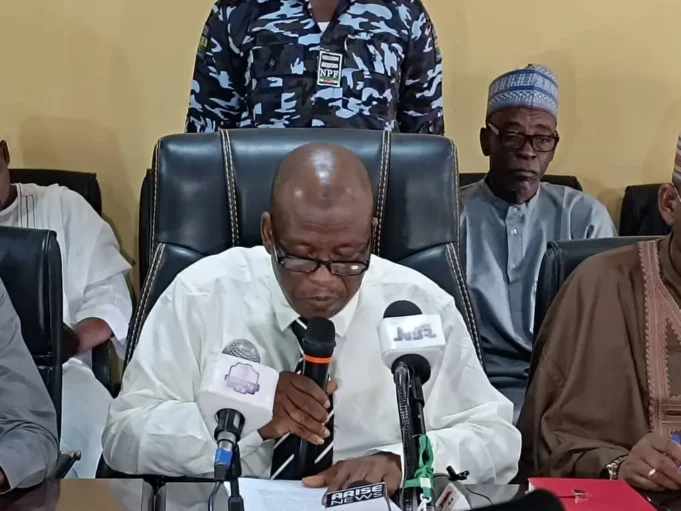
The Fruits Sellers Association, Kano State Chapter, has been advised to develop a strategic plan within a specific timeframe to modernize its business operations.
The Chairman of the Kano State Independent Electoral Commission, KANSIEC, Professor Sani Lawal Malumfashi, gave the advice during a courtesy visit by members of the association to his office.
Professor Malumfashi stated that the fruit business anywhere in the world serves customers from all backgrounds, both rich and poor, due to the importance of fruits in food consumption.
He maintained that the association should seek recognition across the three tiers of government in order to benefit from government policies and programmes.
The KANSIEC Chairman added that the present administration under the Executive Governor, Alhaji Abba Kabir Yusuf, is transforming Kano into a modern metropolitan city with many parks. He said fruit sellers should secure designated spaces around the corners of flyovers across the city.
Earlier, the Chairman of the Fruits Sellers Association of Nigeria, Kano State Chapter, Alhaji Safiyanu Abdullahi, said they visited KANSIEC to seek guidance on how to conduct free, fair, and peaceful elections within the association.
Bashir Habib Yahya
Media Aide to the KANSIEC Chairman
Date: 11/09/2026
News
Breaking :Former PDP National Chairman Alhaji Bamanga Tukur Is Dead
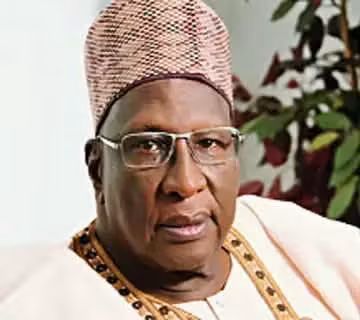
Former Chairman of the peoples Democratic party during Jonathan’s administration Alhaji Bamanga Tukur is dead .
A credible source in Yola the capital of Adamawa state informed Nigerian Tracker that Alhaji Bamanga Tukur passes on in Abuja.
The source said his body will later be conveyed to Yola the capital of Adamawa state for funeral at the palace of Lamidon Adamawa Alhaji Muhammad Barkindo .
Alhaji Dr. Bamanga Mahmud Tukur (CON) was a prominent Nigerian politician, businessman, administrator, and elder statesman who has had a towering impact on Nigeria’s socio-political and economic sectors for over six decades.
He was widely recognized for his roles as the former Governor of the old Gongola State, the former Minister of Industries, and the former National Chairman of the People’s Democratic Party (PDP).
Early Life and EducationDate of Birth: Born on 15 September 1935 in what is today Adamawa State, Nigeria.
Higher Education: He obtained a Master of Science (M.Sc.) degree from the University of Pittsburgh in the United States.
Honorary Recognition: He was awarded an honorary Doctorate Degree in Law (Honoris Causa) by Benue State University in Makurdi, Nigeria.
Traditional Titles: Reflecting his high regional and cultural status, he holds the distinguished traditional titles of Tafidan Adamawa and Wakilin Ganye in Adamawa State.
Career in Public Service & Governance
Nigerian Ports Authority (NPA):
Served as General Manager/Chief Executive from 1975 to 1982, managing port congestion and modernizing seaports.
Governor of Old Gongola State: Elected during the Second Republic in 1982, serving a brief term before the December 1983 military coup.
Minister for Industries: Served under General Sani Abacha’s military administration from 1993 to 1995.
Business and Continental Leadership Founder of BHI Holdings (Daddo Group),
Tukur expanded his economic influence across Africa:
Africa Business Roundtable (ABR): Founder, past president, and Life Patron.
NEPAD Business Group: Elected Chairman in March 2002.
International Maritime Stature: First African Vice President of the International Association of Ports and Harbours (IAPH)
PDP National Chairmanship (2012–2014)Elected PDP National Chairman in March 2012.
News
Nigeria’s Oil Output Hits 1.573m bpd as OPEC Production Rises–Report Says

By Yusuf Danjuma Yunusa
Nigeria’s crude oil production, excluding condensate, rose by 35,000 barrels per day (bpd) to 1.573 million bpd in August 2026, from 1.537 million bpd in July, according to the latest data from the Organisation of Petroleum Exporting Countries (OPEC).
The increase, representing a 2.3 per cent month-on-month (MoM) growth, places Nigeria among OPEC members that recorded higher production during the month.
OPEC, in its latest monthly data based on direct communication from member countries, said Nigeria’s August output was its highest monthly production level in the data provided for 2026.
The August figure also exceeded Nigeria’s average production of 1.552 million bpd in the second quarter of 2026, indicating a gradual improvement in upstream output.
The development comes amid renewed efforts by the Federal Government and oil producers to boost production through improved security, fresh upstream investments, new projects and the rehabilitation of existing assets.
Across OPEC, crude oil production increased by 346,000 bpd to 24.081 million bpd in August, from 23.735 million bpd in July.
Iraq recorded the largest increase among OPEC members, with output surging by 664,000 bpd to 3.378 million bpd. Kuwait followed with a 49,000-bpd increase to 1.894 million bpd, while the United Arab Emirates added 54,000 bpd to reach 3.835 million bpd.
Venezuela also increased production by 23,000 bpd to 1.145 million bpd.
However, some major producers recorded declines. Saudi Arabia’s output fell by 75,000 bpd to 7.276 million bpd, while Algeria and Libya declined by 8,000 bpd and 9,000 bpd to 999,000 bpd and 1.355 million bpd respectively.
Iran recorded the largest decline, with production dropping by 399,000 bpd to 2.086 million bpd.
Beyond OPEC, total production by the broader OPEC+ group, comprising OPEC members and participating non-OPEC producers under the Declaration of Cooperation (DoC), rose by 297,000 bpd to 38.055 million bpd in August.
Within the non-OPEC DoC group, Kazakhstan increased production by 159,000 bpd to 1.807 million bpd, while Russia cut output by 160,000 bpd to 8.718 million bpd.
For Nigeria, the latest production increase could provide some relief to government revenue and foreign exchange earnings, given the continued importance of crude oil exports to the economy.
Nigeria has set a target of raising crude oil production towards three million bpd by 2030, making sustained increases essential to achieving the ambition.
However, the country still faces significant challenges, including ageing fields, infrastructure constraints, crude theft, funding difficulties and the need to attract new investment into the upstream sector.
The August performance therefore represents progress, but maintaining the upward trend will be crucial if Nigeria is to close the gap between current production and its ambitious 2030 target.

From Desks to Degrees: How Governor Yusuf Is Bankrolling A Generation’s Future

KANSIEC Chairman Advises Fruits Sellers Association to Modernize Business

Breaking :Former PDP National Chairman Alhaji Bamanga Tukur Is Dead

Nigeria’s Oil Output Hits 1.573m bpd as OPEC Production Rises–Report Says

Subsidy Removal: Governors, Not Tinubu, Should Account for Funds — Gov Abiodun
From World’s 9th Most Populous City to Perfect: As Gov Yusuf Revisits Kano Master Plan

95% of Governor Abba Kabir Yusuf’s Promises Have Been Fulfilled — CPS Interview By Musa Diso, In Kano

Bello Sharada: A Great Writer, A Bookish Soul, Gone Too Soon

Call Me Chairman, Not Tony!’: Elumelu’s Blunt Correction of Trainee Splits Internet as Old Video Sparks Double Standard Fury

Nigerians Are Tired of Promises’ — CAN Demands Action on Insecurity, Hardship In Eid-el-Maulud Message
From Desks to Degrees: How Governor Yusuf Is Bankrolling A Generation’s Future
KANSIEC Chairman Advises Fruits Sellers Association to Modernize Business
Breaking :Former PDP National Chairman Alhaji Bamanga Tukur Is Dead
Nigeria’s Oil Output Hits 1.573m bpd as OPEC Production Rises–Report Says
Subsidy Removal: Governors, Not Tinubu, Should Account for Funds — Gov Abiodun
From World’s 9th Most Populous City to Perfect: As Gov Yusuf Revisits Kano Master Plan
95% of Governor Abba Kabir Yusuf’s Promises Have Been Fulfilled — CPS Interview By Musa Diso, In Kano
Bello Sharada: A Great Writer, A Bookish Soul, Gone Too Soon
Call Me Chairman, Not Tony!’: Elumelu’s Blunt Correction of Trainee Splits Internet as Old Video Sparks Double Standard Fury
Nigerians Are Tired of Promises’ — CAN Demands Action on Insecurity, Hardship In Eid-el-Maulud Message
-

 Opinion5 years ago
On The Kano Flyovers And Public Perception
-

 Features5 years ago
How I Became A Multimillionaire In Nigeria – Hadiza Gabon
-

 Opinion6 years ago
Kano As future Headquarters Of Poverty In Nigeria
-

 History5 years ago
Sheikh Adam Abdullahi Al-Ilory (1917-1992):Nigeria’s Islamic Scholar Who Wrote Over 100 Books And Journals
-

 Opinion5 years ago
My First Encounter with Nasiru Gawuna, the Humble Deputy Governor
-

 History5 years ago
The History Of Borno State Governor Professor Babagana Umara Zulum
-

 History5 years ago
The Origin Of “Mammy Market” In Army Barracks (Mammy Ochefu)
-

 News4 years ago
Federal University Of Technology Babura To Commence Academic Activities September