
News
Governor Yusuf Visits Kano’s Pioneer Day Science School After Danbello’s Report on Deteriorating Conditions
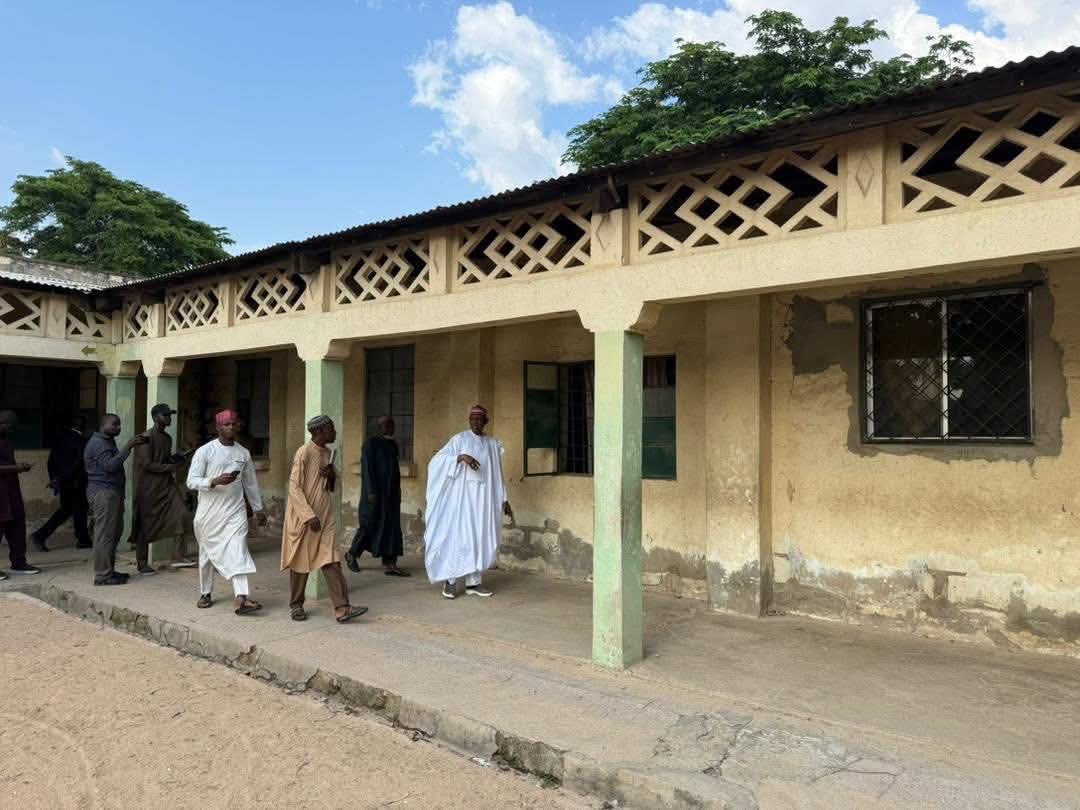
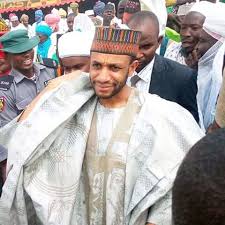
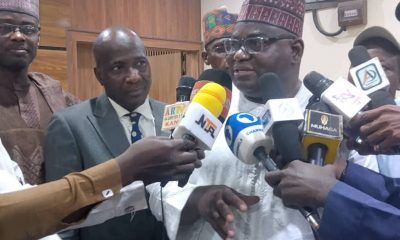
In a swift response to growing public concern, Kano State Governor Abba Kabir Yusuf paid a visit to the Day Science Secondary School the state’s first day science institution following a widely circulated exposé by a skit maker Danbello highlighting the school’s worsening condition.
Founded in 1993, Day Science Secondary School holds a unique place in the annals of Kano’s educational development. The institution was established to provide accessible science-focused education to day students, complementing the boarding science colleges of Dawakin Tofa and Dawakin Kudu, which date back to the 1970s and were launched under the administration of Colonel Sani Bello. These three schools have historically been pillars of science and technology education in northern Nigeria.
A School in Decline
Danbello’s report, which quickly gained traction online and among civil society groups, exposed a disturbing reality: dilapidated classrooms, broken laboratory equipment, overgrown premises, and a lack of basic teaching materials. The account painted a grim picture of neglect in a school that once produced some of Kano’s finest science scholars.
Governor’s Inspection Visit
Governor Yusuf, accompanied by education officials and media representatives, toured the school premises on Monday. He was visibly concerned by the extent of deterioration. Crumbling infrastructure, inadequate sanitation, and under-resourced science labs stood in stark contrast to the school’s original mission of fostering scientific excellence.
“This is unacceptable. We must restore the dignity of our public institutions, especially those with historic significance like Day Science,” Governor Yusuf stated during the visit.
Immediate Action Promised
The Governor ordered the Ministry of Education to begin immediate renovations, including the rehabilitation of classrooms, restoration of laboratory facilities, and provision of instructional materials. He further pledged that the school would be included in the upcoming state-wide education revitalization program.
Symbol of Hope and Reform
Education advocates and former students welcomed the governor’s intervention, describing it as a turning point for science education in Kano. “This school is more than just buildings it’s a legacy of innovation and opportunity. It deserves revival,” said a former alumnus.
As Kano State embarks on an aggressive plan to revamp its public schools, Day Science’s story serves as both a wake-up call and a reminder of the transformative power of committed governance.







News
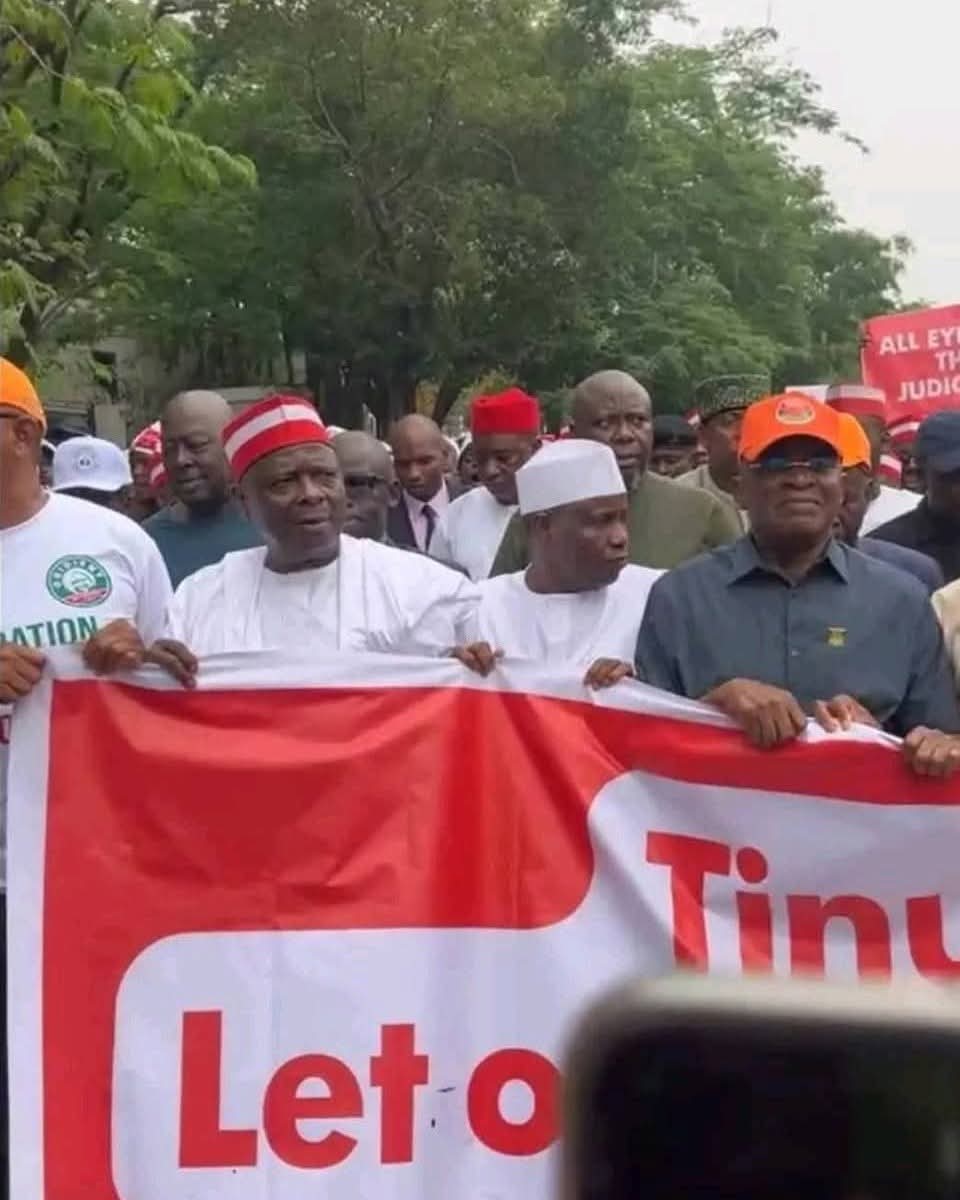
Kwankwaso, Atiku, Amaechi, Obi, Others Match-Out in Peaceful Protest at INEC’s Headquarters
By Yusuf Danjuma Yunusa
A coalition of chieftains from the African Democratic Congress (ADC), led by the party’s interim Chairman, David Mark, staged a peaceful protest at the headquarters of the Independent National Electoral Commission (INEC) in Abuja. The demonstration was in response to INEC’s recent withdrawal of recognition from the David Mark-led faction as the legitimate leadership of the party.
Prominent figures in the protest included former Vice President Atiku Abubakar, former Governors Rabiu Musa Kwankwaso and Peter Obi, as well as former Ministers Rotimi Amaechi and Rauf Aregbesola.
The leadership crisis within the ADC has deepened in recent times, with the emergence of yet another faction backed by state chairmen of the party. This group claims legitimacy over the two existing factions—one led by Nafiu Bala and the other by David Mark.
Amid this increasingly undemocratic atmosphere, the David Mark-led faction had scheduled its national convention for April 14. However, with today being April 8, questions are being raised over whether the faction can meet that deadline or if the leadership dispute will be resolved before the date.
Meanwhile, INEC has set May 10 as the final deadline for all political parties to submit the names of their flag bearers for the 2027 general election.
News
ADC Crisis: Kwankwaso Seeks Intervention of Gombe Emir
By Yusuf Danjuma Yunusa
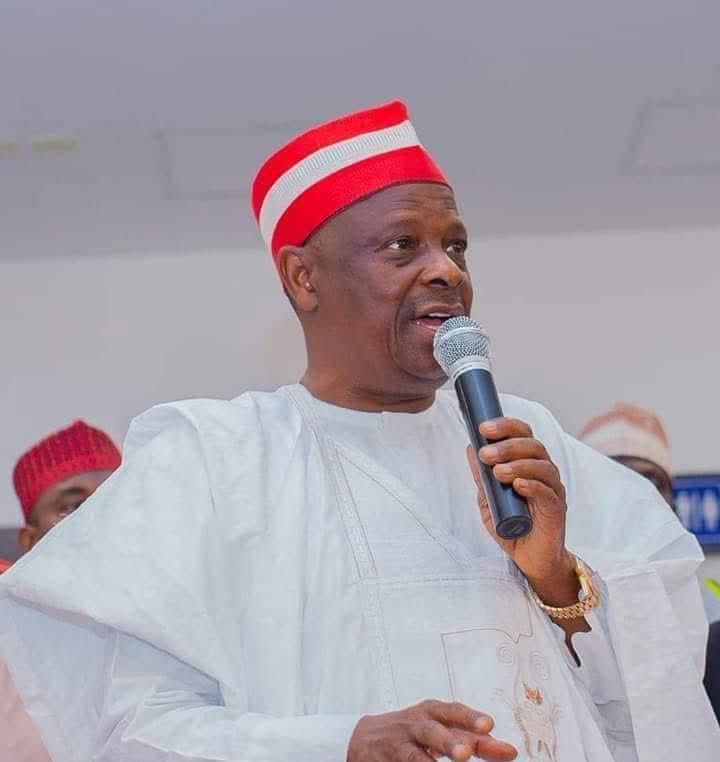
Senator Rabiu Kwankwaso, a chieftain of the African Democratic Congress (ADC), has accused Nafiu Bala, the party’s factional chairman, of acting against democratic principles.
In an interview with DCL Hausa on Tuesday, Kwankwaso revealed that he had invited Bala for a meeting aimed at resolving the party’s crisis amicably, but Bala failed to show up.
“We scheduled to meet yesterday, but despite waiting until morning, he did not come. I had been warned he wouldn’t show up, and his absence is deeply disappointing. I want to pass my message through you now, so that if you meet him, you can deliver it on my behalf,” Kwankwaso said.
He added, “Given the current situation in our country, our party and our democracy cannot afford someone who behaves like the lizard at the mouth of the water pot—blocking progress. As a leader of this movement in Nigeria, I believed that when I invited him, he would honour the request so I could advise him, as a father would a son.”
Kwankwaso noted that Bala was born in 1990 and still needs guidance as a youth. “His current actions are not only harmful to his own future, but also to the ADC and Nigerian democracy as a whole.”
He further warned, “He must recognise that millions have registered with our party. What was once a small party has grown significantly because prominent leaders joined with a mission to do what is right for this country. If he continues to stand in the way of that progress, it will become a very serious problem for him.”
The senator also called on the Emir of Gombe, other traditional rulers, and Islamic scholars (Ulamas) to intervene in the dispute.
“This is a serious matter, and he must realise his mistakes so we can resolve it. I offer this advice freely because I know it is for everyone’s benefit,” Kwankwaso concluded.
News
NCC to Enforce Subscriber Compensation for Poor Telecom Service
By Yusuf Danjuma Yunusa
The Nigerian Communications Commission has announced that its directive mandating telecommunications operators to compensate subscribers for poor service quality will take effect from this month.
The Commission disclosed this in a Frequently Asked Questions document released on Tuesday, offering clarity on how the compensation framework will work and which subscribers qualify.
According to the NCC, the directive applies specifically to Mobile Network Operators that fail to meet the required Key Performance Indicators for Quality of Service. These operators include major players such as MTN Nigeria, Airtel Nigeria, Globacom, and 9mobile, although the Commission did not specify which of them fell short of the standards.
The NCC noted that a separate compensation framework already exists for Internet Service Providers.
Under the new directive, compensation will cover service failures affecting voice calls, data services, and SMS. To qualify, subscribers must have experienced poor network service in an affected Local Government Area and must have carried out at least one revenue-generating activity—such as a billed call, SMS, or data session—within the period in question.
The Commission added that both individual and corporate subscribers are eligible for compensation.
Importantly, the NCC stated that subscribers will not need to apply to receive compensation. Instead, telecom operators are mandated to automatically identify affected customers and compensate them directly.
“The compensation framework will take effect from April 2026.
“No. The directive does not replace existing consumer protection mechanisms. It adds a direct compensation mechanism for affected subscribers. It aligns with measures set in existing legislation, such as the Consumer Code of Practice Regulations 2024 and the Quality of Service Regulations 2024,” NCC said
“Operators are required and mandated to identify affected subscribers and provide compensation directly. Only service failures that fall below the defined thresholds set by the Quality of Service Regulations will qualify,” NCC said.
However, the regulator clarified that minor or short-lived network disruptions that are quickly resolved may not meet the threshold for compensation.
The move is part of the NCC’s broader efforts to improve service delivery and hold telecom operators accountable for consistent network performance across the country.

Kwankwaso, Atiku, Amaechi, Obi, Others Match-Out in Peaceful Protest at INEC’s Headquarters

ADC Crisis: Kwankwaso Seeks Intervention of Gombe Emir

Shekarau In APC, Morale Booster For Governor Abba

NCC to Enforce Subscriber Compensation for Poor Telecom Service

ADC Leadership Tussle Worsens as Third Faction Emerges, Rejects Nafiu Camp, Mark’s Coalition

ADC Leadership Crisis: State Chairmen to Elect Caretaker Committee on Tuesday

Governor Abba Kabir Yusuf Holds Exclusive Prerogative to Choose Deputy – Malam Inuwa Waya

The Governor Who Chose His People Over His Politics: Abba Yusuf and the Moral Courage Behind Kano First
Restoring the Glory That Was Always There: Governor Abba Kabir Yusuf and the Historical Vision Behind Kano First

Table Water Producers Increase New Price for Sachet Water in Kano
Kwankwaso, Atiku, Amaechi, Obi, Others Match-Out in Peaceful Protest at INEC’s Headquarters
ADC Crisis: Kwankwaso Seeks Intervention of Gombe Emir
Shekarau In APC, Morale Booster For Governor Abba
NCC to Enforce Subscriber Compensation for Poor Telecom Service
ADC Leadership Tussle Worsens as Third Faction Emerges, Rejects Nafiu Camp, Mark’s Coalition
ADC Leadership Crisis: State Chairmen to Elect Caretaker Committee on Tuesday
Governor Abba Kabir Yusuf Holds Exclusive Prerogative to Choose Deputy – Malam Inuwa Waya
The Governor Who Chose His People Over His Politics: Abba Yusuf and the Moral Courage Behind Kano First
Restoring the Glory That Was Always There: Governor Abba Kabir Yusuf and the Historical Vision Behind Kano First
Table Water Producers Increase New Price for Sachet Water in Kano
-

 Opinion4 years ago
On The Kano Flyovers And Public Perception
-

 Features5 years ago
How I Became A Multimillionaire In Nigeria – Hadiza Gabon
-

 Opinion5 years ago
Kano As future Headquarters Of Poverty In Nigeria
-

 History5 years ago
Sheikh Adam Abdullahi Al-Ilory (1917-1992):Nigeria’s Islamic Scholar Who Wrote Over 100 Books And Journals
-

 Opinion4 years ago
My First Encounter with Nasiru Gawuna, the Humble Deputy Governor
-

 History5 years ago
The Origin Of “Mammy Market” In Army Barracks (Mammy Ochefu)
-

 History4 years ago
The History Of Borno State Governor Professor Babagana Umara Zulum
-

 News4 years ago
Federal University Of Technology Babura To Commence Academic Activities September