
News
APC Group Accuses Kano Government of Underperformance
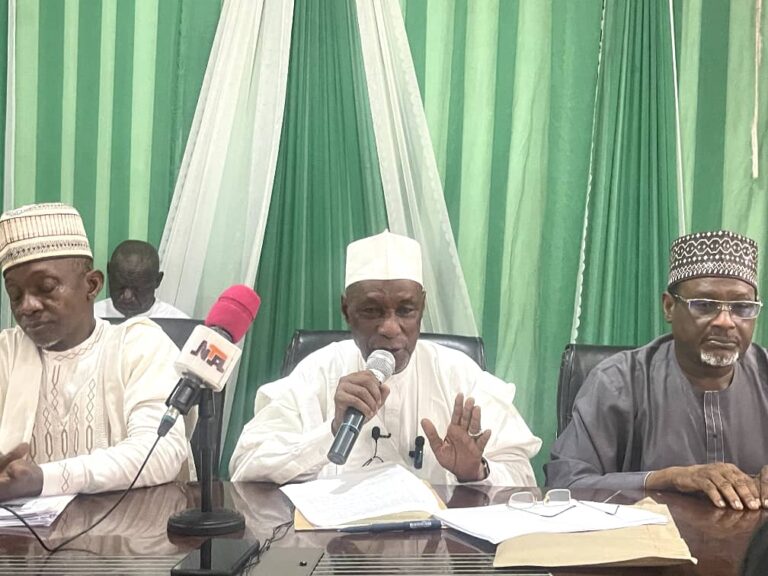
A group known as the APC Patriotic Volunteers has strongly criticized the New Nigeria People’s Party (NNPP) government in Kano State, describing its two-year administration as a “total failure marred by mismanagement, lawlessness, and propaganda.”
Speaking at a press conference in Ka on Wednesday, the group, led by its National President, Alhaji Usman Alhaji (Wazirin Gaya), outlined a series of alleged failures under the administration of Governor Abba Kabir Yusuf.
These include unfulfilled promises in education and infrastructure, as well as a blatant disregard for court rulings. “This administration has failed to honour the rule of law and has continued to operate with impunity,” the group alleged.
According to the APC Patriotic Volunteers, the NNPP-led administration has “virtually nothing to show” for the billions of naira received from the Federation Account Allocation Committee (FAAC), Internally Generated Revenue (IGR), and other sources. They attributed this lack of visible achievement to “petty sentiments, lack of clear-cut policy direction, poor implementation, and the appointment of incompetent individuals to manage state affairs.”
The group expressed particular concern over the persistent water crisis. “The governor himself admitted failure in water supply, yet the Ministry of Water Resources claimed to have spent N1.68 billion on utilities in just three months,” they said. “Meanwhile, residents continue to suffer from acute water scarcity.” They accused the administration of insincerity and mismanagement.
The Volunteers also condemned the NNPP government’s widespread demolitions of buildings and structures across the state, describing it as a “gross violation of the rule of law.” They said the demolitions caused “loss of property worth billions of naira and several lives,” and noted that the government failed to respect court rulings on cases such as the K/Mata Eid Ground and Daula Hotel.
It was reported that on education, the group dismissed the state government’s declaration of an emergency and the allocation of 31% of the 2025 budget to the sector as “mere propaganda.” They claimed that public schools, especially in rural areas, remain in poor condition, with “overcrowded classrooms, overworked teachers, and a lack of learning materials.” According to them, “the so-called emergency on education is nothing but a deceit.”
They further criticized the NNPP administration for undermining local government autonomy, describing it as “a betrayal of President Tinubu’s efforts to strengthen governance at the grassroots.” The group alleged that local councils were recently forced to contribute funds for the reinstatement of Emir Sanusi II, “even though a court order had directed all parties to maintain the status quo.”
The group raised serious concerns over corruption and media suppression. “Despite uncovering ghost workers and diversion of Ramadan feeding funds, no serious action has been taken,” they said. They also condemned the government’s alleged attempt to silence dissenting voices by “banning live political programs on radio and ejecting media outlets from covering government activities.” The Nigerian Bar Association was commended for defending constitutional rights, with the group noting, “We appreciate the NBA’s courage in standing up for democracy.”
In addition, the Volunteers demanded accountability for $6.6 million in external loans secured between June and December 2023 and over N5 billion in ecological funds. “There is no evidence that these funds were used effectively, especially in addressing flood risks,” they said.
They criticized the handling of the Independent Power Project (IPP) initiated under the previous administration. “Instead of using the power to support water supply, it was diverted to Kwankwasiyya Housing Estate,” they claimed. “Meanwhile, key infrastructure was left to decay, worsening the water crisis.”








News
Steron community development through football competition kicks off in Kano
By Abdulgafar Oladimeji
The Kano edition of the Steron national community development through football competition , on Tuesday flagged off in all the wards in across the 15 metropolitan local governments in Kano .
The football competition sponsored by Steron Community Development Foundation will feature grass root football clubs drawn from the wards .
The managing director, Steron Resources International, Abubakar Sadiq Omar briefing sports writers in Kano last Monday, said the major motives behind the football competition is use football as a vehicle to empower Nigerian youths.
According to him, the Steron football project is borne as part of the company’s Cooperate Social Responsibility , CSR with the set out target to assist the youths to achieve their football dreams , saying it is also to make life more meaningful to the future population of Nigerians.
The Managing director , who was represented by the head of the foundation, Mr Musa Mohammed said “ we recognize the power of football as a very strong national unifier and tool for empowerment.
“we hosted similar competitions in other parts of the country, now we are in Kano , Kano is going to be exceptional.
“it is going to be exceptional because, we have invited football scouts to come and watch the matches, so that they can identify those players with exceptional talent, then we can proceed to help them pursue their professional football development.
Mohammed further said that “throughout the duration of the competition, we will be offering free medical services to players, coaches, back room staff, referees and football fans.”
Kano state Football Association, KSFA described the Steron football project as a comprehensive package that would touch all spheres in the pursuit of football development in the state.
The chairman KSFA youths competition committee,, Hassan Garo , spoke on the behalf of the state FA disclosed that the football competition kicks off , March 31st and runs through the first week of April 2026.
He stated that the tournament is an open competition without age restrictions, explaining that this is to allow talented players within all age ranges to showcase their football qualities
He said, however ,players who have featured in any level in either of the national major football leagues are exempted from taking part in the tourney.
In his words “ the tournament will start at the wards level centres, the winners at the wards will proceed to compete to produce the local government champion, then each local government champion will now compete to determine the overall champion.
“our joy at the FA knows no bound, because all the clubs have reasons to celebrate the coming of Steron, once you make it to the local government level you will get consolatory prizes
“meaning that if you advance from the ward stages to the local government you will not go home empty handed, also the scouts will be here to scout for talents.
“the opening match in the inter local government phase, which will involve the clubs that qualified from each local government will be played at Sani Abach stadium.
“The remaining matches at this level of the matches will be played at Mahaha ports complex, the final matches will return to be played at Sani Abach stadium.
He disclosed that provisions have been made for adequate security presence , adding that the state FA has prioritize the essence to make the competition an entertaining event.
He added that the media will be given a pivotal role to bring to Kano living rooms, live reports of the matches .
Garo stressed that “we are not leaving anything to chance, we want to see more private entities like Steron come into the game, either for communal purposes like this one or for commercial purposes, therefore we will always live up to expectations.
He enjoined Kano fans and football stakeholders to grab the opportunity been offered by the sponsors in the area of medical outreach to improve their well being.
Our correspondent reports that, the matches have kicked off in the designated ward centres across the state.
News
Kano Ex-Deputy Governor Gawuna Joins ADC After Resignation from APC
By Yusuf Danjuma Yunusa
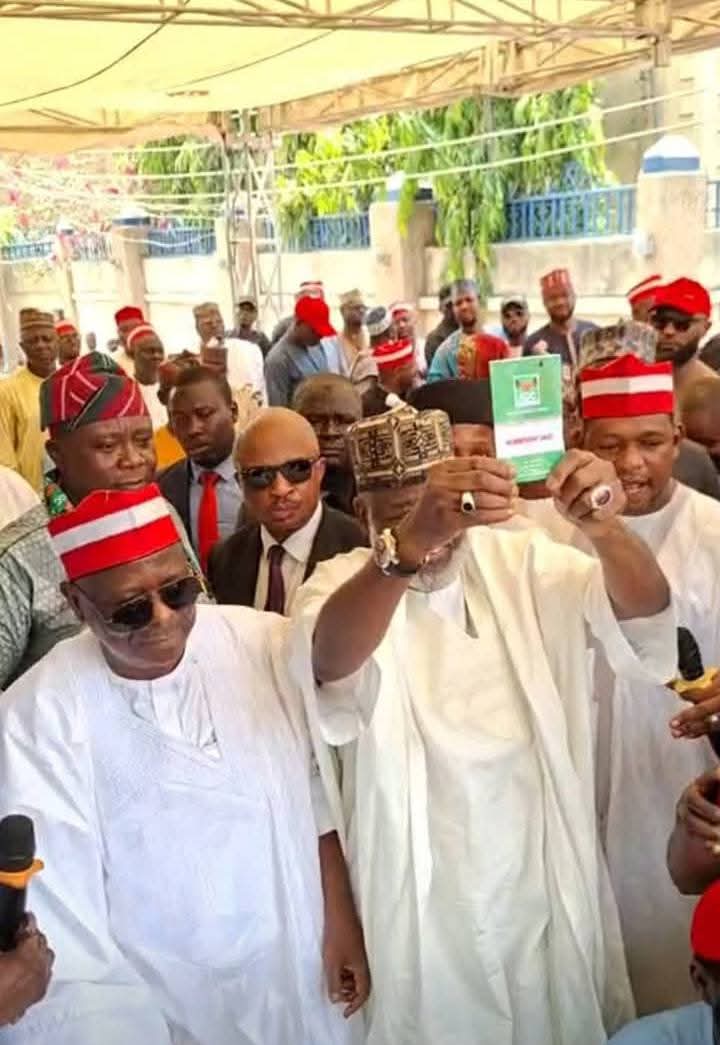
Nasiru Gawuna, the 2023 governorship candidate of the All Progressives Congress (APC) in Kano State, has formally joined the African Democratic Congress (ADC).
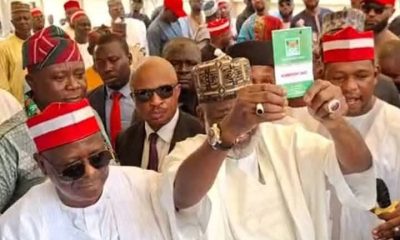
Gawuna, a former deputy governor of the state, received his membership card on Tuesday at his ward in Gawuna, Nasarawa Local Government Area. The event drew a large gathering of supporters and notable political figures, including former Governor Senator Rabiu Musa Kwankwaso, immediate-past Deputy Governor Aminu Gwarzo, and the state ADC chairman, Musa Ungogo.
Speaking after the registration, Gawuna thanked his supporters and party leaders, pledging his commitment to strengthening the ADC in Kano State.
His defection follows a formal resignation from the APC, which he described as a personal and voluntary decision. In a letter dated March 29, 2026, addressed to his ward chairman, Gawuna expressed appreciation to the APC for the opportunity to serve.
The move also comes after his resignation as Chairman of the Board of Directors of the Federal Mortgage Bank of Nigeria, effective March 31, 2026. His departure from the role complied with a directive by President Bola Ahmed Tinubu requiring political appointees to resign in line with the provisions of the Electoral Act.
Gawuna thanked the president for the trust reposed in him, noting it was an honor to serve in various capacities, including as Pro-Chancellor and Chairman of the Governing Council of Bayero University, Kano.
Political observers view Gawuna’s entry into the ADC as a significant boost for the party, given his political influence and strong showing in the 2023 governorship election, where he secured 890,705 votes.
The development is the latest in a series of political realignments in Kano State ahead of the 2027 general elections, signaling continued shifts in the state’s political landscape.
News
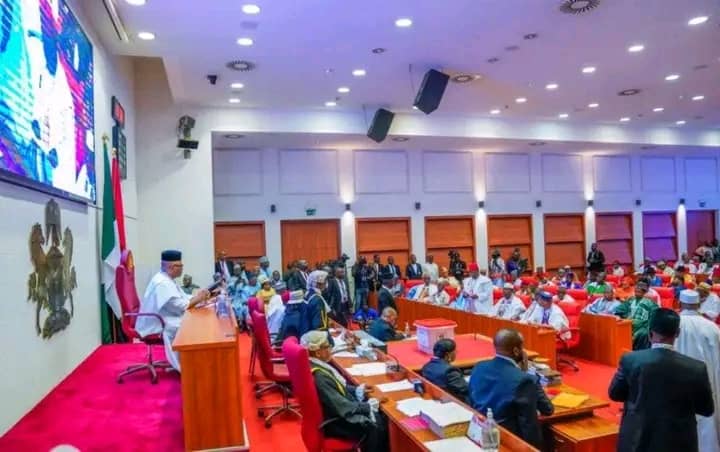
JUST IN: Senate Approves Tinubu’s $6 Billion Loan Request
By Yusuf Danjuma Yunusa
The Senate on Tuesday approved President Bola Tinubu’s request to secure $6 billion in external loans, granting legislative backing for the facilities hours after the Executive formally sought approval to finance critical infrastructure and address fiscal gaps.
The approval followed the consideration of a report submitted by the Chairman of the Senate Committee on Local and Foreign Debts, Senator Aliyu Wamakko (APC, Sokoto North).
In a letter read during plenary, President Tinubu sought approval for two separate facilities: a $5 billion loan from Abu Dhabi Bank to support budget deficit financing and meet existing debt obligations, and a $1 billion loan from UK Export Finance through Citibank London to fund the rehabilitation of the Lagos Port Complex and Tin Can Island Port.
According to the President, the port rehabilitation projects aim to address longstanding operational challenges, improve efficiency, enhance safety standards, support non-oil trade diversification, and position Nigeria as a regional trade hub.
Senate President Godswill Akpabio referred the requests to the committee for expedited consideration, a directive that culminated in Tuesday’s approval.
The latest borrowing comes amid the Federal Government’s sustained reliance on domestic and external loans to finance budget deficits. Four months ago, the National Assembly approved a separate request to raise N1.15 trillion from the domestic debt market to fund the 2025 budget deficit.
In its report, the Senate Committee on Local and Foreign Debts noted that the 2025 Appropriation Act provides for total expenditure of N59.99 trillion—an increase of N5.25 trillion from the Executive’s initial proposal—highlighting the widening fiscal gap driving the government’s borrowing strategy.

Steron community development through football competition kicks off in Kano

Kano Ex-Deputy Governor Gawuna Joins ADC After Resignation from APC

JUST IN: Senate Approves Tinubu’s $6 Billion Loan Request

El-Rufai’s Bail Hearing Adjourned to Wednesday as Security Tightens Around Kaduna Court

El-Rufai Taken Back To Custody

The Governor Who Chose His People Over His Politics: Abba Yusuf and the Moral Courage Behind Kano First

FREEDOM OF SPEECH, NOT FREEDOM FROM CONSEQUENCE: A CITIZEN’S CALL FOR RESPONSIBLE PUBLIC COMMENTARY
Restoring the Glory That Was Always There: Governor Abba Kabir Yusuf and the Historical Vision Behind Kano First

Tinubu to Swear in Olatunji Disu as Inspector-General of Police on Wednesday

NDLEA Clarifies: Drug Case Against Abba Kyari Still Active After Court Discharge
Steron community development through football competition kicks off in Kano
Kano Ex-Deputy Governor Gawuna Joins ADC After Resignation from APC
JUST IN: Senate Approves Tinubu’s $6 Billion Loan Request
El-Rufai’s Bail Hearing Adjourned to Wednesday as Security Tightens Around Kaduna Court
El-Rufai Taken Back To Custody
The Governor Who Chose His People Over His Politics: Abba Yusuf and the Moral Courage Behind Kano First
FREEDOM OF SPEECH, NOT FREEDOM FROM CONSEQUENCE: A CITIZEN’S CALL FOR RESPONSIBLE PUBLIC COMMENTARY
Restoring the Glory That Was Always There: Governor Abba Kabir Yusuf and the Historical Vision Behind Kano First
Tinubu to Swear in Olatunji Disu as Inspector-General of Police on Wednesday
NDLEA Clarifies: Drug Case Against Abba Kyari Still Active After Court Discharge
-

 Opinion4 years ago
On The Kano Flyovers And Public Perception
-

 Features5 years ago
How I Became A Multimillionaire In Nigeria – Hadiza Gabon
-

 Opinion5 years ago
Kano As future Headquarters Of Poverty In Nigeria
-

 History5 years ago
Sheikh Adam Abdullahi Al-Ilory (1917-1992):Nigeria’s Islamic Scholar Who Wrote Over 100 Books And Journals
-

 Opinion4 years ago
My First Encounter with Nasiru Gawuna, the Humble Deputy Governor
-

 History5 years ago
The Origin Of “Mammy Market” In Army Barracks (Mammy Ochefu)
-

 History4 years ago
The History Of Borno State Governor Professor Babagana Umara Zulum
-

 News4 years ago
Federal University Of Technology Babura To Commence Academic Activities September