
Opinion
Palestinians Won The 15-Month Battle -Hashim Abdallah

By Hashim Abdallah
The Palestinians Won The 15-Month Battle -Hashim Abdallah of justice.
On 15th January, 2025 Zionism signed to end its US backed genocide in Palestine where hundreds of thousand casualties recorded mostly Palestinian civilians, including women and children from among whom were journalists, health, rescue and above all diplomatic workers.
Although Palestinians being seeing at the receiving end as they recorded such a huge number of casualties, either dead or maimed ones, it is obvious they won the battle for many reasons from their perspectives and of course from different point of view.
We must firstly take into consideration the aim of the oppression even if it might had falsely been claimed, ie, to rescue the hostages captured by the Hamas. Have the captives been liberated from the Hamas captivity? If no, the claimed, or open aim of the shelling has been defeated outrightly. Has Hamas been forced to release them unwillingly? If no, their resistance is steadfast and their pledge is amazing.
The facts of their being triumphant did not stop there as their resilience in thronging in multitudes to return to the remains and the ‘only remaining 8% saved places in Gaza’ as according to Aljazeera. It surprised the world as they were smiling and raising the two fingers symbolizing their triumph and courage which confirm you the notion of feeling being victorious as they harbour it amidst the debris of the collapsed structures. They appear rejoicing the news of the armistice in spite of the Israeli breaches from the truce first day till the second and third day that exceeded even to the fourth day. Yes, there were attacks here and there with death toll rising even after the ceasefire being said to have already been signed.
Celebration vs protest
As the Palestinians celebrate the ceasefire, Israelis have been reported to have been protesting violently attacking Israeli Palestinians/Arabs.
Captives’ Exchange
It is both surprising and fascinating Palestinians would exchange few jews for many Palestinians as Israeli agreed to with no alternative.
‘You can kill a man, but you can’t kill his ideology’ is a popular saying originated from wise thinkers, revolutionaries and freedom fighters from Bhagat Singh to Martin Luther King, Victor Hugo and Steve Biko. All Palestinians believed to have been fighting a holy war which leads them to heaven. However, this is not an ideology limited to be held by only Palestinians but also all moslems. You could find a lot ready to die defending their territory from Israeli aggression and occupation.
Matyrs is what all Muslims consider and/or refer to brethren died fighting the holy war of self defense and/or the other one,ie, ‘crusade.’
That not limited to Muslims for the world too believed they have been defending themselves from occupation, transgressions, trespassing and land seizure by Israeli settlers backed by the Jew government(s) which the current one is being led by the blood monger, Benjamin Netanyahu.
Even from the eyes of the world of analysis, it is a striking ascertainment among the analysts that none on earth resist like Palestinians. Of course, it is undeniable fact that they never surrendered to Israeli full military forces of aggression and oppression.
Indeed, as it is according to the Muslim faithfuls, the people around the holy mosque of Al’aqsa would be bold, resistant and guards of the Quds Mosque on behalf of the Muslim and Islam as the third holy mosque in Islam.
Palestinians won the war if the world really united in speaking up against the atrocities in Gaza Strip.
The secrets that many non Muslims do not know is that all the happenings have been predictions in Islam. Nothing surprised Muslim world that much.
Hasheem Abdalla teaches English language and Literature at Binyaminu Usman Polytechnic Hadejia, Jigawa State.
08038662494
hashimat@bupoly.edu.ng











Opinion
A FRIEND’S LETTER TO ABDULMUMIN AT FIFTY

By Barr. Ismaeel Ahmed, OON
There is a particular privilege in knowing someone before the world decided who they were going to be; before the titles, the cameras, the offices and the public arguments. I have had that privilege with Abdulmumin Jibrin.
I knew Abdulmumin long before most people knew him as they do today, before the National Assembly and before the many chapters of public life that have since defined his name. So, as he turns fifty, I find myself writing not about the Honourable Member for Kiru and Bebeji, but about my friend, my older brother and school father. That distinction has always mattered.
I remember someone whose mind never seemed to rest. Chairman, as we fondly call him, could take an idea everyone else had accepted, turn it around repeatedly, question it from every direction and continue long after the rest of us had become tired of the conversation. I used to tease him about it, and sometimes I still do. But over the years, I have come to understand that this intellectual restlessness is at the very centre of who he is.
It explains the businessman, the teacher, the politician and the scholar who earned a PhD in International Relations and, years later, returned to Bayero University Kano for another in Economics. Chairman has never believed that learning has an end point. He is always searching for the next question and, inevitably, the better answer.
Yet, for all his accomplishments, what I value most about him is something much simpler: his loyalty. He remembers people. He remembers friendships, kindnesses and those who stood with him when there was little to gain from doing so. Beneath the forcefulness that people see in public is a tenderness and generosity that those who know him closely understand very well.
I have also had the privilege of seeing him through both triumph and adversity. His political journey has had its share of difficult seasons, some of them difficult enough to discourage almost anyone. But Chairman has an extraordinary capacity to return. He reflects, recalibrates and rises again. Not because the fall did not hurt, but because he has always believed that a difficult chapter does not have to be the end of the story.
Perhaps that is one of the most important lessons of his first fifty years. We are not measured by never falling. We are measured by what we learn from the fall and whether we find the courage to rise again.
Another quality I have come to admire is his ability to create room for other people to grow. He does not merely occupy spaces; he opens conversations, shares ideas and encourages those around him to think beyond their immediate circumstances. Many people have benefited from his advice, introductions, encouragement and willingness to challenge them to become better versions of themselves. That influence may not always be visible, but it is one of the lasting marks a person leaves on the lives of others.
He also possesses a rare ability to remain connected to his roots while engaging confidently with the wider world. Whether in the classroom, the boardroom, the political arena or among friends, he carries with him a strong sense of identity and responsibility. His journey has taken him through different institutions and experiences, but it has not separated him from the people, values and community that shaped him. That balance is not easy to maintain, and it is one of the reasons his story continues to resonate with many people.
At fifty, therefore, I am less interested in counting Abdulmumin’s offices, businesses, degrees or political accomplishments. I think instead of the full measure of the man I have known: the businessman who understood risk, the scholar who never stopped learning, the politician who survived both victory and defeat, and the friend who still remembers to call.
Fifty is a beautiful milestone. It gives a man enough road behind him to understand the journey, and, God willing, enough road ahead to decide what he wants the rest of that journey to mean.
My Chairman, I hope the years ahead bring a little more patience to your restlessness and a little more peace to your ambition. Build more. Give more. Mentor more. Forgive quickly, as you have always somehow managed to do. And worry less about who receives the credit. History has its own way of separating noise from substance.
Happy fiftieth birthday, Sir. May the years ahead bring you more wisdom than ambition, more peace than pressure, more purpose than applause, and many more opportunities to give than reasons to receive.
Congrats.
Opinion
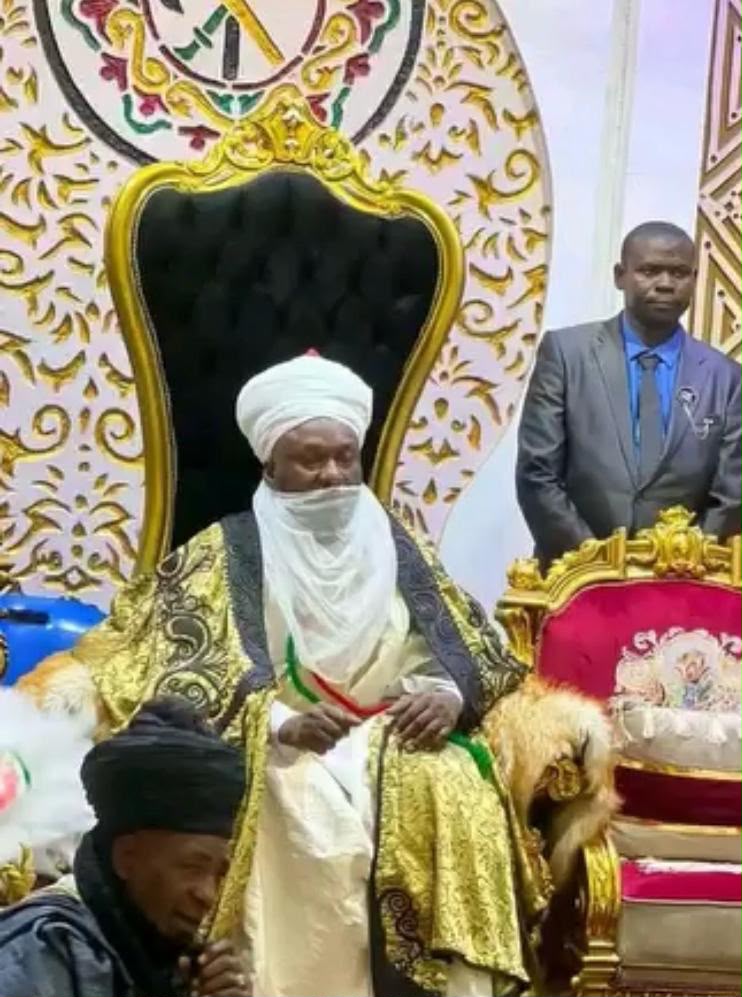
All Hail The 17th Emir Of Gumel, His Royal Highness, Dr. Lawan Ahmed Mohammed-DIG
By DIG Mohammed Usaini Gumel (Rtd)
With profound submission to the will of Almighty Allah, I extend my heartfelt condolences on the passing of our revered Emir, His Royal Highness Dr Ahmad Muhammad Sani II, (CON).
His distinguished reign was marked by wisdom, humility, justice, peace and devoted service to his people. May Almighty Allah forgive his shortcomings, illuminate his grave, admit him into Aljannatul Firdaus and grant him eternal rest. Ameen.
As we mourn his passing, we thank Almighty Allah for the peaceful succession to the revered throne of Gumel. It is therefore with great joy and respect that I congratulate His Royal Highness, Lawan Ahmed Mohammed, PhD, on his ascension as the 17th Emir of Gumel.
Your Royal Highness’s ascension to the throne of Gumel, continues the sacred trust entrusted to the custodians of this ancient throne.
There is no doubt that enduring traditions of unity, dignity, courage and service, has been established and preserved by the forbears, as your late father has strengthened them, through compassionate and principled leadership.
We are confident that your knowledge, experience and understanding of both our traditions and the modern world will guide the Gumel Emirate towards greater progress. We look forward to your leadership to consolidate peace and unity, preserve our cultural heritage, uphold justice and consultation, and promote development in education, agriculture, commerce, healthcare, technology, youth empowerment and community security.
This is a time for every son and daughter of the Gumel Emirate to unite in common purpose. The strength and stability of the throne depend on the cooperation of the Royal Family, traditional titleholders, District and Village Heads, religious leaders, elders, elected representatives, professionals, farmers, traders, women, youth and all our communities, should rally round the new Emir for the common purpose of peace, unity, progress and socio-economic development of the Gumel Emirate.
At this time, our loyalty must be expressed through respect for the traditional institution, responsible conduct, sincere counsel and a shared commitment to the Emirate’s peace and development.
In a period like this we must accept to preserve the legacy of our ancestors and predecessors while building a Gumel Emirate that is peaceful, united, secure, educated, economically vibrant and responsive to every community.
Indeed, a leader serves as the heartbeat of a community. You are the heartbeat of the Gumel Emirate. The Gumel Emirate is lucky to have you as our 17th Emir, because you are such a figure, embodying wisdom, unity, and deep compassion for all residents. This tribute reflects on a legacy defined by tireless service, demonstrating how true leadership transcends mere titles to become a guiding light for generations to come.
Kindness often acts as the strongest bridge between a ruler and the people. We can only expect that this your distinguished reign as the 17th Emir of Gumel shall prioritize the well-being of the vulnerable, ensuring that voices which were often unheard find support within the palace walls.
Your Royal Highness, historical records frequently highlight leaders like the late Emir, who gained fame for generosity of spirit. I am happy to embrace the fact that you shall exhibit actions that prove authority is most effective when it is paired with genuine care for the common person.
The Gumel Emirate is lucky for the fact that beyond local boundaries, you are a master of diplomacy and peace. It’s a fact that conflicts are natural parts of human society, yet you are among the wise leaders who know how to navigate these challenges without bloodshed.
May Almighty Allah grant Your Royal Highness wisdom in judgment, patience in adversity, courage in leadership and sound health throughout your reign. May He protect you, guide your decisions and bless you with sincere, loyal and trustworthy advisers and reign, strengthen our unity, preserve our honour and bring enduring peace, progress and shared prosperity to the entire Gumel Emirate. Amin.
DIG Mohammed Usaini Gumel (Rtd) writes from his Gumel home, Jigawa State.
Opinion
IT IS OVER: Gov Yusuf Ends 50-Year BUK Land Crisis Ushering Progress for 6,000 Families
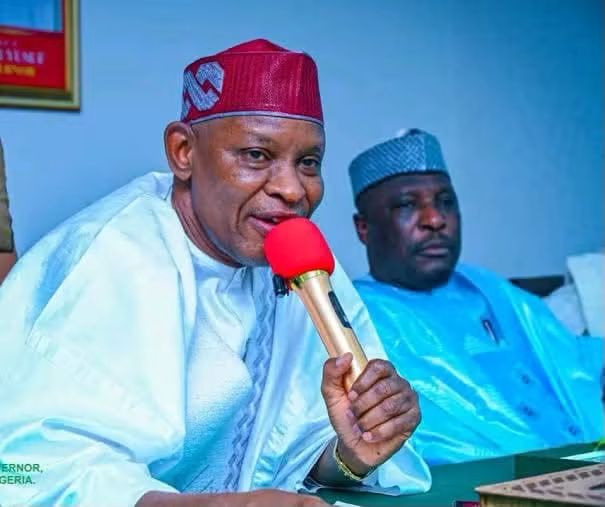
By Abba Anwar
Fifty years of litigation, mistrust, protests and painful loss came to an end yesterday as the Kano State Government formally resolved the protracted land dispute between Bayero University Kano and the people of Rimin Zakara, Rijiyar Zaki and adjoining communities.
At a historic meeting attended by government officials, university authorities, traditional rulers and community representatives, Governor Alhaji Abba Kabir Yusuf declared the crisis over and unveiled a settlement built on “… justice with compassion” that protects both institutional development and innocent families.”
Commissioner for Public Procurement, Projects Monitoring and Evaluation, Nura Iro Ma’aji, represented the Governor, Commissioner for Land and Physical Planning, Abdujjabbar Muhammad Umar was there, Prof Ahmad Muhammad Tsauri, represented the Vice Chancellor of BUK and the people of Rimin Zakara, were led to the venue by Alhaji Baba Habu.
The exceptional effort is a clear testimony that Governor Yusuf’s administration is a peace-loving one which chooses resolution over confrontation.
Just as he said the settlement reflects the core philosophy of his administration, in an effort to confront inherited problems, restore institutions, protect ordinary citizens and deliver practical solutions to a lingering crisis. Which sometime in the past claimed innocent lives.
“We are not here to recount the history of Rimin Zakara. We are here to close it. For almost half a century, this crisis survived successive administrations. When we assumed office, we made a simple commitment, that we would not run away from difficult problems simply because they were inherited,” he emphasized.
The Commissioner for Land and Physical Planning, Umar, explained that a High-Level Committee was constituted after violent confrontations in early 2025 made it clear the dispute had become “… a serious issue of justice, public security, institutional development and community stability.”
He hinted that, after verifying more than 6,000 claims, examining historical records and conducting surveys, the Executive Council approved a settlement guided by one principle, that is to protect BUK, compensate genuine victims, restore peace and bring the dispute permanently to an end.
Under the informed terms of peace, it was positioned that, it would be land for BUK, plots and compensation for the People. An excellent crisis resolution strategy, commended by all and sundry.
The agreement made sure that BUK is protected. Where more than 85 per cent of Bayero University Kano’s landholding is preserved for future academic, research, residential and infrastructural development. The University made a significant sacrifice by accepting the excision of portions of land originally reserved for expansion.
Agreement further paved way for community resettlement. Where residential plots have been reserved and allocated to verified beneficiaries in the approved Rimin Zakara/Rijiyar Zaki and Jajira/Garun-Iya schemes.
Part of the agreement maintains that compensation should be ongoing. As monetary compensation for eligible claims and structures is being processed by the Ministry of Land and Physical Planning. Government has committed Billions of Naira for compensation, resettlement, planning, surveying and infrastructure.
Governor Yusuf warned henceforth that the decision to compensate was humanitarian, not a validation of illegal sales. “Thousands of people bought land in good faith from persons who had no lawful authority to sell it. Many invested their life savings. The strict application of the law without regard to these circumstances could throw thousands of families into a catastrophic situation.”
Only a government with human face can think this way. Or similarly. This good work on compassionate ground means a lot for electoral victory, come 2027. In fact some of the people who made speeches from the part of the community leaders, made it very clear that, their votes and those they control, would be in favour of Governor Yusuf. This was said without any hesitation, whatsoever.
What is worth celebrating in the resolution of Governor Yusuf’s 50-year BUK-Rimin Zakara land dispute is while Kano State has resolved its land dispute, several other states continue to grapple with age-long land conflicts that have lasted five decades and more without final resolution. This speaks volumes about Governor’s capacity, clean mind and strong political will in serving his people.
For example in Cross River/Ebonyi there is Adadama vs Amaegwu dispute. It is a story of a farmland dispute dating back to 1960. In April 2025, the crisis claimed 11 lives and displaced over 2,000 people. Despite a 2024 communique by both state governments, violence has continued. Which shows how strong is Kano’s strategy.
In Ebonyi–Ezza vs Ezillo/Iyionu, it is a land dispute of over 50 years old, with a major serious clash in 2008 that displaced communities for 18 years. In March 2026, displaced persons petitioned Gov. Nwifuru for resettlement. Clashes and abductions were still reported in 2024. These are the kind of scenarios Kano’s current administration averted. Kudos Mr Governor!
The Ogun/Oyo–Odeda boundary dispute that was rooted in colonial 1926 boundaries. In May 2025, the Ogun State House of Assembly again urged the National Boundary Commission to urgently delineate the border after allegations of forceful land acquisition and tampering with boundary pillars. Serious clashes were witnessed which caused some loses. In Kano, under Governor Yusuf, similar ugly situation has been averted.
While Imo–Mgbirichi/Abakuru vs 34 Artillery Brigade caused serious misunderstanding, where land acquired in 1977/78 is the causative agent. Communities protested in 2024 over alleged encroachment “up to backyards of houses.” A Defence Headquarters delegation visited in 2024 for dialogue, but the dispute remains unresolved. Kano’s Model is therefore one of the best in the country.
Kano’s settlement therefore stands out as one of the few instances where a decades-old land crisis has been decisively closed through compensation, resettlement and legal backing. A vote of confidence and thank is naturally directed at Commissioner Umar.
His genuine commitment and political will as copied from the Governor, gave him all the necessary guts and straightforwardness in mending the tore parts of Rimin Zakara and its surroundings, as related to BUK, as an institution.
To unveil some of the commendable strategic points to the gathering, the Commissioner added that government would reissue compensation cards directly to verified beneficiaries and that anyone who exploited the process badly would face legal action. Campassion not weakness indeed.
The resolution followed lawful process that was backed by Law and enforced for development. The settlement is reinforced by the judgment of High Court No. 11 in Suit No. K/M1638/2026 delivered on 18th August 2026, which declared the acquisition lawful and directed government to compensate verified claims. What the state is currently doing is just that.
Part of the resolution process suggests that with effect from 31st August 2026, all land within BUK’s demarcated boundaries would be protected exclusively for the university. Government infrastructure corridors will also be secured. The Governor warned that “Our compassion must never be mistaken for weakness.” And that obstruction or fresh encroachment would be met with firm enforcement.
In what I termed as from crisis to progress: the bigger vision, it is noteworthy to know that the Governor linked the resolution to his administration’s wider development agenda, emphasizing that peace is the foundation for progress.
Touching other areas he acknowledged that “… In Education, we declared a State of Emergency. In Health, we introduced free caesarean-section services. In Water, we approved ₦21.89 billion for Challawa and Tamburawa plants. In Agriculture, we gave ₦1 billion in free fertiliser to 52,800 farmers. In Roads, we are rehabilitating 17 metropolitan roads.”
While he further elaborated that “This is the same spirit in which we approached BUK–Rimin Zakara. We are rebuilding confidence in government’s capacity to solve difficult problems,” he then commended BUK’s Vice-Chancellor, Governing Council and management for their “… patience, maturity and genuine commitment to peace… ” and urged Rimin Zakara, Rijiyar Zaki communities, traditional and religious leaders to safeguard the agreement.
The Governor who was represented by the Commissioner for Public Procurement, Projects Monitoring and Evaluation, Ma’aji,, got a standing ovation when he said, “Today, by the grace of Almighty Allah, a crisis of five decades has an end. Now is the time to move from crisis to development, and from dispute to progress.”
With this all-encompassing peace deal of 50 years long, there are attendant benefits attached to it.
The resolution will definitely yield security and stability. While ending the decades of confrontation, litigation and community tension, peace will now reign in the community and other surrounding communities. This is peace at work.
As a cool way for institutional growth, BUK can now proceed with lecture theatres, laboratories, hospitals and hostels without encumbrances. Resolution gives peace a chance. Corridor for shelter and livelihood now comes to the fore. Thousands of families who bought land in good faith now have legal plots and a path to compensation.
Through the Commissioner for Land, Umar, the thrust of urban planning strategy can now proceed without any hindrance from these communities. The era of proper layouts, roads and infrastructure without illegal sub-division, that remained elusive for decades, is now in place. And indeed investor confidence is restored. Where a clear legal boundary restores confidence in land administration and public institutions in Kano. Weldone the people’s Governor.
Both BUK and Rimin Zakara representatives, Prof Tsauni and Habu, commended the effort of the the Commissioner for Land, Umar, in his unrelenting efforts during the crisis and during the resolution exercises. Assuring that the Commissioner got the courage as a result of the goodwill spirit he got from the Governor. Letters of Grant were distributed to the members of the communities affected. As compensation and other verifications are on top gear.
Anwar writes from Kano
Tuesday, 1st September, 2026

A FRIEND’S LETTER TO ABDULMUMIN AT FIFTY

Ibrahim Little Condemns Attack on Journalists, Calls for Government Commitment to Ending Thuggery

Kano Allocates N27.8bn for ICT, CBT Centres Across 44 LGAs

Governor Yusuf celebrates Abdulmumin Jibrin Kofa at 50

JUST IN: El-rufai’s Family Issues 7-day Ultimatum for Defence Minister to Retract Comment on Violence

From World’s 9th Most Populous City to Perfect: As Gov Yusuf Revisits Kano Master Plan

95% of Governor Abba Kabir Yusuf’s Promises Have Been Fulfilled — CPS Interview By Musa Diso, In Kano

Kano Islamic Scholar Declares Kano Widow Marriage Programme ‘Haram’, Urges Government to Stop It

We’re aware of your clandestine meetings with Lulu-Briggs, 𝐏𝐢𝐝𝐨𝐦𝐬𝐨𝐧, CRP uncovers ex-MD of NDDC, Nunieh

Between Sabotage and Scepticism: Why Nigeria’s Oil Dream Keeps Stalling
A FRIEND’S LETTER TO ABDULMUMIN AT FIFTY
Ibrahim Little Condemns Attack on Journalists, Calls for Government Commitment to Ending Thuggery
Kano Allocates N27.8bn for ICT, CBT Centres Across 44 LGAs
Governor Yusuf celebrates Abdulmumin Jibrin Kofa at 50
JUST IN: El-rufai’s Family Issues 7-day Ultimatum for Defence Minister to Retract Comment on Violence
From World’s 9th Most Populous City to Perfect: As Gov Yusuf Revisits Kano Master Plan
95% of Governor Abba Kabir Yusuf’s Promises Have Been Fulfilled — CPS Interview By Musa Diso, In Kano
Kano Islamic Scholar Declares Kano Widow Marriage Programme ‘Haram’, Urges Government to Stop It
We’re aware of your clandestine meetings with Lulu-Briggs, 𝐏𝐢𝐝𝐨𝐦𝐬𝐨𝐧, CRP uncovers ex-MD of NDDC, Nunieh
Between Sabotage and Scepticism: Why Nigeria’s Oil Dream Keeps Stalling
-

 Opinion5 years ago
On The Kano Flyovers And Public Perception
-

 Features5 years ago
How I Became A Multimillionaire In Nigeria – Hadiza Gabon
-

 Opinion6 years ago
Kano As future Headquarters Of Poverty In Nigeria
-

 History5 years ago
Sheikh Adam Abdullahi Al-Ilory (1917-1992):Nigeria’s Islamic Scholar Who Wrote Over 100 Books And Journals
-

 Opinion5 years ago
My First Encounter with Nasiru Gawuna, the Humble Deputy Governor
-

 History5 years ago
The History Of Borno State Governor Professor Babagana Umara Zulum
-

 History5 years ago
The Origin Of “Mammy Market” In Army Barracks (Mammy Ochefu)
-

 News4 years ago
Federal University Of Technology Babura To Commence Academic Activities September