
News
Abubakar Adam’s Quest for a Better Life: A Journey Marred by Hardship and Betrayal
Abbas Yushau Yusuf
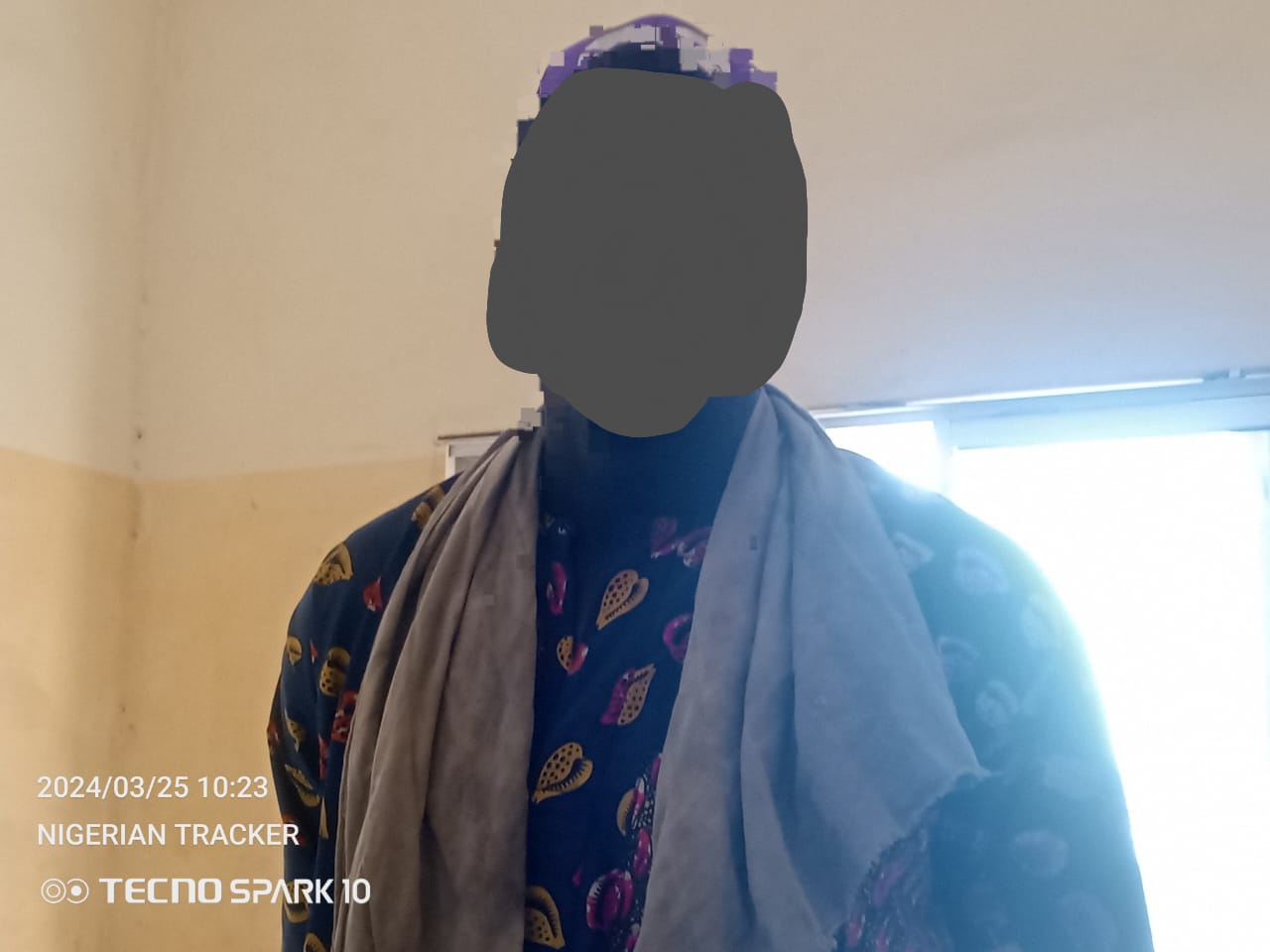
Abubakar Adam, a 25-year-old car washer from Kano in northwestern Nigeria, shared his harrowing tale of a four-month journey in pursuit of a brighter future through Italy via Algeria. However, his aspirations were met with unexpected challenges, leading to an abrupt end to his journey due to stigmatization encountered in Niger.
In an exclusive interview with NIGERIAN TRACKER, Adam recounted his ordeal, shedding light on the trials faced by migrants seeking economic opportunities abroad.
Adam, driven by a desire to alleviate the financial strain on his aging and less privileged parents, made the decision to embark on the journey after learning of people venturing to Algeria for employment prospects.
The journey is challenging,” Adam admitted, reflecting on the unforeseen difficulties encountered along the way.
Departing from Nigeria, Adam and his companions ventured to Zinder, Niger Republic , with hopes of finding employment opportunities perceived to be more favorable than those in their home country.
However, their journey was fraught with obstacles from the outset, as they encountered bureaucratic hurdles at the Nigeria-Niger border, where entry required the purchase of entry cards.
Facing extortion and hostility from Niger immigration officials, Adam and his companions were left stranded at Zinder station, uncertain of their next steps.
Despite encountering setbacks and betrayals from alleged sponsors, Adam remained determined to press on with his journey, driven by the hope of a better future for himself and his family.
Their resilience, however, was met with further challenges as they faced rejection and mistreatment at the hands of immigration officials in Niger.
Nigeria Labour Congress Opposes Military Action in Niger Republic
Forced to endure physical discomfort and humiliation, they resorted to desperate measures, including bribery, to secure passage.
Upon reaching Agadas, their intended destination, Adam and his companions found themselves disillusioned and betrayed by false promises made by their alleged sponsors.
Despite their efforts to find employment and support themselves financially, they were met with disappointment and hardship, ultimately leading to their decision to return home to Kano.
He continued as follows
“One day, we had to return due to our parents’ condition. Our sister’s husband claimed he would secure the funds to take us to Algeria. The 350 thousand Naira was sent to him, as he was in Algeria. My mother sold her goat for 20 thousand Naira and gave it to me, just as my friend’s mother did for him.
We were taken to Mataimai, close to Kwangwalam in Niger. We spent three days there. Her husband called our parents, stating he would host us at Agadas bus station and take us to Algeria within three days. He did this to encourage our parents to send him money.
During our three days in Mataimai, she arranged for a car belonging to her husband’s friend. We embarked on a journey at Bakin Burji in Zinder. Upon alighting from the vehicle without a card, the Niger immigration directed us to enter a room. They threatened to report us back to Nigeria, citing political conflicts between the leaders.
We replied to them that the fight is not between us, the masses, but between the political leaders of Niger and Nigeria. One of the immigration officers threatened to beat us.
We begged them to allow us to pass. They said they would never do so unless we found something to settle them. We searched for a “jaka,” which costs 5 sepa, equivalent to 10 thousand Nigerian money.
They did not even look at us when we begged them. The Niger immigration officers refused to listen to us. We then rented a “Jaka Ashirin,” equivalent to 40 thousand Nigerian currency, from our sister because her husband assured us that upon landing, we would find a job.
We later handed over 20 thousand Naira to the Niger immigration officers, equivalent to Nigerian currency. They were supposed to provide us with a gate pass that would allow us to pass through everywhere. Instead, they started beating us and instructed us to enter our car.
Upon entering the car, other passengers warned us that as Nigerians, we needed to be very careful because we were becoming unpopular in the Niger Republic. Most of the passengers, who were Nigeriens, advised our driver to board us onto a sheep and animal lorry since the Niger immigration officers refused to provide them with the card. They feared we would face the same mistreatment as we experienced at the previous gate.
We later boarded a trailer carrying sheep and rams, continuing our journey on it from Zinder to Agadas. We spent a whole day traveling.
At every gate where there was immigration, we had to lie down and allow the sheep and rams to step on us. Sometimes, the animals excreted over our bodies. We endured this for four days without praying or taking a bath for two weeks. Wherever we went, we had to beg for food to eat.
When we finally arrived at Agadas, we had 50 sepas. We bought a local food made from millet for 50 sepa, and we ate it.
When we landed at Agadas, we learned that our sister’s husband had lied to us. He didn’t know anybody in Agadas; we only met one of his sisters there. We were hosted in one shop, and every day we went out looking for menial jobs without earning a single Kobo.
We continued phoning our sister’s husband, who had taken our 350 thousand Naira in anticipation of sending us some amount, but he refused.
Our aunt sold all her possessions and sent the proceeds to my brother, who went to Mali because he was tired of what was happening. He planned to start digging for gold there.
When he went to Mali, he started smuggling, and sometimes they were pursued and shot at, so they stopped. Meanwhile, he left us in Agadas. Later, he went to Jado, and we are totally disconnected from him; up to now, we don’t know where he is.
The guy whose shop we were staying in Agadas is tired of us; we have exhausted all his food stocks.
We looked for unskilled labor jobs, and in one month, we earned 40 thousand Naira.
We advised ourselves to return home to Kano, Nigeria because our parents didn’t know about our condition.
We decided to return home to Kano without informing our alleged sponsor. We boarded a car, made our way back to Zinder, and faced no challenges on the journey back. From Zinder, we arrived at Kofar Ruwa Bus station in Kano, concluding our four-month journey without reaching Algeria or Italy.
When we returned, our mother started crying when she saw the three of us. She asked about our brother who went to Mali, and when we said we couldn’t find him, she began to cry.
Up until now, the whereabouts of our brothers are unknown. As I am speaking to you, said Abubakar, who came back to Nigeria last February 2024.”
Reflecting on his experience, Adam issued a cautionary message to fellow youths contemplating migration, urging them to exercise caution and pursue opportunities with diligence.
As the issue of labour migration continues to be a pressing concern in Nigeria, Adam’s story serves as a poignant reminder of the perils and challenges faced by those seeking better opportunities abroad. Despite the hardships endured, Adam remains hopeful for a brighter future, advocating for informed decision-making and perseverance in the pursuit of one’s dreams.














News
JUST IN: El-rufai’s Family Issues 7-day Ultimatum for Defence Minister to Retract Comment on Violence

By Yusuf Danjuma Yunusa
Former Minister of the Federal Capital Territory (FCT), Mallam Nasir Ahmad El-Rufai, has issued a seven-day ultimatum to the Minister of Defence, General Christopher Musa (rtd.), to provide evidence backing an allegation that El-Rufai planned killings in Southern Kaduna or publicly retract the claim.
Musa had accused the former governor of taking actions that deepened divisions and contributed to insecurity in Kaduna State during his administration between 2015 and 2023.
The minister, on Channels TV’s Politics Today, described the situation in the state during El-Rufai’s tenure as “toxic”, arguing that residents of Southern Kaduna remained unhappy with the former governor over the killings recorded in the area during his administration.
“El-Rufai did a lot of terrible things in Kaduna State. He divided the state into two. In that, if you are from the south, you cannot go to the north to live,” Musa had said during the interview.
When Musa was asked whether the people of Southern Kaduna were still unhappy with the former governor, he said, “If there is anything worse than unhappy. We can never be happy with somebody who has deliberately planned for the killing of our people.”
He also accused El-Rufai of ordering the demolition of houses belonging to people with whom he had personal disagreements.
But in a statement issued on his behalf by his family, the former governor denied the allegation and demanded retraction.
The statement signed by Hon. Mohammed Bello El-Rufai, eldest son of the former governor, said it was seriously concerned by comments made by the Defence Minister during a live edition of Politics Today on Channels Television on September 3.
The family described the allegation as grave and said it was made without the presentation of evidence to substantiate the claim.
“While General Musa (Rtd.) is entitled to hold and express his personal opinions, the El-Rufai family is equally entitled to demand that such serious allegations be substantiated with credible evidence,” the statement said.
The family therefore called on the Defence Minister to publicly retract the allegation through the same medium on which it was made.
“The family of Mallam Nasir Ahmad El-Rufai, the former Minister of the Federal Capital Territory (FCT), former Governor of Kaduna State and Opposition Leader of the African Democratic Congress (ADC), has noted with serious concern the allegations made by General Christopher Musa (Rtd.), Minister of Defence, on 3 September 2026 during a live television broadcast of Politics Today on Channels Television. During the programme, General Musa alleged that Mallam Nasir El-Rufai actively planned killings in Southern Kaduna while serving as Governor of Kaduna State.”
“This grave allegation was made without the presentation of any evidence in support of the claim. While General Musa (Rtd.) is entitled to hold and express his personal opinions, the El-Rufai family is equally entitled to demand that such serious allegations be substantiated with credible evidence.
“In the absence of such evidence, we call on him to publicly retract the allegation through the same medium on which it was made. Accordingly, General Musa (Rtd.) is hereby given seven (7) days from the date of this statement to either provide evidence in support of his allegation or issue a full public retraction and apology.
“Failure to do so will leave the family with no option but to pursue all appropriate legal remedies available under the law in response to these unsubstantiated allegations.”
El-Rufai, who previously served as FCT minister and Kaduna State governor, is currently an opposition leader of the African Democratic Congress (ADC).
News
Kano Chemists Threaten Warning Strike Over Alleged PCN Pressure

The Association of Patent and Proprietary Medicine Vendors (PPMVs) in Kano State has threatened to embark on a warning strike if the Pharmaceutical Council of Nigeria (PCN) does not stop what it described as persistent pressure on its members.
The chairman of the association in Kano State, Comrade Aminu Hikima, disclosed this in an interview with Dala FM Radio, where he expressed concern over what he described as increasing pressure being exerted on members of the association by the regulatory body.
According to Hikima, the association would be forced to take industrial action as a means of drawing attention to the concerns of its members if the situation is not addressed.
Hikima said the planned warning strike was not the association’s preferred option, stressing that its members would rather see the issues resolved through dialogue and intervention by the relevant authorities.
The Kano State chairman appealed to the PCN to reconsider its approach and stop actions that the association believes are putting unnecessary pressure on chemists operating across the state.
He said members of the association were willing to cooperate with regulatory authorities and comply with lawful requirements, but urged the PCN to ensure that its activities did not unnecessarily disrupt the operations of legitimate medicine vendors.
Hikima also called on the Kano State Government to urgently intervene in the dispute between the association and the PCN in order to prevent the situation from escalating into a warning strike.
The association’s chairman said government intervention was necessary to bring the parties together, address the grievances raised by its members and find a lasting solution to the disagreement.
Hikima further urged the state government to treat the matter as a priority because any disruption in the activities of medicine vendors could have consequences for residents who depend on them for access to medicines and other pharmaceutical products.
He maintained that the association remained committed to working with the government and regulatory authorities to ensure that medicine-related businesses operate within the law while protecting the interests of its members.
The warning by the Kano chemists comes amid calls for greater engagement between medicine vendors and regulatory authorities to resolve disagreements through dialogue rather than industrial action.
News
Why Pantami Should Not Be Trusted With The Governance Of Gombe

An Excerpt From the Piece of Abu-Ubaida Ibrahim Kùnà: By Danjuma Kala Gombe.
Institutional Authority and Governance Standards
In the course of democratic governance, voters entrust their future to leaders whose credentials and character have been rigorously tested and validated. This responsibility becomes even more critical when candidates seek to lead states like Gombe, which faces complex developmental challenges requiring leaders of proven competence and unquestionable integrity. It is therefore imperative that the electorate scrutinize not merely the promises candidates make, but the foundation upon which those promises rest. When institutional examination reveals serious concerns about a candidate’s qualifications and professional standing, voters deserve to understand those concerns clearly and comprehensively. Such is the case with Prof. Isa Ali Pantami, whose bid for the gubernatorial seat in Gombe State must be evaluated against documented institutional concerns regarding his academic advancement and the procedural irregularities surrounding his appointment.
The question is not whether technical authority was exercised, but whether institutional processes were followed with appropriate rigor, transparency, and adherence to established standards. A leader who demonstrates willingness to advance through processes marked by serious procedural irregularities sends a clear message about how that leader would approach governance itself. Will such a leader respect established institutional standards? Will he ensure transparency in important decisions? Will he accept rigorous scrutiny of his actions? These are not abstract questions posed by academic purists, they are concrete governance concerns that directly affect how a state functions and the standards it represents.
Distinguishing Institutional Roles: ASUU’s Investigative Findings
It is important to clarify institutional roles and authorities in this matter. The Academic Staff Union of Universities, representing professors and scholars across Nigerian universities, does not appoint professors. That authority rests with individual university governing councils, which are the bodies with formal administrative power to make such appointments. The Federal University of Technology, Owerri’s Governing Council is the authority that appointed Pantami to the rank of professor, and as a formal administrative act, that appointment remains in effect because the Governing Council has not formally revoked it.
However, ASUU, as the most authoritative voice of Nigeria’s academic community, conducted a detailed investigative examination of Pantami’s appointment and documented serious concerns about the process and qualifications involved. In 2021, ASUU released findings that were unambiguous and consequential: the appointment process had violated established academic standards and procedures. While ASUU does not have formal authority to revoke the appointment, its investigative findings carry significant institutional weight. They represent the professional judgment of Nigeria’s premier academic body regarding whether established standards were observed. These findings matter not because ASUU appointed Pantami, but because they document whether the appointment process itself met the standards the academic community expects.
Procedural Concerns and Substantive Deficiencies
The substance of ASUU’s documented concerns was both detailed and serious. At the time of Pantami’s appointment to the rank of professor, he possessed only approximately one year of post-doctoral teaching experience. This is extraordinarily limited compared to the established standards within Nigerian universities, where professorial appointments typically require a minimum of several years of demonstrable teaching excellence, research productivity, and scholarly contribution. Traditional academic progression through Senior Lecturer and Reader ranks represents years of scholarly work, successful teaching, and administrative contribution. Pantami had not progressed through these established ranks, a deviation from standard academic practice that raises fundamental questions about whether established advancement criteria were applied.
Beyond insufficient experience, the appointment process itself exhibited serious procedural irregularities. What constitutes normal academic practice in university systems worldwide is a rigorous, multi-staged evaluation process that typically extends over years, involving departmental assessment, external peer review by leading scholars, examination of publication records, plagiarism verification, and multiple institutional scrutiny layers. Pantami’s appointment process was reportedly concluded in approximately three months. This extraordinary compression raises questions about whether appropriate diligence was observed. Critical evaluation stages were reportedly bypassed or inadequately conducted. Departmental assessments appear not to have been thorough. External reviews do not appear to have been properly executed. Plagiarism checks were reportedly insufficient. Most troublingly, key documents including detailed assessors’ reports and comprehensive publication records were not made available for proper scrutiny. This lack of transparency raises serious questions about institutional process.
Standards, Character, and Governance Judgment
What makes the documented procedural concerns particularly relevant to governance is what they suggest about standards and judgment. Even if the Governing Council had full authority to appoint Pantami through any process it chose, the question for voters is whether the process that was followed reflects the standards Gombe State deserves in its leadership. Did the appointment follow established academic practice? Were decisions made transparently and with appropriate scrutiny? Were qualifications evaluated fairly against established criteria?
ASUU’s investigation documented that the answer to these questions is troubling. The appointment process deviated from established standards. Evaluation stages were bypassed. Transparency was absent. A serious academic body concluded that established procedures were not observed. This is not a matter of whether the Governing Council had the authority to make the appointment, it is a matter of whether the appointment was made through a process that reflects institutional integrity and adherence to established standards. For governance purposes, this distinction is critical. A leader who demonstrated willingness to advance through compromised procedures raises legitimate questions about whether that leader, when in executive position, would similarly circumvent established processes when convenient.
Institutional Standards and State Development
The broader implications for governance are substantial. A governor is not merely an executive responsible for implementing policies and managing resources. A governor is the symbolic and institutional head of state government, representing the values and standards the state expects from leadership. When that governor is someone who advanced through a process that serious academic institutions documented as deviating from established standards, and who continues to hold a rank that such institutions questioned, the message sent to state institutions is concerning.
Governance in Gombe State requires a leader committed to institutional integrity and established processes. The state faces serious developmental challenges in education, healthcare, infrastructure, and economic development. These challenges require leaders who work effectively within institutional frameworks, maintain transparency in decision-making, and earn trust through demonstrated commitment to proper process and institutional standards. A leader whose rise involved procedural irregularities documented by credible institutional authorities raises questions about whether that leader will similarly prioritize convenience over proper process when governing.
The Voter’s Consideration
For Gombe voters, the relevant question is not whether the Governing Council had authority to appoint Pantami. The question is whether the appointment was made through a process reflecting the institutional standards and transparency Gombe deserves. Documented evidence shows the appointment process deviated from established academic practice and involved serious procedural irregularities. This is not trivial. It reflects on institutional values and standards.
Gombe State requires leadership built on demonstrated respect for institutional processes, transparent decision-making, and adherence to established standards. A governor’s past behavior is the most reliable indicator of future conduct. A leader who advanced through a process marked by procedural irregularities, lack of transparency, and deviation from established standards raises legitimate concerns about how that leader would approach governance. Gombe voters deserve a governor whose advancement was achieved through legitimate institutional processes, whose qualifications were fairly evaluated against established criteria, and whose respect for institutional standards is unambiguous. The documented procedural concerns regarding Pantami’s appointment suggest these standards may not characterize his pattern.
Danjuma Kala,
Former Secretary General NUJ, Gombe State, Sept 5, 2026 Gombe State, Nigeria

JUST IN: El-rufai’s Family Issues 7-day Ultimatum for Defence Minister to Retract Comment on Violence

Kano Chemists Threaten Warning Strike Over Alleged PCN Pressure

Why Pantami Should Not Be Trusted With The Governance Of Gombe

All Hail The 17th Emir Of Gumel, His Royal Highness, Dr. Lawan Ahmed Mohammed-DIG

Prof Gwarzo Nominated for Lifetime Achievement Award in Education, University Development and Philanthropic Impact by The iDevPro-African Institute

From World’s 9th Most Populous City to Perfect: As Gov Yusuf Revisits Kano Master Plan

95% of Governor Abba Kabir Yusuf’s Promises Have Been Fulfilled — CPS Interview By Musa Diso, In Kano

Kano Islamic Scholar Declares Kano Widow Marriage Programme ‘Haram’, Urges Government to Stop It

We’re aware of your clandestine meetings with Lulu-Briggs, 𝐏𝐢𝐝𝐨𝐦𝐬𝐨𝐧, CRP uncovers ex-MD of NDDC, Nunieh

Between Sabotage and Scepticism: Why Nigeria’s Oil Dream Keeps Stalling
JUST IN: El-rufai’s Family Issues 7-day Ultimatum for Defence Minister to Retract Comment on Violence
Kano Chemists Threaten Warning Strike Over Alleged PCN Pressure
Why Pantami Should Not Be Trusted With The Governance Of Gombe
All Hail The 17th Emir Of Gumel, His Royal Highness, Dr. Lawan Ahmed Mohammed-DIG
Prof Gwarzo Nominated for Lifetime Achievement Award in Education, University Development and Philanthropic Impact by The iDevPro-African Institute
From World’s 9th Most Populous City to Perfect: As Gov Yusuf Revisits Kano Master Plan
95% of Governor Abba Kabir Yusuf’s Promises Have Been Fulfilled — CPS Interview By Musa Diso, In Kano
Kano Islamic Scholar Declares Kano Widow Marriage Programme ‘Haram’, Urges Government to Stop It
We’re aware of your clandestine meetings with Lulu-Briggs, 𝐏𝐢𝐝𝐨𝐦𝐬𝐨𝐧, CRP uncovers ex-MD of NDDC, Nunieh
Between Sabotage and Scepticism: Why Nigeria’s Oil Dream Keeps Stalling
-

 Opinion5 years ago
On The Kano Flyovers And Public Perception
-

 Features5 years ago
How I Became A Multimillionaire In Nigeria – Hadiza Gabon
-

 Opinion6 years ago
Kano As future Headquarters Of Poverty In Nigeria
-

 History5 years ago
Sheikh Adam Abdullahi Al-Ilory (1917-1992):Nigeria’s Islamic Scholar Who Wrote Over 100 Books And Journals
-

 Opinion5 years ago
My First Encounter with Nasiru Gawuna, the Humble Deputy Governor
-

 History5 years ago
The History Of Borno State Governor Professor Babagana Umara Zulum
-

 History5 years ago
The Origin Of “Mammy Market” In Army Barracks (Mammy Ochefu)
-

 News4 years ago
Federal University Of Technology Babura To Commence Academic Activities September