
Opinion
My Vision for Jigawa State (IX)
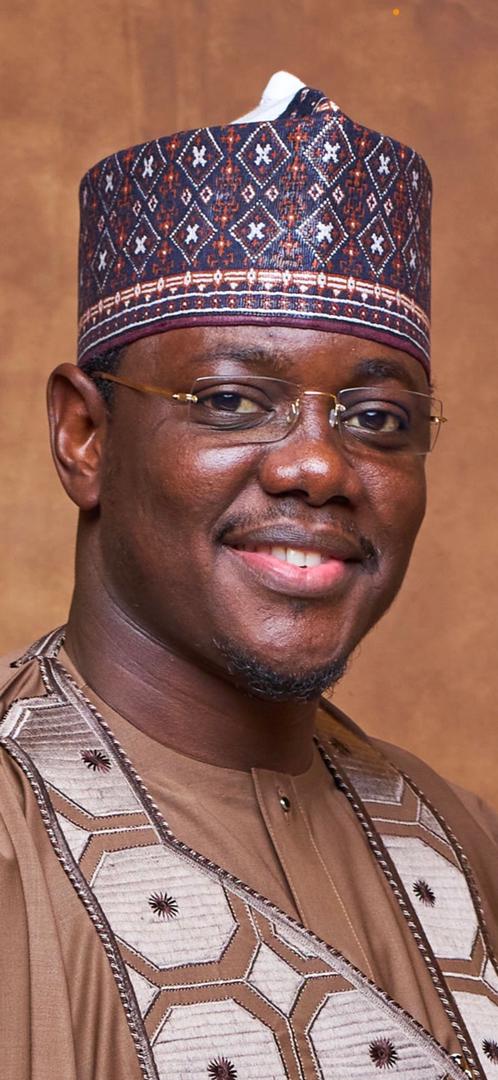
By: Mustapha Sule Lamido
I want to start by reflecting on our journey so far. We have come a very long way moving from one stage to another through the guidance and support of Allah (SWT); we continue to seek for His guidance and direction in whatever we do. We thank you all for the massive support for the PDP in Jigawa State. In the preceding weeks, we have received a lot of commendations and criticisms; we accept them all in good faith and we remain committed to learning from both.
Some weeks ago, we inaugurated our campaigns at the state and senatorial district levels where we met and interacted with the people. The massive crowd that turns up to welcome us at each rally is a testimony of the level of support for PDP by the Jigawa State people. We are not going to take it for granted. With just about 6 to 7 weeks left before the General Elections, I urge everyone to collect their PVCs before the deadline and ensure they dont’ trade their votes for anything.
I have taken a break from communicating my vision because we have already released our full manifesto in November which is also online. Therefore, I deemed it fit to give our people adequate time to digest it and offer their observations. Alhamdulillah, we have been receiving lots of them. We are working on the Hausa version so that everyone will have the opportunity to critique it very well. As I noted earlier, it is not a perfect document, rather it is a proposal that can be improved with your inputs.
So far, we have introduced our overall vision which will be laid on the foundation of unity, good governance and putting Jigawa First. We have also discussed education, health and agriculture. Our plans for other sectors are contained in our manifesto. However, for the sake of those who are not opportune to read it, I will give a brief summary on the other issues.
We will work tirelessly to guarantee the security of lives and properties Insha Allah. That Jigawa is believed to be one of the safest and most peaceful states in Nigeria will not be a license for complacency. Our aim is to sustain the peace and make it even more peaceful. If elected, we will come up with a security masterplan that is comprehensive, intensive and proactive. We will achieve this through traditional rulers engagement, complementing federal security operatives, empowering community security and vigilante groups and emphasizing on surveillance and intelligence gathering. Other measures include sustainable solutions to farmers-herders crisis, partnership with neighbouring states, effective border patrol and strong legislation against crimes.
On the economy, we will start by appraising all the realities when we win the elections. We will subsequently finetune our economic plan to take care of short, medium and long-term requirements. We will work to build a diversified economy that will create jobs and lift people out of poverty as well as generating revenue for the state. This will be achieved through visionary budgeting process for IGR Growth, strengthening our local markets, industrialization through raw materials utilization, mineral exploitation and tourism.
We will Insha Allah partner with the Federal government for a better utilization of the Dutse Airport. With the right efforts and partnerships, the Dutse International Airport can be utilized as a cargo terminal which will serve the entire North-Western Nigeria. We can persuade the Federal Government to decongest other places and divert some cargoes to Dutse. This will in turn transform Jigawa State into a massive economic hub with job and investment opportunities.
As a land-locked state, Jigawa State needs to start considering the Dry port option as an alternative route to economic development. If we can produce a lot of raw materials and sell at cheap price to eventual exporters, why cant we export it ourselves? Making a giant effort in this direction will take us a long way. We can start by reviving the abandoned Maigatari Export Processing Zone.
If elected, we will declare a state of emergency against unemployment, youth restiveness and women underdevelopment. We will emphasize on skill-based education, expansion and modernization of the agricultural sector, development of information and communication technology, reviving the sports and entertainment industries. We will create a database of all Jigawa State graduates for linkage to employment opportunities. We will introduce Graduates Internship Programme for university and college students after NYSC. The programme will post them to different government ministries on a 6-month internship.
Already, we have spelt out our comprehensive plan to tackle flood in my previous releases. I want to assure you that we have plans for other sectors of the environment. Our environment is one of the most neglected components of our society. We are going to change this narrative once elected. We shall have an environmental masterplan that will take care of micro, medium and macro challenges faced by our natural and built environments. We will focus on effective waste management in our municipalities while introducing the culture of environmental sanitation. We shall work on environmental planning, orientation and awareness, tackling of erosion, drought and desertification as well as vectors and mosquitoes’ control in urban centres.
We will Insha Allah introduce an effective digital land administration system which is an indicator of city development. In our vision to have a digital archive/database of land properties and resources, we will establish the Jigawa Geographic Information Systems (JIGIS) as obtainable in FCT-AGIS, Kano-KANGIS, Kaduna-KADGIS and Lagos-LAGIS. The JGIS will play a significant role in agriculture, urban and rural planning, revenue collection, tourism, transportation, mineral exploitation, population and housing census and controlling environmental hazards.
Jigawa State have no option than to embrace unity. Our challenges and aspirations are common, we must therefore work together to address and pursue them. I emphasize as always that unity of Jigawa State is our top priority because it is only with unity that progress, prosperity and development are achievable.
Let me conclude by reiterating that we will continue to play politics of issues not sentiments no matter the amount of provocations. Already, we are glad that the national eyes are now on Jigawa State politics because we are moving faster than many states which were hitherto seen as our political seniors. I use this opportunity to remind all the Jigawa State political players of the Peace Accord we signed in November. We should live up to our words and conduct ourselves with respect and understanding. As we move closer to the elections, we must caution our supporters against violence and disrespect which Jigawa is not known for; if not for anything, there will be life after elections.
Gobe ta Allah ce
©Santurakin Dutse











Opinion
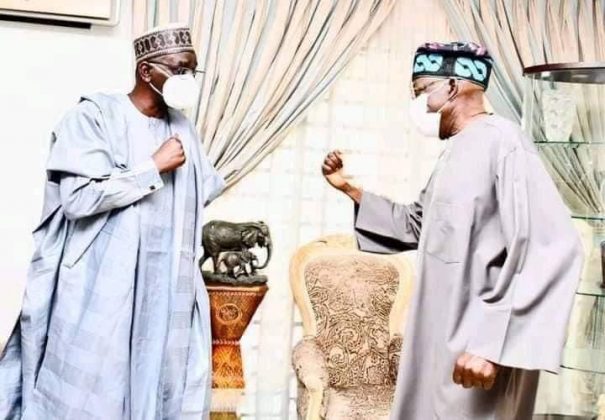
Shekarau In APC, Morale Booster For Governor Abba
By Abba Anwar
It is no longer a news or something strange for Kano people, for one to comfortably advance a stance that, among all the former Governors of Kano, who are still alive, including Military Administrators during Military regime, Malam Ibrahim Shekarau, Sardaunan Kano and a one time Distinguished Senator of the Federal Republic of Nigeria, is the most focused, most honest, most humane, most humble and most lenient, with high sense of spiritual touch.
Just like the former Governor Rabi’u Musa Kwankwaso, whose political structure cuts across all the 44 local government areas in the state, Malam Shekarau has that political spread for sure. Shekarau’s structure, under what is called Shurah Council /Committee, is more genuine and democratic, than that of Kwankwaso.
For the simple reason that, nowhere in his political life, before, during and after his days in office, it was reported that he takes decisions without consultation. The cardinal essence of the true meaning of Shurah. Consultation before action. The concept of Shurah became more prominent in his post administration era.
Even the Shurah Council /Committee, is under the leadership of another respected and down – to-earth personality, Dr Umar Mustapha, popularly known and called Mai Mansaleta (Mentholatum). An ocean difference between Kwankwaso’s Kwankwasiyya and Shekarau’s Shurah. Under Shurah, immediately after Shekarau, there is the Chairman of the body of decision makers, Shurah. Unlike in Kwankwasiyya where you have Kwankwaso and only him, as the alpha and omega. Below him in the chain of decision making and command? Nobody! Absolute totalitarianism!
With the cross over of Shekarau to the ruling All Progressives Congress (APC), the chances and influence of Kano state, Abba Kabir Yusuf, against 2027 election, are becoming more visible, predictable and waxing stronger. Even the consolidation of the party and governance are becoming increasingly focused. Shekarau is respected by almost all Kano elders and responsible individuals.
One good thing about Shekarau’s political empire, is, almost all those who are following his political direction, have it at the back of their mind that, they are duty bound, to be loyal, as a symbol of duty of followership. No blind loyalty, no deceit and no double-speak. He, as an overall leader of the dynasty, if I can use the term, consults, before any decision is reached.
Shekarau in APC, means governor Yusuf’s decisive political spread across all the 44 local governments. I also hope that, Shekarau’s people will not be sidelined in the party activities and governance. As it was the case during the immediate past governor Dr Abdullahi Umar Ganduje, CON.
If and only if governor Yusuf wants to display practical relationship with Shekarau, I suggest, he should incorporate Shekarau’s loyalists in governance, more than any other section or camp of the traditional APC. Why? Because, Shekarau, as it appears now, has no single individual in the party leadership. Right form the ward to local government up to state. Congresses across wards, local governments and state took place few weeks back. Before Shekarau joins the party. So he should be compensated, anyway.
It is governor Yusuf, Malam Shekarau, Baba Ganduje and His Excellency, Deputy Senate President, Distinguished Senator Barau I Jibrin, CFR, who are now on the table. A round table, if you wish. Is not for roundtable discussion. But for redesign, refocus, rejig, realignment and rehearsal of current political reality in Kano, against 2027.
Without fear of contradiction and exaggeration, Shekarau is still one of the very few politicians in the country, whom, when you look at their faces, you see faith, seriousness, straightforwardness, focus, commitment and humility. So as a matter of fact, APC under the governor, in Kano, is lucky to woo Sardaunan Kano, ahead of such stiffer elections, come 2027. Which is just some miles away.
I suggest that, Shekarau people, as he joins APC, should be involved in governance from local governments to state level. Failure to do that, may as well mean, APC looks at him (Shekarau), alone, not alongside his people. And this could mean a bad political approach. Let Shekarau and his people know that, their relevance and influence are spotted and appreciated, by the present state government. Unlike what was obtained in the past. When their hardwork, commitment and loyalty were thrown to the dogs.
As important as Shekarau is, in normalizing and consolidating the strength of APC, not only in Kano, it is expected that, his people would not be neglected after joining the party. Yes, Shekarau still enjoys grassroot supporters, real and genuine, for that matter. The ball, I believe, is in the court of both President Bola Ahmed Tinubu, GCFR, and governor Yusuf.
So governor Yusuf should facilitate the fixing of Shekarau people in some chosen federal government spaces. Consolidation of power, is rewarding, when realities on ground are not deliberately neglected.
Shekarau’s influence cuts across many states, especially, in the North. More importantly, people that are religious, in the true sense of the word religion, gentlemen and other community leaders across our traditional settings. Humility and approachable posture, are two major attitudes that endear him to many.
Without being economical with the truth, I can say, governor Yusuf finds a new political father in Shekarau. Take it or leave it.
Anwar writes from Kano
Wednesday, 8th April, 2026
Opinion
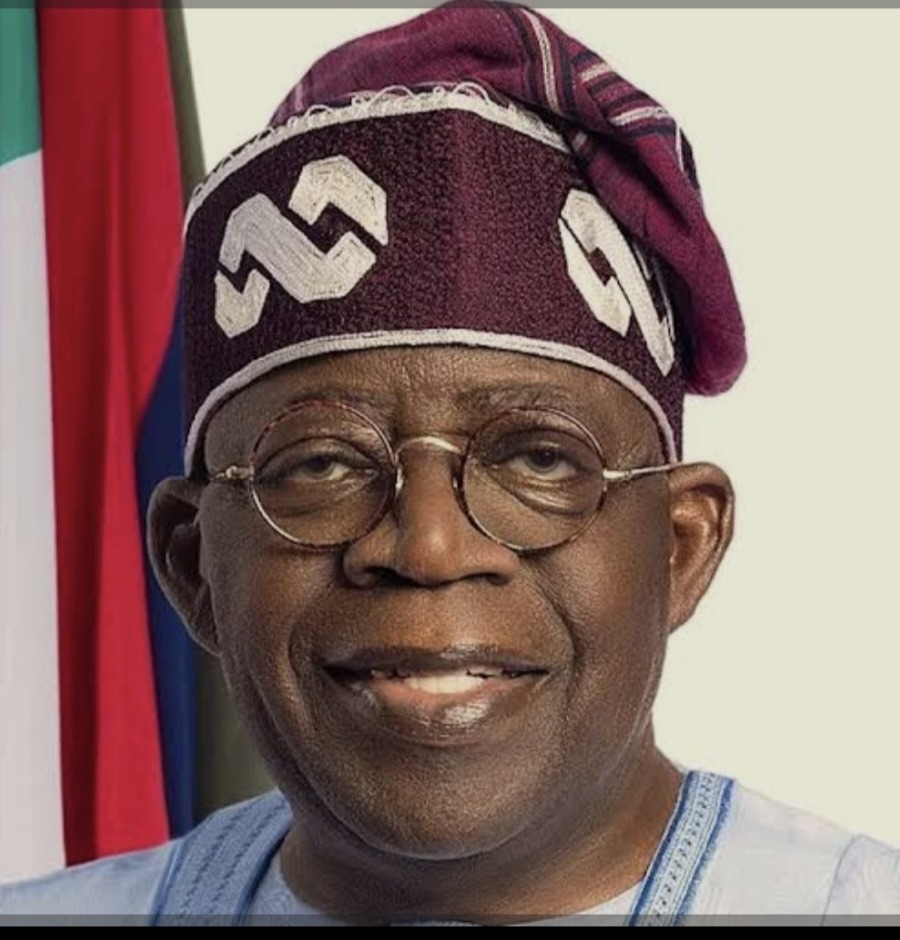
AN OPEN LETTER TO THE PRESIDENT OF THE FEDERAL REPUBLIC OF NIGERIA
Date: April 7, 2026
His Excellency, Bola Ahmed Tinubu, GCFR
President of the Federal Republic of Nigeria
State House, Abuja.
Your Excellency,
We write to you as a collective patriotic stakeholders and concerned citizens of Kano State, motivated by a profound sense of civic duty and an unwavering commitment to the integrity of our democracy.
We are observing with keen interest the ongoing deliberations regarding the appointment of a new Deputy Governor for Kano State, and we are compelled to bring to your attention the grave implications of certain reports currently circulating within the political sphere.
There are persistent and troubling rumors suggesting that the Presidency may be exerting significant pressure on Governor Abba Kabir Yusuf to nominate an individual for the Deputy Governorship who is currently facing multiple and serious corruption charges.
It is imperative to bring to your attention a detail of which you may not be fully aware: the candidate being promoted by the former National Chairman of the APC, Dr. Abdullahi Umar Ganduje, is a co-defendant alongside Dr. Ganduje himself in these very cases.
There are active criminal proceedings instituted by the Kano State Government in competent courts of law, backed by overwhelming documentary evidence.
The precedent for accountability in this administration has already been set. Before the sudden resignation of the former Deputy Governor, Comrade Abdulsalam Gwarzo—which was necessitated by a petition submitted to the State House of Assembly regarding corruption charges to the tune of approximately ₦2 billion—the Assembly had formally demanded that he defend himself.
Rather than engage the members, he chose to resign. To now recommend another individual, whom the state is actively prosecuting across multiple courts, would be, to say the least, a glaring act of double standards.
The pressure being mounted for this specific nomination appears to be nothing more than a calculated attempt to secure a form of “backdoor immunity” for the accused.
By elevating a co-defendant to the office of Deputy Governor, the ongoing trial would be effectively paralyzed, as the individual would then be shielded by the constitutional immunity afforded to that office.
Such a move would be a direct assault on the rule of law and an affront to the judicial process. It would not only ridicule the personality of the Governor but also compromise the integrity of the legislators and the APC as a party.
Your Excellency, we cannot ignore the striking parallel between these local developments and the commendable steps your own administration is taking at the federal level to ensure accountability.
We note the vigor with which your government is investigating high-ranking former officials—including the likes of Abubakar Malami, SAN, and His Excellency, Nasir El-Rufai.
To then turn around and compel a state governor to elevate an individual facing similar scrutiny to the second-highest office in the state would create an irreconcilable double standard.
It is our sincere opinion that Your Excellency should allow the Governor to nominate whoever he feels comfortable working with as his Deputy Governor.
Beyond the moral and legal implications, there is a significant political risk. In a state like Kano, where the ADC is preparing a formidable opposition, mounting pressure to nominate Dr. Ganduje’s candidate will invite immense internal friction and provide the opposition with potent ammunition to challenge the administration’s credibility.
The good people of Kano State, and indeed all Nigerians who believe in the rule of law, would be forced to rethink their perception of your administration’s stance against corruption. We urge you to allow the internal processes of Kano State to unfold without external interference that favors political expediency over judicial integrity.
The soul of our governance and the sanctity of our institutions must remain paramount.
We trust in your wisdom.
E-signed
Habib musa Dawanan is a Kano citizen, frontline member of APC, live at 801 Yakasai Quarters, Kano City.
7th April, 2026
Opinion
OPINION:Bauchi ,A Paradise for Immunity Seekers? How Alleged Corrupt Politicians Are Eyeing Government House
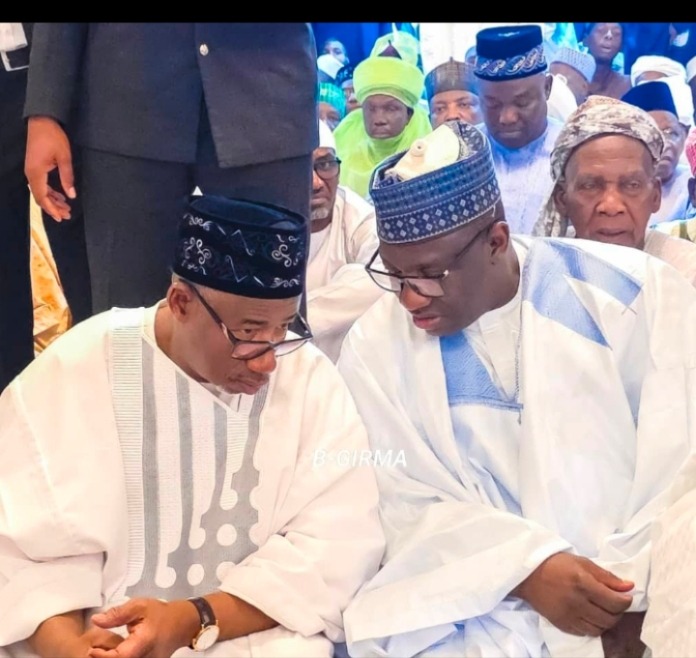
By Haroon Mustapha
For the attention of His Excellency Asiwaju Bola Ahmed Tinubu, GCFR, President and Commander-in-Chief of the Armed Forces of the Federal Republic of Nigeria
If two-term presidential politics is a game of two halves, then the first term is when a President sets direction, lays foundations, and begins to redirect the country toward a brighter future. The second term is when those gains are consolidated, the larger vision is executed, and a lasting legacy is secured. The ‘BAT’ are positioned to become the halcyon period that repositions Nigeria regionally and internationally: no longer the tired story of a nation defined only by potential, but the 21st-century story of a country that converts potential into tangible national benefit.
That is precisely why Bauchi, like every other state in the federation, must not be allowed to become a paradise for immunity seekers. Past executive failure must not be recycled. Allegations of criminality must not be politically laundered. Questions over allegedly siphoned NNPC funds, allegations of procurement abuse, and claims touching on banditry or terrorism financing must not simply be brushed aside while Bauchi misses a genuine opportunity to reposition itself as a hub for tourism, agricultural investment, and strategic solid-mineral development under your second term.
Few tactics in politics are as cynical as the rush for constitutional immunity. Under Section 308 of the 1999 Constitution, as amended, governors are protected from civil and criminal proceedings while in office. For some Bauchi politicians, the timing of their ambition raises serious questions. With lingering allegations from their time in the civil service or in federal appointments, the governorship can appear less like a platform for service and more like the ultimate constitutional shield. Reports in the public domain describe individuals investigated or charged by the Economic and Financial Crimes Commission (EFCC) or the Independent Corrupt Practices and Other Related Offences Commission (ICPC) repositioning themselves as leaders seeking the people’s mandate not necessarily to serve, but, critics argue, to evade accountability. Whatever language such actors now deploy, the public record cannot simply be wished away. This playbook risks turning Bauchi into a haven for immunity seekers, weakening public trust, undermining good governance, and damaging the wider reform legacy your administration seeks to build.
The most obvious example is the current governor, Senator Bala Abdulkadir Mohammed. Before his election in 2019, Mohammed, a former Minister of the Federal Capital Territory, had faced EFCC scrutiny. The anti-graft agency publicly stated that he “was standing trial for money laundering at the time he won election as governor of Bauchi State. Only the constitutional immunity from prosecution, which his current office attracts, has put that case in abeyance.” EFCC statements issued earlier this year reiterated that position and linked the matter to his prior public roles. More recently, his administration has also come under fresh EFCC scrutiny involving aides charged with money laundering and terrorism financing, with his name reportedly appearing in court filings. Governor Mohammed has dismissed these developments as political persecution. Critics, however, argue that his 2019 governorship bid was timed, at least in part, to take advantage of constitutional immunity. Whether one accepts the EFCC’s account or the governor’s defence of a witch-hunt, the optics remain troubling: public office appears, at minimum, to have functioned as a route away from immediate accountability.
Now a section of Bauchi’s political elite is reportedly positioning Dr Bala Maijama’a Wunti as Governor Mohammed’s preferred successor ahead of the 2027 elections. That prospect raises a profound question: is this confidence, or the entitlement of a political class that believes public memory is short and can be manipulated? In today’s world, alleged misconduct in public office does not remain hidden. It is documented, debated, and permanently available for scrutiny. Public commentary on social media, local reporting, and Wunti’s own political signals increasingly frame him as Mohammed’s preferred successor, with consultations inside APC structures reportedly already under way. Some accounts further suggest a wider political bargain in which Governor Mohammed could defect from the PDP to the APC, secure the APC senatorial ticket for Bauchi South, and see his Commissioner of Finance, Yakubu Adamu, who is currently facing EFCC charges of money laundering and terrorism financing at the Federal High Court, emerge as Wunti’s running mate. If such a transition were realised, it would align Bauchi’s leadership succession with the ruling party, smooth Wunti’s path, and preserve Mohammed’s political relevance.
Dr Wunti is a career public servant who served in the Nigerian National Petroleum Company Limited. He joined in 1994 and rose through the ranks to hold several senior positions, including Production Programming Officer, Group General Manager of Corporate Planning and Strategy, Managing Director of the Petroleum Products Marketing Company, and, crucially, Group General Manager of the National Petroleum Investment Management Services from 2020 to 2025.
In his final stint at NNPC, he served as Chief Health, Safety and Environment Officer before retiring in June 2025. Since then, he has increasingly been mentioned as a leading contender for the governorship of Bauchi State.
However, as in the case of Bala
Mohammed in 2019.
Groups such as the Concerned Citizens of Nigeria, the Community Development Committee, and the Citizens Watch Coalition petitioned the EFCC and the National Assembly for investigation, citing what they described as more than 10 incidents of fraud and abuse of office. A 2025 petition to the EFCC reportedly renewed demands for a formal probe. Wunti has not been convicted of any offence, and his defenders have dismissed the allegations as blackmail and baseless claims unsupported by probative evidence. Even so, the accumulation of petitions and media reports has kept the allegations in public view. As he is now discussed as a possible APC governorship candidate in Bauchi, critics see a familiar pattern: a senior federal technocrat under heavy public scrutiny moving toward an office that carries constitutional immunity.
Mr President, you have presented yourself as a bold reformer willing to take difficult decisions that previous administrations avoided. Your economic reforms have marked a clear departure from decades of fiscal complacency. The removal of the fuel subsidy shortly after your inauguration in 2023, though politically risky, ended a long-standing drain on public resources and will remain one of the defining decisions of your presidency.
The unification of exchange rates and the floating of the naira signalled a return to market discipline. Non-oil revenue performance, debt-service relief, GDP recovery, and rising external reserves have all been cited as evidence that your administration is pursuing a serious reform agenda. Additional efforts in civil-service reform, institutional restructuring, regional security cooperation, and infrastructure build-out have reinforced the image of a government trying to reset the Nigerian state. That is precisely why the company your administration keeps matters so much.
The people of Bauchi are tired of unrealised potential. They are tired of youth unemployment, weak primary healthcare, underdeveloped tourism assets, and a state economy that has not matched its promise. Bauchi can be a food basket for the North. It can become an engine room for value-added solid-mineral development. It can attract investment in agriculture, logistics, and tourism. These aspirations fit naturally within your stated vision of a stronger, more economically stable Nigeria built on sustainable growth, institutional integrity, and reduced corruption. But they cannot be realised if the state is captured by political actors whose primary instinct is self-preservation rather than public service.
Mr President your brand rests on reformist credibility: ending unsustainable subsidies, blocking fiscal leakages, and projecting administrative seriousness. Embracing figures with unresolved EFCC-level baggage carries obvious reputational risks. Public perception matters. Global perception matters. If Bauchi’s succession narrative hardens around Wunti amid contract-fraud petitions, and if that process is linked to a wider political accommodation involving Governor Mohammed, it will invite the charge that the ruling party is providing political cover to individuals facing grave allegations. In that scenario, isn’t Bauchi being conned once again?
Mr President, your legacy is not to be built on GDP numbers alone. It is also built on the company one keeps and the precedents one sets. Any association with politicians who appear, in the public mind, to treat the governorship as a get-out-of-jail card risks diluting the narrative of national renewal. It would also feed the perception that the APC is becoming a vehicle for elite protection rather than public service. In Bauchi specifically, the elevation of Wunti despite the allegations tied to his NAPIMS years, even if those allegations have not been proven in court, would send a dangerous signal: that political usefulness can override transparency concerns. Nigerians across the country would then be entitled to ask whether this is truly the new Nigeria your administration promises, or merely the old order dressed in reformist language.
Bauchi State’s political elite must decide whether shielding individuals facing serious public allegations serves the people or merely perpetuates a cycle of impunity. The impunity of the entitled. Mr President, you have staked your place in history on economic courage; you now face a parallel test of political consistency. Enduring legacy demands reform without selective blindness to corruption. Allowing Bauchi to become an immunity paradise would not only betray the people of the state; it could also stain the broader reform project your administration has diligently advanced. The 2027 contest will test whether substance prevails over political shelter, or whether the governorship remains a golden ticket for those with unfinished business before anti-corruption agencies. Nigerians deserve better than a state run as a refuge from accountability.
We remain guided by you, Mr President.
Mustapha, wrote from Bakin Kura Street, Bauchi

Shekarau In APC, Morale Booster For Governor Abba

NCC to Enforce Subscriber Compensation for Poor Telecom Service

ADC Leadership Tussle Worsens as Third Faction Emerges, Rejects Nafiu Camp, Mark’s Coalition

AN OPEN LETTER TO THE PRESIDENT OF THE FEDERAL REPUBLIC OF NIGERIA

Internal Crisis Deepens in Jigawa APC as High-Profile Defections Threaten Party Cohesion

ADC Leadership Crisis: State Chairmen to Elect Caretaker Committee on Tuesday

Governor Abba Kabir Yusuf Holds Exclusive Prerogative to Choose Deputy – Malam Inuwa Waya

The Governor Who Chose His People Over His Politics: Abba Yusuf and the Moral Courage Behind Kano First
Restoring the Glory That Was Always There: Governor Abba Kabir Yusuf and the Historical Vision Behind Kano First

Table Water Producers Increase New Price for Sachet Water in Kano
Shekarau In APC, Morale Booster For Governor Abba
NCC to Enforce Subscriber Compensation for Poor Telecom Service
ADC Leadership Tussle Worsens as Third Faction Emerges, Rejects Nafiu Camp, Mark’s Coalition
AN OPEN LETTER TO THE PRESIDENT OF THE FEDERAL REPUBLIC OF NIGERIA
Internal Crisis Deepens in Jigawa APC as High-Profile Defections Threaten Party Cohesion
ADC Leadership Crisis: State Chairmen to Elect Caretaker Committee on Tuesday
Governor Abba Kabir Yusuf Holds Exclusive Prerogative to Choose Deputy – Malam Inuwa Waya
The Governor Who Chose His People Over His Politics: Abba Yusuf and the Moral Courage Behind Kano First
Restoring the Glory That Was Always There: Governor Abba Kabir Yusuf and the Historical Vision Behind Kano First
Table Water Producers Increase New Price for Sachet Water in Kano
-

 Opinion4 years ago
On The Kano Flyovers And Public Perception
-

 Features5 years ago
How I Became A Multimillionaire In Nigeria – Hadiza Gabon
-

 Opinion5 years ago
Kano As future Headquarters Of Poverty In Nigeria
-

 History5 years ago
Sheikh Adam Abdullahi Al-Ilory (1917-1992):Nigeria’s Islamic Scholar Who Wrote Over 100 Books And Journals
-

 Opinion4 years ago
My First Encounter with Nasiru Gawuna, the Humble Deputy Governor
-

 History5 years ago
The Origin Of “Mammy Market” In Army Barracks (Mammy Ochefu)
-

 History4 years ago
The History Of Borno State Governor Professor Babagana Umara Zulum
-

 News4 years ago
Federal University Of Technology Babura To Commence Academic Activities September