
News
CITAD Laments Rising Cases Of Technology Assisted Violence In Nigeria
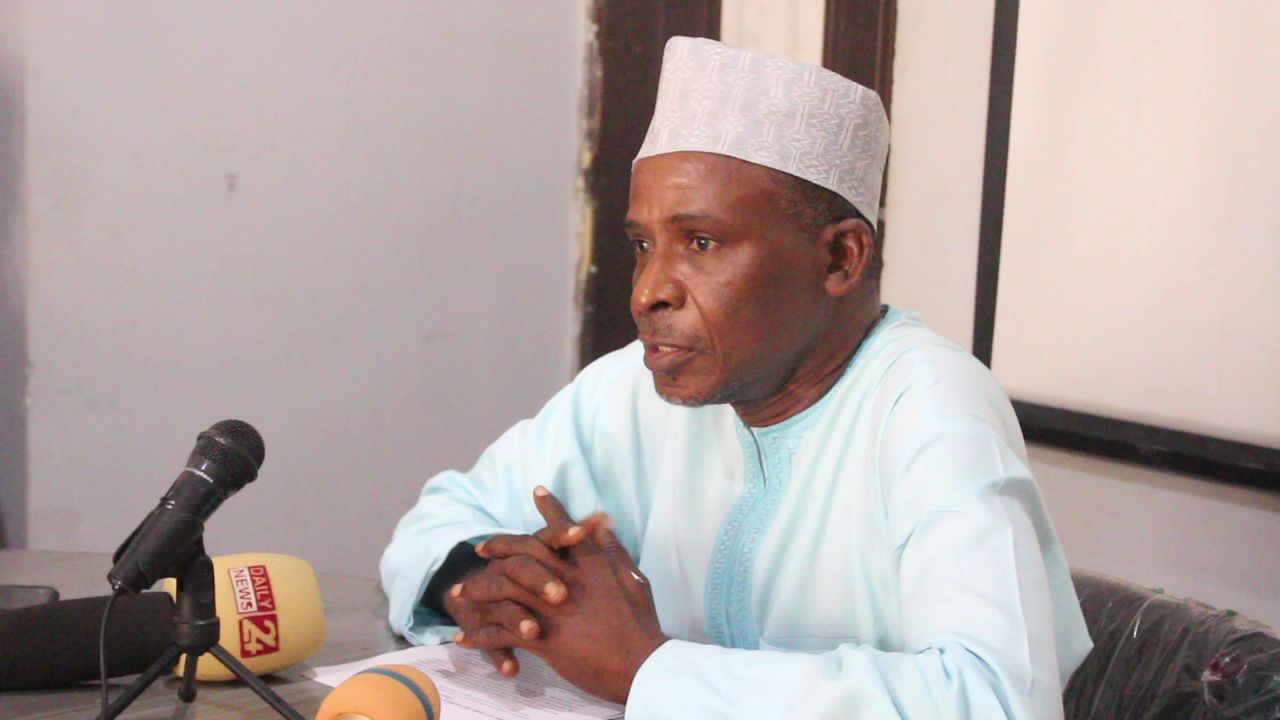
The Executive Director, Centre for Information Technology and Development (CITAD), Yunusa Zakari Ya’u has lamented over the rising cases of technology-assisted gender violence in the country.
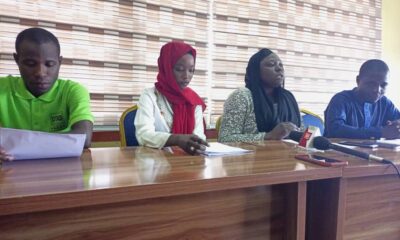
Briefing Journalists at the centre Wednesday in Kano, Ya’u said, the way in which technology is deployed specifically to harm women and girls, including harassment online, rape, kidnapping and killing facilitated via interaction and use of digital technology is disturbing.
He lamented that within the past two weeks, two very disturbing contents on the internet have been making rounds which degrade and dehumanise women and the individuals involved.
According to him, the first was a posting of sexual escape of students of Chrisland, Lagos in faraway Dubai which went viral, leading to the suspension of academic activities in the school.
The second concerned a lady in Ado-Ekiti who was invited her to a hotel room by her friend who had arranged with his three other friends and not only gang-raped her but also posted the act on the internet.
The third was a case of a lady who was kidnapped for money occurred earlier last month in Abuja when a man the lady befriended on social media invited her to his hotel, only for him and his friends to kidnap her, demanding N50 Million from her parents as ransom.
He said, “There have been many other such cases in which social media friends lured their female friends only to rape them and in some instances, kill them to cover up the crime.
12 Years After:Former President Jonathan Extols Late President Yar’Adua
“Cases of young girls falling victims of this technology assisted crime have been on the rise and are contributing negatively to the efforts to address and overcome the gender dimension of the digital divide in the country, which casts women on the negative side of the divide and making it difficult for them to access and make use of the opportunities and benefits digital technology offers for educational advancement, economic empowerment and social inclusion.”
He added that, CITAD, has for the past five years been engaged in monitoring and countering gender violence online and take this very serious, because we have in an earlier research found that gender-based violence online has been a major factor inhibiting factor for the effective use of digital spaces by girls and women in the country as they have internalised the fear that harmful content online has induced in them.
“In another research, we found that harmful content online is targeted at female politicians and women in career such as female journalists and academics, with the aim of discouraging them from those spaces, thus furthering their marginalization in those spheres. For example, female politicians are subjected to social media abuse and intimidation and that in many of cases, they were forced to drop out of contesting of elections because of this.”
He called on parents and husbands using the same excuse to prevent their daughters and wives from using the internet to adjust in their thinking as the world is transiting into making the use of internet a most a necessity to all.
“In all these cases, it is the country and society that suffer from this criminal misappropriation of the powers of the internet. As learning, commerce, social interactions and government services move online, it means that those left behind digitally or are unable to access and use the internet, will equally be left behind in those other spheres.
“Women constitute slightly more than half of the population of the country. As majority of these women are remaining offline as a result of gender violence online and other harmful contents, it means that a large population of Nigerians is left behind.
“In this situation, Nigeria cannot achieve the sustainable development goals as most of them require effective deployment and use of the internet.
“Girls are at disadvantage in getting admission to higher education because they have been prevented from learning to use digital skills which are necessary for passing the entrance examinations to the higher institutions in the country.
“Yet, here in the North we complain of lack of sufficient number of female doctors and other health related professionals, even when we deny girls the opportunity to learn digital skills to gain admission to study for medical profession.
“Women are the majority of citizens who are identity excluded in Nigeria and consequently also financial services excluded, making it difficult for them to access financial services and progress in business. Lack of identity also is inhibiting their ability to exercise their freedom of movement as some important modes of travel cannot convey people without authenticated identity.
“It is for these reason that we at CITAD takes the issue of technology-assisted gender violence online as a serious national problem, that the government has to consider and take necessary means to address it.
“We note the recent empanelling of a Committee by the Federal Government to study and propose solutions to ensuring the protection of children online.
“While we welcome this action, we would like government to also consider and act in the same manner with respect to gender violence online. It is important to reflect that technology-assisted gender violence is pernicious as it is not easily visible, making the victims to suffer doubly as victims of violence and as victims of stigmatization when they report and make their suffering public. This is why victims do not report, allowing themselves to suffer in silence.”
In this respect, Ya’u, on behalf of the CITAD, called on the federal government as well as state governments to as a matter of national urgency:
– Set up a panel to study and propose solutions to technology-assisted gender violence, including proposing legislations on how to deal with it. In making this call, we would like to caution against throwing the baby with the bathwater.
– Government should not use this as an opportunity to inhibiting access to the internet for citizens but rather improve on how citizens are able to access and safely use the internet.
– The Federal Government should incorporate safety and privacy online in the computer studies curriculum of secondary schools. In this way, computer studies can then not be just done to get a credit for admission to higher institutions but also to get life skills that will prepare the students for successful emersion into the digital world.
– While we have made computer studies compulsory at secondary schools, we have not incorporated safety issues in the curriculum. This gaps should be addressed quickly because learning computer studies is not just for passing examinations but to gain skills that are needed to fit into the digital world of today.
– Lot of the criminal uses of the internet is relating to poor understanding of digital rights.
In particular, government itself has not shown proper appreciation of the importance of digital rights. Without a bill of digital rights, the use of the digital space can be counterproductive as we see it now. In this respect, the National Assembly should quickly pass the Digital Rights Bill and the President should sign it.
– The federal government should also come up with a national digital inclusion agenda that will address the many challenges that inhibit the effective access to and use of the internet. This will contribute greatly in addressing the various dimensions of the internal digital divide in the country.













News
Thugs Attack Journalists During APC Rally in Kano

A group of suspected thugs on Saturday attacked journalists covering an All Progressives Congress (APC) rally in Kano State, smashing the windows and damaging a Radio Nigeria vehicle conveying members of the media.
The incident occurred shortly after the conclusion of a rally held at the Sani Abacha Stadium in Kano, where the leadership of a coalition of groups supporting President Bola Ahmed Tinubu was inaugurated.
According to eyewitness accounts, the thugs attacked a team of journalists who had gone to the venue to cover the event, targeting the Radio Nigeria, Pyramid FM vehicle in which some of the journalists were travelling.
The attackers reportedly used machetes and knives to strike the vehicle repeatedly, smashing its windows and damaging various parts of the bus.
Among the journalists affected in the attack were Abdulbaki Ali Ahmad Sharifai of Guarantee Radio and Yakubu Gwagwarwa of Pyramid Radio.
One of the journalists who spoke to Nigerian Tracker said the presence of security personnel inside the Radio Nigeria bus did not deter the attackers from carrying out the assault.
The journalist said the thugs continued attacking the vehicle despite the fact that security agencies were inside the bus with the journalists.
According to him, the attack created fear and confusion among the journalists, who had attended the political gathering in the course of carrying out their professional duties.
The incident has raised concerns over the safety of journalists covering political activities in Kano, particularly during large political gatherings where journalists are expected to move freely and report events without intimidation or attacks.
The motive behind the attack was not immediately clear, and it was also unclear whether any arrests had been made in connection with the incident as of the time of filing this report.
The attack comes amid increased political activities in Kano and across the country as political groups mobilise support for their respective interests ahead of future elections.
News
Gov. Mutfwang Orders Closure of Schools Across State as Diphtheria Hits Plateau

By Yusuf Danjuma Yunusa
Plateau State Governor, Caleb Mutfwang, has directed temporary closure of public and private primary schools across the state over diphtheria outbreak.
The disclosure was made in a statement on Saturday by the commissioner for information and communications, Joyce Ramnap.
She stated that the directive was effective from Monday.
She noted that the government took the decision as preventive measures against the spread of the disease.
Mrs Ramnap noted that the suspected cases had been recorded in parts of Jos North, Wase, Jos South and Bassa Local Government Areas of the state.
“Accordingly, schools that have already resumed academic activities are also directed to close from Monday, September 7, 2026, and remain closed until further notice,” the statement noted.
The statement said the governor directed school proprietors, administrators, teachers, parents and guardians were to comply with the directive.
The governor also said schools should ensure that students and pupils remain at home throughout the period as part of measures to ensure their safety including the teaching and non-teaching staff during the period.
The statement added that Mr Mutfwang appreciated the stakeholders for their understanding and cooperation as the government continued to take appropriate measures in the best interest of the residents.
”Further information on the resumption of academic activities will be communicated to the public in due course,” he said.
Reports have it that 23 peoples have been killed by diphtheria in several communities, and 143 others infected in Jos North.
News
Emir of Gumel, Ahmad Muhammad Sani, Dies After 45 Years on the Throne
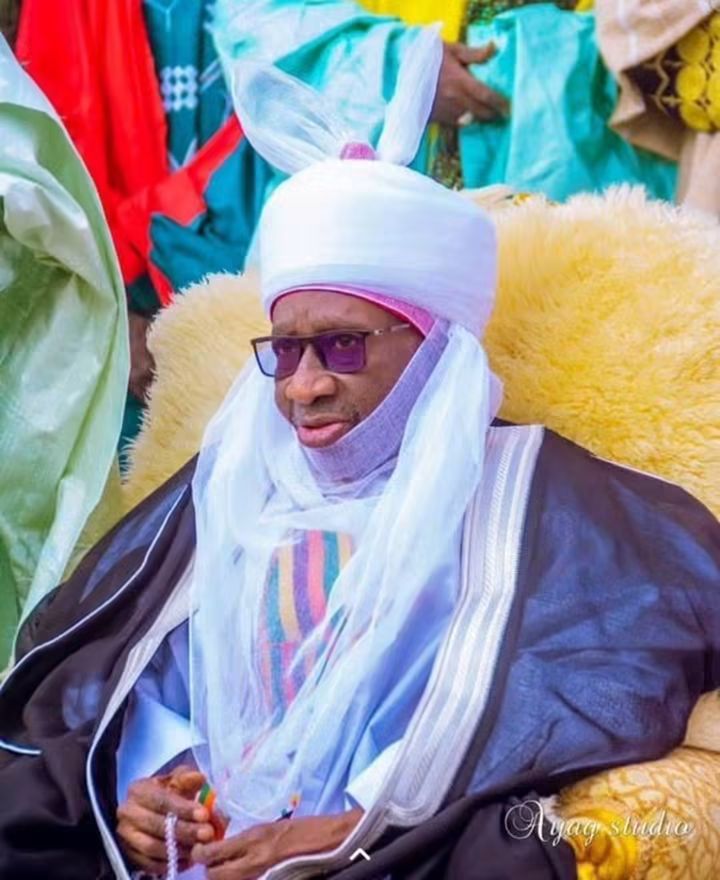
The Emir of Gumel, His Royal Highness Alhaji Ahmad Muhammad Sani II, has died after more than four decades on the throne, bringing to an end the reign of one of Northern Nigeria’s longest-serving traditional rulers.
Ahmad Muhammad Sani II, who became the 16th Emir of Gumel, ascended the throne in 1980 following the death of his father, the late Emir Maina Muhammad Sani II. He subsequently received his staff of office from the then Governor of Kano State, the late Alhaji Abubakar Rimi, in 1981.
His death marks the end of a historic reign that spanned more than 45 years and covered some of the most significant political, social and administrative changes in the old Kano State and, later, Jigawa State.
Before ascending the traditional throne, the late Emir was actively involved in public service and politics. He served as Commissioner for Information, Internal Affairs and Culture in the Kano State Government during the administration of Governor Abubakar Rimi between 1979 and 1980.
His transition from political office to the traditional institution came after the death of his father in December 1980. Historical records indicate that Ahmad Muhammad Sani was selected to succeed his father on December 16, 1980, while his formal presentation with the staff of office followed on May 29, 1981.
As Commissioner for Information, he was associated with important developments in the media sector of the then Kano State. Records indicate that during his tenure, he played a role in the establishment of Triumph newspaper and CTV67 television station, now associated with the state’s television broadcasting history, while also overseeing the expansion of Radio Kano.
His educational background was also notable. He attended Gumel Primary School and Hadejia Middle School before graduating from Kano High School at Rumfa College in 1961. He later obtained qualifications in Public Administration from the Institute of Administration in Zaria, now part of Ahmadu Bello University, and pursued further studies in Political Science and International Relations at Ohio University in the United States.
Before entering politics, Ahmad Muhammad Sani had worked with the Gumel Native Authority and later joined the Immigration Department, where he was posted to Ngamboru Ngala in present-day Borno State. He subsequently served as a senior government official in the Kazaure Divisional Office before moving into politics in 1978.
His long reign as Emir of Gumel made him one of the most experienced traditional rulers in Northern Nigeria. The Jigawa State Government describes him as the 16th Emir of Gumel and records that he had remained on the throne since 1981.
Over the years, the Emir became associated with efforts to promote peace, education, community development and the preservation of traditional values. His palace also played a role in mobilising communities around government programmes, including public health initiatives.
The World Health Organisation, for instance, previously identified the Emir of Gumel as one of the traditional rulers who played an active role in promoting immunisation activities in his emirate. The organisation reported that he publicly vaccinated his own children as part of efforts to reassure communities about the safety of polio vaccination.
Even in the later years of his reign, the Emir continued to participate in peace-building and community affairs. In 2025, he was represented at a farmers-herders peace meeting in Jigawa, where his message emphasised dialogue and mutual understanding as essential to achieving lasting peace.
In December 2025, the Emirate marked his 45th anniversary on the throne, with prominent national and traditional figures, including Vice President Kashim Shettima and the Sultan of Sokoto, participating in activities associated with the anniversary.
His death therefore comes after a reign that began in the final years of the Second Republic and continued through successive military governments, the return to democratic rule in 1999, the creation of Jigawa State and several generations of political leadership.
The Emir of Gumel’s reign also represented a unique bridge between political administration and traditional leadership. Having served as a senior political office holder before becoming a monarch, he brought extensive experience of government and public administration to the traditional institution.
With his passing, the Gumel Emirate loses a monarch whose tenure lasted more than four decades and whose public career had already begun before his accession to the throne.
Details concerning his burial arrangements, the circumstances surrounding his death and the process for selecting his successor are expected to be announced by the Gumel Emirate Council and the Jigawa State Government

Thugs Attack Journalists During APC Rally in Kano

Gov. Mutfwang Orders Closure of Schools Across State as Diphtheria Hits Plateau

Emir of Gumel, Ahmad Muhammad Sani, Dies After 45 Years on the Throne

Uber Shutdowns Operations in Nigeria

Author of ‘Rich Dad Poor Dad’ Languishes in Billion Dollar Debt

From World’s 9th Most Populous City to Perfect: As Gov Yusuf Revisits Kano Master Plan

95% of Governor Abba Kabir Yusuf’s Promises Have Been Fulfilled — CPS Interview By Musa Diso, In Kano

Kano Islamic Scholar Declares Kano Widow Marriage Programme ‘Haram’, Urges Government to Stop It

We’re aware of your clandestine meetings with Lulu-Briggs, 𝐏𝐢𝐝𝐨𝐦𝐬𝐨𝐧, CRP uncovers ex-MD of NDDC, Nunieh

Between Sabotage and Scepticism: Why Nigeria’s Oil Dream Keeps Stalling
Thugs Attack Journalists During APC Rally in Kano
Gov. Mutfwang Orders Closure of Schools Across State as Diphtheria Hits Plateau
Emir of Gumel, Ahmad Muhammad Sani, Dies After 45 Years on the Throne
Uber Shutdowns Operations in Nigeria
Author of ‘Rich Dad Poor Dad’ Languishes in Billion Dollar Debt
From World’s 9th Most Populous City to Perfect: As Gov Yusuf Revisits Kano Master Plan
95% of Governor Abba Kabir Yusuf’s Promises Have Been Fulfilled — CPS Interview By Musa Diso, In Kano
Kano Islamic Scholar Declares Kano Widow Marriage Programme ‘Haram’, Urges Government to Stop It
We’re aware of your clandestine meetings with Lulu-Briggs, 𝐏𝐢𝐝𝐨𝐦𝐬𝐨𝐧, CRP uncovers ex-MD of NDDC, Nunieh
Between Sabotage and Scepticism: Why Nigeria’s Oil Dream Keeps Stalling
-

 Opinion5 years ago
On The Kano Flyovers And Public Perception
-

 Features5 years ago
How I Became A Multimillionaire In Nigeria – Hadiza Gabon
-

 Opinion6 years ago
Kano As future Headquarters Of Poverty In Nigeria
-

 History5 years ago
Sheikh Adam Abdullahi Al-Ilory (1917-1992):Nigeria’s Islamic Scholar Who Wrote Over 100 Books And Journals
-

 Opinion5 years ago
My First Encounter with Nasiru Gawuna, the Humble Deputy Governor
-

 History5 years ago
The History Of Borno State Governor Professor Babagana Umara Zulum
-

 History5 years ago
The Origin Of “Mammy Market” In Army Barracks (Mammy Ochefu)
-

 News4 years ago
Federal University Of Technology Babura To Commence Academic Activities September