
News
Friday Sermon] Lailatul-Qadr, Zakatul-Fitr And I’itikaf
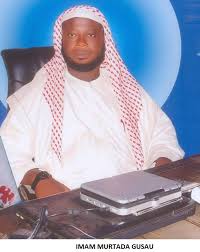
By Imam Murtadha Gusau
In the name of Allah, the Most Gracious, the Most Merciful
All praise is for Allah, we praise Him, we seek His help, we ask for His forgiveness, and we seek refuge with Allah from the evils of our own souls and the wickedness of our actions, whoever Allah guides, there is none that can lead him astray, and whoever Allah allows to go astray, there is none that can lead him to the right path.
I testify and bare witness that there is no deity worthy of worship in truth but Allah, alone, without any partners. And I testify and bare witness that Muhammad (Peace be upon him) is His Servant and Messenger. As for what’s after:
Dear brothers and sisters! The Ibadah (worship) of I’itikaf is a practice that goes back to all those who spend time in seclusion to reflect and ponder over their purpose in life and who want to achieve a higher stage of spirituality. Through their contemplation and reflection on the purpose of their existence, many have offered new and unique perspectives to their fellow humans, and many have achieved higher spiritual status. It is a practice that prevails in all cultures and religions. It inspires a human being to withdraw from the regular hustle and bustle of the world, even from his own family, and focuses on issues that he or she deems significant for oneself and society. The length of seclusion depends on the social rhythm of life in each culture and religion.
Islam institutionalised i’itikaf in the month of fasting through the practice of our beloved Prophet Muhammad (Peace be upon him.) It is a communal obligation, and it means that if only one person observes it in a locality, it would be regarded as an obligation fulfilled on behalf of all. The fasting was declared obligatory for the ninth month of the Islamic lunar calendar in the second year of Prophet’s migration (Hijrah) to Madinah or in the fifteenth year of his Prophetic mission. Except for the first year of fasting, the Prophet is reported to have observed i’itikaf as long as he lived. After him, his wives continued performing i’itikaf in the mosque. He spent ten days in the middle of Ramadan in the mosque, but he advised his companions and followers to continue doing i’itikaf in the last ten days. He once observed i’itikaf for 20 days.
I’itikaf is performed by those who are fasting. Both men and women did their i’itikaf during the time of the Prophet (Peace be upon him). At Prophet’s mosque, special arrangements were made for women following this practice of the Prophet.
During the I’itikaf a person doing i’itikaf should spend the night only in the mosque where he/she is doing i’itikaf, except if the tent is in one of the courtyards of the mosque. If the mosque does not have toilet facilities then the person doing i’itikaf can go home to relieve.
The person who wants to have i’itikaf should enter the mosque before sunset with a clear intention. During his stay, his focus should not be his family, business, or work. However, he can delegate others to take care of these matters in his absence. If due to some unavoidable situation one has to abandon the i’itikaf for intended days, he or she has to complete it later. I’itikaf is an act of Ibadah (worship) and it must be performed with full sincerity and intensity. Imam Malik said:
“A person doing i’itikaf is not doing i’itikaf until he avoids what someone doing i’itikaf should avoid, namely, visiting the sick, praying over the dead, and entering houses, except to relieve himself.”
The best practice is to absorb oneself in prayers and recitation of the Qur’an, reflecting on its meaning and relevance in one’s life. The Prophet in addition to doing this would also use the opportunity to reflect on the condition of Muslims and would discuss strategies to improve the quality of spiritual and social life. There are four things that are proven from the practice of the Prophet (Peace be upon him) during i’itikaf:
1. Consuming less food.
2. Sleeping less number of hours.
3. Lesser engagement in conversation.
4. Lesser social interaction.
Instead, he would focus on the following four:
1. Prayers.
2. Qur’anic recitation of the passages that were revealed until then.
3. Deeper reflections on the divine guidance of the existence of life.
4. Quietly helping others observing the i’itikaf.
In fact, i’itikaf is once a lifetime opportunity to focus on one’s life and purpose in relation to the creator and His creation.
Respected servants of Allah! Zakatul-Fitr is also known as Sadaqatul-Fitr. The word Fitr means the same as Iftar which is breaking a fast. So, Zakatul-Fitr is the name given to charity which is distributed at the end of the fast of Ramadan. Zakatul-Fitr is the Wajib/obligatory or we can say it is a duty on every Muslim to pay Sadaqatul-Fitr before offering Eid prayer. However, it can be paid earlier than that to enable the poor to provide their needs for the Eid day. The main aim of Zakatul-Fitr is to provide the poor with their needs and make them happy on the blessed day of Eid-ul-Fitr.
The intention of paying Zakatul-Fitr is to bring happiness to the poor on the day of Eid. And to do that we may pay it a little in advance as much as this is necessary to make it on time to the poor. Zakatul-Fitr is a seasonal payment that has a special time-related objective that is why it must stick to this time frame. Sadaqatul-Fitr becomes obligatory from sunset on the last day of fasting and remains obligatory until the beginning of Salatul-Eid. Zakatul-Fitr is an obligation which is due to the free or slave Muslim, male or female, young or adult. A man who is the head of a family pays for himself and for whomever he shelters, unless they have enough money of their own, to give out Zakatul-Fitr in Ramadan.
A person has to be a Muslim to be required to pay/give and qualify to receive Zakatul-Fitr. It is stated in Hadith in these words:
“Prophet Muhammad (Peace be upon him) made it incumbent on all the slave or free Muslims, male or female, to pay one Sa’i of dates or barley as Zakatul-Fitr.” [Bukhari]
The significant role played by Zakat in the circulation of wealth within the Islamic society is also played by the Sadaqatul-Fitr. But in the case of Sadaqatul-Fitr, each individual is required to calculate how much charity is due from himself and his dependents and go into the community in order to find those who deserve such charity.
So, we can say that Sadaqatul-Fitr plays an important role in the development of the bonds of community. The rich are obliged to come in direct contact with the poor, and the poor are put in contact with the extremely poor which helps to build real bonds of brotherhood and love within the Islamic community. Ibn Abbas reported that:
“The Prophet (Peace be upon him) made Zakatul-Fitr compulsory so that those who fasted may be purified of their idle deeds anddeeds and shameful talk (committed during Ramadan) and so that the poor may be fed. Whoever gives it before Salah will have it accepted as Zakat, while he who gives it after the Salah has given Sadaqat.” [Abu Dawud]
The amount of Zakat is the same for everyone regardless of their different income brackets. The minimum amount is one Sa’i of food, barley, grain or dried fruit for each member of the family. Paying Zakatul-Fitr is an act of worship, and all acts of worship are described through the Qur’an and Sunnah of Prophet Muhammad (Peace be upon him). May Allah accept our fasts and give us the strength to complete them in a better way by paying Zakatul-Fitr. Ameen!
Dear brothers and sisters! Many Muslims believe that 27th night of Ramadan is Lailatul Qadr, the Night of Power. But the scholars tell us that it could be any of the odd nights in the last 10 nights of Ramadan. And, Allah knows best.
We all feel a special excitement as we anticipate this great Night, and we should therefore reflect on the words of Surah 97 in the Noble Qur’an:
“We have indeed revealed this [Message] in the Night of Power. And what will explain to you what the Night of Power is? The Night of Power is better than a thousand Months. Therein come down the angels and the Spirit by Allah’s permission on every errand. Peace… this until the rise of Morning!”
What is so special about Lailatul Qadr? Why does The Qur’an describe it as “better than 1,000 months?” What if this night had never actually happened?
1,411 years ago (solar calendar), Lailatul Qadr was the night that changed history. It was the night that Angel Gabriel (Jibril AS), brought the first Words of Revelation, the very first verses of The Noble Qur’an to a man sitting in a cave on Jabal Nur, the Mountain of Light. That man, Muhammad Ibn Abdullah, became the Last Messenger and Educator of mankind, Khatimun Nabiyyin, “the Seal of the Prophets.” There would be no new Messenger, no new Prophet after him.
Just imagine! If there was no Lailatul Qadr, the Noble Qur’an would not have been revealed to us. And, if Muhammad had remained a mere man like those around him, then Prophet Isa (Jesus), would have been the last Prophet. As we all know, Prophet Isa spoke Aramaic and we have no complete and accurate version of his message (the Injil) in Aramaic. The Gospels of the New Testament were written at least 40 years after Prophet Isa’s time. The Gospel writers never met him, never heard his words directly nor did they ever see his face. St Barnabas lived in the time of Prophet Isa. His Gospel clearly foretold the coming of Prophet Muhammad (Peace be upon him). However, The Gospel of Barnabas was excluded from the Bible’s New Testament.
From the earliest days of Christianity, controversies raged over the nature of Prophet Isa (Jesus). The idea of the Trinity (3 in 1) God the Father, God the Son and God the Holy Spirit, was only established at the Council of Nicea, 325 years after Jesus!
It was the Noble Qur’an that came down to us, to clarify these controversies over Prophet Isa (Jesus). As we all know, the Qur’an we have today is exactly the same as the one revealed to Prophet Muhammad (Peace be upon him) and it is the only Scripture that has remained intact to this day, since it was revealed. Allah is its Protector. Even if all the printed Qur’ans were destroyed, millions have already memorised it by heart, and new printed versions can easily be produced with every word in its proper place. This amazing book, Allah’s Sacred Word, The Noble Qur’an, is the real gift of Lailatul Qadr.
Let us consider the world scenario on the day before Lailatul Qadr. Imagine the day before, when the man Prophet Muhammad was still deep in meditation, alone in a cave on a mountain near Makkah. His city was a playground for the rich. Might was right. The poor were oppressed. The Arabs worshipped idols made of wood and stone. Women had few rights. Newborn girls were often buried alive. Arabia was so backward that the Persian and Roman Empires didn’t bother to invade. This land and these people weren’t even worth fighting over!
As the day passed into night, Prophet Muhammad (Peace be upon him) became aware of a strange presence in that cave. It was the Angel Gabriel (Jibril AS) in the form of a man. Angel Jibril grabbed him and held him in an ever tightening embrace. Angel Jibril commanded him, repeatedly, to “READ!” Prophet Muhammad was terrified, and he kept saying “I cannot read!” But Angel Jibril persisted, squeezing the breath out of him until Prophet Muhammad almost lost consciousness. Then, slowly and painfully these majestic words emerged from his blessed lips:
“In the Name of Allah, Most Gracious, Most Merciful. Read, in the Name of your Lord (and Educator}, who created! Created human beings out of a mere clot of congealed blood. Read, and your Lord is most Bountiful. He who taught the use of the Pen. Taught mankind that which he knew not!”
Outside the Christian and Jewish worlds, the Arabs were Pagans, praying to idols of their own making. They had desecrated the Ka’abah with 360 idols, almost one for each day of the year. Arabia was in a hopeless state, and it seemed, doomed to a dismal fate. Then literally and metaphorically, out of the darkness of the Cave, and in the Arab’s darkest hour, there appeared the first words of The Noble Qur’an, the first rays of light to dispel their spiritual darkness.
That same sacred light (Nur) that filled the Cave during Lailatul Qadr, that filled the heart of our dear Prophet Muhammad (Peace be upon him), has shone brightly down the ages, to fill our lives also. Year after year, for over 1,443 years, the light of Lailatul Qadr has brought hope and renewed faith, to a world that still finds itself stumbling around, trying to find its way, trying to find its soul in the spiritual darkness of our present times.
Respected brothers and sisters! We all take great care that our homes have adequate gas and electric power. It is also important that we do not neglect our spiritual power. Let us plug our hearts and souls in to Lailatul Qadr and let’s recharge our Iman (faith) batteries. The Muslim world today is once again in a sorry state. Now as ever, we need the Light, the Nur, of Lailatul Qadr, to help us find our way to Allah’s Ridwan, Allah’s Good Pleasure.
Let us spend our Night of Power, in Zikrullah, remembering Allah Almighty, and offering thanks to Him, for his countless blessings that we enjoy each moment of our lives. Let us passionately seek Allah’s help, Glorified and Exalted is He, to lift the burden of injustice and oppression from so many Muslim communities around the world. Let us beg Him to help us become the dynamic, disciplined and balanced community, the Ummatan wasatan, the Balanced People, and the Witness to the Nations, as described in the Noble Qur’an. Let us spend this historic night offering our most heartfelt pleas to our Lord and Educator, to help us become the model Muslims that our children and all future generations can love, respect and follow.
Lailatul Qadr, The Night of Power has energised history. The brilliant and irresistible light of Allah’s revelation illuminated the darkness of human ignorance. In the 7th Century, from an unlikely land of barren deserts and wandering Bedouin, Islam lit up the world. And despite many ups and downs, in communities large and small, Islam still lights up the darkness of human weakness, ignorance and evil today.
What can we learn from the history of Islam that will help us build a better future for our children and grandchildren?
We learn that wishful thinking doesn’t work.. Our laziness won’t solve problems. Unless we strive hard in the ‘greater jihad‘ to control our lower nafs, we are the loosers. We have to look inwardly into our hearts, take stock of ourselves and follow Allah’s advice, our conditions won’t change by themselves. In Surah Al-Ra’d, (13:11), we read:
“Truly, never will Allah change the condition of a people, until they change what is within themselves…”
Allah will not change our condition, until we make the effort to turn away from what displeases Him, and we must strive, sincerely, to seek His pleasure. If we seriously want our conditions to change for the better, we must willingly sacrifice our time and effort to serve others out of love and gratitude to Allah. We must face all our difficulties and problems positively, relying on Allah to accept our efforts and to deliver good results.
Remember that, Prophet Muhammad (Peace be upon him) started his Prophetic mission, as a minority of one. The challenge was enormous. Read his amazing life story. Family and friends later joined him. But he had to work hard, with sincerity, patience and perseverance, for his community to grow. He was determined, patient and persistent. He relied on Allah alone. In time, his Ummah grew in quantity and quality. By the end of his life he had unified a country of wild and warring tribes into a real brotherhood of believers.
Within few years, the effect of that first Lailatul Qadr was that it transformed the weak and troublesome Arab tribes into a nation of Supermen. As one writer described it:
“It was as if the desert sand of Arabia had turned into gunpowder, and when the fuse of Iman (faith) was lit, the Muslims became an unstoppable, irresistible force. They exploded out of the Arabia, north, south, east and west. Even the Roman and Persian empires could not resist them.
Dear brothers and sisters! That mystical and mysterious force that descends by the command of Allah Most High, during Lailatul Qadr, the Night of Power, has proven itself in history. Its clear evidence is there for all of us to see. It can change our lives, for the better, also.
Remember that it was during Ramadan that some of Islam’s noblest and greatest victories were achieved, for example, the Battle of Badr, the Conquest of Makkah, the Conquest of Spain, and the Defeat of Genghis Khan’s Mongols at Ain Jalut.
That same irresistible light hat guided our noble and illustrious predecessors can guide us also. The magic of Lailatul Qadr is none other than Allah’s guidance in the Noble Qur’an and the Prophetic Sunnah. All over the world, millions are using the last 10 days of Ramadan to find the blessing, the barakah, of this Noble Night. Let us therefore rededicate ourselves and re-align our priorities. Let us try hard to be full-time Muslims, not just Jumu’ah Muslims or Ramadan Muslims or Eid Muslims. Allah will never accept divided loyalties. Our hearts must serve Allah alone!
Dear servants of Allah! Why not let me, and you all here, make a commitment today, to serve Allah whole-heartedly, and to let our first love be our love for Allah. And for His sake alone, let us strive every moment of every day to purify and improve ourselves, in body, heart and soul.
Anything less than this will be unworthy of us who choose to call ourselves Muslims and Believers. Only when we have purified our hearts from greed, vanity, cowardice, envy and malice, and we have filled that space with a love of truth, justice, beauty, generosity and mercy, can we expect Allah to change our condition. Once we have won this Jihadun-nafs, this battle against our Lower Self, we can deserve, and deserve, the help and Mercy of Allah.
I pray that, during this historic time, in this blessed Month, on this Great Night of Power, when His angels are sent by His Command, that Allah Most Gracious will accept our commitment. May Healso help us to purify our hearts, strengthen our faith, and enable us to meet every challenge, overcome every difficulty in our lives. May Allah allow us to serve Him in our work, in our leisure, in our study, in our business and professions and in our family life and social relations. And when the time comes for us finally to return to Him, may Allah admit us to the companionship of those whom He loves as His friends. Ameen.
Lastly, I urge all of you to remember the whole Ummah in your precious Du’as, especially in this blessed month and in the last 10 days of Ramadan.
Allah surely knows best and he is the Lords of the universe and May his peace and blessing be on his Messenger, his family, his companions and those who follow them.
I ask Allah, the Most High to grant us success and enable us to be correct in what we say and write, ameen.
Murtadha Muhammad Gusau is the Chief Imam of Nagazi-Uvete Jumu’ah and the late Alhaji Abdur-Rahman Okene’s Mosques, Okene, Kogi State, Nigeria. He can be reached via: gusauimam@gmail.com or +2348038289761.
This Jumu’ah Khutbah (Friday sermon) was prepared for delivery today, Friday, Ramadan 21, 1443 A.H. (April 22, 2022).











News
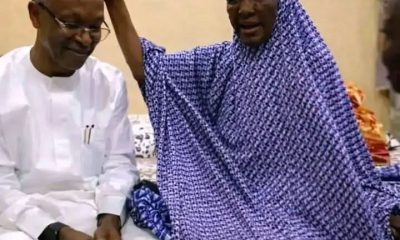
BREAKING: El-Rufai Released Following Mother’s Death, Son Alleges Unlawful Detention
By Yusuf Danjuma Yunusa
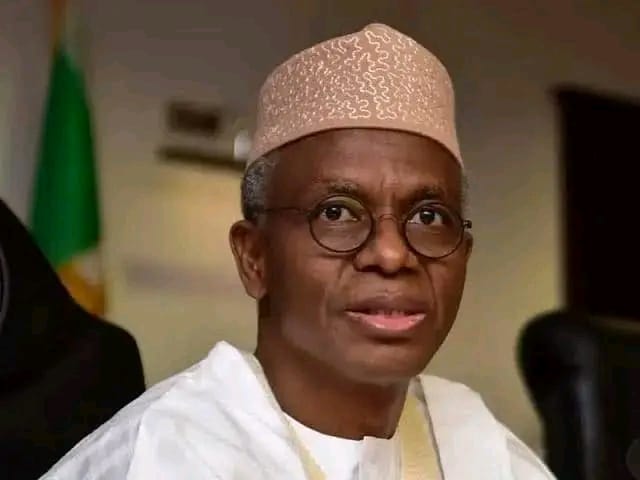
Nasir El-Rufai, the former governor of Kaduna State, has returned home after what his family describes as a period of detention, just in time for the funeral of his late mother.
His son, Bashir El-Rufai, confirmed the development in a post on X (formerly Twitter), stating that his father had been released. Bashir characterized the detention as “unlawful and illegal,” and directed sharp criticism at the agency involved, referring to it as “one of the most corrupt agencies in the Federal Republic of Nigeria that is a lame excuse of a pathetic institution.”
The former governor had reportedly presented himself to the Economic and Financial Crimes Commission (EFCC) on February 16 for questioning. According to Bashir’s account, El-Rufai was held by the commission until his release prior to the funeral.
News
Breaking:Kano Deputy Governor Resigns
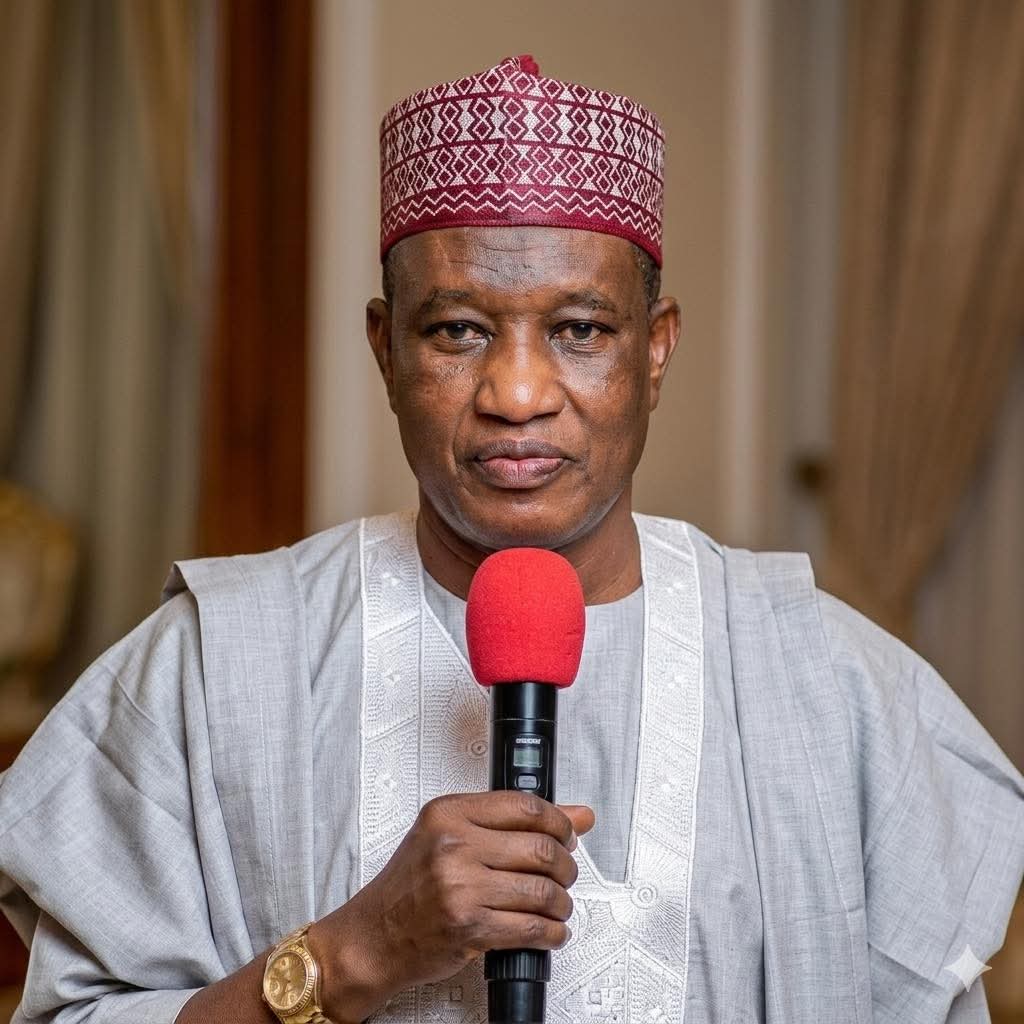
The Kwankwasiyya Movement has announced the resignation of the Deputy Governor of Kano State Comrade Aminu Abdulsalam Gwarzo, stating that the decision was formally communicated to the public in a press release issued on Friday and signed by its spokesperson, Dr. Habibu Sale Mohammed.
According to the statement, the resignation was taken “in the overall interest of the people and the stability of governance” in the state, with the movement noting that recent developments had significantly limited the Deputy Governor’s ability to fully discharge the responsibilities of the office.
The movement also addressed the ongoing issues involving the Kano State House of Assembly, emphasizing that the Deputy Governor’s decision to step down should not be interpreted as an admission of any allegations raised against him, and insisting that he continues to maintain his innocence.
Describing the move as one of “statesmanship,” the statement said the resignation was intended to reduce political tension and prevent further disruptions to governance and development efforts in Kano State, while demonstrating a commitment to peace and political maturity.
The Kwankwasiyya Movement further disclosed that the former Deputy Governor plans to redirect his focus toward strengthening the movement’s internal structures and strategies, particularly as political actors begin positioning ahead of Nigeria’s 2027 general elections.
The statement added that this renewed engagement would involve rebuilding party frameworks and pursuing strategic realignments aimed at promoting what it described as people-oriented leadership, social justice, and sustainable development.
The movement called on its supporters and residents of Kano State to remain calm, law-abiding, and committed to democratic principles, assuring the public that additional details regarding the resignation would be communicated in due course, according to the spokesperson.
Comrade Aminu Abdulsalam Gwarzo the Deputy Governor has been enmeshed in a political battle with his boss Governor Abba Kabir Yusuf since the Governor defected to the All Progressives Congress without the blessing of the NNPP National leader Senator Rabiu Musa Kwankwaso.
Recently the Kano state House of Assembly has issued Impeachment notice on Comrade Aminu Abdulsalam Gwarzo over allegation of corruption.
News
Hajiya Umma El-Rufai, Mother of Former Kaduna Governor, Passes Away
By Yusuf Danjuma Yunusa
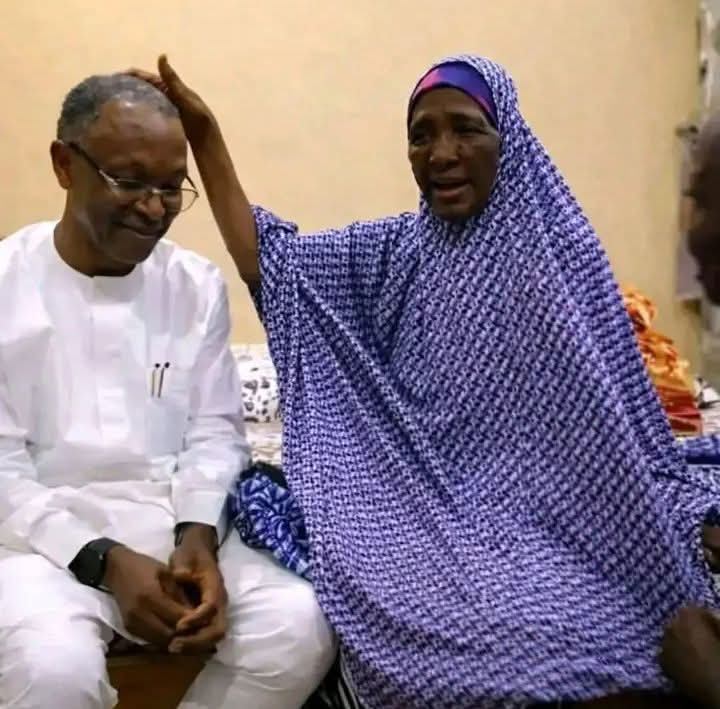
Hajiya Umma El-Rufai, the mother of former Kaduna State governor, Mallam Nasir El-Rufai, has died.
According to family sources, she passed away on Friday afternoon. While details surrounding her death remain unclear at this time, the family has since confirmed the sad event.
The announcement was made public by her grandson, Bello El-Rufai, in a statement shared on Facebook. The statement read:
“Inna lillahi wa inna ilayhi raji’un. From Allah SWT we came and to Him we shall all return.
I would like to inform the public of the demise of my grandmother, Hajiya Umma El-Rufai, who passed away a few hours ago.
She is the biological mother of our father, Mallam Nasir El-Rufai. We are grateful for the life she lived and pray that Allah SWT bless her gentle soul.
May He bless the souls of the parents we have lost. On behalf of our family, we seek your prayers. Thank you.”
The family is expected to release further details regarding funeral arrangements in due course.

APC National Convention : How DSP Barau Displays Political Sagacity, Deep Knowledge of Democracy Before President Tinubu, Others

BREAKING: El-Rufai Released Following Mother’s Death, Son Alleges Unlawful Detention

Breaking:Kano Deputy Governor Resigns

Hajiya Umma El-Rufai, Mother of Former Kaduna Governor, Passes Away

ASUU Threatens Nationwide Shutdown

The Governor Who Chose His People Over His Politics: Abba Yusuf and the Moral Courage Behind Kano First

FREEDOM OF SPEECH, NOT FREEDOM FROM CONSEQUENCE: A CITIZEN’S CALL FOR RESPONSIBLE PUBLIC COMMENTARY

Press Freedom: IPI Nigeria Calls on New Acting IGP to End Police Harassment of Journalists
Tinubu to Swear in Olatunji Disu as Inspector-General of Police on Wednesday
Restoring the Glory That Was Always There: Governor Abba Kabir Yusuf and the Historical Vision Behind Kano First
APC National Convention : How DSP Barau Displays Political Sagacity, Deep Knowledge of Democracy Before President Tinubu, Others
BREAKING: El-Rufai Released Following Mother’s Death, Son Alleges Unlawful Detention
Breaking:Kano Deputy Governor Resigns
Hajiya Umma El-Rufai, Mother of Former Kaduna Governor, Passes Away
ASUU Threatens Nationwide Shutdown
The Governor Who Chose His People Over His Politics: Abba Yusuf and the Moral Courage Behind Kano First
FREEDOM OF SPEECH, NOT FREEDOM FROM CONSEQUENCE: A CITIZEN’S CALL FOR RESPONSIBLE PUBLIC COMMENTARY
Press Freedom: IPI Nigeria Calls on New Acting IGP to End Police Harassment of Journalists
Tinubu to Swear in Olatunji Disu as Inspector-General of Police on Wednesday
Restoring the Glory That Was Always There: Governor Abba Kabir Yusuf and the Historical Vision Behind Kano First
-

 Opinion4 years ago
On The Kano Flyovers And Public Perception
-

 Features5 years ago
How I Became A Multimillionaire In Nigeria – Hadiza Gabon
-

 Opinion5 years ago
Kano As future Headquarters Of Poverty In Nigeria
-

 History5 years ago
Sheikh Adam Abdullahi Al-Ilory (1917-1992):Nigeria’s Islamic Scholar Who Wrote Over 100 Books And Journals
-

 Opinion4 years ago
My First Encounter with Nasiru Gawuna, the Humble Deputy Governor
-

 History5 years ago
The Origin Of “Mammy Market” In Army Barracks (Mammy Ochefu)
-

 History4 years ago
The History Of Borno State Governor Professor Babagana Umara Zulum
-

 News4 years ago
Federal University Of Technology Babura To Commence Academic Activities September