
News
Friday Sermon] Lailatul-Qadr, Zakatul-Fitr And I’itikaf
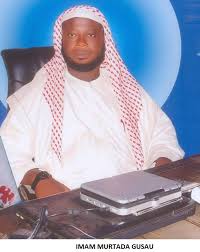
By Imam Murtadha Gusau
In the name of Allah, the Most Gracious, the Most Merciful
All praise is for Allah, we praise Him, we seek His help, we ask for His forgiveness, and we seek refuge with Allah from the evils of our own souls and the wickedness of our actions, whoever Allah guides, there is none that can lead him astray, and whoever Allah allows to go astray, there is none that can lead him to the right path.
I testify and bare witness that there is no deity worthy of worship in truth but Allah, alone, without any partners. And I testify and bare witness that Muhammad (Peace be upon him) is His Servant and Messenger. As for what’s after:
Dear brothers and sisters! The Ibadah (worship) of I’itikaf is a practice that goes back to all those who spend time in seclusion to reflect and ponder over their purpose in life and who want to achieve a higher stage of spirituality. Through their contemplation and reflection on the purpose of their existence, many have offered new and unique perspectives to their fellow humans, and many have achieved higher spiritual status. It is a practice that prevails in all cultures and religions. It inspires a human being to withdraw from the regular hustle and bustle of the world, even from his own family, and focuses on issues that he or she deems significant for oneself and society. The length of seclusion depends on the social rhythm of life in each culture and religion.
Islam institutionalised i’itikaf in the month of fasting through the practice of our beloved Prophet Muhammad (Peace be upon him.) It is a communal obligation, and it means that if only one person observes it in a locality, it would be regarded as an obligation fulfilled on behalf of all. The fasting was declared obligatory for the ninth month of the Islamic lunar calendar in the second year of Prophet’s migration (Hijrah) to Madinah or in the fifteenth year of his Prophetic mission. Except for the first year of fasting, the Prophet is reported to have observed i’itikaf as long as he lived. After him, his wives continued performing i’itikaf in the mosque. He spent ten days in the middle of Ramadan in the mosque, but he advised his companions and followers to continue doing i’itikaf in the last ten days. He once observed i’itikaf for 20 days.
I’itikaf is performed by those who are fasting. Both men and women did their i’itikaf during the time of the Prophet (Peace be upon him). At Prophet’s mosque, special arrangements were made for women following this practice of the Prophet.
During the I’itikaf a person doing i’itikaf should spend the night only in the mosque where he/she is doing i’itikaf, except if the tent is in one of the courtyards of the mosque. If the mosque does not have toilet facilities then the person doing i’itikaf can go home to relieve.
The person who wants to have i’itikaf should enter the mosque before sunset with a clear intention. During his stay, his focus should not be his family, business, or work. However, he can delegate others to take care of these matters in his absence. If due to some unavoidable situation one has to abandon the i’itikaf for intended days, he or she has to complete it later. I’itikaf is an act of Ibadah (worship) and it must be performed with full sincerity and intensity. Imam Malik said:
“A person doing i’itikaf is not doing i’itikaf until he avoids what someone doing i’itikaf should avoid, namely, visiting the sick, praying over the dead, and entering houses, except to relieve himself.”
The best practice is to absorb oneself in prayers and recitation of the Qur’an, reflecting on its meaning and relevance in one’s life. The Prophet in addition to doing this would also use the opportunity to reflect on the condition of Muslims and would discuss strategies to improve the quality of spiritual and social life. There are four things that are proven from the practice of the Prophet (Peace be upon him) during i’itikaf:
1. Consuming less food.
2. Sleeping less number of hours.
3. Lesser engagement in conversation.
4. Lesser social interaction.
Instead, he would focus on the following four:
1. Prayers.
2. Qur’anic recitation of the passages that were revealed until then.
3. Deeper reflections on the divine guidance of the existence of life.
4. Quietly helping others observing the i’itikaf.
In fact, i’itikaf is once a lifetime opportunity to focus on one’s life and purpose in relation to the creator and His creation.
Respected servants of Allah! Zakatul-Fitr is also known as Sadaqatul-Fitr. The word Fitr means the same as Iftar which is breaking a fast. So, Zakatul-Fitr is the name given to charity which is distributed at the end of the fast of Ramadan. Zakatul-Fitr is the Wajib/obligatory or we can say it is a duty on every Muslim to pay Sadaqatul-Fitr before offering Eid prayer. However, it can be paid earlier than that to enable the poor to provide their needs for the Eid day. The main aim of Zakatul-Fitr is to provide the poor with their needs and make them happy on the blessed day of Eid-ul-Fitr.
The intention of paying Zakatul-Fitr is to bring happiness to the poor on the day of Eid. And to do that we may pay it a little in advance as much as this is necessary to make it on time to the poor. Zakatul-Fitr is a seasonal payment that has a special time-related objective that is why it must stick to this time frame. Sadaqatul-Fitr becomes obligatory from sunset on the last day of fasting and remains obligatory until the beginning of Salatul-Eid. Zakatul-Fitr is an obligation which is due to the free or slave Muslim, male or female, young or adult. A man who is the head of a family pays for himself and for whomever he shelters, unless they have enough money of their own, to give out Zakatul-Fitr in Ramadan.
A person has to be a Muslim to be required to pay/give and qualify to receive Zakatul-Fitr. It is stated in Hadith in these words:
“Prophet Muhammad (Peace be upon him) made it incumbent on all the slave or free Muslims, male or female, to pay one Sa’i of dates or barley as Zakatul-Fitr.” [Bukhari]
The significant role played by Zakat in the circulation of wealth within the Islamic society is also played by the Sadaqatul-Fitr. But in the case of Sadaqatul-Fitr, each individual is required to calculate how much charity is due from himself and his dependents and go into the community in order to find those who deserve such charity.
So, we can say that Sadaqatul-Fitr plays an important role in the development of the bonds of community. The rich are obliged to come in direct contact with the poor, and the poor are put in contact with the extremely poor which helps to build real bonds of brotherhood and love within the Islamic community. Ibn Abbas reported that:
“The Prophet (Peace be upon him) made Zakatul-Fitr compulsory so that those who fasted may be purified of their idle deeds anddeeds and shameful talk (committed during Ramadan) and so that the poor may be fed. Whoever gives it before Salah will have it accepted as Zakat, while he who gives it after the Salah has given Sadaqat.” [Abu Dawud]
The amount of Zakat is the same for everyone regardless of their different income brackets. The minimum amount is one Sa’i of food, barley, grain or dried fruit for each member of the family. Paying Zakatul-Fitr is an act of worship, and all acts of worship are described through the Qur’an and Sunnah of Prophet Muhammad (Peace be upon him). May Allah accept our fasts and give us the strength to complete them in a better way by paying Zakatul-Fitr. Ameen!
Dear brothers and sisters! Many Muslims believe that 27th night of Ramadan is Lailatul Qadr, the Night of Power. But the scholars tell us that it could be any of the odd nights in the last 10 nights of Ramadan. And, Allah knows best.
We all feel a special excitement as we anticipate this great Night, and we should therefore reflect on the words of Surah 97 in the Noble Qur’an:
“We have indeed revealed this [Message] in the Night of Power. And what will explain to you what the Night of Power is? The Night of Power is better than a thousand Months. Therein come down the angels and the Spirit by Allah’s permission on every errand. Peace… this until the rise of Morning!”
What is so special about Lailatul Qadr? Why does The Qur’an describe it as “better than 1,000 months?” What if this night had never actually happened?
1,411 years ago (solar calendar), Lailatul Qadr was the night that changed history. It was the night that Angel Gabriel (Jibril AS), brought the first Words of Revelation, the very first verses of The Noble Qur’an to a man sitting in a cave on Jabal Nur, the Mountain of Light. That man, Muhammad Ibn Abdullah, became the Last Messenger and Educator of mankind, Khatimun Nabiyyin, “the Seal of the Prophets.” There would be no new Messenger, no new Prophet after him.
Just imagine! If there was no Lailatul Qadr, the Noble Qur’an would not have been revealed to us. And, if Muhammad had remained a mere man like those around him, then Prophet Isa (Jesus), would have been the last Prophet. As we all know, Prophet Isa spoke Aramaic and we have no complete and accurate version of his message (the Injil) in Aramaic. The Gospels of the New Testament were written at least 40 years after Prophet Isa’s time. The Gospel writers never met him, never heard his words directly nor did they ever see his face. St Barnabas lived in the time of Prophet Isa. His Gospel clearly foretold the coming of Prophet Muhammad (Peace be upon him). However, The Gospel of Barnabas was excluded from the Bible’s New Testament.
From the earliest days of Christianity, controversies raged over the nature of Prophet Isa (Jesus). The idea of the Trinity (3 in 1) God the Father, God the Son and God the Holy Spirit, was only established at the Council of Nicea, 325 years after Jesus!
It was the Noble Qur’an that came down to us, to clarify these controversies over Prophet Isa (Jesus). As we all know, the Qur’an we have today is exactly the same as the one revealed to Prophet Muhammad (Peace be upon him) and it is the only Scripture that has remained intact to this day, since it was revealed. Allah is its Protector. Even if all the printed Qur’ans were destroyed, millions have already memorised it by heart, and new printed versions can easily be produced with every word in its proper place. This amazing book, Allah’s Sacred Word, The Noble Qur’an, is the real gift of Lailatul Qadr.
Let us consider the world scenario on the day before Lailatul Qadr. Imagine the day before, when the man Prophet Muhammad was still deep in meditation, alone in a cave on a mountain near Makkah. His city was a playground for the rich. Might was right. The poor were oppressed. The Arabs worshipped idols made of wood and stone. Women had few rights. Newborn girls were often buried alive. Arabia was so backward that the Persian and Roman Empires didn’t bother to invade. This land and these people weren’t even worth fighting over!
As the day passed into night, Prophet Muhammad (Peace be upon him) became aware of a strange presence in that cave. It was the Angel Gabriel (Jibril AS) in the form of a man. Angel Jibril grabbed him and held him in an ever tightening embrace. Angel Jibril commanded him, repeatedly, to “READ!” Prophet Muhammad was terrified, and he kept saying “I cannot read!” But Angel Jibril persisted, squeezing the breath out of him until Prophet Muhammad almost lost consciousness. Then, slowly and painfully these majestic words emerged from his blessed lips:
“In the Name of Allah, Most Gracious, Most Merciful. Read, in the Name of your Lord (and Educator}, who created! Created human beings out of a mere clot of congealed blood. Read, and your Lord is most Bountiful. He who taught the use of the Pen. Taught mankind that which he knew not!”
Outside the Christian and Jewish worlds, the Arabs were Pagans, praying to idols of their own making. They had desecrated the Ka’abah with 360 idols, almost one for each day of the year. Arabia was in a hopeless state, and it seemed, doomed to a dismal fate. Then literally and metaphorically, out of the darkness of the Cave, and in the Arab’s darkest hour, there appeared the first words of The Noble Qur’an, the first rays of light to dispel their spiritual darkness.
That same sacred light (Nur) that filled the Cave during Lailatul Qadr, that filled the heart of our dear Prophet Muhammad (Peace be upon him), has shone brightly down the ages, to fill our lives also. Year after year, for over 1,443 years, the light of Lailatul Qadr has brought hope and renewed faith, to a world that still finds itself stumbling around, trying to find its way, trying to find its soul in the spiritual darkness of our present times.
Respected brothers and sisters! We all take great care that our homes have adequate gas and electric power. It is also important that we do not neglect our spiritual power. Let us plug our hearts and souls in to Lailatul Qadr and let’s recharge our Iman (faith) batteries. The Muslim world today is once again in a sorry state. Now as ever, we need the Light, the Nur, of Lailatul Qadr, to help us find our way to Allah’s Ridwan, Allah’s Good Pleasure.
Let us spend our Night of Power, in Zikrullah, remembering Allah Almighty, and offering thanks to Him, for his countless blessings that we enjoy each moment of our lives. Let us passionately seek Allah’s help, Glorified and Exalted is He, to lift the burden of injustice and oppression from so many Muslim communities around the world. Let us beg Him to help us become the dynamic, disciplined and balanced community, the Ummatan wasatan, the Balanced People, and the Witness to the Nations, as described in the Noble Qur’an. Let us spend this historic night offering our most heartfelt pleas to our Lord and Educator, to help us become the model Muslims that our children and all future generations can love, respect and follow.
Lailatul Qadr, The Night of Power has energised history. The brilliant and irresistible light of Allah’s revelation illuminated the darkness of human ignorance. In the 7th Century, from an unlikely land of barren deserts and wandering Bedouin, Islam lit up the world. And despite many ups and downs, in communities large and small, Islam still lights up the darkness of human weakness, ignorance and evil today.
What can we learn from the history of Islam that will help us build a better future for our children and grandchildren?
We learn that wishful thinking doesn’t work.. Our laziness won’t solve problems. Unless we strive hard in the ‘greater jihad‘ to control our lower nafs, we are the loosers. We have to look inwardly into our hearts, take stock of ourselves and follow Allah’s advice, our conditions won’t change by themselves. In Surah Al-Ra’d, (13:11), we read:
“Truly, never will Allah change the condition of a people, until they change what is within themselves…”
Allah will not change our condition, until we make the effort to turn away from what displeases Him, and we must strive, sincerely, to seek His pleasure. If we seriously want our conditions to change for the better, we must willingly sacrifice our time and effort to serve others out of love and gratitude to Allah. We must face all our difficulties and problems positively, relying on Allah to accept our efforts and to deliver good results.
Remember that, Prophet Muhammad (Peace be upon him) started his Prophetic mission, as a minority of one. The challenge was enormous. Read his amazing life story. Family and friends later joined him. But he had to work hard, with sincerity, patience and perseverance, for his community to grow. He was determined, patient and persistent. He relied on Allah alone. In time, his Ummah grew in quantity and quality. By the end of his life he had unified a country of wild and warring tribes into a real brotherhood of believers.
Within few years, the effect of that first Lailatul Qadr was that it transformed the weak and troublesome Arab tribes into a nation of Supermen. As one writer described it:
“It was as if the desert sand of Arabia had turned into gunpowder, and when the fuse of Iman (faith) was lit, the Muslims became an unstoppable, irresistible force. They exploded out of the Arabia, north, south, east and west. Even the Roman and Persian empires could not resist them.
Dear brothers and sisters! That mystical and mysterious force that descends by the command of Allah Most High, during Lailatul Qadr, the Night of Power, has proven itself in history. Its clear evidence is there for all of us to see. It can change our lives, for the better, also.
Remember that it was during Ramadan that some of Islam’s noblest and greatest victories were achieved, for example, the Battle of Badr, the Conquest of Makkah, the Conquest of Spain, and the Defeat of Genghis Khan’s Mongols at Ain Jalut.
That same irresistible light hat guided our noble and illustrious predecessors can guide us also. The magic of Lailatul Qadr is none other than Allah’s guidance in the Noble Qur’an and the Prophetic Sunnah. All over the world, millions are using the last 10 days of Ramadan to find the blessing, the barakah, of this Noble Night. Let us therefore rededicate ourselves and re-align our priorities. Let us try hard to be full-time Muslims, not just Jumu’ah Muslims or Ramadan Muslims or Eid Muslims. Allah will never accept divided loyalties. Our hearts must serve Allah alone!
Dear servants of Allah! Why not let me, and you all here, make a commitment today, to serve Allah whole-heartedly, and to let our first love be our love for Allah. And for His sake alone, let us strive every moment of every day to purify and improve ourselves, in body, heart and soul.
Anything less than this will be unworthy of us who choose to call ourselves Muslims and Believers. Only when we have purified our hearts from greed, vanity, cowardice, envy and malice, and we have filled that space with a love of truth, justice, beauty, generosity and mercy, can we expect Allah to change our condition. Once we have won this Jihadun-nafs, this battle against our Lower Self, we can deserve, and deserve, the help and Mercy of Allah.
I pray that, during this historic time, in this blessed Month, on this Great Night of Power, when His angels are sent by His Command, that Allah Most Gracious will accept our commitment. May Healso help us to purify our hearts, strengthen our faith, and enable us to meet every challenge, overcome every difficulty in our lives. May Allah allow us to serve Him in our work, in our leisure, in our study, in our business and professions and in our family life and social relations. And when the time comes for us finally to return to Him, may Allah admit us to the companionship of those whom He loves as His friends. Ameen.
Lastly, I urge all of you to remember the whole Ummah in your precious Du’as, especially in this blessed month and in the last 10 days of Ramadan.
Allah surely knows best and he is the Lords of the universe and May his peace and blessing be on his Messenger, his family, his companions and those who follow them.
I ask Allah, the Most High to grant us success and enable us to be correct in what we say and write, ameen.
Murtadha Muhammad Gusau is the Chief Imam of Nagazi-Uvete Jumu’ah and the late Alhaji Abdur-Rahman Okene’s Mosques, Okene, Kogi State, Nigeria. He can be reached via: gusauimam@gmail.com or +2348038289761.
This Jumu’ah Khutbah (Friday sermon) was prepared for delivery today, Friday, Ramadan 21, 1443 A.H. (April 22, 2022).










News
Mass Exodus Looms in Kano APC as More Chieftains Consider Exit — Mansur Ahmed
A former governorship aspirant of the Peoples Democratic Party (PDP), Engr. Mansur Ahmed, has predicted a possible mass exodus of prominent politicians and party stakeholders from the All Progressives Congress (APC) in Kano State amid persistent internal disagreements.
Ahmed made the prediction while addressing journalists following his resignation from the APC, according to a statement signed by Usman Bello on his behalf.
The former APC member described the recent resignation of party chieftain Alhaji Aminu Dabo as an indication of a deeper crisis within the party, suggesting that more prominent members could leave in the coming days.
Ahmed alleged that the Kano APC was experiencing persistent internal disputes that had continued to undermine unity among its members, with little indication that the disagreements would be resolved soon.
He further disclosed that several political leaders and stakeholders across Kano State were holding consultations over their future in the party and were considering formally resigning.
According to Ahmed, the consultations involved prominent political figures and their allies who were weighing their options before deciding on their next political destination.
Reflecting on his political career, Ahmed described himself as a former PDP governorship aspirant who also served as Deputy Coordinator of the 2015 presidential campaign in Kano.
He said he and his associates were currently consulting with political allies to determine the next direction of their political engagement following his departure from the APC.
The statement did not identify the other party leaders allegedly preparing to resign or disclose when they might announce their decisions.
It also did not indicate whether Ahmed and the politicians consulting with him had reached any agreement to join another political party.
Ahmed’s prediction comes amid continuing political realignments in Kano State as political actors assess their options ahead of the 2027 general elections.
News
Kano Donates Equipment to NDLEA
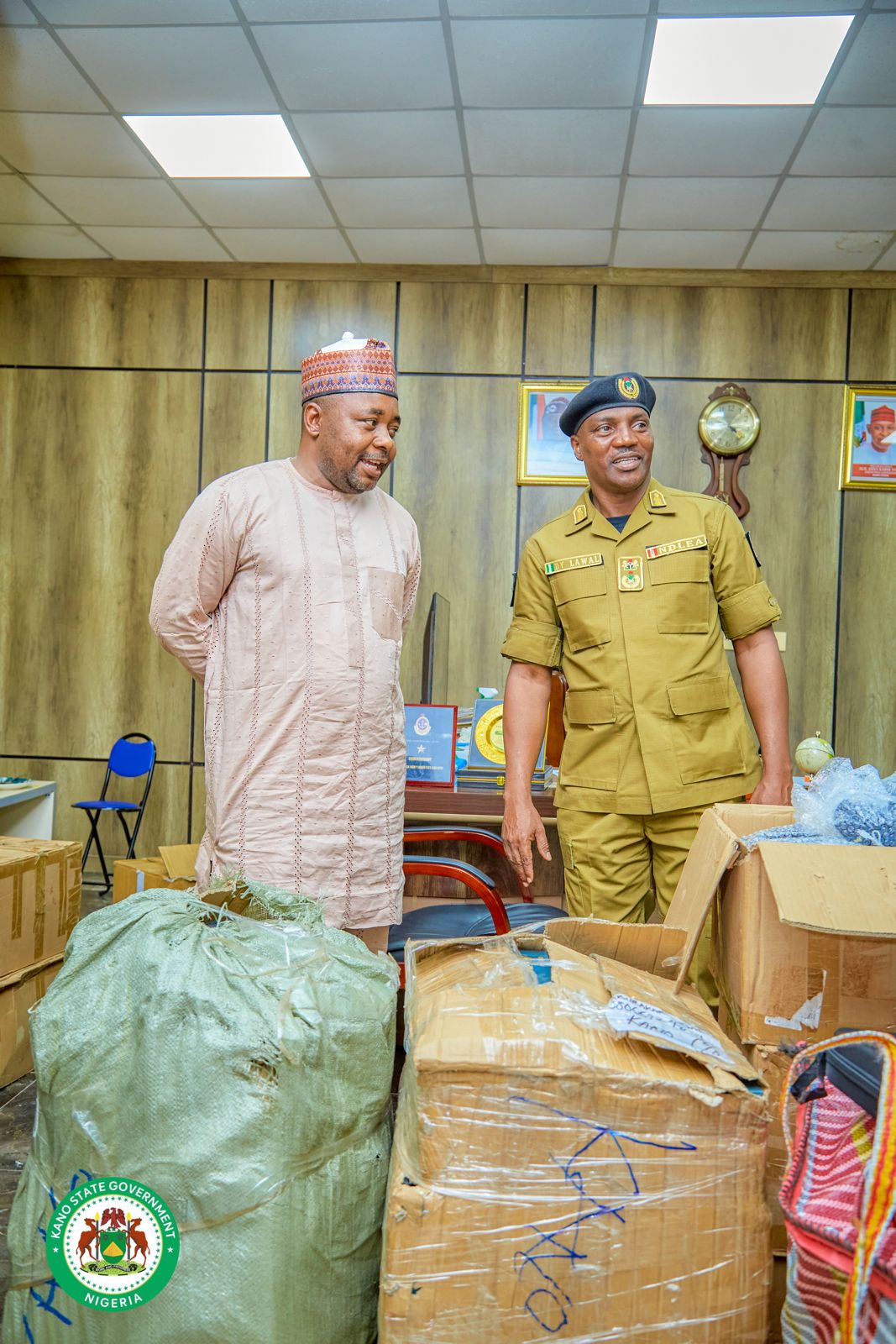
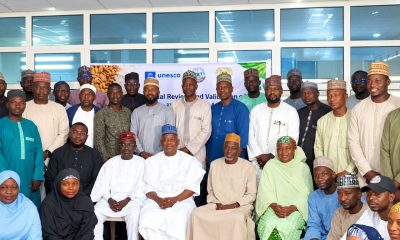
The Kano State Government has donated working tools to the National Drug Law Enforcement Agency (NDLEA), Kano Strategic Command, to strengthen the fight against drug abuse and illicit trafficking.
The items were presented on Thursday, October 22, 2026, by the Chairman of the Kano State Multi-Agency Task Force on Drug Abuse and Illicit Trafficking, Barrister Muhuyi Magaji Rimin Gado, on behalf of Governor Abba Kabir Yusuf.
Speaking at the presentation, Magaji said the donation reflected the government’s determination to tackle drug-related offences, which he identified as a major contributor to social vices in society.
He lamented that substance abuse had reached a frightening dimension, requiring concerted action by the government, security agencies and other stakeholders.
According to him, Governor Yusuf’s administration is committed to providing the necessary support to agencies responsible for combating drug abuse and illicit trafficking, using all available means to address the growing challenge.
Magaji stressed that effective coordination among relevant institutions was essential to curbing the menace and protecting the future of young people in the state.
Receiving the items, CN Dahiru Yahaya Lawan, Kano Strategic Commander of the NDLEA, expressed gratitude to the governor and the state government, describing the intervention as timely.
He said the equipment would enhance the command’s operational capacity and strengthen its efforts to combat drug abuse and illicit trafficking.
Lawan assured the government that the items would be judiciously utilised to achieve their intended purpose.
He emphasised that the fight against drugs was a collective responsibility, calling on residents, community leaders and other stakeholders to support law enforcement agencies in tackling the problem.
The donation underscores the state government’s drive to strengthen inter-agency collaboration and provide operational support for the fight against drug-related offences, with the ultimate goal of creating a safer, drug-free society.
News
NDC Kano Asks INEC to Investigate Conflicting Primary Election Reports

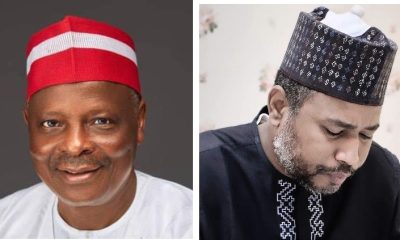
The Nigeria Democratic Congress (NDC), Kano State Chapter, has called on the Independent National Electoral Commission (INEC) to investigate the alleged issuance of multiple inconsistent monitoring reports on the party’s primary elections in the state.
The party made the call in a statement dated October 19, 2026, signed by Senior Advocate of Nigeria (SAN) Magaji Mato Ibrahim and four other lawyers, in response to a public statement issued on October 17 by Bola Aidi, SAN & Co., solicitors to five individuals claiming candidature under the NDC in Kano State.
According to the lawyers representing the NDC Kano State Chapter, the petition submitted to the INEC chairman on October 16 concerned the conduct of Mrs Hauwa Buhari, Head of the Department of Election and Party Monitoring at the commission’s Kano State office.
The lawyers said the petition sought an investigation into what they described as materially inconsistent versions of a monitoring report allegedly signed by the same INEC official concerning the party’s primary elections.
They maintained that the petition was issued with the authority of the NDC Kano State Chapter, dismissing suggestions that the party’s leadership was unaware of the complaint.
“The petition was issued on the instructions of the NDC Kano State Chapter. We have since received and confirmed those instructions,” the lawyers said.
They argued that the state chapter had the right to challenge the integrity of official records purportedly reflecting the outcome of its primary elections, particularly where such documents were being relied upon in court proceedings involving the party’s candidates.
The lawyers further alleged that the different versions of the monitoring report contained material inconsistencies, with some allegedly undated, while listing individuals who, according to the party, were neither screened nor cleared for the relevant constituencies.
They also claimed that the reports excluded candidates recognised by the party whose names appeared on Form EC9D, which they said was signed by the NDC National Chairman and National Secretary and submitted to INEC.
According to the statement, the INEC official had previously acknowledged gaps in the monitoring report, while a corrected version was allegedly forwarded to the commission’s headquarters in Abuja without formal communication or implementation.
The lawyers argued that the alleged discrepancies required an administrative investigation by INEC, irrespective of the ongoing court cases involving the disputed candidatures.
They said the commission had a responsibility to establish the authenticity of its official records and resolve any inconsistencies that could affect the integrity of the electoral process.
Lawyers Raise Concerns Over Court Proceedings
The NDC’s lawyers also questioned the circumstances surrounding the suits filed at the Federal High Court by the five individuals represented by Bola Aidi, SAN & Co., who claim to be candidates of the party in Kano State.
According to the statement, the cases were instituted and prosecuted without notice to the candidates recognised by the party until recently.
The lawyers said the affected candidates had taken steps to establish the status of the proceedings and pursue appropriate legal remedies to defend their nominations.
They expressed concern that individuals whose electoral interests were allegedly directly affected by the cases were not joined in the proceedings from the outset.
The statement argued that the failure to join such interested parties raised questions about compliance with the principles of fair hearing, particularly in pre-election disputes.
The lawyers maintained that all parties whose rights could be affected by a court’s decision should be given an opportunity to participate in the proceedings in accordance with the applicable rules of court.
NDC Questions Response by Bola Aidi, SAN & Co.
The party’s lawyers also questioned why Bola Aidi, SAN & Co. had issued a public statement defending the INEC official instead of directly addressing the allegations concerning the conflicting monitoring reports.
According to them, Mrs Hauwa Buhari is an official of a constitutional body with the institutional capacity and legal responsibility to defend its personnel and official records.
They described the decision by private solicitors representing individuals claiming candidature under the NDC to publicly defend an INEC official against a petition concerning the integrity of electoral records as unusual.
However, the lawyers cautioned against speculation, stating that any relationship between the solicitors, their clients and the conduct of the INEC official should be established through an investigation by the commission.
They insisted that the central issue remained the alleged inconsistencies in the monitoring reports and the need for INEC to determine which version accurately reflected the party’s primary elections.
Party Cites Pending Appeals
The statement also addressed the reliance by Bola Aidi, SAN & Co. on Suit No. FHC/ABJ/CS/1628/2026 and judgments delivered by the Federal High Court in Kano on October 14, 2026.
The NDC’s lawyers said the judgments were the subject of appeals and maintained that the existence of court decisions did not prevent INEC from investigating the authenticity of records generated by its officials.
They cited Section 287(3) of the Nigerian Constitution, arguing that the obligation to obey subsisting court orders did not preclude the commission from examining or correcting defective administrative records.
According to the statement, the proper forum for challenging the judgments was the Court of Appeal, adding that the respondents in the cases had already filed an appeal against the Federal High Court’s decision in Kano.
The lawyers further stated that the appeal had been served on INEC’s Kano office and its national headquarters in Abuja.
They also argued that the party’s screening and clearance records, alongside Form EC9D, showed that the five individuals represented by Bola Aidi, SAN & Co. had not fulfilled the party’s requirements for nomination in the relevant constituencies.
According to the lawyers, an INEC monitoring report could not, by itself, confer candidature on individuals who had not satisfied the party’s screening and clearance requirements.
They further maintained that such a report could not override the party’s official submission under Section 29 of the Electoral Act, 2026.
NDC Demands Immediate Investigation
The lawyers called on the INEC chairman to order an immediate investigation into the circumstances surrounding the alleged issuance of multiple inconsistent and undated monitoring reports signed by Mrs Hauwa Buhari.
They urged the commission to withdraw or disown any versions found to be defective and issue a single, authentic and properly dated report reflecting the candidates nominated by the party and submitted to the commission.
The lawyers also called on INEC to communicate the authentic report to the relevant parties and take appropriate administrative or disciplinary action if the investigation established any wrongdoing.
They argued that the commission’s independence would be strengthened by ensuring the accuracy and consistency of its official records rather than resisting complaints about alleged discrepancies.
In conclusion, the NDC Kano State Chapter reaffirmed its commitment to the rule of law and the integrity of the electoral process, according to the statement.
The lawyers said the party’s recognised candidates would pursue all available legal remedies, including the pending appeals, to protect their nominations.
They also urged all parties to allow INEC to discharge its administrative responsibility of addressing defective records while allowing the Court of Appeal to determine the pending appeals based on the evidence and applicable law.
The statement was signed by Magaji Mato Ibrahim, SAN, I.M. Abdullahi, Esq., Siraj Hamza, Esq., Fengak Obadiah Gokir, Esq., and Uchechukwu Michael Ogbei, Esq., on October 19, 2026.

Mass Exodus Looms in Kano APC as More Chieftains Consider Exit — Mansur Ahmed

Kano Donates Equipment to NDLEA

NDC Kano Asks INEC to Investigate Conflicting Primary Election Reports

Gov. Yusuf Appoints Inuwa Waya Director of International Corporations Engagement

NEC Activates 90-Day Economic Action Plan to Ease Cost of Living

Zamfara Varsity ASUU Threatens Warning Strike Over FG-ASUU Agreement, Promotion Arrears

PCACC Arrests Man Over Alleged ₦4.5m Sale, Illegal Leasing of Kano Government Horse Stable

Kano Monitors ₦48.9bn Projects Across Six LGAs

Goje’s Electoral War:The Confrontation With Tinubu,Governor Inuwa,Usman Kumo And APC candidates Ahead Of 2027

Kano Spends ₦10.36bn on Hospitality, Sitting Allowances, Others in Six Months
Mass Exodus Looms in Kano APC as More Chieftains Consider Exit — Mansur Ahmed
Kano Donates Equipment to NDLEA
NDC Kano Asks INEC to Investigate Conflicting Primary Election Reports
Gov. Yusuf Appoints Inuwa Waya Director of International Corporations Engagement
NEC Activates 90-Day Economic Action Plan to Ease Cost of Living
Zamfara Varsity ASUU Threatens Warning Strike Over FG-ASUU Agreement, Promotion Arrears
PCACC Arrests Man Over Alleged ₦4.5m Sale, Illegal Leasing of Kano Government Horse Stable
Kano Monitors ₦48.9bn Projects Across Six LGAs
Goje’s Electoral War:The Confrontation With Tinubu,Governor Inuwa,Usman Kumo And APC candidates Ahead Of 2027
Kano Spends ₦10.36bn on Hospitality, Sitting Allowances, Others in Six Months
-

 Opinion5 years ago
On The Kano Flyovers And Public Perception
-

 Features5 years ago
How I Became A Multimillionaire In Nigeria – Hadiza Gabon
-

 Opinion6 years ago
Kano As future Headquarters Of Poverty In Nigeria
-

 History6 years ago
Sheikh Adam Abdullahi Al-Ilory (1917-1992):Nigeria’s Islamic Scholar Who Wrote Over 100 Books And Journals
-

 Opinion5 years ago
My First Encounter with Nasiru Gawuna, the Humble Deputy Governor
-

 History5 years ago
The History Of Borno State Governor Professor Babagana Umara Zulum
-

 History6 years ago
The Origin Of “Mammy Market” In Army Barracks (Mammy Ochefu)
-

 News5 years ago
Federal University Of Technology Babura To Commence Academic Activities September