
News
Friday Sermon] The Muslim Ummah’s Predicaments And Their Solutions
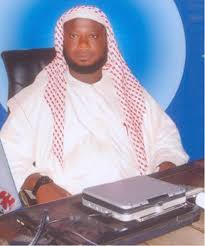
By Imam Murtadha Gusau
In The Name of Allah, The Most Merciful, The Bestower of Mercy
All praise is due to Allah, the Lord of all creation—may He extol the Messenger in the highest company of Angels and send His peace and blessings upon him—likewise upon his family, Companions, and true followers.
Dear brothers and sisters! Today, if we are to discuss the problems and issues faced by the Muslim Ummah, we shall see that many of them are related to personal lives. Collectively this is what can be observed and this is becoming the leading cause to a social decline in Muslim societies. The need of the hour is for everyone to self-introspect and rectify. At a locals, states and national levels, the leaders need to fulfill their responsibilities and roles assigned to them. Today’s sermon (Khutbah) is an attempt to highlight those areas which are leading to our destruction and decadence as an Ummah (nation).
Respected servants of Allah! When the people, especially the leaders, both individually as well as collectively begin to worry about self-analysis, weaknesses, responsibilities and how to rectify them, automatically there will be positive results that will be observed, In Shaa Allah as follows:
Dangote Fertiliser to train over 1 million farmers in three years
1. Complete Iman, Righteous Deeds, Fear of Allah and the Worry for the Day of Judgement (Akhirah):
Our beloved Prophet, Muhammad (Peace be upon him) reformed the society and raised a foundation for the Companions (Sahabas) as examples for all. This reform was of a nation who were deep in the depths of ignorance and misguidance. Murder and robbery were the norm. The society was so engrossed in the wrong that no one wanted to be their leader. Our beloved Prophet (Peace be upon him) completely reformed these people to perfect their faith, lead them to righteous deeds and the fear of Allah Almighty. He instilled in them the worry for the Day of Judgement (Akhirah). The entire society and its mindset changed. The very same people who were involved in looting and murder became leaders. Their society became an example of what was to be followed. They became successful against strong international forces such as Qaisar and Kisrah.
Whether it be our leaders or the nation, whether we speak of individuals or community as a whole, discipline is the power. The effectiveness of sound character along with the fear of Allah Almighty is the key to success. This is the sustenance that is essential. We are deprived of these basics individually as well as an Ummah (nation). The most important areas that need to be addressed are that we are far from sincerity, weakened in terms of righteous deeds and exemplary character, free from the worry of accountability and heedless of the life after death which is to follow. All of these are the very foundation, if not strengthened with Iman (faith), we cannot expect our building to be dependable.
2. The Disease of Weakness:
The Muslim Ummah today is surrounded by the whirlpool of injustice. Muslims are being massacred everywhere. Every dawn brings a greater number of chaos and problems. Our Enemies (from within and outside) are attacking the Muslims in all aspects and are bloodthirsty to eradicate the entire Muslim nation from the face of this earth. Our beloved Prophet (Peace be upon him) not only warned us of this degeneration but also gave us the reasons for this decline. In a Hadith we learn that when a nation is inflicted with a disease of “weakness,” and here ‘weakness’ is referred to the too much love of this world and the dislike of death, then such problems shall arise. This is the time when a strengthened belief, righteous deeds, fear of Allah Almighty and the worry for the Hearafter is the need of the hour. Additionally, there is a need for us to look at the lack of collective discipline within us. We have to eradicate the too much love of this world and the dislike for death as they are the foundation of all evil. Fear of death becomes a reason for a weak heart and enslavement. Once we overcome this, then we will be able to come out from many vices, In Shaa Allah.
3. Preaching Unity and Consensus:
At this time, the Muslim nations face many issues due to the lack of unity and consensus. There have formed many a groups, sects and factions based on various beliefs, geographical locations as well as cultural variances leading to hatred and enmity. The slogan of “divide and rule” has caused split in the Muslim Ummah and many walls have been erected amongst us Muslims. The link that bonded the Muslims together has been broken. We have left the teachings of the Prophet Muhammad (Peace be upon him) which has led us astray and this divide. The split into factions, prejudice and extremism has taken face which is leading to a non-ending war and corruption. If the entire Muslim Ummah comes together with unity and the end to such divides, there is no reason for problems to continue to evade us. Imagine how the world consisting of the many Muslim nations will change if it can come together as one force by holding on the rope of Allah Almighty with the prescribed instruction.
Today if the European Union (EU) exists with blocks of the European countries alleged together under a single umbrella, why cannot the Muslim nations do the same? If we continue with the divergence, problems will continue to rise.
4. Lack of concrete and strong Education:
One of the main issues faced by the Muslim nations is the lack of education. Leaders, Individuals as well as the society is to be held responsible for the lack of this. The government is also to carry this burden of responsibility. Ironically, this is the Muslim Ummah (nation) upon which the first commandment to be sent through the form of revelation was “iqra,” – read. This is the nation upon which the Prophet (Peace be upon him) was sent with the supplication:
“O Allah, increase me in my knowledge.”
This is the very nation, the identity of which is education. What a shame it is if such a nation is left behind in the race of knowledge and education.
Where the leaders are to be blamed for being negligent to provide the infrastructure for high quality education through setting an appropriate budget, the individuals are also heedless of wanting to work hard to excel in any field whether it be technology or innovation. Whether it is the field of medicine, engineering or science, we love to speak highly of the developments. Do we ever stop to think that why are Muslims no longer leaders in these fields of excellence? Why are Muslims dependent on others? Why is there a lack of literacy in the Islamic world today? Why aren’t the prestigious universities and observatories in Islamic regions?
This definitely is a time to stop and reflect. There is a dire need for us to speculate and derive some concrete conclusions leading to action plans, otherwise the future of the Muslim Ummah will continue to look darker than ever before.
5. Indolence, Sedentary Lifestyle and a Laid Back Attitude:
Our indolence is one of the prime reasons for the problems at hand. This laid back attitude is both at the individual level as well as the collective level. We prefer laziness over constructive plans and a comfortable lifestyle allowing to stay in our comfort-zones rather than “go out there and achieve” attitude. Our leaders are enjoying their royal way of life along with the politicians and head of states. The Muslim youth do not want to work hard and are happy with being sedentary. They have left the spears and arrows and found their passion in music and suchlike. All of the above has lead to the decline of the Muslim nations as a whole. We have become almost a laughing stock in front of the world. The poison of obscenity and lewdness has encompassed our generations. Wasteful and unnecessary activities and discussions have left us nowhere.
Those people who are empty of the wealth of knowledge and Iman (faith) are not promised the help of Allah. Only when people will adopt a path with a concrete direction and focus to pleasing Him, will they find success. Yet, we are deprived of this because of our own choices. We must understand and recognise this major problem and work towards trying to become more goal-oriented and productive to please Him.
6. Waste of Resources and Over-spending:
Not only do we waste human resource, but we also waste natural resources. Allah Almighty has blessed the Muslim nations with a variety of resources such as gold. We have minerals in abundance. Whether we look at it with respect to agriculture, mineral or seasonal produce, the Muslim nations have an overflowing wealth of resources. Yet, we are not able to plan the efficient use of these blessings.
The enemies have taken out oil from the Muslim countries. The contracts for gold extraction has been given to others and negotiated at a lesser value than what they are actually worth. We do not have ability to build dams on our own rivers. And the command of preparing against the enemy was given to us through these words of the Qur’an:
“And prepare against them whatever you are able of power and of steeds of war…” [Surah Al-Anfal: 60]
We are even unable to look after our own necessary resources, lest prepare against enemies!
Moreover, the waste of resources and over-spending has made us brothers to Devils (Shayatin). As it is stated in the Qur’an:
“Indeed, the wasteful are brothers of the devils (Shayatin).” [Surah Al-Isra: 27]
Our wealthiest of people are loaded with gold which is greatly manifested through ceremonies and clothing in celebrations of weddings. We are drowned under the love of material wealth and spending excessively on food to utilities as compared to an ordinary man who is unable to afford even one meal for the day. We are so occupied in spending, it is unbelievable! This is a weakness and we need to change.
Please, let’s adopt the way of Prophet Yusuf (AS) who was wise enough to teach us how to pace the spending through a mediocre way of managing the resources when he did the same for Egypt. He intelligently managed the resources for an entire nation and spread it out in to save the people of famine and provide relief. He was able to do this by adopting three (3) means. What were they?
1. Sincerity
2. Moderate Spending
3. Planning
And the nation was saved from a decline that would have finished it all.
7. Corruption and Wrong Intention:
Corruption and ill will is one of the major underlying issue. This is found at all levels of the Muslim societies. The Prophet (Peace be upon him) predicted this for the very same reason. In a Hadith we learn, the gist of which is that close to the end of times, sincerity will be lifted. People will say there is one man who is sincere and trustworthy. This implies the scarcity of both trustworthiness as well as sincerity close to the end of times. We see this happening today.
Today, if our judicial systems, societies, countries, organisations and each individual becomes free of the curse of corruption and adopts sincerity, the Muslim world will take a new order.
8. Injustice and Unfairness:
There is a famous saying of Ali (RA):
“Societies can exist with unbelief (kufr) but not with injustice.”
Today, in the Muslim countries, injustice has taken many forms. We witness the injustice of other nations upon the Muslim Ummah, but we also witness this at the position of the one in authority. The one in authority assumes power and oppresses the one below whether it be with wealth, power, status or ranks. Justice is not being served and even the concept of justice seems to be dwindling at all levels. Unless, we create a foundation of justice, our problems will not only remain unresolved, but will also grow exponentially.
9. Inferiority Complex:
Another prime reason for the issues faced by Muslim Ummah is the feeling of being inferior as compared to the rest of the world. This feeling of being lowly than others causes us to become in awe of other religions as well as nations. We become slaves to their way of life and ideologies. Unable to set our own boundaries and practice our own ways, we have allowed foreign cultures and religions to take over our very set ways of Islam. Unless we become confident that our religion provides a wonderful system of life, we will be unable to move on with grace and honour. We have only to blame ourselves, here.
10. Differences in Status:
The concept of bureaucracy is another cause of the decline of the Muslim Ummah. Today we are engrossed in the pride of our lineage, of our status, of our wealth causing a rift in the hearts and minds of people. The tribal system has taken over us and even the most educated ones fall prey to this delusion that they are “above all” and have a sense of false entitlement.
Each area has taken the authority to practice its own law with regards to reward and punishment, leaving behind the Shari’ah. The Prophet Muhammad (Peace be upon him) has warned us of such differences and told us clearly that this became the reason for the destruction of previous nations. We are strictly told to stay away from this vice.
11. Influence of the West:
Sadly, today those who call themselves activists, reformers or carry projects of philanthropy are under the influence and following of the West. The reformers are not aware of the following of Islam, rather are guiding people to the ways and thoughts of the Non-Muslims. This is taking us away from the basic teaching of character building, obedience as well as our roles as defined by the Creator.
The media, today, plays a very important role in this negative propagation and changing of mindset in the Muslim nations especially the youth. The youth are being told that whatever practice of Islam has been prescribed is backward and not for this time. There is a better way out there which needs to be adopted. Hence, Islam needs to be reformed under the current times. It is evident that the role media plays internationally is that of to demean Islam. It propagates obscenity and impermissible acts making it acceptable.
Our main problem as Muslim nations is that we do not condemn such people who are out to change the Islamic culture under the name of “modernism”, “growth” and “liberation.” We have handed over all platforms to such people and stepped back. As Muslim communities, we all need to step up, create our own way so the nations can be given a correct and true perspective of what ideologies Islam really is based upon.
12. Inability To Self-Reform:
Another area which deeply requires our attention is that we do not wish to self-introspect but continue on to rectify others. The general public speaks out against leaders. Those in position, in return, bad mouth the public. It is a vicious cycle. We need to set our priorities and focus on ourselves rather than trying to please international nations. Leaders are required to become mindful and sensitive towards the needs of their people. Let’s leave aside the “blame-game” which is not only found with regards to the general public and leaders but is also very much a part of the Muslim culture as a while. We do not mean what we say and this is a very big vice. Instead of adopting the culture of pointing fingers at the other, let us all look deep within and change ourselves. All the areas that have been highlighted above require a rectification at the level of the self as well as Muslim nations as a whole. Only then can we imagine Muslims to unite and become one body. For this, we all need to work towards betterment with sincerity and effort. We need to go ahead and invest our wealth for the Muslim nation to become what was dreamed of with the advent of Islam.
May Allah Almighty give us the ability for these changes and have mercy upon us, ameen.
Dear brothers and sisters this messages and sermons is always brought to you by Nagazi-Uvete Islamic Center.
We sincerely seek your financial support on the feeding in this blessed month of Ramadan. Your support is highly needed for Allah’s sake.
As usual, we sincerely solicit for your kind and sincere contribution towards the Ramadan feeding of our orphans, widows and less privileged; and the development of our schools and Islamic Center financially, materially and morally.
Our aim and objective always is to have a standard Islamic center and Arabic/Islamic schools for orphans and less privileged Muslims children in Nigeria.
If you want to pay your Zakah, Sadaqah, Fidyah, or Kaffarah, our great Islamic center is waiting for you. Your Ramadan donation will help distribute food packs, and iftar food for our orphans.
Remember, Ramadan will not be the same without our families, but unfortunately this is not a privilege enjoyed by everyone. This is the reason we’re steadfast in planning to provide iftar for poor people, orphans, widows, less privileged etc.
We are planning to distribute food stuff package that worth amount of to 4000 poor Muslim families and 2000 orphans In Shaa Allah.
And your contribution towards feeding the fasting souls is highly waiting as usual. May Allah rewards all your efforts and your good deeds, ameen.
Allah Almighty says:
“If you support the course of Allah, He will support you.” [Qur’an, 47: 7]
The Prophet Muhammad (Peace be upon him) said:
“Whoever relieves his Muslim brother of a hardship from the hardships of this world, Allah shall relieve him of a hardship from the hardships of the Day of Judgement. And whoever makes things easy for a person in difficulty, Allah will ease for him in this world and the Next. Allah is forever aiding a servant so long as he is in the aid of his brother.”
And he (Peace be upon him) said:
“Every act of goodness is considered as Sadaqah.” [Al-Bukhari]
We need the followings:
• Permanent buildings with many classes
• Boards, chairs and desks
• Arabic and Islamic books
• Feeding facilities
• Uniforms
• Computers
• Foodstuffs for Ramadan Iftar and clothes for orphan’s Sallah festival
Account details:
Account no. – 0048647196
Account name – Murtala Muhammed
GTBank
For more enquiries contact, Imam Murtadha Muhammad, the director and Imam Of the Center: 08038289761.
To donate foodstuffs. Contact the following Numbers: 08038289761, 08056557477
Jazakumullah Khairan as you kindly contribute.
Allah surely knows best and he is the Lords of the universe and May his peace and blessing be on his Messenger, his family, his companions and those who follow them.
I ask Allah, the Most High to grant us success and enable us to be correct in what we say and write, ameen.
Murtadha Muhammad Gusau is the Chief Imam of Nagazi-Uvete Jumu’ah and the late Alhaji Abdur-Rahman Okene’s Mosques, Okene, Kogi State, Nigeria. He can be reached via: gusauimam@gmail.com or +2348038289761.
This Jumu’ah Khutbah (Friday sermon) was prepared for delivery today, Friday, Ramadan 07, 1443 A.H. (April 08, 2022).







News
Alkalanci Unites Clerics and Journalists in Gombe to Combat Misinformation Ahead of Elections

Religious leaders, media professionals, and stakeholders have converged in Gombe State for a two-day capacity-building workshop aimed at combating misinformation and promoting media literacy ahead of Nigeria’s election season.
The workshop, organised by Alkalanci, a fact-checking and media literacy organisation, brought together the Islamic clerics and journalists to strengthen community resilience against false narratives, disinformation and emdisinformation and emerging threats such as deep fakes.
Speaking at the opening ceremony, the editor of Alkalanci, Alhassan Bala, described the initiative as both timely and urgent, warning that the country faces heightened risks of misinformation as the elections approach.
The workshop featured practical sessions on fact-checking, verification of digital content, and strategies for countering false narratives.
Organisers disclosed to Arewa PUNCH that similar trainings have been held in Kano and Sokoto, with expansion plans across Nigeria to build a network of “resilient communities” anchored on truth and accountability.
“Our goal is to create communities where misinformation can not easily take root because people are equipped to challenge and reject it,” Bala said.
“This year is an election eve period, and misinformation is expected to rise not just from local actors but also through foreign information manipulation and interference,” Bala noted.
With the growing sophistication of AI-generated content like deepfakes, we must equip influential voices to protect themselves and their communities from falsehood,” he alerted.
The editor further warned that the rapid spread of unverified content poses a direct threat to peace and unity.
“A single message can reach thousands within minutes. Unfortunately, much of what circulates is misleading or harmful. That is why we are here to build resilience through truth,” he insisted.
Bala noted that the training specifically targets Islamic clerics due to their influence in shaping public opinion.
“For millions, your voices are sources of guidance and authority. With that trust comes the responsibility to ensure what you share is verified and beneficial,” he said.
Representing the Emir of Gombe, Abubakar Shehu-Abubakar, the Dan Amana Gombe, Alhaji Abubakar Isma’ila, underscored the moral and religious obligation to uphold truth.
“Misinformation and disinformation remain among the most pressing challenges of our time, often leading to social tension and conflict,” he said.
Punch
News
Nigeria’s Opposition Coalition: Navigating Leadership Tussles, Candidate Selection, and the Road to 2027
By Yusuf Danjuma Yunusa
The Nigerian political landscape is currently simmering with uncertainty as the country’s embattled opposition coalition grapples with a series of interconnected dilemmas. From internal party squabbles to the high-stakes question of a presidential candidate capable of unseating incumbent Bola Ahmed Tinubu in 2027, the coalition’s path forward is anything but straightforward. This report provides a detailed examination of the key fault lines within the opposition, the strategic calculations underway, and the prospects for a unified challenge against the All Progressives Congress (APC).
The Party Allegiance Conundrum: Stay or Abandon the ADC?
At the heart of the opposition’s immediate crisis is the question of which political platform to adopt. The coalition had previously coalesced around the African Democratic Congress (ADC), but the party has since become deeply factionalised, raising doubts about its viability as a vehicle for a credible electoral challenge. Alternatives such as the New Democratic Congress (NDC) and the People’s Redemption Party (PRP) have been floated as potential replacements.
After intense internal deliberations, coalition leaders have resolved not to abandon the ADC at this critical juncture. Their reasoning rests on two pillars. First, they argue that considerable resources—financial, organisational, and political—have already been invested in building the ADC into a formidable opposition force ahead of the 2027 general election. Second, they contend that the ruling APC’s strategy of suppressing opposition platforms is not unique to the ADC. In their view, leaving the ADC for another party without first cleansing it of “bad eggs” would only export the same dysfunction to any new vehicle. Therefore, calls to exit solely because of the ongoing leadership tussle have been firmly rejected.
The Presidential Candidate Puzzle: Atiku, Obi, Kwankwaso, or Amaechi?
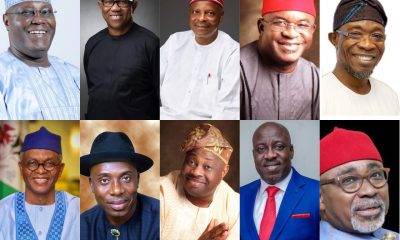
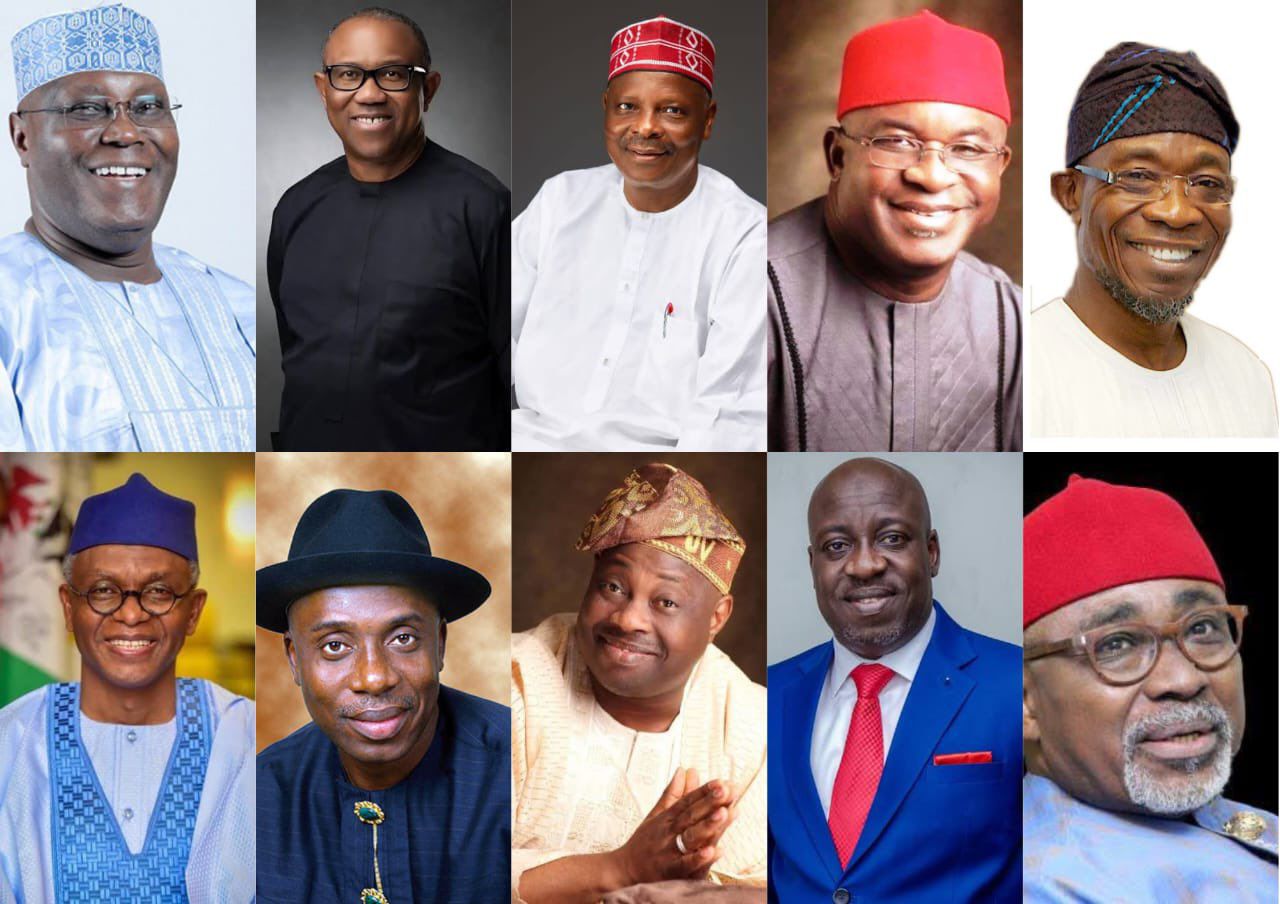
Beyond the party platform issue lies an even more contentious dilemma: who will fly the coalition’s flag as presidential candidate. The quartet of political heavyweights—former Vice President Atiku Abubakar (PDP), former Governor of Anambra Peter Obi (Labour Party/ADC), former Governor of Kano Rabiu Kwankwaso (NNPP), and former Minister of Transport Rotimi Amaechi (APC defector)—each command significant followings. Yet their rivalry threatens to fragment the coalition before it can even take shape.
The Atiku-Obi Ticket Proposition
Political pundits have suggested that the coalition’s strongest chance lies in reviving the 2019 formula: Atiku as presidential candidate and Peter Obi as his running mate. Proponents argue that this combination balances regional and ethnic considerations—Atiku drawing from the north-east and Obi from the south-east—while leveraging the name recognition of both figures. The ticket would also present a direct contrast to President Tinubu’s southern Muslim identity.
The Kwankwaso-Obi Counterproposal
Observers have countered that the electorate may be suffering from “Atiku fatigue,” noting that the former vice president has contested every election cycle since 2007 without success. These analysts argue that it is time for Atiku to step aside and allow a Kwankwaso-Obi pairing, with Kwankwaso at the top and Obi as his deputy. They believe that Kwankwaso’s northern grassroots appeal, combined with Obi’s youth and digital following, could replicate the “outsider” energy that propelled Obi to third place in 2023.
The Obedient Movement’s Resistance and Obi’s Stated Position
The permutations become more fraught once the Obedient Movement—the sprawling, youth-led network that propelled Peter Obi to unexpected prominence in 2023—is factored in. The movement has been unequivocal: Peter Obi will not deputise for anyone. Its leaders view Obi not merely as a candidate but as the embodiment of a generational and governance reform movement. Any suggestion that he accept a vice-presidential slot is met with fierce resistance.
For his part, Peter Obi has repeatedly stated that he will be on the 2027 presidential ballot as a flag bearer of a party. Observers have interpreted this stance in two ways. Either he remains committed to his previous political platform—the Labour Party, which gave him the ticket in 2023—or he has prepared an alternative in the event that the coalition’s chosen vehicle (the ADC) becomes unworkable.
Speculation of an Obi Exit from ADC
With the ADC’s leadership crisis now fully manifest, social media and political circles are rife with speculation that Obi may soon abandon the ADC altogether. The most likely destination is a return to the Labour Party, where he still enjoys substantial institutional loyalty. However, other unnamed parties are also said to be under consideration. The coalition’s ability to hold together could hinge on whether Obi decides to remain within the fold or strike out on his own.
The Electability Question: Can Obi Defeat President Tinubu?
Beyond the internal machinations, analysts are divided on whether Peter Obi—even if he secures a presidential ticket—can actually defeat President Bola Ahmed Tinubu in 2027.
The Case for Obi’s Victory
Proponents of Obi’s electability point to the momentum he generated in 2023, when he captured over six million votes despite running on a relatively unknown party platform. They argue that if that momentum remains intact—and if he selects a northern Muslim as his running mate to balance the ticket—he could defeat Tinubu. The reasoning rests heavily on the north’s growing disillusionment with the president. Tinubu’s economic policies, including the removal of fuel subsidies and unification of exchange rates, have triggered steep inflation and a cost-of-living crisis. Furthermore, political observers note that Tinubu’s administration has engaged in what many northern elites perceive as the political persecution of prominent northern figures, allegedly to neutralise potential challengers from the region. This combination of economic pain and political marginalisation, they argue, could drive a decisive northern rejection of the incumbent.
The Counterargument: Obstacles to an Obi-Led Ticket
Opposing analysts offer a sobering rebuttal. They note that any ticket with Obi at the top would require a northern politician to accept the vice-presidential slot. But among the coalition’s leading lights—Atiku, Kwankwaso, and even Amaechi—none are likely to subordinate themselves to Obi. Atiku sees himself as the elder statesman and natural standard-bearer. Kwankwaso commands his own northern power base and has little interest in playing second fiddle. Consequently, the prediction that Obi could defeat Tinubu, while not impossible, rests on a political alignment that currently shows no signs of materialising. Without a willing and credible northern running mate, Obi’s chances remain speculative at best.
The Nigerian opposition coalition stands at a defining moment. It has chosen to stay and fight for control of the factionalised ADC, rejecting the easier path of switching to a new platform. Yet that decision may prove pyrrhic if the leadership tussle continues to drain energy and credibility. Simultaneously, the unresolved question of a presidential candidate threatens to fracture the alliance before it can present a united front. Peter Obi’s unwillingness to play a subordinate role, coupled with the Obedient Movement’s intransigence, creates a high-stakes bargaining environment. Meanwhile, the coalition’s ultimate viability depends on whether it can translate anti-Tinubu sentiment—particularly in the north—into a coherent electoral strategy.
As 2027 approaches, the opposition would do well to remember that Nigerians are watching not only for charisma but for competence, unity, and a credible plan to address the nation’s deepening economic and security challenges. The current web of dilemmas, if left unresolved, may hand President Tinubu a second term by default.
News
INEC Urges Broadcasters to Uphold Fairness Ahead of 2027 Elections
By Yusuf Danjuma Yunusa
The Independent National Electoral Commission has underscored the critical role of broadcast media in safeguarding electoral integrity, urging broadcasters to uphold fairness, professionalism, and accuracy ahead of the 2027 general elections.
Addressing the 81st General Assembly of the Broadcasting Organisations of Nigeria on Wednesday in Abuja, the INEC chairman, Prof. Joash Amupitan, stressed that the management of the airwaves under the Electoral Act 2026 would be decisive in shaping public trust and democratic outcomes.
Amupitan noted that the growing influence of broadcast platforms has made it central to political communication.
He warned, saying, “Your airwaves have become the primary infrastructure of our democracy. If they are clear, the nation sees the truth; if they are clouded by misinformation, the sovereign will of the people is threatened.”
Amupitan highlighted key provisions of the Electoral Act 2026, particularly those mandating equal access to media platforms and prohibiting the misuse of state-owned media.
He explained that “state apparatus, including the media, shall not be employed to the advantage or disadvantage of any political party or candidate at any election”.
He also emphasised that media time shall be allocated equally among the political parties or candidates at similar hours of the day.
Amupitan further cautioned against inflammatory political messaging, citing the law, which states that “a political campaign or slogan shall not be tainted with abusive language directly or indirectly likely to injure religious, ethnic, tribal or sectional feelings.”
The commission also reiterated restrictions on campaign broadcasts close to election day, noting that “any person, print or electronic medium that broadcasts, publishes, advertises or circulates any material within 24 hours immediately preceding or on polling day commits an offence under this Act.”
While acknowledging the reforms introduced by the new law, the INEC chairman raised concerns over enforcement gaps, regulatory overlap, and the growing influence of digital media, warning that these challenges could undermine the effectiveness of the legal framework.
He called for stronger collaboration between regulators and industry players, proposing an alliance involving INEC, BON, security agencies, and the judiciary to ensure compliance and accountability.
With the countdown to the 2027 elections underway, the Commission disclosed that “283 days remain until the Presidential and National Assembly Elections on January 16, 2027,” and “304 days to go” before the governorship and state assembly polls.

EXCLUSIVE: How DSP Barau Douses Tension In Kano’s Noisy Politics

The Final Betrayal Of A Red Neck?-Martin Yakwo

Alkalanci Unites Clerics and Journalists in Gombe to Combat Misinformation Ahead of Elections

Nigeria’s Opposition Coalition: Navigating Leadership Tussles, Candidate Selection, and the Road to 2027

INEC Urges Broadcasters to Uphold Fairness Ahead of 2027 Elections

ADC Leadership Crisis: State Chairmen to Elect Caretaker Committee on Tuesday

Governor Abba Kabir Yusuf Holds Exclusive Prerogative to Choose Deputy – Malam Inuwa Waya

DSP Barau As A Global Citizen, His Recent Global Engagements

NUJ Kano Online Chapel Tightens Membership Standards, Approves 31 Applicants After Rigorous Screening

APC National Convention : How DSP Barau Displays Political Sagacity, Deep Knowledge of Democracy Before President Tinubu, Others
EXCLUSIVE: How DSP Barau Douses Tension In Kano’s Noisy Politics
The Final Betrayal Of A Red Neck?-Martin Yakwo
Alkalanci Unites Clerics and Journalists in Gombe to Combat Misinformation Ahead of Elections
Nigeria’s Opposition Coalition: Navigating Leadership Tussles, Candidate Selection, and the Road to 2027
INEC Urges Broadcasters to Uphold Fairness Ahead of 2027 Elections
ADC Leadership Crisis: State Chairmen to Elect Caretaker Committee on Tuesday
Governor Abba Kabir Yusuf Holds Exclusive Prerogative to Choose Deputy – Malam Inuwa Waya
DSP Barau As A Global Citizen, His Recent Global Engagements
NUJ Kano Online Chapel Tightens Membership Standards, Approves 31 Applicants After Rigorous Screening
APC National Convention : How DSP Barau Displays Political Sagacity, Deep Knowledge of Democracy Before President Tinubu, Others
-

 Opinion4 years ago
On The Kano Flyovers And Public Perception
-

 Features5 years ago
How I Became A Multimillionaire In Nigeria – Hadiza Gabon
-

 Opinion5 years ago
Kano As future Headquarters Of Poverty In Nigeria
-

 History5 years ago
Sheikh Adam Abdullahi Al-Ilory (1917-1992):Nigeria’s Islamic Scholar Who Wrote Over 100 Books And Journals
-

 Opinion4 years ago
My First Encounter with Nasiru Gawuna, the Humble Deputy Governor
-

 History5 years ago
The Origin Of “Mammy Market” In Army Barracks (Mammy Ochefu)
-

 History4 years ago
The History Of Borno State Governor Professor Babagana Umara Zulum
-

 News4 years ago
Federal University Of Technology Babura To Commence Academic Activities September