
News
Hunger Hits Over 27 Million People as West Africa Faces it’s Worst Food Crises
By Bashir Hassan Abubakar
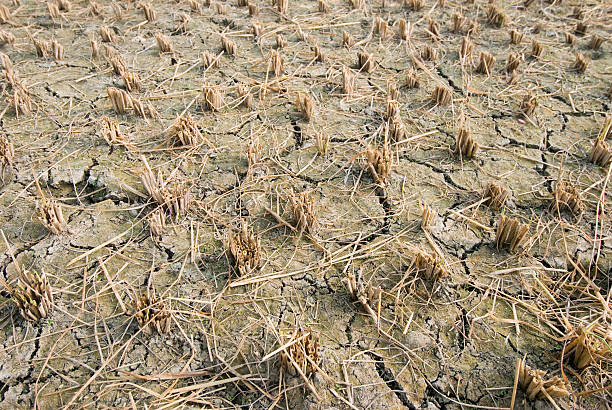
West Africa is hit by its worst food crisis in a decade, with 27 million people going hungry. This number could rise to 38 million this June – a new historic level and already an increase by more than a third over last year- unless urgent action is taken.
This alert was contained in a press statement issued by eleven international organizations in response to new analyses of the March 2022 Cadre Harmonisé (CH), ahead of the virtual conference on the food and nutrition crisis in the Sahel and Lake Chad organized by the European Union and the Sahel and West Africa Club.
Over the past decade, far from abating, food crises have been increasing across the West African region, including in Burkina Faso, Niger, Chad, Mali, and Nigeria. Between 2015 and 2022, the number of people in need of emergency food assistance nearly quadrupled, from 7 to 27 million.
An Insight: The Impact of Covid-19 on Street hawkers, Case Study Of Kano State
“Cereal production in some parts of the Sahel has dropped by about a third compared to last year. Family food supplies are running out. Drought, floods, conflict, and the economic impacts of COVID-19 have forced millions of people off their land, pushing them to the brink” says Assalama Dawalack Sidi, Oxfam’s regional director for West and Central Africa
“The situation is forcing hundreds of thousands of people to move to different communities and to live with host families who are already living in difficult conditions themselves. There is not enough food, let alone food that is nutritious enough for children. We must help them urgently because their health, their future and even their lives are at risk,” said Philippe Adapoe, Save the Children’s director for West and Central Africa.
Malnutrition is steadily increasing in the Sahel. The United Nations estimated that 6.3 million children aged 6-59 months will be acutely malnourished this year – including more than 1.4 million children in the severe acute malnutrition phase – compared to 4.9 million acutely malnourished children in 2021.
“I had almost no milk left so I gave my baby other food. He often refused to take it and lost weight. In addition he had diarrhea, which worsened his condition,” said Safiatou, a mother who had to flee her village because of the violence in Burkina Faso.
In addition to conflict and insecurity, pockets of drought and poor rainfall distribution have reduced communities’ food sources, especially in the Central Sahel. To make up for the gap, many families are selling their assets, jeopardizing their productive capacity and the future of their children. Young girls may be forced into early marriage and other forms of gender-based violence may increase as food becomes scarcer.
“The rains were scarce. There is no more food. With the lack of grazing, the sheep are getting thinner and this forces us to sell them at a loss. I used to have twelve sheep, but now I only have one left”, explains Ramata Sanfo, a herder from Burkina Faso. “I would like to have my cattle back so that I have enough money and my children can go back to school.”
Food prices have increased by 20-30 percent over the past five years in West Africa. While food reserves are dwindling in the Sahel, the crisis in Ukraine is making the situation dangerously worse. According to the Food and Agriculture Organization of the United Nations, food prices could rise by another 20 percent worldwide, an unbearable increase for already fragile populations. In addition, the crisis is likely to cause a significant decrease in wheat availability for six West African countries that import at least 30 percent, and in some cases more than 50 percent, of their wheat from Russia and Ukraine.
Another likely effect of the crisis in Europe is a sharp drop in international aid to Africa. Many donors have already indicated that they may make cuts in their funding to Africa. For example, Denmark has announced that it will postpone part of its bilateral development assistance to Burkina Faso (50 per cent in 2022) and to Mali (40 percent in 2022) rather than fund the reception of people who have fled their homes in Ukraine with new money.
“There should be no competition between humanitarian crises,” says Mamadou Diop, regional representative of Action Against Hunger. “The Sahel crisis is one of the worst humanitarian crises on a global scale and, at the same time, one of the least funded. We fear that by redirecting humanitarian budgets to the Ukrainian crisis, we risk dangerously aggravating one crisis to respond to another.”
Humanitarian organizations are urging governments and donors not to repeat the failures of 2021, when only 48 percent of the humanitarian response plan in West Africa was funded. They must immediately close the $4 billion funding gap in the UN appeal for West Africa to save lives and ensure that these funds support age-, gender-, and disability-sensitive interventions. No one should be left behind.
“The conference on the Sahel crisis scheduled for tomorrow is a unique opportunity to mobilize the necessary emergency food and nutrition assistance and to prove that the lives of people in Africa are not worth less than those in Europe,” says Assalama Dawalack Sidi.
Our correspondent reports that the eleven international organizations participating in this press release are Oxfam, Action Against Hunger, Save the Children, CARE International, International Rescue Committee (IRC), Norwegian Refugee Council (NRC), The Alliance for International Medical Action (ALIMA), Tearfund, World Vision (WV), Handicap International – Humanité & Inclusion and Mercy Corps.”














News
Kano Pillars Unveils New Technical Adviser, Promises Club Reforms and World-Class Academy

Nigeria Premier Football League (NPFL) side Kano Pillars Football Club has officially unveiled Daniel Ogunmodede as its new Technical Adviser, with the club outlining an ambitious plan to rebuild the team, establish a world-class youth academy, and restore the club’s status as one of Nigeria’s leading football institutions.
Speaking during his unveiling in Kano, Ogunmodede said he accepted the appointment because the club’s vision aligned with his personal football philosophy and long-term ambitions. He said the project presented by the club’s leadership convinced him that Kano Pillars was committed to building a successful future.
“The vision and mission presented to me fit perfectly with what I want to achieve as a coach. This is an important project aimed at building a team capable of winning every competition we participate in. We are not just here to play football; we are here to win,” Ogunmodede said.
The new Technical Adviser revealed plans to restructure the club’s football development system through the establishment of a world-class academy beginning from the Under-12 level. According to him, the academy will serve as the foundation for sustained success while preparing young talents to compete at the highest level.
“We will restructure and organize a world-class academy from the Under-12 category upwards. Our goal is to compete in every competition available to us, including the CAF Champions League, and to build a team that consistently challenges for honours,” Ogunmodede stated.
Ogunmodede also stressed the importance of open communication within the club, saying he would operate an inclusive leadership style that encourages dialogue rather than authoritarian decision-making. He assured players, officials, and supporters that his office would remain accessible to everyone working towards the club’s success.
“My door is always open for proper communication. I dislike autocracy and believe in deliberation and teamwork. If you cannot meet the chairman, you can meet me. I am result-oriented, but I also believe we must work together as brothers and sisters to achieve our objectives,” he said.
Addressing Kano Pillars supporters, Ogunmodede acknowledged the passion of the club’s fans and appealed for patience and unity throughout the rebuilding process. He noted that while success cannot be guaranteed in every match, the team would remain committed to improving and competing for honours.
“I have seen how passionate Kano Pillars supporters are. It is impossible to win every game, but we want to build a team that competes and wins consistently. I appeal to the fans to remain calm and avoid the kind of crises the club experienced over the past three years. This project is built on respect, honesty, hard work and discipline. While I will not beg for respect, my players and I deserve it,” Ogunmodede said.
The Technical Adviser added that challenges were inevitable in football but expressed confidence that the club would be prepared to overcome them. He also noted his familiarity with northern Nigeria, saying he was pleased to return to the region.
“We cannot run away from problems, but whenever they come, we will be ready to handle them squarely. I have lived in northern Nigeria before, and I am happy to be back. I appreciate the warm welcome and hospitality I have received and the numerous goodwill messages. I promise not to let the people of Kano down,” he added.
Ogunmodede further urged all stakeholders to put aside political differences and unite behind the club’s collective ambition of returning Kano Pillars to the summit of Nigerian football.
Earlier, Chairman of Kano Pillars Football Club, Ahmad Musbahu Garo, expressed appreciation to the Governor of Kano State for his continued support for the club. He described the appointment of Ogunmodede as a demonstration of the club’s determination to build a competitive and successful team.
“The appointment of our new Technical Adviser reflects our unwavering commitment to assembling a competent team capable of achieving our goals. We pledge our full and unreserved support to him as he begins this important assignment, and we are confident that together we will return Kano Pillars to its rightful place among the top clubs in Nigeria and Africa,” Garo said.
News
APC Ends Speculation, Unveils Shettima as Tinubu’s 2027 Running Mate

By Yusuf Danjuma Yunusa
The All Progressives Congress (APC) has finally laid to rest months of intense speculation over the party’s presidential ticket for the 2027 general election, formally presenting Vice President Kashim Shettima as President Bola Ahmed Tinubu’s running mate.
A meeting of the party’s National Working Committee (NWC) alongside top party leaders is currently underway at the Continental Hotel in Abuja to seal the announcement. Senior APC leaders at the venue confirmed to Politics Digest that President Tinubu has re-nominated Shettima, effectively reaffirming the partnership that delivered victory for the party in the 2023 presidential poll.
The decision comes after months of speculation that the President might replace his deputy with a northern Christian candidate ahead of the election, a move that would have significantly altered the religious composition of the ticket. Friday’s development represents the clearest indication yet that the President has chosen continuity over political recalibration.
According to THEWILL, Tinubu’s decision was conveyed through his Special Adviser on Political Affairs, Ibrahim Masari, during the meeting. Masari presented the President’s nomination form to the APC leadership and simultaneously submitted Shettima’s nomination form, officially confirming the Vice President as the running mate.
The ceremony was attended by members of the APC National Working Committee, some governors, and members of the National Assembly elected on the party’s platform, who witnessed the formal presentation of the nomination documents. Also present were members of the Progressive Governors Forum (PGF), led by its Chairman and Governor of Imo State, Senator Hope Uzodinma.
The announcement puts to rest sustained debate over the fate of the Vice President, who has faced repeated questions about his position on the ticket since the 2023 election. With this formal unveiling, the Tinubu-Shettima ticket is now set for the 2027 presidential race.
News
Gombe Assembly Screens, Confirms Hon. Maigari as Commissioner, thrice
By: Umar Umar
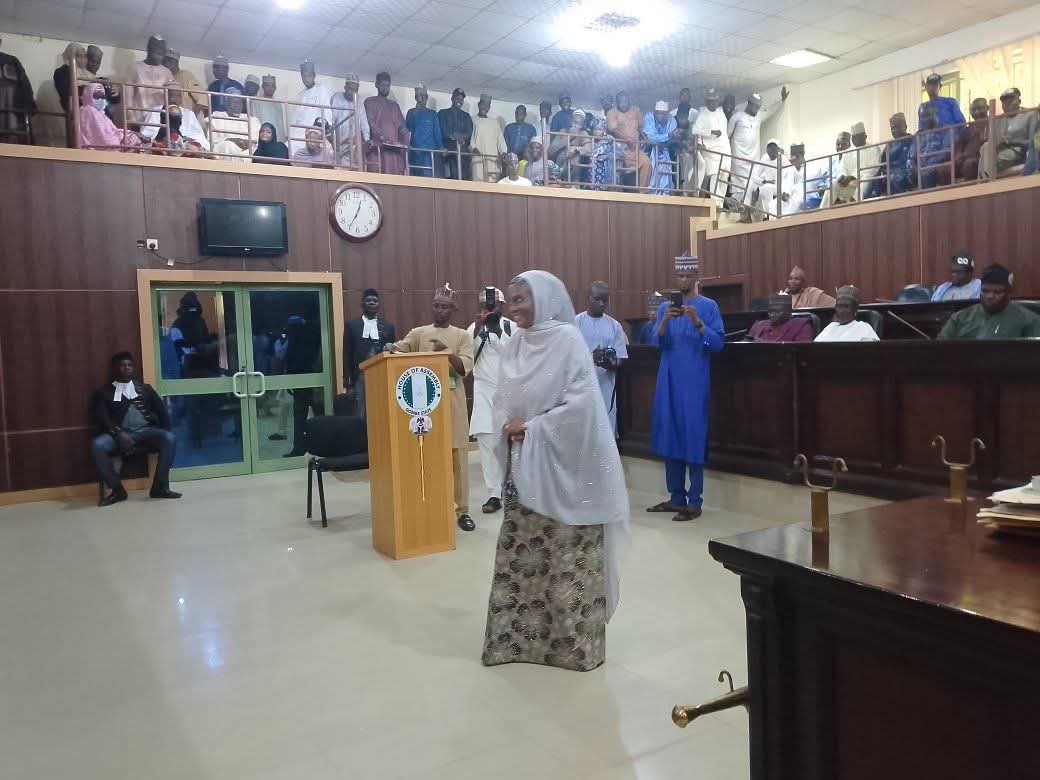
The Gombe State House of Assembly has screened and confirmed Prof (Hon) Aishatu Umaru Maigari as a substantive commissioner following her nomination by the executive governor of Gombe State Alhaji Muhammad Inuwa Yahaya as part of efforts to restructure the state’s Executive Council.
Her confirmation followed the governor’s submission of her name alongside those of other nominees to the House of Assembly for screening in accordance with constitutional provisions.
The confirmation marks another chapter in Maigari’s public service career under the administration of Governor Muhammad Inuwa Yahaya, having previously served in key positions in the state cabinet.
Maigari was first appointed Commissioner for Science, Technology and Innovation in 2019, a position she held until 2022.
Following a cabinet reshuffle by Governor Inuwa Yahaya in 2022, she was redeployed to the Ministry of Education, where she served as Commissioner for Education until 2023.
After the governor secured a second term in office, she was reappointed and continued to head the Ministry of Education from 2023 until 2026, when the governor dissolved the State Executive Council as part of plans to reconstitute the cabinet.
Her latest screening and confirmation by the House of Assembly clears the way for her return to the cabinet following her reappointment by Governor Inuwa Yahaya.
Over the years, Prof. Maigari has earned recognition for her contributions to public service, particularly in the Education and Science sectors.
During her tenure, she participated in the implementation of government policies aimed at improving education delivery, promoting innovation and strengthening institutional development in Gombe State.
Beyond her official responsibilities, Maigari is widely regarded by supporters and political associates as a grassroots politician who has maintained close contact with her constituents through various empowerment initiatives and community engagement programmes.
Supporters say she has consistently demonstrated commitment to improving the welfare of ordinary citizens through interventions targeted at women, youths and vulnerable groups across communities.
She has also been described by colleagues, associates and supporters as a leader who maintains cordial working relationships with employees at all levels. Those who have worked with her say she is approachable, encourages teamwork and promotes cooperation among both junior and senior staff in the various ministries where she has served.
Political observers believe her reappointment reflects Governor Inuwa Yahaya’s confidence in her experience and administrative capacity as the administration seeks to strengthen governance and accelerate the implementation of its development agenda.
The reconstitution of the State Executive Council is expected to inject fresh momentum into the government’s programmes and policies, with the newly confirmed commissioners expected to contribute their experience toward improving service delivery and socio-economic development across Gombe State.

Kano Pillars Unveils New Technical Adviser, Promises Club Reforms and World-Class Academy

Alhaji Tijjani Rabiu Spikin: A Neighbour, Philanthropist, and Friend of Children

Kano Secured: HE Garo Represents Gov Yusuf at High-Level Northern Security Summit

APC Ends Speculation, Unveils Shettima as Tinubu’s 2027 Running Mate

Arewa Media Summit:Big Promises, Little Substance-Tijjani Sarki

Governor Yusuf Apppoints Ibrahim Adam Special Adviser On Social Media, Other Advisers

In a leaked letter: Deputy Senate President Writes Minister, Seeks Revocation of multi billion Naira Kano–Gwarzo–Dayi Road Contract Over Poor Performance

IMF Recommends New Taxes on Fuel Products, Telecom Services in Nigeria

Northern Youths Hail National Assembly’s Approval of State Police, Describe Move as Landmark Security Reform
Alhaji Tijjani Rabiu Spikin: A Neighbour, Philanthropist, and Friend of Children
Kano Pillars Unveils New Technical Adviser, Promises Club Reforms and World-Class Academy
Alhaji Tijjani Rabiu Spikin: A Neighbour, Philanthropist, and Friend of Children
Kano Secured: HE Garo Represents Gov Yusuf at High-Level Northern Security Summit
APC Ends Speculation, Unveils Shettima as Tinubu’s 2027 Running Mate
Arewa Media Summit:Big Promises, Little Substance-Tijjani Sarki
Governor Yusuf Apppoints Ibrahim Adam Special Adviser On Social Media, Other Advisers
In a leaked letter: Deputy Senate President Writes Minister, Seeks Revocation of multi billion Naira Kano–Gwarzo–Dayi Road Contract Over Poor Performance
IMF Recommends New Taxes on Fuel Products, Telecom Services in Nigeria
Northern Youths Hail National Assembly’s Approval of State Police, Describe Move as Landmark Security Reform
Alhaji Tijjani Rabiu Spikin: A Neighbour, Philanthropist, and Friend of Children
-

 Opinion4 years ago
On The Kano Flyovers And Public Perception
-

 Features5 years ago
How I Became A Multimillionaire In Nigeria – Hadiza Gabon
-

 Opinion5 years ago
Kano As future Headquarters Of Poverty In Nigeria
-

 History5 years ago
Sheikh Adam Abdullahi Al-Ilory (1917-1992):Nigeria’s Islamic Scholar Who Wrote Over 100 Books And Journals
-

 Opinion5 years ago
My First Encounter with Nasiru Gawuna, the Humble Deputy Governor
-

 History4 years ago
The History Of Borno State Governor Professor Babagana Umara Zulum
-

 History5 years ago
The Origin Of “Mammy Market” In Army Barracks (Mammy Ochefu)
-

 News4 years ago
Federal University Of Technology Babura To Commence Academic Activities September