
News
President Buhari impressed with Dangote’s $2.5bn Fertiliser plant
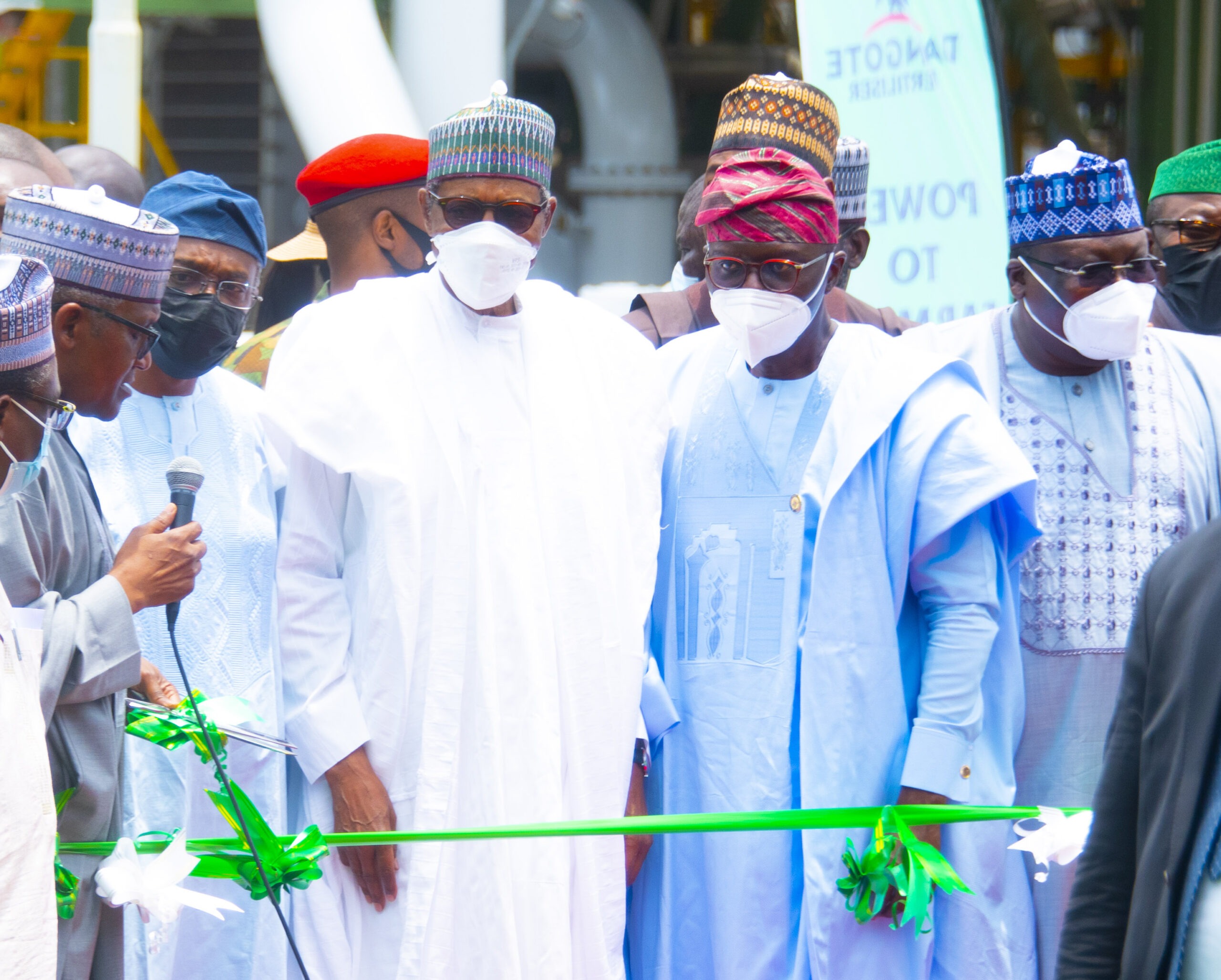
President Muhammadu Buhari today commissioned the new 3 million Metric Tonnes capacity per annum state-of-the-art Dangote Fertiliser Urea Plant, with an emphatic assurance that the project would give a huge fillip to Nigeria’s agricultural sector, which revitalisation has been a focal point of his administration’s economic policy.
The new plant, which he commissioned in the presence of some 18 governors, ministers, captains of industries as well as prominent traditional rulers, is located at Ibeju Lekki, Lagos Free Trade Zone within the periphery of the Dangote refinery.
A visibly excited President Buhari said the coming on stream of the plant would create huge opportunities in the areas of employment, trade, warehousing, transport and logistics. The Plant, according to the President “will greatly create wealth, drastically reduce poverty and secure the future of our nation”.
He said, “In the agricultural sector, another focal point of our economic policy, we expect a boom as fertiliser is now readily available. Many Nigerians who hitherto practiced subsistence farming because of non-availability of necessary inputs can now take up agriculture as a business. We expect a rise of new breed of agropreneurs who will add value to farming and make the nation self-sufficient in food production.”
According to him, the federal government is now determined more than ever before to provide enabling environment for private sector investors to thrive, adding that his government would continue to improve on infrastructure, power, security and enact relevant laws and regulations that would drive investments in the economy.
President Buhari reiterated that part of the government’s effort in this regard was the partnership with the private sector government via a tax credit scheme, in the rehabilitation of roads across Nigeria under the Presidential Order No. 7.
“As we all know, good roads contribute to easy movement of goods and services across the nation, thus reducing cost of doing business and improving productivity. We are also rehabilitating our railway lines and building new ones to lessen the burden on our roads and create more effective multi-model transportation networks,” he added.
In an earlier welcome address, President of Dangote Group, Aliko Dangote described the new plant as a game changer, as it has the capacity to make Nigeria become self-sufficient in fertiliser production, with spare capacity to export to other markets in Africa and the rest of the world. He added that already, Dangote fertiliser has reached the markets in the USA, Brazil and Mexico.
According to him, the Fertiliser plant, which is the largest granulated Urea fertiliser complex in Africa, occupies 500 hectares of land, was built at a cost of $2.5 Billion, and is expected to reduce drastically level of unemployment and youth restiveness in the country through employment opportunities. To him, the plant is expected to generate new jobs with top quality fertiliser being available and in sufficient quantities for the farmers.
He stated that agriculture accounts for 20 per cent of the nation’s GDP and that the new plant was an ambitious project that would provide both direct and indirect employment, thereby reducing youth restiveness
Dangote Fertiliser, according to him, would ensure emergence of farmers in the country, providing hundreds of jobs and ushering in a new era of agricultural entrepreneurs, (agroprenuers). “This breed of agroprenuers will take to farming on large scales, providing food and raw materials for our industries,” he added.
Dangote stated that the fertiliser plant is rolling out with innovations that would transform the agricultural sector in the form of extension services for small and medium scale farmers. It has set up a well-equipped fertiliser soil testing laboratory to enable it analyse and identify soil deficiency and the appropriate fertiliser blend.
“Studies have shown that applying the right fertiliser to the soil will boost productivity. This service is to cover all the geopolitical zones, and will surely change agricultural landscape in the country by transforming farming into a lucrative profession.
“Dangote Fertiliser is working with Farmer Associations, Corporate Farmers, NPK Blenders, NGO/development partners and State Governments all over Nigeria, and governments across Africa and beyond who are looking for sustainable approach to improving soil quality and farm yields,” he explained.
Speaking at the occasion, Governor of Central Bank of Nigeria, Godwin Emefiele said Nigeria is indeed indebted to Aliko Dangote for his giant stride to add value to Nigeria’s economy. According to him, “It is great that a Nigerian has taken not just this great initiative of helping to solve our perennial problem of importing petrochemical products including fertiliser but has taken advantage of the emerging huge market opportunity presented by recent global developments.”
Emefiele commended President Buhari for providing all the support needed to put in place economic policies that would reverse the trend of the doldrums, pointing out that the completion of the fertiliser plant is a stellar example of the realisation of the vision.
The CBN governor described the fertiliser plant as timely considering the recent developments in the global market, where prices of wheat, fertiliser and crude oil spiked by over 20 per cent, following the start of the Russia – Ukraine war.
“In addition to the lessons we learnt from the protectionist actions of countries during the early days of COVID-19, this investment is again a glaring testament to the foresight and tireless efforts of Mr. President in encouraging domestic production of items that can be produced in Nigeria, especially agriculture. This would not only help to enable greater
He recalled that prior to 2015 when President Buhari resumed office, Nigeria had a fertiliser shortfall of about 3.5 million tonnes per annum compared to the over 6 million tonnes per annum required in the country.
“Then President Buhari inaugurated the Presidential Fertiliser Initiative and charged them with resolving this problem. With sustained efforts, other indigenous companies like Indorama and Notore with a combined capacity of over 2.5 million tonnes per annum have tried to match the market demand, yet the country still faced a huge shortfall of fertiliser supply. Today, Nigeria is self-sufficient in the production of urea, and we are also the leading producer of urea in the African continent,” he added.
The Minister of Agriculture, Dr. Mahmood Abubakar called on other investors to rise up to the occasion, noting that the Dangote Fertiliser would help to solve the problem of fertiliser shortages in Nigeria. He also assured that the government would enforce standard in the industry to maintain quality.
Lagos state governor, Mr. Babajide Sanwo-Olu commended Alhaji Aliko Dangote for always blazing the trail, noting that Lagos state government was happy to be hosting many of his businesses. He added that, “with the largest fertiliser plant in Africa in Lagos and the largest refinery in the world coming soon, there is nobody that would not be proud of Alhaji Dangote.”
The governor stated that Nigeria would quickly forget its many economic problems if another entrepreneur like Dangote could be replicated in other regions of Nigeria.
Sanwo-Olu also said that private investors could always count on Lagos State government when it comes to provision of an enabling environment to make businesses thrive.











News
State Police: 24 State Assemblies Approve Constitutional Amendment–Presidency
By Yusuf Danjuma Yunusa
The Presidential Working Group on the National Policing Bill says 24 State Houses of Assembly have approved the Constitution (Sixth Alteration) Bill, 2026, providing for a dual policing system.
The approval meets the constitutional threshold of two-thirds of the 36 states required for the amendment to proceed.
The Working Group commended the State Houses of Assembly for their action and acknowledged the National Assembly for passing the amendment in both chambers.
This is contained in a statement issued by Femi Gbajabiamila, Chief of Staff to the president and chairman of the Working Group, on Friday in Abuja.
“In line with Section 9 of the Constitution, the amendment can now be returned to the National Assembly for transmission to Mr President for assent.”
Mr Gbajabiamila said the approval provided constitutional backing for the policing framework outlined in the Working Group’s draft National Policing Bill, 2026.
He added that the draft bills were undergoing legislative drafting, review and validation at the Federal Ministry of Justice.
The bills are expected to be returned on or before October 30, after which the Working Group will give them final consideration before presenting them to President Bola Tinubu.
The Working Group urged stakeholders to support a smooth transition to a dual policing system aimed at improving public safety.
News
ECOWAS Court Faults Process Backed by Council of Ministers in Darma Removal Case
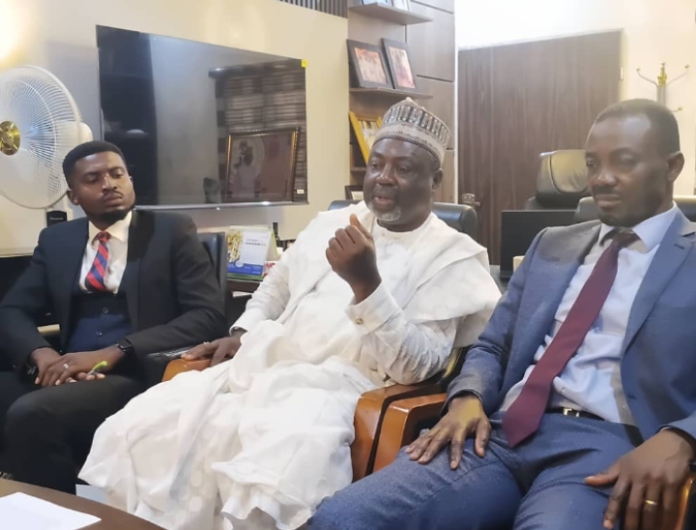
The ECOWAS Community Court of Justice has ruled that the removal and replacement of former ECOWAS Commissioner for Internal Services, Prof. Nazifi Abdullahi Darma, were unlawful, overturning a process that culminated in his replacement being formalised by the Council of Ministers.
Darma disclosed the outcome while briefing journalists in Abuja on the Court’s recent judgment.
He said the dispute arose after a memorandum dated 30 October 2025 by the then President of the ECOWAS Commission, Dr. Omar Alieu Touray withdrew responsibilities previously exercised by Darma and initiated steps that eventually led to his replacement.
While Darma challenged the actions before the ECOWAS Court on 3 November 2025, the Federal Republic of Nigeria subsequently recalled him and nominated a successor.
The Council of Ministers later formalised the replacement.
However, the Court found that the legal requirements for ending his mandate had not been satisfied.
According to Darma, the Court held that the memorandum triggering the process was based on adverse allegations that affected his responsibilities and was issued without giving him an effective opportunity to respond.
“The Court found that these actions were taken without prior notice or an effective opportunity for me to respond,” he said.
The Court further ruled that managerial powers vested in the President of the Commission could not be used to extinguish or transfer responsibilities assigned by Community law to another statutory office.
Darma said the Court also rejected the argument that Nigeria’s recall automatically ended his tenure as Commissioner.
“Once appointed, a Commissioner derives his mandate from Community law and not from the nominating Member State,” he quoted the Court as holding.
The Court consequently declared that his removal and replacement were unlawful, notwithstanding the subsequent actions taken to formalise the change in office.
The judgment ordered the payment of outstanding salaries, allowances and accrued entitlements up to the expiration of his tenure and awarded him US$50,000 in general damages.
Because his tenure expired on 31 August 2026, the Court did not order reinstatement.
Describing the ruling as significant for regional governance, Darma said it reaffirmed that ECOWAS statutory office holders can only be removed through procedures recognised by Community law.
News
Dangote Cement Gboko Commits Millions in Scholarship Scheme
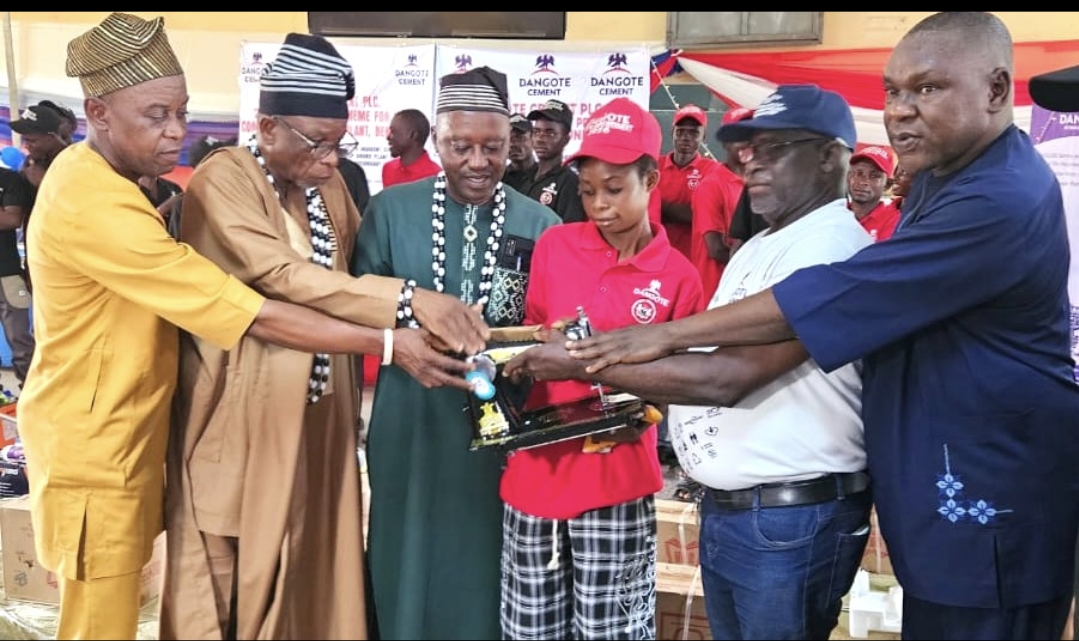
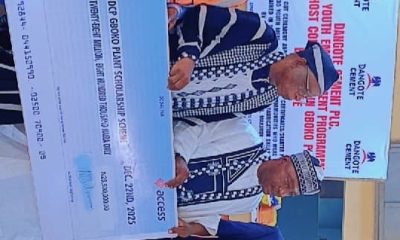
Dangote Cement Plc, Gboko Plant has awarded multi-million-naira scholarships to tertiary and secondary school students from its six host communities in Benue State.
The company also presented starter packs, working tools and certificates to graduates of its Youth Empowerment Programme to enable them to establish their own businesses, apply the skills acquired during the training and become financially reliant.
The Minister of Solid Minerals Development, Dr. Henry Dele Alake, lauded Dangote Cement Plc for its community development interventions, calling on other private sector players to adopt similar initiatives to promote socio-economic development in their host communities.
Dr. Alake, who was represented by the Federal Mines Officer of the Federal Ministry of Solid Minerals Development in Benue State, Engr. Achi Gregory, urged the company to sustain its commitment to implementing community development programmes agreed upon with its host communities.
Speaking at the official presentation ceremony, Group Head, Social Performance, Dangote Cement Plc, Mr. Wakeel Olayiwola, said the implementation of the Community Development Agreement underscores Dangote Cement’s commitment to equipping young people with practical skills and resources to promote entrepreneurship, create employment opportunities and improve livelihoods in its host communities.
Mr. Olayiwola, who was represented by the Head of Social Performance of the Dangote Cement, Gboko Plant, Dr. Johnson Kor, said the scholarship and youth empowerment programmes came against the backdrop of several other programmes recently executed by the company, which include farmers and women empowerment programmes.
The Acting Plant Director, Dangote Cement, Gboko, Engr. Arbind Singh, said: “This annual scholarship scheme for indigent students of the host communities is an indication of our company’s commitment to its Corporate Social Responsibilities (CSR).”
Engr Singh, who was represented by the company’s General Manager, Production, Engr Tabershima Soom, said: “The Gboko Plant has already launched 150 Women Empowerment Programme and 50 Farmerss Empowerment Programme where women were provided with cash to support their businesses, and farmers were supported with farm inputs.”
The beneficiary communities for these programs are: Tse-Kucha, Quarry, Amua, Mbazembe, Mbatur, and Pass Brothers.
Speaking on behalf of the Benue State Attorney-General, the Chairman of the Mineral Resources and Environmental Management Committee (MIREMCO), Barr. Dooshima Orosaga, commended Dangote Cement Plc for its compliance with the Community Development Agreement (CDA), urging the beneficiaries and host communities to maximise the benefits of the company’s interventions.
Chairman of the Gboko Local Government, Hon Yina Elias said the government will continue to provide the support needed for the company to succeed, adding that the Dangote Cement Plc is an exemplary company in Corporate Social Responsibilities programmes.
In his remarks, the District Head of Ukpekpe, Chief Tsegba Igbarumun, commended Dangote Cement Plc’s Gboko Plant for its contributions to the community, assuring the company of the community’s continued support.
He said the community valued its mutually beneficial relationship with the company and would continue to serve as its ambassadors.
A beneficiary of the Youth Empowerment Programme, Mr Ignatius Aondohemba, expressed appreciation to Dangote Cement Plc for the support, pledging to put the skills and resources provided to good use and build a business that would enable him to become an employer of labour.

State Police: 24 State Assemblies Approve Constitutional Amendment–Presidency

ECOWAS Court Faults Process Backed by Council of Ministers in Darma Removal Case

Dangote Cement Gboko Commits Millions in Scholarship Scheme

Mass Exodus Looms in Kano APC as More Chieftains Consider Exit — Mansur Ahmed

Kano Donates Equipment to NDLEA

PCACC Arrests Man Over Alleged ₦4.5m Sale, Illegal Leasing of Kano Government Horse Stable

Kano Monitors ₦48.9bn Projects Across Six LGAs

Goje’s Electoral War:The Confrontation With Tinubu,Governor Inuwa,Usman Kumo And APC candidates Ahead Of 2027

Kano Spends ₦10.36bn on Hospitality, Sitting Allowances, Others in Six Months

Prof Yusuf Adamu Delivers BUK’s 63rd Professorial Inaugural Lecture, Reflects on Medical Geography and Academic Legacy
State Police: 24 State Assemblies Approve Constitutional Amendment–Presidency
ECOWAS Court Faults Process Backed by Council of Ministers in Darma Removal Case
Dangote Cement Gboko Commits Millions in Scholarship Scheme
Mass Exodus Looms in Kano APC as More Chieftains Consider Exit — Mansur Ahmed
Kano Donates Equipment to NDLEA
PCACC Arrests Man Over Alleged ₦4.5m Sale, Illegal Leasing of Kano Government Horse Stable
Kano Monitors ₦48.9bn Projects Across Six LGAs
Goje’s Electoral War:The Confrontation With Tinubu,Governor Inuwa,Usman Kumo And APC candidates Ahead Of 2027
Kano Spends ₦10.36bn on Hospitality, Sitting Allowances, Others in Six Months
Prof Yusuf Adamu Delivers BUK’s 63rd Professorial Inaugural Lecture, Reflects on Medical Geography and Academic Legacy
-

 Opinion5 years ago
On The Kano Flyovers And Public Perception
-

 Features5 years ago
How I Became A Multimillionaire In Nigeria – Hadiza Gabon
-

 Opinion6 years ago
Kano As future Headquarters Of Poverty In Nigeria
-

 History6 years ago
Sheikh Adam Abdullahi Al-Ilory (1917-1992):Nigeria’s Islamic Scholar Who Wrote Over 100 Books And Journals
-

 Opinion5 years ago
My First Encounter with Nasiru Gawuna, the Humble Deputy Governor
-

 History5 years ago
The History Of Borno State Governor Professor Babagana Umara Zulum
-

 History6 years ago
The Origin Of “Mammy Market” In Army Barracks (Mammy Ochefu)
-

 News5 years ago
Federal University Of Technology Babura To Commence Academic Activities September