
News
NACA donates four ambulances to Kano
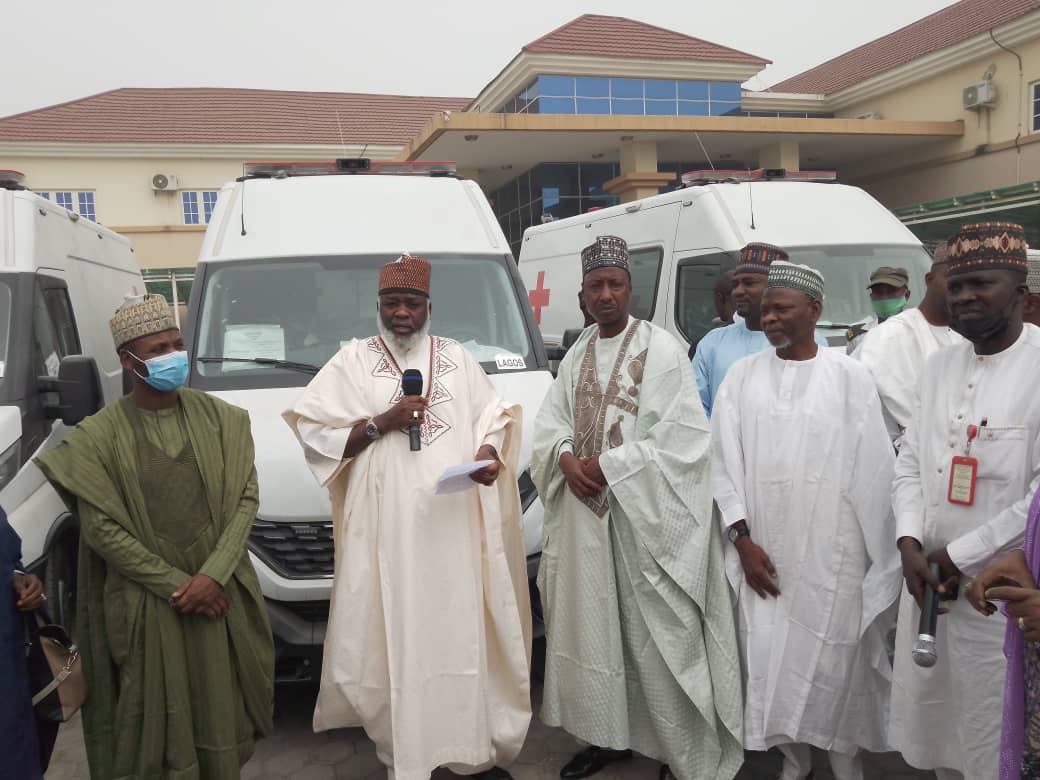
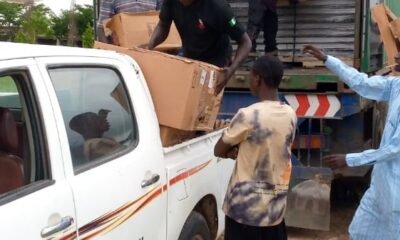
The National Agency for the Control of AIDS (NACA) has donated four ambulances to the Kano State Government in appreciation of its efforts towards HIV-AIDS control.
The Director-General of the agency, Dr Gambo Gumel, who presented the vehicles to Gov. Abdullahi Ganduje at the Government House on Tuesday said the ambulances acquired through the Global Health System Fund in Geneva to strengthen the health system in the state.
Represented by Director special duties of the agency, Alhaji Baidi Mohammed explained that the vehicles equipped with state of the earth facilities w be donated to the state in recognition of the state government’s efforts in controlling the spread of HIV in the state.
“NACA wishes to appreciate the efforts of Kano Government in her contribution to making sure HIV and AIDS no longer a public health threat in Kano.
“We are also commending the state governments policy of pre-marital HIV test for potential couples before marriage, and this is what we are advocating nationwide,” he explained.
The D-G revealed that the 2018 NAIIS survey shows that Kano had a HIV/AIDS prevalence rate of 0.6 per cent which as at today dropped to 0.5 per cent due to Kano Government’s efforts of allocating resources to state SACA through Kano State Health Trust Fund to carry out HIV/AIDS response and activities.
The NACA boss added that Kano State benefited from the UN-Basket fund facilitated and coordinated by NACA where cash and other essential items were given to the indigent and vulnerable during COVID-19 pandemic in 2021.
According to him, the agency also empowered 150 vulnerable and indigent person’s in Kano State who were trained in different skills.
Gumel added that the beneficiaries were given start-up packs to empower them economically.
Responding, Gov. Ganduje described the receipt of the vehicles as apt, saying it would go a long in curbing the spread of HIV/AiDS in the state.
Represented by his deputy, Dr. Nasiru Gawuna said that the state was looking forward to the time when the spread of HIV would be controlled in the country.
He said that the state government under the leadership of Gov. Ganduje ha spent a lot in curbing the spread of HIV/ AiDS in the State.
Ganduje who commended NACA for the gesture, restated the state government commitment towards in developing health care sector.











News
China, Nigeria Mark Friendship with Joint Cultural Mural
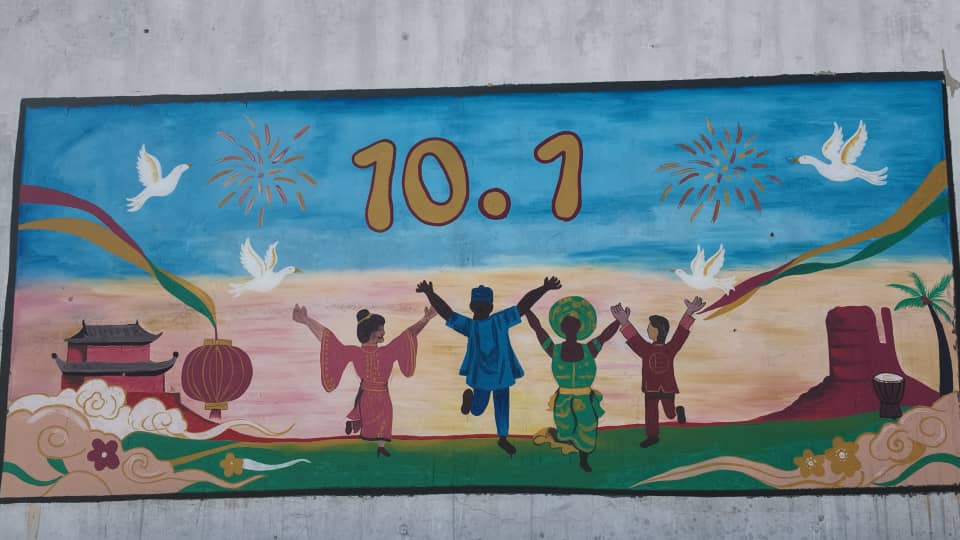
A colourful mural celebrating both China’s National Day and Nigeria’s Independence Day has been unveiled at an overseas project site, serving as a vivid symbol of the enduring friendship between the two nations.
The artwork, jointly produced by Chinese and Nigerian staff, features builders dressed in traditional Chinese costumes and Nigerian ethnic attire holding hands and dancing together.
Above them, fireworks and white doves of peace illuminate the sky, while the inscription “10.1” highlights the dual significance of October 1, the China’s National Day and Nigeria’s Independence Day.
On the left side of the mural, ancient Chinese architecture, red lanterns and auspicious cloud motifs showcase Chinese heritage.
On the right, red earth, coconut palms and African drums reflect Nigeria’s cultural identity. Flowing ribbons weave across the painting, symbolising unity and shared destiny.
Project officials described the mural as a “living testament” to cooperation at the frontline of development. They said it embodies mutual trust and support as workers from both countries overcome challenges together.
The initiative underscores cultural integration and partnership, with both sides pledging to continue working hand in hand to strengthen ties.
“Celebrating two festivals as one, we march forward with one heart,” a statement read, emphasising the commitment to write new chapters of friendship along the path of cooperation.
The mural, rooted in the overseas project site, stands as a reminder of the brotherly bond between China and Nigeria, and the shared vision of building together for a brighter future.
News
Musa Illiyasu Kwankwaso Celebrates Senator Lado @60, Says Is A Political Dogma
From Muhammad Kabir Kano
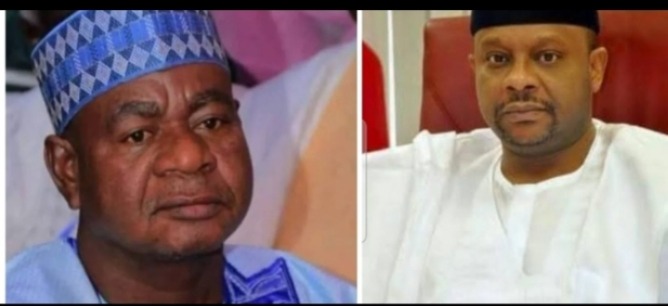
The spokesperson of Political Appointees Forum from Kano State, Dr. Musa Illiyasu Kwankwaso, has described Senator Basheer Lado, the Special Adviser to President Tinubu on National Assembly Matters (Senate), who also doubles as the Chairman of the Appointees, on his 60th birthday, as a Political Blog who plays the game with maturity and respect.
Kwankwaso who also describes Senator as Political Dogma, praised his contributions to democratic governance, humanitarian services and national development.
“Senator Lado is a dependable public servant and accomplished legislator whose experience had helped strengthen relations between the Executive and the Senate and also steer ship the activities of the Political Appointees with huge respect and understanding”,
He said it is on notice that Lado served in the Senate for four years before his by late President Buhari on Relief agency and subsequent appointment as Tinubu’s liaison officer in the upper chamber of the National Assembly.
Lado represented Kano Central Senatorial District in the Seventh National Assembly from 2011 to 2015, where he served as Vice Chairman of the Senate Committee on Works.
Lado facilitated several constituency projects, including the Kundila Bridge, popularly known as Gadar Lado, in Kano State. His contributions to humanitarian services through his previous roles as Federal Commissioner of the National Commission for Refugees, Migrants and Internally Displaced Persons, and Director-General of the National Agency for the Prohibition of Trafficking in Persons (NAPTIP).
He said Lado contributed to protecting vulnerable Nigerians, combating human trafficking and improving the welfare and rehabilitation of displaced persons.
Kwankwaso further commended the senator’s humanitarian initiatives through the Ladon Alheri Foundation, particularly in education, healthcare, women’s economic empowerment, rural water supply and support for disadvantaged communities.
” Lado’s contributions across public service reflected his commitment to national development and the welfare of Nigerians”, he added.
News
EFCC Reopens Atiku’s Alleged Financial Crimes Probe
By Yusuf Danjuma Yunusa
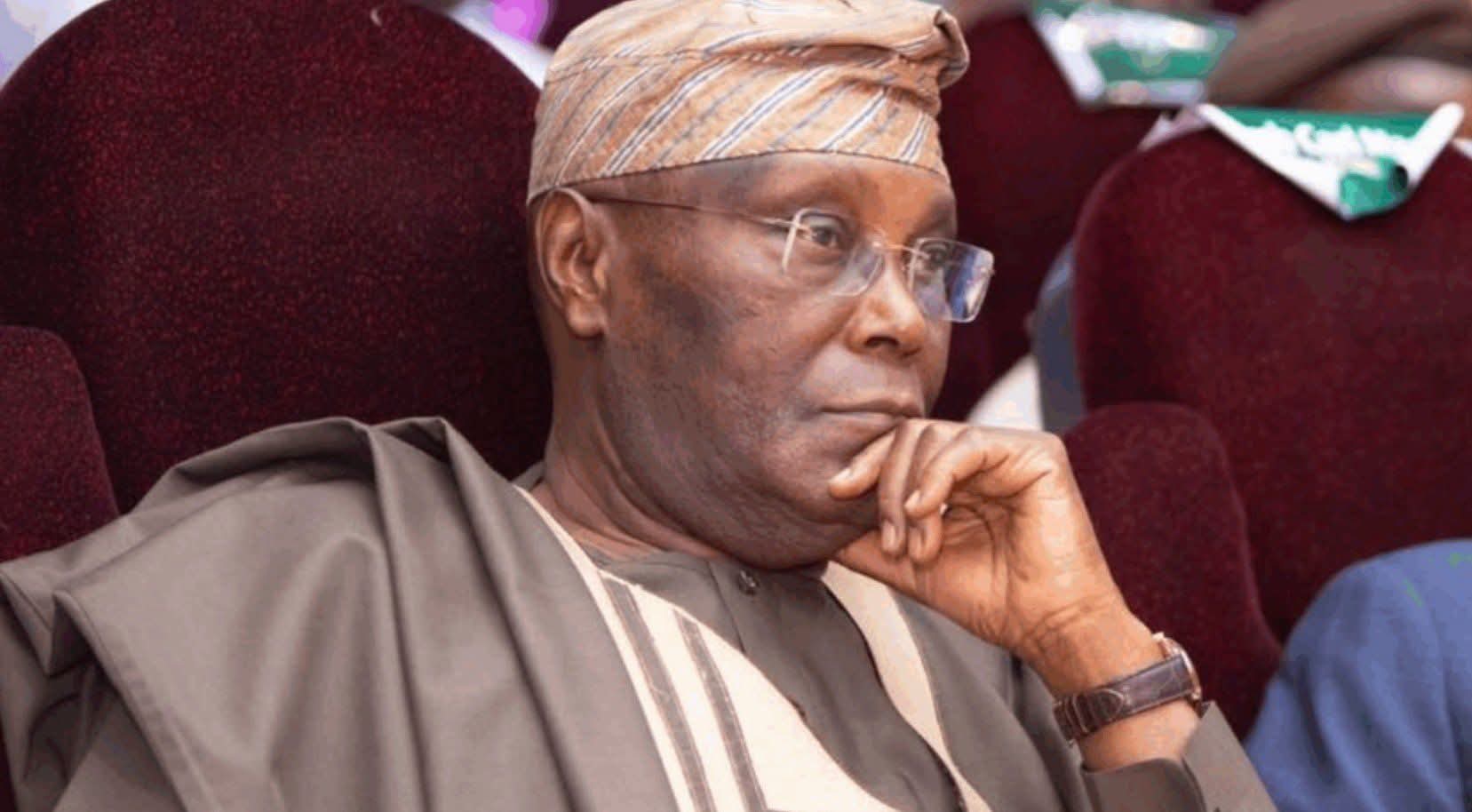
The Economic and Financial Crimes Commission (EFCC) has reopened its investigation into allegations against former Vice President Atiku Abubakar following a petition by former House of Representatives member, Hon. Ehiozuwa Johnson Agbonayinma, seeking his prosecution over alleged financial crimes.
The petition seeks to revive a case dating back to 2006, asking the anti-graft agency to revisit its investigation under former chairman, Mallam Nuhu Ribadu, and consider a subsequent report by a United States Senate subcommittee.
Speaking on the development, Agbonayinma said the EFCC had acknowledged his petition, dated August 27, 2026, and received on September 1. Filed through his lawyer, Chief Hannibal Egbe Uwaifo, SAN, the petition asks the commission to reactivate its earlier report and act on the allegations.
The former lawmaker appeared at the EFCC headquarters in Jabi, Abuja, where he adopted the petition and answered questions from investigators.
Agbonayinma said the matter should not be allowed to remain unresolved.
“I want to thank Nigerians, the EFCC, and those praying for me in this struggle. The laws are meant for both the rich and the poor. After the EFCC has done a fantastic job, it should not be kept under the table,” he said.
In the petition, Agbonayinma urged the EFCC to revisit its September 2006 report on Atiku and a February 4, 2010, report by the US Senate Permanent Subcommittee on Investigations, arguing that both documents should form the basis for renewed action.
The petition alleged that the EFCC had previously indicated that Atiku could face prosecution after leaving office as vice-president, when his constitutional immunity ceased to apply, but that no prosecution followed.
Agbonayinma described the alleged failure to act as a dereliction of duty and argued that pursuing the matter would demonstrate the commission’s resolve to hold politically influential figures accountable.
He also disclosed that he had petitioned US President Donald Trump over the allegations.
The EFCC spokesman, Dele Oyewale, had yet to respond to messages seeking an update on the investigation as of the time of filing this report.

Why Gov Abba Deserves Another Tenure

China, Nigeria Mark Friendship with Joint Cultural Mural

Musa Illiyasu Kwankwaso Celebrates Senator Lado @60, Says Is A Political Dogma

EFCC Reopens Atiku’s Alleged Financial Crimes Probe

APC Presidential Campaign Council: Nigerians Devoid Of Party Affiliations Endorses Tinubu’s 2nd Term-Kwankwaso

Zamfara Varsity ASUU Threatens Warning Strike Over FG-ASUU Agreement, Promotion Arrears

PCACC Arrests Man Over Alleged ₦4.5m Sale, Illegal Leasing of Kano Government Horse Stable

Goje’s Electoral War:The Confrontation With Tinubu,Governor Inuwa,Usman Kumo And APC candidates Ahead Of 2027

Prof Yusuf Adamu Delivers BUK’s 63rd Professorial Inaugural Lecture, Reflects on Medical Geography and Academic Legacy

Senate Passes Barau’s Bill to Provide Legal Framework for Yusuf Maitama Sule Federal University of Education, Kano
Why Gov Abba Deserves Another Tenure
China, Nigeria Mark Friendship with Joint Cultural Mural
Musa Illiyasu Kwankwaso Celebrates Senator Lado @60, Says Is A Political Dogma
EFCC Reopens Atiku’s Alleged Financial Crimes Probe
APC Presidential Campaign Council: Nigerians Devoid Of Party Affiliations Endorses Tinubu’s 2nd Term-Kwankwaso
Zamfara Varsity ASUU Threatens Warning Strike Over FG-ASUU Agreement, Promotion Arrears
PCACC Arrests Man Over Alleged ₦4.5m Sale, Illegal Leasing of Kano Government Horse Stable
Goje’s Electoral War:The Confrontation With Tinubu,Governor Inuwa,Usman Kumo And APC candidates Ahead Of 2027
Prof Yusuf Adamu Delivers BUK’s 63rd Professorial Inaugural Lecture, Reflects on Medical Geography and Academic Legacy
Senate Passes Barau’s Bill to Provide Legal Framework for Yusuf Maitama Sule Federal University of Education, Kano
-

 Opinion5 years ago
On The Kano Flyovers And Public Perception
-

 Features5 years ago
How I Became A Multimillionaire In Nigeria – Hadiza Gabon
-

 Opinion6 years ago
Kano As future Headquarters Of Poverty In Nigeria
-

 History6 years ago
Sheikh Adam Abdullahi Al-Ilory (1917-1992):Nigeria’s Islamic Scholar Who Wrote Over 100 Books And Journals
-

 Opinion5 years ago
My First Encounter with Nasiru Gawuna, the Humble Deputy Governor
-

 History5 years ago
The History Of Borno State Governor Professor Babagana Umara Zulum
-

 History6 years ago
The Origin Of “Mammy Market” In Army Barracks (Mammy Ochefu)
-

 News5 years ago
Federal University Of Technology Babura To Commence Academic Activities September