
News
Wole Soyinka Centre opens application for 16th investigative reporting award
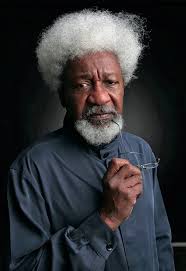
The Wole Soyinka Centre for Investigative Journalism (WSCIJ) will on Monday, 4th October 2021 open its application portal for interested journalists to apply for the sixteenth edition of the annual Wole Soyinka Award for Investigative Reporting.
Journalists from the print, online, photo, cartoon, television and radio genres with stories published between 4th October 2020 and 3rd October 2021 may submit their works on the online portal – www.award.wscij.org. Deadline for submission is Sunday, 24 October 2021 by 4pm.
WSCIJ introduced the portal for application for all categories of the award in 2020 in response to the COVID-19 pandemic and to encourage journalists who otherwise would not apply because of long distance and the cost of sending hardcopy applications to apply.
Submitted works that meet the entry criteria will be coded by WSCIJ to conceal the identity of authors and their media houses and scored by an independent Judges’ Board based on quality of investigation, evidence, human rights elements, ethical reportage, courage, individual creativity, public interest, impact and quality of presentation. The judges board is made up of seasoned media practitioners, academic and journalism veterans with good understanding of investigative reporting and its public policy implications.
The award is WSCIJ’s flagship programme. It was held first in 2005 to build a culture of investigative reporting in the Nigerian media and honour journalists who expose public or corporate corruption, human rights abuses and regulatory failures.
Removal Of Sheikh Khalil:An Act Of Sychophancy
In a statement signed by Motunrayo the executive Director of the centre said the WSCIJ remains committed to rewarding best practices in the media through the award which has produced 102 finalists, 52 Soyinka Laureates, and 11 investigative journalists of the year. It has also made 24 honorary decorations for the Lifetime Award for Journalistic Excellence and the Anti-Corruption/Human Rights Defender Awards.
















News
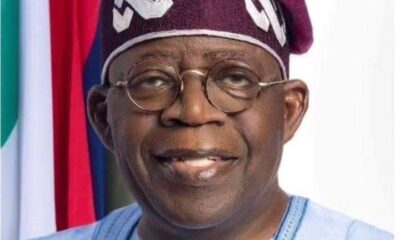
President Tinubu Salutes Hon. Kabir Bichi, Chair Appropriation Committee Of The House Of Representatives On His 45th Birthday

President Bola Ahmed Tinubu celebrates the Chairman, House of Representatives Committee on Appropriation, Hon. Abubakar Kabir Bichi, on his 45th birthday today.
President Tinubu describes Hon. Bichi, who represents Bichi Federal Constituency of Kano State, as a vibrant, resourceful and dedicated lawmaker whose commitment to legislative duties and national development stands out.
President Tinubu remarks: “ As Chairman of one of the most strategic committees of the House, Hon. Bichi has demonstrated uncommon capacity, grit, and leadership in steering the consideration, scrutiny, and passage of the nation’s annual budget, a role central to implementing the Renewed Hope Agenda.
“I commend him for his effective representation of his constituents and his impactful interventions in education, infrastructure, and youth empowerment, which have endeared him to his people.
“Bichi has distinguished himself since his first election to the House in 2019, where he served as Chairman of the House Committee on Works in the 9th Assembly and now as Chairman of Appropriation in the 10th Assembly.
“ As he marks his birthday today, I urge him to rededicate himself to serving his people and his fatherland.
“ And I pray to Almighty God to continue to bless him with good health, wisdom and strength.”
Bayo Onanuga
Special Adviser to the President
(Information & Strategy)
October 3, 2026
News
Yari Urges North to Respect Power Rotation, Back Tinubu’s 8-Year Presidency
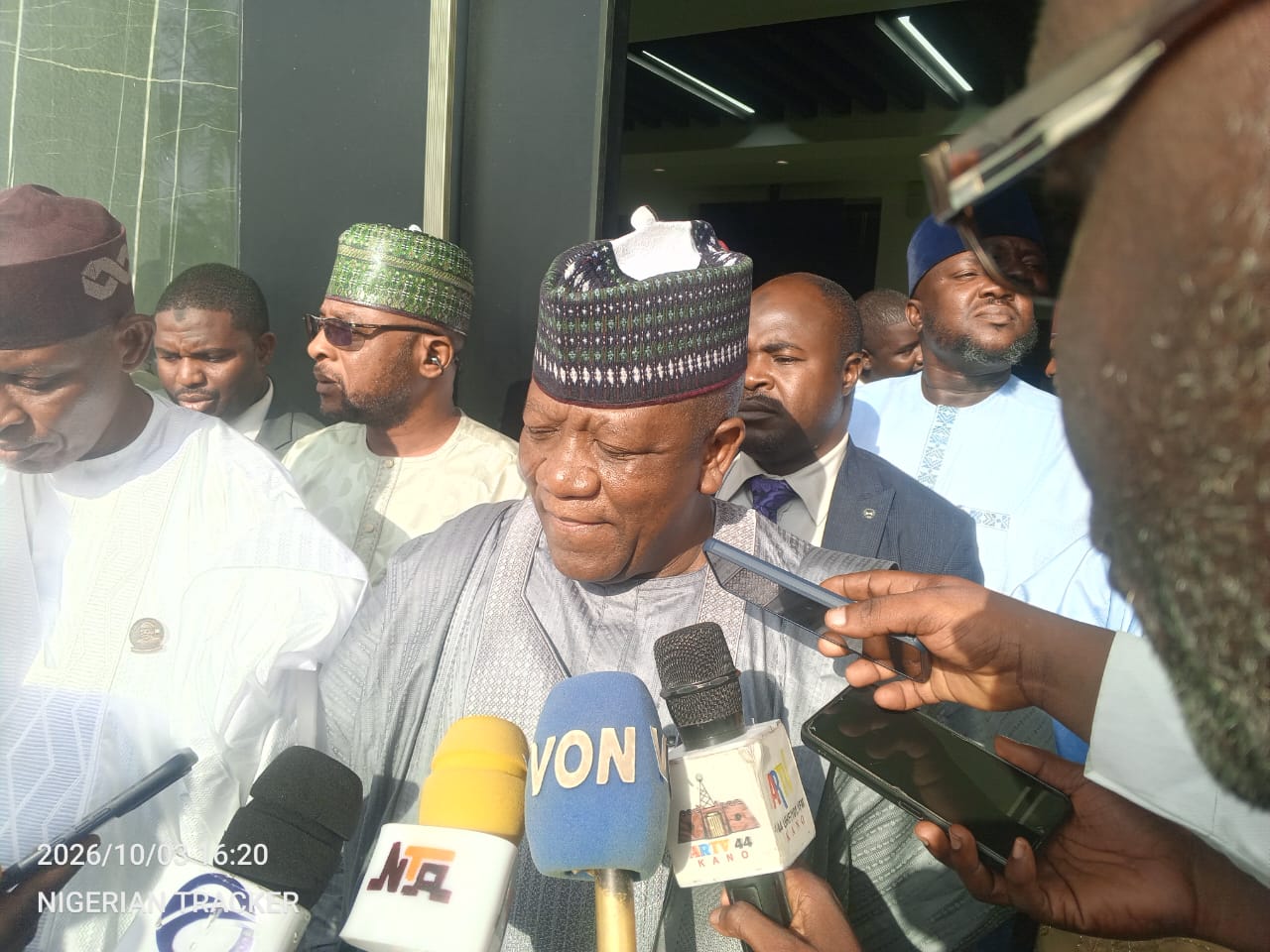
The Director-General of the APC Presidential Campaign Council, Senator Abdul Aziz Yari Abubakar, has called on Nigerians in the North to respect the informal power-rotation arrangement and allow President Bola Ahmed Tinubu to complete his constitutionally permitted eight-year tenure.
Yari made the call while addressing journalists at the Kano Government House after a meeting with Kano State Governor Abba Kabir Yusuf.
The former Zamfara State governor said the North should understand and respect the political arrangement that brought the presidency to the South in 2023, arguing that the presidency had been held by a northerner for several years before the emergence of Tinubu.
Yari said, “66 years ago since independence, the country was led by northerners for 47 years,” adding that Nigerians should recognise the importance of maintaining unity and understanding how the country’s political system operates.
According to him, Nigeria remains a country that all citizens must work together to protect, regardless of regional or political differences.
“As we love this country, we don’t have any country other than Nigeria. Nigerians should come and understand how this country works. It is also better than many nations,” Yari said.
The APC chieftain explained that his role as Director-General of the campaign council was not limited to promoting President Tinubu but also included promoting national unity and understanding among Nigerians.
Yari said the current political arrangement should be respected, noting that former President Muhammadu Buhari, a northerner, governed the country between 2015 and 2023 before power shifted to Tinubu from the South in 2023.
“Having said this, this country, Nigeria, from 2015 to 2023 was led by a northerner, and now from 2023 to 2026 it is led by a southerner,” he said.
He therefore appealed to northerners not to seek to overturn the existing zoning arrangement on the basis of the region’s population, saying the political understanding was important for national stability.
“If we say we want to uproot the zoning arrangement because of our numbers, then my call for northerners is to understand how it works. They even understand more than I do,” Yari said.
He acknowledged that President Tinubu’s administration, like every government, was not perfect, but argued that the challenges facing Nigeria should not solely be attributed to the administration.
“Nobody is perfect. The southerners have also experienced what we are complaining about today when President Buhari was in power,” he said.
Yari also argued that insecurity was not peculiar to Nigeria, saying countries across the world, including the United States, continue to grapple with security challenges despite their level of development.
“On problems, no problem of a country is solved by any government, including even in the United States. They are managing insecurity as we are managing it,” he said.
The APC campaign council director-general further cited gun violence in Chicago as an example of the security challenges faced by other countries, stressing that every nation has its own problems that require continuous efforts to address.
Turning to the economy, Yari said Nigerians should assess the Tinubu administration based on economic indicators and compare the situation at the time the president assumed office in 2023 with the current position.
“When you look at when Asiwaju Bola Ahmed Tinubu came to power in 2023, go and check what was the state of our reserves and what it is today, and what was the rate of inflation in 2023 and what it is today,” he said.
Yari maintained that the administration was making efforts to address the country’s economic and security challenges, while acknowledging that governments at both federal and state levels were working to improve the situation.
He urged Nigerians, particularly those in the North, to give the political arrangement time, arguing that the presidency would return to the region after Tinubu’s tenure if the existing rotation principle was maintained.
“I am calling on northerners to note that by the time Bola Ahmed Tinubu finishes in 2031, it will definitely come back to the North. So, this is how the arrangement is,” Yari said.
He added that federal and state governments were making efforts to address the challenges confronting the country and urged Nigerians to support measures aimed at strengthening national unity and development.
News
Scrap Dealers Begin 15-Day Strike, Blame Chinese, Foreign Firms for Market Crisis
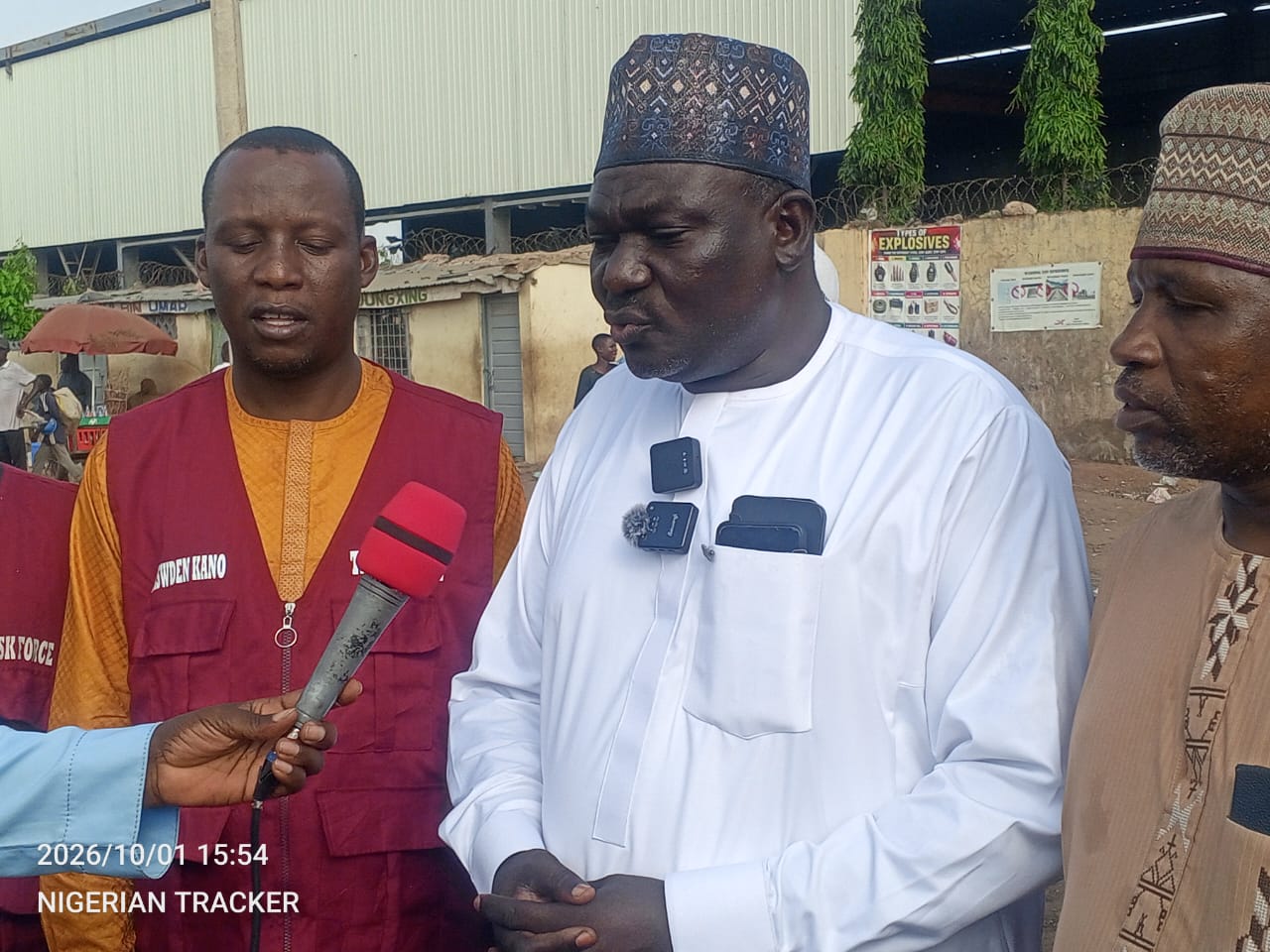
The National Association of Scrap and Waste Dealers Employers of Nigeria has commenced a 15-day nationwide warning strike over what it described as the devaluation of its members’ businesses by Chinese and other foreign companies operating in Nigeria.
The association announced the commencement of the strike on Thursday, saying its members were withdrawing their services to draw the attention of the Federal Government and relevant authorities to what it described as unfair practices threatening the survival of the scrap and waste recycling industry.
The Vice President of the association, Aminu Hassan Soja, popularly known as Sarkin Karafan Kasar Hausa, disclosed the decision while addressing journalists in Kano on Thursday.
Hassan said members of the association were losing between ₦2 million and ₦3 million on every truckload of scrap materials as a result of what he alleged were activities of Chinese and other foreign companies in the sector.
According to him, the situation had significantly affected the prices of scrap materials and was making it increasingly difficult for Nigerian-owned businesses to remain viable.
The association’s vice president further alleged that some foreign operators were involved in practices that were affecting the quality of construction materials produced from recycled metals.
Hassan specifically alleged that 12-millimetre iron rods were being presented or processed as 10-millimetre rods, a development he linked to concerns over the quality of building materials and the reported collapse of buildings in different parts of the country.
He said the alleged practices were taking place despite existing laws and regulations governing the production and marketing of construction materials in Nigeria.
The association’s leader expressed concern that foreign companies were allegedly operating as though there were no effective laws regulating their activities in the country.
Hassan said the decision to embark on the 15-day strike followed efforts by the association to draw the attention of relevant authorities to the challenges facing its members.
He said the association had written to relevant government agencies as well as security agencies to formally notify them of the warning strike and its implications.
According to him, the association has a membership of more than two million people across the country, stressing that its members had complied with the directive to withdraw their services.
Hassan described the association as one of the largest employers of labour in the country outside the agricultural sector, saying the activities of its members contribute significantly to employment and the recycling economy.
He said the strike was therefore intended to compel the authorities to address the concerns raised by the association and protect local operators in the scrap and waste business.
Soja says the association’s leadership had information that some individuals could attempt to act as saboteurs from within the association.
Hassan urged members to remain united and adhere to the directive throughout the 15-day warning strike, while calling on government agencies to intervene in the issues raised by the association.
He said the association remained open to dialogue with the Federal Government and other stakeholders, but insisted that the concerns of its members must be addressed to prevent further losses and protect businesses operating in the sector.

President Tinubu Salutes Hon. Kabir Bichi, Chair Appropriation Committee Of The House Of Representatives On His 45th Birthday

Yari Urges North to Respect Power Rotation, Back Tinubu’s 8-Year Presidency

Muhuyi Raided Our Area: Encomiums, Prayers and Solidarity Trail Operation

Scrap Dealers Begin 15-Day Strike, Blame Chinese, Foreign Firms for Market Crisis

Kaduna Court Dismisses El-Rufai Trial Judge Recusal Application, Orders Accelerated Hearing

Zamfara Varsity ASUU Threatens Warning Strike Over FG-ASUU Agreement, Promotion Arrears

Kano Chemists Threaten Warning Strike Over Alleged PCN Pressure

Per Ishaq Samaila: “Waziri” for Strategy. “Mai Jama’a” for Service. One Man. One Mission. Ibrahim Kabir Masari

Goje’s Electoral War:The Confrontation With Tinubu,Governor Inuwa,Usman Kumo And APC candidates Ahead Of 2027

Prof Yusuf Adamu Delivers BUK’s 63rd Professorial Inaugural Lecture, Reflects on Medical Geography and Academic Legacy
President Tinubu Salutes Hon. Kabir Bichi, Chair Appropriation Committee Of The House Of Representatives On His 45th Birthday
Yari Urges North to Respect Power Rotation, Back Tinubu’s 8-Year Presidency
Muhuyi Raided Our Area: Encomiums, Prayers and Solidarity Trail Operation
Scrap Dealers Begin 15-Day Strike, Blame Chinese, Foreign Firms for Market Crisis
Kaduna Court Dismisses El-Rufai Trial Judge Recusal Application, Orders Accelerated Hearing
Zamfara Varsity ASUU Threatens Warning Strike Over FG-ASUU Agreement, Promotion Arrears
Kano Chemists Threaten Warning Strike Over Alleged PCN Pressure
Per Ishaq Samaila: “Waziri” for Strategy. “Mai Jama’a” for Service. One Man. One Mission. Ibrahim Kabir Masari
Goje’s Electoral War:The Confrontation With Tinubu,Governor Inuwa,Usman Kumo And APC candidates Ahead Of 2027
Prof Yusuf Adamu Delivers BUK’s 63rd Professorial Inaugural Lecture, Reflects on Medical Geography and Academic Legacy
-

 Opinion5 years ago
On The Kano Flyovers And Public Perception
-

 Features5 years ago
How I Became A Multimillionaire In Nigeria – Hadiza Gabon
-

 Opinion6 years ago
Kano As future Headquarters Of Poverty In Nigeria
-

 History5 years ago
Sheikh Adam Abdullahi Al-Ilory (1917-1992):Nigeria’s Islamic Scholar Who Wrote Over 100 Books And Journals
-

 Opinion5 years ago
My First Encounter with Nasiru Gawuna, the Humble Deputy Governor
-

 History5 years ago
The History Of Borno State Governor Professor Babagana Umara Zulum
-

 History6 years ago
The Origin Of “Mammy Market” In Army Barracks (Mammy Ochefu)
-

 News4 years ago
Federal University Of Technology Babura To Commence Academic Activities September