
News
Climate Change: Foundation Pledges To Plant 10,000 Trees In Kano
Muhammad Umar
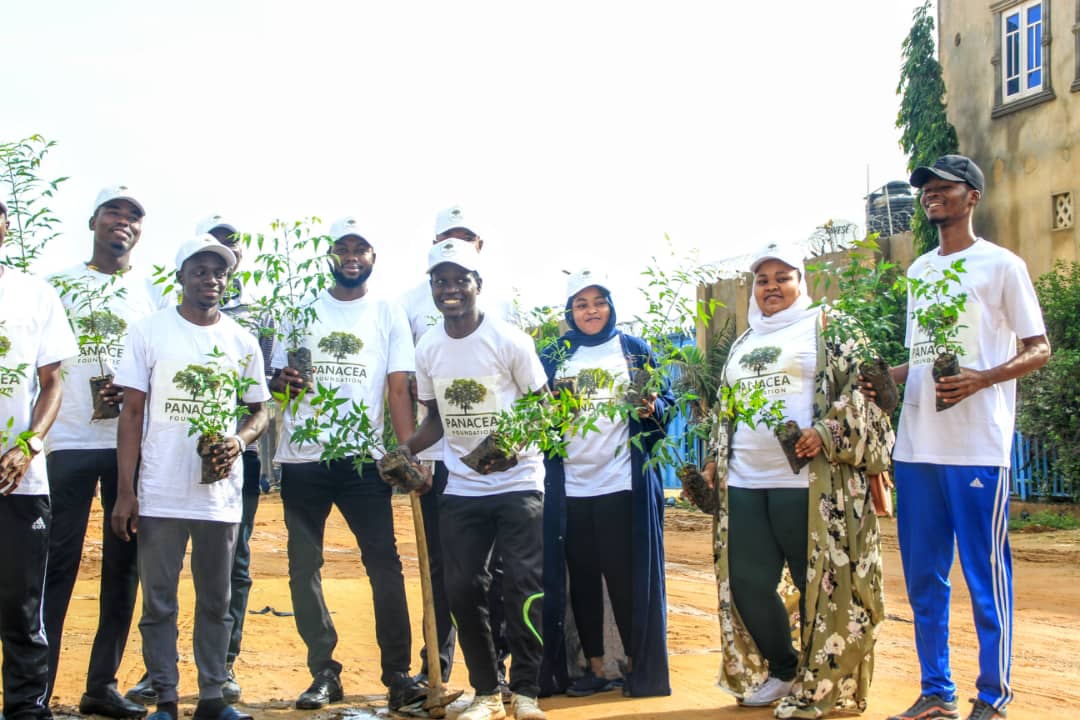
The PANACEA charity foundation pledged to plant 10,000 trees across the Kano state including schools, government agencies, and hospitals so as to alleviate the impact of climate change on the environment.
Dr. Dahir Muhammad Hashim, the promoter of the foundation, in an interview with Nigerian Tracker correspondent on Saturday in Kano said the tree planting campaign was flagged-off on Thursday, August 27 at Kurna Asabe, Gobirawa Ward in Dala Local Government Area, a community mostly destroyed by flooding.
He further explained that the tree planting project is in collaboration with the Federal Ministry of Environment and Kano state Ministry of Environment.
Hashim said the seedlings are of various tree species that provide herbal medicine, food and help hugely in carbon sequestration.
“This project is in conformity with the objectives and indicators of SDGs, Zero Hunger, and Sustainable Cities and Communities”, he said.
“Therefore, I am appealing to the residents to guard the trees so that the initiative would not be a wasted effort and would improve our environment”.
However, Nigerian Tracker interviewed some Kano residents over the development.
Abubakar Aminu, a resident of Gezawa Local Government Area lauded the effort of PANACEA charity foundation on the development of planting trees in the communities saying the trees will reduce the level of flooding and also provide food and herbs to people, and to emulate the foundation I promise to plant at least 10 trees in my local community here in Kofar Fada, Gezawa and also will motivate others to plant trees around their surroundings.
Kano Rainfall Anomaly: An indicator of climate change(
Abba Muhammad Yusuf a resident of Gwale Local Government Area, noted that Planting trees in communities reduces the level of erosion and wind disaster, and also it provides a natural conducive atmosphere in the society.

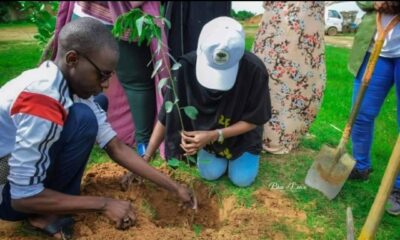
Some Children Planting Trees
The project of planting 10,000 trees in Kano will also make Kano a green city and also provide food and herbal medicine to people.
Abdulaziz Namadi from Yalwa Qauters in Dala Local Government Area and also a student in the Faculty of Agric, Bayero University, Kano, however, said “Planting trees in the environment provide good oxygen human being breath and reduce the amount of any kind of pollution, water runoff, and prevent flooding.
It also provides food protection and home for animals who are habitat”.
Meanwhile, the Chief Imam of Kurna Asabe Juma’at Mosque, Mallam Ibrahim Arzai expressed happiness and appreciated the foundation for embarking on the tree-planting project calling on other NGOs to imitate.
Hashim explained that the foundation planting campaign Continued at Kofar Waika, Dala Local Government Area on Saturday.











News
ADC Reports Surge in Membership Following Kwankwaso’s Defection, Calls Him ‘Game Changer’
By Yusuf Danjuma Yunusa
The African Democratic Congress (ADC) has officially welcomed former Kano State Governor and 2023 presidential candidate Senator Rabiu Musa Kwankwaso into its fold, touting his defection as a pivotal move that strengthens a growing coalition for political realignment in Nigeria.
In a statement released for immediate effect, the party described Kwankwaso as a “game-changer,” announcing that he has directed his network of supporters nationwide to join the ADC. According to the party, this call has already triggered a significant uptick in registrations on its online platform over the past 24 hours.
The ADC’s National Publicity Secretary, Mallam Bolaji Abdullahi, framed the defection as part of a broader recognition among Nigerians of the need for a credible political alternative. The statement emphasized Kwankwaso’s experience in governance, grassroots influence, and capacity to unify as assets to the party’s ambition to “rebuild Nigeria.”
Notably, the ADC highlighted the presence of several high-profile leaders at the defection event, including the party’s National Chairman, Senator David Mark; National Secretary, Ogbeni Rauf Aregbesola; and leading presidential aspirants such as former Vice President Atiku Abubakar, Mr. Peter Obi, and Rt. Hon. Rotimi Amaechi. Their attendance, the party stated, reflects a united front and growing momentum.
The party characterized the surge in online registrations as evidence that Nigerians are aligning with what it called a “different path forward.” In its appeal to Kwankwaso’s supporters and the broader public, the ADC positioned itself as a vehicle for restoring dignity, opportunity, and public trust in governance.
“Change does not happen by chance,” the statement concluded. “It happens when people come together with purpose.”
The development marks a significant realignment in Nigeria’s opposition political landscape, with the ADC seeking to position itself as a converging point for influential politicians and their followings ahead of future elections.
News
Foreign Affairs Minister Resigns to Pursue Bauchi Governorship Election
By Yusuf Danjuma Yunusa
The Minister of Foreign Affairs, Yusuf Maitama Tuggar, has resigned from his position in the administration of President Bola Ahmed Tinubu to pursue the governorship of Bauchi State in the 2027 election.
Tuggar submitted his resignation on Monday, in compliance with a presidential directive requiring all political appointees with electoral ambitions to vacate their posts by the March 31, 2026, deadline.
The directive, issued through the office of the Secretary to the Government of the Federation, George Akume, aligns with Section 88(1) of the Electoral Act, 2026, and the timetable released by the Independent National Electoral Commission (INEC). It affects ministers, advisers, and heads of federal agencies intending to contest in the 2027 general elections.
Reports have it that his resignation positions him to seek the ticket of the All Progressives Congress (APC) for the Bauchi State gubernatorial race.
Tuggar’s entry is expected to significantly reshape the state’s political landscape, intensifying an already competitive contest for the APC nomination. His background as a career diplomat and serving minister is seen by political observers as a potential advantage, offering national visibility and extensive political networks.
With less than 24 hours remaining before the deadline, additional resignations from the Federal Executive Council are anticipated as other appointees move to formalize their electoral ambitions.
News
Kwankwaso Officially Joins ADC
By Yusuf Danjuma Yunusa
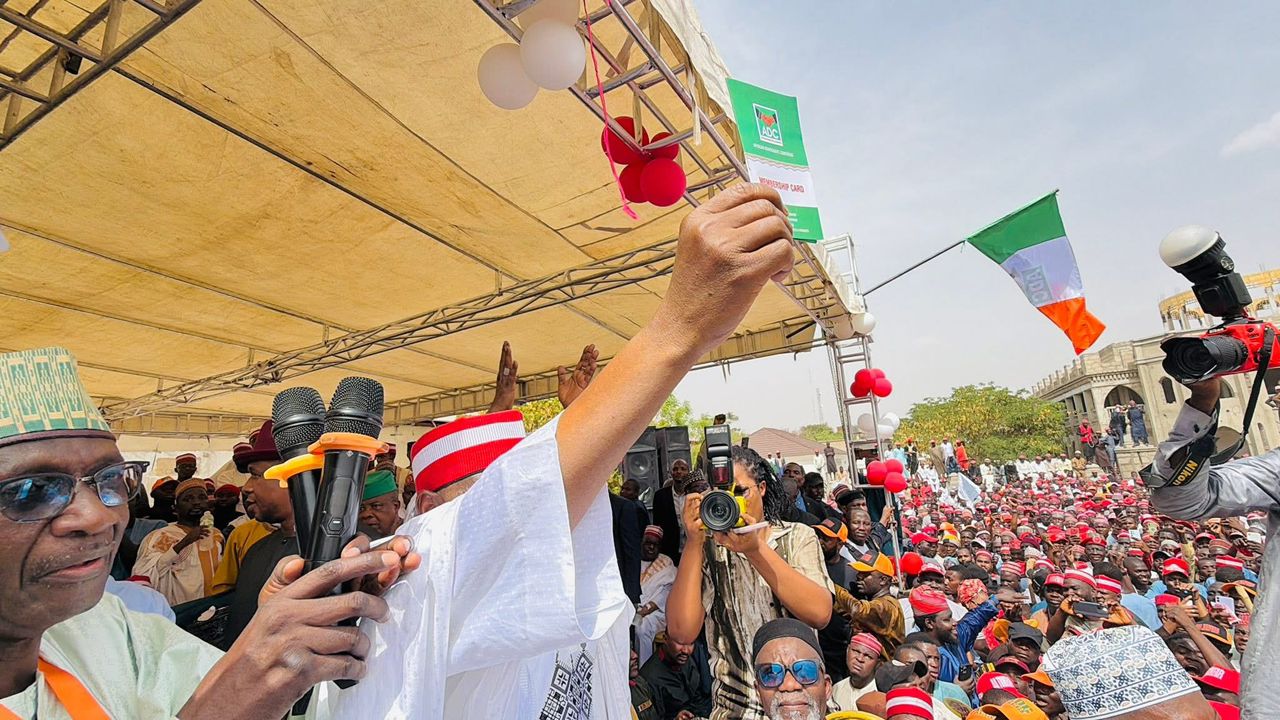
Former presidential candidate of the New Nigeria Peoples Party and ex-Governor of Kano State, Senator Rabiu Kwankwaso, has officially joined the African Democratic Congress.
The former Minister of Defence also registered with the party and received his membership card on Monday at Gidan Kwankwasiyya, Miller Road, Bompai, Kano.
Present at the event include ADC National Chairman and former Senate President, David Mark; former Sokoto State Governor, Senator Aminu Tambuwal; former Minister of Transportation, Rotimi Amaechi; former Labour Party presidential candidate, Peter Obi; Senator Dino Melaye; and former National Chairman of the All Progressives Congress, John Odigie-Oyegun, among others.

ADC Reports Surge in Membership Following Kwankwaso’s Defection, Calls Him ‘Game Changer’

Foreign Affairs Minister Resigns to Pursue Bauchi Governorship Election

Kwankwaso Officially Joins ADC

El-Rufai/Uba Sani And Pantami’s Perceived Peace Of The Graveyard

Defection: Kwankwaso’s Legacy Under Scrutiny; A Critical Look at his Political Journey Since 1999

The Governor Who Chose His People Over His Politics: Abba Yusuf and the Moral Courage Behind Kano First

FREEDOM OF SPEECH, NOT FREEDOM FROM CONSEQUENCE: A CITIZEN’S CALL FOR RESPONSIBLE PUBLIC COMMENTARY
Restoring the Glory That Was Always There: Governor Abba Kabir Yusuf and the Historical Vision Behind Kano First

Tinubu to Swear in Olatunji Disu as Inspector-General of Police on Wednesday

NDLEA Clarifies: Drug Case Against Abba Kyari Still Active After Court Discharge
ADC Reports Surge in Membership Following Kwankwaso’s Defection, Calls Him ‘Game Changer’
Foreign Affairs Minister Resigns to Pursue Bauchi Governorship Election
Kwankwaso Officially Joins ADC
El-Rufai/Uba Sani And Pantami’s Perceived Peace Of The Graveyard
Defection: Kwankwaso’s Legacy Under Scrutiny; A Critical Look at his Political Journey Since 1999
The Governor Who Chose His People Over His Politics: Abba Yusuf and the Moral Courage Behind Kano First
FREEDOM OF SPEECH, NOT FREEDOM FROM CONSEQUENCE: A CITIZEN’S CALL FOR RESPONSIBLE PUBLIC COMMENTARY
Restoring the Glory That Was Always There: Governor Abba Kabir Yusuf and the Historical Vision Behind Kano First
Tinubu to Swear in Olatunji Disu as Inspector-General of Police on Wednesday
NDLEA Clarifies: Drug Case Against Abba Kyari Still Active After Court Discharge
-

 Opinion4 years ago
On The Kano Flyovers And Public Perception
-

 Features5 years ago
How I Became A Multimillionaire In Nigeria – Hadiza Gabon
-

 Opinion5 years ago
Kano As future Headquarters Of Poverty In Nigeria
-

 History5 years ago
Sheikh Adam Abdullahi Al-Ilory (1917-1992):Nigeria’s Islamic Scholar Who Wrote Over 100 Books And Journals
-

 Opinion4 years ago
My First Encounter with Nasiru Gawuna, the Humble Deputy Governor
-

 History5 years ago
The Origin Of “Mammy Market” In Army Barracks (Mammy Ochefu)
-

 History4 years ago
The History Of Borno State Governor Professor Babagana Umara Zulum
-

 News4 years ago
Federal University Of Technology Babura To Commence Academic Activities September