
News
Fake News, Threat to Nigeria’s Peaceful Coexistence-CDD

Fake News has been described as a great threat to peaceful co-existence in Nigeria which transcends to political elections and a threat to Democratic Values.
The Director Center for Democracy and Development West Africa Mrs Idayat Hassan stated this at the Opening Session of the Hackathon on Combating Disinformation and Fake News in Northern Nigeria .
Mrs Idayat said In recent times, fake news and disinformation around politics, governance, elections and conflict in Nigeria have become common.
She said their commonality is not the only threat to Nigeria’s democratic values and existence but posed a serious challenge to the mutual and peaceful coexistence of diverse Nigerians.
According to Idayat that is why civil society organization with the mandate of safeguarding and promoting democratic culture, values and existence believed must do everything possible to avert scenario of Fake News and disinformation threatening Nigeria especially the North.
The CDD Director West Africa said the population of Nigerians on different social media platforms is increasing by the day, while that is a welcome development for reasons such as political discussion, expression of opinions, accountability, prompt sharing and exchange of information, etc, it also portends certain experiences or incidences that require robust interventions to make the online space safe and peaceful.
Police molest and detained NAN correspondent
She described disinformation and fake news as having repercussions on societal peace and progress.
According to her Centre for Democracy and Development (CDD-West Africa) became concerned about the rising disinformation and fake news incidences not only on social media platforms, or blog spots but in the mainstream media.
Mrs Idayat Hassan pointed out that is the reason why the centre is deploying multiple tools on combating disinformation and fake news in Nigeria, and today’s hackathon is one of them.
‘’For the past two years, CDD has been making efforts to combat disinformation and fake news in Nigeria and recently in Northern Nigeria through the fact-checking, weekly radio programme, jingles on the radio station, social influencers on social media and continuous online campaign, use of native songs to enlighten the populace’’
‘’The hackathon which we are kick-starting today is born out of CDD’s desire to generate concrete and realistic ideas or solutions that will help combat disinformation and fake news particularly in Northern Nigeria’’
Idayat Hassan believed that opening up for ideas and solutions to emerge from a variety of people is a good strategy to address fake news, that is the reason why CDD announced the call for applications
She added that months back hackathon received in total, two hundred (2000) applications from numerous individuals wanting to showcase their ideas at the hackathon and after review shortlisted fifty (50) young men and women from Northern Nigeria.
According to the Director West Africa Out of these twenty (20) participants, three (3) best ideas or solutions will be selected by a team of expert judges over the next three (3) days of brainstorming sessions.
She added that Prizes have been reserved for the best three (3) ideas that will emerge. The prizes include winning 1000 dollars, opportunity to participate in the regional hackathon as well as fellowship.
The Director CDD West Africa also thanked all participants who join the opening session of the hackathon and wish all the participants well as they showcase their ideas and solutions to combating fake news and disinformation in Northern Nigeria.
She concluded that CDD will remain focused and determined in its the pursuit of seeing a society where fake news and disinformation aren’t constructed, shared or promoted.












News
Nigeria’s GDP Growth, Drop in Inflation Not Translating into Poverty Reduction – BUK Deputy VC
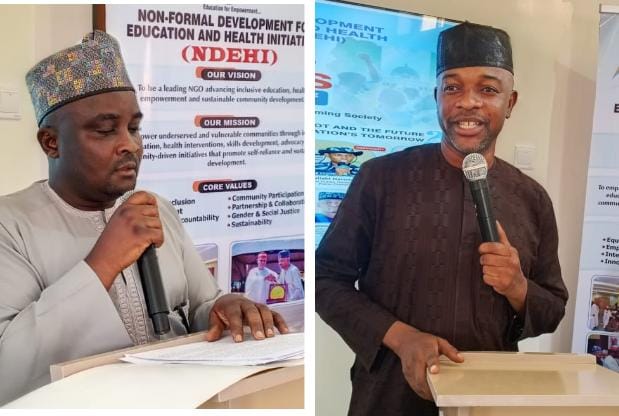
The Deputy Vice-Chancellor (Academics) of Bayero University Kano (BUK), Professor Ahmad Muhammad Tsauni, has said that Nigeria’s recent economic growth and decline in inflation have yet to translate into a meaningful reduction in poverty among citizens.
Professor Tsauni, an economist, made this observation during a gathering organised by the Non-Formal Development for Education and Health Initiative, with the theme, “Nigeria at a Crossroad: Who Is to Fix It?”
He said that although Nigeria had recorded some level of growth in its Gross Domestic Product (GDP) and improvements in certain economic indicators, the development had not significantly improved the living conditions of ordinary Nigerians.
According to him, the country continues to grapple with complex economic and social challenges that require collective efforts and practical solutions to overcome.
“We want to show that Nigeria is a country that, in spite of its challenges, has complex problems that will not really allow it to address them easily. Recently, we have been experiencing some level of growth in GDP, but those indices are not translating into a reduction in poverty, and so we are at a crossroads,” he said.
The BUK Deputy Vice-Chancellor explained that addressing the country’s challenges required more than government interventions, stressing that every Nigerian had a responsibility to contribute to rebuilding the country.
He maintained that the responsibility of finding solutions to Nigeria’s problems should not be left to individuals, political leaders or organisations alone, but should involve citizens from all sectors of society.
Professor Tsauni also called on the government to formulate and implement pragmatic policies capable of addressing the country’s challenges, while emphasising the importance of building public trust.
He, however, identified negative societal attitudes and a lack of commitment to national development as some of the major obstacles preventing Nigeria from achieving the desired results from its policies.
According to him, Nigeria has developed several sound policies over the years, but poor attitudes and the failure of citizens to demonstrate the necessary commitment have continued to undermine their implementation.
“We have beautiful policies in Nigeria, but they cannot work because of our attitude. We should not apportion blame to anybody because we created the problem together, so everybody should contribute,” he said.
The university don urged Nigerians across different professions and institutions to examine their conduct and take responsibility for improving the country.
He specifically noted that classroom teachers, judges, public servants and other professionals must reflect on their individual responsibilities, adding that positive changes in societal attitudes were essential to national development.
Professor Tsauni further stressed that Nigeria’s current situation required collective reflection and a change in citizens’ approach to public responsibilities rather than continuous blame-shifting.
Earlier, the Technical Lead of the Non-Formal Development for Education and Health Initiative, Dr Auwal Halilu, called on Nigerians to demonstrate patriotism and contribute towards revitalising the country.
Dr Halilu said Nigeria was facing numerous challenges as the country approached the 2027 general elections, stressing the need for citizens to reflect on how to secure the country’s future through responsible participation in the electoral process.
He urged Nigerians to embrace positive values, transparency and accountability, noting that national development could only be achieved when citizens and leaders demonstrated genuine commitment to the country’s progress.
“We should take into consideration that we are going to revitalise this country. Every Nigerian should be patriotic. There are a lot of challenges in Nigeria as we approach the 2027 elections. How can we help to get the best in Nigeria? We should change our values for good and be transparent,” he said.
Dr Halilu also challenged Nigerians to consider how they could support leaders in addressing the country’s challenges, rather than leaving the responsibility of national development entirely to those in government.
He emphasised that rebuilding Nigeria required a collective commitment to good values, transparency and patriotism, particularly as the country prepares for another general election in 2027.
The gathering provided an opportunity for discussions on Nigeria’s economic and social challenges, the responsibilities of citizens and the need for collective action towards national development.
News
Dala Chairman Marks Two Years In Office With Prayers For Peace,Leaders
By Abdu Saidu
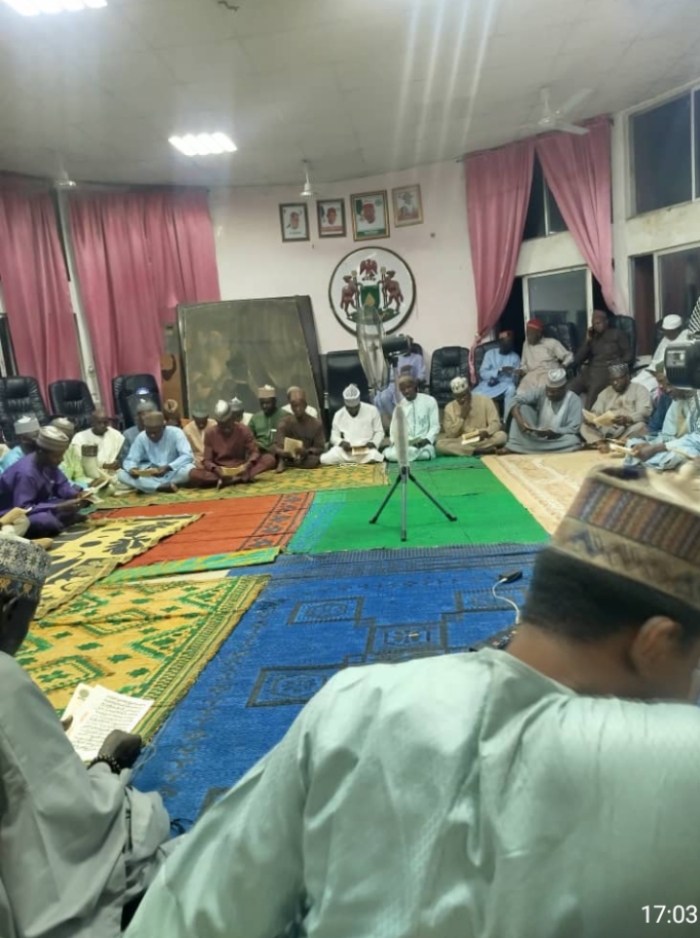
The Chairman of Dala Local Government Area of Kano State, Hon. Suraj Ibrahim Imam, has marked his second anniversary in office with a special prayer session for peace, stability and good governance in Dala, Kano State and Nigeria at large.
The prayer session, held on Saturday at the local government secretariat, featured the recitation of the Holy Qur’an by about 60 Islamic scholars and Qur’anic memorizers drawn from different parts of the council area.
The participants offered prayers for divine guidance, wisdom and success for Governor Abba Kabir Yusuf, President Bola Ahmed Tinubu, members of the National Assembly and the Kano State House of Assembly, as well as other political leaders.
Speaking at the event, Imam said the prayer session was organised to express gratitude to Almighty Allah for the opportunity to serve the people of Dala for two years and to seek His continued guidance and blessings for the council, the state and the country.
He added that the gathering was also an opportunity to pray for the success of Governor Yusuf and other political leaders in their future political engagements.
On his administration’s performance, the chairman disclosed that several development projects had been executed across the 12 wards of Dala Local Government Area within the past two years, with the support and approval of Governor Yusuf.
He commended the governor for his development initiatives across the state’s 44 local government areas, particularly in healthcare, education, security, road construction, potable water supply, agriculture and employment generation.
According to Imam, the interventions have contributed to improving the living conditions of residents and strengthening development at the grassroots.
He expressed confidence in the governor’s leadership and called on residents and political stakeholders to support his re-election in 2027. He also expressed support for President Tinubu and other APC candidates ahead of the next general elections.
The event was attended by Alhaji Bashir Ibrahim Al-Mustapha, OON, councillors, Islamic scholars, Qur’anic memorizers, political advisers, the local government secretary and other stakeholders from across Dala Local Government Area.
News
NNPC Confirms Gas Supply & Network Availability
NNPC Limited confirms that gas transportation network operated by its subsidiary, NNPC Gas Infrastructure Company Limited (NGIC), remains available to support deliveries to power generating stations Nationwide without any constraints. NGIC’s operational records do not indicate transportation-related constraints within its network that explain the current decline in electricity generation.
NNPC Limited is focussed on actualizing the Federal Government’s gas development and monetization agenda which has led to about 10% growth in gas production volumes 2026 year to date. Gas supply availability is therefore not a challenge as NNPC remains committed to supporting efforts to improve electricity generation through safe, reliable and efficient gas supply and transportation.
This clarification follows the Nigerian Independent System Operator’s (NISO) statement of 5 November 2026, which cited limited gas availability and reduced water inflows to hydroelectric stations as causes of lower generation. NNPC Limited’s clarification concerns the operational status of NGIC’s transportation network. Gas production, commercial supply arrangements and actual deliveries to individual power plants must be assessed separately from the availability of transportation infrastructure.
A comprehensive assessment must also consider the availability and operational readiness of generating units, plant maintenance schedules and actual gas offtake. These factors determine whether gas supplied can be converted into electricity. They should be verified alongside gas supply data to establish the causes of the shortfall.
NNPC Limited supports a coordinated review of operational data by gas suppliers, transporters, power generators and NISO to identify specific constraints and guide effective interventions. Accurate reporting across the gas-to-power value chain is essential to resolving the challenges and sustaining public confidence.
Our focus remains on dependable energy infrastructure and constructive collaboration that helps translate Nigeria’s gas resources into more reliable electricity for Nigerians.
Andy Odeh
Chief Corporate Communications Officer
NNPC Limited
Abuja
6 November 2026

Nigeria’s GDP Growth, Drop in Inflation Not Translating into Poverty Reduction – BUK Deputy VC

Dala Chairman Marks Two Years In Office With Prayers For Peace,Leaders

NNPC Confirms Gas Supply & Network Availability

Kano Task Force Seizes 3.18m Pregabalin Capsules After Rapid Response Squad Launch

Former Kano NUJ Chairman Abbas Ibrahim Loses Mother at 91

Kano Monitors ₦48.9bn Projects Across Six LGAs

Open The Social Sciences “A Tribute to a Heterodox Scholar: Mallam Ibrahim Muazzam

Senate Passes Barau’s Bill to Provide Legal Framework for Yusuf Maitama Sule Federal University of Education, Kano

Gov. Yusuf Appoints Inuwa Waya Director of International Corporations Engagement

Dawakin Tofa Academic Forum Holds Maiden Heroes Day, Honours Former Kano Governor
Nigeria’s GDP Growth, Drop in Inflation Not Translating into Poverty Reduction – BUK Deputy VC
Dala Chairman Marks Two Years In Office With Prayers For Peace,Leaders
NNPC Confirms Gas Supply & Network Availability
Kano Task Force Seizes 3.18m Pregabalin Capsules After Rapid Response Squad Launch
Former Kano NUJ Chairman Abbas Ibrahim Loses Mother at 91
Kano Monitors ₦48.9bn Projects Across Six LGAs
Open The Social Sciences “A Tribute to a Heterodox Scholar: Mallam Ibrahim Muazzam
Senate Passes Barau’s Bill to Provide Legal Framework for Yusuf Maitama Sule Federal University of Education, Kano
Gov. Yusuf Appoints Inuwa Waya Director of International Corporations Engagement
Dawakin Tofa Academic Forum Holds Maiden Heroes Day, Honours Former Kano Governor
-

 Opinion5 years ago
On The Kano Flyovers And Public Perception
-

 Features5 years ago
How I Became A Multimillionaire In Nigeria – Hadiza Gabon
-

 Opinion6 years ago
Kano As future Headquarters Of Poverty In Nigeria
-
 History6 years ago
Sheikh Adam Abdullahi Al-Ilory (1917-1992):Nigeria’s Islamic Scholar Who Wrote Over 100 Books And Journals
-

 Opinion5 years ago
My First Encounter with Nasiru Gawuna, the Humble Deputy Governor
-

 History5 years ago
The History Of Borno State Governor Professor Babagana Umara Zulum
-
 History6 years ago
The Origin Of “Mammy Market” In Army Barracks (Mammy Ochefu)
-
 News5 years ago
Federal University Of Technology Babura To Commence Academic Activities September