
Opinion
Kano Assembly :Making A Hero In Muhuyi Magaji
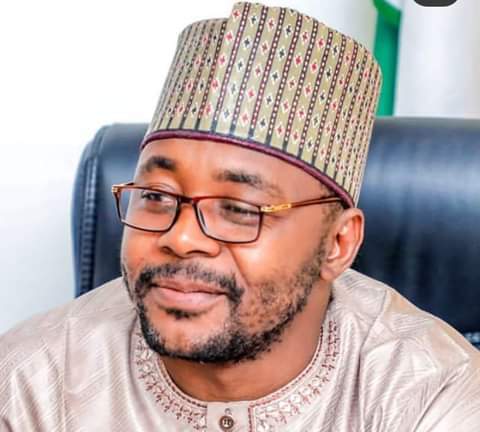
By Auwalu Abdulqadir
As the unfolding Drama between the Kano state House of assembly and the former chairman of Kano state public complaints and Anti-corruption commission continued, the general public has been awash with fallacies since a committee was constituted by the state assembly to investigate the so-called allegations being meted against Barrister Magaji while he was at the office.
The nitty-gritty of law-making requires experience devoid of political interference, but the legislature has thrown itself into futility and derails from its main function of making good laws which they were elected to do.
Now they have executed the main hatched job which they were scripted to do on behalf of the executive arm of government.
.Sometimes I wondered how scriptwriters work hard to film a whole movie into real-life stories to which the Kano legislature did a few months back as if My Boss Muhuyi Magaji Rimin Gado is their only legislative agenda in the third quarter of the year 2021.
From the committee, they set up in a closed-door meeting to suspension, then asking my boss to appear before them and then making the world believe that he falsified medical report, blab la bla.
Lawmakers are now making the most populous state in Nigeria a laughing stock in the eyes of the world.
The lawmaking body’s probe of Barrister Muhuyi revolves around one thing, that is the issue of posting an accountant to his office which led to suspension, then asking him to appear before them despite his health challenges and now recommending his removal which was the main goal of his detractors and those that don’t want to see the fight against corruption by my boss succeed in Kano.
Every individual in and around the world is much aware of a story uncovered by one of the investigative online media in Nigeria, The Daily Nigerian, and others on a plot to remove the most celebrated Anti-graft boss among the 36 states of the Federation.
The story on the plan to remove him went viral on the 27th of June 2021, and the Kano state legislature went Gaga the following week through diversionary tactics, and here is where we are that is the 26th of July recommending his final removal as the Anti Graft boss.
The reason why I said diversionary tactics was that the story broken on the 27th of June on a plot to remove Muhyi Magaji from his position has now come to reality.
They are now telling the public all sorts of stories through misleading information.
Now taken us back a little on how the scenario started, on June 27th Daily Nigerian and other online mediums carried the following story exactly as follows.
“’ Plot to remove the chairman of the Kano State Public Complaints and Anti-Corruption Commission, PCAC, Muhuyi Rimingado, has thickened as Governor Abdullahi Ganduje allegedly mounts pressure on the State Assembly to execute the hatchet the job.
Informed sources at the Assembly said that the governor wanted the legislators to remove the state anti-corruption commission boss for poke nosing into his family’s affairs.
“There is actually a plot, with the governor as arrowhead, to remove Muhuyi. Although the governor did not specifically state Muhuyi’s offense, he just wanted him out of that office.
“You know in the governor’s usual antics of pushing the legislature to take the bullet for him. Remember he did the same when he wanted to get rid of his former deputy, Hafiz Abubakar, and former Emir Muhammadu Sanusi II,” said a legislator familiar with the plot.
Hepatitis Day: 9 In 10 People Are Ignorant
On the possibility of executing the governor’s bidding, the lawmaker said majority members of the Assembly are rubber-stamps.
The crisis began early this month when Mr. Rimingado beamed his searchlight into the contracts allegedly awarded to companies linked to the governor’s family.
In a letter sighted with reference number PCACC/CM/OFF/VOL.1/071 dated June 10, 2021, and signed by the chairman of the commission, Muhuyi Rimingado, the commission requested the commissioner of the Ministry of Works to provide information relating to the construction of Cancer Center and the supply of diesel by the state government.
“In the exercise of its powers under Section 9 and Section 15 of the Kano State Public Complaints and Anti-Corruption Commission Law 2008 (as amended), the Commission is currently conducting an investigation which requires you to provide the following details:-
“(a) All documents relating to Cancer Centre
“(b) All documents pertaining to procurement of Diesel.
“(c) Any other information that will aid the Commission’s investigation.”
Credible sources told this newspaper that bulk diesel supply in government ministries, departments and agencies is allegedly the exclusive preserve of the first family.
It was gathered that the contract for the construction of the Cancer Centre, allegedly believed to be handled by a proxy of the first family, is undergoing a series of variations, which calls for concern of the commission.
The contract for the Cancer Centre was initially awarded at the cost of N2.4 billion but currently stands at over N5billion due to a series of variations.
It was gathered that there is alleged round-tripping in the diesel supply contracts, such that funds were allegedly released without the supply of the commodity.
Mr Rimingado, a lawyer, recently came under fire for his failure to investigate the governor’s corruption, particularly the dollar bribe-taking videos exposed by this newspaper in October 2018.
Efforts to speak with Mr Rimingado on his removal plan proved abortive as he barred incoming calls into his known telephone number.
A spokesman for the governor Abba Anwar did not pick our reporter’s calls, nor respond to a text message seeking the governor’s response on the matter’’
Daily Nigerian
The following week after 27th June Daily Nigerian and other publications were vindicated when the House suspended my boss from office without giving him a fair hearing.
The content of the above story is yet to be answered by the state legislature and July 27 is where we are that is recommending his removal by the assembly based on the following flimsy excuses.
If people like Timi the Law are alive and Human Rights lawyer Gani Fawehenmi, they will weep on how the law-making process in Nigeria has been bastardized by no one other than those who are supposed to uphold its sanctity and protect it.
Can we say we are in a paramilitary era where trump up charges are instituted on military officers by their military superiors just to get rid of certain individuals they are not pleased with by making them heroes of their own time?
Now people and expert jurists should look at this and see how the state assembly executed what it was set to do.
The report on that made Headlines on the removal of my boss goes as follows.
“ Kano State House of Assembly has today in its plenary session received a report of the House Adhoc Committee on the investigation of a petition received by the House from the office of the Accountant General of the State against Muhuyi Magaji esq.
The Adhoc Committee Chairman Umar Musa Gama presented the report before the Honourable House where the House deliberated and agreed on the recommendation of the Committee.
Among the recommendation as Stated by the Majority Leader Labaran Abdul Madari in a chat with journalists after the sitting includes;
That the House should recommend the immediate removal of Muhuyi Magaji esq by the State Government as the suspended Chairman of the Public Complain and Anti Corruption Commission as provided by Section 6 of the Anti Corruption Law 2010 as amended which provides that,
“The Chairman or any other member of the Commission appointed under this Law may at any time be removed from office by the Governor acting upon a resolution supported by simple majority of the members of the State House of Assembly, praying that he be removed from office for inability to discharge effectively the functions of his office or for any other reason.”
The Committee further recommends the arrest, investigation, and prosecution of Muhuyi Magaji esq for the offenses of forgery and presenting false information to public office under sections 262,363,364 and 161 of the penal code of Kano State as amended.
Similarly, the Committee recommends that the said Accountant staff on grade level 04 should be dealt with in accordance with Kano State Civil Service rules whereas the rejected Chief Accountant by the suspended Chairman should be directed to take over the affairs of the Account Department of the Commission.
Later the House set up an Adhoc Committee under the Chairmanship of the Deputy Speaker Zubairu Hamza Masu to investigate the financial dealings of the Commission from 2015 to date and to submit a report within three months.
As at today, the House of Assembly has not received a court order on this matter.
The above-itemized issues have shown how the house is making a mockery of the law, first by including an item that has never been a subject of their investigation, that is the so-called forgery they said he has committed when they made it mandatory that he must appear before them.
Now since chief executives are making a faux pass in dealing with the judiciary, the legislative arm of government has now followed suit, that is ignoring court orders, the court order was given three days to their sitting and despite the reportage by the press, in their resolution recommending his removal from the office they said they have not received any court order, lawmakers are now ignoring the law which is a pity for the growth and sustenance of democracy.
As the legislative arm of government is independent, one asks why will they not allow government agencies that are independent to discharge their responsibilities.
The reason why the PCACC has had many breakthroughs under the chairmanship of my boss was that he did his best to ensure that its independent and in the course of doing that the legislature was teleguided to use that in removing Barrister Muhuyi Magaji.
In order to justify their flimsy excuse in suspending and recommending the sack of Barrister Muhuyi, just because he wanted to assert the independence of the commission they cited the that he rejected an accountant sent to his office, an independent body acts independently and no one should raise an eyebrow.
With the unfolding scenario, the Kano state house of assembly has made a hero in Barrister Muhuyi Magaji Rimin Gado one of the celebrated Anti-corruption Czar.
The Yet to be answered Questions by the legislature
From the diversionary tactics of the legislature and to sweep things under the carpet during Barrister Muhyi’s Melodrama scripted by the lawmakers they once claim to have constituted another committee to investigate the finances of the commission,but nothing was heard from a mere mention.
Another gullibility they played with the people of Kano and other Nigerians was that since there was already a conspiracy to deal with him they went ahead to flout a court order restraining them from investigating him by a court of competent jurisdiction which made people to smell a rat in the pot of chickens,at the end, they have shown that they are their own judges.
Now they have made people to believe that Muhuyi Magaji’s fight against corruption is a nuisance to them and their pay masters.
The media is much aware how a committee was set up to scrutinize the finances of the commission and then later shifted the issue to the allegation of forgery and all was done without giving the accused a fair hearing.
The issue of forgery need to be proven beyond a reasonable doubt before condemning the person of Muhyi Magaji and in all the accusations he has never been allowed to prove his innocence what a pity
Auwalu Abdulqadir is the personal assistant to Barrister Muhuyi Magaji Rimin Gado
Opinion
The missing commissioner :Unraveling The Controversy Behind The Arewa Media Summit

By Shariff Aminu Ahlan
It is outrageous, disturbing, unimaginable, undeserved, and simply difficult to comprehend how such a high-profile and well-attended event, organized to celebrate media excellence and promote discussions on strengthening media platforms that advance the Northern agenda, could deliberately exclude the Commissioner for Information of the host state, a man widely acknowledged as one of the most competent and outstanding Information Commissioners in Northern Nigeria.
The wave of criticism that followed the event was massive and centered on several noticeable shortcomings, including poor coordination, misplaced priorities, organizational lapses, and a lack of professionalism. However, the most ironic aspect of the entire event was the deliberate exclusion of the State Commissioner for Information.
As the summit was organized under the leadership of the Senior Special Assistant to the President on Media, the apparent lapses and alleged collaboration with disgruntled elements pursuing hidden agendas ultimately diminished what should have been a historic gathering. Despite the presence of governor, commissioners of information from various states, media practitioners, academics, and other distinguished personalities, the event failed to make the impact many had anticipated.
To be fair, the organizers made considerable efforts to ensure the summit achieved its objectives. The discussions focused on Northern Nigeria and explored practical ways through which the media could contribute to the region’s development by promoting constructive narratives, intellectual engagement, and effective information dissemination.
Unfortunately, avoidable organizational shortcomings prevented the event from fully meeting expectations. More importantly, the exclusion of the host state’s Commissioner for Information became one of the most talked-about controversies surrounding the summit.
Had the organizers involved the Commissioner from the planning stage, his vast experience, administrative competence, and institutional knowledge could have significantly improved the coordination of the event. His contributions might have transformed the summit into a model gathering and eliminated many of the shortcomings that attracted widespread criticism.
Ironically, those blaming the Commissioner for his absence are not being fair. Such accusations only strengthen the belief that certain individuals are pursuing a carefully orchestrated agenda aimed at discrediting him. According to available information, the Commissioner was not invited to an event held within his own official domain. In keeping with professional ethics and protocol, he chose not to attend an event from which he had been deliberately excluded. The consequences of that decision. and of the organizers’ actions, were evident for everyone to see.
As for those working tirelessly to push the Commissioner into political irrelevance, they should understand that their alleged campaign has become increasingly obvious. More importantly, the Governor has continued to demonstrate confidence in him. Beyond that, the Commissioner has continued to receive recognition and commendation for his dedication, professionalism, and unwavering commitment to the responsibilities entrusted to him.
History has repeatedly shown that competence, professionalism, and integrity ultimately outlast conspiracy, manipulation, and political scheming.
Shariff Aminu Ahlan
APC Intellectual Warrior
Realahlan0101@gmail.com
Opinion
eHealth Bill: How DSP Barau, the Digital Senator, is Driving Nigeria’s Health Tech Future
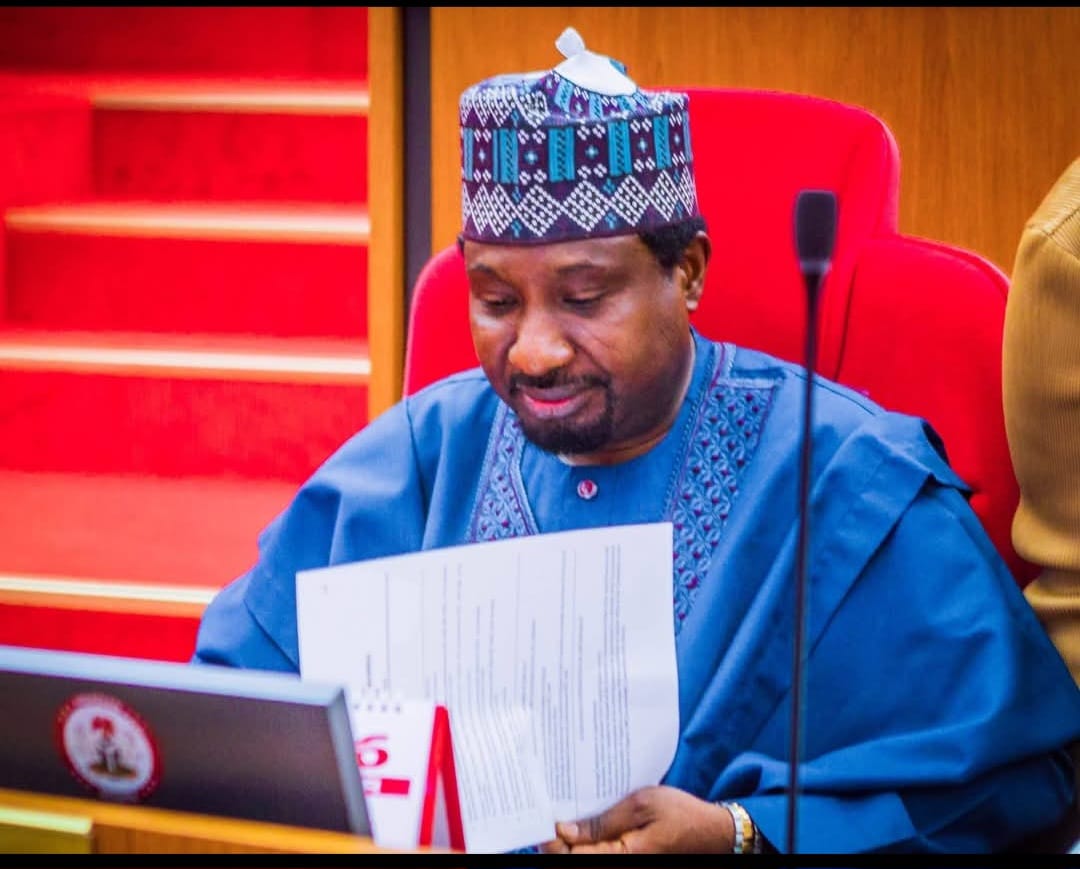
By Abba Anwar
Only advanced minds and globally exposed political leaders can think of the necessity and relevance of E-Health regulatory framework in the nation’s healthcare system.
The National E-Health Bill, 2026, presented to the Senate plenary session some weeks back, by His Excellency the Deputy Senate President, Barau I Jibrin, CFR, PhD, is a clear testimony that, this Distinguished Senator knows the right button to press when it comes to compliance with the global practice in the healthcare sector.
As the Bill passed second reading three days ago, it has become clearer that our National Assembly houses refined legislators, who behave as and are global citizens. Who understand what is obtained elsewhere across the globe in many sectors, including health.
On his Facebook page DSP disclosed that, “During today’s plenary of the Senate, my Bill, the National E-Health Bill, 2026, scaled second reading in our bid to establish a comprehensive legal and institutional framework for the development, regulation, coordination and integration of electronic health services in the Federal Republic of Nigeria.”
He was supported unanimously by his Distinguished colleagues, during the plenary. After which it has been referred to the Committee on Health (Secondary and Tertiary) for the remaining legislative process. Two weeks was given for the Committee to report back to the plenary.
To tell you that DSP is soundly familiar with the digital terrain in the healthcare sector, with deep interest and unwavering care for all Nigerians, he argued on the floor of the Senate, that, “… the healthcare sector globally is undergoing an unprecedented digital transformation. Across developed and emerging economies, digital technologies have become indispensable tools for improving healthcare delivery, expanding access to medical services, reducing costs and enhancing health outcomes.
Nations are increasingly deploying electronic medical records, telemedicine platforms, artificial intelligence, mobile health applications, electronic prescriptions, wearable health technologies and integrated health information systems to improve efficiency and quality of care.”
The above argument advanced by Senator Jibrin, tells us in broader terms and unhindered breakthrough in the thinking, action, deep philosophy and glaring global comprehension of this noble legislator in pushing for the advancement of our healthcare system. With reference to global experience.
In his added capacity as an astute administrator, a focused Pan-African legislator and a high profile researcher he was able to capture bit-by-bit reasons why digital healthcare system is a prerequisite of modern healthcare administration and management.
The attention of my readers is needed here, where he argued brilliantly that, “Nigeria cannot afford to remain on the margins of this global transformation. Despite significant investments in healthcare infrastructure and reforms over the years, our healthcare delivery system continues to face enormous challenges.
Medical records remain largely paper-based, resulting in loss of patient information, duplication of diagnostic tests, delayed treatment and avoidable medical errors. Healthcare facilities often operate in isolation, making it difficult to exchange patient information securely across institutions.”
Because of his glued attachment to the grassroot, he was able to remember that, millions of our citizens are residing in rural, underreported, hard-to-reach and underserved communities, which make them to continue facing enormous barriers in accessing specialist medical care due to shortages of healthcare professionals and geographical limitations.
As a scholar with real and genuine academic Doctorate Degree (PhD) he was able to draw a scientific curtain for the need to have regulations governing the operationalization procedures of digital healthcare. Our esteemed Digital Legislator of repute.
That was when he said, “… the COVID-19 pandemic demonstrated beyond doubt that digital health technologies are no longer optional but essential components of resilient healthcare systems. During the pandemic, telemedicine, remote consultations and electronic health information systems became indispensable in maintaining continuity of healthcare services while reducing unnecessary physical contact.”
It is through proper legislation that any system strives, cements its parts, provides goodies, enhances benefits and maintains advantages. Thinking in the same way Senator Jibrin believes that, with the negation of clear legislation there is every likelihood that, what becomes the outputs are “… fragmented implementation, inconsistent standards, inadequate interoperability, weak governance structures and uncertainty regarding legal responsibilities of healthcare providers operating digital platforms.”
During his presentation or rather arguments, he behaved as if he was a medical personnel. When he raised the issue of data confidentiality and management. One of the core behavior of health workers, to safeguard the privacy and health history of patients.
Too tantalizing for a non-medical person, when he argued that, “Distinguished Colleagues, data protection remains one of the cornerstones of this legislation. Health information is among the most sensitive categories of personal information. The Bill therefore establishes robust safeguards to ensure confidentiality, integrity and security of patients’ medical records.”
Thinking from informed position ab initio, to show to all that, DSP Jibrin knew his starting point, he knows where he was heading to and knows the clear message involved in digitalizing healthcare system, with relevant stakeholders, he identified possible collaborators who are critical in the implementation of this all-important Bill.
He said, “… this Bill aligns with the Federal Government’s digital transformation agenda, the National Digital Health Strategic Framework, the National Health Act, Universal Health Coverage objectives, the Nigeria Data Protection Act and our broader commitment to achieving the Sustainable Development Goals, particularly Goal 3 on Good Health and Well-being and Goal 9 on Industry, Innovation and Infrastructure.”
Before the Bill scaled the second reading, DSP urged his colleagues to see wisdom in the Bill and support him for its passage. Understanding the critical need for the Bill, having gone far and wide across the globe he believes that this 21st century digital era should be reflected in our healthcare sector.
In his urge to colleagues he said, “This Bill represents a bold legislative response to the realities of twenty-first-century healthcare. It provides the legal foundation necessary for building a modern, efficient, inclusive and technology-driven healthcare system that will serve present and future generations of Nigerians.
I therefore urge my Distinguished Colleagues to support this very important Bill and allow it to proceed to Second Reading.”
Anwar writes from Kano
Sunday, 12th July, 2026
Opinion
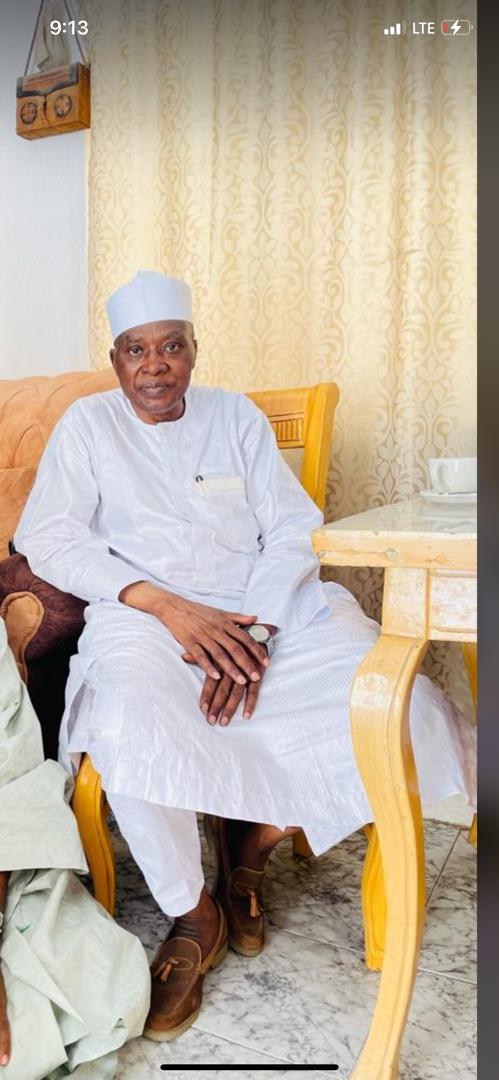
Alhaji Tijjani Rabiu Spikin: A Neighbour, Philanthropist, and Friend of Children
BY
MUDASSIR ALIYU YUNUSA (MSNB)
mudassiray@gmail.com
Alhaji Tijjani Rabiu Spikin, popularly known as ‘Tijjani Spikin,’ is one of the most respected elders of the Kofar Nassarawa and Sabuwar Kofa communities. A successful businessman with an outstanding reputation, he is admired not only for his business accomplishments but also for his kindness, humility, and generosity toward those around him, especially children.
He is widely regarded as a man of peace who values harmonious relationships. He believes that good neighbourliness is built on mutual respect, compassion, and the willingness to uphold the rights of others. His home has always been a place where people feel welcome, particularly children, and he has earned the trust and admiration of both the young and the old through his exemplary character.
What distinguishes Alhaji Tijjani most is his genuine love for children. He has always shown special affection to every child living in his neighbourhood, regardless of family background. It has long been his habit to brighten their day by giving them small gifts, including cash, biscuits, sweets, and other treats. To many children, these gestures were not merely gifts but expressions of love and encouragement that made them feel valued and appreciated.
Those who grew up in the area could bear me witness. I can vividly remember the excitement whenever Alhaji Tijjani came out in the morning or afternoon on his way to his daily routine. Children would eagerly and joyously gather around him, knowing that he would never send them away empty-handed. Because of this remarkable generosity to the children, they affectionately gave him the nickname “Mai Raba Kwandala Kwandala,” meaning “the man who shared coins.” It was a title born out of admiration for his habit of distributing small denominations of the Nigerian naira to every boy or girl he met.
Today, Alhaji Tijjani Rabiu (Spikin) remains a shining example of how kindness, generosity, and good neighbourliness can leave a lasting impact on a community, especially in the minds of the children who have now become youths and stakeholders in society. His legacy is reflected not only in the lives he has touched but also in the fond memories cherished by generations of children who experienced his compassion firsthand.
May Almighty Allah (SWT) continue to bless Alhaji Tijjani Rabiu and his entire family abundantly. May He increase him in wealth, grant him sound health, strengthen him in Iman (faith), protect him from all harm, and reward his kindness with His endless mercy in this world and in the Hereafter. Ameen.
Mudassir can be reached via:
mudassiray@gmail.com

Hon. Abubakar Kabir Bichi launches 4th postgraduate scholarship program, sponsors 122 students

Sarkin Yakin Kano, Ambassador Ahmad Umar Loses Mother at 78

2027: Loyalty Reloaded As Gov Yusuf Picks Deputy Garo As Running Mate

BUK, European Space Agency Equip Journalists with Satellite Tools for Climate Reporting

Journalists, Researchers and Development Experts Call for Greater Focus on Impact Storytelling as ISDI Holds Founding Conversation

Alhaji Tijjani Rabiu Spikin: A Neighbour, Philanthropist, and Friend of Children

In a leaked letter: Deputy Senate President Writes Minister, Seeks Revocation of multi billion Naira Kano–Gwarzo–Dayi Road Contract Over Poor Performance

FGCKOSA Sues Federal Government, Developer Over Alleged Conversion of FGC Kano Land to Private Estate

Breaking:ADC Reaffirms Ibrahim Khalil as 2027 Kano Governorship Candidate, Rejects Alleged Imposition

When Military Ethos Is Married Into Royalty: As Emir Muhammad Sanusi II Turbans Former Chief of Air Staff as “Sarkin Fulanin Jaidanawa”
Hon. Abubakar Kabir Bichi launches 4th postgraduate scholarship program, sponsors 122 students
Sarkin Yakin Kano, Ambassador Ahmad Umar Loses Mother at 78
2027: Loyalty Reloaded As Gov Yusuf Picks Deputy Garo As Running Mate
BUK, European Space Agency Equip Journalists with Satellite Tools for Climate Reporting
Journalists, Researchers and Development Experts Call for Greater Focus on Impact Storytelling as ISDI Holds Founding Conversation
Alhaji Tijjani Rabiu Spikin: A Neighbour, Philanthropist, and Friend of Children
In a leaked letter: Deputy Senate President Writes Minister, Seeks Revocation of multi billion Naira Kano–Gwarzo–Dayi Road Contract Over Poor Performance
FGCKOSA Sues Federal Government, Developer Over Alleged Conversion of FGC Kano Land to Private Estate
Breaking:ADC Reaffirms Ibrahim Khalil as 2027 Kano Governorship Candidate, Rejects Alleged Imposition
When Military Ethos Is Married Into Royalty: As Emir Muhammad Sanusi II Turbans Former Chief of Air Staff as “Sarkin Fulanin Jaidanawa”
-

 Opinion4 years ago
On The Kano Flyovers And Public Perception
-

 Features5 years ago
How I Became A Multimillionaire In Nigeria – Hadiza Gabon
-

 Opinion5 years ago
Kano As future Headquarters Of Poverty In Nigeria
-

 History5 years ago
Sheikh Adam Abdullahi Al-Ilory (1917-1992):Nigeria’s Islamic Scholar Who Wrote Over 100 Books And Journals
-

 Opinion5 years ago
My First Encounter with Nasiru Gawuna, the Humble Deputy Governor
-

 History4 years ago
The History Of Borno State Governor Professor Babagana Umara Zulum
-

 History5 years ago
The Origin Of “Mammy Market” In Army Barracks (Mammy Ochefu)
-

 News4 years ago
Federal University Of Technology Babura To Commence Academic Activities September