
News
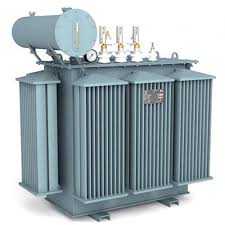
Residents of Tunga Community in Gwale decries shortage of power supply by KEDCO
By Abdullahi Tijjani
Residents of Tunga community in Gwale local Government Decries Shortage of power Supply by KEDCO
Constant power supply is among key agent of societal development globally.
Kano being the center of commerce in Nigeria and beyond relies on electricity for micro and small businesses.
For the people of Tunga Community in Gwale local government the shortage of power in the last one week has thrown them into hardship which they considered unbearable especially with the hot weather in Kano.
Edo 2020: Galadima Hails Team Kano
A resident of the Area malam Mukhtar Bala who spoke to NIGERIAN TRACKER said shortage of power during this hot weather was unbearable.
“We couldn’t sleep at night because of the hot weather and there is no light,our kids and family members find its difficult to sleep at night, we are appealing to KEDCO management to come to our aid”
A hair Barber at Tunga who spoke under the condition of Anomity said he is running his business at lost due to lack of power in the area.
” I bought fuel for my generator for almost 1500 on daily basis,which make the business less profitable, we hardly gets power for three hours in a day, we’re really suffering “
When contacted the corporate public relations officer of KEDCO,Ibrahim shawai by sending him a WhatsApp chat, and a text message, but up to the time of filing this report there was no response.










News
Nigeria’s Oil Output Hits 1.573m bpd as OPEC Production Rises–Report Says

By Yusuf Danjuma Yunusa
Nigeria’s crude oil production, excluding condensate, rose by 35,000 barrels per day (bpd) to 1.573 million bpd in August 2026, from 1.537 million bpd in July, according to the latest data from the Organisation of Petroleum Exporting Countries (OPEC).
The increase, representing a 2.3 per cent month-on-month (MoM) growth, places Nigeria among OPEC members that recorded higher production during the month.
OPEC, in its latest monthly data based on direct communication from member countries, said Nigeria’s August output was its highest monthly production level in the data provided for 2026.
The August figure also exceeded Nigeria’s average production of 1.552 million bpd in the second quarter of 2026, indicating a gradual improvement in upstream output.
The development comes amid renewed efforts by the Federal Government and oil producers to boost production through improved security, fresh upstream investments, new projects and the rehabilitation of existing assets.
Across OPEC, crude oil production increased by 346,000 bpd to 24.081 million bpd in August, from 23.735 million bpd in July.
Iraq recorded the largest increase among OPEC members, with output surging by 664,000 bpd to 3.378 million bpd. Kuwait followed with a 49,000-bpd increase to 1.894 million bpd, while the United Arab Emirates added 54,000 bpd to reach 3.835 million bpd.
Venezuela also increased production by 23,000 bpd to 1.145 million bpd.
However, some major producers recorded declines. Saudi Arabia’s output fell by 75,000 bpd to 7.276 million bpd, while Algeria and Libya declined by 8,000 bpd and 9,000 bpd to 999,000 bpd and 1.355 million bpd respectively.
Iran recorded the largest decline, with production dropping by 399,000 bpd to 2.086 million bpd.
Beyond OPEC, total production by the broader OPEC+ group, comprising OPEC members and participating non-OPEC producers under the Declaration of Cooperation (DoC), rose by 297,000 bpd to 38.055 million bpd in August.
Within the non-OPEC DoC group, Kazakhstan increased production by 159,000 bpd to 1.807 million bpd, while Russia cut output by 160,000 bpd to 8.718 million bpd.
For Nigeria, the latest production increase could provide some relief to government revenue and foreign exchange earnings, given the continued importance of crude oil exports to the economy.
Nigeria has set a target of raising crude oil production towards three million bpd by 2030, making sustained increases essential to achieving the ambition.
However, the country still faces significant challenges, including ageing fields, infrastructure constraints, crude theft, funding difficulties and the need to attract new investment into the upstream sector.
The August performance therefore represents progress, but maintaining the upward trend will be crucial if Nigeria is to close the gap between current production and its ambitious 2030 target.
News
Subsidy Removal: Governors, Not Tinubu, Should Account for Funds — Gov Abiodun

By Yusuf Danjuma Yunusa
Ogun State Governor, Dapo Abiodun, has said state governors, rather than President Bola Tinubu, should be held responsible for explaining how funds accruing from the removal of petrol subsidy are being spent.
Abiodun said the removal of the subsidy had increased allocations to state governments, making governors better positioned to account for how the additional revenue was being utilised.
The governor spoke at a rally organised by the All Progressives Congress (APC) in Ogun.
He was reacting to criticism from opposition politicians over the management of funds saved from the removal of the petrol subsidy.
According to Abiodun, it was inappropriate to demand that Tinubu account for the gains from the policy when state governments receive increased allocations from the Federation Account.
He said governors had been using the additional funds to finance infrastructure and other development projects across their states.
“They said they want to return the subsidy. Are they mad? They were asking our leader to explain what he did with subsidy removal gains,” Abiodun said in Yoruba.
“It is we (governors) that should make such explanations because it is we, state governors, that collect the money.
“Besides, what have we been using to build roads, schools, provide good housing and incentives for farmers? Isn’t it from subsidy?”
The governor’s comments come amid renewed political arguments over the economic impact of the removal of petrol subsidy and how the resulting increase in government revenue has been distributed and spent.
Abiodun also used the occasion to attack opposition parties ahead of the 2027 general elections, expressing confidence that the APC would defeat its political rivals.
“Go and tell your people that all of them are not up to one. We will defeat them mercilessly,” he said.
The controversy over the utilisation of funds associated with subsidy removal has featured prominently in the political debate in recent weeks.
Atiku Abubakar, presidential candidate of the African Democratic Congress (ADC), has repeatedly criticised the Tinubu administration over what he described as a failure to account for the savings generated by the removal of the subsidy.
Atiku has also vowed to restore the petrol subsidy if elected president in 2027, arguing that the government has not adequately explained how the savings from its removal have been utilised.
Tinubu, however, rejected the proposal, describing it as evidence of what he called “serious ignorance of governance and economy.”
The President also argued that some state governments were struggling to pay workers’ salaries and pensions before he assumed office, linking the improvement in states’ finances to the reforms introduced by his administration.
On August 19, Taiwo Oyedele, Minister of Finance and Coordinating Minister of the Economy, said the removal of the petrol subsidy had enabled the federation to mobilise N15.8 trillion between June 2023 and December 2025.
The figure has since featured in the broader debate over the fiscal impact of the subsidy removal and the extent to which the additional revenue has translated into improved public services and infrastructure.
News
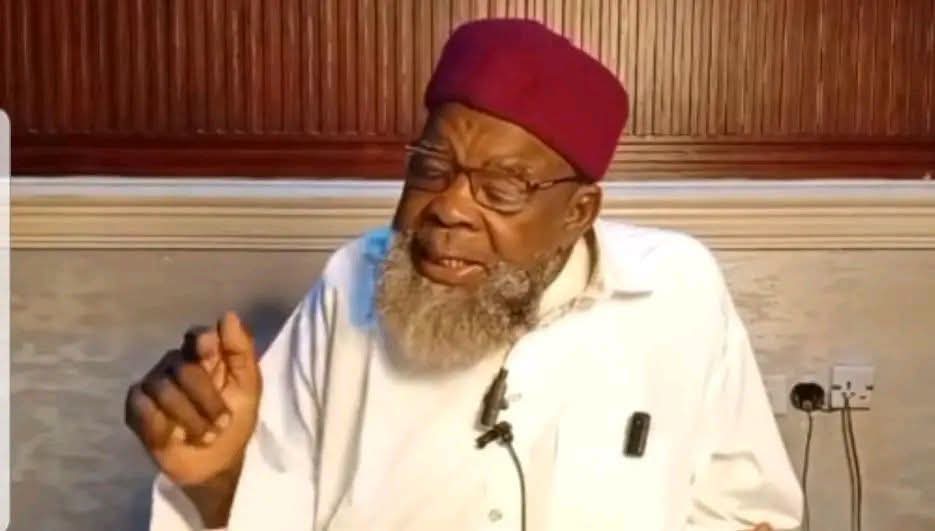
Sokoto Islamic Cleric Stabbed After Friday Prayers; Suspected Attacker Killed by Followers
By Yusuf Danjuma Yunusa
An Islamic cleric, Malam Musa Lukwa, was stabbed shortly after leading the Friday prayer at his mosque in Mabera area of Sokoto metropolis on Friday.
The spokesman of the Sokoto State Police Command, DSP Ahmad Rufa’i, confirmed the incident to newsmen in Sokoto.
Rufa’i said the cleric was stabbed twice in the neck and taken to the Specialist Hospital, Sokoto, where he was receiving treatment and responding to it.
He said the suspected attacker was killed by the cleric’s followers after the incident, adding that no arrest had been made in connection with the ensuing violence.
According to him, the command had deployed security personnel to prevent the situation from escalating.
He said investigation was ongoing to establish the circumstances surrounding the attack and identify those involved.
The incident was reportedly linked to a previous sermon by the cleric which some Islamic scholars and their followers considered offensive to the parents of Prophet Muhammad.
A man identified as Mai Barewa had allegedly threatened the cleric and one of his senior students over the sermon.
He was subsequently arrested and arraigned before a court, with the case reportedly ongoing.
The cleric and his followers were also said to have written to the Sokoto State Government four days before the attack, expressing concern over the threats against them.
Following the incident, some youths reportedly protested in parts of the metropolis, including Sahara, Bello Way and Aliyu Jodi.
The development caused some shop owners to close their businesses, while security operatives were deployed to strategic locations to maintain law and order.
The police urged residents to remain calm and avoid taking the law into their own hands.

Nigeria’s Oil Output Hits 1.573m bpd as OPEC Production Rises–Report Says

Subsidy Removal: Governors, Not Tinubu, Should Account for Funds — Gov Abiodun

Sokoto Islamic Cleric Stabbed After Friday Prayers; Suspected Attacker Killed by Followers

Clerics Call, Citizens Cheer: Kano Rallies Behind Muhuyi’s Anti-Drug Task Force

Kwankwaso Raises Age, Health Alarm, Asks Atiku to Quit Active Politics

From World’s 9th Most Populous City to Perfect: As Gov Yusuf Revisits Kano Master Plan

95% of Governor Abba Kabir Yusuf’s Promises Have Been Fulfilled — CPS Interview By Musa Diso, In Kano

Bello Sharada: A Great Writer, A Bookish Soul, Gone Too Soon

Call Me Chairman, Not Tony!’: Elumelu’s Blunt Correction of Trainee Splits Internet as Old Video Sparks Double Standard Fury

Nigerians Are Tired of Promises’ — CAN Demands Action on Insecurity, Hardship In Eid-el-Maulud Message
Nigeria’s Oil Output Hits 1.573m bpd as OPEC Production Rises–Report Says
Subsidy Removal: Governors, Not Tinubu, Should Account for Funds — Gov Abiodun
Sokoto Islamic Cleric Stabbed After Friday Prayers; Suspected Attacker Killed by Followers
Clerics Call, Citizens Cheer: Kano Rallies Behind Muhuyi’s Anti-Drug Task Force
Kwankwaso Raises Age, Health Alarm, Asks Atiku to Quit Active Politics
From World’s 9th Most Populous City to Perfect: As Gov Yusuf Revisits Kano Master Plan
95% of Governor Abba Kabir Yusuf’s Promises Have Been Fulfilled — CPS Interview By Musa Diso, In Kano
Bello Sharada: A Great Writer, A Bookish Soul, Gone Too Soon
Call Me Chairman, Not Tony!’: Elumelu’s Blunt Correction of Trainee Splits Internet as Old Video Sparks Double Standard Fury
Nigerians Are Tired of Promises’ — CAN Demands Action on Insecurity, Hardship In Eid-el-Maulud Message
-

 Opinion5 years ago
On The Kano Flyovers And Public Perception
-

 Features5 years ago
How I Became A Multimillionaire In Nigeria – Hadiza Gabon
-

 Opinion6 years ago
Kano As future Headquarters Of Poverty In Nigeria
-

 History5 years ago
Sheikh Adam Abdullahi Al-Ilory (1917-1992):Nigeria’s Islamic Scholar Who Wrote Over 100 Books And Journals
-

 Opinion5 years ago
My First Encounter with Nasiru Gawuna, the Humble Deputy Governor
-

 History5 years ago
The History Of Borno State Governor Professor Babagana Umara Zulum
-

 History5 years ago
The Origin Of “Mammy Market” In Army Barracks (Mammy Ochefu)
-

 News4 years ago
Federal University Of Technology Babura To Commence Academic Activities September