
Features
The Story Of ‘LIKITAN BURRA’, Dr Adnan
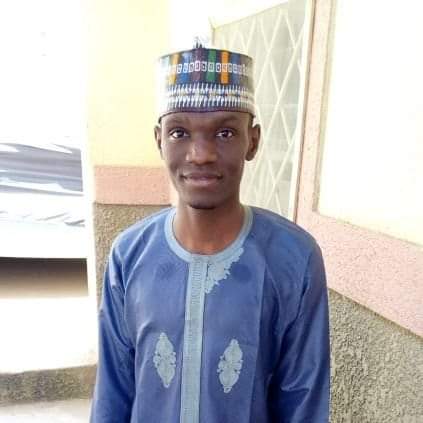
Abdul Ahmad Burra
Last week, I received several phone calls and messages from my kinsmen, the people of Burra in Ningi Local Government, all talking about one thing.
More often, when these kind of calls and messages come from home, they would be about either pressing issue in our community or when tree fellers and deforestation cartels, who are as powerful and influential as Presidential Villa cabals, strike harder, threatening our forests. People would start calling requesting me to do something about it because of my concern on community development and historic penchant for fight against destruction of our forests.
This time the topic is different. All the calls are about ‘Likitan Burra’; the Chief Medical Officer of General Hospital Burra. His name is Dr. Muhammad Adnan!
Danburan Kano Faruk ,The First Son Of Emir Bayero To Acquire Western Education
The first call was like a distress one on Monday last week. The caller helplessly said Abdul they have transferred ‘Likitan Burra’, the hospital will be in mess if we allow this transfer. He then narrated to me how the Doctor transformed the hospital in two years and rendered helpless service to all communities of Burra, some parts of Toro Local Government and neighbouring communities of Sumaila, Doguwa, Tudun Wada and Takai Local Governments of Kano State.
According to him since the establishment of the Hospital, they never had a great Doctor like him.
Another caller me how Dr. Adnan religiously stayed in Burra for two years attending to patients. He said due to the deteriorating nature of the hospital, people prefer to take their patients to either Federal Medical Centre Birnin Kudu in Jigawa State or Aminu Kano Teaching Hospital for better medical attention but immediately after he was posted to Burra in 2019, the situation changed. People no longer travel to long distance for medical care. Our neighbours from Kano State made Burra their medical Mecca. Referral of cases to FMC Birnin Kudu and AKTH reduced drastically.
The caller therefore insisted that we must do something urgently to cancel the transfer of the Doctor. He said himself, Sarkin Burra and some influential community leaders are doing something about it, being close to the Speaker and other government officials, I should also do something at my own end.
Testimonies of Dr. Adnan’s selfless service kept pouring in. I was told how the medical doctor became anti corruption czar. He blocked all major financial leakages in the Hospital and judiciously used the resources coming into the hospital especially from donor agencies and programmes such as N-SHIP. The Doctor used all resources at his disposal to transform the hospital by providing basic medical equipments and renovating various units. In matter of months, the hospital wore new look.
I was also told how the Doctor dedicated even weekends to attend to some critical medical issues. Sometimes he would travel to Bauchi, his hometown to spend a weekend at home, but if a call is put to him that there is critical medical matter, he would call off the weekend break and immediately travel back to Burra, about 230 kilometer journey.
His dedication and sacrifice toward effective healthcare delivery to the community is legendary and uncommon among the medical personnel of today’s generation. Another important testimony about him, is his professionalism and success of his surgeries and treatments.
From religious leaders to community and traditional leaders, from youth and students to women groups, small and big, it’s protest everywhere in Burra and environs, all saying Dr Adnan should not go. His transfer to elsewhere should be cancelled.
In fact, in recent years I can’t recall seeing a civil servant being celebrated and loved by the people he served like the ‘Likitan Burra’, Dr Adnan.
Then, some people began to come up with some conspiracy theories. That some people who benefit from corruption in the hospital are behind the transfer of the Doctor because he blocked their sources of illegal money. People were lamenting and pointing accusing fingers at some individuals.
As I am planning to take up the matter, yesterday I saw people posting their pictures with the Doctor and emotionally bidding him farewell as he finally leaves Burra. It was so much emotional.
When I see the picture of the Doctor for the first time, to my surprise, I realized that the ‘Likitan Burra’ my people so much cherish is my Unimaid friend whom I didn’t meet since 2008. I exclaimed, no wonder! The Adnan I know in University of Maiduguri can do more than that.
I got to know Adnan through my roommates who were his classmates at MBBS Department; Dr Jamil Big J, Dr Usman Jama’are, Dr Mikail Daudu Suleiman and Late Dr. Aminuddeen Idris. Our room in B Block was the meeting point of many medical students especially those who are from Bauchi State.
Adnan was a super guru and a very religious man who rarely talk then. While he was in 200 level, he got scholarship to study medicine in Russia. That was the time he left us and I didn’t see him again since then. Unknown to me he was in my hometown serving my people diligently and selflessly.
I couldn’t believe that the Russian doctor will even accept to work in General Hospital Burra which many doctors see as punishment ground for doctors who don’t have godfathers. I then know, we were just lucky to have the Russian trained medical doctor posted to Burra and stayed for more than two years.
I immediately got his number, called him and introduced myself to him. He quickly remember me and memories of our meeting point, B3 Room 9 in Unimaid.
I visited him at their family house this evening where we discussed about his experience in the Hospital and the possibility of his return to Burra.
He debunked the rumour that some staff in the Hospital are behind his transfer. In fact he didn’t transfer but quits State Government’s service because his two year bond with the Bauchi State Government has elapsed and he will now proceeds to residency training in Abubakar Tafawa Balewa Teaching Hospital to become a consultant. Thus his return to Burra as Chief Medical Officer can’t be possible.
The Russian doctor told me how he met the hospital so much dilapidated but was so strong not to look for transfer, stayed and contribute his own quota.
Dr. Adnan explained to me how he enjoyed working and living in Burra.
According to him, what impressed him more about Burra is our value for education, everybody goes to school.
However he lamented how we don’t allow our women to study medical courses and work in the hospital despite the high literacy and value of education.
He narrated to me how a nurse, an indigene of Burra was posted to the hospital but immediately she reported, worked for her transfer to Bauchi. “If an indigene of Burra will not work in the hospital who do you think will come and serve you better?. In fact one of the problems of the hospital I couldn’t solve was that of the Maternity. This is because there is no single indigenous nurse or midwife working in the Hospital. Those we have are from Benue and Lagos States.” He explained to me.
Dr Adnan advised that we should sponsor women who are married in Burra to College of Nursing and Midwifery so that they can come back and work at the Hospital. He said this the most effective way to solve many problems in the Hospital.
I expressed the utmost appreciation of all the people of Burra and other benefiting communities to him for his spectacular service which we believe Almighty Allah will soon reward him in many ways.
While we awaits the Ministry of Health to post a medical doctor that will replace the Russian Doctor, people of Burra will forever remain grateful their doctor, Adnan and pray that Almighty Allah will grant him all his desires and elevate him to an enviable status here and hereafter.
Abdul Ahmad Burra
30th January, 2021.


Features
Why I want To Rewrite Kannywood’s Playbook – Dan Hausa

By Saif Ibrahim, Kano
Who is Dan Hausa?
I am Kamilu Ibrahim born 31 years ago, but most people know me as Dan Hausa. I was born in Fagge, Kano State, and from the very beginning I knew I wanted to tell stories that reflect the realities of my people. I trained at the High Definition Film Academy in Abuja, SAE Institute, and also took part in the U.S. Embassy’s Filmmaking for Impact program. I join the fikm making industry and started directing in 2017 because I wanted full control over how my stories are told.
Can you tell us a bit about yourself and your journey into film directing?
My journey began with a love for storytelling—I started as a scriptwriter, then worked closely with experienced filmmakers before directing my first film. Over the years, I’ve learned that directing isn’t just about cameras and lights, but about understanding people, culture, and the power of narrative.
Growing up, I saw how films could educate and inspire people. In Arewa, cinema is more than entertainment—it’s a mirror of society. I wanted to use that mirror to reflect our values, challenges, and hopes. That desire to make meaningful films pushed me into directing.
What sets your work apart in today’s Kannywood?
For me, it’s about merging modern cinematic techniques with our Hausa cultural identity. I love bold visuals and tight storytelling, but I never want to lose that traditional heartbeat of my origin. My goal has always been to raise our production quality to international standards while staying true to our roots”, proof of that is clear in my current and biggest project, “Wata Shida.
How would you describe your directing style?
I like to call my style “realism with purpose.” I focus on authenticity—every scene, every performance, every frame must feel true to life. But I also ensure that there’s always a message, something the audience can take home and reflect on.
Can you highlight some of your notable works?
Sure, there is Wata Shida which is currently airing and has an overwhelming response from the public and the likes of Lulu Da Andalu a myth-inspired adventure series showing on AREWA24 and YouTube. YouTube pushed us to think bigger in terms of story and production. Mijin Hajiya earned me Best Director at the 2024 Kano Entertainment Awards, while Tataburza made waves at film festivals. Earlier films like Bakon Yanayi (2019) and my debut Kulba Na Barna (2017) helped me define my style. My latest project, Amaryar Lalle, starring Rahama Sadau, premieres August 2025 on Sadau Pictures TV. Each project is a step forward in showing what Kannywood can achieve.
What awards and recognitions have you earned?
I have also been recognized by the Arewa5050 Awards and Kaduna International Film Festival (KIFF) for Lulu Da Andalu, which even won Best Indigenous Hausa Film. There’s also an AMVCA nomination for best Africanindigenous language , which is exciting because it means Hausa stories are getting wider attention.”
Who are your key collaborators?
Filmmaking is teamwork; TY Shaba has been a creative partner on several projects, especially on Lulu Da Andalu. I have WORKED with Rahama Sadau on Amaryar Lalle has been fantastic; she brings so much energy to the screen.”
What themes do you explore in your films?
I like telling stories where modern life clashes with traditional values—family conflict, cultural identity, gender roles. These are real issues in our society, and I try to explore them honestly but cinematically. I believe film should make people feel and also think.”
What is your next project?
I am working on Wata Shida Season 2, a story about a woman who enters a six-month sham marriage to protect her inheritance. It’s socially meaningful but also very entertaining. I will also continue with season 2 of “Amaryar Lalle.”
Can you tell us a little about your latest project?
This project is very close to my heart. It follows a young girl fighting to get an education in a society full of obstacles. Through her eyes, we see how family, tradition, and resilience collide, and how hope can survive even in the harshest situations.”
What inspired you to make this story?
Growing up, I saw so many bright young girls whose dreams were cut short just because they were girls. I felt a responsibility to tell this story—not as fiction, but as a mirror of what is happening around us.
How do you balance tradition and modernity in your work?
A: It’s about respect. I respect our traditions, but I also embrace new technology and ideas. In my films, I make sure traditional values are represented truthfully, while using modern techniques to improve production quality.
What challenges do you face as a director in Kannywood?
Budgets are often limited, and resources can be scarce. But the biggest challenge is sometimes societal misunderstanding of what we do as filmmakers. People forget that film is also an art form and a tool for change, not just entertainment.
Can you tell us your favourite project
Every project has its own special memory, but I’m proudest when a film sparks conversation or impacts people’s lives. For example, one of my recent films about youth unemployment led to community discussions and even small initiatives to help young people. That’s when I feel film is doing its job.
What advice would you give to aspiring directors?
Learn the craft—don’t rush. Watch films, study scripts, spend time on set even if it’s just to observe. Most importantly, stay humble and focused. Filmmaking is about patience, teamwork, and vision.
What should audiences expect from your upcoming projects?
Expect more powerful stories rooted in our culture, with better technical quality. I’m working on projects that tackle real societal issues, and I believe they’ll resonate with audiences not just in Arewa, but globally.
Features
Antenatal Care: Why some women misses several sessions

By Aisha Muhammad Rabiu
In many parts of Northern Nigeria, antenatal care is a vital step in ensuring the health of both mother and the unborn child. Yet, an increasing number of women are neglecting this crucial stage of pregnancy, putting themselves and their babies at serious risk, hence the high infant, mother mortality rate.
Health experts have been warning that antenatal visits help detect pregnancy complications at its early stage, provide essential supplements for healthy mother/child development, and educate mothers on safe delivery practices. But for some women, they find antenatal care as a burden either due to poverty or lack of awareness based on cultural practices and beliefs. As such antenatal remains a neglected priority.
In Kadawa, Fatima Sani, a 28-year-old expectant mother, admits she has not attended a single session of antenatal since the start of her pregnancy. she said “It’s not that I don’t want to go, but the clinic is far from my house, and my husband says we should save the transport money for delivery day. I just pray Allah protects me and my baby.”
From Dan Bare, Shago Tara precisely, Khairat a mother of 4 shares her reasons for not attending antenatal session even though she is fully aware that the session is very important to pregnant women. She said “I feel healthy, so I don’t see the need to go for antenatal. My mother gave birth to all her children at home without any clinic visits, and they all survived.”
In Rijiyar Zaki, Hadiza Mukhtar recalls her previous pregnancy, where she skipped antenatal visits entirely. “The nurses were rude to me when I first went. I decided I would not return. This pregnancy, I haven’t gone at all,” she confesses.
For Usaina Muhammad of Kurna, the problem is financial. “I can’t afford the registration fee, and I also have other children to feed. I know antenatal is important, but survival comes first.”
Meanwhile, Maryam Lawan of Layi Kaji reveals that misinformation has influenced her decision. “Someone told me that the iron tablets they give at the clinic make the babies grow too big, making delivery harder. So, I decided to avoid it altogether.”
Medical professionals emphasize that skipping antenatal care increases the risk of complications such as anemia, high blood pressure, infections, and even maternal or infant death. Dr. Ibrahim Musa, a gynecologist in Kano, warns: “We see many emergencies that could have been avoided if the mother had attended antenatal. Most of these cases arrive late, making it harder for the doctors to save lives.”
Experts and community leaders agree that raising awareness is key in addressing the matter. Antenatal care should be made more affordable, accessible, and culturally acceptable for all women. Religious leaders, health workers, and family members all have a role to play in encouraging expectant mothers to attend regular check-ups.
Neglecting antenatal care is not just a personal choice; it’s a public health concern that affects families, communities, and the future of the nation. Ensuring that every mother has the knowledge, resources, and support to seek antenatal care is a step toward a healthier society.
Aisha Muhammad Rabiu writes from Bayero University Kano (BUK) and she can be reached at Email: aishatama2020@gmail.com
Phone no.08084273341
Features
Rano’s Peaceful Legacy: More Than a Slogan, One Tragedy Won’t Define Us

For decades, Rano Garin Autan Bawo has proudly stood as a symbol of peace and harmony in Kano State. It is a place where neighbors look out for one another, where disputes are settled through dialogue, and where diversity is met with respect—not resentment. In Rano, peace is not just a slogan—it is a way of life passed down through generations.
The tragic incident that recently occurred at the Divisional Police Station in Rano Local Government has deeply shaken our community. Known for generations as one of the most peaceful and united areas in Nigeria, Rano now faces the painful reality of an attack that led to the death of a Divisional Police Officer and the destruction of police property. This senseless act of violence goes against everything our community stands for and must not be seen as a reflection of who we are.
Rano has long been recognized for its peaceful spirit, tolerance, and respect for all. People from different backgrounds, religions, and cultures have lived side by side here in harmony. This didn’t happen by chance—it is the result of years of effort by our leaders, religious figures, and ordinary citizens who believe that our strength lies in our unity and diversity.
Our respect for law and order is deep-rooted. We understand the crucial role that security personnel play in keeping our community safe. The people of Rano have always appreciated the risks and sacrifices made by the police, military, and other agencies to protect lives and property.
Respect for the law here is not just about obeying rules—it’s about a shared belief in justice, fairness, and solving problems peacefully and legally. This belief has helped build a respectful and cooperative relationship between the police and the people.
What happened at the police station is completely out of character for our community. The individuals who carried out this attack do not represent us. Their actions go against the values that have shaped Rano. We strongly condemn what they did and make it clear that their behavior does not reflect who we are.
The loss of the Divisional Police Officer is not just a blow to the Nigeria Police Force or the Kano State Police Command—it is a loss for all of us. He wasn’t just doing his job; he was part of our extended family. His death is an attack on the peace and security that we all hold dear.
We send our deepest condolences to his family. No words can ease the pain of losing a loved one in such a brutal way. Our thoughts are also with his colleagues in the police force, who have lost a brother and a friend.
We also stand with the Kano State Police Command and the Nigeria Police Force as they face this heartbreaking loss. We understand how much this affects their morale, especially at a time when their work is more important than ever.
Destroying police buildings and equipment is not just an attack on law enforcement—it’s an attack on the very system that helps keep us safe. These facilities belong to the people and serve the entire community. Damaging them harms everyone, especially the most vulnerable among us.
We urge the government and relevant authorities to investigate this incident fully and fairly. Those responsible must be held accountable. Justice must be swift and uncompromised. Our community deserves to see the law upheld and the wrongdoers brought to book.
To our young people—the future of Rano—we ask for calm and reflection. We know that you may be frustrated or angry about many issues. But violence is never the answer. Taking the law into your own hands only brings more pain and setbacks for everyone.
Instead, we encourage our youth to focus on positive, constructive paths. There are peaceful, legal ways to raise your voices and push for change. Use those channels. Help move our community forward.
Rano must now focus on healing, rebuilding trust, and recommitting to the peaceful values that have always defined us. We must come together—young and old, leaders and citizens—to ensure that such violence never happens again.
We call on traditional leaders, religious figures, community elders, youth leaders, and all residents to stand united in promoting peace and respect for the law. Let’s strengthen our partnership with security agencies and support their efforts to keep us safe, while also holding them accountable to serve with respect and dignity.
How we respond to this tragedy will shape our future. Let us choose unity over division, peace over violence, and hope over despair. The actions of a few will not define us. We will protect the legacy of peace that Rano is known for and continue working together for a better tomorrow.
Buhari Abba wrote this piece from Unguwar Liman Rano.

From Desks to Degrees: How Governor Yusuf Is Bankrolling A Generation’s Future

KANSIEC Chairman Advises Fruits Sellers Association to Modernize Business

Breaking :Former PDP National Chairman Alhaji Bamanga Tukur Is Dead

Nigeria’s Oil Output Hits 1.573m bpd as OPEC Production Rises–Report Says

Subsidy Removal: Governors, Not Tinubu, Should Account for Funds — Gov Abiodun
From World’s 9th Most Populous City to Perfect: As Gov Yusuf Revisits Kano Master Plan

95% of Governor Abba Kabir Yusuf’s Promises Have Been Fulfilled — CPS Interview By Musa Diso, In Kano

Bello Sharada: A Great Writer, A Bookish Soul, Gone Too Soon

Call Me Chairman, Not Tony!’: Elumelu’s Blunt Correction of Trainee Splits Internet as Old Video Sparks Double Standard Fury

Nigerians Are Tired of Promises’ — CAN Demands Action on Insecurity, Hardship In Eid-el-Maulud Message
From Desks to Degrees: How Governor Yusuf Is Bankrolling A Generation’s Future
KANSIEC Chairman Advises Fruits Sellers Association to Modernize Business
Breaking :Former PDP National Chairman Alhaji Bamanga Tukur Is Dead
Nigeria’s Oil Output Hits 1.573m bpd as OPEC Production Rises–Report Says
Subsidy Removal: Governors, Not Tinubu, Should Account for Funds — Gov Abiodun
From World’s 9th Most Populous City to Perfect: As Gov Yusuf Revisits Kano Master Plan
95% of Governor Abba Kabir Yusuf’s Promises Have Been Fulfilled — CPS Interview By Musa Diso, In Kano
Bello Sharada: A Great Writer, A Bookish Soul, Gone Too Soon
Call Me Chairman, Not Tony!’: Elumelu’s Blunt Correction of Trainee Splits Internet as Old Video Sparks Double Standard Fury
Nigerians Are Tired of Promises’ — CAN Demands Action on Insecurity, Hardship In Eid-el-Maulud Message
-

 Opinion5 years ago
On The Kano Flyovers And Public Perception
-

 Features5 years ago
How I Became A Multimillionaire In Nigeria – Hadiza Gabon
-

 Opinion6 years ago
Kano As future Headquarters Of Poverty In Nigeria
-

 History5 years ago
Sheikh Adam Abdullahi Al-Ilory (1917-1992):Nigeria’s Islamic Scholar Who Wrote Over 100 Books And Journals
-

 Opinion5 years ago
My First Encounter with Nasiru Gawuna, the Humble Deputy Governor
-

 History5 years ago
The History Of Borno State Governor Professor Babagana Umara Zulum
-

 History5 years ago
The Origin Of “Mammy Market” In Army Barracks (Mammy Ochefu)
-

 News4 years ago
Federal University Of Technology Babura To Commence Academic Activities September