
News
UniAbuja Hosts 51st Inaugural Lecture on Climate-Resilient Plant Breeding
Abuja, June 25, 2026.
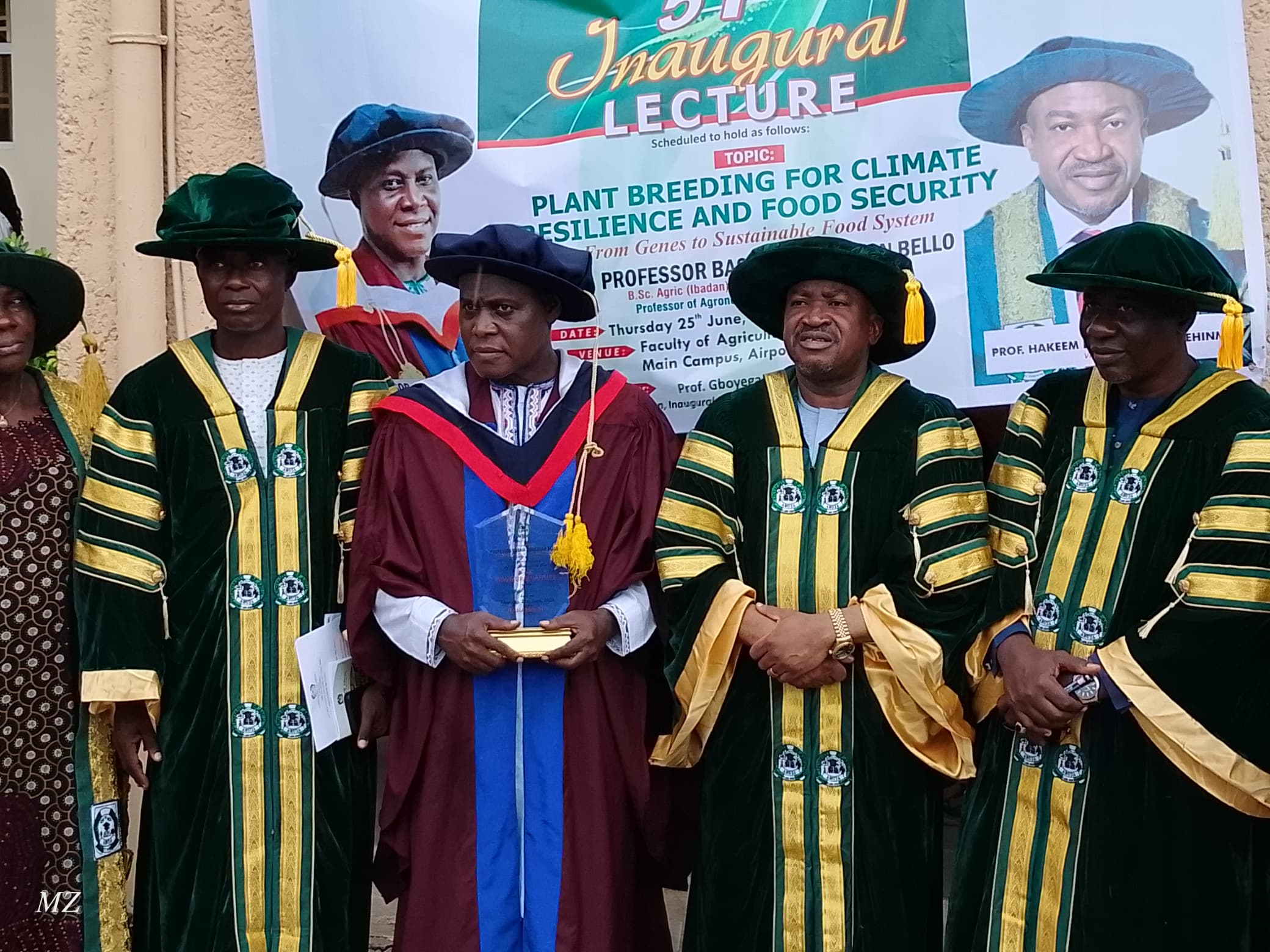
Yakubu Gowon University (formerly the University of Abuja) on Thursday held its 51st Inaugural Lecture, where Professor Bashir Omolaran Bello, Professor of Agronomy (Plant Breeding and Genetics), underscored the importance of plant breeding in tackling climate change and ensuring global food security.
The lecture, titled “Plant Breeding for Climate Resilience and Food Security: From Genes to Sustainable Food System,” was held at the Faculty of Agriculture Lecture Theatre, Main Campus, Airport Road, Abuja.
The event commenced with an opening prayer, followed by the introduction of distinguished guests, including Dr. Nasri Mustafa, Mallam Abdullah, Alhaji Wahab Ademula, Alhaji Shitu Rasheed, and Alhaji Mustafa, alongside representatives of various organizations and members of the university community.
In his opening remarks, the Vice-Chancellor, Professor Hakeem Babatunde Fawehinmi, welcomed participants and expressed confidence in the success of the event. He reaffirmed the university’s commitment to research excellence and described the inaugural lecture series as an important platform for advancing scholarship and innovation.
Delivering the inaugural lecture, Professor Bello opened his presentation by examining the global challenges of climate change, global warming, climate resilience, and food security. He explained that climate-resilient crops “withstand, adapt, and recover from the effects of climate variability,” stressing that such crops are indispensable to sustainable agriculture in a changing climate.
Tracing the evolution of plant breeding, the professor outlined four major stages in its development: Early Domestication (10,000 BC–1865), Traditional Breeding (1865–1980), Molecular Breeding (1980–2015), and Genomics, Gene Editing and Digital Breeding (2015–2026). He explained that each phase has contributed significantly to improving crop productivity and resilience.
Highlighting advances in biotechnology, Professor Bello discussed tissue culture as an effective technique for the production of disease-free and uniform plants. He further emphasized that “conservation is vital for long-term crop availability,” noting that preserving plant genetic resources remains essential to sustainable agriculture.
Speaking on the significance of crop improvement, he stated that “Plant breeding is vital for sustainable food development.” He observed that “plant breeding has progressed from conventional methods to genomic-assisted innovation, remaining central to agricultural transformation and global food security.”
The professor described research as the foundation of future agricultural development, declaring that “Research is a necessity.” He therefore advocated increased funding and grants to enable researchers to develop improved crop varieties capable of withstanding climate-related challenges.
Emphasizing the need for continuous scientific advancement, Professor Bello remarked that “The future depends on innovation,” adding that “the future of food security lies in continuous innovation and strategic collaboration in plant breeding.” He further urged governments, research institutions, and development partners to “ensure farmers have access to improved and climate-resilient seeds.”
Reflecting on his academic journey, Professor Bello highlighted his numerous research publications and contributions to crop improvement. Beyond maize, he disclosed that his research has focused on sweet potato, tomato, sugarcane, and several other economically important crops, demonstrating how modern plant breeding can improve productivity, strengthen climate resilience, and enhance farmers’ livelihoods.
At the conclusion of the lecture, Professor Bello expressed gratitude to Almighty Allah and acknowledged the support of his late parents, siblings, mentors, the Vice-Chancellor, Deputy Vice-Chancellor, principal officers, the Inaugural Lecture Committee, the Faculty of Agriculture, university administrative and technical staff, heads of departments, colleagues, students, his associates at the Federal University Gashua, research partners, and all contributors to his academic journey. He dedicated the lecture to everyone who contributed to his research.
Following a vote of thanks, the Vice-Chancellor presented Professor Bello with a commemorative plaque and certificate in recognition of his outstanding contributions to Agronomy and Plant Breeding. Professor Fawehinmi commended the inaugural lecturer for his scholarly achievements and expressed optimism that more professors from the university’s various faculties would continue to deliver impactful inaugural lectures.
The ceremony concluded with closing remarks and a closing prayer led by Professor Umar. Guests later gathered for group photographs, bringing the university’s 51st Inaugural Lecture to a successful close.
The lecture reinforced the importance of research, innovation, conservation, and strategic collaboration in building climate-resilient agricultural systems capable of guaranteeing sustainable food security for future generations.
By Igboka Annabel
Department of Development and Strategic Communication University of Abuja Nigeria.















News
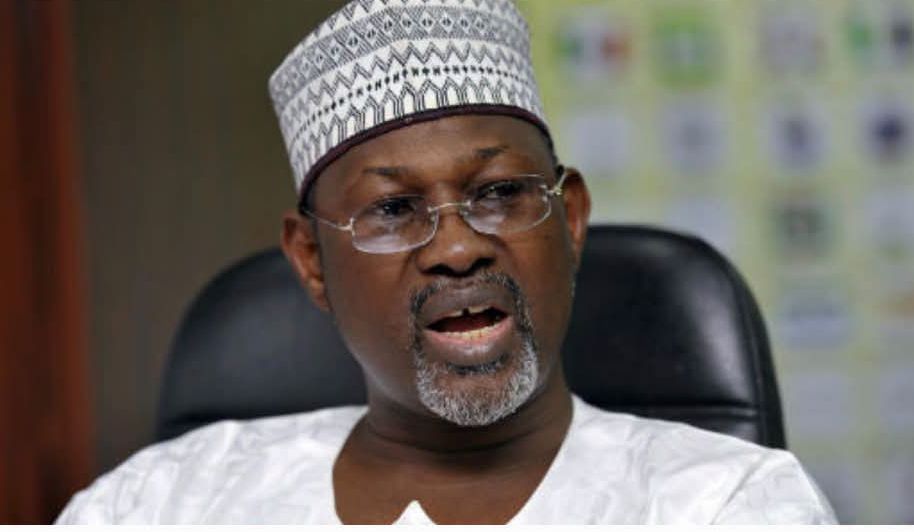
2027 Elections: Ex-INEC Chair, Attahiru Jega, Warns Against Unchecked Use of AI
By Yusuf Danjuma Yunusa
A former Chairman of Independent National Electoral Commission, INEC, Prof. Attahiru Jega, has called for proactive and robust safeguards to protect information integrity, as Nigeria moves closer to the 2027 general elections.
Mr Jega made the call in Abuja at a National Summit on Artificial Intelligence (AI), Foreign Information Manipulation and Interference, FIMI, and Electoral Information Integrity.
Speaking as the chairman of the event, with the theme: “Beyond the Ballot: Safeguarding Electoral Information Integrity in the Age of AI”, Mr Jega noted that safeguarding electoral information against digital manipulation and malicious threats had become a critical task for all stakeholders.
While acknowledging that AI holds tremendous potential to improve efficiency and effectiveness in governance and electoral processes, he warned that it also carried severe negative uses that could undermine the integrity of elections.
“What is most important, of course, is how we prepare, anticipate these challenges and take appropriate measures, including setting up a framework of rapid response to address these,” he said.
Drawing from his participation in the 2024 Cambridge Conference on Electoral Democracy, Jega recommended that Election Management Bodies (EMBs) in Africa should consider deploying AI-driven tools, such as chatbots powered by officially-verified data.
He noted that such would allow citizens to quickly access accurate information and verify the authenticity of data being circulated.
“I understand that some African EMBs have seen the utility of this in checkmating or reducing the negative effects and the impact of misinformation and disinformation during elections.
“And I would like to recommend that if INEC has not done so so far, it might be a useful issue to add to our discussions and to see as to how best to know it before the 2027 general elections,” he said.
The former INEC chairman noted that building trust and public confidence in the electoral process was important.
“The integrity of an election is so important and the building trust and ensuring that there is public confidence in what participants in the electoral process do, and other key stakeholders do, is very important,” Jega said.
He urged participants to leverage the summit’s platform to move beyond dialogue and develop actionable strategies, rapid-response frameworks and tactical solutions to secure the integrity of future elections.
Join Daily Nigerian WhatsApp Channel
Declaring the workshop open, the Minister of Information and National Orientation, Mohammed Idris, said that the integrity of 2027 elections remained a shared responsibility, noting that every institution and every citizen had a role to play.
Mr Idris, who was represented by the Executive Secretary, Nigerian Press Council (NPC), Dr Dili Ezughah, said that the President Bola Tinubu led-administration recognised the importance of credible information environment to democratic stability.
While citing Nigeria’s National Artificial Intelligence Strategy, published in 2024, which provides a framework for responsible, critical and inclusive AI development and deployment, he stated the Tinubu administration also recognised the importance of credible information in strengthening Nigeria’s democracy.
“A significant demonstration of this commitment is the establishment of the UNESCO Category 2 International Media and Information Literacy Institute in Nigeria,” he said.
The minister said that Tinubu had demonstrated the commitment by signing the amended Electoral Act 2026 into law on Feb. 18, which provided for mandatory electronic transmission of polling unit results and recognised the time-tested results viewing portal.
He, however, said that technology alone could not guarantee public confidence in the electoral process, saying it should involve all stakeholders playing their expected roles.
“Electoral institutions must communicate clearly. Journalists must verify information and citizens must know where to obtain authentic electoral updates.
“I wish to emphasise that responsible journalism must not be mistaken for favourable journalism. The media must remain free to question government, political parties, candidates and public institutions, ensuring fairness and fair distinction between facts, allegations and opinions.
“We must also protect freedom of expression and the right to information.”
News
Mahanga TV appoints former AREWA24 staff Zuwairiyah Girei as MD
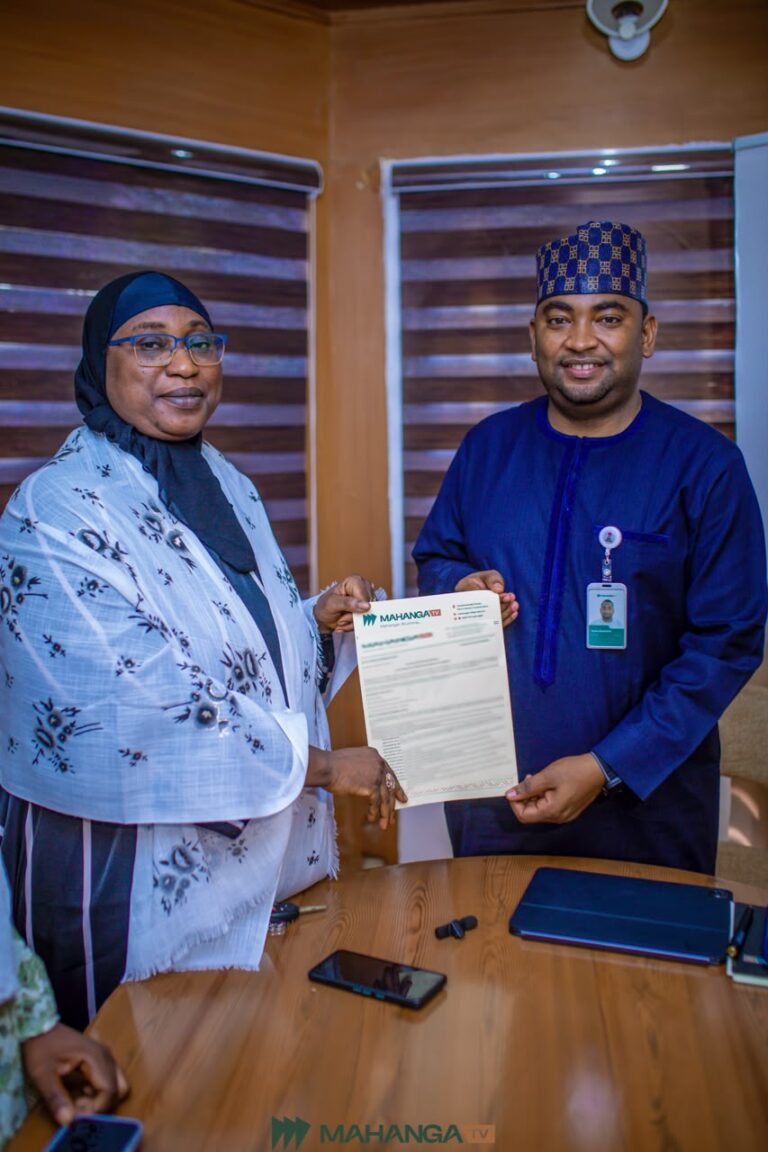
Mahanga TV, a Kano-based television station, has appointed former AREWA24 staff member Zuwairiyah Adamu Girei as its new Managing Director, bringing her more than 14 years of experience in Hausa-language television production and broadcasting to the organisation.
Girei was formally welcomed into her new role during a reception held at Mahanga TV’s premises in Kano on Monday, November 2, 2026, marking a new phase in the organisation’s growthe barely three months after its launch.
Speaking at the reception, Girei expressed excitement over her appointment, describing her experience at AREWA24 as a significant milestone in her professional journey.
She said she would draw on the knowledge and experience acquired during her time at the television station to strengthen Mahanga TV and drive it towards greater achievements.
“All the experience I have at AREWA24, I will bring here, and I think I will do extraordinary because I know what I have learnt there. I pray that we will see success beyond our expectations,” she said.
Outlining her vision for Mahanga TV, the new Managing Director said the organisation would look beyond Northern Nigeria and target audiences across Africa and the rest of the world.
She identified the large Hausa-speaking population as a major opportunity for the industry, noting that despite the challenges facing Hausa-language broadcasting, the sector has a substantial audience.
“We have over 60 million Hausa speakers in Nigeria, so I think we have a target audience we have to try to reach,” she said.
Girei said her leadership would focus on understanding audience expectations, introducing improvements and positioning Hausa productions for international recognition.
“Our thinking is pan-African; our thinking is the world. Our thinking is now how can Hausa film reach the Oscars. That is the thinking,” she said.
Looking ahead to the next decade, she expressed her ambition to see Mahanga TV secure three to four Academy Awards, earn international recognition and become a household name among viewers across different age groups.
She said she envisioned a future where Mahanga TV would be the preferred television platform in homes, with both adults and children identifying with its programmes.
The Chief Executive Officer of Mahanga TV, Nuhu Abdullahi Balarabe, said Girei’s appointment was informed by the organisation’s rapid growth and the need for experienced leadership to sustain its progress.
Balarabe explained that he initially served as both Managing Director and CEO but decided to appoint a dedicated Managing Director to oversee the organisation’s daily operations and provide the leadership required to sustain its expanding activities.
He said the organisation needed someone who could provide consistent leadership and maintain its momentum as it continued to grow.
“She is well experienced, and I’m sure she will use that experience to take the organisation further from where it is,” he said.
Balarabe disclosed that Mahanga TV had recorded progress beyond its initial expectations within three months of launching, attributing the achievement to the dedication of its staff, consultants and advisers.
He said the organisation was expanding its content offerings through original productions and partnerships with independent producers to provide audiences with engaging programmes.
He also urged viewers to continue supporting the station and sharing feedback through its social media platforms and WhatsApp channel, assuring them that the organisation remained open to suggestions as it worked to improve its services.
Reaffirming the organisation’s broader ambition, Balarabe said Mahanga TV was committed to ensuring that Hausa stories, culture and experiences reached audiences across the world.
“We have a beautiful tale happening in Northern Nigeria, and I believe it is only we that can tell our own story. We want to make sure all our stories are told and they reach every part of the world,” he said.
Also speaking, Mahanga TV’s Creative Director and Brand Manager, Abdulbasit Abanikanda, described Girei’s appointment as a timely development that would strengthen the organisation’s management structure and provide better direction for its expanding workforce.
Abanikanda recalled that Mahanga TV started with a team of just three people but had since grown considerably, making the appointment of an experienced manager necessary to coordinate its activities.
He expressed confidence in Girei’s ability to advance the station’s creative vision, noting that her ambition of taking Hausa stories to audiences across the world aligned with the organisation’s objectives.
With Girei’s appointment, Mahanga TV aims to consolidate its early progress, strengthen its content production and expand the reach of Hausa storytelling, creating opportunities for Northern Nigeria’s stories, culture and creative talent to gain wider national and international recognition.
News
Kano Governor Nominates Ex- Speaker, Spokesperson as Commissioners
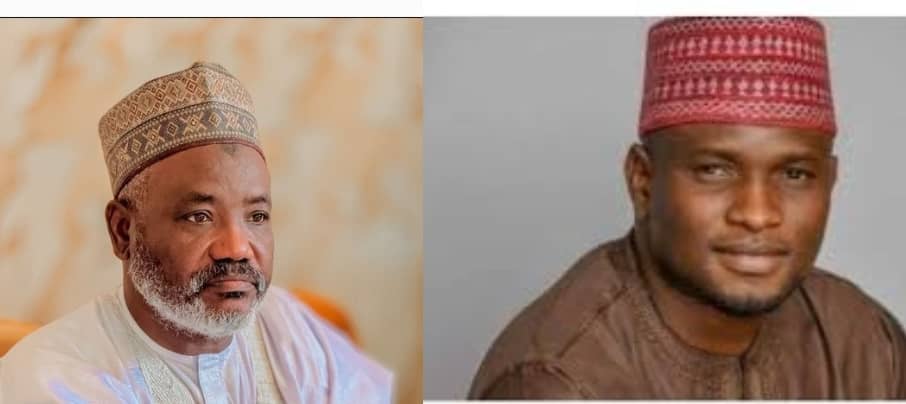
Kano State Governor, Abba Kabir Yusuf, has nominated his spokesperson, Sanusi Bature Dawakin Tofa, and a former Speaker of the State House of Assembly, Balarabe Sa’idu Gani, for appointment as commissioners.
The governor has forwarded their names to the Kano State House of Assembly for screening and confirmation.
The Assembly is expected to screen the nominees on Tuesday, November 3, 2026, at 10:00 a.m.
In a statement issued on Monday, the Assembly’s spokesperson, Kamaluddeen Sani Shawai, said the legislature had received a formal communication from Governor Yusuf requesting the screening of the two nominees.
He added that the exercise would be conducted in accordance with the provisions of the Constitution of the Federal Republic of Nigeria.
Gani served as Speaker of the Kano State House of Assembly from 2003 to 2007, while Bature currently serves as the governor’s spokesperson.

2027 Elections: Ex-INEC Chair, Attahiru Jega, Warns Against Unchecked Use of AI

Mahanga TV appoints former AREWA24 staff Zuwairiyah Girei as MD

Kano Governor Nominates Ex- Speaker, Spokesperson as Commissioners

2027: Rep Abubakar Kabir Bichi holds strategic meeting with Kano lawmakers

Kano’s War On Drugs: How Barr. Muhyi’s Taskforce Is Changing The Game

Kano Monitors ₦48.9bn Projects Across Six LGAs

Kano Spends ₦10.36bn on Hospitality, Sitting Allowances, Others in Six Months

Open The Social Sciences “A Tribute to a Heterodox Scholar: Mallam Ibrahim Muazzam

Senate Passes Barau’s Bill to Provide Legal Framework for Yusuf Maitama Sule Federal University of Education, Kano

Kano First Forum Petitions Police Over Alleged Inciting Statements by Aminu Babba Dan Agundi
2027 Elections: Ex-INEC Chair, Attahiru Jega, Warns Against Unchecked Use of AI
Mahanga TV appoints former AREWA24 staff Zuwairiyah Girei as MD
Kano Governor Nominates Ex- Speaker, Spokesperson as Commissioners
2027: Rep Abubakar Kabir Bichi holds strategic meeting with Kano lawmakers
Kano’s War On Drugs: How Barr. Muhyi’s Taskforce Is Changing The Game
Kano Monitors ₦48.9bn Projects Across Six LGAs
Kano Spends ₦10.36bn on Hospitality, Sitting Allowances, Others in Six Months
Open The Social Sciences “A Tribute to a Heterodox Scholar: Mallam Ibrahim Muazzam
Senate Passes Barau’s Bill to Provide Legal Framework for Yusuf Maitama Sule Federal University of Education, Kano
Kano First Forum Petitions Police Over Alleged Inciting Statements by Aminu Babba Dan Agundi
-

 Opinion5 years ago
On The Kano Flyovers And Public Perception
-

 Features5 years ago
How I Became A Multimillionaire In Nigeria – Hadiza Gabon
-

 Opinion6 years ago
Kano As future Headquarters Of Poverty In Nigeria
-

 History6 years ago
Sheikh Adam Abdullahi Al-Ilory (1917-1992):Nigeria’s Islamic Scholar Who Wrote Over 100 Books And Journals
-

 Opinion5 years ago
My First Encounter with Nasiru Gawuna, the Humble Deputy Governor
-

 History5 years ago
The History Of Borno State Governor Professor Babagana Umara Zulum
-

 History6 years ago
The Origin Of “Mammy Market” In Army Barracks (Mammy Ochefu)
-
 News5 years ago
Federal University Of Technology Babura To Commence Academic Activities September