
News
Senate Passes State Police Bill, Empowers Govs to Appoint Commissioners
By Yusuf Danjuma Yunusa
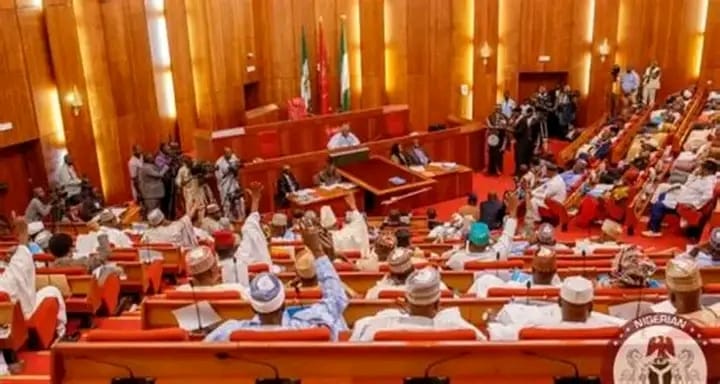
The Senate on Wednesday passed the landmark Constitution Alteration Bill seeking to establish state police across the federation, marking a major step in Nigeria’s decades-long debate over decentralising the country’s policing structure to address worsening insecurity.
The passage followed a rigorous clause-by-clause consideration of the bill and came after more than two-thirds of senators voted in support through a manual voting process conducted on the floor of the chamber.
Senate President, Godswill Akpabio, announced the passage of the legislation after lawmakers overwhelmingly backed the proposal during plenary.
The upper chamber approved the bill after considering the report of the Senate Committee on the Review of the Constitution, presented by Deputy Senate President and committee chairman, Barau Jibrin.
The bill’s provisions were first considered at the Committee of the Whole before lawmakers adopted them and proceeded to a final vote.
Debate on the legislation was led by Senate Leader, Opeyemi Bamidele, who urged senators to support what many lawmakers described as a critical reform aimed at strengthening internal security and improving response to local threats.
The legislation seeks to establish a state policing framework that would operate concurrently with the existing federal police system, effectively ending the exclusive control of policing by the Federal Government.
A key provision of the bill “empowers state governors to appoint Commissioners of Police for their respective states, subject to confirmation by the state Houses of Assembly.”
Under Clause 17 of the proposed constitutional amendment, “while the Federal Police Service will continue to be headed by the Inspector-General of Police, each State Police Service shall be headed by a Commissioner of Police appointed by the governor and confirmed by the legislature of the state.”
The bill further outlines the operational relationship between governors and state police commands.
Section 17(6) provides that “a governor may issue lawful written directives of a general policy nature to the Commissioner of Police on matters relating to the maintenance of public safety and public order within the state.”
To address concerns over potential abuse of the new policing structure by state governments, lawmakers included safeguards aimed at protecting political freedoms and civil liberties.
Section 17(7) specifically states that “a state Commissioner of Police shall not arrest, detain, investigate or deploy force against any person, political party or group merely for criticising the government except in accordance with the law.”
The provision is intended to prevent state police formations from being weaponised against political opponents, activists, journalists or dissenting voices and ensures that any action taken must comply with due process and existing legal provisions.
The passage of the bill came barely an hour after the Senate abandoned plans to deploy an electronic voting system for the consideration of the State Police Bill and other constitutional amendment proposals.
Lawmakers instead adopted a manual voting process following concerns that technical glitches affecting some voting devices could disenfranchise senators and undermine the integrity of the exercise.
The decision followed a motion made by Bamidele, who argued that every senator should be given an equal opportunity to participate in the historic vote.
Akpabio backed the proposal, insisting that an open voting system would not only guarantee full participation but also promote transparency by allowing Nigerians to know where their representatives stood on critical constitutional issues.
Several senior government officials, including the Governor of Kaduna State, Senator Uba Sani; Governor of Ogun State, Prince Dapo Abiodun; Governor of Ondo State, Lucky Aiyedatiwa; and the Chief of Staff to President Bola Tinubu, Femi Gbajabiamila, witnessed the Senate’s decision on the floor of the Senate.
Following the adoption of the motion, senators were called individually to publicly declare their votes during the consideration of the constitutional amendment bills.
The successful passage of the State Police Bill represents one of the most consequential constitutional reforms undertaken by the 10th National Assembly and is expected to reshape Nigeria’s security architecture.














News
Dangote Cement Gboko Commits Millions in Scholarship Scheme
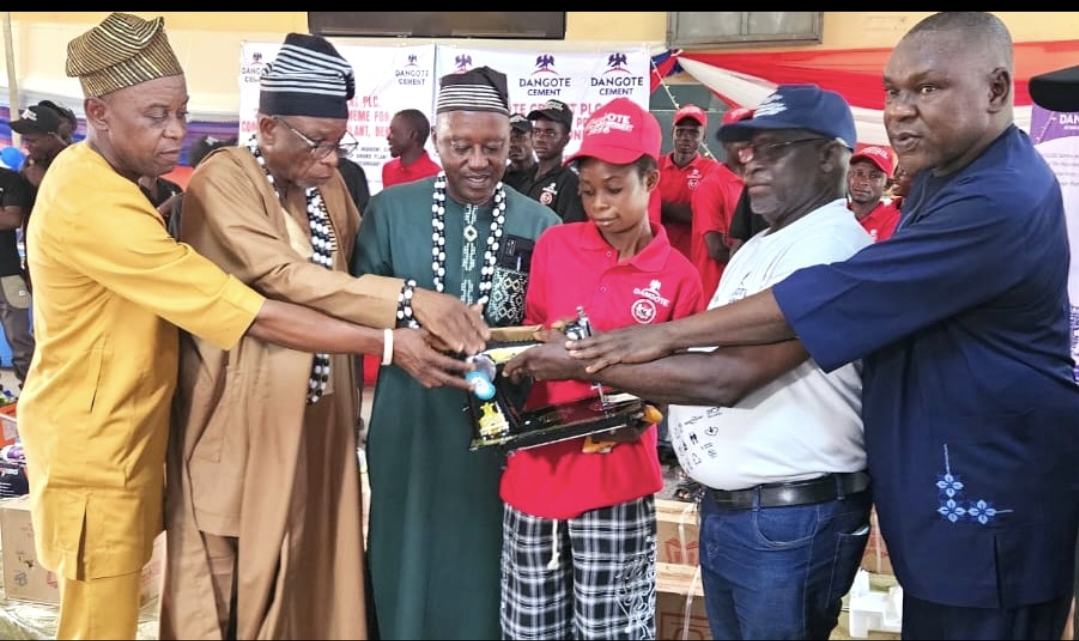
Dangote Cement Plc, Gboko Plant has awarded multi-million-naira scholarships to tertiary and secondary school students from its six host communities in Benue State.
The company also presented starter packs, working tools and certificates to graduates of its Youth Empowerment Programme to enable them to establish their own businesses, apply the skills acquired during the training and become financially reliant.
The Minister of Solid Minerals Development, Dr. Henry Dele Alake, lauded Dangote Cement Plc for its community development interventions, calling on other private sector players to adopt similar initiatives to promote socio-economic development in their host communities.
Dr. Alake, who was represented by the Federal Mines Officer of the Federal Ministry of Solid Minerals Development in Benue State, Engr. Achi Gregory, urged the company to sustain its commitment to implementing community development programmes agreed upon with its host communities.
Speaking at the official presentation ceremony, Group Head, Social Performance, Dangote Cement Plc, Mr. Wakeel Olayiwola, said the implementation of the Community Development Agreement underscores Dangote Cement’s commitment to equipping young people with practical skills and resources to promote entrepreneurship, create employment opportunities and improve livelihoods in its host communities.
Mr. Olayiwola, who was represented by the Head of Social Performance of the Dangote Cement, Gboko Plant, Dr. Johnson Kor, said the scholarship and youth empowerment programmes came against the backdrop of several other programmes recently executed by the company, which include farmers and women empowerment programmes.
The Acting Plant Director, Dangote Cement, Gboko, Engr. Arbind Singh, said: “This annual scholarship scheme for indigent students of the host communities is an indication of our company’s commitment to its Corporate Social Responsibilities (CSR).”
Engr Singh, who was represented by the company’s General Manager, Production, Engr Tabershima Soom, said: “The Gboko Plant has already launched 150 Women Empowerment Programme and 50 Farmerss Empowerment Programme where women were provided with cash to support their businesses, and farmers were supported with farm inputs.”
The beneficiary communities for these programs are: Tse-Kucha, Quarry, Amua, Mbazembe, Mbatur, and Pass Brothers.
Speaking on behalf of the Benue State Attorney-General, the Chairman of the Mineral Resources and Environmental Management Committee (MIREMCO), Barr. Dooshima Orosaga, commended Dangote Cement Plc for its compliance with the Community Development Agreement (CDA), urging the beneficiaries and host communities to maximise the benefits of the company’s interventions.
Chairman of the Gboko Local Government, Hon Yina Elias said the government will continue to provide the support needed for the company to succeed, adding that the Dangote Cement Plc is an exemplary company in Corporate Social Responsibilities programmes.
In his remarks, the District Head of Ukpekpe, Chief Tsegba Igbarumun, commended Dangote Cement Plc’s Gboko Plant for its contributions to the community, assuring the company of the community’s continued support.
He said the community valued its mutually beneficial relationship with the company and would continue to serve as its ambassadors.
A beneficiary of the Youth Empowerment Programme, Mr Ignatius Aondohemba, expressed appreciation to Dangote Cement Plc for the support, pledging to put the skills and resources provided to good use and build a business that would enable him to become an employer of labour.
News
Mass Exodus Looms in Kano APC as More Chieftains Consider Exit — Mansur Ahmed
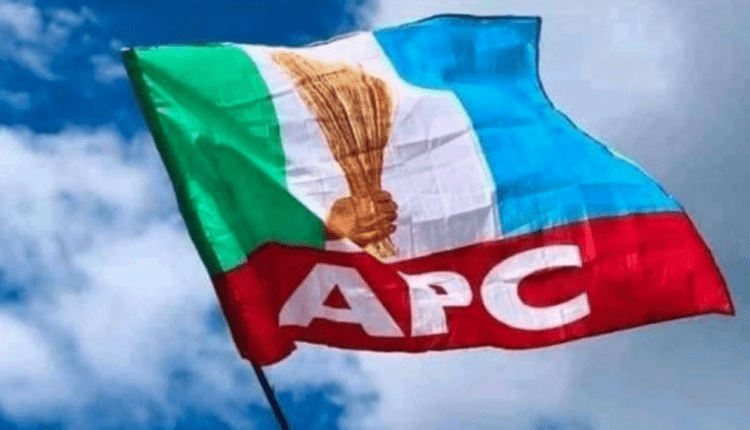
A former governorship aspirant of the Peoples Democratic Party (PDP), Engr. Mansur Ahmed, has predicted a possible mass exodus of prominent politicians and party stakeholders from the All Progressives Congress (APC) in Kano State amid persistent internal disagreements.
Ahmed made the prediction while addressing journalists following his resignation from the APC, according to a statement signed by Usman Bello on his behalf.
The former APC member described the recent resignation of party chieftain Alhaji Aminu Dabo as an indication of a deeper crisis within the party, suggesting that more prominent members could leave in the coming days.
Ahmed alleged that the Kano APC was experiencing persistent internal disputes that had continued to undermine unity among its members, with little indication that the disagreements would be resolved soon.
He further disclosed that several political leaders and stakeholders across Kano State were holding consultations over their future in the party and were considering formally resigning.
According to Ahmed, the consultations involved prominent political figures and their allies who were weighing their options before deciding on their next political destination.
Reflecting on his political career, Ahmed described himself as a former PDP governorship aspirant who also served as Deputy Coordinator of the 2015 presidential campaign in Kano.
He said he and his associates were currently consulting with political allies to determine the next direction of their political engagement following his departure from the APC.
The statement did not identify the other party leaders allegedly preparing to resign or disclose when they might announce their decisions.
It also did not indicate whether Ahmed and the politicians consulting with him had reached any agreement to join another political party.
Ahmed’s prediction comes amid continuing political realignments in Kano State as political actors assess their options ahead of the 2027 general elections.
News
Kano Donates Equipment to NDLEA

The Kano State Government has donated working tools to the National Drug Law Enforcement Agency (NDLEA), Kano Strategic Command, to strengthen the fight against drug abuse and illicit trafficking.
The items were presented on Thursday, October 22, 2026, by the Chairman of the Kano State Multi-Agency Task Force on Drug Abuse and Illicit Trafficking, Barrister Muhuyi Magaji Rimin Gado, on behalf of Governor Abba Kabir Yusuf.
Speaking at the presentation, Magaji said the donation reflected the government’s determination to tackle drug-related offences, which he identified as a major contributor to social vices in society.
He lamented that substance abuse had reached a frightening dimension, requiring concerted action by the government, security agencies and other stakeholders.
According to him, Governor Yusuf’s administration is committed to providing the necessary support to agencies responsible for combating drug abuse and illicit trafficking, using all available means to address the growing challenge.
Magaji stressed that effective coordination among relevant institutions was essential to curbing the menace and protecting the future of young people in the state.
Receiving the items, CN Dahiru Yahaya Lawan, Kano Strategic Commander of the NDLEA, expressed gratitude to the governor and the state government, describing the intervention as timely.
He said the equipment would enhance the command’s operational capacity and strengthen its efforts to combat drug abuse and illicit trafficking.
Lawan assured the government that the items would be judiciously utilised to achieve their intended purpose.
He emphasised that the fight against drugs was a collective responsibility, calling on residents, community leaders and other stakeholders to support law enforcement agencies in tackling the problem.
The donation underscores the state government’s drive to strengthen inter-agency collaboration and provide operational support for the fight against drug-related offences, with the ultimate goal of creating a safer, drug-free society.

Dangote Cement Gboko Commits Millions in Scholarship Scheme

Mass Exodus Looms in Kano APC as More Chieftains Consider Exit — Mansur Ahmed

Kano Donates Equipment to NDLEA

NDC Kano Asks INEC to Investigate Conflicting Primary Election Reports

Gov. Yusuf Appoints Inuwa Waya Director of International Corporations Engagement

PCACC Arrests Man Over Alleged ₦4.5m Sale, Illegal Leasing of Kano Government Horse Stable

Kano Monitors ₦48.9bn Projects Across Six LGAs

Goje’s Electoral War:The Confrontation With Tinubu,Governor Inuwa,Usman Kumo And APC candidates Ahead Of 2027

Kano Spends ₦10.36bn on Hospitality, Sitting Allowances, Others in Six Months

Prof Yusuf Adamu Delivers BUK’s 63rd Professorial Inaugural Lecture, Reflects on Medical Geography and Academic Legacy
Dangote Cement Gboko Commits Millions in Scholarship Scheme
Mass Exodus Looms in Kano APC as More Chieftains Consider Exit — Mansur Ahmed
Kano Donates Equipment to NDLEA
NDC Kano Asks INEC to Investigate Conflicting Primary Election Reports
Gov. Yusuf Appoints Inuwa Waya Director of International Corporations Engagement
PCACC Arrests Man Over Alleged ₦4.5m Sale, Illegal Leasing of Kano Government Horse Stable
Kano Monitors ₦48.9bn Projects Across Six LGAs
Goje’s Electoral War:The Confrontation With Tinubu,Governor Inuwa,Usman Kumo And APC candidates Ahead Of 2027
Kano Spends ₦10.36bn on Hospitality, Sitting Allowances, Others in Six Months
Prof Yusuf Adamu Delivers BUK’s 63rd Professorial Inaugural Lecture, Reflects on Medical Geography and Academic Legacy
-

 Opinion5 years ago
On The Kano Flyovers And Public Perception
-

 Features5 years ago
How I Became A Multimillionaire In Nigeria – Hadiza Gabon
-

 Opinion6 years ago
Kano As future Headquarters Of Poverty In Nigeria
-
 History6 years ago
Sheikh Adam Abdullahi Al-Ilory (1917-1992):Nigeria’s Islamic Scholar Who Wrote Over 100 Books And Journals
-
 Opinion5 years ago
My First Encounter with Nasiru Gawuna, the Humble Deputy Governor
-

 History5 years ago
The History Of Borno State Governor Professor Babagana Umara Zulum
-
 History6 years ago
The Origin Of “Mammy Market” In Army Barracks (Mammy Ochefu)
-
 News5 years ago
Federal University Of Technology Babura To Commence Academic Activities September