
Opinion
Restoring the Glory That Was Always There: Governor Abba Kabir Yusuf and the Historical Vision Behind Kano First
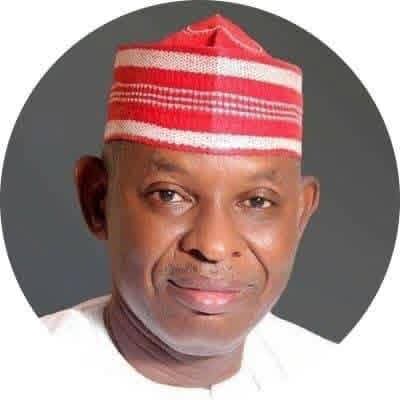
By Saminu Umar Ph.D | Senior Lecturer, Department of Information and Media Studies, Bayero University, Kano
Kano does not need to be invented. That is a truth so fundamental, so historically self-evident, that it should not need to be stated at all, and yet the circumstances of recent decades have made its restatement not merely appropriate but urgent. There is a tendency, in the discourse of Nigerian development, to treat every governance initiative as a beginning, as though the society being governed had no prior history of achievement, no accumulated wisdom, no tested traditions of institutional excellence on which new efforts might be built. This tendency is not merely intellectually lazy, but it is, in the specific context of Kano, a form of historical injustice, a failure to reckon honestly with the civilizational inheritance that this state carries and that its people have never entirely abandoned, even through the long and painful decades in which their institutions were hollowed out, their values eroded, and their confidence systematically undermined by the combined weight of misgovernance, corruption, and the slow cultural dislocation that follows when a society loses trust in the institutions that are supposed to embody its highest aspirations.
Kano was, long before Nigeria existed as a political entity, one of the most sophisticated and enduring centers of civilization in West Africa. Its greatness was not the greatness of conquest or of externally imposed order. It was the greatness of organic development, of a society that built, over centuries, a coherent and self-sustaining civilization on foundations that were simultaneously material and moral. The trans-Saharan trade networks that made Kano a commercial hub of continental significance were sustained not merely by geography or by the availability of goods, but by a culture of commercial integrity, of trust between trading partners, of contractual reliability, and of the kind of reputational accountability that makes markets function across distances and between strangers. The Islamic scholarship that gave Kano its intellectual authority was not merely a religious tradition. It was a governance philosophy, one that placed knowledge, justice, accountability, and the subordination of personal interest to public duty at the center of what it meant to hold power. The traditional political institutions that maintained Kano’s social order were not instruments of oppression but, at their best, mechanisms of consultation, legitimacy, and the managed resolution of social conflict.
These were not accidental achievements. They were the products of deliberate cultivation, of generations of Kano’s people choosing, consciously and consistently, to organize their collective life around values that made both individual flourishing and communal solidarity possible. That is what a civilization is: not a collection of buildings or a record of territorial expansion, but a living tradition of values, practices, and institutions that enables a human community to achieve, across time, more than any individual generation could accomplish alone. Kano built such a civilization. And the question that every serious governor of Kano must eventually confront, whether they frame it in these terms or not, is whether they are adding to that civilization or subtracting from it.
It is against this civilizational backdrop that the Kano First Initiative under Governor Abba Kabir Yusuf must be understood, not as a new idea imported into Kano from outside, not as a political slogan invented to win elections and abandoned when the votes are counted, but as a deliberate act of historical retrieval, an attempt to reach back through the debris of recent decades and recover the foundations on which Kano’s genuine greatness was built. The initiative’s framework document states this explicitly and without embarrassment: Kano’s most persistent challenges are not solely infrastructural or economic in nature. They are fundamentally behavioral, normative, and narrative failures, accumulated over time and reinforced by weak value transmission, fragmented authority, and uncoordinated messaging. This is a diagnosis of remarkable historical honesty, and it is one that only a governor with a genuine understanding of what Kano has been and what it has lost could have authorized.
Governor Yusuf’s historical vision is not nostalgic in the sentimental sense of the word. He is not proposing a return to a romanticized past that never existed in the uncomplicated form that nostalgia requires. He is proposing something simultaneously more modest and more ambitious: the recovery of specific values, specific institutional principles, and specific civic traditions that demonstrably worked, that demonstrably sustained Kano’s coherence and productivity over centuries, and that demonstrably began to break down when they were displaced by the governing logic of extraction, patronage, and the systematic subordination of public interest to private accumulation. Islamic ethical governance, communal responsibility, the dignity of productive labor, respect for legitimate authority, the centrality of knowledge in public life, these are not abstract ideals. They are the operational principles of a civilization that actually functioned, and their recovery is not a romantic aspiration but a practical governance imperative.
The intellectual architecture through which this recovery is being pursued bears the clear fingerprints of the Honourable Commissioner for Information and Internal Affairs, Comrade Ibrahim Abdullahi Waiya, whose contribution to the Kano First Initiative has been, in every meaningful sense, the contribution of a man who understands both what Kano is and what it needs. The framework he has championed integrates three traditions that, taken together, give the initiative both its cultural legitimacy and its analytical credibility: the Islamic ethical governance tradition that historically underpinned Kano’s stability and justice, Kano’s own sociocultural heritage of communal solidarity and institutional accountability, and the modern behavioral change communication science that provides the methodological tools for translating values into measurable social outcomes. This integration is not accidental. It reflects a deep conviction, shared by both the governor and his commissioner, that genuine renewal cannot be achieved by importing foreign solutions but only by excavating and rebuilding on Kano’s own foundations.
The scale of what has been lost must be honestly acknowledged if the scale of what is being attempted is to be properly appreciated. Kano today carries wounds that decades of misgovernance have inflicted on its social fabric with a thoroughness that cannot be undone quickly or easily. Youth disaffection has reached levels that express themselves in drug abuse, street violence, and the nihilistic political thuggery that represents, at its core, the rage of young people who were promised a future and received instead a void. Institutional trust, once the bedrock of Kano’s civic life, has been so systematically eroded that the default posture of many citizens toward their government is not engagement but cynicism, not participation but withdrawal. The digital media ecosystem, which should be a tool of civic enlightenment, has in too many instances become a vehicle for the amplification of the very misinformation, polarization, and moral dislocation that the Kano First Initiative is designed to address. These are not small problems, and they will not yield to small solutions.
What gives the Kano First Initiative its historical seriousness is precisely that it does not pretend otherwise. The four-phase implementation framework, stretching from 2026 through 2030, is built on the recognition that the restoration of a civilization’s normative foundations is a generational project, not a political campaign. Phase One builds the empirical foundation, the baseline surveys, perception mapping, and narrative architecture that genuine social intervention requires. Phase Two deploys coordinated, multi-channel behavioral activation across youth networks, religious institutions, traditional authorities, and community organizations. Phase Three scales what works and deepens digital engagement. Phase Four embeds the initiative permanently into Kano’s governance architecture through a dedicated directorate and the annual Kano Values Index. This is not the timeline of an administration managing its image. It is the timeline of a government that has looked honestly at the depth of the challenge and committed itself to the depth of response that the challenge demands.
There is an emotional dimension to this story that deserves to be named directly, because it is one that the purely analytical framing of policy discourse tends to obscure. Kano’s people love their state with an intensity and a pride that is, even in a country of fierce regional loyalties, remarkable. They carry within them the memory of a greatness that their grandparents knew and that they themselves have glimpsed, in fragments and in moments, even through the long decades of disappointment. When Governor Yusuf speaks of restoring Kano’s glory, he is not merely making a political argument. He is speaking to something that lives in the hearts of ordinary Kano citizens, something that has survived misgovernance, political manipulation, and cultural erosion with a resilience that is itself a testament to the depth of Kano’s civilizational roots. That emotional resonance is not a weakness in the Kano First philosophy. It is one of its greatest strategic assets, because renewal that connects with people’s deepest sense of identity and pride generates the kind of civic energy that no top-down programme can manufacture.
The work of restoring that glory belongs, ultimately, not to government alone but to every institution, every community leader, every journalist, every religious scholar, every teacher, every trader, and every young person in Kano who chooses, in their daily conduct, to live by the values that made this civilization great. Governor Abba Kabir Yusuf has provided the vision, the institutional framework, and the personal example of a leader who is willing to pay the political costs that genuine commitment to the public good always exacts. Comrade Ibrahim Abdullahi Waiya has provided the intellectual architecture and the communication infrastructure through which that vision can be translated into civic reality. The rest, as it must always be when a society is serious about its own renewal, belongs to the people.
Kano’s glory was never lost. It was covered over, layer by layer, by the accumulated debris of decades of bad governance, institutional betrayal, and the slow erosion of the values that once made it shine. The Kano First Initiative is not building something new on empty ground. It is clearing the ground of debris so that what was always there can breathe again, grow again, and reclaim the space in Nigeria’s national life and in West Africa’s historical memory that Kano has always, by right of civilization, deserved to occupy. That is the historical vision behind Kano First. And it is a vision worth every effort, every sacrifice, and every ounce of collective will that Kano’s people can bring to its realization.
Saminu Umar Ph.D is a Senior Lecturer in the Department of Information and Media Studies, Bayero University, Kano. surijyarzaki@gmail.com









Opinion
Re: “Kano Spends #26.5BN On Govt House,Governors Office, Travels In Six Months
Setting the Records Straight from the Published Budget Performance Report
By Hon. Muhammad Sanusi S. Kiru, FCIA
As a citizen of Kano State with an abiding interest in good governance, transparency and responsible public discourse, I consider it necessary to independently examine the figures currently circulating under the headline: “Kano Spends ₦26.5bn on Govt House, Governor’s Office, Travels in Six Months.”
Public expenditure must be subjected to scrutiny. The media has an indispensable responsibility to hold governments and public institutions accountable. However, such scrutiny achieves its purpose only when figures extracted from official financial documents are presented within their correct accounting and administrative context.
I have therefore examined the Kano State Second Quarter 2026 Budget Performance Report, the publicly available document from which the figures in the report appear to have been derived. My review reveals a number of important facts which members of the public deserve to know.
I. THE ₦25.869 BILLION IS NOT THE GOVERNOR’S PERSONAL EXPENDITURE
The official Budget Performance Report indeed contains an expenditure figure of approximately ₦25.869 billion under the broader Government House administrative classification.
However, this classification is not synonymous with the personal expenditure of the Governor, nor does the amount represent expenditure exclusively incurred by the Governor’s immediate office.
Rather, it is an umbrella administrative classification encompassing several offices, directorates, agencies and governmental functions.
It would therefore be misleading to interpret or present the entire ₦25.869 billion as money spent personally by the Governor or exclusively by his immediate office.
II. GOVERNMENT HOUSE PROPER RECORDED APPROXIMATELY ₦3.288 BILLION
A closer examination of the same official document shows that Government House proper, under administrative code 011100100100, recorded cumulative expenditure of approximately ₦3.288 billion as at June 2026.
This was against an approved annual provision of approximately ₦39.514 billion, meaning that only about 8.3 per cent of the annual provision had been utilised at the end of the first six months.
This distinction is fundamental.
The difference between the ₦3.288 billion expenditure attributable to Government House proper and the ₦25.869 billion aggregate expenditure under the wider administrative classification should not be overlooked in any objective analysis.
III. THE ₦25.869 BILLION COVERS SEVERAL ESTABLISHMENTS
The broader ₦25.869 billion figure incorporates expenditure attributable to several establishments and governmental functions administratively grouped under Government House.
These include, among others, the Deputy Governor’s Office, Protocol Directorate, Media and Publicity establishments and other offices and agencies.
For example, the official report indicates that approximately ₦4.471 billion recorded under the Deputy Governor’s Office was capital expenditure. The Protocol Directorate also accounts for a substantial component of expenditure contained within the broader administrative classification.
These are distinct governmental expenditures and should not be portrayed as the Governor’s personal expenditure.
IV. THE ₦626.95 MILLION DESCRIBED AS “TRAVEL”
The additional figure of approximately ₦626,947,782.13 deserves particular attention.
The amount does appear in the official Q2 2026 Budget Performance Report. However, examination of the underlying document shows that the figure appears under the Primary Healthcare expenditure reporting section, specifically against Local Travel and Transport: Training.
This raises a legitimate question as to the basis for adding the ₦626.95 million to the broader Government House administrative expenditure to arrive at the headline figure of approximately ₦26.5 billion.
If the expenditure is classified in the official document under Primary Healthcare and relates to local travel and transport for training, it should not be presented in a manner capable of creating the impression that the amount represents the Governor’s travel expenditure.
V. THE COMPARABLE EXPENDITURE ACTUALLY DECLINED
There is another important fact which deserves equal prominence.
The broader Government House administrative expenditure reportedly stood at approximately ₦28.84 billion during the first six months of 2025, compared with approximately ₦25.87 billion during the corresponding period of 2026.
This represents a reduction of approximately ₦2.97 billion, or about 10.3 per cent.
The year-on-year comparison therefore indicates a decline rather than an escalation in expenditure under the broader administrative classification.
MY FINDING
Having examined the underlying figures, my considered view is that the headline “Kano Spends ₦26.5 Billion on Govt House, Governor’s Office, Travels in Six Months” requires substantial clarification and context.
The ₦25.869 billion figure is contained in the official Budget Performance Report, but it represents expenditure under a broader administrative classification encompassing several offices, agencies, directorates and governmental functions. Government House proper recorded approximately ₦3.288 billion.
Similarly, the additional ₦626.95 million presented as travel expenditure appears in the official document under a Primary Healthcare expenditure section relating to Local Travel and Transport: Training. It should therefore not, without further evidence, be interpreted as the Governor’s travel expenditure.
Furthermore, the comparable broader administrative expenditure declined from approximately ₦28.84 billion in the first half of 2025 to ₦25.87 billion in the first half of 2026, representing a reduction of about 10.3 per cent.
Accountability is not served by shielding government from scrutiny. Neither is it served by presenting legitimate public expenditure figures without their necessary administrative and accounting context.
As citizens, we must continue to demand prudence, transparency and accountability from those entrusted with public resources. In the same spirit, public discourse—particularly on matters involving billions of naira of taxpayers’ money—must be anchored on accuracy, context and fairness.
The records are public. The figures can be verified. Let the facts speak for themselves.
Hon. Muhammad Sanusi S. Kiru, FCIA
Concerned Kano Citizen
Opinion
Olodo Uprising:The Debate Over Fame, Knowledge And Nigeria’s Digital Future-Peter Peace

By Peter Peace Eshiofune
In today’s Nigeria, a viral video can attract thousands of views within hours, while educational content may struggle to receive the same attention. This changing relationship between knowledge, entertainment and online fame came under scrutiny following comments by Nigerian rapper Oludemilade Martin Alejo, popularly known as YCee, during an appearance on the Afropolitan Podcast in June 2026.
YCee described what he called the “Olódò Uprising,” expressing concern about what he saw as the growing celebration of ignorance and the increasing value placed on internet fame and virality. He referred to what he called “Peller culture,” using popular content creator Peller as an example of a broader digital trend rather than as the sole subject of his criticism. His comments generated responses from Peller and others on social media.
The Yoruba expression “olódò” is commonly used as a derogatory term for someone perceived as unintelligent or academically weak. In YCee’s context, however, the expression was used to describe a perceived social trend in which content that attracts attention, regardless of its intellectual value, can receive greater recognition than knowledge, academic achievement or meaningful contributions.
The controversy became more complicated when content creator Jarvis responded to YCee. She pointed to her university education and argued that content creation should not automatically be interpreted as a rejection of education or evidence of ignorance. She also highlighted the difficulty many young Nigerians face in finding employment, presenting digital content creation as another way young people can earn a living.
Her argument raises an important question: Is the popularity of online entertainment evidence of declining intellectual values, or is it also a response to the economic realities facing young Nigerians?
The question cannot be separated completely from the country’s employment situation. According to the National Bureau of Statistics’ Labour Force Survey, the unemployment rate among Nigerians aged 15–24 stood at 6.5 per cent in the second quarter of 2024. While unemployment statistics alone cannot explain why individuals become content creators, they provide context for understanding why young people may explore alternative forms of work.
This economic reality helps explain why, for many young Nigerians, social media is no longer simply a platform for entertainment. It has become a space for entrepreneurship, self-expression, networking and communication. With Nigeria’s rapidly expanding digital environment, the opportunity to reach large audiences has also created new possibilities for creators and digital businesses. DataReportal estimated that Nigeria had 47.8 million active social-media user identities in October 2025, showing the size of the audience available to creators and digital businesses.
At the same time, YCee’s concern cannot simply be dismissed. Social media platforms are built around attention and engagement. Views, likes, shares and followers can increase a creator’s visibility and, in some cases, create economic opportunities. This can encourage creators to produce content capable of attracting strong reactions.
The audience is also part of this system. Creators may produce the content, but audiences influence what becomes popular through what they watch, share, comment on and promote. The “Olódò Uprising” debate therefore goes beyond individual personalities. It raises questions about the values that millions of digital users collectively reward.
This distinction is important because entertainment and intelligence are not opposites. A comedian, musician, streamer or content creator can be intelligent and highly educated, just as a person with formal education can produce misleading or poorly informed content. The more important question is what society chooses to reward with attention and influence.
This is where media literacy becomes important. Young people need the ability to question what they see online, distinguish entertainment from misinformation and understand why certain content becomes more visible than others. Educators and communicators also face the challenge of promoting knowledge without treating entertainment as the enemy or appearing disconnected from the realities of young people’s digital lives.
The debate also shows that responsibility does not rest entirely with content creators. Audiences, platforms and communicators all contribute to the digital environment. What receives attention today can influence what creators produce tomorrow, creating a cycle in which popularity can determine the kind of content that is repeatedly seen.
Perhaps this is why the “Olódò Uprising” debate has attracted attention beyond the personalities involved. Beneath the arguments about YCee, Peller and Jarvis lies a larger question about Nigeria’s changing digital culture: If attention can be converted into influence and income, what happens when going viral becomes more attractive than developing knowledge and skills?
The answer should not be to reject entertainment or condemn young people who make a living online. Instead, Nigeria needs a digital culture where creativity and economic opportunity can exist alongside education, critical thinking and responsible communication.
Ultimately, the “Olódò Uprising” may be less about whether one person is intelligent or another is not. It may be about what Nigerians choose to celebrate, what they choose to amplify and the kind of digital culture they want to create.
Peter Peace Eshiofune
A 200-level student of the Department of Development and Strategic Communication, University of Abuja.
Opinion
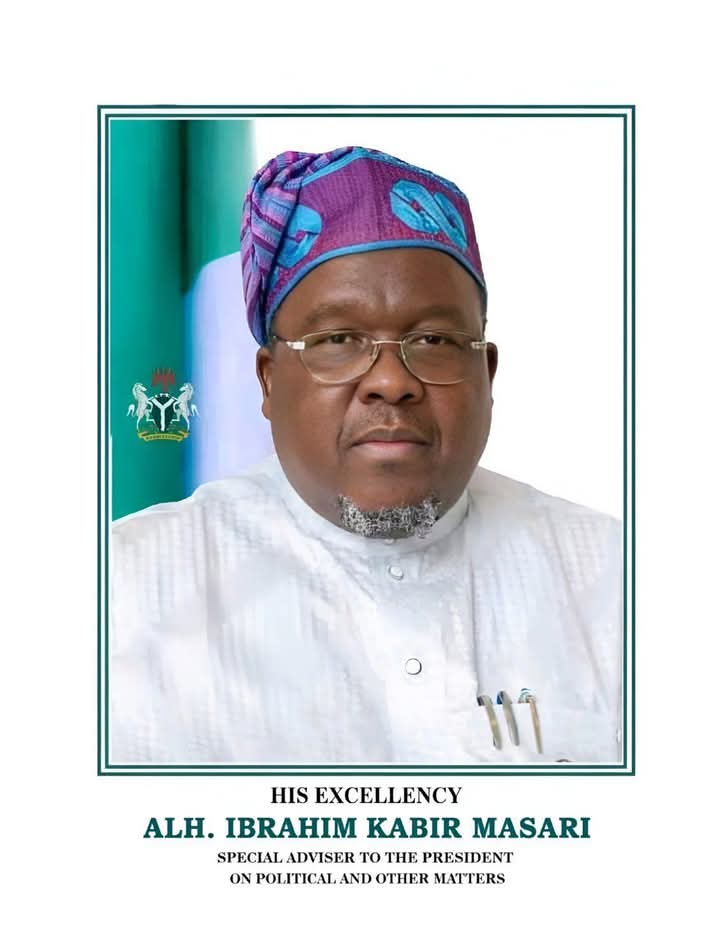
Masari: The Quite Architect With No Rivalry, Only Results for APC in 2027
By Abba Anwar
One name that rings bell and attracts all manner of attentions is Honourable Ibrahim Kabiru Masari, Special Adviser on Political and Other Matters, to President Bola Ahmed Tinubu, GCFR, Commander-in-Chief of the Armed Forces of the Federal Republic of Nigeria. The gentleman whose love for the ruling All Progressives Congress (APC) is undeniably visible across all Northern states and even beyond. His elevation from Senior Special Assistant to Special Adviser was a good stamp from the Presidency.
As the 2027 general election draws closer and the race for relevance intensifies within the ruling APC, one name keeps surfacing and resurfacing in quiet rooms where party unity is negotiated and in loud ones where it is celebrated; comes the name Masari.
As Special Adviser very close the President he has not chosen the path of noise or rivalry, with other party heavyweights or appointees. Instead, he has positioned himself as a stabilizing force, a bridge between the Presidency and the party base, and between the North and the center. In a political season often defined by competition for slots and spotlight, his reputation for humility, fairness in appointments, and commitment to party hegemony has made him one of APC’s most valuable assets.
In what usually becomes nation’s political practice under the guise of politics of camps and blocs, Masari is described by party insiders as someone who does not engage in rivalry with other Northern appointees. He has become a rallying point because he prioritizes APC first, region second. For sure he doesn’t ask where you are from before he asks how the party can win.
His special care, concern and love for Kano state are some of the things why he becomes endeared to Kano people. The appointment of Hon Yahuza Ado Inuwa, as the Chairman Standard’s Council, Standard Organization of Nigeria (SON) was birthed, facilitated and secured by Hon Masari and the appointment of Eng Abdullahi Garba Ramat, to the position of Chairman/CEO, Nigerian Electricity Regulatory Commission (NERC), though short-lived, was a singular effort of this gentleman, Masari.
Apart from many more employment opportunities he secured for Kano people at the federal ministries and agencies. He contributed immensely in many other political appointments of Kano citizens in President Tinubu administration.
The same thing, he has special interest and love for Kano’s political development. During 2019 gubernatorial election when the then Governor of Kano state Dr Abdullahi Umar Ganduje was running for the second term and Eng Abba Kabir Yusuf (current governor of Kano), was running on the platform of the opposition People’s Democratic Party (PDP), the atmosphere was in cul-de-sac, he performed wonders for APC and Ganduje.
When both parties were in absolute fear, uncertainty and frustration, Hon Masari played a significant role in APC’s victory. From the electioneering campaign to the declaration of inconclusive result. Up to the Gama tug-of-war, in Nassarawa local government area. He came to the rescue of Ganduje that time. As Tinubu, APC National Leader then, supervised the project. Tinubu and Masari, not even federal government under late President Muhammadu Buhari, saved APC, Ganduje and Kano people from the clutches of PDP.
So to me, whatever good thing Ganduje did to Tinubu and/or Masari, is just a returning match. No more no less. And politics is an envelope of returning matches. At whatever level you can think of.
To also tell you that the Special Adviser, Political, to President Tinubu cares much about healthy political development in Kano, he played an important and unmatched role, in making sure that His Excellency Murtala Sule Garo becomes the Deputy Governor of Governor Abba Kabir Yusuf. Even if I said singlehandedly, is not a derailed exercise. I was privy to many efforts then.
The same Masari moved in quickly when some forces wanted Ganduje, to be bundle out of the APC’s National Headquarters, as National Chairman of the party. It Masari who instantly intervened and saved the situation from total collapse. He did that to save Ganduje, Kano state image in the national scheme of things and to consolidate the strength of the party in Northern Nigeria. We all saw how Ganduje resigned unscathed.
I once called him the Distributor of Opportunity. It is obvious to say that his strength is in opening doors at the federal level for capable hands, not just from Katsina state, but across the North and beyond. This has earned him goodwill and cemented the perception that the Tinubu administration is rewarding loyalty and competence, not just geography.
In his home state Katsina, he was instrumental to the appointment of the following people, in different federal agencies. These are the Executive Director, National Social Insurance Trust Fund (NSITF) Barr. Samaila Abdu, Board Chairman, Badagry College, Lagos, Kabiru Musa Kafur, Chief of Staff to the Honourable Minister of Housing and Urban Development, Dr. Abba, Executive Director, Monitoring and Implementation, Nigeria–São Tomé and Príncipe Joint Development Authority, Alhaji Abdullahi Muhammed Yari and Hon. Dr. Jabiru Salisu Abdullahi Tsauri as the National Coordinator and Chief Executive Officer of AUDA-NEPAD Nigeria, among others.
He facilitated for the employment of hundreds of Katsina people and other Northern states. Without any consideration of where one comes from. It is undoubtedly clear to note that, quintessential individuals like Masari are great assets to the President and the ruling APC, as we are inching towards general election of 2027.
Without any doubt or rethink, this man is an embodiment of victory, political sophistication, foresight, deeply rooted influence among his people, needed experience, domineering political architecture and relevance.
Another good thing about this gentleman is his simplicity in dealing with all other political appointees, who come from the North. He is different, as he has no political rival under whose rivalry the party and the President suffer technically. He has good understanding with all the Ministers from the North, all appointees of federal government agencies and departments and all party leaders from his geo-political zone, North West and beyond, among others.
He is in good term with Distinguished members of the National Assembly, especially the leadership of the two Chambers, these are His Excellency Deputy Senate President, Barau I Jibrin, CFR, Phd and Right Honourable Speaker, House of Representatives, Tajuddeen Abbas.
All Governors from his zone and even beyond have good working relationship with this gentleman. No wonder whenever he organizes Empowerment Programmes in Katsina state, you see Governors trooping to bless the gatherings. Clear indication of harmonious relationship.
So what a perfect Special Adviser, Political and Other Matters to the President? Lest I forget, the spend stupendous amount of money in empowering his people. To them, their Tinubu is Masari. Without fear of mincing words, I can say with people like Masari in the North, 2027 will be an easy ride for Mr President.
He definitely matters for 2027 general elections. Not only Presidential election. His contribution to the welfare of youth and women in his domain means a lot in aiding the ruling APC. With a youthful voting population and high expectations, APC needs figures who can hold the party together without inflaming divisions. Masari’s role in consultation, conflict management, and mobilization makes him central to the party’s electoral machinery.
Another good thing about him is what prompted me to call him The Humble Operator. Yes despite holding a strategic position close to the President, Masari maintains a low-profile, service-driven approach. In politics where ego often fractures parties, his humility is being read as strength.
The ocean of difference that stands between him and other political leaders from this part of the country, is his no-nonsense response to political rumor mongers, who always plant seed of acrimony among party members, leaders and elders. Whoever takes rumor to him is at his (rumor monger) own peril. His straightforwardness is encouraging and always timely. Masari Gabas ne!
What further differentiates him with other political big shots from North, is his non-rivalry posture. While it is common to see political office holders, elected or appointed, souped in sour relationship between themselves, in Masari the situation is not that bad and terrifying.
He is in good term with all our Ministers from the North, all leaders of the National Assembly who come from the North, ranging from Right Honourable Speaker, Abbas, Deputy President of the Senate, Senator Jibrin and all Chairmen of Senate Committees and House Committees, who hailed from the North.
When you want to see his red eye, sabotage Tinubu’s government. This has been his character since the coming of Tinubu as President.
Let me note and conclude that as APC heads into another defining election, the party may need fewer loud voices and more steady hands. In Ibrahim Kabiru Masari, it appears to have found both.
HAPPY MAULUD TO ALL MY READERS!
Anwar writes from Kano
Tuesday, 25th August, 2026

You’re a Hypocrite!” – Bashir el-Rufai Goes Nuclear on Brother Bello Over Uba Sani Loyalty

Court Ultimatum Forces FBI to Hand Over Tinubu’s Fraud Records to Judge—But Keeps Them Hidden from Public

Ratko Mladić: The Butcher of Bosnia and the Shadow He Leaves Behind

NFF President Gusau Resigns

NUT Launches ‘Go Public’ Campaign to Promote Public Education in Nigeria

How Kano Digitized Land Turns N50m to N750m Monthly

Borders, Visas and the Beautiful Game: How U.S. Immigration Policies Shaped Global Perceptions During the 2026 FIFA World Cup

I Gave Tijjani Gandu N10 Million to Support Musicians, Media but Funds Were Allegedly Not Distributed – Governor Yusuf’s Spokesperson

Atiku Replies Obasanjo, Says He Has No Regret Thwarting the Third Term Agenda

From World’s 9th Most Populous City to Perfect: As Gov Yusuf Revisits Kano Master Plan
You’re a Hypocrite!” – Bashir el-Rufai Goes Nuclear on Brother Bello Over Uba Sani Loyalty
Court Ultimatum Forces FBI to Hand Over Tinubu’s Fraud Records to Judge—But Keeps Them Hidden from Public
Ratko Mladić: The Butcher of Bosnia and the Shadow He Leaves Behind
NFF President Gusau Resigns
NUT Launches ‘Go Public’ Campaign to Promote Public Education in Nigeria
How Kano Digitized Land Turns N50m to N750m Monthly
Borders, Visas and the Beautiful Game: How U.S. Immigration Policies Shaped Global Perceptions During the 2026 FIFA World Cup
I Gave Tijjani Gandu N10 Million to Support Musicians, Media but Funds Were Allegedly Not Distributed – Governor Yusuf’s Spokesperson
Atiku Replies Obasanjo, Says He Has No Regret Thwarting the Third Term Agenda
From World’s 9th Most Populous City to Perfect: As Gov Yusuf Revisits Kano Master Plan
-

 Opinion5 years ago
On The Kano Flyovers And Public Perception
-

 Features5 years ago
How I Became A Multimillionaire In Nigeria – Hadiza Gabon
-

 Opinion6 years ago
Kano As future Headquarters Of Poverty In Nigeria
-

 History5 years ago
Sheikh Adam Abdullahi Al-Ilory (1917-1992):Nigeria’s Islamic Scholar Who Wrote Over 100 Books And Journals
-

 Opinion5 years ago
My First Encounter with Nasiru Gawuna, the Humble Deputy Governor
-

 History5 years ago
The History Of Borno State Governor Professor Babagana Umara Zulum
-

 History5 years ago
The Origin Of “Mammy Market” In Army Barracks (Mammy Ochefu)
-

 News4 years ago
Federal University Of Technology Babura To Commence Academic Activities September